
I want to reflect upon a fascinating conversation I had late Christmas night with a dear friend. We ended up talking about personal boundaries, and the ways we protect ourselves emotionally. It was one of those deep, reflective discussions that linger long after the words are spoken.
At some point, I shared a hard lesson I learned from an ex-partner about the concept of indifference. That simple admission opened a door to a much larger, layered conversation about what indifference truly means, how it functions, and the role it plays in our relationships; both with others and with ourselves.
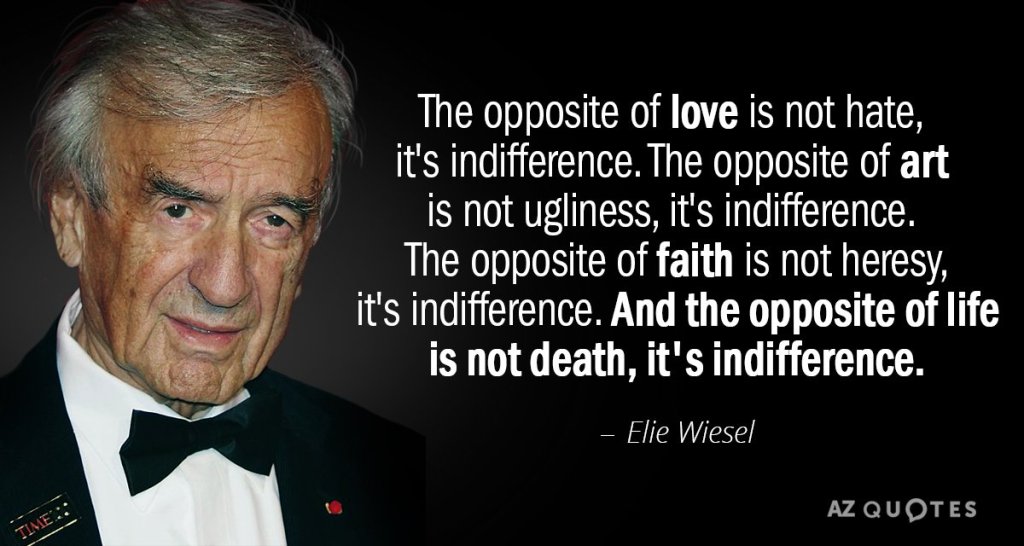
What struck me was how much weight the word indifference carries. It’s such a profound concept when you think about it. Philosophers like Elie Wiesel have said that indifference, not hatred, is the true opposite of love. Love and hate, after all, are both fiery, emotional investments; they require energy, passion, and focus. But indifference? That’s the absence of all of that. It’s an emotional void, a refusal to care.
We talked about how indifference can be more painful than outright hate. At least with hate, you know you’re being seen, felt, acknowledged in some way. Indifference, on the other hand, feels like being erased, like you don’t matter enough to warrant any reaction at all. In relationships, it can create this deep loneliness; a silent, aching space where love or even conflict should be.
But then we got into the darker side of indifference, how it can also be wielded as a kind of weapon. It’s not always passive, you know? Sometimes it’s deliberate, a way to assert control or punish without saying a word. We’ve all seen or felt it in some form: the cold shoulder, the ignored text, the subtle withholding of care or acknowledgment. Those silences and omissions can be sharper than words.
We explored a few examples, like in romantic relationships, when one partner uses indifference to send a cruel, unspoken message: “You don’t matter.” Or in workplaces, where a boss might undermine someone by pretending their contributions don’t exist. That kind of calculated indifference is devastating because it’s so insidious. It leaves the other person questioning their worth.
What’s tricky is that indifference isn’t always malicious. It can be a survival mechanism too, right? Sometimes, detaching and withdrawing emotionally is a way to protect ourselves from toxic dynamics or emotional exhaustion. The question is whether indifference is being used as self-preservation or as a means to harm or manipulate someone else.
Honestly, the more we talked about it, the more I realized how thin the line is between healthy detachment and destructive indifference. I think perhaps that intention is everything, whether it’s about creating space for yourself or shutting someone out entirely.
The whole conversation left me reflecting on my own tendencies and how I’ve used or experienced indifference in my life. It’s a lot to sit with, but also something I feel like I need to understand better.
What do you think? Have you ever found yourself wrestling with indifference, either as a tool or as something you’ve been on the receiving end of?
 The Rowanwood Chronicles