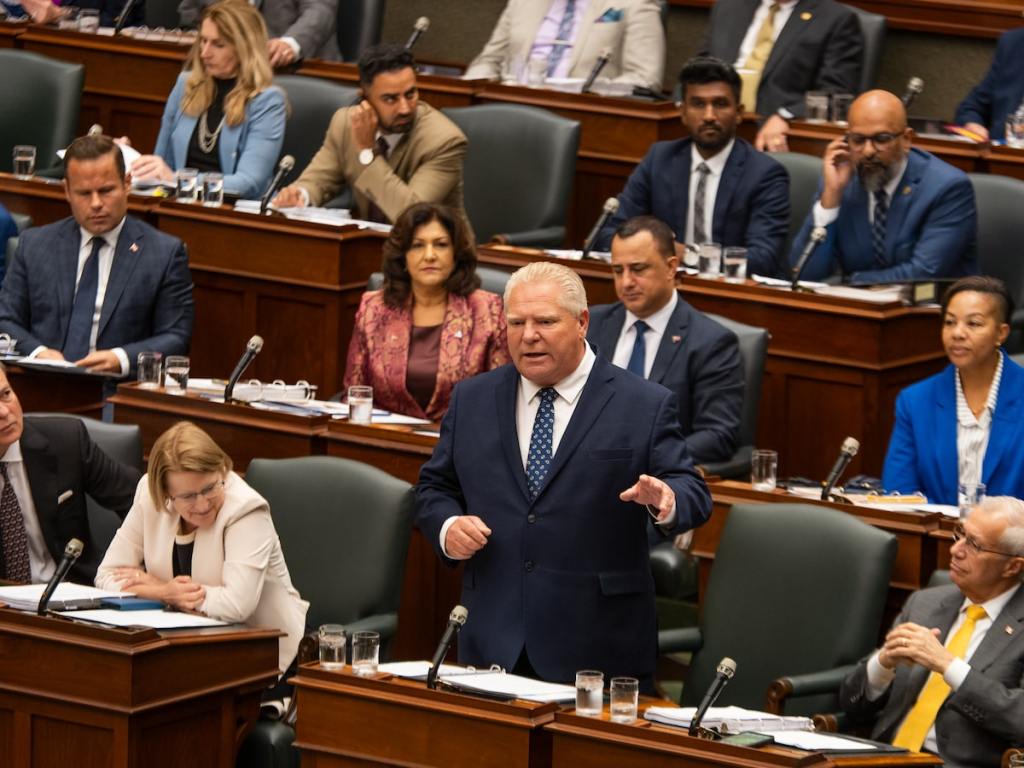
The Ontario government has introduced a proposal that would fundamentally alter the province’s access to information regime. The amendments under consideration would exclude records held by the premier, cabinet ministers, and their political offices from the scope of the province’s Freedom of Information law. At the same time, the proposal would lengthen the time government institutions have to respond to information requests and apply the new rules retroactively to requests already in the system. Taken together, these measures would mark a sharp departure from the principles that have guided public access to government records in Ontario for more than three decades.
Access to information legislation exists for a simple reason. Democratic governments exercise power on behalf of the public, and the public therefore has a right to understand how decisions are made. Ontario’s Freedom of Information and Protection of Privacy Act was built around that principle. While certain categories of information have always been protected, particularly cabinet deliberations and personal privacy, the general premise has remained clear: records created in the conduct of public business belong, ultimately, to the public.
The proposed amendments would carve out a new and sweeping exception. Records located in the offices of the premier and cabinet ministers would no longer be subject to access requests. In practical terms, that means that political offices at the centre of provincial decision making could become zones of administrative opacity. Documents relating to policy discussions, communications with stakeholders, or advice provided by political staff could simply fall outside the reach of the law.
The implications are not merely theoretical. Many of the most significant investigative revelations in Ontario politics have emerged through freedom of information requests directed at ministerial offices and related records. Journalists and public interest groups have relied on those requests to understand how decisions were shaped, who was consulted, and what information was available to decision makers at critical moments. Removing political offices from that framework would inevitably narrow the public record.
The proposal’s retroactive component raises an additional concern. Retroactive secrecy sits uneasily within a legal framework designed to promote transparency. When governments change the rules governing access to information after requests have already been filed, the effect is not merely administrative. It risks creating the perception that the rules are being rewritten to shield particular controversies or decisions from scrutiny.
The extension of response timelines from thirty days to forty five business days may appear modest by comparison, yet it reinforces the same broader trend. Access delayed is frequently access denied, particularly in an environment where timely disclosure is essential for public debate. Journalists working to inform citizens about active political controversies depend on the timely release of records. Lengthening the process reduces the practical value of the information that is eventually disclosed.
Governments routinely argue that greater confidentiality is necessary for effective decision making. Cabinet discussions require a degree of privacy. Political staff must be able to offer candid advice. Those principles have long been recognized within the existing law. The problem arises when the zone of confidentiality expands so far that it begins to swallow the principle of public accountability itself.
Ontario’s access to information system has never been perfect. Delays, redactions, and bureaucratic caution have always limited the flow of records. Yet the framework established a basic expectation that the machinery of government would operate under a presumption of openness. The proposed amendments would move the province in the opposite direction, concentrating greater informational power within the political executive while reducing the public’s ability to examine how decisions are made.
Transparency laws are not technical administrative instruments. They are structural features of democratic governance. When access to information narrows, the distance between citizens and the institutions that govern them inevitably grows. The current proposal therefore represents more than a routine legislative adjustment. It signals a shift in the balance between political authority and public oversight, one that risks weakening a cornerstone of democratic accountability in Ontario.
⚖️ 1. International Women’s Day Sparks Global Demonstrations
March 8 marked International Women’s Day, with marches, political rallies, and policy announcements across dozens of countries. Demonstrations focused on issues such as equal pay, reproductive rights, education access, and women’s political representation.
Why it matters:
One of the world’s largest annual civic mobilizations
Increasing pressure for gender-equity legislation
A major platform for labour and social justice campaigns
🏅 2. 2026 Winter Paralympics Begin in Italy
The Winter Paralympic Games officially opened in Milan and Cortina d’Ampezzo and entered their first full week of competition. More than 600 athletes from over 50 countries are competing in alpine skiing, para-hockey, biathlon, and other adaptive sports.
Why it matters:
One of the largest international adaptive-sport events
Growing global recognition of Paralympic athletes
Increasing investment in inclusive sport programs
🌌 3. Strong Solar Winds Trigger Northern Lights Displays
Fast solar winds from the Sun increased geomagnetic activity this week, producing bright aurora displays across northern regions of North America and Europe. Observers in parts of Canada and the northern United States reported strong viewing conditions.
Why it matters:
The Sun is approaching the peak of its 11-year solar cycle
Auroras may become more frequent in the coming year
Strong solar storms can affect satellites and power grids
🌍 4. Middle East War Continues to Disrupt Regional Air Travel
The ongoing conflict in the Middle East continued to disrupt aviation across the region this week, forcing airlines to reroute or cancel flights and operate reduced schedules. Major aviation hubs reported delays and reduced capacity as airlines avoided conflict zones.
Why it matters:
Major impact on global aviation routes
Energy markets and shipping lanes remain volatile
The conflict is now affecting international travel and logistics
❄️ 5. World Speed Skating Championships Conclude in the Netherlands
The World Allround Speed Skating Championships took place in Heerenveen, Netherlands, bringing together many of the world’s best skaters for a demanding multi-distance competition that determines the sport’s most complete athletes.
Why it matters:
One of the sport’s most prestigious annual championships
Key preparation for Olympic-level competition
Continues the Netherlands’ role as a global centre of speed skating
🌟 The Big Picture
The second week of March illustrated the diverse forces shaping the global moment: civic activism, international sport, space-weather phenomena, geopolitical conflict, and major cultural events all unfolding simultaneously across the planet.
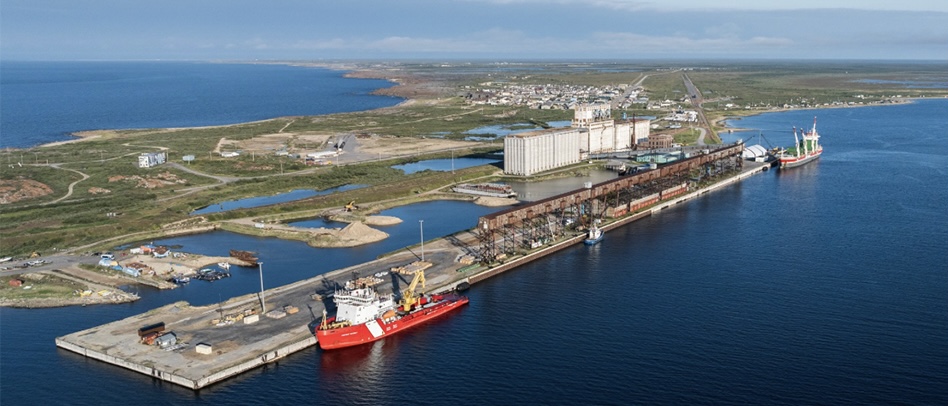
The Port of Churchill has long occupied an awkward place in Canadian economic geography. On the conventional map it appears remote, almost stranded on the western shore of Hudson Bay, far from the industrial corridors that dominate North American trade. For decades this visual impression shaped policy assumptions. Churchill was treated as a marginal northern outpost rather than a serious transportation node.
Yet the assumptions embedded in flat maps are often misleading. Global shipping follows the curvature of the Earth rather than the straight lines suggested by atlases. Vessels travel along great-circle routes, the shortest distance between two points on the globe. When the North Atlantic is viewed through this lens, Churchill occupies a far more interesting position than commonly assumed.
Measured along great-circle routes, Churchill sits almost directly across the North Atlantic from northern Europe. The sailing distance between Churchill and the Port of Antwerp-Bruges is roughly 3,900 nautical miles. This is only modestly longer than the distance from Montreal to the same destination and dramatically shorter than the route from Vancouver, which requires passage through the Panama Canal and spans more than 8,000 nautical miles. The northern geography therefore aligns Churchill naturally with European markets rather than Asian ones.
Rail geography reinforces this logic. A significant portion of Canadian agricultural production lies across the northern Prairie belt, including regions surrounding Saskatoon, Prince Albert, and northern Alberta. From several of these areas, the rail distance to Churchill is comparable to, and in some cases shorter than, the distance to southern export ports. The Hudson Bay Railway links the port directly into the North American rail network, creating a corridor that runs from the Prairie interior to Hudson Bay without crossing an international border.
For bulk commodities, this alignment of rail and maritime geography carries practical implications. Commodities such as grain, potash, fertilizer inputs, and mineral concentrates are routinely transported in large volumes on specialized bulk carriers. These cargoes are far less dependent on the rigid scheduling demanded by container shipping. As a result, they can tolerate seasonal shipping windows more easily than high-frequency container trade. The economics of bulk logistics therefore fit more comfortably with Churchill’s operating conditions.
At the same time, it is important to recognize the limits of the model. Churchill cannot realistically compete with Vancouver for Asian trade. Shipping routes from the Pacific coast to East Asia are among the shortest and most efficient maritime corridors in the world. Attempting to replicate that role through northern Arctic routes, including the Northwest Passage, remains impractical due to ice conditions, insurance risks, and limited infrastructure. Churchill’s comparative advantage lies in the opposite direction, toward Europe.
This is where the strategic logic of recent international partnerships begins to emerge. Europe is seeking diversified supplies of agricultural commodities, fertilizer inputs, and critical minerals as part of broader efforts to reduce reliance on politically sensitive supply chains. Western Canada possesses many of these resources in abundance. A seasonal but direct corridor from the Prairie interior to northern Europe therefore holds a certain economic symmetry.
In this context, Churchill need not aspire to the scale of Vancouver or Montreal to justify renewed attention. The port’s potential lies in a more specialized role: a northern export valve connecting Western Canada to European markets. Grain shipments during the late summer and autumn harvest period, mineral concentrates moving from northern mining regions, and fertilizer products destined for European agriculture all fit naturally within this model.
The concept is neither revolutionary nor unprecedented. Numerous ports in northern Europe and the Baltic already operate with seasonal or semi-seasonal ice conditions. Their viability rests not on year-round container traffic but on carefully planned flows of bulk cargo coordinated with shipping seasons.
Viewed through this lens, the geography of Churchill becomes less perplexing. The port does not sit at the edge of Canada’s transportation system. Rather, it occupies a hinge between the Prairie interior and the North Atlantic. The distances involved, the alignment of rail infrastructure, and the nature of bulk commodity trade combine to create a narrow but potentially meaningful logistical niche.
Such a niche would never transform Churchill into a mega-port. Yet it could allow the harbour on Hudson Bay to serve a quiet but strategically useful role within Canada’s evolving northern economy. In an era when climate change, resource development, and geopolitical realignment are drawing attention toward the Arctic, that role may prove more relevant than earlier generations of policymakers assumed.
Across the industrial world there has been a long and sometimes quiet struggle over the ownership of essential infrastructure. Electricity grids, railways, telecommunications networks, and pipelines have all passed through cycles of public construction and private acquisition. Yet among these, water occupies a fundamentally different category. It is not merely an economic input or a commercial service. It is a precondition for life, public health, and social stability. When a society debates the governance of water systems, it is not arguing about a typical utility. It is debating the stewardship of a shared biological necessity.
Ontario now finds itself at the edge of such a debate.
Recent legislative changes, most notably those contained within Bill 60 – Fighting Delays, Building Faster Act, 2025, create new mechanisms through which municipal water and wastewater systems may be transferred into corporate governance structures. The government’s stated intention is administrative efficiency and infrastructure financing. Ontario’s rapidly growing population requires substantial investment in water infrastructure, and municipalities are under increasing fiscal pressure to expand treatment capacity, pipelines, and pumping stations. From a narrow administrative perspective, the argument is straightforward. Corporate utilities can borrow capital more flexibly and operate with financial tools unavailable to traditional municipal departments.
But efficiency arguments alone cannot settle the deeper question.
Public utilities exist because certain services are too fundamental to leave entirely to the logic of markets. Water systems in Canada were built during the twentieth century precisely because the private delivery of drinking water had repeatedly proven unreliable, inequitable, and sometimes dangerous. Municipal ownership was not an ideological experiment. It was the result of a century of public-health lessons learned through epidemics, contamination events, and uneven private provision.
Ontario’s own history contains one of the most sobering reminders of that truth. The tragedy of Walkerton Water Crisis demonstrated with painful clarity that water governance demands uncompromising accountability. The response in the years that followed was not to dilute public oversight but to strengthen it. Ontario built one of the most rigorous drinking water regulatory regimes in the world, premised on the principle that safe water is a public responsibility.
That principle deserves careful protection.
The concern raised by critics of the new legislative framework is not that privatization will occur immediately. Rather, the concern lies in the structural pathway that corporatization creates. When water utilities are moved out of direct municipal governance and into corporate entities, the nature of decision-making changes. Boards replace councils. Rate structures become financial instruments. Infrastructure planning is evaluated increasingly through the lens of return on investment rather than the broader calculus of community welfare.
None of these shifts automatically produce privatization. Yet they move the system closer to the institutional architecture within which privatization becomes possible.
The international experience provides numerous examples of this progression. In several jurisdictions, the path toward private water delivery began not with outright sales of infrastructure but with the creation of corporate utilities, public-private partnerships, and long-term concession agreements. Over time, financial pressures and political incentives often pushed these arrangements further toward private control. Once essential infrastructure is embedded within corporate governance frameworks, the distinction between public service and commercial utility can gradually blur.
The risk is not merely ideological. It is practical.
Water systems require long-term investment horizons measured in decades. Pipes laid beneath city streets may remain in service for half a century. Treatment plants operate for generations. Public ownership aligns naturally with these timelines because governments exist to steward infrastructure across electoral cycles. Private entities, even well-regulated ones, operate under shorter financial expectations. Shareholder value and quarterly performance rarely align with the slow maintenance rhythms of buried municipal infrastructure.
There is also the matter of democratic legitimacy. Municipal water systems today are ultimately accountable to elected councils. Citizens can vote out the officials responsible for water policy. Rate increases, infrastructure investments, and service priorities are debated in public forums. Corporate governance, by contrast, places these decisions within boardrooms whose members are not directly accountable to voters.
Water policy should not be insulated from democratic oversight. It should be anchored within it.
None of this denies the real financial pressures facing municipalities. Ontario’s growing cities must build enormous quantities of new water infrastructure to support housing construction and economic expansion. Financing models will need to evolve. Innovative approaches to capital investment may be necessary. Yet innovation in financing should not be mistaken for a justification to weaken public ownership.
The core principle should remain simple and clear.
Water systems belong to the communities that depend on them. The reservoirs, aqueducts, pumping stations, and treatment plants that sustain modern cities were built with public resources over generations. They represent a shared civic inheritance. Their purpose is not to generate profit but to safeguard public health and ensure universal access to a basic human necessity.
Public utilities exist precisely because some services are too important to treat as commodities. Water is foremost among them.
Ontario’s policymakers would therefore be wise to proceed with caution. Legislative frameworks designed for administrative flexibility can sometimes produce unintended consequences decades later. Once governance structures shift, reversing course becomes difficult. Infrastructure systems have a way of locking in the institutional assumptions under which they were built.
The question facing the province is therefore larger than the technical design of utility corporations. It is about the kind of stewardship Ontarians expect for the most essential resource in their society.
A civilized state recognizes that certain responsibilities cannot be outsourced. Among them is the simple but profound duty to ensure that every citizen can turn on a tap and trust what flows from it.
Water, quite simply, should remain in the hands of the people.
Researchers announced early results from a Phase 3 clinical trial of a new Alzheimer’s treatment, showing slowed cognitive decline in patients with early-stage disease. The drug targets beta-amyloid accumulation and could become the first major therapy to meaningfully alter disease progression.
Why it matters:
Could transform treatment for millions worldwide
Offers hope for early intervention strategies
Signals growing investment in neurodegenerative disease research
🌕 2. A Total Lunar “Blood Moon” Eclipse
A spectacular total lunar eclipse on March 3 turned the Moon a deep red color for viewers across North America, the Pacific region, and parts of Asia and Australia. The event occurs when Earth moves directly between the Sun and Moon, casting a shadow that filters sunlight through Earth’s atmosphere.
Why it matters:
First lunar eclipse of 2026
Visible across large parts of the world
Part of a broader series of eclipses occurring in 2025–2026
🚀 3. Artemis II Moon Mission Moves Toward Launch
NASA moved closer to launching Artemis II, the first crewed lunar mission since the Apollo era. The mission’s launch window opened March 6 and will send astronauts on a journey around the Moon and back to Earth.
Why it matters:
First humans to travel beyond low-Earth orbit in over 50 years
Includes a Canadian astronaut
A key step toward future lunar landings and eventual Mars missions
🏅 4. 2026 Winter Paralympics Open in Italy
The 2026 Winter Paralympic Games officially opened on March 6 with a ceremony in Verona, Italy. Athletes from dozens of countries will compete in alpine skiing, biathlon, para-hockey, and other events across northern Italy.
Why it matters:
Hundreds of athletes representing more than 50 countries
Growing global recognition of adaptive sport
Major international sporting event following the Winter Olympics
🌌 5. Solar Activity Sparks Northern Lights Displays
Strong solar activity produced geomagnetic storms that triggered vivid northern lights displays across parts of Canada and the northern United States. Some locations farther south than usual also reported aurora sightings.
Why it matters:
Solar activity is approaching the peak of its cycle
Auroras becoming more frequent and widespread
Space weather can affect satellites and power systems
🌟 The Big Picture
The first week of March highlighted a mix of breakthroughs in science and medicine, remarkable astronomical events, major sporting competitions, and natural phenomena, illustrating the wide-ranging forces shaping our world.
There are political decisions that change a nation’s trajectory, and then there are political decisions that change the clock on the microwave twice a year.
British Columbia’s long-gestating move to end seasonal time changes belongs to the second category. And yet, like so many small administrative reforms, it reveals more about governance, coordination, and federalism than its modest subject suggests.
When David Eby says the issue is about “making life easier for families” and “reducing disruptions for businesses,” he is not wrong. Twice a year, millions of people reset schedules, disrupt sleep cycles, confuse meeting times, and briefly destabilize routines. The economic cost is diffuse but real. The human irritation is universal.
But the British Columbia story is not simply about clocks. It is about interdependence.
A Province Ready, A Continent Not British Columbia passed legislation in 2019 to adopt permanent daylight saving time. The public consultation showed strong support. The mechanics were prepared. The legal framework exists. Yet implementation stalled because BC tied its decision to the U.S. Pacific Northwest, particularly Washington, Oregon, and California.
Why? Because Vancouver and Seattle function less like distant cities and more like adjacent economic zones. A two-hour time gap for part of the year would complicate trade, transportation, markets, and daily cross-border life. So BC waited on American congressional action that never arrived.
That is the quiet absurdity of modern federalism. A provincial legislature can pass a law. A neighbouring state legislature can pass a similar law. And both remain inert because a third legislative body, thousands of kilometres away in Washington, D.C., controls the clock.
BC’s renewed political framing signals impatience with that paralysis.
Canada’s Patchwork Time Regime Canada does not have a single national time policy. Provinces decide.
Saskatchewan effectively does not change clocks. Yukon moved to permanent time in 2020. Ontario passed legislation that would end seasonal changes, but only if Quebec and New York follow suit. Nova Scotia has debated similar moves.
In other words, the legislative scaffolding already exists across multiple provinces. What is missing is synchronization.
This is the core tension. Canadians dislike changing clocks. Legislatures have responded. Yet every province that is economically entangled with a neighbour hesitates to move unilaterally.
BC’s decision, if implemented regardless of U.S. action, would break that coordination norm. It would demonstrate that a province can absorb the temporary inconvenience of cross-border time divergence in exchange for internal consistency.
That matters.
The Real Policy Question No One Likes to Debate There is also a deeper issue that remains politically underexplored. Ending clock changes is popular. Choosing which time to keep is less so.
Permanent daylight saving time means brighter winter evenings and darker winter mornings. In northern latitudes, those mornings become very dark indeed. Sleep researchers often argue permanent standard time aligns better with human circadian rhythms. Politicians prefer the marketing appeal of longer evening light.
BC chose permanent daylight saving time.
The choice is not trivial. It reflects a cultural preference for after-work daylight over morning biological alignment. It favours consumer time over solar time.
That debate is barely visible in the political messaging, but it exists beneath the surface.
What This Means for Canada If BC proceeds, several things follow.
First, Ontario’s conditional legislation becomes harder to justify. The argument that “we must wait for everyone” weakens once one major province decides not to.
Second, public debate will intensify in provinces that have already prepared legislative tools but lack political momentum.
Third, the federal government may find itself facing pressure for coordination, even if timekeeping remains a provincial power. A national conversation could emerge not because Ottawa initiated it, but because provincial asymmetry forces it.
Will the rest of Canada follow immediately? No.
Will BC’s move increase the probability of broader change within five years? Very likely.
Clock policy is rarely transformative. But it is revealing. It exposes how deeply integrated provincial economies are with the United States. It demonstrates the limits of legislative autonomy in a continental marketplace. And it shows that even mundane administrative reforms require geopolitical choreography.
In the end, this is not about daylight. It is about governance friction.
And as with so many small reforms, once one jurisdiction proves that the sky does not fall when the clocks stop changing, others tend to follow.
For generations, the emergency department waiting room has served as the visible face of a health-care system under strain. Rows of plastic chairs, muted televisions, exhausted families, and the slow churn of triage have become so familiar that they are almost invisible. Yet the waiting room is not merely a physical space. It is a diagnostic instrument. It tells us, with brutal honesty, where the rest of the system has failed.
The emerging concept of the “virtual waiting room,” in which low-acuity patients wait at home until summoned, does not eliminate this reality. It relocates it. The crowd disappears from the hallway but not from the system. The queue still exists, only now it is distributed across living rooms, workplaces, parked cars, and smartphones. This is not a cure. It is a reframing.
And yet, reframing matters.
From Place to Process Emergency care was designed for immediacy: heart attacks, strokes, trauma, catastrophic events. Over time it has become the safety net for everything else. When primary care is unavailable, after-hours clinics are full, or social supports collapse, the emergency department becomes the default portal into the system. It is open, universal, and legally obligated to see everyone. No other part of health care operates under those conditions.
Virtual queue systems acknowledge a hard truth: the emergency department is now as much a scheduling problem as a clinical one.
By allowing some patients to wait remotely, hospitals are quietly shifting from a place-based model to a process-based model. Care is no longer defined by where you sit but by your position in a digital flow. Airlines made this transition decades ago. Banking followed. Retail perfected it. Health care, notoriously conservative, is now being pushed in the same direction by necessity rather than enthusiasm.
Comfort Is Not Capacity Letting patients wait at home is humane. It reduces exposure to illness, lowers stress, and restores a sense of control. For parents with sick children, elderly patients, or those with chronic pain, this is not a trivial improvement. It is a meaningful one.
But comfort should not be confused with capacity.
A virtual waiting room does not create new nurses, physicians, or beds. It does not shorten diagnostic turnaround times or speed inpatient admissions. It simply redistributes discomfort away from the hospital campus. The operational bottleneck remains exactly where it was: inside the system.
If anything, success may make the underlying shortage easier to ignore. A hallway filled with stretchers is politically alarming. An invisible queue dispersed across thousands of homes is not.
The Consumerization of Urgent Care These systems also reflect a broader cultural shift. Patients increasingly expect transparency, updates, and predictability. Knowing “you are number 12 in line” reduces anxiety even if the wait itself is unchanged. Digital notifications mimic familiar consumer experiences, transforming the emergency department from a chaotic black box into something resembling a service platform.
This is not trivial psychology. Perceived fairness and information availability strongly influence satisfaction. People tolerate long waits better when they understand them.
However, consumer expectations carry risks. Health care is not retail. Medical priority must override first-come, first-served logic. The danger is not that hospitals will abandon triage, but that public expectations will drift toward transactional thinking: if I checked in earlier, why am I not seen sooner?
Equity at the Edge Every digital solution introduces a new boundary between those who can access it and those who cannot. Reliable phones, language proficiency, technological confidence, stable housing, and transportation all become hidden prerequisites.
Ironically, the populations most dependent on emergency departments are often the least equipped to navigate digital intake systems. Seniors, recent immigrants, low-income individuals, and people experiencing homelessness may be excluded by design even when inclusion is the stated goal.
Future emergency care will have to confront this paradox directly: the tools that improve efficiency can also deepen inequity.
The Quiet Admission of Primary-Care Failure Perhaps the most significant implication of virtual waiting rooms is what they implicitly concede. Many low-acuity emergency visits occur because patients have nowhere else to go. Family physicians are scarce, after-hours coverage is limited, and walk-in clinics are overwhelmed or disappearing. The emergency department has become the only guaranteed point of access.
Managing these visits more comfortably does not address why they occur.
In this sense, virtual waiting rooms are less an innovation in emergency medicine than a coping mechanism for primary-care shortages. They are downstream adaptations to upstream failures.
What the Future Actually Looks Like If current trends continue, emergency care will likely evolve into a hybrid system with several distinct layers:
Pre-arrival digital screening and queueing Patients initiate contact online or by phone before leaving home. Dynamic routing Some cases redirected to urgent-care centres, virtual consults, or next-day clinics. Distributed waiting Patients wait wherever they are safest and most comfortable. Rapid in-hospital processing Physical presence reserved for diagnostics and treatment rather than idle waiting. Integration with community care Follow-up arranged before discharge to prevent repeat visits.
This model treats the emergency department less as a room and more as a node in a network.
The Risk of Normalizing Crisis There is a subtle danger in making dysfunction more tolerable. Systems that operate in chronic crisis can persist indefinitely if the pain is managed rather than resolved. A comfortable queue is still a queue. An efficient workaround can delay structural reform for years or decades.
Policy makers may view virtual waiting systems as evidence that hospitals are adapting successfully, reducing the urgency to invest in workforce expansion, long-term care capacity, mental-health services, or primary care access. The technology becomes a pressure valve that prevents political explosion.
A Humane Stopgap, Not a Destination Despite these concerns, the move toward remote waiting should not be dismissed. It reflects compassion as well as pragmatism. If patients must wait, allowing them to do so in dignity is unquestionably better than forcing them into crowded corridors for hours on end.
The deeper question is whether society will mistake this improvement for a solution.
Emergency departments were never meant to be the front door to the entire health system. Virtual waiting rooms acknowledge that they have become exactly that. The future of emergency care will not be determined by how efficiently we manage the queue, but by whether we can reduce the need for the queue at all.
Until then, the waiting room will endure. It will simply be everywhere instead of somewhere.
Trade agreements are rarely about trade alone. They are instruments of strategic positioning, domestic reassurance, and geopolitical signaling. The proposed Comprehensive Economic Partnership Agreement between Canada and India sits squarely at this intersection. It is less a conventional tariff-cutting exercise than a test of whether two pluralistic democracies with complicated domestic politics can construct a durable economic relationship in a fragmenting global order.
For Canada, the motivation is increasingly structural rather than opportunistic. An export economy anchored overwhelmingly to the United States faces persistent vulnerability to policy shifts south of the border. The impulse to diversify markets is not new, but recent protectionist currents and the volatility of U.S. trade policy have transformed diversification from aspiration into necessity. India, with its scale, growth trajectory, and relative institutional stability, represents one of the few markets capable of absorbing Canadian exports at meaningful volume while also offering reciprocal opportunities.
India’s motivation is different. New Delhi seeks capital, technology, energy security, and access to advanced services while preserving policy autonomy and protecting domestic producers. Indian trade strategy has historically favored gradualism, selective liberalization, and strong safeguards for agriculture and small industry. Any agreement with Canada will therefore reflect asymmetry not only in economic structure but also in negotiating philosophy.
The present talks must also be understood as a recovery operation. Bilateral relations were deeply strained by political tensions and security allegations in recent years. The resumption of negotiations signals a pragmatic decision on both sides that economic interests outweigh diplomatic estrangement. However, the shadow of mistrust has not disappeared. Trade negotiators may speak the language of tariffs and regulatory alignment, but political leaders must manage constituencies that view the other country through a lens of suspicion. This complicates ratification even if technical negotiations succeed.
Structural Complementarities and Frictions At first glance, the Canadian and Indian economies appear complementary. Canada is resource-rich, capital-intensive, and export-oriented in commodities and advanced services. India is labor-abundant, manufacturing-aspiring, and consumption-driven. In theory, this creates a classic pattern of mutually beneficial exchange: resources and expertise flowing one way, manufactured goods and services the other.
Agriculture illustrates both promise and tension. Canada is a major exporter of pulses, grains, and oilseeds that India periodically requires to stabilize domestic food prices. Yet India also protects its farmers aggressively for social and political reasons. Tariffs, quotas, and sudden regulatory changes are common policy tools in New Delhi’s domestic management of food security. Canadian producers seek predictable access; Indian policymakers seek flexibility. Reconciling these priorities will be among the most technically complex elements of any agreement.
Manufactured goods pose a different challenge. India wants improved access for its industrial exports, particularly in sectors where it aims to move up the value chain. Canadian industry, smaller in scale and already exposed to U.S. competition, may resist additional pressure from lower-cost producers. Trade agreements often redistribute opportunity within economies as much as between them, creating domestic winners and losers whose political influence shapes final outcomes.
Energy, Minerals, and the Strategic Core If there is a single domain capable of anchoring a durable Canada–India partnership, it is energy and critical resources. India’s economic expansion will require enormous quantities of fuel, electricity generation capacity, and raw materials for infrastructure and technology. Canada possesses many of these in abundance, from hydrocarbons to uranium to battery minerals.
Uranium cooperation is particularly significant. India’s nuclear energy program is expanding as part of its strategy to reduce carbon intensity while maintaining baseload power. Canadian uranium, already exported to several countries under strict safeguards, could become a cornerstone of this effort. Such trade is not merely commercial; it embeds long-term strategic interdependence through supply contracts, regulatory oversight, and technological cooperation.
Critical minerals represent another convergence point. The global transition toward electrification and digital infrastructure has elevated materials such as lithium, nickel, and cobalt from niche commodities to strategic assets. Canada seeks reliable buyers and investment in extraction and processing. India seeks secure supply chains independent of geopolitical rivals. Agreements in this domain may proceed faster than broader trade liberalization because both sides perceive them as mutually reinforcing national priorities.
Energy exports more broadly face logistical constraints. Canada’s infrastructure has historically been oriented toward the U.S. market. Expanding shipments to Asia requires pipelines, liquefaction facilities, and port capacity that take years to build and are subject to domestic environmental debates. Thus, even if market access improves on paper, physical delivery capabilities will shape the real economic impact.
Services, Mobility, and the Human Dimension Trade in the twenty-first century increasingly involves services, knowledge, and people rather than goods alone. Canada’s strengths in education, finance, engineering, and digital industries align with India’s demand for advanced expertise. Conversely, India’s vast pool of skilled professionals seeks opportunities abroad, including temporary work arrangements and educational pathways.
Mobility provisions are therefore likely to be politically sensitive but economically important. Canadian policymakers must balance labor market needs with public concerns about immigration levels. Indian negotiators view mobility as a central benefit of any agreement. Achieving equilibrium may require targeted programs for specific sectors rather than broad liberalization.
Educational links deserve special attention. India is one of the largest sources of international students in Canada, generating both economic activity and long-term people-to-people ties. Regulatory changes affecting student visas have already demonstrated how quickly this channel can expand or contract. A trade framework that stabilizes educational cooperation would have effects far beyond tuition revenues, influencing innovation networks and diaspora relations.
Political Economy and Ratification Risks Even the most carefully negotiated agreement must survive domestic politics. In Canada, provinces hold significant authority over areas such as natural resources and procurement. Their support is essential. Agricultural regions, manufacturing hubs, and energy-producing provinces will evaluate the deal through different lenses, potentially producing a fragmented national consensus.
In India, federal structures and state-level interests also complicate implementation. Agricultural policy in particular is intertwined with regional politics and rural livelihoods. National leaders may sign agreements that require delicate internal balancing to enforce.
Public perception will matter as much as economic modeling. Trade deals are often judged not by aggregate gains but by visible disruptions. Industries facing adjustment costs mobilize more effectively than diffuse beneficiaries. A government that frames the agreement as part of a broader strategy for economic resilience rather than a narrow commercial bargain stands a better chance of sustaining support.
Timeline Realities and the Meaning of “Signing” Predictions that a comprehensive agreement could be concluded within a single year should be treated cautiously. Modern trade agreements are sprawling legal instruments covering intellectual property, digital governance, investment rules, dispute settlement mechanisms, and environmental standards. Negotiating these provisions typically requires years.
A more plausible scenario involves a staged process. An initial framework agreement or “early harvest” package could address less contentious areas such as investment facilitation, cooperation on energy and minerals, and selected tariff reductions. This would allow political leaders to demonstrate progress while leaving more difficult issues for subsequent rounds.
Such incrementalism aligns with India’s negotiating tradition and Canada’s desire for tangible diversification gains. It also reflects the reality that trust, once damaged, must be rebuilt gradually.
Strategic Significance Beyond Commerce Ultimately, the importance of a Canada–India partnership extends beyond bilateral trade statistics. It represents a recalibration of middle-power diplomacy in an era when the global system is increasingly defined by great-power rivalry and economic fragmentation. For Canada, engagement with India signals participation in the Indo-Pacific’s economic architecture. For India, deeper ties with a G7 country reinforce its status as a central actor rather than a peripheral one.
The agreement, if realized, would not replace Canada’s relationship with the United States, nor would it transform India into Canada’s primary market. Its value lies in diversification, resilience, and optionality. In a world where supply chains can be weaponized and alliances can shift abruptly, having multiple reliable partners is itself a form of economic security.
Whether the deal is signed this year or several years hence, the direction of travel is clear. Both countries perceive that disengagement carries higher long-term costs than cooperation, even when cooperation is difficult. Trade agreements often emerge not from optimism but from recognition of shared necessity. The Canada–India negotiations appear to fit this pattern precisely.
Right then, pet, pull up a chair and stick kettle on, ‘cause Big Mac’s got summat to say about this lot in black an’ white.
Ah divvent care what any pundit on the telly says, man, this run of defeats from Newcastle United is nowt to dee wi’ tired legs, small squads, Mercury in retrograde, or the price of Greggs pasties. These lads are paid more in a week than ah got in forty year at the shipyard, and ah managed not to fall apart every time someone put pressure on us.
Up front, we’ve got all the menace of a wet digestive biscuit.
The ball goes oot wide, comes back in, nowt happens. Again. And again. It’s like watchin’ someone try to open a tin of beans with a spoon. There’s graft, aye, but absolutely nee progress. Striker’s stood there surrounded by defenders like he’s lost at Eldon Square on a Saturday. Midfield? Miles away. If they were any deeper they’d be in Sunderland.
And dinna get us started on creativity. Used to be we’d have lads stormin’ into the box like bargain hunters at a Boxing Day sale. Now it’s all polite, like they’re queuin’ for the post office.
Then yesterday against Everton, wor back four went from solid brick wall to soggy Rich Tea in about five minutes.
Full-backs both halfway to Whitley Bay when we lose the ball. Centre-halves lookin’ at each other like, “You gan, nah you gan,” while some Everton lad just strolls through the gap like he’s walkin’ his dog on the Town Moor. Defensive midfield screen? Missing. Probably stuck in traffic on the Tyne Bridge.
It was pure panic stations. Not organised panic like a fire drill. Proper kitchen-on-fire panic.
Pressing’s gone all to pot as well.
One lad charges in like an overexcited labrador, the rest stand off like they’ve just remembered they left the iron on. Opponents ping two passes and suddenly they’re in acres of space, and wor defence is backpedallin’ faster than me when ah accidentally liked a Facebook post from 2012.
That famous intensity? Looks less like controlled aggression and more like eight blokes chasin’ the same carrier bag doon Shields Road.
Confidence, mind, that’s the sneaky one.
Ye can see it. Extra touch here. Wrong pass there. Shot when they should pass, pass when they should leather it. It’s like they’re all tryin’ not to be the one who messes up, which of course guarantees somebody will.
Football’s a simple game made complicated by overthinkin’. And right now, this lot are thinkin’ so hard they could power the Metro.
But here’s the thing, pet.
This isn’t a bad team. Not even close. It’s a good engine runnin’ slightly out of tune. Timing off. Distances wrong. Press half a second late. Runs half a yard short. At this level, that’s the difference between lookin’ like world-beaters and lookin’ like you’ve accidentally wandered into the wrong five-a-side pitch.
Give them a spark, one scruffy win, one moment where the ball pings in off someone’s backside, and suddenly they’ll look like Brazil ‘70 again.
Until then, Big Mac will be here in his armchair, mutterin’ into his tea, shoutin’ at the telly, and wonderin’ why nobody ever just shoots when ah tell them to.
Because honestly, pet…
It’s not complicated.
Put ball in net.
Stop other lot puttin’ ball in net.
Try not to defend like you’ve just met each other in the car park.
For most of the postwar era, Canada treated defence dependence on the United States not as a vulnerability but as a convenience. Geography, shared language, integrated command structures, and the comforting mythology of permanent alignment made it easy to believe that continental security was a solved problem. The bill would always be paid in Washington. The industrial base would always be American. Canadian sovereignty, in practical terms, would be exercised mainly through polite consultation. That arrangement delivered peace dividends, but it also produced a quiet atrophy of national capability.
The emerging shift associated with Mark Carney signals a different mood. Not anti-American, not theatrical, simply overdue. Strategic adulthood rarely arrives with fanfare. It arrives when a country realizes that dependence is not the same thing as partnership, and that insurance policies only work if one can pay the premium personally when required.
Canada is not uniquely weak, nor uniquely trapped. It is simply a medium-sized power that spent three decades optimizing for efficiency instead of resilience. Defence procurement favored off-the-shelf purchases from the largest supplier. Supply chains stretched across borders because accountants, not strategists, set the terms. Domestic production became episodic, revived only when a crisis or regional jobs program demanded it, then allowed to fade again. None of this was irrational. It was merely short-sighted.
Yet history offers a reminder that capability can be rebuilt when a state decides it matters. During the Second World War, Canada transformed itself into one of the world’s major industrial producers almost overnight, constructing ships, aircraft, vehicles, and munitions at a scale wildly disproportionate to its population. The lesson is not that such mobilization should be repeated, but that industrial capacity is not a natural resource. It is a political decision sustained over time.
Aerospace as Proof of Latent Capacity Canada’s aerospace sector demonstrates what consistent investment can achieve. Firms such as Bombardier, Pratt & Whitney Canada, Bell Textron Canada, and CAE occupy world-class positions in their niches. Engines designed in Quebec power aircraft on every continent. Flight simulators built in Montreal train pilots from dozens of air forces. These are not symbolic achievements. They are the infrastructure of modern military power, even when marketed as civilian products.
What is striking is not that Canada lacks expertise, but that it rarely organizes this expertise toward sovereign capability. The country produces components for other nations’ systems while importing finished platforms for its own forces. It is the industrial equivalent of exporting lumber and importing furniture. Economically sensible in peacetime, strategically questionable in an era defined by contested supply chains.
Shipbuilding and the Slow Return of Patience Naval construction tells a similar story. After decades of decline, Canada chose to rebuild shipyards through long-term programs rather than one-off contracts. Irving Shipbuilding and Seaspan are now producing vessels again, slowly reconstituting skills that had nearly vanished. The process has been expensive, imperfect, and frequently criticized. It is also precisely how industrial capacity is restored: by accepting that competence cannot be purchased instantly from abroad.
The deeper lesson is psychological. A country accustomed to buying finished products must relearn how to tolerate development risk, schedule overruns, and the political discomfort of long timelines. Sovereignty is not a subscription service with monthly billing. It is capital expenditure.
None of this implies a clean break from the United States, nor should it. The continental defense relationship is anchored in geography and mutual interest, not sentimentality. Integrated warning systems, intelligence sharing, and joint planning are rational responses to a shared landmass facing the Arctic. What changes is the assumption that Canada must therefore remain permanently industrially subordinate. Allies can cooperate without one being structurally dependent on the other’s factories.
Critics often argue that Canada lacks the scale to sustain a full defense industry. The argument is only half true. No middle power produces everything domestically, including the United States, which relies on global supply chains despite its rhetoric of self-reliance. The real question is not whether Canada can be fully independent. It is which capabilities are too important to outsource indefinitely. Ammunition, surveillance systems, cyber tools, Arctic infrastructure, and logistics resilience fall into that category far more than prestige platforms designed primarily for alliance interoperability.
Economic logic alone will never justify these investments. Autonomy is inefficient by design. Domestic production costs more than bulk purchasing from a superpower. Redundant supply chains look wasteful until the moment they become essential. The decision to proceed anyway reflects a shift from peacetime accounting to strategic accounting, where resilience has value even when it sits idle.
There is also a quiet geopolitical realism behind the change. The United States itself has become less predictable, not necessarily hostile, but increasingly focused on internal priorities and great-power competition elsewhere. Allies are being encouraged, sometimes bluntly, to shoulder more responsibility. Taking that message seriously is not disloyalty. It is compliance.
From this perspective, the move toward greater Canadian defence autonomy feels less like a bold new doctrine and more like catching up with the obvious. A wealthy G7 country with vast territory, critical resources, and Arctic frontage should not rely on external production for core security needs. That it has done so for so long reflects historical good fortune as much as strategic wisdom.
The transition will be slow, uneven, and occasionally frustrating. Procurement systems will resist change. Budgets will provoke domestic debate. Some projects will fail. Others will succeed quietly and receive little attention because resilience rarely makes headlines. Over time, however, a more balanced posture can emerge: one in which Canada remains a committed ally while also possessing the means to act when alliance consensus falters.
In that sense, the prevailing attitude of “about time” is not triumphalism but relief. A mature state does not measure sovereignty by how loudly it proclaims independence, but by how calmly it prepares for the possibility of standing on its own. Moving in that direction now, before necessity turns into crisis, is not alarmism. It is prudence finally outrunning complacency.







 The Rowanwood Chronicles