Canada and India: The Long Negotiation Toward a Necessary Partnership

Trade agreements are rarely about trade alone. They are instruments of strategic positioning, domestic reassurance, and geopolitical signaling. The proposed Comprehensive Economic Partnership Agreement between Canada and India sits squarely at this intersection. It is less a conventional tariff-cutting exercise than a test of whether two pluralistic democracies with complicated domestic politics can construct a durable economic relationship in a fragmenting global order.

For Canada, the motivation is increasingly structural rather than opportunistic. An export economy anchored overwhelmingly to the United States faces persistent vulnerability to policy shifts south of the border. The impulse to diversify markets is not new, but recent protectionist currents and the volatility of U.S. trade policy have transformed diversification from aspiration into necessity. India, with its scale, growth trajectory, and relative institutional stability, represents one of the few markets capable of absorbing Canadian exports at meaningful volume while also offering reciprocal opportunities.

India’s motivation is different. New Delhi seeks capital, technology, energy security, and access to advanced services while preserving policy autonomy and protecting domestic producers. Indian trade strategy has historically favored gradualism, selective liberalization, and strong safeguards for agriculture and small industry. Any agreement with Canada will therefore reflect asymmetry not only in economic structure but also in negotiating philosophy.

The present talks must also be understood as a recovery operation. Bilateral relations were deeply strained by political tensions and security allegations in recent years. The resumption of negotiations signals a pragmatic decision on both sides that economic interests outweigh diplomatic estrangement. However, the shadow of mistrust has not disappeared. Trade negotiators may speak the language of tariffs and regulatory alignment, but political leaders must manage constituencies that view the other country through a lens of suspicion. This complicates ratification even if technical negotiations succeed.

Structural Complementarities and Frictions
At first glance, the Canadian and Indian economies appear complementary. Canada is resource-rich, capital-intensive, and export-oriented in commodities and advanced services. India is labor-abundant, manufacturing-aspiring, and consumption-driven. In theory, this creates a classic pattern of mutually beneficial exchange: resources and expertise flowing one way, manufactured goods and services the other.

Agriculture illustrates both promise and tension. Canada is a major exporter of pulses, grains, and oilseeds that India periodically requires to stabilize domestic food prices. Yet India also protects its farmers aggressively for social and political reasons. Tariffs, quotas, and sudden regulatory changes are common policy tools in New Delhi’s domestic management of food security. Canadian producers seek predictable access; Indian policymakers seek flexibility. Reconciling these priorities will be among the most technically complex elements of any agreement.

Manufactured goods pose a different challenge. India wants improved access for its industrial exports, particularly in sectors where it aims to move up the value chain. Canadian industry, smaller in scale and already exposed to U.S. competition, may resist additional pressure from lower-cost producers. Trade agreements often redistribute opportunity within economies as much as between them, creating domestic winners and losers whose political influence shapes final outcomes.

Energy, Minerals, and the Strategic Core
If there is a single domain capable of anchoring a durable Canada–India partnership, it is energy and critical resources. India’s economic expansion will require enormous quantities of fuel, electricity generation capacity, and raw materials for infrastructure and technology. Canada possesses many of these in abundance, from hydrocarbons to uranium to battery minerals.

Uranium cooperation is particularly significant. India’s nuclear energy program is expanding as part of its strategy to reduce carbon intensity while maintaining baseload power. Canadian uranium, already exported to several countries under strict safeguards, could become a cornerstone of this effort. Such trade is not merely commercial; it embeds long-term strategic interdependence through supply contracts, regulatory oversight, and technological cooperation.

Critical minerals represent another convergence point. The global transition toward electrification and digital infrastructure has elevated materials such as lithium, nickel, and cobalt from niche commodities to strategic assets. Canada seeks reliable buyers and investment in extraction and processing. India seeks secure supply chains independent of geopolitical rivals. Agreements in this domain may proceed faster than broader trade liberalization because both sides perceive them as mutually reinforcing national priorities.

Energy exports more broadly face logistical constraints. Canada’s infrastructure has historically been oriented toward the U.S. market. Expanding shipments to Asia requires pipelines, liquefaction facilities, and port capacity that take years to build and are subject to domestic environmental debates. Thus, even if market access improves on paper, physical delivery capabilities will shape the real economic impact.

Services, Mobility, and the Human Dimension
Trade in the twenty-first century increasingly involves services, knowledge, and people rather than goods alone. Canada’s strengths in education, finance, engineering, and digital industries align with India’s demand for advanced expertise. Conversely, India’s vast pool of skilled professionals seeks opportunities abroad, including temporary work arrangements and educational pathways.

Mobility provisions are therefore likely to be politically sensitive but economically important. Canadian policymakers must balance labor market needs with public concerns about immigration levels. Indian negotiators view mobility as a central benefit of any agreement. Achieving equilibrium may require targeted programs for specific sectors rather than broad liberalization.

Educational links deserve special attention. India is one of the largest sources of international students in Canada, generating both economic activity and long-term people-to-people ties. Regulatory changes affecting student visas have already demonstrated how quickly this channel can expand or contract. A trade framework that stabilizes educational cooperation would have effects far beyond tuition revenues, influencing innovation networks and diaspora relations.

Political Economy and Ratification Risks
Even the most carefully negotiated agreement must survive domestic politics. In Canada, provinces hold significant authority over areas such as natural resources and procurement. Their support is essential. Agricultural regions, manufacturing hubs, and energy-producing provinces will evaluate the deal through different lenses, potentially producing a fragmented national consensus.

In India, federal structures and state-level interests also complicate implementation. Agricultural policy in particular is intertwined with regional politics and rural livelihoods. National leaders may sign agreements that require delicate internal balancing to enforce.

Public perception will matter as much as economic modeling. Trade deals are often judged not by aggregate gains but by visible disruptions. Industries facing adjustment costs mobilize more effectively than diffuse beneficiaries. A government that frames the agreement as part of a broader strategy for economic resilience rather than a narrow commercial bargain stands a better chance of sustaining support.

Timeline Realities and the Meaning of “Signing”
Predictions that a comprehensive agreement could be concluded within a single year should be treated cautiously. Modern trade agreements are sprawling legal instruments covering intellectual property, digital governance, investment rules, dispute settlement mechanisms, and environmental standards. Negotiating these provisions typically requires years.

A more plausible scenario involves a staged process. An initial framework agreement or “early harvest” package could address less contentious areas such as investment facilitation, cooperation on energy and minerals, and selected tariff reductions. This would allow political leaders to demonstrate progress while leaving more difficult issues for subsequent rounds.

Such incrementalism aligns with India’s negotiating tradition and Canada’s desire for tangible diversification gains. It also reflects the reality that trust, once damaged, must be rebuilt gradually.

Strategic Significance Beyond Commerce
Ultimately, the importance of a Canada–India partnership extends beyond bilateral trade statistics. It represents a recalibration of middle-power diplomacy in an era when the global system is increasingly defined by great-power rivalry and economic fragmentation. For Canada, engagement with India signals participation in the Indo-Pacific’s economic architecture. For India, deeper ties with a G7 country reinforce its status as a central actor rather than a peripheral one.

The agreement, if realized, would not replace Canada’s relationship with the United States, nor would it transform India into Canada’s primary market. Its value lies in diversification, resilience, and optionality. In a world where supply chains can be weaponized and alliances can shift abruptly, having multiple reliable partners is itself a form of economic security.

Whether the deal is signed this year or several years hence, the direction of travel is clear. Both countries perceive that disengagement carries higher long-term costs than cooperation, even when cooperation is difficult. Trade agreements often emerge not from optimism but from recognition of shared necessity. The Canada–India negotiations appear to fit this pattern precisely.


Five Things We Learned This Week

📅 February 7 – February 13, 2026


🛡️ 1. Europe Signals a Historic Security Shift

At the Munich Security Conference, European leaders openly discussed preparing for a world where U.S. protection may no longer be guaranteed 🇪🇺⚔️.

  • Greater European military autonomy
  • Expanded defense spending
  • Discussion of relying on France’s nuclear deterrent

The tone was stark: leaders warned that the post-Cold War security framework may be fading. This points toward a long-term restructuring of global power relationships.


✈️ 2. Italy Moves to Ban Strikes During the Winter Olympics

With millions expected to travel for the Milano-Cortina Winter Games, Italy announced emergency measures to prevent airport shutdowns 🚫✈️.

  • Planned labor strikes threatened major disruption
  • Government intervention to suspend airport walkouts
  • Security concerns following prior transport incidents

Hosting the Olympics often leads governments to prioritize uninterrupted transport and security over normal labor actions.


🎭 3. Massive Indian Cultural Festival in Kuwait

More than 700 performers showcased Indian heritage at a major open-air festival on Kuwait’s Green Island 🇮🇳🎶.

  • Traditional dance and music performances
  • Food, crafts, and cultural exhibits
  • Strong participation from expatriate communities
  • Free public access

The event highlighted the growing influence of diaspora communities and cultural diplomacy in the Gulf region.


🛰️ 4. Drone Strikes Target Ukrainian Infrastructure

Large-scale Russian drone attacks struck energy facilities and port infrastructure, particularly around Odesa ⚡🚁.

  • Damage to power systems
  • Economic disruption
  • Pressure on export routes
  • Ongoing humanitarian risks

The conflict continues to shape global security, energy markets, and political alignment across Europe.


🪐 5. Saturn Enters Aries — A Cultural Moment

Saturn’s transition into Aries generated widespread global attention in astrology circles 🔮✨.

  • Last occurred in the late 1990s
  • Interpreted as a period of accountability and upheaval
  • Major engagement across social media and popular culture

Regardless of scientific validity, such symbolic narratives often reflect public mood and influence social discourse.


🌟 Weekly Takeaway

This week revealed structural shifts rather than a single dominant headline — evolving security alliances, governments prioritizing mega-events, ongoing war impacts, expanding cultural globalization, and a search for meaning in uncertain times.

Beyond Tariffs: How the EU – India Free Trade Agreement Signals a New Trade Order

The conclusion of the European Union – India Free Trade Agreement (FTA)marks a defining moment in global economic governance, drawing to a close nearly two decades of intermittent negotiations and signalling a recalibration of economic power in a fracturing global trade system. Known in press briefings as the “mother of all deals,” this comprehensive pact expands market access, slashes tariffs on a historic scale, and positions both partners to mitigate the impact of rising protectionism by third countries. This essay analyzes the pact’s economic architecture, geopolitical drivers, and implications for the broader global order.  

At the heart of the pact is an expansive liberalization of trade in goods and services. The agreement eliminates or significantly reduces tariffs on over 90% of traded goods by value, with India granting preferential access to more than 99% of Indian exports and the EU offering liberalization on approximately 97% of its exports to India. Major industrial sectors: machinery, chemicals, pharmaceuticals, medical and optical equipment will see tariff lines phased out across multi-year timetables. Special quotas and phased reductions on sensitive lines such as automobiles reflect carefully calibrated concessions designed to balance domestic political interests with international commitments; cars imported from the EU will face duties reduced from up to 110 % today to single-digit levels under an annual quota regime.  

Services and investment chapters are similarly consequential. EU firms gain enhanced access to India’s services sectors, including financial services, maritime transport and professional services, while intellectual property protections are strengthened to align Indian and European frameworks, critical for sectors reliant on predictable rights enforcement. The agreement also includes provisions for cooperation on customs procedures and dispute resolution, signalling an intent to reduce non-tariff barriers that often impede real-world commerce.  

The strategic timing of the FTA’s conclusion cannot be divorced from the changing global trade architecture. Both India and the EU have faced increasing volatility in their trade relationships with the United States, where elevated tariffs and trade tensions have disrupted traditional export patterns and encouraged market diversification. In this context, the FTA functions as a risk-mitigation strategy, reducing reliance on markets where tariff policies are unpredictable and asserting a rules-based alternative anchored in predictable market access and regulatory cooperation. For India, which currently faces tariff rates as high as 50 % in some third-country markets, the deal offers a pathway toward diversification and deeper integration into global value chains.  

Moreover, the pact reflects a broader geopolitical calculus. The EU and India together represent a market of approximately 2 billion people and a substantial share of global GDP. Strengthening bilateral economic ties serves as a hedge against the economic influence of China, and aligning regulations and standards contributes to the EU’s broader strategy of consolidating like-minded partners with robust legal and market frameworks. The agreement also dovetails with complementary FTAs, such as the UK–India deal, enhancing India’s connectivity with major advanced economies.  

Critically, the FTA embeds sustainability and regulatory cooperation into its economic architecture. Chapters addressing environmental protections, labour standards, and sustainable development aim to balance liberalized trade with social and ecological commitments. The inclusion of structured cooperation on climate action, supported by financial pledges from the EU, situates this trade pact within a broader normative framework seeking to reconcile growth with sustainability imperatives.  

Despite its ambition, implementation challenges remain. The agreement requires formal ratification by the European Parliament, member states, and the Indian Union Cabinet before entering into force. Domestic constituencies, particularly in agriculture and automobile sectors, will continue to influence the pace and contours of implementation. The phased nature of tariff reductions, especially in politically sensitive areas, illustrates the enduring tension between economic liberalization and domestic economic safeguards.  

The EU – India Free Trade Agreement represents a landmark in twenty first century trade policy. Its comprehensive coverage of goods, services, and regulatory cooperation; enacted against a backdrop of rising global tariff volatility, positions it as both an economic catalyst and a strategic bulwark within a more fragmented global trade order. As implementation unfolds, the agreement’s success will largely depend on how effectively this new architecture can foster deeper economic integration while respecting the diverse economic imperatives of its signatories.  

Sources:
Policy, outcomes and tariff details: EU–India Free Trade Agreement Chapter Summary, European Commission policy memo, 2026
India-EU FTA coverage and preferential access statistics, The Economic Times, January 2026;
Strategic context and export liberalisation figures, European Union official releases and reports, 2026;
Integration of services and sustainability provisions, policy analyses, 2026.  

From Evidence to Exemption: How Bill 5 Rewrites Ontario’s Relationship with the Past

For more than four decades, Ontario’s archaeological system has rested on a quiet but essential bargain. Cultural heritage, once disturbed, cannot be reassembled. In exchange for allowing land to be developed, altered, and intensively used, the province embedded a requirement that trained professionals, operating at arm’s length from political power, would determine what lay beneath the surface and how it should be treated. This arrangement did not make archaeology anti-development. It made development accountable to history.

The recent amendments to the Ontario Heritage Act under Bill 5 weaken that bargain. They replace a system grounded in professional judgment and transparent process with one increasingly shaped by political discretion. The shift is not merely administrative. It strikes at the epistemological foundation of heritage protection by moving decisions about archaeological value away from evidence-based assessment and toward executive authority exercised behind closed doors.

Archaeology functions differently from most heritage disciplines because its subject matter is frequently unknown until it is destroyed. Unlike a heritage building or a designated landscape, an archaeological site often announces its existence only when machinery is already at work. The pre-Bill 5 framework recognized this reality by requiring assessment in areas of archaeological potential before development proceeded. That precautionary logic treated uncertainty as a reason for care, not as a justification for exemption. Bill 5 inverts that logic by allowing unknown sites to be bypassed if they are not already identified, a circular standard that guarantees loss precisely where knowledge is thinnest.

The damage here is cumulative rather than dramatic. Each unassessed site removed from the record narrows the historical archive permanently. Archaeology does not merely recover objects. It reconstructs patterns of land use, migration, trade, conflict, and environmental adaptation across thousands of years. When sites are destroyed without study, those patterns become fragmented, distorted, or irretrievable. Over time, this produces a thinner, more selective account of Ontario’s past, one shaped less by evidence than by what happened to survive political timelines.

The implications for Indigenous heritage are particularly severe. Many archaeological sites represent ancestral places that remain culturally and spiritually significant, regardless of whether they are formally registered or visible on the landscape. A system that allows cabinet or ministerial exemptions without robust, mandatory Indigenous consultation risks repeating older colonial patterns, where Indigenous history is treated as an obstacle to progress rather than a foundational layer of the land itself. When decisions are centralized and expedited, relationships grounded in consent, stewardship, and shared authority are the first casualties.

There is also an institutional cost. Professional archaeology in Ontario has long operated as a regulated field with ethical obligations, peer accountability, and methodological standards. When political actors gain the ability to override or pre-empt that process, expertise becomes advisory rather than determinative. Over time, this erodes the authority of professional judgment and encourages a culture where heritage protection is viewed as discretionary, negotiable, or expendable in the face of economic pressure.

Transparency suffers as well. Archaeological assessments, reports, and registers create a public record. They allow decisions to be scrutinized, challenged, and improved. Executive exemptions, by contrast, concentrate power while reducing visibility. Even when exercised legally, such authority diminishes public trust by removing heritage decisions from open processes and situating them within cabinet deliberations that are structurally insulated from external review.

The broader cultural consequence is a subtle recalibration of values. Heritage protection becomes framed not as a public good but as a regulatory burden to be managed or avoided. The past is no longer something held in trust for future generations, but something weighed against short-term policy objectives. That framing does not abolish archaeology outright. It renders it fragile, contingent, and politically vulnerable.

Ontario’s archaeological record is finite. Every exemption that allows development to proceed without assessment trades long-term knowledge for short-term convenience. Once made, that trade cannot be reversed. Bill 5 thus does not merely streamline process. It alters the moral economy of heritage protection by shifting authority away from evidence, expertise, and public accountability toward discretion exercised in the name of urgency.

History rarely announces its loss in the moment it occurs. The damage becomes visible only later, when questions can no longer be answered, when gaps appear where continuity should exist, and when future scholars inherit a record shaped less by what once was than by what was allowed to disappear.

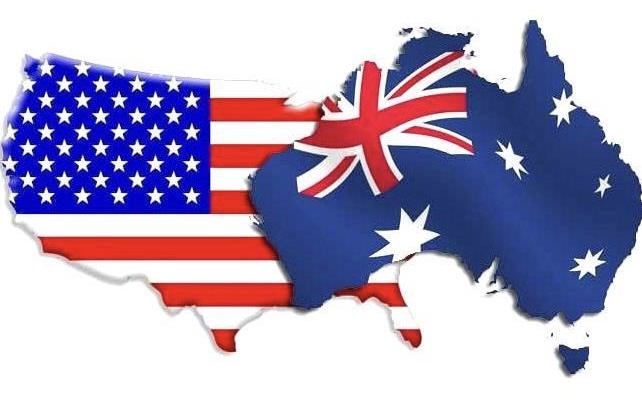
Australia: The Prize No One Talks About

There’s a story playing out on the world stage that barely makes a ripple in most media cycles. While the headlines fixate on Ukraine, Gaza, or Taiwan, an unspoken contest is quietly unfolding for influence over a country that has, for too long, been treated as a polite and distant cousin in global affairs: Australia.

We’re used to thinking of the United States as having eyes on Canada, economically, culturally, and strategically. The integration is old news: NORAD, pipelines, the world’s longest undefended border, and the quiet assumptions of shared destiny. But if you really want to understand the next chapter of global power politics, don’t look north. Look west. Look south. Look to Australia.

What’s emerging now is not a scramble for land or flags, but for strategic intimacy, a deep intertwining of interests, logistics, defense capabilities, and ideological alignment. Australia is the prize not because it’s weak, but because it’s vital: geographically, economically, and politically.

The American Pivot
The United States is already entrenched. Through AUKUS, it has committed to helping Australia build nuclear-powered submarines and integrate into the U.S. military-industrial supply chain. But this is more than just a defense pact. It’s about locking Australia into a security and technology architecture that positions it as a forward base for U.S. naval and cyber operations, a southern anchor against Chinese ambitions in the Indo-Pacific.

What few people understand is this: Australia is becoming America’s new front line. Not in the sense of war, but in the grand strategy of containment, deterrence, and projection. The U.S. doesn’t want Australia as a vassal, it wants it as a platform, a co-pilot, a bulwark. In many ways, it’s happening already.

India Enters the Frame
But Washington isn’t the only capital watching Canberra. New Delhi is quietly but deliberately courting Australia too, not for bases, but for bonds.

India sees Australia through a different lens: not as a strategic outpost, but as an extension of its civilizational, economic, and diasporic reach. With a large and growing Indian community in Australia, rising trade links, and joint naval exercises in the Indian Ocean, India’s interest is long-term and layered.

What India understands, and what many in the West overlook, is that Australia is a natural expansion point for a rising democratic Asia. It’s a source of energy, food, space, and credibility. In a world where climate instability and resource scarcity are redefining security, having Australia in your corner isn’t optional. It’s essential.

Why It Matters
This isn’t a turf war. It’s not a return to Cold War blocs. It’s more fluid than that, a web of influence where infrastructure, education, culture, and soft power matter just as much as tanks and treaties.

The real story is this: Australia is shifting from the periphery to the center of global strategic thought. It’s no longer just “down under.” It’s at the crossroads of the world’s most dynamic (and dangerous) geopolitical contest: the one unfolding across the Indo-Pacific.

And here’s the kicker: Australians are waking up to this. The era of benign non-alignment is over. The decisions they make in the next decade, about alliances, sovereignty, and identity — will echo far beyond their shores.

So the next time someone tells you it’s all about Europe or the South China Sea, remind them: The most consequential strategic competition of the 21st century might just be quietly unfolding in the sunburnt country; and it’s not just China who’s watching. The U.S. and India are, too. And they both want Australia in their future.