On Corners, Chaos, and the Curious Absence of Space

There are moments in modern football when the game appears to have outpaced its own laws. The corner kick, once a simple restart, has become one of those moments. In the contemporary Premier League, it is no longer merely a delivery into the box. It is a rehearsed collision.

The modern corner is defined less by the flight of the ball and more by the bodies that await it. Attackers arrive early, establish position, and, with increasing boldness, occupy the goalkeeper’s space. There is grappling, blocking, and the subtle art of standing precisely where a goalkeeper would prefer to move. By the time the ball is struck, the contest is already compromised.

Referees, operating under the laws set by the International Football Association Board, are asked to distinguish between legitimate physicality and unlawful interference. It is an impossible burden. What appears to one official as clever positioning appears to another as a foul. VAR, constrained by thresholds of clarity, has not resolved the ambiguity. The result is inconsistency, frustration, and a growing sense that the goalkeeper has become an unprotected participant in his own six-yard domain.

And yet, the solution may already exist, not in elite football, but in its humbler cousin.

The Small-Sided Clarity
In 5-a-side football, the “D” is inviolate. It belongs to the goalkeeper alone. Outfield players may approach it, circle it, and shoot toward it, but they may not enter. The effect is immediate and unmistakable. The goalkeeper operates in clear space. The chaos is removed not by subjective judgment, but by geometric certainty.

No referee is required to interpret a tangle of limbs. No attacker is permitted to establish a blocking position before the play unfolds. The contest, when it comes, is between the ball and the goalkeeper, not between the goalkeeper and a crowd.

It is, in its way, elegant.

The Six-Yard Box Proposal
It is here that a modest proposal suggests itself. At a corner kick in elite football, all outfield players, attacking and defending alike, would be required to remain outside the six-yard box until the ball is struck. The goalkeeper alone would be permitted to occupy that space.

The principle is not foreign to the game. At a penalty, players are held beyond the eighteen-yard line until the kick is taken. At free kicks, distance is enforced as a matter of routine. Football already understands the value of temporary spatial restriction in the service of fairness.

Why, then, does the corner remain exempt?

Such a rule would not abolish contest. It would merely delay it. Attackers could still make their runs, defenders could still track them, and the ball would still arrive into a contested area. What would disappear is the premeditated obstruction, the quiet pinning of the goalkeeper before the play has even begun.

The six-yard box would become, briefly, what it was always intended to be: a space for goalkeeping.

Consequences and Considerations
There would, of course, be objections. Coaches would argue that a legitimate avenue of attacking play had been curtailed. Set-piece specialists would lament the loss of carefully constructed routines. Traditionalists would mutter, as they always do, about the erosion of the game’s organic chaos.

But the counterargument is difficult to ignore. What is being removed is not skill, but exploitation. The current state of affairs rewards those who can most effectively interfere before the ball is in play. It is a loophole masquerading as tactics.

A six-yard exclusion would shift the emphasis back to timing, delivery, and aerial ability. It would privilege the moment of the kick, not the wrestling match that precedes it.

Enforcement, too, would be simpler than the current regime. Encroachment is visible. It is measurable. It requires no interpretation of intent, only observation of position. The referee’s task would be clarified rather than complicated.

A Return to First Principles
Football has always balanced freedom with structure. Too much of the former invites chaos; too much of the latter stifles the game’s spirit. The corner kick, in its present form, has tipped too far toward disorder, not in the play itself, but in the moments before it.

The lesson from 5-a-side is not that space must be rigidly controlled, but that certain spaces, at certain times, benefit from clarity. The goalkeeper’s domain, at the instant before a corner is delivered, may be one of those times.

The game need not be reinvented. It need only be reminded that fairness is often a matter of inches, and that sometimes, the simplest line on the pitch is the one that restores it.

🌍 Five Things We Learned This Week

📅 Saturday, March 8 → Friday, March 13, 2026


⚖️ 1. International Women’s Day Sparks Global Demonstrations

March 8 marked International Women’s Day, with marches, political rallies, and policy announcements across dozens of countries. Demonstrations focused on issues such as equal pay, reproductive rights, education access, and women’s political representation.

Why it matters:

  • One of the world’s largest annual civic mobilizations
  • Increasing pressure for gender-equity legislation
  • A major platform for labour and social justice campaigns

🏅 2. 2026 Winter Paralympics Begin in Italy

The Winter Paralympic Games officially opened in Milan and Cortina d’Ampezzo and entered their first full week of competition. More than 600 athletes from over 50 countries are competing in alpine skiing, para-hockey, biathlon, and other adaptive sports.

Why it matters:

  • One of the largest international adaptive-sport events
  • Growing global recognition of Paralympic athletes
  • Increasing investment in inclusive sport programs

🌌 3. Strong Solar Winds Trigger Northern Lights Displays

Fast solar winds from the Sun increased geomagnetic activity this week, producing bright aurora displays across northern regions of North America and Europe. Observers in parts of Canada and the northern United States reported strong viewing conditions.

Why it matters:

  • The Sun is approaching the peak of its 11-year solar cycle
  • Auroras may become more frequent in the coming year
  • Strong solar storms can affect satellites and power grids

🌍 4. Middle East War Continues to Disrupt Regional Air Travel

The ongoing conflict in the Middle East continued to disrupt aviation across the region this week, forcing airlines to reroute or cancel flights and operate reduced schedules. Major aviation hubs reported delays and reduced capacity as airlines avoided conflict zones.

Why it matters:

  • Major impact on global aviation routes
  • Energy markets and shipping lanes remain volatile
  • The conflict is now affecting international travel and logistics

❄️ 5. World Speed Skating Championships Conclude in the Netherlands

The World Allround Speed Skating Championships took place in Heerenveen, Netherlands, bringing together many of the world’s best skaters for a demanding multi-distance competition that determines the sport’s most complete athletes.

Why it matters:

  • One of the sport’s most prestigious annual championships
  • Key preparation for Olympic-level competition
  • Continues the Netherlands’ role as a global centre of speed skating

🌟 The Big Picture

The second week of March illustrated the diverse forces shaping the global moment: civic activism, international sport, space-weather phenomena, geopolitical conflict, and major cultural events all unfolding simultaneously across the planet.

Five Things We Learned This Week

📅 Saturday, February 28 → Friday, March 6, 2026


🧬 1. Breakthrough Alzheimer’s Therapy Shows Promising Trial Results

Researchers announced early results from a Phase 3 clinical trial of a new Alzheimer’s treatment, showing slowed cognitive decline in patients with early-stage disease. The drug targets beta-amyloid accumulation and could become the first major therapy to meaningfully alter disease progression.

Why it matters:

  • Could transform treatment for millions worldwide
  • Offers hope for early intervention strategies
  • Signals growing investment in neurodegenerative disease research

🌕 2. A Total Lunar “Blood Moon” Eclipse

A spectacular total lunar eclipse on March 3 turned the Moon a deep red color for viewers across North America, the Pacific region, and parts of Asia and Australia. The event occurs when Earth moves directly between the Sun and Moon, casting a shadow that filters sunlight through Earth’s atmosphere.

Why it matters:

  • First lunar eclipse of 2026
  • Visible across large parts of the world
  • Part of a broader series of eclipses occurring in 2025–2026

🚀 3. Artemis II Moon Mission Moves Toward Launch

NASA moved closer to launching Artemis II, the first crewed lunar mission since the Apollo era. The mission’s launch window opened March 6 and will send astronauts on a journey around the Moon and back to Earth.

Why it matters:

  • First humans to travel beyond low-Earth orbit in over 50 years
  • Includes a Canadian astronaut
  • A key step toward future lunar landings and eventual Mars missions

🏅 4. 2026 Winter Paralympics Open in Italy

The 2026 Winter Paralympic Games officially opened on March 6 with a ceremony in Verona, Italy. Athletes from dozens of countries will compete in alpine skiing, biathlon, para-hockey, and other events across northern Italy.

Why it matters:

  • Hundreds of athletes representing more than 50 countries
  • Growing global recognition of adaptive sport
  • Major international sporting event following the Winter Olympics

🌌 5. Solar Activity Sparks Northern Lights Displays

Strong solar activity produced geomagnetic storms that triggered vivid northern lights displays across parts of Canada and the northern United States. Some locations farther south than usual also reported aurora sightings.

Why it matters:

  • Solar activity is approaching the peak of its cycle
  • Auroras becoming more frequent and widespread
  • Space weather can affect satellites and power systems

🌟 The Big Picture

The first week of March highlighted a mix of breakthroughs in science and medicine, remarkable astronomical events, major sporting competitions, and natural phenomena, illustrating the wide-ranging forces shaping our world.

Big Mac’s Rant from the Armchair

By Big Mac, the OAP Blogger from Byker

Right then, pet, pull up a chair and stick kettle on, ‘cause Big Mac’s got summat to say about this lot in black an’ white.

Ah divvent care what any pundit on the telly says, man, this run of defeats from Newcastle United is nowt to dee wi’ tired legs, small squads, Mercury in retrograde, or the price of Greggs pasties. These lads are paid more in a week than ah got in forty year at the shipyard, and ah managed not to fall apart every time someone put pressure on us.

Up front, we’ve got all the menace of a wet digestive biscuit.

The ball goes oot wide, comes back in, nowt happens. Again. And again. It’s like watchin’ someone try to open a tin of beans with a spoon. There’s graft, aye, but absolutely nee progress. Striker’s stood there surrounded by defenders like he’s lost at Eldon Square on a Saturday. Midfield? Miles away. If they were any deeper they’d be in Sunderland.

And dinna get us started on creativity. Used to be we’d have lads stormin’ into the box like bargain hunters at a Boxing Day sale. Now it’s all polite, like they’re queuin’ for the post office.

Then yesterday against Everton, wor back four went from solid brick wall to soggy Rich Tea in about five minutes.

Full-backs both halfway to Whitley Bay when we lose the ball. Centre-halves lookin’ at each other like, “You gan, nah you gan,” while some Everton lad just strolls through the gap like he’s walkin’ his dog on the Town Moor. Defensive midfield screen? Missing. Probably stuck in traffic on the Tyne Bridge.

It was pure panic stations. Not organised panic like a fire drill. Proper kitchen-on-fire panic.

Pressing’s gone all to pot as well.

One lad charges in like an overexcited labrador, the rest stand off like they’ve just remembered they left the iron on. Opponents ping two passes and suddenly they’re in acres of space, and wor defence is backpedallin’ faster than me when ah accidentally liked a Facebook post from 2012.

That famous intensity? Looks less like controlled aggression and more like eight blokes chasin’ the same carrier bag doon Shields Road.

Confidence, mind, that’s the sneaky one.

Ye can see it. Extra touch here. Wrong pass there. Shot when they should pass, pass when they should leather it. It’s like they’re all tryin’ not to be the one who messes up, which of course guarantees somebody will.

Football’s a simple game made complicated by overthinkin’. And right now, this lot are thinkin’ so hard they could power the Metro.

But here’s the thing, pet.

This isn’t a bad team. Not even close. It’s a good engine runnin’ slightly out of tune. Timing off. Distances wrong. Press half a second late. Runs half a yard short. At this level, that’s the difference between lookin’ like world-beaters and lookin’ like you’ve accidentally wandered into the wrong five-a-side pitch.

Give them a spark, one scruffy win, one moment where the ball pings in off someone’s backside, and suddenly they’ll look like Brazil ‘70 again.

Until then, Big Mac will be here in his armchair, mutterin’ into his tea, shoutin’ at the telly, and wonderin’ why nobody ever just shoots when ah tell them to.

Because honestly, pet…

It’s not complicated.

Put ball in net.

Stop other lot puttin’ ball in net.

Try not to defend like you’ve just met each other in the car park.

Haway The Lads!

Small Nations, Shared Games: A Commonwealth Investment in the Future

For much of its modern history, the Commonwealth Games has drifted toward the logic of other mega-events: large cities, escalating costs, and a quiet assumption that only wealthy hosts need apply. Yet the Commonwealth itself is not a club of large powers. It is, numerically and culturally, a network dominated by small and developing states. Reimagining the Games so they are hosted by the smallest members, but financed collectively according to national GDP would not be charity. It would be strategic infrastructure policy disguised as sport.

Such a model would transform the Games from a periodic spectacle into a rotating development engine, deliberately directed toward places where capital investment produces the greatest long-term return.

Infrastructure Where It Matters Most
Small Commonwealth countries often face the same structural constraints: limited transport networks, fragile energy systems, housing shortages, and vulnerability to climate shocks. These are not failures of governance so much as arithmetic. When a nation of a few hundred thousand people must finance major infrastructure alone, projects either stall or never begin.

A GDP-weighted funding model would change that equation. Large economies such as CanadaAustraliaUnited Kingdom, and India could contribute proportionally without significant domestic strain, while host nations gain assets that would otherwise take generations to afford.

Crucially, these investments would not need to be limited to stadiums. Modern Games planning increasingly integrates:
• Airport and port expansion
• Renewable energy grids
• Water and sanitation upgrades
• Telecommunications networks
• Public transit
• Resilient housing

In developing contexts, these are not ancillary benefits. They are transformational foundations for economic growth.

Tourism as a Permanent Industry, Not a Seasonal Gamble
For many small states, tourism is already the primary economic engine. Hosting the Games would accelerate that sector by compressing decades of branding and infrastructure development into a single cycle.

Consider nations such as BarbadosMalta, or Seychelles. Global exposure from a major sporting event can reposition a country from niche destination to household name. Improved airports, hotels, and transport systems continue generating revenue long after the closing ceremony.

Unlike industrial mega-projects, tourism infrastructure scales naturally to local economies. A new terminal, cruise port, or transit corridor does not become obsolete. It becomes the backbone of a sustainable service economy.

Climate Resilience Disguised as Event Planning
Many of the Commonwealth’s smallest members sit on the front lines of climate change. Sea-level rise, stronger storms, and water insecurity are existential threats. Yet climate adaptation projects are expensive and often struggle to secure financing.

A collectively funded Games could prioritize resilient design as a requirement rather than an afterthought:
• Elevated and storm-resistant construction
• Microgrids powered by renewables
• Flood-resistant transport corridors
• Emergency response infrastructure
• Water security systems

In effect, the Commonwealth would be financing survival infrastructure under the politically palatable banner of sport.

Ending the Prestige Arms Race
Large hosts often overspend to signal global status, producing stadiums that struggle to find post-event uses. Small states cannot afford that kind of extravagance. Their constraints encourage practicality.

Facilities would likely be:
• Modular or temporary
• Scaled to local demand
• Designed for schools and community use
• Integrated into existing urban plans

The result could be the most sustainable version of a mega-event yet attempted, precisely because the host nation lacks the capacity for waste.

A More Meaningful Commonwealth
The Commonwealth frequently struggles to define its contemporary purpose beyond historical ties. A shared funding model for the Games would provide a concrete expression of mutual responsibility.

Citizens in wealthier countries would see tangible outcomes from their contributions: functioning infrastructure, stable partners, and strengthened trade relationships. Smaller nations would experience membership as materially beneficial rather than symbolic.

This is not altruism alone. Stability in vulnerable regions reduces migration pressures, disaster response costs, and geopolitical volatility. Development is cheaper than crisis management.

A Distributed Model for the Future
Logistical challenges are real, but not insurmountable. Events could be distributed across neighboring islands or regions, supported by temporary accommodations such as cruise ships and regional transport networks. Modern broadcasting reduces the need for centralized mega-venues, allowing the Games to function as a multi-site festival rather than a single urban takeover.

Such flexibility aligns with the geography of many small Commonwealth states, particularly in the Caribbean and Pacific.

Strategic Optimism
A Commonwealth Games hosted by its smallest members and funded by all according to capacity would represent a quiet, but profound shift in global thinking. It would suggest that international gatherings need not be competitions for prestige but opportunities for targeted development.

The return on investment would be measured not in medal tables but in decades of improved mobility, energy security, tourism revenue, and climate resilience.

In a world where large institutions often struggle to demonstrate relevance, this model would do something radical: it would build things that last, in places that need them most.

And in doing so, the Commonwealth would rediscover a purpose suited not to its past, but to its future.

Prince Edward County’s For Sale Signs

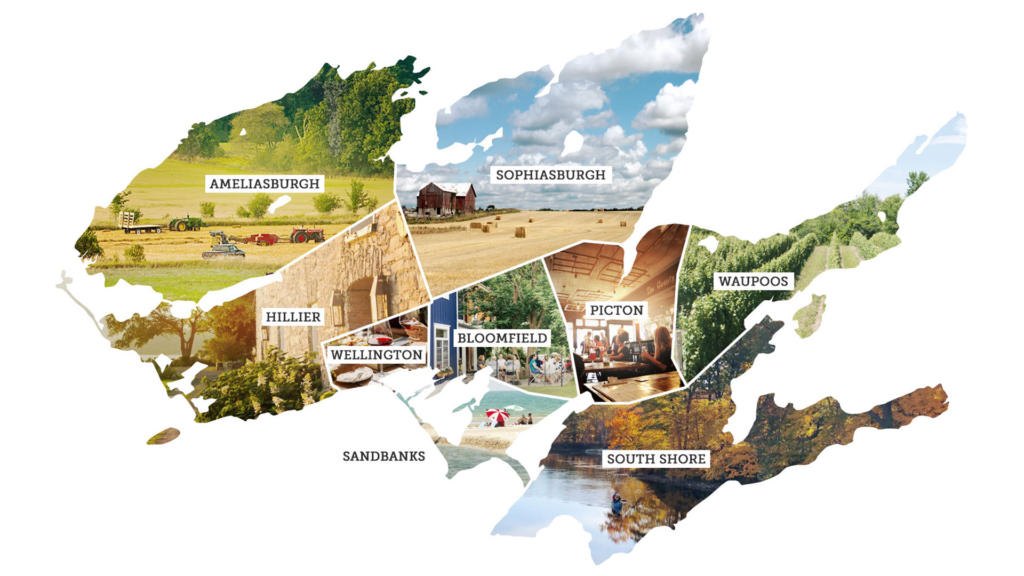
In Prince Edward County, the sudden cluster of “for sale” signs hanging on winery gates and brewery fences is not coincidence. It is the visible edge of a structural shift. What was once Ontario’s most romanticized craft-beverage frontier is entering its consolidation phase.

For two decades, the County was a story of pioneers. Thin limestone soils, lake-tempered winds and stubborn optimism produced a generation of estate wineries in Hillier, small-batch cider houses in Waupoos and farmhouse breweries tucked behind century barns. Many were founded between the early 2000s and mid-2010s. They were not built as scalable industrial operations. They were built as passion projects with hospitality rooms attached.

Now those founders are aging. Succession planning in lifestyle agriculture is notoriously weak. Children often pursued careers elsewhere. Managers were rarely given equity. The result is predictable: retirement without a natural buyer inside the tent.

But demographics alone do not explain the volume of listings.

Margins have tightened dramatically. Vineyard agriculture in the County is capital-intensive and climate-exposed. Vines take years to mature. Winter kill remains a risk. Labour costs have risen. Packaging, especially aluminum cans and glass, has been volatile and more expensive. Energy costs for fermentation and climate control have climbed. Insurance premiums have followed suit. A small producer making 5,000 to 20,000 cases annually does not have the purchasing leverage of a multinational brand.

Retail evolution adds another layer. Ontario’s beverage market has been liberalizing beyond the historic dominance of the Liquor Control Board of Ontario. On paper, more outlets should help local producers. In practice, broader distribution means competing on shelf space against scaled domestic brands and global imports with marketing budgets County operators cannot match. Boutique wineries built around cellar-door experiences now face a world that rewards consistent volume and supply chain reliability.

Tourism volatility compounds the stress. Prince Edward County’s beverage economy is profoundly seasonal. July and August can carry an entire year. A cool spring, wildfire smoke, a soft tourism season, or simply consumer belt-tightening can erase projected profits. Fixed costs do not shrink when weekend traffic does.

Land values further distort the equation. The County is no longer simply farmland. It is lifestyle real estate within reach of Toronto and Ottawa buyers. In areas like Hillier and Waupoos, vineyard acreage carries speculative value unrelated to grape yield. Owners approaching retirement can often extract more certainty by selling land and brand assets than by enduring another decade of climate risk and thin margins.

The recent spike in Ontario-focused buying following the removal of U.S. products from LCBO shelves created a short-term lift for local wine. Yet macro tailwinds do not erase micro fragility. Increased demand benefits those positioned to supply at scale. It does not automatically rescue a 15-acre estate winery with aging equipment and limited distribution.

There is also market saturation. Prince Edward County’s brand became its own magnet. Success attracted entrants. Tasting rooms multiplied. Craft beer, cider and wine competed not only with imports but with one another within a geographically tight region. Weekend tourism dollars are finite. Too many taprooms chasing the same visitor inevitably compresses revenue per operator.

None of this suggests collapse. It signals maturation. Every emerging wine region passes through romance, expansion, strain and consolidation. The County is entering the phase where well-capitalized buyers, regional consolidators and hospitality groups acquire established brands and infrastructure at more rational valuations.

For observers, the current listings are less a crisis than a transition. The era of founder-driven artisanal sprawl is giving way to professionalized, capital-structured ownership. Prince Edward County’s limestone soils are not going anywhere. The question is not whether wine, beer and cider will continue there. The question is who will own the next chapter, and at what scale.

The for-sale signs are not a verdict. They are the punctuation mark between one generation’s dream and the next generation’s balance sheet.

Five Things We Learned This Week

📅 February 7 – February 13, 2026


🛡️ 1. Europe Signals a Historic Security Shift

At the Munich Security Conference, European leaders openly discussed preparing for a world where U.S. protection may no longer be guaranteed 🇪🇺⚔️.

  • Greater European military autonomy
  • Expanded defense spending
  • Discussion of relying on France’s nuclear deterrent

The tone was stark: leaders warned that the post-Cold War security framework may be fading. This points toward a long-term restructuring of global power relationships.


✈️ 2. Italy Moves to Ban Strikes During the Winter Olympics

With millions expected to travel for the Milano-Cortina Winter Games, Italy announced emergency measures to prevent airport shutdowns 🚫✈️.

  • Planned labor strikes threatened major disruption
  • Government intervention to suspend airport walkouts
  • Security concerns following prior transport incidents

Hosting the Olympics often leads governments to prioritize uninterrupted transport and security over normal labor actions.


🎭 3. Massive Indian Cultural Festival in Kuwait

More than 700 performers showcased Indian heritage at a major open-air festival on Kuwait’s Green Island 🇮🇳🎶.

  • Traditional dance and music performances
  • Food, crafts, and cultural exhibits
  • Strong participation from expatriate communities
  • Free public access

The event highlighted the growing influence of diaspora communities and cultural diplomacy in the Gulf region.


🛰️ 4. Drone Strikes Target Ukrainian Infrastructure

Large-scale Russian drone attacks struck energy facilities and port infrastructure, particularly around Odesa ⚡🚁.

  • Damage to power systems
  • Economic disruption
  • Pressure on export routes
  • Ongoing humanitarian risks

The conflict continues to shape global security, energy markets, and political alignment across Europe.


🪐 5. Saturn Enters Aries — A Cultural Moment

Saturn’s transition into Aries generated widespread global attention in astrology circles 🔮✨.

  • Last occurred in the late 1990s
  • Interpreted as a period of accountability and upheaval
  • Major engagement across social media and popular culture

Regardless of scientific validity, such symbolic narratives often reflect public mood and influence social discourse.


🌟 Weekly Takeaway

This week revealed structural shifts rather than a single dominant headline — evolving security alliances, governments prioritizing mega-events, ongoing war impacts, expanding cultural globalization, and a search for meaning in uncertain times.

The EPL Profit and Sustainability Trap

🏟️ Why England’s richest league needs a fairer way to grow everyone, not just the elite

Few leagues on Earth stir as much emotion as the English Premier League. From the roar of St James’ Park to night matches at Anfield and Old Trafford, the drama is as much about identity and history as it is about trophies. Yet beneath the surface of titles and television deals lies a less visible but equally powerful force shaping outcomes: financial regulation.

For years, fans have watched ambitious clubs, including Newcastle United, invest in their squads and attempt to climb the competitive ladder, only to find themselves constrained by rules that were never designed to equalize opportunity. At the same time, the unresolved Manchester City case has exposed how unclear regulations and uneven enforcement undermine trust in the system itself.

📉 What the Profit and Sustainability Rules Were Meant to Do

The Premier League’s Profit and Sustainability Rules were introduced to prevent clubs from spending themselves into financial ruin. English football has lived through administrations, fire sales, and collapsed clubs, and the instinct to prevent that chaos is understandable.

However, PSR focuses narrowly on accounting losses rather than competitive reality. Clubs are limited in how much they can lose over a rolling period, regardless of their ownership structure or growth phase. The problem is that football success is not driven by losses but by proportional investment.

A club with enormous global revenues can spend aggressively while remaining compliant. A club with a smaller commercial base but ambitious ownership is punished for trying to close the gap. In effect, the rules freeze historical advantage into place.

🏰 The Structural Advantage of the Big Six

The so-called Big Six are not simply better-run football clubs. They benefit from decades of accumulated advantages: global fanbases, commercial partnerships, repeated European qualification, and media exposure that reinforces all of the above.

PSR does nothing to counter this structural reality. Instead, it reinforces it. Clubs outside the elite are expected to grow revenue first, but revenue growth in football usually follows success, not the other way around. This circular logic ensures that the top stay on top.

⚠️ Manchester City and the Crisis of Enforcement

The prolonged Manchester City case highlights a second, equally damaging flaw. When rules are vague, poorly drafted, or legally fragile, enforcement becomes slow, inconsistent, or impossible.

Regardless of one’s view on City’s guilt or innocence, the lesson is clear. A regulatory framework that collapses under legal challenge is not fit for purpose. Fans lose faith when some clubs appear untouchable, while others face swift punishment.

🛠️ A Fairer and More Logical Alternative

If the Premier League genuinely wants sustainability without entrenching inequality, reform must be structural rather than cosmetic. A fair system could rest on four simple principles.

📊 1. Revenue-Based Squad Spending Limits

Instead of limiting losses, total football expenditure should be capped as a percentage of audited revenue. For example, wages and transfer amortisation combined could be limited to seventy percent of revenue.

This scales naturally. Bigger clubs can still spend more, but only in proportion to what they actually generate. Ambitious clubs are encouraged to grow income, not suppress investment.

💰 2. Progressive Revenue Distribution

Broadcast income should be distributed more progressively. Lower-table clubs should receive higher proportional shares, while clubs qualifying for European competition receive less domestic redistribution.

This does not punish success. It recognises that competitive leagues require genuine upward mobility.

🔍 3. Clear, Enforceable Rules

Financial regulations must be written in plain language, legally robust, and enforceable within defined timelines. If clubs are to be held accountable, the rules must survive scrutiny.

🏗️ 4. Incentives for Long-Term Investment

Clubs that invest in academies, infrastructure, and homegrown players should receive regulatory credits. These investments strengthen English football as a whole and reduce reliance on short-term transfer inflation.

🏁 Conclusion: Sustainability Should Not Mean Stagnation

The current system treats financial losses as the problem while ignoring structural inequality as the cause. A fairer framework would reward real growth, allow ambition within limits, and apply rules consistently to all.

For Newcastle supporters and fans of every club outside the traditional elite, fairness does not mean guaranteed success. It means a league where intelligent management, strategic investment, and long-term planning are allowed to compete with inherited advantage.

Football thrives on hope. Regulation should protect that hope, not quietly legislate it out of existence.

Five Things We Learned This Week

Date: February 7, 2026
Range: Saturday to Friday


1️⃣ 🌎 New START Treaty Expires

The New START nuclear arms reduction treaty between the United States and Russia officially expired this week, ending the last remaining bilateral limits on strategic nuclear arsenals. Analysts warned the lapse increases global security uncertainty and complicates future arms-control negotiations.

2️⃣ 🕊️ Rafah Crossing Reopens for Humanitarian Access

The Rafah border crossing between Gaza and Egypt reopened on a limited basis, allowing humanitarian aid deliveries and medical evacuations. The move comes amid a fragile ceasefire, with international agencies stressing the ongoing risks facing civilians.

3️⃣ 🌍 Extreme Weather Strains Infrastructure Worldwide

Severe floods, storms, and temperature extremes affected multiple regions this week, damaging infrastructure and overwhelming emergency services. Colombia reported major flooding and bridge collapses, while Europe and North America faced related climate-driven disruptions.

4️⃣ 🦴 Rare Dinosaur Discovery Advances Science

Paleontologists announced the discovery of a new dinosaur species preserved with exceptional detail, including cellular-level skin structures. The find offers new insight into Cretaceous-era ecosystems and the evolution of large herbivorous dinosaurs.

5️⃣ ❄️ Winter Olympics Open in Italy

The 2026 Winter Olympic Games officially opened in Milan and Cortina d’Ampezzo, featuring a large-scale ceremony celebrating Italian culture and international cooperation. Nearly 3,000 athletes from more than 90 countries are competing across winter sports disciplines.


📌 Notable Context From the Week

  • ☢️ Humanitarian agencies warned of worsening conditions in parts of the Sahel and West Africa.
  • 🏗️ Major infrastructure and climate-related funding commitments featured in several national budgets.
  • 🌐 Diplomatic efforts continued globally amid rising geopolitical and environmental pressures.

Ontario’s Blue Cheeses and the Discipline of Restraint

Ontario’s blue cheeses occupy a distinctive place within Canada’s dairy landscape. They do not dominate by volume, nor do they pursue the extremity that often defines international blue-cheese prestige. Instead, Ontario producers have developed a reputation for restraint, balance, and technical discipline. In a category often tempted by pungency for its own sake, Ontario blues tend to privilege structure and repeatability. That choice has quietly earned them national and international respect.

At the centre of this story is Celtic Blue Reserve, produced by Glengarry Fine Cheese in eastern Ontario. It is widely regarded as the province’s flagship blue and, by extension, one of the most important cheeses ever produced in Canada. Its recognition as Best in Show at the American Cheese Society competition was not a novelty outcome but a validation of method. The cheese combines dense, creamy paste with assertive but measured blue veining. Salt, tang, and cultured sweetness remain in equilibrium. Nothing dominates, and nothing feels unfinished. It is a blue cheese built for confidence rather than shock.

The success of the Reserve rests on foundations laid by the original Celtic Blue, which remains a mainstay on Ontario cheese boards. This earlier expression is milder, softer, and intentionally accessible. Its importance lies not in awards but in function. It established that Ontario blues could invite rather than challenge the eater. In doing so, it broadened the audience for blue cheese within the province and created space for more ambitious expressions to follow.

Ontario’s blue-cheese identity is not confined to a single producer. Krüger Blue, made with Guernsey milk in eastern Ontario, represents a more rustic and assertive branch of the same tradition. Richer milk brings deeper colour and a more aromatic profile, with flavours that lean toward earth and cellar rather than cream and butter. Its recognition at the World Cheese Awards signals that Ontario blues can scale intensity without losing composure.

Sheep’s-milk blues such as Highland Blue further complicate the picture. These cheeses tend to display layered flavours, faint spice, and a denser mouthfeel. They appeal to experienced blue-cheese drinkers looking for depth rather than familiarity. Their presence matters because it shows that Ontario producers are not confined to a single style, even if balance remains the common thread.

Acknowledging this does not require diminishing the achievements of other provinces. Quebec’s monastic blues bring historical continuity and spiritual craft. British Columbia’s brie-style blues explore lushness and surface-ripened elegance. Yet Ontario’s contribution is different. It is less about inheritance or stylistic flourish and more about calibration. Ontario blues succeed because they are engineered carefully, aged deliberately, and released only when the elements align.

The defining characteristic of Ontario blue cheese is therefore not boldness, but control. These are cheeses designed to be eaten often rather than remembered once. They sit comfortably on the table, return well to the palate, and reward familiarity. In a category that often celebrates excess, Ontario has chosen discipline, and the results speak quietly but persuasively for themselves.

Sources:
Glengarry Fine Cheese Company. Celtic Blue and Celtic Blue Reserve Product Information and Awards.
https://glengarrycheese.ca
American Cheese Society. Award Winners Archive.
https://www.cheesesociety.org
World Cheese Awards. Medal Winners Database.
https://worldcheeseawards.com
Lakeview Cheese Galore. Ontario Artisan Blue Cheese Listings and Producer Notes.
https://lakeviewcheesegalore.ca
TasteAtlas. Best Rated Blue Cheeses in Canada.
https://www.tasteatlas.com/best-rated-blue-cheeses-in-canada