
I was recently chatting with my youngest brother, who lives in a NE England coastal town, and he asked about Justin Trudeau’s resignation, and what was going to happen next. A Tory at heart, my sibling’s instincts are those of hard work, community service and fewer taxes. We started to discuss “the next pandemic” and what could be done about the financial stress many people suffered during the COVID-19 event, and I mentioned Universal Basic Income (UBI) as a possible solution and long term game changer. He had never heard of UBI, and so I thought it was time for this post. This one’s for you, Bro!
Universal Basic Income (UBI) represents one of the most transformative policy ideas of our time, offering a practical solution to poverty, inequality, and the economic challenges of the 21st century. More than just a tool to address immediate financial hardship, UBI is a blueprint for fostering fairness, stability, and shared prosperity.
At its core, UBI guarantees every citizen a regular, unconditional income, free from the inefficiencies and stigmatization of traditional welfare systems. This simple, yet revolutionary concept ensures that no one is left without the means to secure basic necessities such as food, housing, and healthcare. UBI lifts individuals out of poverty, empowering them to make choices that improve their well-being and build resilience against life’s uncertainties.
A Revenue-Neutral Model for UBI
Critics often argue that UBI is financially unsustainable, but innovative approaches like those proposed by UBI Works demonstrate that it can be funded in a revenue-neutral way. The UBI Works model suggests targeted taxation on sectors and activities that can contribute more to public welfare without burdening the average taxpayer. For example, the proposal includes a 4% tax on profits and a 3% tax on remuneration within the financial sector—an industry that benefits significantly from economic activities.

Additionally, UBI Works advocates for closing tax loopholes and tackling tax evasion, ensuring corporations and wealthy individuals contribute their fair share. This model not only provides a sustainable funding mechanism for UBI, but also reinforces principles of fairness in the tax system.
Stimulating Economic Growth and Jobs
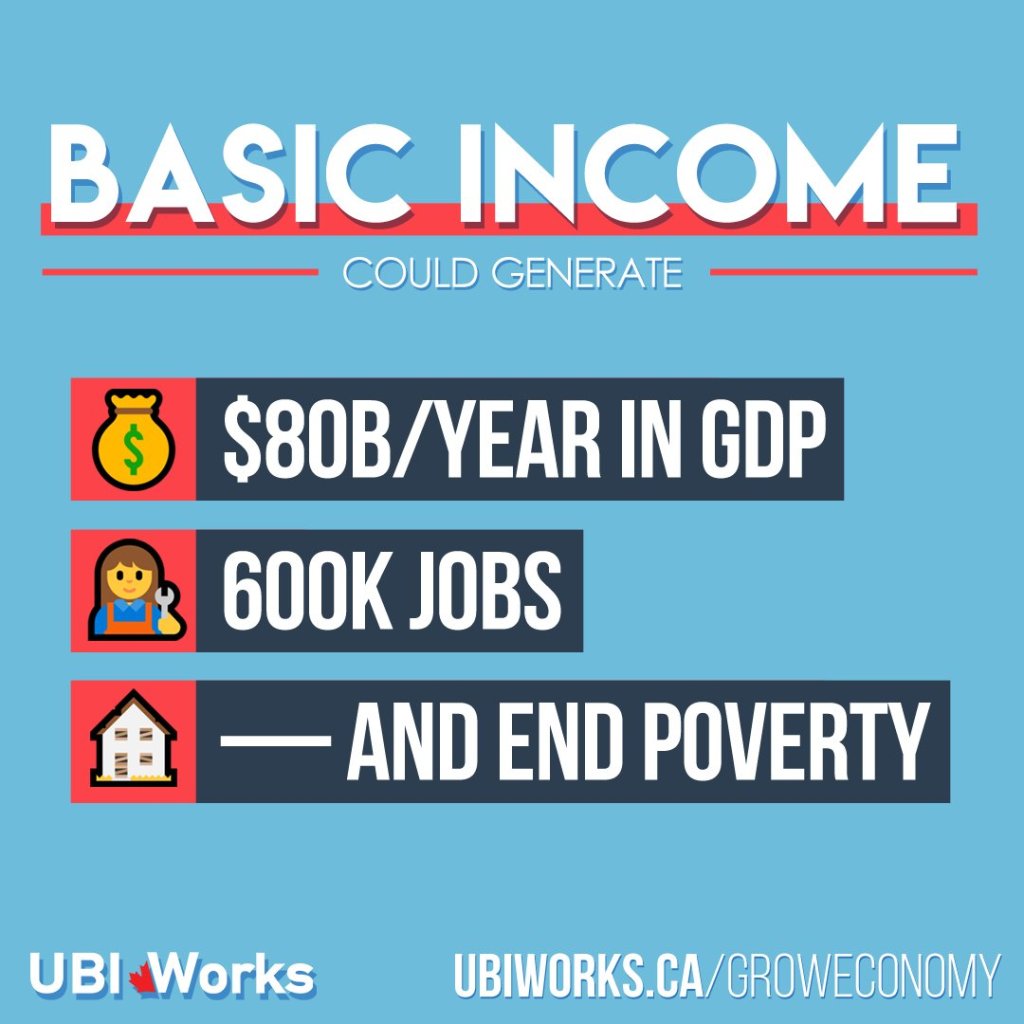
From a supply-and-demand perspective, UBI has the potential to be an economic game-changer. By boosting consumer purchasing power, UBI drives demand for goods and services, spurring business growth and job creation. Research by the Canadian Centre for Economic Analysis projects that a UBI program in Canada could grow the economy by $80 billion annually and add 600,000 jobs, all while eliminating poverty nationwide.
On the supply side, UBI offers workers the flexibility to pursue education, training, or entrepreneurial ventures, aligning their skills with roles they are passionate about rather than accepting exploitative or mismatched jobs out of financial desperation. This not only improves individual well-being but also enhances productivity across the economy.
A Tool for Equity and Resilience
As technological disruption, automation, and globalization continue to reshape labor markets, UBI provides a much-needed safety net. It equips individuals to navigate a rapidly changing economic landscape, enabling them to invest in themselves without the constant fear of financial ruin. At the same time, UBI reduces income inequality and promotes social cohesion by narrowing the wealth gap and fostering a more equitable distribution of resources.
Critically, UBI shifts the focus from reactive welfare systems to proactive empowerment. It eliminates the stigma and inefficiencies of means-tested programs while ensuring everyone benefits from a guaranteed income floor. This universal approach builds trust and unity within society, creating a stronger, more inclusive social fabric.
A Bold Vision for the Future
Universal Basic Income is more than an economic policy—it’s a statement of values. It asserts that every individual, regardless of circumstance, deserves dignity, security, and opportunity. By adopting a revenue-neutral model, UBI proves that fairness and sustainability can go hand in hand.
As the world grapples with inequality, economic volatility, and the social challenges of the 21st century, UBI offers a bold yet practical solution. It envisions a future where poverty is eliminated, opportunity is universal, and every citizen has the means to lead a secure and fulfilling life. UBI is not just a policy—it’s a pathway to a just and prosperous society.
 The Rowanwood Chronicles