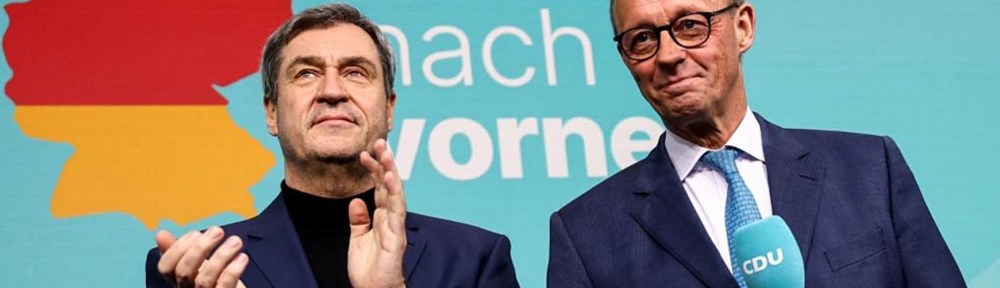
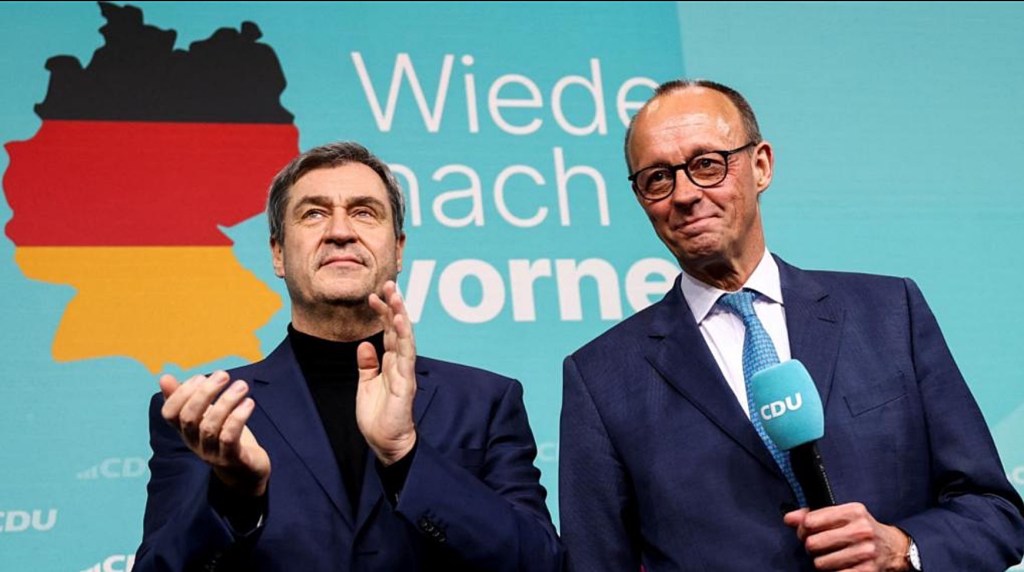
Germany’s federal election has sent ripples across Europe, highlighting both the challenges and the resilience of the continent’s democratic institutions. In a tightly contested race, the conservative CDU/CSU, led by Friedrich Merz, secured a narrow victory, while the far-right Alternative für Deutschland (AfD) achieved its most significant post-war result, gaining nearly 19.5% of the vote. This outcome underscores a growing political divide in Germany, but also reaffirms the enduring strength of its democratic processes. Despite fears of radicalism, mainstream parties have reaffirmed their commitment to upholding democratic norms, with Merz explicitly ruling out any coalition with the AfD.
The election was precipitated by the collapse of Chancellor Olaf Scholz’s coalition government, a victim of economic stagnation and internal disputes. While the Social Democrats (SPD) suffered their worst post-war result, the stability of Germany’s institutions ensures that the country remains a pillar of the European project. The transition to new leadership will undoubtedly come with challenges, but Germany’s role as a leading economic and political force within the EU remains unshaken.
Far-right rhetoric has gained traction in some regions, fueled by concerns over immigration and economic uncertainty. However, this trend is counterbalanced by the resilience of the European Union itself. The EU has repeatedly demonstrated its ability to navigate political turbulence among member states, acting as a stabilizing force that prioritizes economic strength, security, and democratic governance. The Franco-German alliance, while facing strains, remains central to European cohesion, and President Emmanuel Macron has been vocal about the need for stronger European integration to counter populist forces.
Transatlantic relations add another layer of complexity to the European political landscape. The return of Donald Trump to the White House has introduced unpredictability, particularly regarding U.S. support for Ukraine and potential economic policy shifts that could impact European markets. However, rather than weakening the EU, these external pressures have only reinforced the bloc’s determination to assert its independence on key issues such as defense, energy, and trade. Macron and other European leaders have continued to push for greater strategic autonomy, ensuring that Europe is not overly reliant on shifting U.S. policies.
Europe’s path to stability lies in its ability to reinforce its institutions, deepen cooperation among member states, and address the root causes of public discontent. By strengthening the European Commission’s role in economic planning, expanding security initiatives such as PESCO (Permanent Structured Cooperation), and implementing policies that promote inclusive economic growth, the EU can effectively counter the rise of extremism and maintain its position as a global leader in democratic governance.
Update
Since writing this piece, Friedrich Merz has spoken about a stronger, integrated EU, that can look after itself without assistance from the USA, and the possibility of exploring a European Defence Force outside of NATO.
 The Rowanwood Chronicles