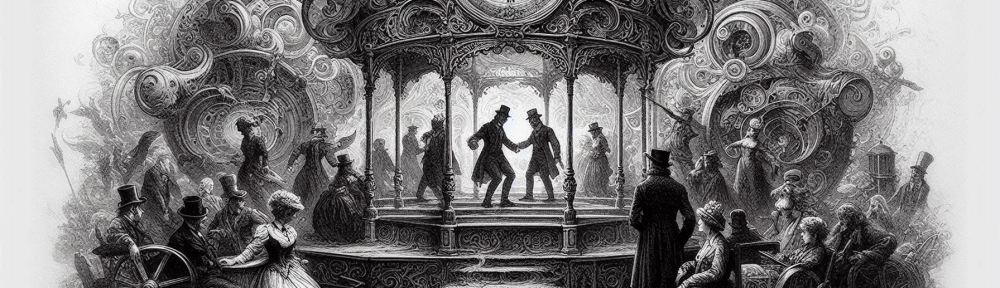
If time were to happen all at once – where past, present, and future coexisted simultaneously – it would upend our understanding of reality, causality, and even consciousness itself. Our perception of time as a flowing sequence of events is deeply ingrained in both our experience and our scientific models, but what if that flow was an illusion? What if every moment simply existed, with no distinction between before and after?
One of the most immediate consequences of such a reality would be the breakdown of cause and effect. Our world operates on the principle that actions have consequences, that the past influences the present, which in turn shapes the future. If time were simultaneous, there would be no before or after – everything would simply be. In such a reality, would it even make sense to speak of events “happening”? Without sequence, there is no causality, and without causality, the entire structure of our decision-making and agency becomes questionable. Could free will exist in a reality where all choices have already unfolded in every possible way?
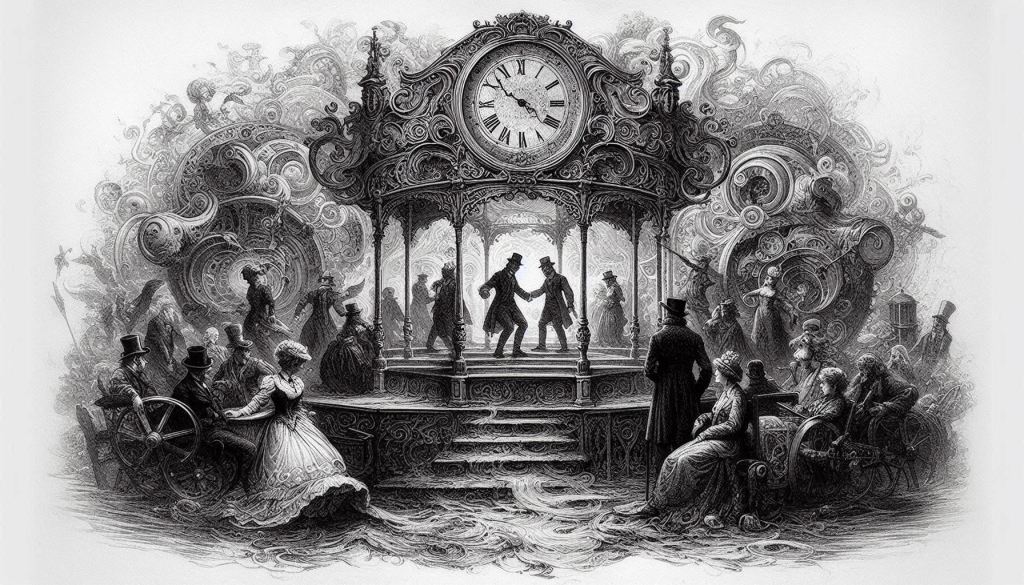
Our perception of time is not just a philosophical construct, but a deeply embedded feature of human consciousness. We process the world sequentially because our brains are wired to do so. If time were happening all at once, would we experience our entire lives simultaneously? Would we be both a newborn and an elderly person at the same time, fully aware of every moment we have ever lived? If that were the case, then identity itself might become meaningless, dissolving into an incomprehensible blur of every possible experience. Alternatively, it is possible that our consciousness would still only access one “slice” at a time, navigating an eternal landscape without truly perceiving its timeless nature.
This idea is not entirely foreign to physics. The “block universe” model in relativity suggests that time is a fixed, four-dimensional structure where the past, present, and future all exist equally. In this view, time does not “flow”; rather, it is a static dimension much like space, with our perception of movement through it being an emergent phenomenon. If this were true, the notion of “now” would be subjective, merely a point of reference chosen by an observer rather than a fundamental feature of the universe. This model sounds similar to how the fictional wormhole aliens in Star Trek: Deep Space 9 live, as they have no understanding of linear time, and the concept of consequences.
Another major implication of a timeless reality is how it would affect the laws of physics themselves. Much of modern science relies on the assumption that time allows for entropy, the increase of disorder in a system. This principle explains why we remember the past but not the future and why systems evolve rather than remaining frozen in place. If time did not progress, but instead existed as a complete whole, then entropy might be an illusion, or at the very least, an incomplete way of understanding change. Could it be that what we perceive as time’s passage is simply our consciousness moving through an already-existent structure?
If time truly happened all at once, it would redefine the very nature of reality. Perhaps we are already living in such a universe but are unable to perceive its full nature due to the limitations of human cognition. What we call “the present” might just be a thin veil over a vast, timeless structure, one that we are only beginning to understand.
 The Rowanwood Chronicles