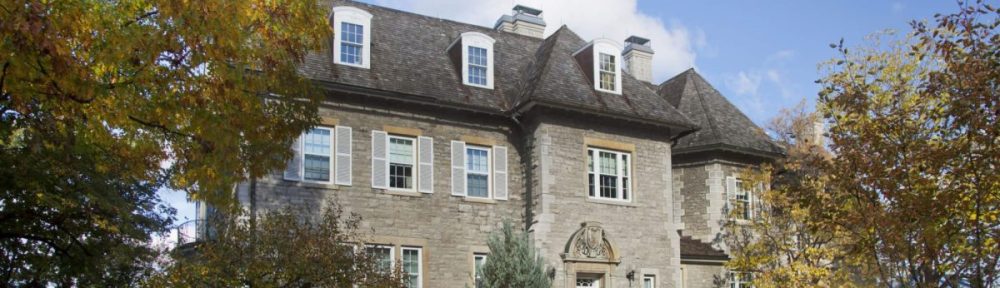
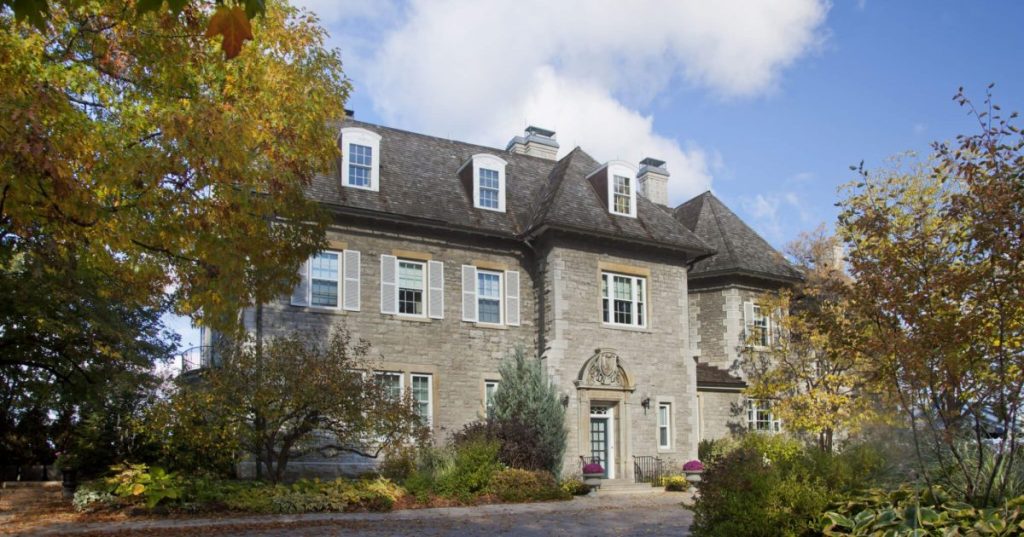
For nearly a decade, 24 Sussex Drive has sat in dignified decay; its halls silent, its windows dark. Once the official residence of Canada’s Prime Ministers, it has become a symbol not of leadership, but of limbo. The questions of what to do with 24 Sussex, renovate, rebuild, repurpose, have lingered without resolution, weighed down by political caution and public ambivalence. But perhaps we’ve been asking the wrong question. Instead of struggling to salvage a mid-century home with outdated systems and looming asbestos, it’s time we recognized that this moment calls for vision, not nostalgia. Canada deserves not only a new residence for its Prime Minister, but a bold reimagining of what leadership looks like, and where it lives.
Imagine this, a purpose-built complex that serves as both the official residence and the working headquarters of the Prime Minister of Canada, located on the sprawling grounds of Rideau Hall. This would not be a fortress, nor a vanity project. It would be a national institution, designed for transparency, diplomacy, and sustainability. It would reflect not just the occupant of the office, but the country they serve. Here is a rare opportunity to commission a project that shows the world who we are: a country of bold ideas, architectural excellence, Indigenous respect, recognition of the provinces and territories, and ecological consciousness.
Placing the Prime Minister’s residence and office at Rideau Hall makes both symbolic and logistical sense. It is already the site of Canada’s vice-regal presence and home to state ceremonies, visiting dignitaries, and national celebrations. Integrating the Prime Minister’s quarters into this historic landscape would bring coherence to the ceremonial heart of the nation. It would also enhance security, reduce inefficiencies, and allow for shared infrastructure between the Governor General’s operations and the Prime Minister’s Office. More than that, it would physically express Canada’s model of constitutional democracy: a Prime Minister, not as a distant executive, but as a visible, engaged steward of public trust.
This would be no private enclave. The new complex could feature public spaces: gardens, galleries, viewing areas, where Canadians and visitors could witness history in the making. Designed through an open national competition, the project would draw upon the talents of Canadian architects, builders, and artists. It would foreground Indigenous perspectives, perhaps through partnerships with First Nations designers and knowledge keepers, making reconciliation a structural and aesthetic principle. It could be built to the highest environmental standards, net-zero energy, carbon neutral, and climate resilient, setting a global benchmark for how democratic institutions can lead by example in a warming world.
As for 24 Sussex, it too deserves a future, not as a personal residence, but as a public place. Rather than disappearing behind construction tarps or bureaucratic indecision, it could be reborn as The Museum of Canadian Prime Ministers. There, the lives and legacies of the country’s leaders, visionary and flawed alike, could be explored with nuance and depth. Imagine rooms restored to reflect different eras, immersive exhibits about the crises and triumphs that unfolded within its walls, and interactive installations that encourage civic learning and debate. It would be a museum not of personalities alone, but of ideas and institutions, a place where Canadians could come to better understand the machinery of government, and their role in shaping it.
The cost of doing nothing is not zero. Every year we stall, the price of restoring 24 Sussex climbs, while the image of our national leadership suffers from association with crumbling plaster and political fearfulness. This isn’t about extravagance. It’s about pride, coherence, and nation-building. Other countries, Australia, Germany, the Nordic nations, have constructed modern official residences that reflect their identity and values. Canada can and should do the same.
We’re standing at the threshold of a generational opportunity. Let’s stop asking whether we can afford to build something worthy of our Prime Minister, and start asking what kind of country we want to present, to ourselves and the world. A new residence and office at Rideau Hall, paired with a museum at 24 Sussex, would tell a story of continuity and progress, of humility and ambition. It would turn a political liability into a cultural legacy. And it would say, without apology: this is Canada, and this is what we stand for.
 The Rowanwood Chronicles