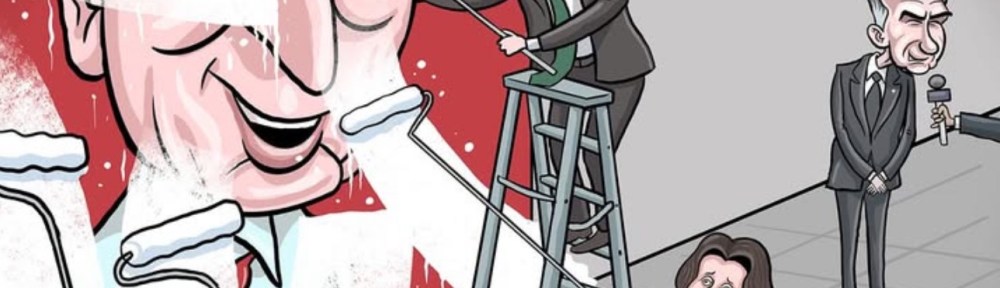
Now that Mark Carney has won the 2025 federal election, and as Prime Minister, named his new cabinet, his ability to navigate the internal politics of the Liberal Party will be just as crucial as his capacity to govern the country. While Carney’s experience as Governor of the Bank of Canada and later the Bank of England gives him credibility as a skilled economic manager, political leadership is an entirely different challenge. Government is not just about making rational policy decisions; it is about managing competing egos, regional interests, and the internal factionalism that defines any major political party. The question is whether Carney, a newcomer to elected politics, can withstand the pressures of a party where everyone wants a piece of the action.
One of Carney’s greatest strengths is his ability to operate within complex institutions, where navigating bureaucracy and political sensitivities is essential. However, the Liberal Party is not a technocratic body, it is an organization with entrenched factions, long-standing rivalries, and individuals who expect rewards for their loyalty. A Prime Minister must act as both leader and power broker, ensuring that key players feel valued while still asserting control over the direction of the government. If Carney fails to grasp this dynamic early on, he risks being seen as an outsider unable to command the loyalty of his own caucus.

A major test will be how he handles the various factions within the party. The Liberals are not a monolithic entity; they consist of a progressive wing that leans heavily on social justice issues and a centrist bloc that prioritizes economic pragmatism. There are also strong regional interests at play, particularly from Ontario and Quebec, where powerful party figures hold significant influence. A successful leader must strike a balance, ensuring that no single faction feels alienated while maintaining a clear sense of direction. If Carney leans too heavily into one camp, especially if he is seen as overly technocratic at the expense of political instinct, he risks internal dissent.
Another potential challenge is dealing with the remnants of Trudeau’s inner circle. If Carney takes the leadership, it will not necessarily mean the party’s Trudeau-era power structure disappears overnight. There will be long-time MPs and advisers who built their careers under Trudeau’s leadership and may not be quick to embrace Carney’s vision. Some may resist his authority outright, while others could quietly work against him if they feel sidelined. Managing this transition will require careful maneuvering, if Carney fails to integrate these figures into his team in a way that acknowledges their influence, he could find himself facing internal power struggles before he even settles into office.
Cabinet appointments announced today will be an early indicator of whether Carney understands the importance of political management. Every successful leader knows that forming a cabinet is not just about qualifications; it is about rewarding allies, neutralizing threats, and ensuring regional representation. If Carney takes a purely meritocratic approach, appointing ministers based solely on expertise rather than political necessity, he could alienate those who expect a return on their loyalty. The most effective prime ministers understand that governing is about both competence and coalition-building; failing to strike that balance can quickly lead to discontent within caucus.
Beyond Parliament Hill, Carney will also need to connect with the party’s grassroots. The Liberal base consists of volunteers, donors, and riding association leaders who expect their voices to be heard. Carney’s reputation as an elite, internationalist figure could work against him if he does not make a concerted effort to engage directly with these groups. If he is perceived as distant or disconnected from the party’s rank and file, he could struggle to maintain cohesion within the Liberal movement. Trudeau, for all his faults, had a deep personal connection with the party’s grassroots, something that sustained him through difficult periods. Carney will need to build that relationship from scratch.
Like any new leader, Carney will face an early test, a moment that defines his ability to command respect and authority within his party. Whether it is a scandal, an economic crisis, or a policy misstep, how he handles that first major challenge will set the tone for his leadership. If he shows strength and decisiveness, he could solidify his position within the party. But if he falters, doubts about his leadership will begin to fester, potentially leading to deeper internal divisions.
Ultimately, Carney’s success will hinge on his ability to adapt. He has the intellectual firepower and the institutional experience, but politics is a game of relationships, instincts, and survival. If he can master that side of the job, he could thrive. If not, he risks becoming yet another promising leader undone by the very party that brought him to power.
 The Rowanwood Chronicles