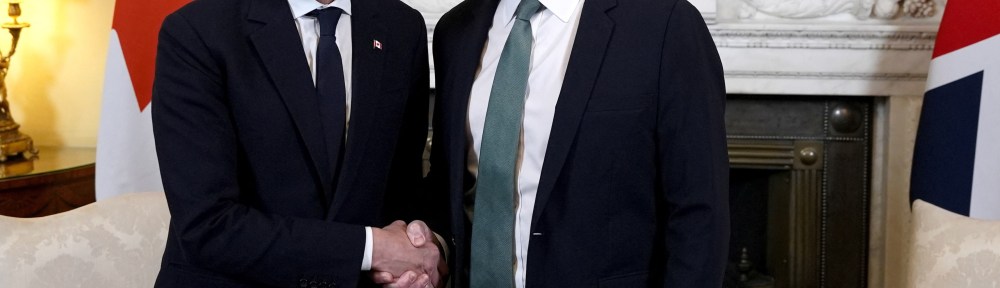
In an era marked by political turmoil, populism, and polarized electorates, the emergence of two distinctly technocratic leaders, Canada’s Mark Carney and the United Kingdom’s Keir Starmer, signals a subtle, but significant shift in governance. Both men have stepped into their roles as Prime Ministers in the last year, bringing with them a pragmatic, policy-driven style that eschews grandstanding for steady, results-oriented leadership.
Mark Carney’s ascension to the Canadian premiership in March 2025 was, by many measures, unconventional. Known primarily for his extraordinary track record as an economic steward, having helmed two of the world’s most influential central banks, Carney entered politics without prior elected office experience. Yet this outsider status may be his greatest asset. Carney’s approach is quintessentially technocratic: data-driven, nuanced, and focused on long-term stability rather than short-term political gain.

Early in his tenure, Carney moved decisively, but quietly to abolish the consumer carbon tax, a move that was politically contentious, but signaled his willingness to recalibrate policies based on public sentiment and economic realities. Simultaneously, he maintained other industrial carbon levies, showing a measured balancing act between environmental priorities and economic concerns. His focus on national sovereignty, especially in the context of complex geopolitical pressures from the United States, demonstrates his comfort in navigating both domestic and international arenas with calculated precision.
Across the Atlantic, Keir Starmer’s rise to UK Prime Minister in mid-2024 was accompanied by a return to a more traditional, sober style of governance after over a decade of Conservative rule. Starmer’s background as a human rights lawyer and former Director of Public Prosecutions clearly informs his methodical and legalistic approach to leadership. His government has tackled thorny domestic challenges, from public sector strikes to immigration policy reform, without resorting to populist rhetoric or headline-grabbing gestures.
Starmer’s pragmatism is evident in his recent reforms: ending winter fuel payments for millions, launching an early prisoner release scheme to reduce overcrowding, and instituting new border security measures. These decisions, while controversial, reflect a focus on institutional reform and social justice framed within achievable policy frameworks. Unlike more flamboyant predecessors, Starmer projects a sense of quiet competence, aiming to rebuild public trust through consistency and fairness rather than drama.
What unites Carney and Starmer is their shared embrace of technocratic governance, an approach that values expertise, incremental progress, and policy refinement over ideological battles or media theatrics. Both leaders seem intent on “getting on with the job,” navigating complex political landscapes with a steady hand. This approach is particularly noteworthy given the current political climate, where many leaders lean heavily on spectacle or populist appeals.
Their quiet competence is not without risks. Technocratic leaders can be perceived as detached or insufficiently charismatic, which can make it challenging to galvanize broad popular enthusiasm. Yet, for electorates fatigued by volatility and crisis, Carney and Starmer offer a reassuring alternative: governance that promotes substance over style and incremental progress over sweeping promises.
The early months of Mark Carney’s and Keir Starmer’s premierships illustrate the power of quiet, data-driven leadership in modern politics. Their technocratic approaches may not dominate headlines, but they offer a compelling model for steady, pragmatic governance in an era that sorely needs it.
 The Rowanwood Chronicles