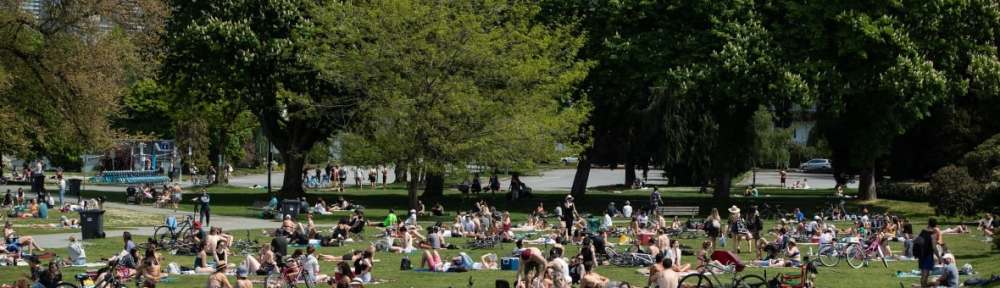
Public drinking reveals much about how societies balance freedom, responsibility, and trust. The stark contrast between Ottawa’s tentative, tightly-controlled 2025 pilot program for alcohol consumption in municipal parks and Germany’s longstanding acceptance of public drinking illustrates deeper social and cultural divides. In short, while Germans operate under a framework of collective behavioral expectations and trust, Canadians, at least in Ottawa, approach public behavior through a lens of institutional caution and control.
In Germany, it is not only legal, but culturally unremarkable to walk through a park or down a street sipping beer or wine. Public drinking is allowed in virtually all spaces: parks, streets, public transport, so long as behavior remains respectful. There is no need for signage, restricted hours, or opt-in zones. Instead, the rules are social: keep your voice down, clean up after yourself, and don’t cause a disturbance. The assumption is that most people, most of the time, can be trusted to enjoy alcohol in public without devolving into chaos. Enforcement is minimal and focused on conduct rather than consumption. The legal framework reflects this confidence in citizens’ capacity for self-regulation.
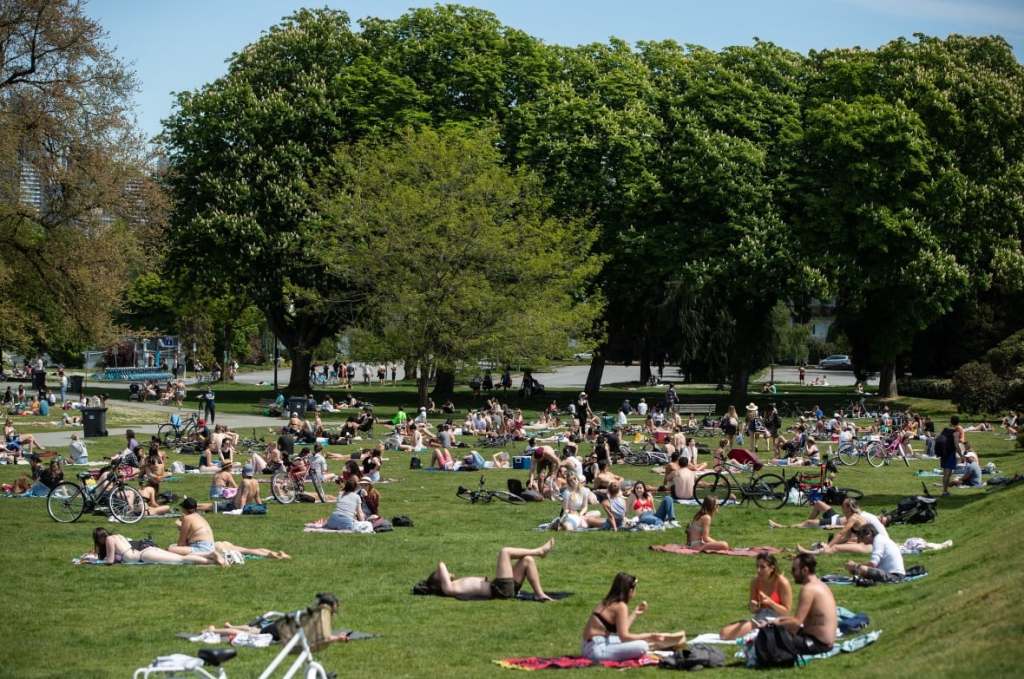
Ottawa, by contrast, is poised to take a small, hesitant step into public drinking territory. The 2025 summer pilot, if passed by full council, will allow alcohol in select municipal parks during restricted hours and away from certain facilities. Local councillors must “opt in” their parks, and enforcement mechanisms, signage, and safety protocols are emphasized. The premise is that public drinking is potentially risky, necessitating detailed restrictions and contingency planning. The policy does not presume that residents can handle this responsibility; rather, it cautiously tests whether they might.
This divergence is not simply legal, it is philosophical. German norms lean on a social compact that assumes citizens will behave decently in shared spaces. Canadians, or at least Canadian policymakers, appear to lack such confidence. Public drinking is imagined not as an ordinary act, but as a behavior to be fenced in, bounded, and watched. Ottawa’s delay in launching even a pilot underscores a broader cultural tendency: one that privileges regulation over trust, institutional control over social cohesion.
Underlying this is a question of what kind of public life a society envisions. In Germany, a Feierabendbier (after-work beer) on a park bench is an extension of civil society, part of a shared public realm. In Ottawa, such an act still falls outside acceptable norms, even as urban life becomes denser and more diverse. This points to a lingering paternalism in Canadian municipal governance: the belief that citizens must be managed rather than trusted.
Ultimately, the Ottawa-Germany contrast reveals a deeper social reality. Where Germans assume the public is capable and socialized, Canadians assume the public needs structure and limits. That divergence shapes not just laws, but the very character of public space, and what we are allowed to do within it. Public drinking, then, becomes a proxy for how much a society trusts its own people.
 The Rowanwood Chronicles