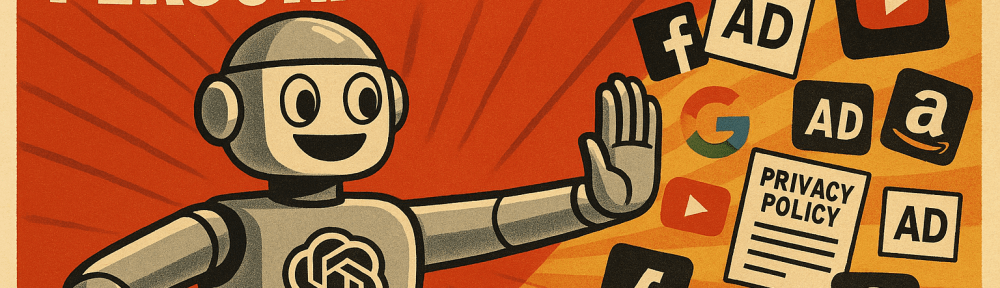
The age of the intelligent digital assistant has finally arrived, not as a sci-fi dream, but as a powerful, practical reality. Tools like ChatGPT have evolved far beyond clever conversation partners. With the introduction of integrated features like Connectors, Memory, and real-time Web Browsing, we are witnessing the early formation of AI systems that can manage calendars, draft emails, conduct research, summarize documents, and even analyze business workflows across platforms.
The functionality is thrilling. It feels like we’re on the cusp of offloading the drudgery of digital life, the scheduling, the sifting, the searching, to a competent and tireless assistant that never forgets, never judges, and works at the speed of thought.
Here’s the rub: the more capable this assistant becomes, the more it must connect with the rest of your digital life, and that’s where the red flags start waving.
The Third-Party Trap
OpenAI, to its credit, has implemented strong safeguards. For paying users, ChatGPT does not use personal conversations to train its models unless explicitly opted in. Memory is fully transparent and user-controllable. And the company is not in the business of selling ads or user data, a refreshing departure from Big Tech norms.
Yet, as soon as your assistant reaches into your inbox, calendar, notes, smart home, or cloud drives via third-party APIs, you enter a fragmented privacy terrain. Each connected service; be it Google, Microsoft, Notion, Slack, or Dropbox, carries its own privacy policies, telemetry practices, and data-sharing arrangements. You may trust ChatGPT, but once you authorize a Connector, you’re often surrendering data to companies whose business models still rely heavily on behavioural analytics, advertising, or surveillance capitalism.
In this increasingly connected ecosystem, you are the product, unless you are exceedingly careful.
Functionality Without Firewalls Is Just Feature Creep
This isn’t paranoia. It’s architecture. Most consumer technology was never built with your sovereignty in mind; it was built to collect, predict, nudge, and sell. A truly helpful AI assistant must do more than function, it must protect.

And right now, there’s no guarantee that even the most advanced language model won’t become a pipe that leaks your life across platforms you can’t see, control, or audit. Unless AI is designed from the ground up to serve as a digital privacy buffer, its revolutionary potential will simply accelerate the same exploitative systems that preceded it.
Why AI Must Become a Personal Firewall
If artificial intelligence is to serve the individual; not the advertiser, not the platform, not the algorithm, it must evolve into something more profound than a productivity tool.
It must become a personal firewall.
Imagine a digital assistant that doesn’t just work within the existing digital ecosystem, but mediates your exposure to it. One that manages your passwords, scans service agreements, redacts unnecessary data before sharing it, and warns you when a Connector or integration is demanding too much access. One that doesn’t just serve you but defends you; actively, intelligently, and transparently.
This is not utopian dreaming. It is an ethical imperative for the next stage of AI development. We need assistants that aren’t neutral conduits between you and surveillance systems, but informed guardians that put your autonomy first.
Final Thought
The functionality is here. The future is knocking. Yet, if we embrace AI without demanding it also protect us, we risk handing over even more of our lives to systems designed to mine them.
It’s time to build AI, not just as an assistant, but as an ally. Not just to manage our lives, but to guard them.
 The Rowanwood Chronicles