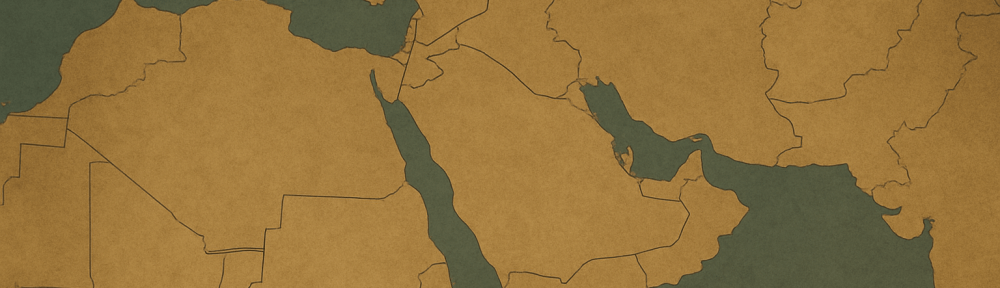
The term Middle East has long been used in Western discourse to refer to the region spanning from Egypt and Turkey through to Iran and the Arabian Peninsula. This label is neither geographically accurate nor politically neutral. As calls grow for more inclusive and less Eurocentric terminology, there is a strong case for renaming the region altogether. A number of alternatives have been proposed, each with merits and limitations, but Greater West Asia emerges as the most appropriate and equitable option.
The Problems with “Middle East”
Eurocentrism
The label “Middle East” reflects a 19th-century British imperial perspective. From London, it was east of Europe, but west of British India—hence “middle.” It is not a term rooted in the cultures or languages of the people it describes, but in the navigation maps and strategic concerns of empires.
Vagueness and Inconsistency
The boundaries of the “Middle East” shift depending on context. Does it include North Africa? Is Afghanistan in or out? Turkey? This imprecision reduces its utility and fosters confusion.
Cultural Baggage
The term is often associated with conflict, terrorism, and religious strife in Western media, reinforcing stereotypes rather than offering a neutral geographic description.
Possible Alternatives
West Asia
This term corrects the geographic problem, situating the region accurately within the continent of Asia, but it has not gained widespread traction. Some critics argue it may be too narrow, excluding North Africa and the Caucasus.
Southwest Asia and North Africa (SWANA)
A politically motivated term intended to center Indigenous and decolonial perspectives. It explicitly includes North Africa and parts of Asia, but its complexity and unfamiliarity outside activist and academic circles limit its uptake.
MENA (Middle East and North Africa)
Common in policy and development discourse, but it retains the problematic “Middle East” and is more of a bureaucratic construct than a corrective.
Arab World / Muslim World
These terms are culturally specific and exclude non-Arab and non-Muslim populations in the region such as Persians, Jews, Christians, Kurds, Druze, and others. They entrench religious or ethnic majoritarian narratives.
Why Greater West Asia Works Best
Geographically Accurate
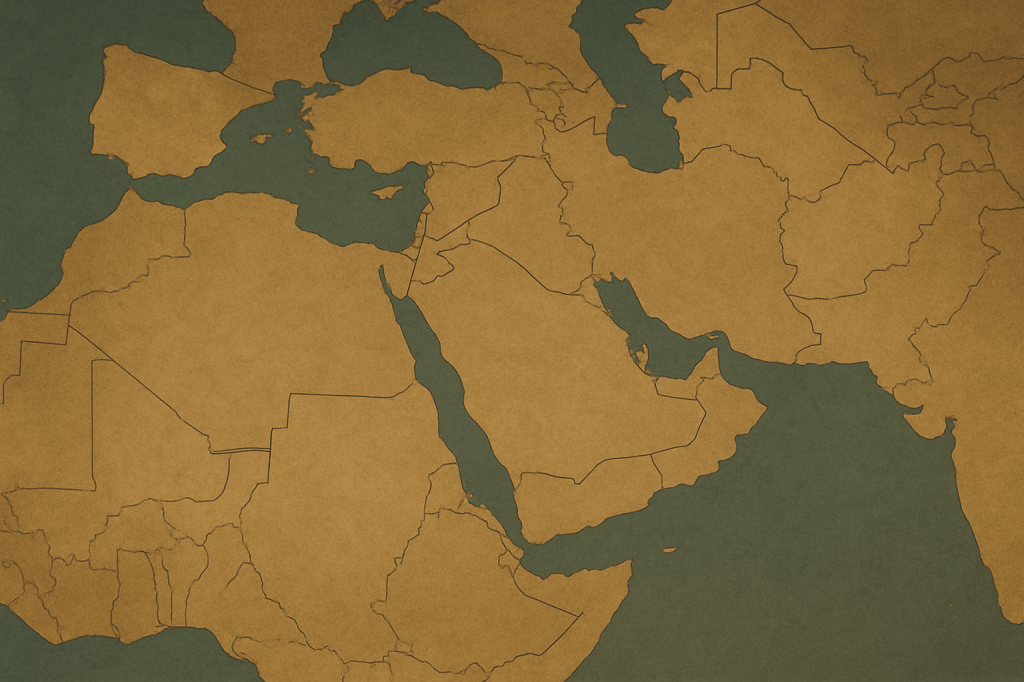
“West Asia” correctly places the region within the Asian landmass, and “Greater” allows for a broader scope including the Levant, Anatolia, the Arabian Peninsula, the Iranian Plateau, and parts of the Caucasus and even North Africa, if contextually needed.
Free of Cultural, Religious, or Ethnic Ties
The term avoids privileging one group over another: Arab, Persian, Turkish, Jewish, Kurdish, or otherwise. This neutrality is vital in a region that is home to dozens of languages, religions, and ethnic identities.
De-centres the West
Using “Greater West Asia” acknowledges the geographic reality from a global, not Eurocentric, perspective. It also strips away the legacy of colonial nomenclature imposed by British and French cartographers and strategists.
Scalability and Clarity
The prefix “Greater” allows for flexible boundaries while “West Asia” provides the core anchor. This mirrors successful regional terms like “Greater Europe” or “Greater Southeast Asia.”
Conclusion
Renaming the “Middle East” is more than a semantic exercise; it’s about decolonizing our geographic imagination. Of the alternatives, Greater West Asia is the most inclusive, descriptive, and politically neutral. It offers a clean break from imperial labels and better reflects the region’s complexity and humanity, without reducing it to a cultural monolith or geopolitical battleground. It’s time we updated our vocabulary accordingly.
 The Rowanwood Chronicles