
Diplomacy, as the textbooks remind us, is supposed to be the fine art of saying nothing offensive in as many words as possible while drinking bad coffee in conference rooms. But nobody seems to have given that manual to Pete Hoekstra, the newly minted U.S. Ambassador to Canada, who has decided to trade in understatement for a megaphone. In the span of a few short months, Hoekstra has managed to scold Canadians for not being sufficiently pro-American, accuse us of harboring “anti-American” slogans, and downplay Canada’s concerns about border overreach. If he’s aiming for “charm offensive,” he has nailed the second half of the phrase.
This is, of course, not the first time Canada and the U.S. have had words. We’ve bickered over softwood lumber, dairy tariffs, steel quotas, pipelines, and, once upon a time, acid rain. But usually ambassadors play the role of polite go-between, smoothing over disputes while the real political firestorms rage between ministers and presidents. Hoekstra seems to have missed the memo: his preferred strategy is less smooth diplomacy, more bull in a China shop – minus the bull’s natural grace.
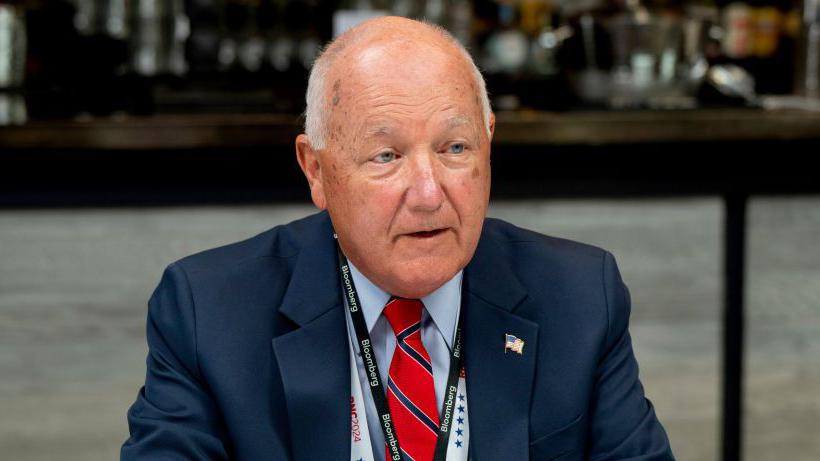
His latest theme? Canadians just aren’t playing nice. We apparently spend too much time with “elbows up,” as if the entire country were auditioning for beer league hockey. He’s miffed that Canada has dared to issue travel advisories about U.S. border searches, insisting those reports are “isolated events.” Never mind that Canadian travelers actually experienced them. It’s a bit like telling someone who just got splashed by a passing truck that rain isn’t real.
Nowhere is this attitude more obvious than in the discussions around U.S. preclearance, the system where American border officers operate inside Canadian airports, inspecting passengers before they even board a plane to the United States. For travelers, preclearance is handy: you arrive stateside as a domestic passenger, skip long immigration lines, and make your connections. For the U.S., it’s even better: it lets them enforce their rules on foreign soil, keeping anyone they don’t like from ever boarding. For Canada, it’s…..complicated. Preclearance represents cooperation, yes, but also a certain loss of sovereignty. Not surprisingly, Ottawa sometimes drags its heels on expansion.
To Hoekstra, though, Canada’s reluctance to roll out the red carpet for more American officers in our airports amounts to ingratitude. The U.S. gives us this wonderful gift, he implies, and we respond with suspicion. It’s the diplomatic equivalent of scolding a dinner guest for not raving loudly enough about the casserole. The irony is rich: when Canada recently announced its first landpreclearance operation in the U.S., with Canadian officers screening travelers at a New York border crossing, nobody in Ottawa suggested that Americans were being unfriendly. Apparently only Canadians can be accused of bad manners.
And then there’s NEXUS, the trusted traveler program that makes cross-border trips bearable for frequent fliers. Here, too, Canada and the U.S. cooperate closely, with Canadians now able to use Global Entry kiosks thanks to their NEXUS membership. But you wouldn’t know it from the ambassador’s rhetoric. He talks as if the U.S. is single-handedly shouldering the burden of efficiency while Canada stubbornly blocks progress. The reality is that both sides benefit and both sides foot the bill. Preclearance doesn’t spring fully formed from Washington; Canadian airports build the facilities, Canadian taxpayers share the costs, and Canadian sovereignty bends to make it possible.
So why the sharp elbows from Hoekstra? Partly it’s style, he has never been known as a shrinking violet. But partly it reflects a broader U.S. strategy of leaning harder on Canada. The two countries are already sparring at the World Trade Organization over tariffs that Ottawa calls “unjustified.” Washington wants more Canadian concessions on energy, environment, and defense spending. Ambassadors don’t freelance in these circumstances; they set the tone their bosses in the White House prefer. If that tone is loud, impatient, and dismissive of Canadian sensitivities, then Hoekstra is performing to spec.
Still, it’s worth noting how Canadians are responding. While most don’t object to preclearance itself, after all, we enjoy shorter lines at airports, there is resistance to being lectured about it. Canadians pride themselves on being cooperative partners, not subordinate provinces. When the ambassador claims Canada isn’t “playing nice,” many hear it as “you’re not agreeing quickly enough with U.S. demands.” The fact that Canada has invested in NEXUS expansions, shared intelligence, and even put its own officers on U.S. soil underlines the absurdity of the accusation.
In the end, Hoekstra’s style may generate headlines, but it risks eroding goodwill. Diplomacy works best when it feels like a partnership of equals, not a schoolteacher scolding a roomful of students. Canadians are famously polite, but we’re also famously stubborn when pushed. If the ambassador thinks a little tough talk will get Canada to open every airport door to U.S. preclearance, he may be in for a long wait.
Until then, travelers will keep swiping their NEXUS cards, lining up at preclearance facilities, and quietly rolling their eyes at the spectacle. After all, Canadians know that living next to the United States is a bit like living next to an elephant. When it shifts, you feel it. When it trumpets, you really feel it. And when the ambassador starts lecturing you about your manners, sometimes the most diplomatic response is the Canadian classic: a polite smile, a quiet mutter, and an elbow gently nudged back into his ribs.
 The Rowanwood Chronicles