
Something is stirring within the Democratic Party of the United States. The off-year elections held this week were, in purely political terms, a resounding success. Democrats swept high-profile races in Virginia, New Jersey, and New York City, while quietly notching smaller but strategically vital wins in states like Georgia and California. These victories, taken together, have left political analysts wondering whether we are seeing the faint outlines of a new political momentum; one that could pull the party closer to its grassroots and, perhaps, toward a more caring, socially grounded, even socialist vision of governance.
In Virginia, Abigail Spanberger’s victory for governor was a study in moderate competence. Her campaign was pragmatic, rooted in local concerns: affordability, infrastructure, and the language of unity over ideology. In New Jersey, Mikie Sherrill followed a similar script, emphasizing trust and stability in a time of global uncertainty. Both are centrists, comfortable in the tradition of cautious, business-friendly Democratic politics that has defined the party’s leadership for decades.
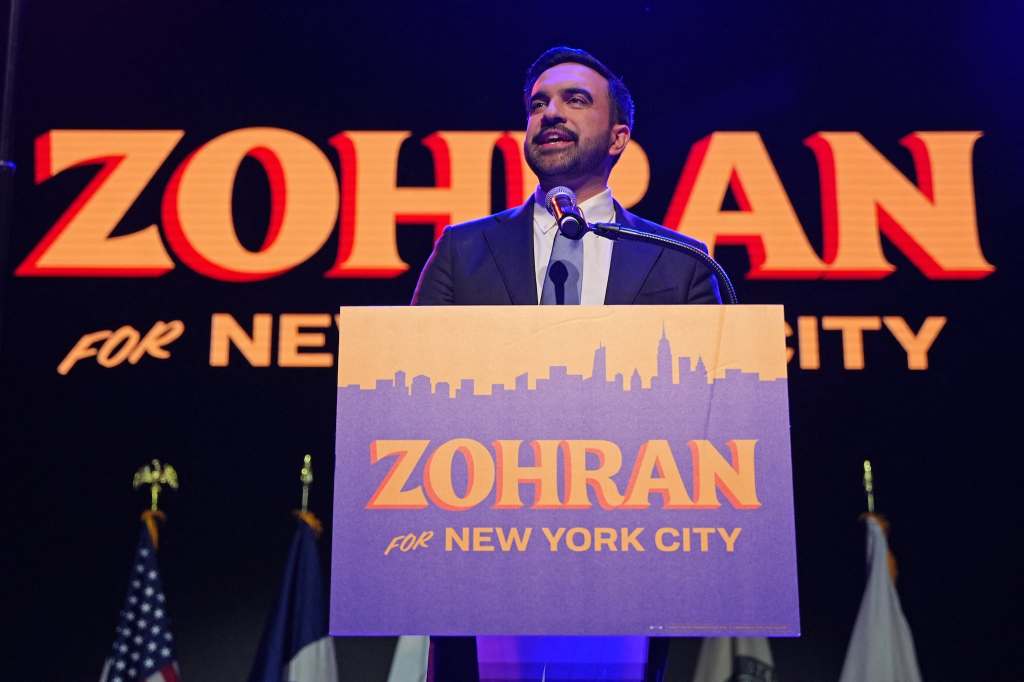
And yet, something more radical glimmered elsewhere. In New York City, Zohran Mamdani, a self-described democratic socialist, captured the mayoralty with a platform that read like a manifesto for a more humane urban future: a rent freeze, free public transit, and universal childcare. His campaign attracted young voters and those disillusioned by what they see as the corporate centrism of Washington. For many, his win was not just local — it was symbolic. It suggested that, beneath the polished pragmatism of the party establishment, there lies a restless hunger for deeper change.
Down-ballot, too, the signs were intriguing. In Georgia, Democrats flipped Public Service Commission seats on the strength of voter frustration over energy prices, a victory built less on ideology than empathy for working-class struggles. In California, the passage of Proposition 50, which allows the legislature to draw congressional districts, handed Democrats a structural advantage that could support longer-term policy experimentation. Across the map, voters seemed to respond to messages centered on care: the cost of living, health, childcare, and the simple question of who the system serves.
These results invite a larger question: Are we witnessing the start of a shift toward a more caring, grassroots Democratic Party; one that takes social justice and collective wellbeing as its compass?
The case for optimism rests on several pillars. Mamdani’s win gives the left a tangible foothold in executive leadership, something not seen since the days of Bernie Sanders’ insurgent campaigns. The new generation of Democratic voters is younger, more diverse, and more skeptical of market orthodoxy than at any point in recent memory. The cost-of-living crisis has blurred the old ideological lines, making redistributive and solidarity-based policies newly attractive to the middle class. And in the wake of Trump’s re-election, the moral and cultural energy of resistance has turned inward, focusing less on opposition and more on what a humane Democratic vision might actually look like.
Yet optimism must coexist with realism. The party’s leadership remains firmly in centrist hands. The Democratic National Committee, congressional leadership, and major donor networks are aligned with a strategy of cautious coalition-building and market-compatible reform. They have reason to be pleased: the moderate playbook, they can argue, just won two governorships. Leaders like Spanberger and Sherrill embody the view that Democrats must win from the middle to govern at all. Their victories, like Joe Biden’s before them, reinforce the institutional belief that centrism is safety.
This is the core tension now facing the party: the grassroots energy that fuels local and progressive campaigns versus the corporate and donor-driven pragmatism that defines national leadership. For the socialist or justice-oriented wing to shape the future, it must turn local victories into durable infrastructure; unions, candidates, policy think tanks, and media networks that can sustain the pressure upward. Without that, the leadership will absorb the energy, rebrand it in softer language, and continue to steer the ship gently leftward without truly changing its course.
The most likely scenarios unfold along three lines. In the first, progressive candidates keep winning, their policies prove popular, and the national platform slowly adapts; integrating labour rights, universal childcare, and socialised public services into the mainstream Democratic identity. In the second, the leadership co-opts the rhetoric of care without altering the underlying economic model, producing a modestly kinder capitalism that soothes but does not transform. And in the third, the leadership doubles down on centrism, citing electability, and the left’s momentum fractures into isolated city-level experiments.
At this moment, it is too early to tell which path will prevail. The evidence of change is real, but fragile. Mamdani’s New York, after all, stands beside Spanberger’s Virginia; two visions of the Democratic Party separated by temperament, class, and strategy. The question is not whether the party can win, but what it intends to do with its wins.
Still, for those who believe in a more compassionate politics, one that measures success not by GDP but by dignity, these elections whisper possibility. The caring impulse, long buried under poll-tested language, is stirring again. It will take courage, organisation, and persistence to turn that whisper into policy, but every movement begins this way: not with a roar, but with the quiet sound of voters choosing empathy over fear.
Sources:
Reuters, Democrats bask in electoral victories a year after Trump’s reelection(Nov 5 2025)
The Guardian, Democrats have racked up election wins across America – but they would do well not to misread the results (Nov 5 2025)
Politico, The last time Democrats won like this was right before the 2018 blue wave (Nov 5 2025)
AP News, Georgia PSC races highlight voter anger over energy costs (Nov 5 2025)
NBC Washington, Takeaways from Election Day 2025 (Nov 5 2025).
 The Rowanwood Chronicles