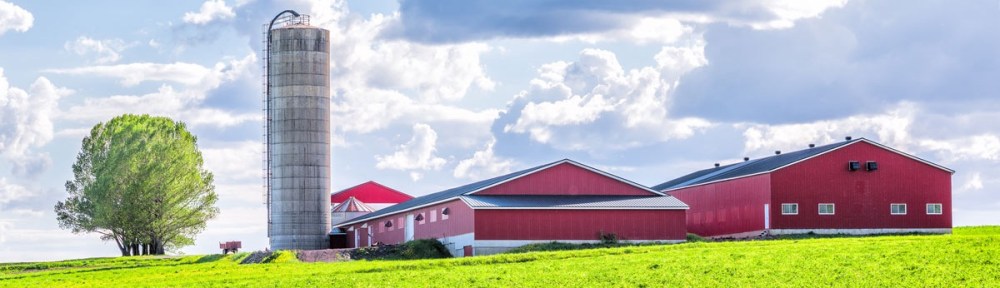
Quebec has quietly become a national leader in agrifood planning and food security. At a time when global food systems are increasingly fragile, the province offers a clear and pragmatic model for how public policy, local investment, and social equity can combine to build a more resilient, sustainable food system. The rest of Canada would do well to take note.
Central to Quebec’s approach is its comprehensive provincial framework, Politique bioalimentaire 2018–2025: Alimenter notre monde. This policy articulates a long-term vision for food sovereignty and ecological stewardship. It promotes value-added processing, regional production, and stronger local supply chains. What sets Quebec apart is not simply the breadth of the strategy, but the coordination behind it. Provincial and federal funds are deployed in tandem, targeting greenhouse expansion, food transformation infrastructure, agri-environmental practices, and innovation. In 2023, Quebec committed $175 million toward increasing regional food self-sufficiency, a move that signaled a shift away from dependence on volatile global supply chains.
This funding strategy has been reinforced by the Canada–Quebec Sustainable Canadian Agricultural Partnership agreement, which committed $955 million over five years to support producers across the province. The agreement includes enhanced compensation under AgriStability, infrastructure renewal programs, and expanded support for environmental and climate-smart practices. With a 25 percent increase over the previous five-year framework, this is one of the most ambitious agrifood investments in the country.
Quebec’s focus on food processing has also paid dividends. In Saguenay–Lac-Saint-Jean, for example, Céréales Normandin received over $3.5 million in combined provincial and federal support to expand its grain-processing capacity. By transforming local cereals into flour, semolina, and plant-based protein concentrates, the facility strengthens Quebec’s ability to retain value within the province. It also reduces dependency on long-haul transportation and foreign inputs. This kind of investment represents a structural shift toward field-to-fork sovereignty.
But production and processing are only part of the story. Quebec integrates food security into its broader public health and education agenda. The province supports farm-to-school programs that connect children directly with local farms, using classroom engagement and institutional procurement to build food literacy and sustainable eating habits. Programs like AgrÉcoles and Farm to School Québec are designed not as symbolic gestures, but as long-term educational investments. They are complemented by robust health policy measures, including proposed front-of-package nutrition labels and consideration of a sugary drinks tax. While other provinces rely on voluntary industry commitments, Quebec has shown a willingness to legislate for public health.
Climate adaptation is another defining element. Quebec has made significant advances in controlled-environment agriculture, particularly hydro-powered greenhouses. These facilities now supply roughly half of the province’s fruits and vegetables year-round. This model aligns well with Quebec’s decarbonization goals and offers a buffer against supply chain disruptions caused by weather, wildfires, or border issues. The greenhouse sector also creates jobs in rural regions, adding social and economic depth to what might otherwise be seen as technical infrastructure.
Quebec’s broader social policy reinforces its food security efforts. The province maintains Canada’s most generous child benefits and has indexed income supports to inflation, resulting in lower levels of food insecurity compared to most other provinces. By recognizing that hunger is not just a supply issue but a matter of income and social policy, Quebec links its agrifood system to social resilience. This integrated approach provides not only food, but dignity and stability.
Cultural identity plays a role as well. Quebec has long embraced supply management in sectors like dairy and maple syrup, not as a form of protectionism, but as a tool for supporting regional producers and maintaining quality standards. This model may not translate directly across all of Canada, but it offers a reminder that local economies thrive when policy reflects place-based values.
Perhaps the most compelling lesson from Quebec is its refusal to silo food policy. Instead, it has created a system where agriculture, health, education, environment, and social equity intersect. The result is not just a stronger food system, but a stronger society. In an era of climate disruption, geopolitical instability, and growing inequality, Quebec is showing how to build something that is local, resilient, and future-ready.
Canada as a whole will face increasing pressure in the years ahead to secure its food systems. If policy-makers are serious about ensuring affordability, sustainability, and sovereignty, they would be wise to study what Quebec has already built.
Sources
• Government of Canada. “Canada and Quebec sign a new $955 million agreement over five years to support Quebec’s agricultural sector.” March 2023. https://www.canada.ca/en/agriculture-agri-food/news/2023/03/canada-and-quebec-sign-a-new-955-million-agreement-over-5-years-to-support-quebecs-agricultural-sector.html
• Government of Canada. “Over $3.5 million for Céréales Normandin to expand its product range.” March 2024. https://www.canada.ca/en/economic-development-quebec-regions/news/2024/03/increasing-quebecs-food-selfsufficiency-over-35m-for-cereales-normandin-to-expand-its-product-range.html
• Equiterre. “Farm to School Québec.” https://www.equiterre.org/en/articles/project-local-food-procurement-farm-to-school-quebec
• The 14. “Reinforcing policies to improve Quebec’s food supply.” https://the-14.com/reinforcing-policies-to-improve-quebecs-food-supply
• West Quebec Post. “Quebec to invest $175 million over five years to increase food self-sufficiency.” https://www.westquebecpost.com/quebec-to-invest-175-million-over-five-years-to-increase-food-self-sufficiency
 The Rowanwood Chronicles