First of a pair of posts to start the week off right.
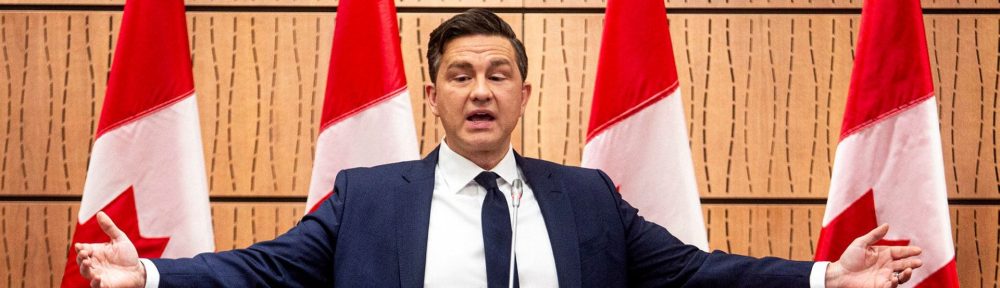
The recent developments within the Conservative Party of Canada have marked a notable shift in the parliamentary landscape and exposed significant strains in Pierre Poilievre’s leadership. Over the past several weeks a sequence of defections and a resignation have transformed what might once have been viewed as isolated dissent into a pattern that raises questions about internal dissatisfaction and strategic direction. Conservative Members of Parliament crossing the floor to join Prime Minister Mark Carney’s Liberal government and an unexpected resignation from a sitting Conservative MP signal more than routine political realignment; they suggest deepening fractures in the Conservative caucus under Poilievre’s leadership.
The most visible manifestation of this trend was the decision by Michael Ma, Member of Parliament for Markham–Unionville, to formally leave the Conservative caucus and join the Liberals. Ma’s move, announced in early December 2025, came only weeks after Nova Scotia MP Chris d’Entremont made the same transition, citing dissatisfaction with the direction of Conservative politics and an attraction to the Liberals’ policy approach and governance agenda. These defections have materially advantaged the Liberal government, bringing it within one seat of a majority in the House of Commons and thereby altering the balance of power in Parliament.

In conjunction with these floor crossings, Edmonton MP Matt Jeneroux’s announcement that he will resign from Parliament rather than continue under the current Conservative leadership has intensified speculation about internal party morale. The combination of defections and the resignation of a sitting MP so soon after a general election is highly unusual; Jeneroux’s departure, though not a floor crossing, underscores wider unease among Conservative ranks and reflects strategic choices by individual MPs about their political futures.
Commentators and political observers have read these departures as symptomatic of a broader dissatisfaction with Poilievre’s leadership style and strategic posture. Floor crossers have explicitly referenced disagreements over tone and direction, framing their moves as a response to a negative or uncompromising political approach that they believe detracts from constructive governance. D’Entremont’s statements about feeling misaligned with his party’s leadership emphasize a preference for engagement with pragmatic policy solutions over relentless opposition.
The reaction within Conservative circles has been mixed, but often defensive. Poilievre himself has publicly rejected the notion that his leadership style should change in response to these departures, framing the defections as electoral betrayal rather than internal critique and asserting that the party must remain focused on its core commitments. However, Liberal House Leader Steven MacKinnon has suggested that Ma’s decision is not unique but part of a small but growing contingent of Conservative MPs who are “extremely frustrated” with the party’s political direction.
In practical terms, the departure of two MPs and the resignation of another in such close succession has a tangible impact on parliamentary arithmetic and strategic leverage. With the Liberals approaching a working majority, the Conservative opposition’s ability to influence legislative business is diminished, altering the dynamics of the minority Parliament. These shifts also have implications for the upcoming Conservative leadership review, where questions about unity, electoral viability, and direction will dominate discussion among delegates and members.
The cumulative effect of these events is not merely numerical. It reflects a broader narrative of internal tension within the Conservative Party, tensions that revolve around how best to advance policy goals, maintain electoral appeal, and manage ideological diversity within a fractured caucus. Whether these departures precipitate further exits or merely represent short-term recalibration remains an open question. What is clear is that these developments have dealt a substantive blow to Poilievre’s efforts to project unity and discipline, instead highlighting the challenges of leadership in an era of fluid parliamentary allegiances and evolving political identities.
 The Rowanwood Chronicles