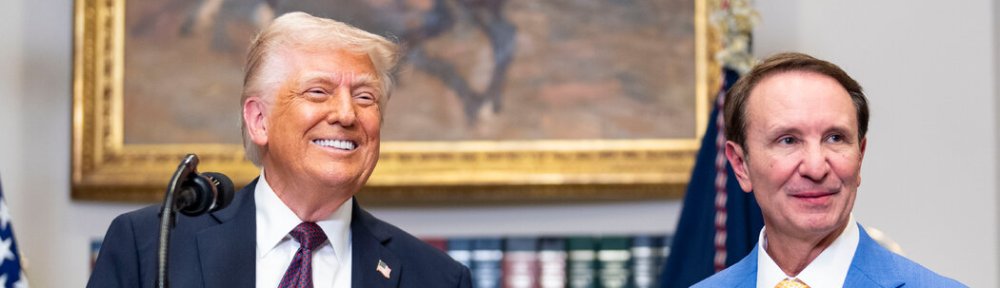
In December 2025, President Donald Trump announced that he would appoint Louisiana Governor Jeff Landry as the United States special envoy to Greenland. The announcement came with Trump’s customary social-media flourish, framing Greenland as “essential to our national security” and praising Landry’s willingness to advance U.S. interests in the Arctic. Landry himself declared that it was an “honor … to make Greenland a part of the U.S.” even as he would remain governor of Louisiana concurrently. Reuters

1. It’s a Diplomatic Stunt, Not Strategy
Appointing a U.S. special envoy to a territory that is not a U.S. partner or diplomatic interlocutor is, by definition, an odd choice. Greenland is a semi-autonomous territory of the Kingdom of Denmark, and sovereignty over Greenland rests with Copenhagen under international law. Even if Greenland exercises home rule over many internal matters, Denmark retains foreign-affairs authority. Euronews
Denmark reacted accordingly. Its foreign minister denounced the move and summoned the U.S. ambassador in protest, asserting that territorial integrity must be respected. Danish and Greenlandic leaders jointly declared that “you cannot annex another country,” and reinforced that “Greenland belongs to the Greenlanders.” Euronews
2. The People of Greenland Have Spoken—Loudly
Trump and his allies have repeatedly hinted that Greenlanders might welcome U.S. affiliation or even statehood. Yet public opinion data tell a different story: 85% of Greenlanders oppose becoming part of the United States, with only about 6% in favor. A News AMERICAS poll
Ignoring the expressed will of the local population while proclaiming sovereign ambitions isn’t strategic leadership. It’s symbolic posturing that weakens U.S. credibility with the very audiences that Washington claims to want on its side.
3. National Security Strategy vs. Tactical Execution
To be fair, Greenland does matter in the Arctic geostrategic environment. Its geographic position gives control over approaches to North America, and U.S. military assets like Pituffik Space Base have long been elements of continental defense. There is also growing global competition in the Arctic amid climate change and resource access. These realities are consistent with core themes in the U.S. National Security Strategy (NSS): maintaining technological edge, reinforcing alliance structures, and securing critical supply chains. Associated Press
But that strategic framework does not justify appointing a governor as envoy with public remarks about making another country part of the United States. That is a conflation of long-term objectives (strengthening U.S. strategic position in the Arctic) with short-term theatrics that have real diplomatic and legal consequences.
4. Why This Matters Beyond Headlines
A smart Arctic strategy might include genuine cooperative defense partnerships with Greenland and Denmark, investment in shared security infrastructure, climate resilience, and economic collaboration that respects sovereignty. Instead, the current approach:
- Undermines alliance trust with a NATO member whose cooperation is critical in Europe and the Arctic.
- Misreads local sentiment, dismissing Greenlanders’ clear preference to determine their own future.
- Reduces U.S. policy to rhetorical brinkmanship, distracting from substantive cooperation where it matters.
If the NSS is a roadmap for how the U.S. secures its interests in an increasingly competitive world, this envoy appointment reads like a sideshow detour driven by personality rather than policy.
Sources
- Reuters: Trump names Louisiana governor Landry as Greenland special envoy
- The Washington Post: Trump appoints Jeff Landry as special envoy to Greenland
- Euronews: Denmark demands US respect its sovereignty
- A News AMERICAS poll: 85% of Greenlanders oppose U.S. ownership
- Associated Press: Trump appoints Louisiana Gov. Jeff Landry
 The Rowanwood Chronicles