
Some books aren’t just read – they become companions, revisited as life shifts and perspectives deepen. For me, Frank Herbert’s Dune is one of those books, a story I reread every year, discovering something new as my own experiences reshape how I see it. But C.J. Cherryh’s The Faded Sun Trilogy holds a different kind of power. While I don’t revisit it annually, its well-worn spines tell the story of years spent returning to its rich, meditative exploration of culture, survival, and identity.
Published between 1978 and 1979, the trilogy – Kesrith, Shon’jir, and Kutath – takes place in Cherryh’s Union-Alliance universe, where power struggles between species shape the galaxy. The Mri, a proud nomadic warrior culture, face extinction, betrayed by their former employers, the alien Regul, during a war with humanity. Once indispensable mercenaries, the Mri are now abandoned, eking out an existence on the desert planet Kesrith. It’s here that Sten Duncan, a human soldier, becomes entangled in their plight. His curiosity grows into something deeper as he immerses himself in their alien customs and traditions. Over the trilogy, Duncan evolves from an observer to a mediator, caught between the Mri and a universe determined to erase them.
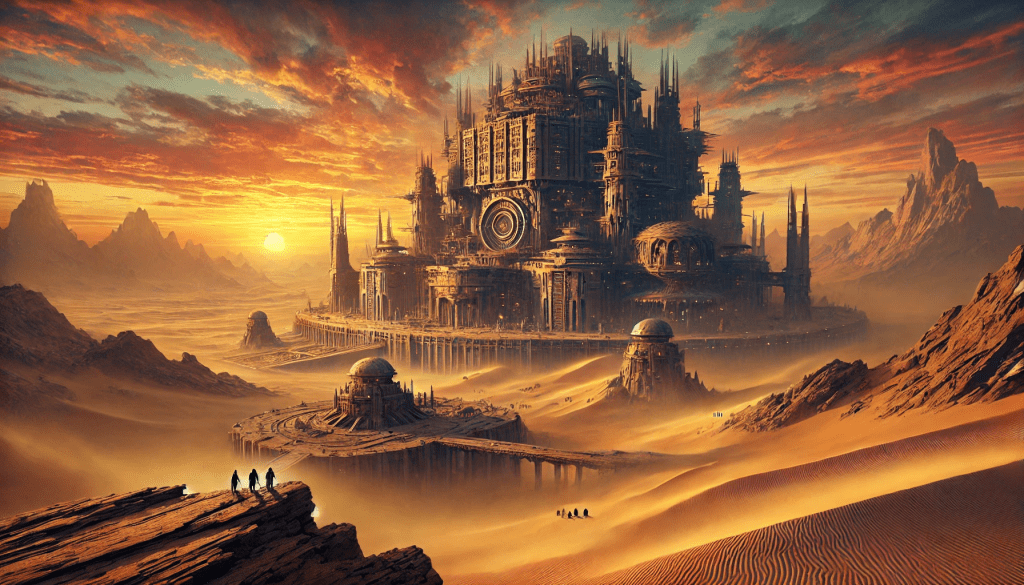
The trilogy opens on Kesrith, a desert world as harsh and unrelenting as the Mri’s reality. Cherryh’s writing captures the desert as a living entity – a stark, intricate landscape mirroring the Mri’s fragile resilience. Humanity steps into the vacuum left by war, bringing complexities of expansion and conquest, while the Regul, bureaucratic and manipulative, operate from the shadows.
What makes Cherryh’s storytelling unforgettable is her refusal to romanticize the Mri. They are flawed, bound by an honor code that defines, but also constrains them. Their worldview, steeped in ritual and tradition, feels authentically alien, requiring both Duncan and the reader to adapt. Duncan’s transformation is central to the story, as he sheds the biases of his upbringing and immerses himself in the Mri’s culture. His journey reflects the trilogy’s larger questions: Can true understanding exist between fundamentally different peoples? And what is the cost of bridging that divide?
As the story unfolds in Shon’jir and Kutath, the stakes deepen. The surviving Mri flee Kesrith in search of a new home, grappling with the pressures to adapt or perish. Their destination, the ancestral world of Kutath, offers the promise of renewal, but also threatens irrelevance in a universe that has moved on without them. Cherryh captures this tension masterfully, forcing the Mri, and the reader, to confront the delicate balance between survival and transformation.
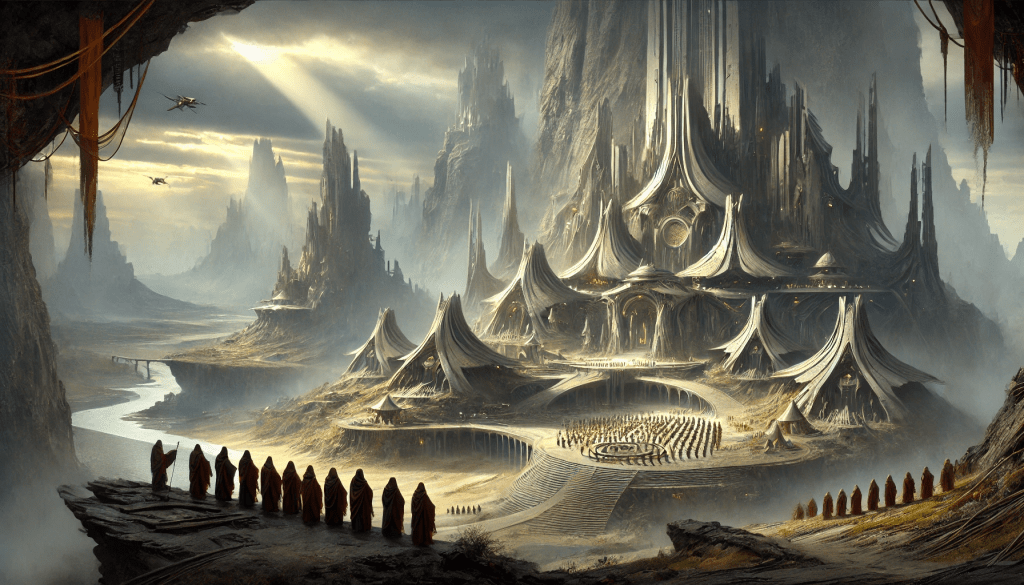
At its core, The Faded Sun Trilogy is a meditation on the fragility of cultural identity and the devastating impact of imperialism. The Mri’s plight echoes the experiences of countless displaced peoples, their traditions and way of life slowly eroded by conquest and assimilation. Cherryh critiques imperialism but avoids simple moral binaries. The Regul, manipulative and cold, and humanity, ambitious and expansionist, are driven by survival instincts rather than malice. This ambiguity forces the reader to grapple with the complexities of cultural dominance and erasure.
Environmental themes add another layer of depth. The desert of Kesrith is more than a setting; it embodies the Mri’s plight – beautiful yet unforgiving, resilient, but fragile. Cherryh draws subtle parallels between the destruction of ecosystems and the loss of cultures, reminding us that imperialism claims both land and people.
Cherryh’s prose is dense, her world-building meticulous, and her portrayal of alien perspectives unmatched. Yet this depth demands patience. The trilogy’s introspective tone and slow pacing, particularly in Shon’jir, may challenge readers, but those willing to engage with its complexities are richly rewarded.
This is not a story of grand battles or easy resolutions. It is a quiet masterpiece that explores identity, survival, and the cost of understanding. Its legacy is evident in modern science fiction, influencing works like The Expanse and A Memory Called Empire. Yet, it remains singular in its vision.
Returning to these books feels like standing in a vast desert – alone with the weight of history and the persistence of life. The truths Cherryh captures burn brightly, offering a story that transforms as deeply as it entertains.
 The Rowanwood Chronicles