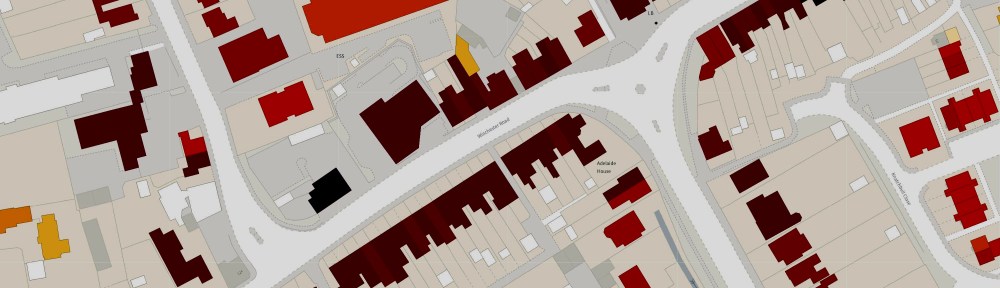
When I arrived at Durham University in 1985 to begin my PhD research, I was given an office once occupied by David Rhind, a leading figure in geomatics. Professor Rhind passed away this month at 81, following a distinguished career in geomorphology, geomatics and cartography. Two of his most notable contributions were to the Chorley Committee’s 1987 report on the “Handling of Geographical Information” and his leadership of the Ordnance Survey (OS) as Director General from 1992 to 1998; a position I once aspired to.

In the early 1990s, the UK Ordnance Survey transitioned from offering maps at cost to a commercially-driven model aimed at reducing taxpayer dependence. Spearheaded by Rhind, this shift was intended to generate new revenue streams by charging commercial rates, fostering innovation in the private sector, with this change occurring during John Major’s continuation of Margaret Thatcher’s free-market Conservative government.
On the surface, the strategy seemed a logical response to the digital age, but its impact on the OS’s client relationships raised concerns. A prime example was the UK Automobile Association (AA), which had long relied on OS maps. As the OS raised prices, the AA, caught between increasing costs and the need to maintain affordable services, began developing its own mapping solutions. This shift, prompted by Rhind’s commercial model, mirrored a broader industry trend where rising prices forced organizations to explore alternatives.
The AA’s move away from OS data highlighted a flaw in the OS’s strategy: by prioritizing revenue, the OS alienated loyal clients and opened the door for competitors offering cheaper or more specialized services. This weakened OS’s market dominance and contributed to the rise of private mapping services, eroding its monopoly.
This shift also sparked debate about public ownership of data. Mapping data, funded by taxpayers, had once been made available at cost to ensure equitable access. Rhind’s commercialization, while financially successful, seemed to contradict this principle, favoring revenue over the broader public good.
In hindsight, the transition to a commercial model raised important questions about the long-term sustainability of the OS. While it aimed to modernize the service and ensure financial self-sufficiency, it fragmented the market, driving clients to develop in-house solutions and creating competition. The AA’s departure underscores the risks of prioritizing profit over accessibility.
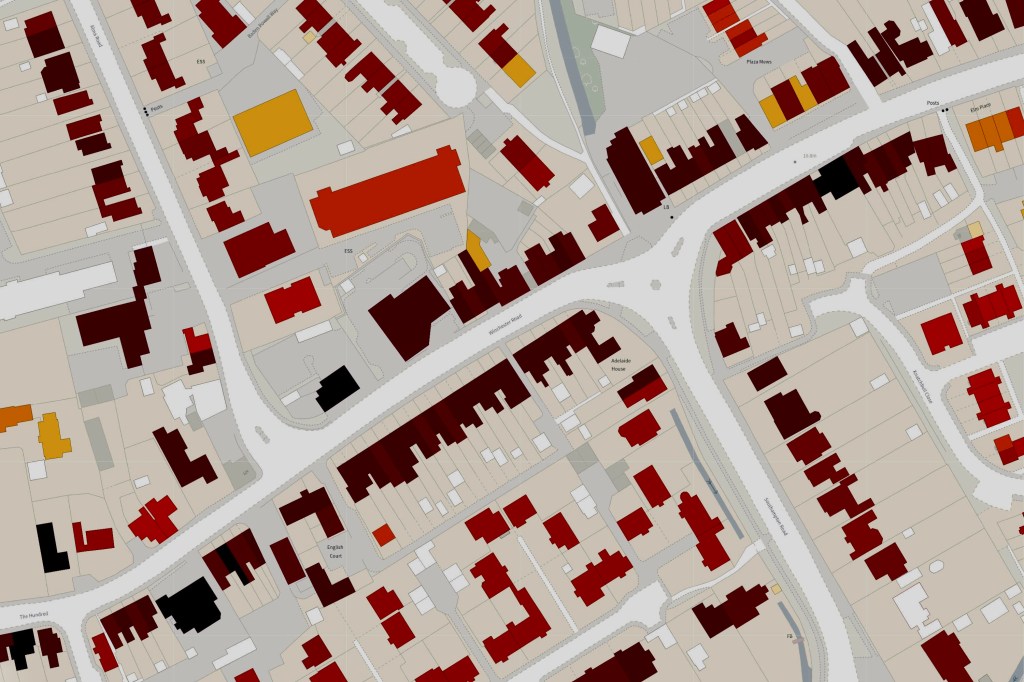
Today, the OS operates on a mixed-cost model, offering both free OpenData and premium products sold based on usage. This model aims to balance public access with financial sustainability, generating revenue for ongoing data maintenance. However, the legacy of the commercialization strategy persists, and the question remains whether the OS can maintain its mission of serving the public good while ensuring its financial independence. The challenge is finding a balance that doesn’t drive clients away or erode public access.
It’s interesting to note that the U.S. Geological Survey (USGS) continues to distribute a significant amount of its data free to the public including topographical map, earthquake and water data along with Landsat imagery. While the USGS does offer some cost-recovery and subscription-based data sets, the vast majority of its data holdings are still freely available, but I wonder how long this financial model will be in place under the second Trump administration.
 The Rowanwood Chronicles