I wrote this piece in response to a comment from one of my readers. I hope they like it; it’s a follow up on the post “A Pigeonhole for Every Personality”
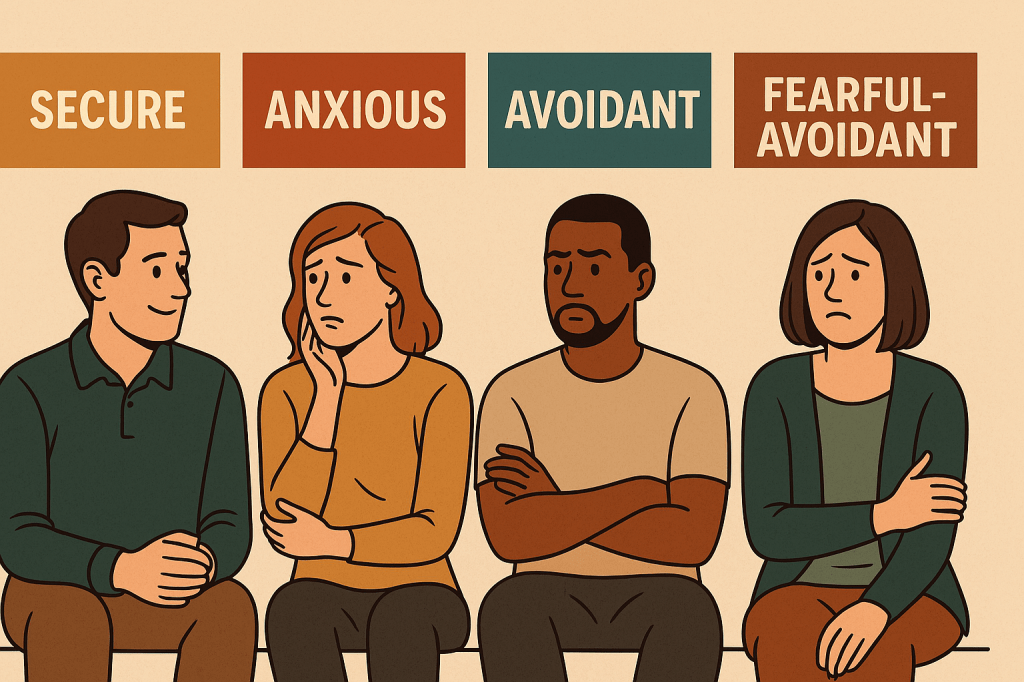
If there’s one thing western society loves almost as much as personality tests, it’s diagnosing relationship dynamics with attachment styles. Suddenly, every awkward text message delay, every weird argument over who forgot to buy oat milk, and every vague feeling of existential dread about love can be neatly categorized into one of four labels: Secure, Anxious, Avoidant, or the truly thrilling combo package—Fearful-Avoidant.
It’s like the Myers-Briggs of romance, except instead of deciding whether you’re an introvert or extrovert, you get to figure out whether you cling to your partner like a koala in a windstorm, or bolt for the door the second someone gets emotionally vulnerable.
The concept of attachment styles comes from psychologist John Bowlby, who first theorized that the way we bonded with our caregivers as infants shapes how we approach relationships in adulthood. Sounds reasonable, right? But the internet has turned this into an all-consuming diagnostic tool, where every failed romance is either the fault of an anxious partner texting too much or an avoidant partner texting… never.
The Pigeonholes of Love
Let’s start with the holy grail: Secure Attachment. If you have this, congratulations! You are a unicorn. You text back promptly, communicate your needs like a functional adult, and somehow don’t panic when your partner asks, “Hey, can we talk?” You were probably raised by parents who hugged you at the right times, and never forgot to pick you up from soccer practice. The rest of us admire you, resent you a little, and assume you exist mostly in fiction.
Then there’s Anxious Attachment, a.k.a. the Overthinker’s Club. These are the people who send, “Hey, everything okay?” when you don’t respond within 15 minutes, then follow up with, “Sorry, never mind, ignore me,” followed by, “Actually, I just wanted to check in,” and finally, “I guess you hate me now.” They crave closeness, but also kind of expect to be abandoned at any moment, which makes dating them an emotional rollercoaster with no seatbelts.
On the flip side, we have Avoidant Attachment, the poster child for ghosting. These folks see a heartfelt emotional conversation the way most people see an unsolicited call from their car insurance provider: something to be avoided at all costs. Their love language is “mysterious silence” and they’d rather disappear into the woods than have a deep talk about feelings. Commitment feels suffocating, which is why they often end up dating people with anxious attachment, because nothing says “healthy relationship” like one person desperately clinging, and the other desperately pulling away.
And then, for the truly chaotic, we have Fearful-Avoidant Attachment, also known as “Anxious and Avoidant, Because Why Not?” These individuals desperately want connection but also deeply fear it, making every relationship a high-stakes game of emotional Jenga. They text “I miss you” and then immediately throw their phone into the sea. They want love, but also, love is terrifying. It’s exhausting for everyone involved.
Escaping the Labels
Like every other personality test, attachment styles are useful, until they become a life sentence. Sure, maybe your childhood shaped your relationship habits, but that doesn’t mean you’re doomed to spend eternity analyzing your texts like a forensic scientist. People can change, grow, and even, brace yourself, go to therapy.
So, the next time someone tells you they’re anxiously attached or avoidantly wired, smile, nod, and remember; nobody fits neatly into a box. Except maybe Secure people. But honestly, who trusts them?
 The Rowanwood Chronicles
Ha! “Mysterious silence” as a love language? That tracks 😁
Solid summary, this reader does like it, even though you didn’t mention the internet’s favorite villain, i.e. the Dismissive Avoidant. What’s with that?
LikeLike
Thanks for the feedback and encouragement! I seemed to have used the “old” attachment style guide, and so now I have an opportunity to write a whole new blog post on Dismissive-Avoidant!
LikeLike