
In a city where political identities are often blurred by the pragmatism of urban governance, the decision by New York City mayoral candidate Zohran Mamdani to brand himself as a Democratic Socialist rather than the more conventional Social Democrat is not just a semantic flourish, it is a calculated and resonant act of political self-definition. With this move, Mamdani has signaled both clarity of purpose and a refusal to soften the ideological edges that increasingly define contemporary progressive movements.
The term “Social Democrat” has long carried the weight of historical compromise. It evokes images of European-style welfare capitalism: generous but measured; systemic but rarely disruptive. In the American context, it has often been used to describe politicians whose policies emphasize equity within capitalism without directly challenging its underlying structures. This has made it a safe label, palatable to centrists and progressives alike, but also, increasingly, a vague one. In contrast, “Democratic Socialist” offers sharper contours. It suggests not merely redistribution, but reimagination: of public housing as a universal right, of transit as a decommodified public service, and of the city itself as a collective endeavor rather than a marketplace.
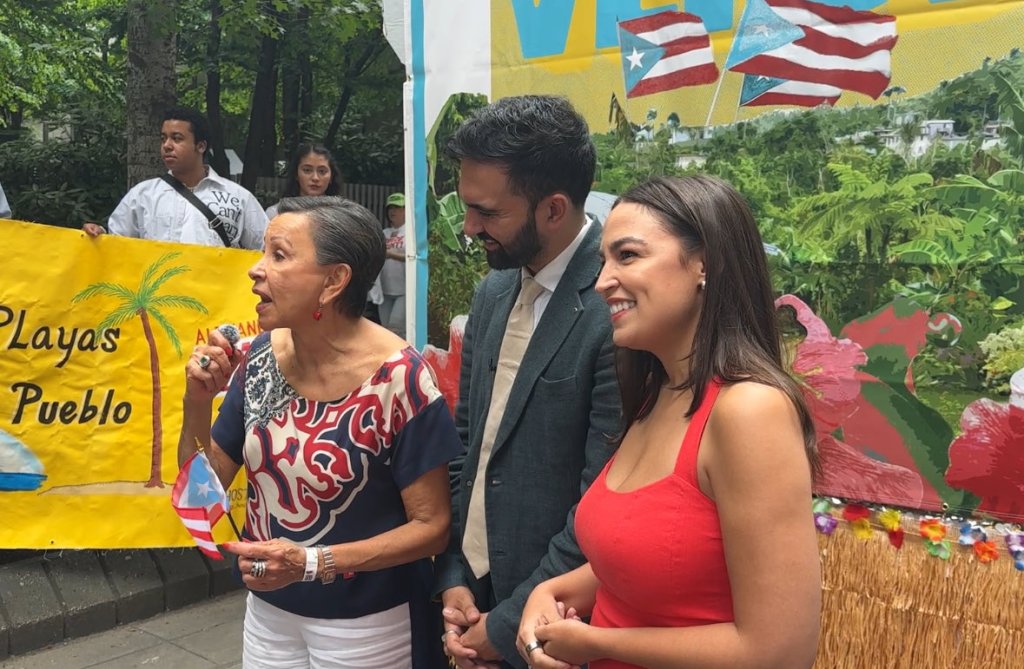
Mamdani’s use of the term places him firmly in the lineage of figures like Bernie Sanders and Alexandria Ocasio-Cortez, both of whom have successfully mainstreamed democratic socialism in American electoral politics. In doing so, he taps into an energized political current, particularly among younger voters, renters, union members, and New Yorkers disillusioned by the city’s deepening inequality and chronic dysfunction. For a generation raised amid austerity, pandemic precarity, and climate anxiety, the usual reformist language has begun to ring hollow. Mamdani’s brand of politics, by contrast, offers a promise of structural transformation, not just technocratic adjustment.
Importantly, this positioning also exerts strategic pressure on the rest of the field. In a crowded race where multiple candidates will profess progressive values, Mamdani’s unambiguous ideological label sets a benchmark. It forces other candidates to articulate whether their vision for the city includes systemic change or simply more efficient management. It also inoculates Mamdani from accusations of policy inconsistency or opportunism, his brand is explicit, unapologetic, and tied to a coherent political tradition.
The risks are not insignificant. “Socialism” remains a loaded term in American discourse, and Mamdani’s opponents will undoubtedly attempt to weaponize it. Yet recent electoral cycles suggest that voters, especially in urban areas, are increasingly unmoved by such attacks. If anything, they may interpret them as evidence that the candidate is willing to speak uncomfortable truths. In this context, reclaiming the term “Democratic Socialist” is not a liability, but an asset; a demonstration of conviction in an era fatigued by ideological hedging.
In choosing that label, Mamdani has not only clarified his own platform but reshaped the ideological stakes of the mayoral race. It is a move that marks him not merely as a candidate of the left, but as one committed to a transformative vision of what New York City could be.
 The Rowanwood Chronicles