I’ve been rewatching The Practice, hoping for a dose of nostalgia: those late-90s courtroom theatrics, that moody theme tune, and the familiar rhythm of idealism crashing against legal reality. But what surprised me wasn’t the storytelling or the era, it was how deeply repelled I became by the show’s lead character, Bobby Donnell. A man of supposedly good intentions, he’s ultimately undone by his chronic emotional dishonesty and suffocating self-righteousness. In the end, the best thing the show did was pave the way for the arrival of the Boston Legal characters, who brought the nuance, wit, and moral complexity that Bobby never could.
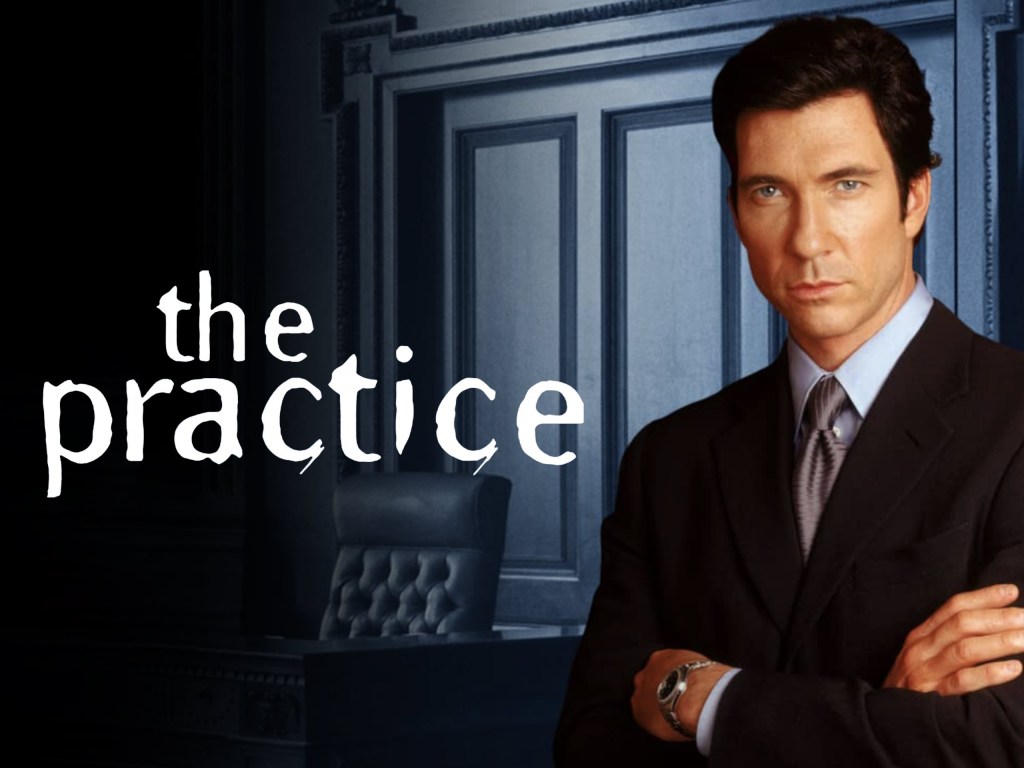
For a character originally framed as the moral heart of The Practice, Bobby Donnell ultimately emerges as its most damning contradiction. Played with a smoldering mix of gravitas and entitlement by Dylan McDermott, Bobby begins the series as a principled criminal defense attorney running a small Boston firm with a mission: protect the rights of the accused, even the despised. But over eight seasons, Donnell unravels, not just under the weight of his cases, but under the pressure of his own hypocrisy, ego, and emotional rigidity. He becomes less a moral compass and more a cautionary tale of what happens when leadership is confused with self-righteousness.
From the very beginning, Bobby insists his firm is about justice, not winning, not profit, but justice. Yet in practice, he constantly makes decisions based not on principle but personal discomfort. In Season 2’s “Line of Duty,” he castigates Ellenor Frutt for defending a client accused of killing a cop, saying some cases just shouldn’t be touched, even though the client’s constitutional rights were clearly at risk. Later, he takes on a mob-connected case, barely blinking, justifying it with lawyerly detachment. His selective outrage isn’t about morality; it’s about optics and control.
This moral cherry-picking repeats again and again. He regularly scolds his colleagues, especially Ellenor and Eugene, for taking hard cases, yet he routinely inserts himself into the most controversial trials, usually for ego or narrative centrality. His courtroom speeches swell with high-minded rhetoric, but outside the courtroom, he withholds trust, refuses to share decision-making power, and isolates himself emotionally from his team. Even when he claims to be protecting the firm’s integrity, he does so in ways that diminish the very people who built it with him.
Perhaps the clearest example of Donnell’s contradictions is his relationship with Lindsay Dole. Their romance, marriage, and eventual collapse unfold like a metaphor for Bobby himself, filled with good intentions, but poisoned by his inability to be emotionally honest. He expects Lindsay to carry the weight of their private life while he wavers and withdraws, unsure whether he wants to be a husband, a leader, or a martyr. In Season 7, when Lindsay leaves both the firm and the marriage, Bobby doesn’t fight for either. He simply broods, as if his silent suffering proves moral superiority. It doesn’t. It proves emotional cowardice.
By the time we reach Season 8, Bobby’s time is up. In the premiere episode “We the People,” he quietly announces his resignation, telling Eugene the firm has “changed.” But it’s clear to everyone, audience included, that it’s Bobby who has lost the thread. He leaves not with a grand gesture or hard-earned redemption, but with a hollow retreat. He has become irrelevant in the very world he once dominated. His ideals, which once energized the firm, now suffocate it. His refusal to adapt, to delegate, or to acknowledge his own contradictions has rendered him inert.
This transition is even more striking when Alan Shore, played by James Spader, is introduced. Where Donnell is rigid, Shore is fluid. Where Bobby moralizes, Alan provokes. Where Donnell masks his ambition behind virtue, Shore lays his cards on the table and dares anyone to call his bluff. Alan Shore is deeply flawed, cynical, manipulative, and unrepentantly arrogant, but he is never dishonest with himself or others about what he is. That self-awareness becomes his superpower. In contrast, Bobby drowns in the space between who he thinks he is and how he actually behaves.
This contrast explains why Shore succeeded Donnell as the show’s new focus, and why Boston Legal, the spin-off centered on Alan, felt so fresh. Alan’s moral ambiguity is deliberate, ironic, and challenging. Bobby’s is accidental and tragic. One is a commentary; the other is an artifact.
And perhaps that’s where Bobby Donnell best reflects the culture of his time. Emerging in the late 1990s, Bobby embodied the era’s discomfort with ambiguity. He was created at a time when American television wanted its male leads to be strong, sensitive, and righteous, but without really questioning how they acquired their authority. He was a Gen-X liberal fantasy: passionate about justice, yet plagued by self-doubt; emotionally repressed, yet morally certain. As the show matured, and as post-9/11 culture demanded sharper moral distinctions, Donnell’s gray-zone ethics and hand-wringing leadership began to look less noble and more self-indulgent.
In the end, Bobby Donnell is not a crusader. He is a man who mistook his own fragility for integrity, and his discomfort for principle. He failed to grow, to share power, or to examine his contradictions. His quiet exit from The Practice wasn’t just a narrative decision or a budget cut, it was the necessary conclusion of a character who never truly earned the role of moral center. And as Alan Shore stepped into the void, The Practice pivoted from sermons to satire, from guilt to guile, and was, arguably, better for it.
 The Rowanwood Chronicles