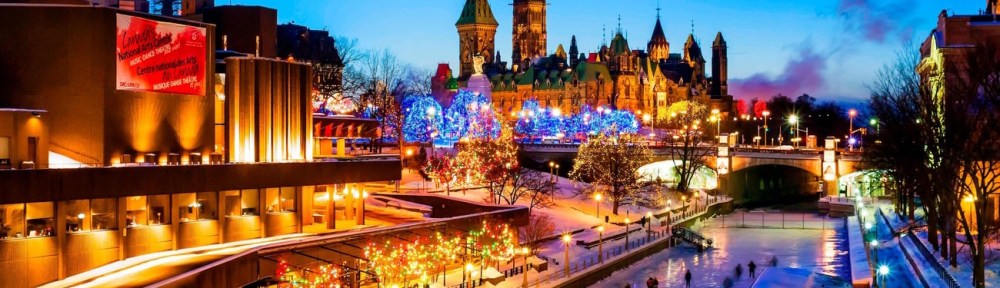
Ottawa has long laboured under the stereotype of being a sleepy government town where the sidewalks roll up at dusk. Nightlife in the nation’s capital has been quietly evolving through careful curation of venues, live music, food offerings, and niche late-night culture. The City has now created a central portal aimed at aggregating entertainment options while offering clear, accessible safety information. The result is a civic initiative that feels both timely and responsible.
The site functions as a hub rather than a hype machine. Design choices favour clarity and usability. Visitors encounter a cleanly organized venues directory, a safety section that points to trusted public health resources, and a business area that consolidates permits and licensing guidance. The tone is professional and approachable, which suits a municipal platform whose aim is to broaden participation in the night economy while maintaining public safety.

The venues directory is the site’s core. Category and location filters provide a practical way to find music venues, bars, lounges, and cultural spaces. Each listing supplies essentials such as name and address alongside genre tags that communicate the nightly atmosphere. This structure is especially helpful for patrons seeking a particular sound or vibe, from intimate jazz rooms to late-night electronic sets and drag performances. The directory reflects a diverse cultural offering that will surprise those who still picture Ottawa as monochrome after dark.
Safety receives thoughtful attention. The site links to harm reduction guidance and public health materials rather than attempting to recreate clinical advice. That approach builds credibility. Safety information is presented as a core part of the proposition rather than an afterthought, which sends a clear message that expanding the night economy must be done with public wellbeing in mind.
Resources for businesses demonstrate the City’s recognition of nightlife as an economic driver. Permit information, licensing details, and strategic planning documents are gathered in one place. This helps operators navigate civic requirements and signals that the municipality intends to partner with the private sector rather than simply regulate it. The inclusion of an Insiders section, which points to local newsletters and scene curators, is a welcome nod to the grassroots networks that actually animate the night scene.
In its current incarnation, the site succeeds at centralizing information and legitimizing after-dark culture as a civic priority. It feels like a strong launch platform that sets the groundwork for a more dynamic, user-focused service. To evolve into the indispensable tool that patrons, promoters, and visitors will rely upon, the site should add features that make discovery spatial, immediate, and deeply searchable.
Upgrades and Improvements to Make Ottawa At Night Truly Useful
- Map-Based User Interface A split-screen map and list view would turn a static directory into an exploratory tool. Clustered markers in denser neighbourhoods, clickable venue callouts, and the ability to draw a search box on the map would speed discovery for both tourists and locals planning a multi-stop evening.
- Cuisine Filtering Food choice often drives evening plans. Add structured cuisine tags such as Italian, Indian, Thai, Ethiopian, Mexican, Middle Eastern, Caribbean, and vegetarian or vegan options. Include kitchen hours so a user can find venues serving late dinners or small plates before a show.
- Enhanced Search Facets Extend search beyond music and neighbourhood. Offer filters for price range, accessibility, outdoor patio, open now, family friendly, gender neutral washrooms, and age restrictions. Granular facets reduce decision friction and increase confidence when choosing a venue.
- Integrated Event Calendar An events calendar with ticket links and add-to-calendar functionality would give the site a living pulse. Allow users to filter events by date, genre, and venue, and permit venues to post recurring nightlies. This transforms the portal from a directory into an event discovery engine.
- Transit and Ride Integration Embed late-night transit data, suggested pickup points for ride-share services, and walking times between venues. Clear routing information reduces the uncertainty that often dampens spontaneous nights out and improves safety outcomes.
- Accessibility and Safety Tags Make accessibility and safety facts prominent. Tag wheelchair access, accessible washrooms, service animal policy, quiet areas, and proximity to safe pick-up locations. Visibility of these details broadens inclusion for patrons with differing needs.
- User Ratings and Short Reviews Introduce a lightweight review system with verification for venue owners. Short, moderated reviews provide social proof while preserving a professional tone. Combine editorial descriptions with user impressions for balanced listings.
- Venue Claiming and Live Updates Allow venues to claim listings and update hours, menus, and event schedules through a verified portal. A moderated workflow keeps data accurate without imposing heavy administrative burden on City staff.
- Open Data and API Publish an exportable dataset and a simple API so local apps, tourism operators, and researchers can reuse the listings and events. Open data multiplies civic investment and supports the broader night economy ecosystem.
- Personalized Itinerary Builder Add an itinerary tool that chains dinner, a show, and a late-night bar with travel time calculated automatically. Shareable itineraries make planning with friends effortless and encourage multi-venue nights.
- Popularity Signals Provide anonymized crowd-level indicators, initially based on scheduled events rather than live tracking. Event-driven signals give a sense of atmosphere without creating privacy concerns.
- Multilingual Expansion Offer partial translations of key pages in languages frequently used by visitors to the city. This increases accessibility for international tourists and supports broader cultural engagement.
Review source and official site: https://ottawaatnight.ca
Along with general information about the site for the public, this review aims to provide constructive, actionable recommendations that can be handed to designers or civic teams for implementation.
 The Rowanwood Chronicles