
If the first step in the ethical evolution of museums is reckoning with the origins of their collections, the second must be reimagining how cultural treasures can be shared, studied, and celebrated without being hoarded. Fortunately, the 21st century offers tools our forebears could only dream of. Digital technology, particularly high-resolution 3D scanning, modeling, and immersive virtual platforms, is rewriting the rules of preservation and access. When used with cultural sensitivity and ethical intention, these tools allow us to honour ownership, facilitate repatriation, and still nourish a global commons of cultural knowledge.
Take 3D scanning: what was once an expensive novelty is now a powerful instrument of restitution and democratization. Museums can now create hyper-detailed digital replicas of artifacts, capturing every chisel mark, brushstroke, or weave of fabric. These models can be studied, shared online, integrated into augmented or virtual reality tools, or even 3D printed, all without requiring the physical artifact to remain on display in a distant capital city. This changes the equation. The original object can go home, back to the community or country from which it was taken, while its likeness continues to serve educational and scientific purposes worldwide.
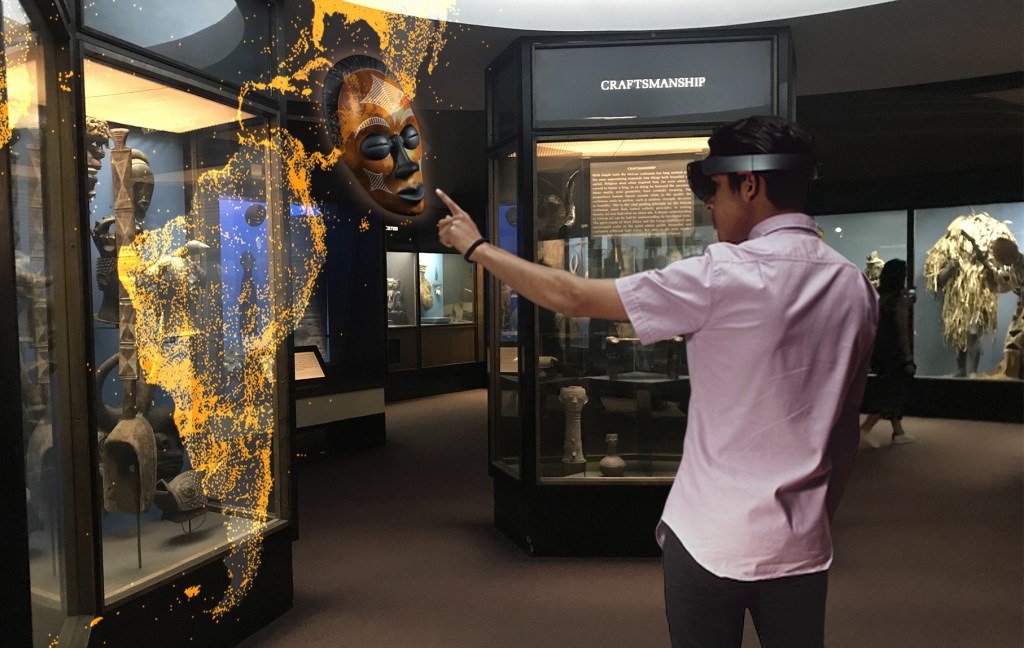
There is a quiet but profound dignity in this digital compromise. It allows for the physical return of heritage to those to whom it belongs, not just legally, but spiritually and historically, while also supporting the broader mission of museums to educate and inspire. And in many cases, the digital version can do things the original never could. Scholars can examine its dimensions in microscopic detail. Teachers can beam it into classrooms. Visitors can manipulate it, interact with it, and even walk through the worlds from which it came.
Yet let’s not pretend digital tools are a panacea. A scan cannot replicate the scent of parchment, the weight of a carved idol, or the sacredness of a funerary mask imbued with ancestral memory. Creating these models demands money, time, and skilled technicians, resources that smaller institutions may lack. But for those who can muster them, the return is substantial: ethical legitimacy, global engagement, and future-proof access to cultural heritage.
Enter the virtual museum, a concept whose time has truly come. With internet access now ubiquitous in much of the world, online museum platforms are exploding. Whether it’s the British Museum’s virtual galleries or the immersive tours of the Louvre, these digital spaces offer a new kind of cultural experience: borderless, accessible, and unconstrained by bricks, mortar, or geopolitics. For those unable to travel, due to distance, disability, or cost, virtual museums are not just convenient; they are transformational.
These platforms do more than display scanned objects. They weave in video, sound, oral histories, and expert commentary. They let users “handle” objects virtually, walk through reconstructions of lost cities, or compare artworks from across time zones and traditions. And crucially, they offer a space where repatriated artifacts can remain visible to the world. A sculpture returned to Nigeria or a mask restored to a Pacific island doesn’t need to vanish from global consciousness. Its story, and its scanned image, can be co-curated with local voices, shared respectfully, and kept safe in the digital domain.
This co-curation is vital. A truly decolonized digital strategy doesn’t just upload images, it shares authority. It ensures that the descendants of artifact-makers help decide how those objects are described, displayed, and interpreted. Digital museums can become sites of collaboration, not appropriation; places where cultural equity is baked into the code.
And then there’s the sustainability argument. Virtual museums dramatically reduce the environmental costs of international exhibitions, staff travel, and artifact shipping. They offer resilience against disaster, a fire, flood, or war may destroy a gallery, but not its digital twin. In a world of increasing instability, that matters.
So where does this leave us? It leaves us at the edge of something hopeful. The combination of digital modeling and virtual museums does not replace the need for physical repatriation, it complements and strengthens it. It allows us to move beyond the binary of “ours” versus “theirs,” and into a more nuanced, shared stewardship of humanity’s treasures.
The museum of the future is not a fortress. It is a node in a network, a partner in a dialogue, and a bridge across histories. If museums can embrace this vision, ethical, inclusive, and digitally empowered, they can transform from institutions of possession to institutions of connection. And that, perhaps, is the most valuable exhibit of all.
 The Rowanwood Chronicles