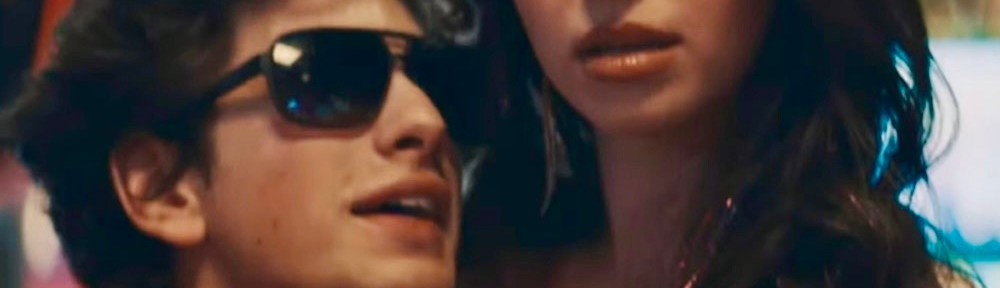
Sean Baker’s Anora may have won over the Oscars, but let’s be honest, this movie is a mess wrapped in neon lights and misplaced enthusiasm. It felt like something Baker wrote during his first year in film school fulfilling his teenage fantasies, and it’s the cinematic equivalent of a dive bar that looks fun from the outside, but reeks of stale beer and regret the moment you step in. Sure, it aims for a gritty, heartfelt take on sex work and the human condition, but what we get instead is a meandering, self-indulgent hormonal dream that confuses excess for artistry.
Let’s start with the so-called plot. Actually, scratch that, let’s start by asking if there even is a plot. The film meanders like a lost tourist on the Vegas Strip, lurching from scene to scene with no clear purpose. Ani, our protagonist, is introduced as a stripper with big dreams and zero depth, and we’re supposed to care about her whirlwind relationship with a clueless Russian heir; but instead of a gripping character study, we get a series of chaotic encounters that amount to little more than an overlong, R-rated sitcom episode where the jokes don’t land and the stakes feel artificial. There is a lack of real violence that we might expect from the henchmen, perhaps to maintain sympathy for both sides of the conflict, but Ani seem to either ignorant of the danger she is in, or a much hardened character than we are led to believe.

Speaking of artificial, the film’s depiction of sex work is about as grounded as a reality show. While Baker clearly wants to paint a raw, unfiltered portrait, he ends up romanticizing and sanitizing it in a way that feels both naive and irresponsible. The whole thing plays like someone’s edgy fantasy of what the industry might be like rather than a film that has anything meaningful to say. It’s not exactly Pretty Woman, but it’s also nowhere near as insightful as it thinks it is; and it’s certainly nowhere near as nuanced as Wayne Wang’s The Centre of the World.
Then there’s the pacing, or rather, the complete lack of it. The movie swings wildly between frantic, high-energy sequences and long, drawn-out moments of supposed introspection. Instead of tension, we get tedium. Instead of depth, we get characters staring off into the distance like they’ve just realized they left the oven on. Sean Baker’s direction, usually sharp and compelling, feels strangely unfocused here, as if he’s trying to recreate the chaotic energy of the Safdie brothers, but forgot to include a sense of purpose.
And let’s not forget the so-called humor. The film has been described as a dark comedy, but the laughs are as rare as a taxi in a rainstorm. What we get instead are awkward, uncomfortable moments that don’t quite land, sometimes because they’re too crude, sometimes because they’re just not funny. It’s like watching someone tell an inside joke to a room full of confused strangers.
By the time the credits roll, Anora feels less like a bold, provocative piece of filmmaking, and more like an experiment that spiraled out of control. The characters are thin, the story is scatterbrained, and the attempts at social commentary barely scratch the surface. It’s a movie that wants to be raw and unflinching, but ends up feeling hollow, like an expensive neon sign with a burnt-out bulb. Sure, some will call it daring, but there’s a fine line between bold and bloated, and Anora trips right over it.
 The Rowanwood Chronicles
My 76 year-old dad called it a boring porno 🙄
LikeLike