Unknown's avatar

About Chris McBean

Strategist, polyamorist, ergodox, permaculture & agroforestry hobbyist, craft ale & cider enthusiast, white settler in Canada of British descent; a wanderer who isn’t lost.

Five Things We Learned This Week

Here’s your fresh edition of “Five Things We Learned This Week” for July 19–25, 2025, featuring completely new global developments – all occurring within the past seven days:

🌍 1. China Cracks Down on Strategic Minerals Smuggling

China officially pledged to toughen enforcement against smuggling of vital strategic minerals like rare earths, citing increased covert operations, including false declarations and third-country transshipments.  This crackdown aims to safeguard materials essential to sectors from chipmaking to defense, reinforcing China’s zero‑tolerance export policy.

🌐 2. DRC and M23 Rebels Sign Ceasefire in Doha

On July 19, the Democratic Republic of Congo (DRC) and M23 rebel forces signed a declaration of principles in Doha, agreeing to an immediate ceasefire, detainee exchanges under ICRC oversight, and peace talks scheduled for August amid restored state authority efforts. 

🌐 3. Massive Russia Drone and Missile Attack on Ukraine

Overnight July 18–19, Ukraine endured a major assault of more than 30 missiles and about 300 drones launched by Russia, damaging critical infrastructure in Sumy and causing widespread power outages.

🌀 4. Magnitude 5.6 Earthquake Hits Northern Iran

A shallow 5.6 magnitude earthquake struck northern Iran on July 19, as reported by seismic authorities. The quake occurred at just 3 km depth, raising regional concerns about damage and preparedness in seismically active zones. 

🏅 5. British Athletes Finally Receive 1997 World Relay Gold

At London’s Diamond League event, Britain’s men’s 4×400 m relay teamwere presented with their 1997 World Championship gold medals, awarded 28 years late after the U.S. team was disqualified for doping.

The ceremony was attended by 60,000 cheering fans, honoring athletes Roger Black, Iwan Thomas, Jamie Baulch, Mark Richardson, and heat runner Mark Hylton.

This edition brings five entirely new, date-specific events from July 19–25, 2025: ranging from geopolitics and conflict, to environmental policy and sports history. Let me know if you’d like direct links or further analysis on any of these!

The Lost Republic: How America Abandoned Reconstruction and Built the Wrong Nation

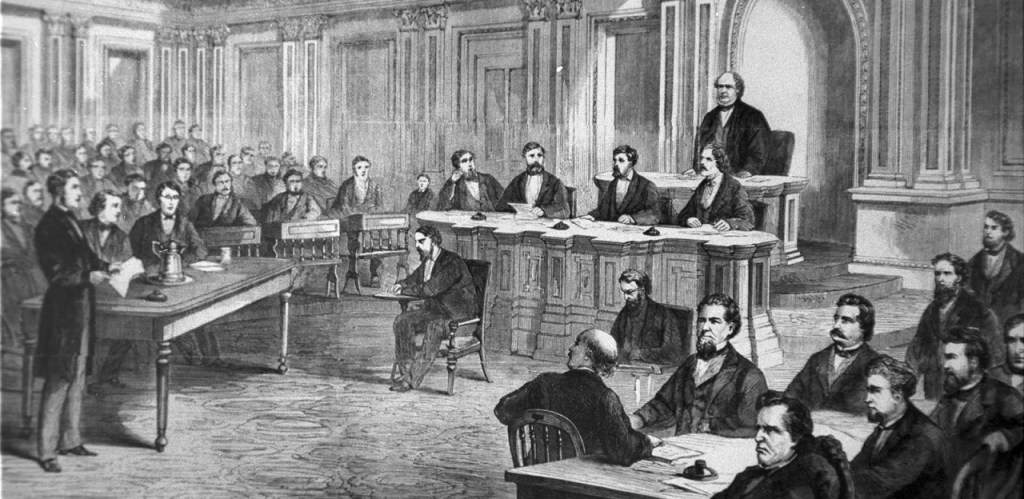
The United States stands today on the foundation of an unfinished revolution. The Civil War, often portrayed as the crucible in which the nation was made whole, was followed by a period of unparalleled opportunity to remake the republic. That window, known as Reconstruction, saw the brief emergence of a multiracial democracy in the former Confederate states, shepherded by the Radical Republicans in Congress. These were men who believed, fiercely and with moral clarity, that the war’s outcome demanded nothing less than the complete transformation of Southern society and the full inclusion of formerly enslaved people as citizens, voters, and landowners. What followed instead was a quiet, but definitive betrayal: a failure to complete the project of Reconstruction that left the white supremacist order largely intact, and gave rise to what some, including political commentator Allison Wiltz, now refer to as the “Second Republic.”

The Radical Republicans imagined a different America, one that would break the planter class’s hold over Southern life and reconstruct the country on the basis of racial equality and federal protection of civil rights. Their vision included land redistribution, the use of military force to protect Black communities, and the permanent disenfranchisement of Confederate leaders. The legal architecture was established: the 13th, 14th, and 15th Amendments promised freedom, citizenship, and suffrage. For a moment, this new republic seemed within reach. Black men voted and held office; schools and mutual aid societies flourished; and a vibrant, if fragile, political culture began to take root in the South.

Yet the resistance to this vision was swift and violent. Former Confederates, resentful and unrepentant, regrouped under new banners. Paramilitary groups like the Ku Klux Klan emerged to intimidate Black voters and assassinate Black officeholders. Northern commitment to the cause of Reconstruction waned in the face of political fatigue, economic anxiety, and racist sentiment. The Compromise of 1877, which ended federal military occupation of the South, is widely recognized as the final nail in the coffin of Reconstruction. In exchange for a peaceful transfer of power in a contested presidential election, federal troops were withdrawn, effectively abandoning Black Southerners to white rule once again.

What emerged from this retreat was not the restoration of the antebellum order, but its mutation into something more insidious. The Southern elite reasserted dominance not through slavery, but through systems of racial control that would become known as Jim Crow. Sharecropping, vagrancy laws, and racial terror filled the vacuum left by federal inaction. In the North, corporate capitalism surged forward, aided by a Supreme Court increasingly hostile to civil rights and sympathetic to business interests. The new republic, this Second Republic, was forged not in the idealism of the Radical Republicans, but in the compromise between Northern capital and Southern white supremacy.

This betrayal continues to shape the American republic. The legacy of that failed Reconstruction is visible in the persistent racial wealth gap, in mass incarceration, and in the legal structures that continue to insulate white political power from meaningful multiracial challenge. It is felt in the enduring distortions of the Senate and Electoral College, institutions that grant disproportionate influence to states that once formed the Confederacy. It is also enshrined in the judicial philosophy that privileges state power over federal guarantees of equality, a doctrine born in the retreat from Reconstruction, and still central to American constitutional life.

What if the Radical Republicans had succeeded? That question, once the domain of counterfactual speculation, is now a central concern of a new generation of historians and public thinkers. They argue that the United States would have become a different nation entirely, one in which racial justice was not a belated corrective, but a foundational principle. A country in which democracy was not constrained by white fear and property rights, but energized by the full participation of all its citizens. In short, they argue that the real opportunity to found a just republic came not in 1776, but in the 1860s, and that the country blinked.

In this light, America’s long twentieth century: the civil rights movement, the New Deal, the struggle for voting rights, can be seen not as inevitable progress but as a series of rear-guard actions trying to recover ground lost in the 1870s. Each new wave of reform has faced the same obstacles that defeated Reconstruction: the intransigence of entrenched interests, the ambivalence of white moderates, and the enduring capacity of American institutions to absorb and deflect demands for justice. The Second Republic, born of compromise and fear, remains with us still.

To understand the full dimensions of America’s present crises, from voter suppression to white nationalist resurgence, requires reckoning with the moment the nation chose reconciliation over transformation. Reconstruction was not a tragic failure of policy; it was an abandoned revolution, and until that original promise is fulfilled, the United States remains a republic only partially realized, haunted by the ghosts of the one it refused to become.

Sources:
• Foner, Eric. Reconstruction: America’s Unfinished Revolution, 1863–1877.Harper & Row, 1988.
• Blackmon, Douglas A. Slavery by Another Name. Anchor Books, 2008.
• Wiltz, Allison. “How the United States Became a Second Republic.” Medium, 2022.
• Du Bois, W.E.B. Black Reconstruction in America, 1860–1880. Free Press, 1998 (original 1935).

Maplewashing: The Hidden Deception in Canadian Grocery Aisles

Maple leaves on packaging, “Product of Canada” claims, and patriotic hues of red and white, these symbols of national pride are meant to instill trust and confidence in Canadian consumers. Yet behind some of these labels lies a troubling trend: the misrepresentation of imported food as domestically produced. Known colloquially as “maplewashing,” this practice is drawing increased scrutiny as Canadians seek greater transparency, and authenticity in their grocery choices.

At its core, maplewashing is a form of food fraud. Products sourced from the United States or other countries are being marketed with suggestive imagery or ambiguous labeling that implies Canadian origin. In some cases, food items imported in bulk are processed or repackaged in Canada, allowing companies to legally label them as “Made in Canada” or “Product of Canada” under current regulatory loopholes. This manipulation undermines consumer confidence and disadvantages local producers who adhere strictly to Canadian sourcing standards.

The Canadian Food Inspection Agency (CFIA) defines food fraud as any deliberate misrepresentation of food products, including their origin, ingredients, or processing methods. While the CFIA has made progress in addressing such issues, the agency still faces challenges in policing the retail landscape. Consumers have reported examples of apples from Washington state sold under Canadian branding, and frozen vegetables with packaging that evokes Canadian farms but are sourced entirely from overseas. These practices erode the integrity of the food system and compromise informed consumer choice.

In response to growing concern, some major retailers have attempted corrective measures. Loblaw Companies Ltd., for instance, has piloted initiatives to label tariff-affected American products with a “T” to signal their origin. Other grocers have begun offering clearer signage or dedicated sections for verified Canadian goods. Despite these efforts, enforcement remains patchy, and misleading labels continue to circulate freely on supermarket shelves.

Digital tools have emerged as allies in the fight against maplewashing. Smartphone apps now allow consumers to scan barcodes and trace the country of origin of a product, giving them the ability to verify claims independently. These apps, combined with mounting consumer pressure, are gradually raising the bar for accountability in food labeling.

Still, the systemic nature of the problem requires more than consumer vigilance. Regulatory reform is essential. Advocacy groups have called on the federal government to tighten definitions for what qualifies as “Product of Canada.” Under current guidelines, a product can be labeled as such if 98% of its total direct costs of production are incurred in Canada. Critics argue that this threshold allows too much flexibility for products with foreign origins to slip through.

Maplewashing is not merely a matter of misplaced labels. It is a breach of trust between food producers, retailers, and the Canadian public. As more shoppers demand transparency and local accountability, there is an opportunity to rebuild confidence through clearer standards, stronger enforcement, and a renewed commitment to honest labeling. Food should tell the truth about where it comes from, and no amount of patriotic packaging should be allowed to obscure that.

Sources:
Canadian Food Inspection Agency – Food Fraud
New York Post – Canadian shoppers frustrated at confusing US food labels
Business Insider – Canadian stores labeling American imports to warn consumers
Barron’s – Canadian boycott of American goods

Why Remembering You’re Always an Outsider Is Good for Business Consultants

As a business consultant, it’s common to spend extended periods embedded within a client’s organization. You may have a desk in their office, attend team meetings, and collaborate closely with staff at every level. It can feel like you’re part of their team, and sometimes clients may even treat you as one of their own.

But here’s an important reality that every consultant should keep front and center: no matter how much time you spend on-site, you are not, and never truly become, a member of their staff or permanent team. Recognizing this boundary is not just a philosophical point; it’s crucial for your effectiveness, your professionalism, and your well-being.

The Consultant’s Unique Position: Inside and Outside
Consultants occupy a unique vantage point that combines proximity and distance. You have access to the inner workings of the organization, insight into its culture, and the ability to influence decisions. Yet, unlike employees, you maintain independence and objectivity. That distance is your strength.

When you start to blur the lines, seeing yourself as “one of them” or becoming emotionally over-invested, you risk losing that objectivity. You may find it harder to challenge entrenched thinking or push for necessary, but uncomfortable changes. This can reduce the value you bring and potentially damage your credibility.

Why Clients Want You Close, But Not Part of the Team
Clients invite consultants in because they want fresh eyes, outside expertise, and sometimes a catalyst for change. If you were simply another internal employee, your perspective would be limited by existing organizational dynamics, politics, and habits.

That desk in the office is a practical convenience, a way to collaborate effectively. But it’s also a reminder: you’re a guest with a mission, not a permanent resident. This helps preserve your role as a trusted advisor rather than an insider subject to the same pressures and biases.

Maintaining Professional Boundaries Benefits Everyone
Keeping a clear boundary between consultant and client staff creates space for honest feedback and transparent communication. It allows you to speak truth to power without fear of reprisal or emotional entanglement.

For your own well-being, it helps maintain perspective. You avoid burnout that can come from overidentifying with a client’s internal struggles or organizational drama. You’re able to recharge between engagements, bringing renewed energy and insight to each new project.

Practical Tips for Consultants
Remember Your Contractual Role: You are hired for a defined scope and duration. Keep that in mind to avoid mission creep.
Maintain Objectivity: Regularly check your assumptions and biases. Ask yourself if you’re seeing the organization clearly or through the lens of familiarity.
Protect Your Boundaries: It’s okay to say no or push back if a client expects you to overstep your role.
Stay Connected to Your Own Network: Consulting can be isolating. Keep in touch with peers and mentors outside the client environment.
Celebrate Your Outsider Status: Use it as a source of strength. Your independence allows you to spot blind spots and opportunities that internal teams may miss.

Having a desk in your client’s office may create an illusion of belonging, but never forget you are a professional outsider with a distinct role and valuable perspective. Embracing that reality keeps you effective, respected, and energized throughout your consulting career.

Nigel Farage: The Pint-Sized Prophet of Populism (And Other Tall Tales)

If there were ever a political equivalent of a pub bore who mistook volume for vision and nostalgia for nationalism, it would surely be Nigel Farage. A man who has turned the art of saying nothing loudly into a long-running solo act, Farage now finds himself back on the national stage, pint in one hand, populist outrage in the other, like some Poundland Churchill with a hangover and no sense of irony.

Farage is not so much a politician as he is a walking sentiment, equal parts grumble and grin, a one-man Brexit tribute band who simply refuses to leave the stage, even though the audience has changed, the tune is out of key, and most of the band have long since sobered up and gone home.

His comeback tour, cleverly rebranded as “Reform UK”, is less a political movement than a support group for people who think the country went downhill the moment rationing ended. Armed with a spreadsheet of cherry-picked grievances and a deeply suspicious love for “common sense,” Farage has returned to Westminster as if he’s just popped into the nation’s living room to remind us that he’s still very angry, and that he can still somehow get on telly.

Let’s rewind. This is the man who has never won a seat in Westminster in seven tries, and only managed it on the eighth, Clacton, bless its confused heart, where enough voters were presumably just hoping he’d shut up if they gave him something to do. For years, Farage has been like that one bloke at a barbecue who says he doesn’t want to run the country, then spends three hours explaining why everyone else is doing it wrong and how it used to be better when “you could still say what you liked.”

What does he stand for? That depends entirely on what week it is and who’s paying attention. Europe? He hates it, except when he’s drawing a salary from the European Parliament, where he famously turned up just enough to wave little flags and scowl like a teenager dragged to a family dinner. Immigration? Terrible thing, until you remember he’s married a German and once declared he’d happily take in Ukrainians (as long as they were “the right kind” of refugee). The monarchy? Loves it, but isn’t above throwing shade at King Charles if it means a few more headlines in the Mail.

Farage is the kind of man who could declare war on Brussels at breakfast, have a ‘fish and chip’ photo op by lunch, and be caught on a yacht with a Russian banker by dinner. He’s not consistent – he’s theatrical. His is a politics of performance, not policy. Ask him how to fix the NHS and he’ll answer with a Churchill quote, a puff of smoke, and a vague suggestion that if only people stood up straight and sang the anthem more often, all would be well.

And let’s talk about the pint. That ever-present glass of warm bitter isn’t just a prop – it’s practically a political philosophy. It says, “I’m one of you,” even as Farage hobnobs with hedge funders and flirts with conspiracy theories like they’re going out of fashion (spoiler: they aren’t, at least not on GB News). The pint is the mask, just as every Farage rant is the distraction. He rails against elites while being one. He promises change while offering the same tired menu of scapegoats and slogans.

His greatest trick, of course, was convincing half the country that Brexit was an answer, not a 12-part question to which no one has yet written a coherent reply. And when things inevitably began to unravel: when farmers panicked, fish rotted, and red tape multiplied like rabbits on a cider binge; Farage did what any master of misdirection would do: he changed the subject. Now it’s the “deep state,” or “wokeism,” or electric cars. Anything to keep the engine of indignation running.

Farage’s real superpower is survival. Like a political cockroach, he outlives scandals, failures, party collapses, and logic itself. Reform UK isn’t about reforming anything; it’s about reforming Farage, again and again, into whatever new flavour of rage the market demands. One week it’s immigration, the next it’s Net Zero, the next it’s some obscure rant about meat taxes or metric martyrs. The man reinvents himself more often than Madonna, and with even more eyeliner, if you count the smugness.

And now, astonishingly, he wants to be Prime Minister. Farage, who has never run anything larger than a press stunt, now fancies himself as the captain of HMS Britain. It’s like giving the keys to your house to the bloke who just finished yelling at the manager in Wetherspoons.

Britain deserves better than Farage. They deserve leaders with ideas, not just outrage. With plans, not just punchlines. And with principles that go beyond “whatever makes the headlines.”

But perhaps the biggest joke is that Farage is no joke at all. He’s a very real symptom of a very real problem: a political culture where volume trumps vision, and media clout outweighs moral clarity. He may make Brits laugh, roll their eyes, or rage, but the real danger is when we stop noticing the sleight of hand behind the show.

So enjoy the circus. But don’t buy the popcorn.

Transparency on Tap: Why All Canadian Cider Should List Sugar Content

Back in December 2024, I wrote about the need for Ontario Cider to be labeled with its sugar content, and now with removal of interprovincial trade barriers there is a more urgent requirement for this change to be implemented nationwide.

As Canada steadily dismantles its long-standing patchwork of interprovincial trade barriers, from wine to eggs to trucking regulations, we must also address the smaller, subtler obstacles to open commerce and informed consumer choice. One such barrier, hidden in plain sight, is the inconsistent requirement for sugar labelling in Canadian craft cider.

Currently, cider producers are not required to list residual sugar content on their bottles or cans: not in Ontario, not in Quebec, not in B.C., or anywhere else in Canada. This lack of transparency undermines both public health goals and consumer trust. It also creates an uneven playing field for craft producers committed to lower-sugar products who must compete in a marketplace where consumers are left guessing.

Sugar Content: A Consumer Right
Residual sugar in cider can vary wildly, from dry, brut-style ciders with under 5 g/L to sweet dessert ciders with over 60 g/L. Yet without disclosure, consumers are flying blind. For diabetics, keto adherents, or simply those who want to monitor their sugar intake, this is more than a minor inconvenience, it’s a barrier to safe and informed consumption.

By contrast, wine labels often include sweetness descriptors like “dry” or “off-dry,” and many producers voluntarily publish grams per litre. Even big-brand soda discloses exact sugar content, so why are fermented apple products exempt?

A Barrier to Fair Trade
The newly energized national push to eliminate interprovincial trade barriers, backed by premiers and the federal government alike, is about more than just moving goods freely. It’s about creating a common regulatory language so producers in Nova Scotia can sell into Alberta without retooling their labels or marketing. If one province (say, Ontario) were to mandate sugar content on cider labels and others did not, that becomes a de facto barrier.

If Health Canada or the Canadian Food Inspection Agency mandated a national requirement for sugar content in grams per litre on all cider products, we’d level the playing field and remove an ambiguity that hinders cross-provincial commerce. More importantly, we’d be empowering Canadian consumers to make more informed decisions in a market that’s become increasingly diverse, from bone-dry craft ciders to syrupy-sweet fruit blends.

The Health Argument Is National Too
According to Statistics Canada, the average Canadian consumes about 89 grams of sugar per day, well above the World Health Organization’s recommended maximum of 50 grams. Alcoholic beverages, especially “alcopops” and flavoured ciders, are a hidden contributor. The federal government has already moved to require nutrition labels on prepackaged foods and some alcohol categories; cider should be next.

A Simple, Feasible Fix
Requiring sugar content on cider labels is not technically difficult. The metric, grams per litre, is already measured during fermentation and used internally by cideries to define style and taste profile. A national labelling requirement would cost little to implement and make a meaningful difference to consumers.

One Label, One Standard
As Canada moves toward true internal free trade, let’s make sure consumer transparency travels alongside it. Listing sugar content on cider labels isn’t just good policy for public health, it’s a smart, simple step toward harmonizing our food and drink economy. When it comes to cider, it’s time Canadians knew exactly what they’re drinking, no matter where it’s made.

On a personal note, my interest goes beyond the health issue, it’s that I much prefer ciders with less than 5 g/L and that currently just because a can or bottle says “Dry” doesn’t mean the cider is actually dry. 

The Budapest Memorandum of 1994: A Cautionary Tale in Security Assurances

The Budapest Memorandum on Security Assurances, signed on 5 December 1994, stands as a pivotal moment in post-Cold War geopolitics. Emerging from the ashes of the Soviet Union, it marked a rare convergence of nuclear disarmament and multilateral diplomacy. Ukraine, Belarus, and Kazakhstan, each inheriting a share of the USSR’s vast nuclear arsenal, were persuaded to relinquish their strategic weapons in exchange for assurances from the United States, the United Kingdom, and the Russian Federation. The signing took place at an OSCE summit in the Hungarian capital, hence the document’s name.

At the heart of the memorandum was Ukraine’s possession of the third-largest nuclear arsenal in the world. Though the warheads were technically under Russian operational control, they remained physically on Ukrainian soil. The U.S. in particular led efforts to prevent the emergence of new nuclear states from the former Soviet republics, promoting the Treaty on the Non-Proliferation of Nuclear Weapons (NPT) as the legal mechanism for disarmament. In return for joining the NPT as a non-nuclear weapon state, Ukraine was promised political assurances regarding its sovereignty, territorial integrity, and security.

The terms of the Budapest Memorandum were significant, though pointedly not binding under international law. The signatories pledged to respect the independence and existing borders of Ukraine, refrain from the threat or use of force, and avoid economic coercion. They also committed to seek UN Security Council action if nuclear weapons were ever used against Ukraine, and promised not to use nuclear weapons against the country themselves. The inclusion of a clause requiring consultations in the event of disputes or threats was intended to provide a diplomatic channel in times of crisis.

What is critical to understand is that the memorandum was not a formal treaty. It lacked enforcement mechanisms and legal penalties, relying instead on political goodwill and international norms. This distinction would prove fatal to its credibility two decades later.

The annexation of Crimea by the Russian Federation in early 2014, followed by its support for separatists in the Donbas region, represented a direct challenge to the core principles enshrined in the Budapest Memorandum. Ukraine’s territorial integrity was violated by a state that had explicitly committed to uphold it. While the United States and the United Kingdom issued strong condemnations and imposed sanctions on Russia, neither country provided direct military support to Ukraine, citing the memorandum’s non-binding nature.

Russia, for its part, has argued that the circumstances of 2014, namely, the change in Ukraine’s government following the Maidan Revolution, nullified the commitments under the agreement. It has also claimed that Crimea’s “referendum” justifies its actions. These positions are widely rejected by the international legal community and by the other signatories of the memorandum, but the damage to the credibility of security assurances was done.

The legacy of the Budapest Memorandum is now viewed with a mix of regret and realism. It illustrates the limits of non-binding agreements in deterring aggression by great powers, and it has become a central reference point in discussions on nuclear disarmament and non-proliferation. For Ukraine, the memorandum is a bitter reminder of the price paid for denuclearization without robust, enforceable guarantees. For the global community, it raises hard questions about the viability of relying on political promises in an increasingly unstable world.

The Budapest case has also had ramifications beyond Eastern Europe. It has been cited by countries such as North Korea and Iran in debates over nuclear policy, reinforcing the perception that possession of nuclear weapons may offer more reliable security than any assurance signed on paper. In the decades since, the gap between rhetoric and reality in international security agreements has only widened.

Sources
• United States Department of State Archive. Background Briefing on Ukraine, March 2014. https://2009-2017.state.gov
• United Nations Office for Disarmament Affairs. Treaty on the Non-Proliferation of Nuclear Weaponshttps://disarmament.un.org
• Council on Foreign Relations. Why Ukraine Gave Up Its Nuclear Weapons, 2022. https://www.cfr.org/backgrounder/why-ukraine-gave-nuclear-weapons
• Chatham House. Ukraine, Russia and the West: The Budapest Memorandum at 30, 2023. https://www.chathamhouse.org

The Promise of Sand Batteries: A New Frontier in Thermal Energy Storage

In the global push toward a clean energy future, battery technology has taken centre stage. Yet not all energy needs to be stored as electricity. Enter the sand battery: a simple, scalable, and surprisingly elegant solution to the problem of storing renewable energy as heat. While lithium and flow batteries dominate headlines, sand-based thermal storage may quietly become one of the most important tools in the transition to net zero, especially in colder climates and industrial sectors.

At its heart, a sand battery is a thermal energy storage system. It uses resistive heating elements to convert surplus renewable electricity into heat, which is then stored in a large mass of sand. Sand is cheap, abundant, non-toxic, and capable of withstanding extremely high temperatures – up to 1000°C in some designs. Once heated, the sand is housed in a well-insulated steel or concrete silo, where it can retain thermal energy for days, weeks, or even months. The stored heat can later be extracted and used directly in heating systems or, in some cases, converted back into electricity.

The real beauty of sand batteries lies in their efficiency and affordability. When used for heating applications, such as district heating networks or industrial processes, they achieve thermal round-trip efficiencies of 80 to 95 percent. This puts them in a strong position compared to chemical batteries, especially where the end-use is heat rather than electricity. Converting heat back into electricity is less efficient, often below 40 percent, which limits their utility as pure power storage. Yet, for countries with long, cold winters, and industries dependent on high-temperature heat, sand batteries could be revolutionary.

In Finland, the town of Kankaanpää is already home to the world’s first commercial sand battery, developed by startup Polar Night Energy. The battery stores excess wind and solar power during the summer and discharges it in winter to supply district heat. It’s a practical, real-world demonstration of what this technology can do: provide seasonal storage at a fraction of the cost of chemical alternatives. Think of Canada’s northern and remote coastal communities storing wind and solar energy during the summer, then operating their community heating facilities using sand batteries throughout the winter.  

The potential applications extend well beyond district heating. Many industrial processes: textiles, paper, chemicals, and food production, rely heavily on thermal energy. Today, most of that heat comes from burning fossil fuels. Sand batteries offer a clean alternative, especially when paired with renewables. They’re also ideal for off-grid and remote locations, where reliable heat can be hard to come by.

Compared to other storage technologies, sand batteries stand out for their low cost and long-duration potential. They’re not a replacement for lithium batteries or pumped hydro, but are a crucial complement. As more nations seek to decarbonize not just electricity, but also heating and industry, sand batteries will likely find a permanent place in the energy landscape.

Simple, scalable, and rooted in abundant natural materials, sand batteries remind us that sometimes the most advanced solutions are also the most grounded. In the race toward a sustainable energy future, this humble pile of sand might just be one of our best bets.

Five Things We Learned This Week

Here’s the fresh edition of “Five Things We Learned This Week” for July 12–18, 2025, featuring entirely new developments—no repeats, all within the past seven days:

🌊 1. Central Texas Flash Floods Devastate Communities

• Between July 4–7, unprecedented flash floods in Central Texas, including Camp Mystic, resulted in at least 129 deaths, with over 160 people still missing  .

• The disaster inflicted estimated economic losses of $18–22 billion, raising critical questions about climate-linked extreme weather and resilience amid weakened federal emergency infrastructure  .

🔥 2. Deadly European Heatwave Continues—Over 2,300 Deaths

• A severe heatwave that began in late May continued into mid-July, claiming approximately 2,300 lives—with Spain, the U.K., and Portugal most affected  .

• Record-breaking high temperatures (e.g., up to 46.6 °C in Portugal on June 29) prompted heat-health alerts, hosepipe bans, and drought declarations across parts of the U.K.  .

⚖️ 3. Thailand’s Prime Minister Suspended Amid Political Turmoil

• On July 1, Thailand’s Constitutional Court suspended PM Paetongtarn Shinawatra over an alleged leaked call—further destabilizing the already fragile 8-minister coalition  .

• This development deepens the ongoing political crisis and could trigger early elections or realignment in Thai governance   .

🇸🇾 4. Israeli Airstrikes Hit Key Syrian Military Sites

• On July 16, Israeli jets conducted strikes on the Syrian Presidential Palace and General Staff headquarters in Damascus  .

• The attack marks a significant escalation in Israel’s regional military operations and further strains tensions amid Syria’s protracted conflict  .

🏊‍♂️ 5. Singapore Hosts World Aquatics Championships

• From July 10–13, Singapore successfully hosted the 2025 World Aquatics Championships, attracting global athletes and fans to the city-state  .

• The event showcased elite competition in swimming, diving, water polo, and synchronized swimming, reinforcing Singapore’s capacity to host world-class sporting events  .

Each of these highlights occurred between July 12–18, 2025, and provides truly fresh insight across climate disasters, health crises, political shifts, military action, and international sport. Would you like full links or deeper analysis on any of these?

The Problem with TNG Groups: Why We Can’t Afford to Ignore the Elders (Updated)

The update is because apparently I wasn’t clear enough around the distinction between BDSM play and sex, while making the case for intergenerational mentorship, without diluting the importance of age-specific spaces. 

By now, most of us active in the kink world have heard of TNG groups – short for The Next Generation. These are community spaces, usually restricted to members aged 18 to 35, designed to provide younger people with opportunities to explore BDSM among peers, free from what some see as the social and sexual pressures of older participants.

I understand the motivation. For younger people, entering a kink space for the first time can be daunting, especially when it’s populated by people who are decades older. There’s a very real concern about predatory behaviour, especially in communities where power exchange is already a central theme. Boundaries matter. And spaces where younger kinksters can build confidence, self-knowledge, and friendships without fear of being “creeped on” are valid and valuable.

Yet, somewhere along the way, the well-intentioned effort to protect and empower young people has hardened into something less healthy: exclusion. What began as a way to create peer-based support networks has too often become a wall that blocks essential mentorship, skill transmission, and historical continuity, elements that BDSM, as both a practice and a culture, can’t afford to lose.

BDSM Is Not Sex – But Sex Has Muddied the Water
We need to start by untangling a key confusion that’s quietly undermining both sides of this debate: BDSM play is not inherently sexual. The popularization of kink through mainstream media and online platforms like FetLife and Reddit has brought in a wave of newcomers, many from swinger or sex-positive backgrounds, who conflate BDSM with sex, and especially with casual sex.

To be clear, there is nothing wrong with mixing sex and kink when it’s negotiated. But BDSM is, at its core, about power exchange, control, sensation, trust, and often intense emotional experiences. For many long-time practitioners, myself included, it’s not about genitals or orgasms. It’s about precision, discipline, psychological connection, and often an aesthetic rooted in service, restraint, and deep consent.

When younger kinksters say, “We don’t want to be hit on by older members,” they are absolutely within their rights, but when that discomfort is extended to include exclusion from educational play parties, skill shares, or mentoring scenes simply because someone is over 40, we are no longer talking about safety, we’re talking about ageism. And in doing so, we risk throwing out the very scaffolding that makes BDSM sustainable.

The Value of Mentorship in BDSM
Unlike sex, which most people figure out through personal experimentation, BDSM carries real physical, psychological, and ethical risks. There are tools that can break skin, restrict breathing, or trigger trauma. There are dynamics that mimic abuse but rely on deep consent, mutual care, and communication. These things are not intuitive. They are learned.

Much of what we know today about safety, negotiation, aftercare, trauma-informed practice, and even how to structure a D/s relationship, was developed by earlier generations of kinksters who often learned the hard way. There is a lineage of knowledge that deserves to be passed down, not cut off.

I’ve seen firsthand what happens when younger players are left to figure things out on their own. I’ve watched scenes falter because no one recognized emotional drop. I’ve seen harm escalate because boundaries were not clearly discussed. I’ve witnessed newer Dominants imitate porn-inspired dynamics with no understanding of service, responsibility, or care. And I’ve seen submissives pushed beyond their limits by equally inexperienced peers, not out of cruelty, but out of ignorance.

This is not a matter of policing young people. It’s a call to enrich their experience with the depth of collective wisdom that already exists.

Let TNG Stay Social – But Open the Gates for Skill-Building
To be clear, I’m not against TNG spaces. The desire to socialize with peers is entirely valid. Younger folks deserve spaces where they can be themselves, flirt freely, and build community without feeling objectified by older members, but BDSM play spaces and skill-sharing events are not the same thing as social mixers. When TNG policies extend to the full exclusion of older, experienced practitioners from education-focused events, we lose the very thing that makes kink community valuable.

The solution isn’t to abandon age-based spaces, it’s to differentiate between social comfort and educational necessity. TNG groups can and should host age-restricted munches, parties, and discussion groups, but when it comes to workshops, play parties focused on learning, mentorship programs, and community leadership, older kinksters still have a vital role to play.

That role isn’t about control or dominance over the group. It’s about availability, humility, and stewardship. The job of an elder isn’t to run the show, but to help others run their own shows safely and meaningfully.

Safer Communities Require Bridges, Not Walls
We don’t build safer communities by locking people out. We build them by teaching people how to assess risk, how to spot manipulation, how to say no and how to hear no. These are not age-bound skills, they are community-bound ones, and community can’t thrive without cross-generational dialogue.

We also need to reject the simplistic framing that younger equals safe and older equals predatory. Harmful behaviour exists across all ages, genders, and orientations. What matters is ethics, accountability, and communication, not the date on someone’s birth certificate.

Toward a New Kind of TNG – One Rooted in Collaboration
Imagine a model where TNG groups maintain social autonomy, but invite older members to run skill-based workshops, offer scene coaching, or mentor newer Dominants and submissives. Where events have posted boundaries, vetting, and safety teams, but also include intergenerational wisdom. Where “creepy” behaviour is called out and dealt with directly, not just filtered out through blanket age bans. Where learning is prioritized, not sanitized.

TNG spaces could become crucibles for a new kind of kink culture, one that’s trauma-informed, neurodivergence-aware, inclusive, and intersectional, but only if they also embrace the old lessons that still matter. We don’t need elders to dominate the room, but we do need them to be in the room.

Don’t Lose the Map
No one climbs a mountain without a guide. And no one should be expected to navigate the emotional, psychological, and physical terrain of BDSM without access to experienced support. If you’re 22 and just stepping into kink, you deserve better than a social group with no elders, and a YouTube playlist. You deserve mentorship, safety, and tradition alongside your peer group.

At the time of writing, my regular BDSM play partners range in age from their early 30s to mid 60s, and I’m currently mentoring a newcomer to the community in her early 40s. Because we’ve taken the time to communicate clearly, set expectations, and build trust, age fades into the background. What truly matters are knowledge, skill, and lived experience.

It’s time we stopped treating age as the enemy and started treating community as the goal. Let the TNG groups flourish, but let the wisdom flow.

Sources
• Barker, M., & Langdridge, D. (2010). Understanding Non-Monogamies. Routledge.
• Newmahr, S. (2011). Playing on the Edge: Sadomasochism, Risk, and Intimacy. Indiana University Press.
• Easton, D., & Hardy, J. W. (2017). The Ethical Slut (3rd ed.). Ten Speed Press.
• Rubel, D. J. (2014). “Kink and the Problem of Nonsexual Intimacy.” Journal of Positive Sexuality, 1(1), 16–19.
• Martinez, T. (2022). “The Rise and Limits of TNG Spaces in the Kink Community.” Leatherati Archive.