Strategist, polyamorist, ergodox, permaculture & agroforestry hobbyist, craft ale & cider enthusiast, white settler in Canada of British descent; a wanderer who isn’t lost.
Ah yes, ghosting, the ultimate disappearing act of the digital age. It’s like ditching a party through the bathroom window without so much as a “thanks for the snacks.” Passive-aggressive? Check. Lazy? Double check. But effective? Sure, if you count avoiding awkward conversations as an accomplishment. Spoiler alert – it’s not.
Let’s be real. Ghosting is less about sparing someone’s feelings and more about dodging accountability. It’s like saying, “I’m too emotionally constipated to have an adult conversation, so here’s eternal silence instead.” Bravo, ghoster. You’ve unlocked the relationship equivalent of turning off your phone and calling it self-care.
Now, here’s the plot twist: some people ghost people they actually like. Why, you ask? Oh, just a cocktail of commitment issues, fear of vulnerability, and the maturity of a houseplant. Think of it as emotional dodgeball, except they threw the ball, ran home, and never came back.
Research (and common sense) shows that people with attachment avoidance are the reigning champions of ghosting. These are the folks who would rather fake their own death than text, “This isn’t working out.” Instead, they fade away like a bad Wi-Fi signal, leaving you wondering if it was something you said, did, or wore (it wasn’t).
Here’s the kicker, ghosting isn’t about you. It’s about them. Their fears. Their insecurities. Their inability to handle adult-level emotions. So, when someone ghosts you, consider it a blessing. You just dodged a lifetime of, “Why won’t they talk about their feelings?” Pop the champagne and move on.
That said, let’s not sugarcoat it, ghosting hurts. It’s the emotional equivalent of yelling into an empty canyon and waiting for an echo that never comes. One minute you’re texting about your favorite pizza toppings, the next you’re refreshing your messages like a stock ticker in free fall. And just when you’ve pieced yourself back together, in shuffles the ghost turned zombie.
Ah yes, the zombie; a ghoster who rises from the dead with a “Hey stranger!” text at 2 a.m., as if they didn’t vanish like a magician’s rabbit. It’s the ultimate insult: “I didn’t care enough to stay, but I’m bored enough to come back.” Block them, delete the thread, and light a sage stick for good measure.
So, what’s the moral of the story? Ghosting is the coward’s way out. It’s a neon sign flashing, “I can’t handle hard conversations!” If you’re ghosted, clap for yourself because you dodged an emotional grenade. And if the zombie reappears? Ghost them right back. Poetic justice tastes even better than that pizza you never got to share.
Over the past few weeks, social media has once again erupted (pun intended) with dire warnings that Yellowstone’s “supervolcano” is about to blow. TikTok doomsayers cite minor earthquakes, thermal features, and even routine geyser activity as harbingers of catastrophe. But is there any truth to these claims?
The short answer is no. The United States Geological Survey (USGS), which monitors Yellowstone around the clock with some of the most sophisticated volcanic surveillance equipment in the world, has stated plainly: there is no sign of impending volcanic eruption.
Let’s break down the facts.
🌋 Current Volcano Status (July 2025)
According to the latest monthly update from the USGS Yellowstone Volcano Observatory (YVO), the volcano alert level remains at “NORMAL”, and the aviation color code is GREEN. These are the lowest possible threat levels.
In June 2025, a total of 60 small earthquakes were recorded in the Yellowstone region – the largest being magnitude 2.7. These are not unusual for the region, which experiences 1,000–3,000 small quakes annually due to tectonic and hydrothermal activity.
Ground deformation – which could suggest underground magma movement – has followed seasonal patterns, with about 3 cm of gradual subsidence (sinking) since October. This is a normal process that’s been ongoing for years and shows no signs of new magma intrusion.
No earthquake swarms or unusual uplift patterns have been detected.
🔥 What About the Geysers and Hydrothermal Eruptions?
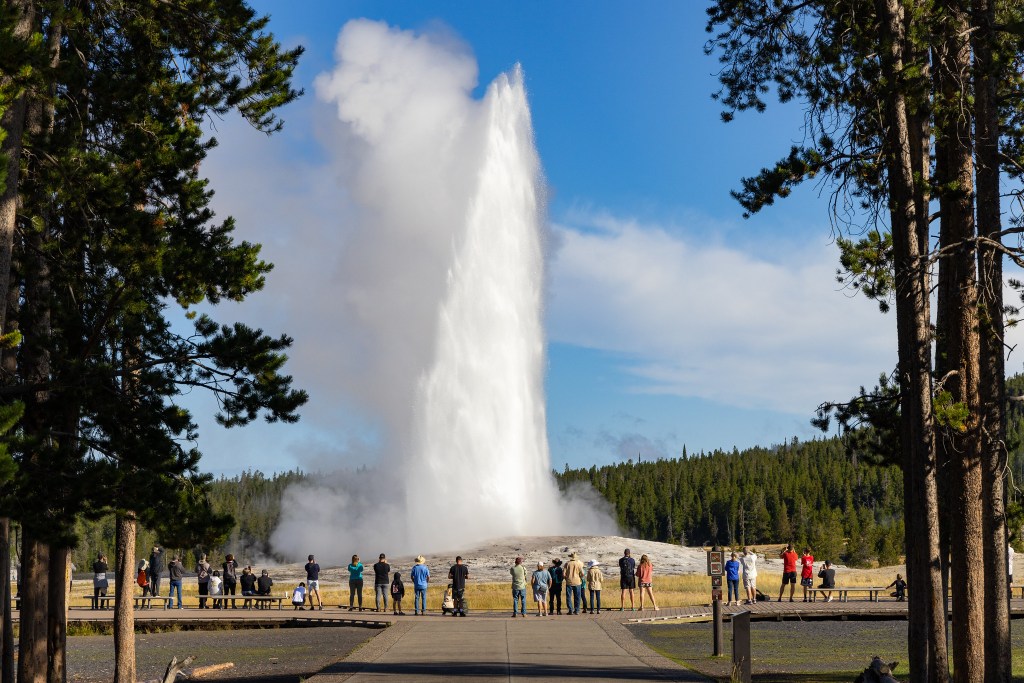
Much of the alarm online stems from a webcam video of a minor hydrothermal “eruption” at Black Diamond Pool, which occurred at 6:25 a.m. MDT on June 12, 2025. While visually striking, this was not a volcanic eruption. Hydrothermal explosions are steam-driven events caused by water heating rapidly beneath the surface – common in geyser basins like Biscuit Basin, where this event occurred.
These events do not indicate magma movement or increase the likelihood of a super-eruption.
Even the famed Steamboat Geyser, the world’s tallest active geyser, has had a busy year. But again, this activity is part of Yellowstone’s normal hydrothermal behaviour, which is separate from the volcanic system.
🧠 What the Science Says About Risk
New research published in 2025 using advanced imaging techniques (seismic tomography and magnetotellurics) has provided a more detailed look at Yellowstone’s subsurface magma system. Key findings include:
Four distinct magma bodies exist under Yellowstone, but they are mostly solidified (less than 15% melt), meaning they are not capable of producing a super-eruption.
A magma cap – a pressurized layer around 3.8 km deep – acts like a pressure relief valve, venting volcanic gases and preventing pressure buildup.
The risk of a major eruption is extremely low. The USGS estimates the annual probability of a super-eruption at 0.00014% – or 1 in 700,000.
Yellowstone is not some forgotten natural hazard. It is among the most heavily monitored volcanic systems on Earth, with:
Over 40 seismic stations
Ground deformation sensors (GPS and InSAR)
Real-time gas emission detectors
Remote thermal imaging and high-resolution webcams
Additionally, new sensors were installed in 2024 in Biscuit Basin and Slough Creek to monitor hydrothermal features more precisely. Any significant change would be detected within minutes and shared widely by USGS, NOAA, and international volcanic monitoring organizations.
✅ Final Word
The truth is less dramatic than a TikTok clip, but far more reassuring. Yellowstone is a living, breathing volcanic and hydrothermal system, and minor earthquakes, geyser bursts, and steam explosions are all part of its normal geological rhythm.
The scientific consensus remains solid: there is no indication of any imminent eruption, let alone a catastrophic one. So while the Yellowstone landscape may be thrilling, the science is calm and clear.
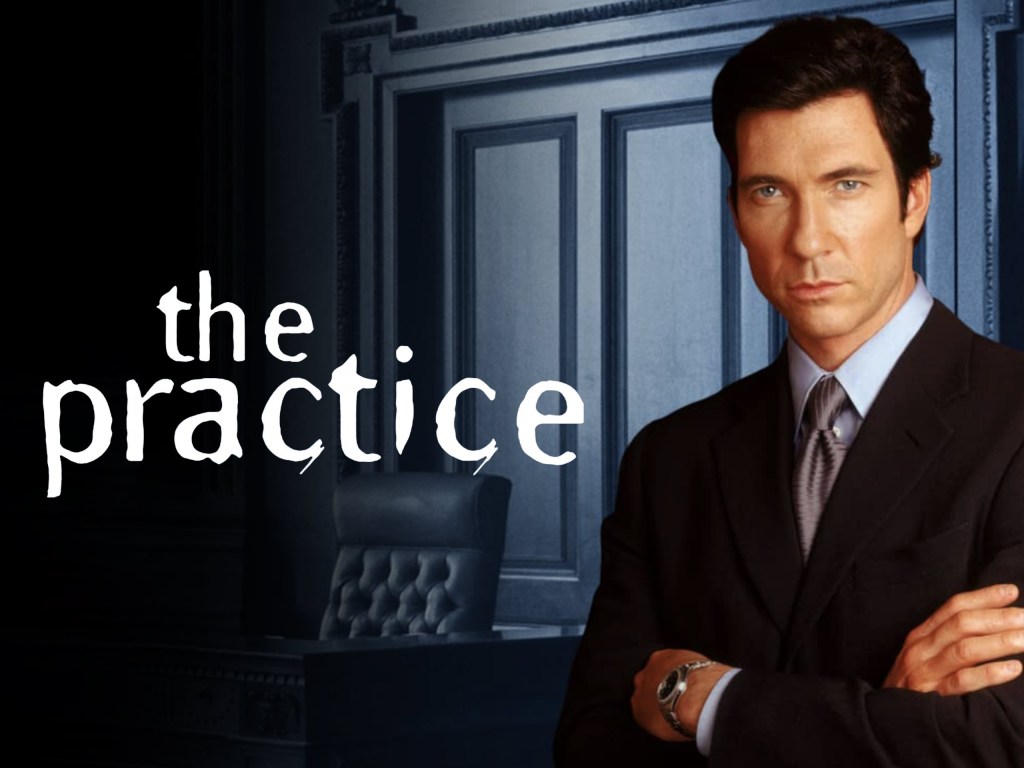
I’ve been rewatching The Practice, hoping for a dose of nostalgia: those late-90s courtroom theatrics, that moody theme tune, and the familiar rhythm of idealism crashing against legal reality. But what surprised me wasn’t the storytelling or the era, it was how deeply repelled I became by the show’s lead character, Bobby Donnell. A man of supposedly good intentions, he’s ultimately undone by his chronic emotional dishonesty and suffocating self-righteousness. In the end, the best thing the show did was pave the way for the arrival of the Boston Legal characters, who brought the nuance, wit, and moral complexity that Bobby never could.
For a character originally framed as the moral heart of The Practice, Bobby Donnell ultimately emerges as its most damning contradiction. Played with a smoldering mix of gravitas and entitlement by Dylan McDermott, Bobby begins the series as a principled criminal defense attorney running a small Boston firm with a mission: protect the rights of the accused, even the despised. But over eight seasons, Donnell unravels, not just under the weight of his cases, but under the pressure of his own hypocrisy, ego, and emotional rigidity. He becomes less a moral compass and more a cautionary tale of what happens when leadership is confused with self-righteousness.
From the very beginning, Bobby insists his firm is about justice, not winning, not profit, but justice. Yet in practice, he constantly makes decisions based not on principle but personal discomfort. In Season 2’s “Line of Duty,” he castigates Ellenor Frutt for defending a client accused of killing a cop, saying some cases just shouldn’t be touched, even though the client’s constitutional rights were clearly at risk. Later, he takes on a mob-connected case, barely blinking, justifying it with lawyerly detachment. His selective outrage isn’t about morality; it’s about optics and control.
This moral cherry-picking repeats again and again. He regularly scolds his colleagues, especially Ellenor and Eugene, for taking hard cases, yet he routinely inserts himself into the most controversial trials, usually for ego or narrative centrality. His courtroom speeches swell with high-minded rhetoric, but outside the courtroom, he withholds trust, refuses to share decision-making power, and isolates himself emotionally from his team. Even when he claims to be protecting the firm’s integrity, he does so in ways that diminish the very people who built it with him.
Perhaps the clearest example of Donnell’s contradictions is his relationship with Lindsay Dole. Their romance, marriage, and eventual collapse unfold like a metaphor for Bobby himself, filled with good intentions, but poisoned by his inability to be emotionally honest. He expects Lindsay to carry the weight of their private life while he wavers and withdraws, unsure whether he wants to be a husband, a leader, or a martyr. In Season 7, when Lindsay leaves both the firm and the marriage, Bobby doesn’t fight for either. He simply broods, as if his silent suffering proves moral superiority. It doesn’t. It proves emotional cowardice.
By the time we reach Season 8, Bobby’s time is up. In the premiere episode “We the People,” he quietly announces his resignation, telling Eugene the firm has “changed.” But it’s clear to everyone, audience included, that it’s Bobby who has lost the thread. He leaves not with a grand gesture or hard-earned redemption, but with a hollow retreat. He has become irrelevant in the very world he once dominated. His ideals, which once energized the firm, now suffocate it. His refusal to adapt, to delegate, or to acknowledge his own contradictions has rendered him inert.
This transition is even more striking when Alan Shore, played by James Spader, is introduced. Where Donnell is rigid, Shore is fluid. Where Bobby moralizes, Alan provokes. Where Donnell masks his ambition behind virtue, Shore lays his cards on the table and dares anyone to call his bluff. Alan Shore is deeply flawed, cynical, manipulative, and unrepentantly arrogant, but he is never dishonest with himself or others about what he is. That self-awareness becomes his superpower. In contrast, Bobby drowns in the space between who he thinks he is and how he actually behaves.
This contrast explains why Shore succeeded Donnell as the show’s new focus, and why Boston Legal, the spin-off centered on Alan, felt so fresh. Alan’s moral ambiguity is deliberate, ironic, and challenging. Bobby’s is accidental and tragic. One is a commentary; the other is an artifact.
And perhaps that’s where Bobby Donnell best reflects the culture of his time. Emerging in the late 1990s, Bobby embodied the era’s discomfort with ambiguity. He was created at a time when American television wanted its male leads to be strong, sensitive, and righteous, but without really questioning how they acquired their authority. He was a Gen-X liberal fantasy: passionate about justice, yet plagued by self-doubt; emotionally repressed, yet morally certain. As the show matured, and as post-9/11 culture demanded sharper moral distinctions, Donnell’s gray-zone ethics and hand-wringing leadership began to look less noble and more self-indulgent.
In the end, Bobby Donnell is not a crusader. He is a man who mistook his own fragility for integrity, and his discomfort for principle. He failed to grow, to share power, or to examine his contradictions. His quiet exit from The Practice wasn’t just a narrative decision or a budget cut, it was the necessary conclusion of a character who never truly earned the role of moral center. And as Alan Shore stepped into the void, The Practice pivoted from sermons to satire, from guilt to guile, and was, arguably, better for it.
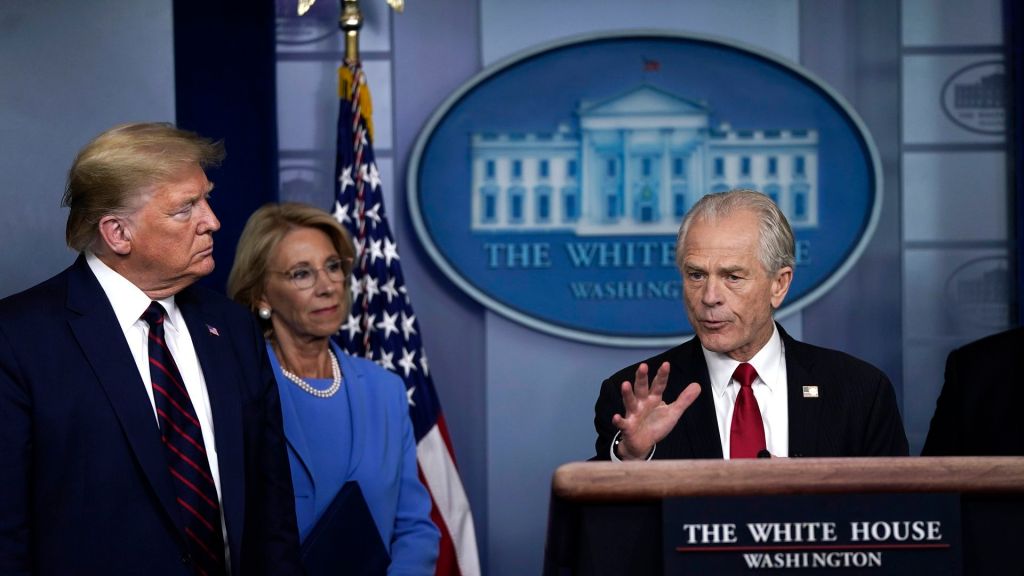
When Peter Navarro, former White House trade adviser and Trump loyalist, publicly urged Canadians to pressure their government into “negotiating fairly” before U.S. tariffs hit on August 1, the message wasn’t strength, it was panic. Navarro’s over-the-top rhetoric, painting Canada as an obstinate, underpowered negotiator, is less about truth and more about fear. If the United States were truly in control of the trade talks, it wouldn’t need to bluster. It wouldn’t need to insult. And it certainly wouldn’t be begging Canadians to do its dirty work.
Let’s be clear: Canada is not on its knees. We’re not some brittle middle power gasping for access to American markets. We’re a G7 economy with sophisticated supply chains, deep global trade ties, and a well-earned reputation for playing the long game. When Washington starts lashing out with threats and playground-level taunts, it’s a sign we’ve landed a punch.
Navarro’s claim that Canada is being “very challenging” at the negotiating table is revealing. It means our team is doing its job. Canadian trade officials, seasoned, careful, and resolute, have held their ground in defense of fair access, environmental standards, and domestic protections. That makes the Americans nervous. And when Americans get nervous in a Trump-style administration, they yell louder, not smarter.
The proposed 35% tariffs, to be imposed on Canadian goods not covered by the USMCA, are intended as a hammer. But even a hammer needs a target that won’t hit back. And this time, Canada has alternatives: deepening trade with the EU and Asia-Pacific, strengthening regional innovation hubs, and leveraging our vast resources in climate-sensitive sectors that the U.S. increasingly needs but doesn’t yet control.
Navarro also made a critical tactical error. By calling on Canadian citizens to push back against their own government, he misunderstands our national character. Canadians don’t take kindly to being told what to do, especially not by foreign officials acting like economic schoolyard bullies. The effect will likely be the opposite: renewed support for Ottawa’s position and a strengthening of political will across party lines to resist being steamrolled.
Historically, Canada has negotiated from the shadows, careful to avoid open confrontation. But this isn’t 1987. Today’s Canada is assertive, strategically patient, and unafraid of outlasting American tantrums. Navarro’s comments, while aggressive on the surface, are deeply revealing underneath. They betray a U.S. trade team that’s frustrated, boxed in, and afraid of losing leverage.
So yes, when the U.S. starts yelling, Canada should listen, but not to obey. To smile, stand tall, and quietly note: we’ve got them worried.
Sources: • Bloomberg Law, “Navarro Urges Canada to ‘Negotiate Fairly’ Before August Tariff Deadline,” July 11, 2025. • AInvest, “Trump Announces 35% Tariff on Canadian Goods,” July 11, 2025. • Government of Canada, Global Affairs briefings on trade diversification (2023–2025).
Francesca Albanese, the United Nations Special Rapporteur on the situation of human rights in the Occupied Palestinian Territories, has become one of the most influential, and controversial, voices in global human rights discourse. An Italian international lawyer appointed in 2022, Albanese has positioned herself at the forefront of international legal scrutiny over Israel’s conduct in Gaza. Her reports, grounded in humanitarian and international law, have consistently challenged the mainstream narratives upheld by Western governments. As the Gaza war grinds through its second year, Albanese has emerged not merely as a monitor, but as a forceful advocate for accountability, naming states, corporations, and institutions she believes are complicit in what she bluntly calls a genocidal campaign.
Her March 2024 report to the UN Human Rights Council marked a turning point. Titled “Anatomy of a Genocide,” the report concluded there were reasonable grounds to believe that Israel had committed acts constituting genocide against the Palestinian people in Gaza. She outlined three of the five legally defined genocidal acts under the 1948 Genocide Convention: the killing of group members, the infliction of serious bodily or mental harm, and the deliberate imposition of conditions calculated to bring about physical destruction. At the time of her report, more than 32,000 Palestinians had been killed, including over 13,000 children. Thousands more were presumed dead under rubble. The report accused Israel not only of disproportionate military action, but of implementing a systematic campaign to make Gaza uninhabitable.
The reaction was explosive. Israeli officials condemned the report as biased and dangerous. U.S. officials accused her of ignoring the Hamas attacks of October 7, 2023, which triggered Israel’s full-scale assault on Gaza, but Albanese had not ignored them. She acknowledged the attacks and the killing of Israeli civilians, calling for accountability for all war crimes. Her argument, however, centered on the scope and scale of Israel’s response, one she argued had moved far beyond self-defense into collective punishment and mass destruction. She called for arms embargoes, sanctions, and referrals to the International Criminal Court.
In July 2025, Albanese issued another report that further intensified international debate. This time, she focused on the role of private industry in sustaining the Gaza war. The 27-page document named over sixty multinational corporations allegedly involved in arming or profiting from the Israeli military campaign. Among them were Lockheed Martin, Elbit Systems, Caterpillar, Palantir, Microsoft, and Alphabet. Albanese argued that the war was not just politically and ideologically driven, but economically sustained a “lucrative genocidal campaign” in her words. She asserted that private military and surveillance industries were supplying the tools of destruction in Gaza, enabling and profiting from the ongoing devastation of Palestinian civilian life.
The U.S. government, under President Donald Trump and Secretary of State Marco Rubio, responded swiftly. In early July 2025, Albanese became the target of sanctions under the Global Magnitsky Act. Her U.S. assets were frozen, her entry into the United States banned, and she was publicly accused of antisemitism and abuse of her UN mandate. The sanctions were unprecedented. Never before had a UN Special Rapporteur been personally sanctioned by a Security Council member state. Rubio framed the action as a necessary response to what he called her “campaign of political warfare against Israel.”
International condemnation followed. UN officials, the European Union, and rights organizations including Amnesty International and Human Rights Watch decried the move as a direct assault on the independence of UN experts. The UN High Commissioner for Human Rights reminded member states that Rapporteurs operate under strict mandates and do not represent the UN’s institutional voice, but contribute independent expertise essential to global governance. Amnesty International called the sanctions “a disgrace to international justice,” warning they would have a chilling effect on future investigations of powerful states. Albanese herself called the measures “obscene,” arguing they were designed to silence her work and shield Israel and its allies from legal scrutiny.
At the core of Albanese’s work is a consistent demand for equal application of international law. She insists that rights and protections cannot be selectively applied based on alliances or geopolitical convenience. In doing so, she has tapped into a growing current of frustration, particularly in the Global South, where the credibility of Western-led institutions is seen as deeply compromised. Her reports have become essential reading for legal scholars, policymakers, and activists seeking to understand not only the Gaza conflict, but also the broader erosion of global legal norms.
Francesca Albanese is not neutral, nor does she pretend to be. Her work takes a moral stance, grounded in legal analysis and human rights doctrine. It is that very combination, rigorous documentation and unapologetic condemnation, that has made her one of the most important, and most polarizing, figures in the debate over Gaza. She has forced the international community to confront uncomfortable truths, not only about war, but about complicity, silence, and profit.
Volunteerism has long been woven into the fabric of Canadian society. From informal acts of neighbourly support to highly structured programs run through non-profits and public institutions, the practice of giving time and effort without monetary reward has played a vital role in community building, social cohesion, and service delivery. Yet, as Canada changes, demographically, economically, and technologically, so too does the nature of volunteering. In particular, the contrast between rural and urban participation in volunteerism highlights both opportunity and strain within the sector.
A Historical Perspective: State Support and Civic Energy Canada’s federal government has historically recognized the value of volunteerism and made substantial efforts to coordinate and support the sector. The most significant of these efforts came in the early 2000s with the Voluntary Sector Initiative (VSI), a groundbreaking partnership between the federal government and the voluntary sector. It aimed to improve relations, support innovation, and enhance governance in the non-profit field. Within it, the Canada Volunteerism Initiative (CVI) funded research, capacity-building, and public engagement campaigns. Although the VSI ended in 2005, it laid important groundwork by formalizing the relationship between civil society organizations and the federal state.
Departments such as Human Resources Development Canada (HRDC), later restructured into Employment and Social Development Canada (ESDC), have overseen volunteer policy and programming. Recent federal initiatives, like the Canada Service Corps (launched in 2018), focus on youth engagement in service projects and offer microgrants to promote local volunteering. The New Horizons for Seniors Program also supports older Canadians’ participation in community volunteerism. While there is no standalone federal department solely dedicated to volunteerism, it remains embedded within broader social development frameworks.
Recent Trends: Decline and Resilience Data from the late 2010s and early 2020s reveal both strengths and stresses within the Canadian volunteer ecosystem. As of 2018, over 13 million Canadians, 41% of the population, were engaged in formal volunteerism, contributing a staggering 1.7 billion hours annually. Yet post-pandemic surveys show troubling signs: 55% to 65% of charities report difficulty recruiting and retaining volunteers, with many forced to cut programs due to shortages.
Notably, volunteer patterns are shifting. Traditional, long-term roles are declining in favour of more episodic or informal volunteering, especially among youth. Factors such as time constraints, economic insecurity, digital preferences, and burnout have reshaped how Canadians approach community service. While organizations like Volunteer Canada continue to offer leadership, training, and research, there is growing urgency to adapt volunteer roles to new realities; flexible schedules, virtual engagement, and better inclusion of marginalized groups.
The Rural – Urban Divide: Participation and Capacity Perhaps the most persistent, and revealing, dimension of volunteerism in Canada is the divide between rural and urban communities. Historically, rural Canadians have had higher participation rates in formal volunteering. Data from the late 1990s and early 2000s show that 37% of rural residentsvolunteered, compared with 29% in urban centres. Among those with post-secondary education, rural volunteers also outpaced urban peers: 63% of rural university grads volunteered versus 42% in urban areas. Similarly, 67% of college-educated rural residents participated in community groups, compared to 55% in cities.
This elevated participation reflects the central role that volunteering plays in small towns and rural communities, where fewer formal services exist, and much of the civic infrastructure, libraries, community centres, fire services, food banks, is volunteer-run. Yet this strength is also a vulnerability. In recent years, many rural communities have reported a sharp decline in volunteer numbers. A 2025 report from rural Alberta described the “plummeting” of local volunteers, warning that essential community functions were under threat.
The rural sector also faces structural challenges. Of Canada’s ~136,000 non-profit organizations in 2022, only 21.3% were located in rural or small-town settings, compared to 78.7% in urban areas. This limits both the reach and coordination capacity of the rural volunteer system, even as demand for services grows. Moreover, rural organizations often lack the staff or infrastructure to recruit and manage volunteers effectively. Data from Volunteer Toronto’s 2025 report confirms that non-profits with dedicated volunteer managers are 16 times more successful in engaging people, resources many rural groups simply don’t have.
The Broader Role of Volunteerism: Health, Identity, and Belonging Beyond economics and logistics, volunteerism holds deeper meaning in Canadian life. Research has long shown strong links between volunteering and well-being. Volunteers report lower stress levels, better mental health, and a greater sense of purpose. For newcomers, volunteering offers social integration. For youth, it builds skills and confidence. For seniors, it combats isolation.
Moreover, volunteering shapes Canadian identity. The nation’s reputation for kindness and civic responsibility is deeply connected to the widespread assumption that people help each other, often through organized groups. Volunteerism is one of the few activities that bridges socio-economic, linguistic, and cultural divides.
A Call for Renewal Volunteerism in Canada is both a legacy and a living system. While the numbers remain impressive, the sector is showing signs of strain, especially in rural areas and among long-time service organizations. A national renewal is underway: a National Volunteer Action Strategy is being developed with support from the federal government, aiming to modernize the sector and reverse declining trends.
As Canada continues to evolve, so too must its approach to volunteerism. This means investing in recruitment, training, and support, especially where capacity is low. It means listening to the needs of volunteers themselves and creating flexible, inclusive ways to contribute. Most of all, it means recognizing volunteerism not just as charity or goodwill, but as vital infrastructure in the Canadian democratic and social landscape.
Sources • Volunteer Canada (2023–2024 reports): https://volunteer.ca • Statistics Canada: General Social Survey and 2018 formal volunteering stats • Canada Service Corps and ESDC evaluation documents (2023–2024) • Volunteer Toronto Snapshot (2025): https://www.volunteertoronto.ca • Senate report “Catalyst for Change” (2023) • Rural Alberta volunteer crisis coverage: https://rdnewsnow.com
The Duddo Five Stones, nestled atop a gentle rise in north Northumberland, are a compelling testament to prehistoric endeavours in the British Isles. Erected during the Early Bronze Age, roughly 4,000 years ago, these stones comprise five extant monoliths, though archaeological surveys from the 1890s revealed empty sockets for two additional stones and confirmed an original complement of seven. Inhabitants of that period fashioned these curious markers from local soft sandstone, now distinguished by deep vertical grooves, so pronounced that the stones are sometimes spoken of as the “Singing Stones,” a nod to the haunting whistles that breeze through their fissures.
Despite their modest size compared to the monumental rings of Wiltshire, the Duddo Stones rise to heights between 1.5 m and 2.3 m and form a circle approximately 10 m in diameter. The largest stone, over two metres tall, has been likened to “a clenched fist rising menacingly out of the rough turf,” while others resemble giant decaying teeth. Weathered both by time and legend, the stones bear cup-marks and grooves that spark speculation, were these carved by ritual, or simply products of centuries of erosion?
In the heart of the circle lies evidence of its most solemn function: a central pit, excavated in the late 19th century, that contained charcoal and cremated human bone, suggesting funerary or ritual use. A later investigation unearthed fragments of pottery, perhaps a cremation vessel, further hinting at ancient rites performed upon this exposed Northumbrian hill. Such findings align with the broader traditions of Bronze Age Britain, where stones were placed to commemorate the dead, mark sacred boundaries, and orient events within a celestial calendar.
Indeed, solar and lunar alignments are often proposed for stone circles. In Duddo’s case, the stones occupy an eminence offering sweeping views of the Cheviot Hills to the south and Lammermuir Hills to the north, and may well align with midwinter sunrises or solstitial events. This deliberate positioning underlines a shared cosmological purpose with contemporaneous sites such as Stonehenge and Avebury, where built environments reflect ancient understandings of the cosmos.
Any comparison to Stonehenge or Avebury must acknowledge scale. Those iconic sites, part of a UNESCO World Heritage complex, were grand ceremonial landscapes, featuring massive sarsen lintels, henges, and extensive rituals spanning centuries. Yet Duddo’s significance should not be measured in tonnage alone. The world of early Bronze Age Northumberland had its own spiritual horizons. Stone placement here demonstrates ingenuity in local engineering, community organisation, and a relationship with the landscape that mirrored the aims of their southern counterparts.
Moreover, Duddo may be Northumberland’s best‑preserved stone circle, admired by archaeologists for its dramatic hill‑top setting and intact character. Accessibility is simple: a short permissive path from the B6354 guides visitors to this serene site, free to all, but weather and muddy fields. The site evokes reverence and reflection, a place where wind and sky merge timelessly with carved stone.
In a cultural landscape often dominated by southern giants, the Duddo Five Stones deserve equal attention. They speak of regional expressions of Bronze Age spirituality, mortuary practice, and astronomical concern. While lacking the architectural complexity of Stonehenge or the vast scale of Avebury, they nonetheless resonate with ancestral agency, standing quietly yet powerfully within a broader tapestry of prehistoric monumentality. To relegate Duddo to a mere footnote is to impoverish the understanding of Britain’s Bronze Age mosaic. It is no lesser these many millennia later, just more intimate, more quietly potent, and every bit as integral to prehistoric Britain’s story.
This post is an update on the AUKUS saga that I wrote about, back in May 2025. Do you think the Australians are wishing they had stuck with their agreement with the French?
As the ink dries on Australia’s multi-decade submarine commitment under the AUKUS pact, new political winds out of Washington are shaking the foundations of what Canberra once saw as a strategic guarantee. Under the returning Trump administration, the U.S. is pushing to renegotiate the financial terms of the agreement and is reportedly seeking to insert a wartime control clause, raising fresh concerns about Australia’s sovereignty and strategic independence.
The heart of the issue is money. While Australia has already pledged over US$500 million to help expand U.S. submarine production capacity, Trump’s team is now demanding far more, up to US$2 billion in new payments, as a condition to secure delivery of three to five U.S. Virginia-class nuclear submarines from 2032 onward. These funds would be directed to bolster American shipyards, particularly in Virginia and Connecticut, which remain overextended and under pressure to deliver on U.S. Navy contracts.
The financial squeeze isn’t the only concern. Reports have surfaced in The Australian and News.com.au that a so-called “China clause” may be under quiet negotiation. This clause would give the U.S. the right to reclaim or restrict Australian use of the submarines during a major conflict, particularly one involving China. While the Pentagon has not confirmed the existence of such a clause, the possibility alone has ignited alarm among Australian defense experts and former leaders.
Former Prime Minister Malcolm Turnbull, an early critic of the AUKUS pact, warned that the submarine deal risks becoming a one-sided arrangement in which Australia pays heavily to host, maintain, and eventually crew American subs, without ever holding true operational control. Bob Carr, another former senior figure, was blunter: if the clause is real, it would render Australia’s billion-dollar fleet a “rental service” for U.S. war planners.
Current officials, including Defence Minister Richard Marles, have sought to play down the growing controversy. He insists the U.S. review is “routine” and that Australia remains committed to the AUKUS vision. But behind closed doors, pressure is mounting. Canberra must now decide whether to comply with the new financial demands and legal caveats—or begin preparing for a prolonged diplomatic standoff.
Meanwhile, in the U.S. and U.K., the shipyards and surrounding real estate markets continue to benefit from AUKUS-linked investments. The U.S. gains not only geopolitical leverage but a quiet economic windfall, as the influx of Australian capital fuels job creation and property demand in key production zones like Newport News, Virginia and Barrow-in-Furness in the UK.
What began as a trilateral alliance of equals now looks increasingly like a bargain between a landlord and tenant, with Australia footing the bill for the privilege of being an American ally. As the strategic calculations shift and Trump’s transactional style returns to the global stage, Australia’s AUKUS submarines may be powerful, but only if Canberra retains the keys.
Here’s the latest edition of “Five Things We Learned This Week” for July 5–11, 2025, featuring all-new insights within the past seven days—no repeats from previous lists:
⚖️ 1. Trump Intensifies Trade War with 30–50% Tariffs
Between July 7–11, President Trump sent letters threatening 30% tariffs on EU & Mexico (starting Aug 1), 35% on Canada, and 50% on imported copper, along with an extra 10% on BRICS allies .
Global markets responded with caution—stocks dipped, safe-haven assets steadied, and commodity currencies showed volatility .
🛢️ 2. Oil Prices Jump Over 2% amid Tight Markets and Tariff Fears
On July 11, Brent rose ~2.5% ($1.72/barrel) to $70.36, and WTI climbed 2.8% to $68.45, sparked by IEA warnings of tighter supply, OPEC+ compliance, and trade policy risks .
U.S. rig counts fell for the 11th straight week, intensifying concerns about future output ().
🌍 3. UN Adopts Climate–Human Rights Resolution
On July 8, the UN Human Rights Council passed a climate change motion that ties environmental harm to human rights—adopted by consensus after the Marshall Islands withdrew a controversial fossil-fuel phase-out amendment .
The resolution calls for “defossilizing our economies” and sets a benchmark for framing climate action as a global human-rights priority .
On July 7, at their Rio meeting, BRICS leaders urged wealthy nations to fund climate transitions in developing countries, while also affirming continued fossil fuel usage in their economies .
Brazil’s President Lula warned against denialism, contrasting BRICS multilateralism with U.S. isolationism ().
🎤 5. Reuters NEXT Asia Summit Tackles Trade, AI & Global Stability
July 7, the Reuters NEXT Asia forum in Singapore convened ~350 global leaders to debate pressing issues—covering AI innovation, trade disputes, and geopolitical uncertainty .
Discussions stressed AI’s dual potential for disruption and opportunity, with trade tensions—especially tariffs—looming large.
Each of these five highlights occurred between July 5–11, 2025, and brings fresh, global perspectives to this week’s roundup. Want full article links or deeper analysis? Just say the word!
David Suzuki, Canada’s most revered environmental voice, has issued a warning with unusual bluntness and finality: “We are so fucked.” Speaking in recent weeks, Suzuki declared that “it’s too late,” stating that the global fight to halt climate catastrophe is effectively lost. His comments have rippled through climate policy circles, activist communities, and public discourse alike, not because the science has changed, but because the candour of the message has stripped away any remaining illusions of gradualism or incremental change.
The context is clear. Extreme weather events are no longer exceptions, they are becoming the rule. July 2024 was the hottest month in recorded human history, and 2025 is on track to exceed it. Wildfires, floods, droughts, and mass displacement now dominate the headlines with increasing regularity. Against this backdrop, Suzuki’s declaration is not a shock, it is confirmation of what many already fear: that mitigation may no longer be enough.
Beyond Optimism: A Shift to Resilience Suzuki’s words – “we are so fucked” – were not made in jest or despair, but as an urgent call to face reality. He argued that society must now “hunker down”, a phrase that signals a strategic pivot from prevention to adaptation. The idea is not to give up, but to regroup, reorganize, and prepare. In doing so, he joins a growing body of thinkers who have moved past the assumption that global climate agreements or consumer-level behavior changes will be enough to stave off the worst.
Suzuki pointed to places like Finland as examples of what adaptive resilience might look like. Communities there are being asked to prepare for regular power outages, floods, and food shortages by mapping vulnerable neighbours, sharing equipment, and establishing local escape routes and resource stockpiles. In Suzuki’s view, this is no longer the work of fringe preppers, but essential civil preparedness.
Systemic Failure, Not Personal Blame Central to Suzuki’s critique is the idea that responsibility has been wrongly placed on individuals, rather than on systems. “The debate about climate change is over,” he has said repeatedly. “The science is clear that it’s happening and that humans are causing it.” But rather than empower collective transformation, that clarity has been dulled by decades of delay and deflection. The culprits, he asserts, are fossil fuel companies and the political classes that have shielded them.
These industries, Suzuki argues, have spent years spreading misinformation, lobbying against meaningful legislation, and greenwashing their activities to appear sustainable. The result is a global response that has been far too slow, too fragmented, and too compromised by economic interests to meet the scale of the challenge. While citizens have been urged to recycle and reduce air travel, oil and gas production continues to expand in many countries.
This misdirection has helped create a false narrative that consumer choices alone can avert disaster. Suzuki, echoing many climate scientists and activists, argues that such messaging amounts to a deliberate “psy-op”, a strategic effort to protect entrenched power and profit by scapegoating the individual.
Hunkering Down Is Not Surrender To “hunker down,” in this context, means to accept what is now inevitable while fighting to minimize further harm. It is a call to prepare for climate impacts that will affect infrastructure, food systems, migration, and public health. This includes planning for power disruptions, ensuring access to potable water, decentralizing food systems, and rebuilding communities to be less reliant on fragile supply chains.
Resilience at the local level becomes critical: communities need to inventory their own vulnerabilities, understand who is most at risk, and develop coordinated mutual-aid structures. Governments will need to lead this transition by investing in renewable grids, disaster planning, urban cooling infrastructure, and community-based health services. And crucially, they must stop subsidizing the very industries responsible for the crisis.
From Climate Denial to Climate Delay One of the more insidious barriers to action today is not outright denial, but climate delay, a subtle but pervasive tactic that gives the appearance of action while deferring the difficult decisions. Suzuki has long warned against this. The danger now lies not in ignorance, but in political cowardice and corporate co-option. Net-zero pledges decades into the future are meaningless without immediate action. What’s needed is not just a plan, but a reckoning.
Brutal Clarity, Not Despair Suzuki’s warning may sound like defeat, but it is more accurately described as a turning point. When he says, “We are so fucked,” it is not an invitation to despair, but a demand to confront reality without euphemism or illusion. Hope remains, but it must be grounded in preparedness, in systemic change, and in solidarity. Communities, governments, and institutions must move with the urgency that this moment demands.
The time for optimism as a communications strategy has passed. What remains is action, rooted in clear-eyed honesty and collective survival.





 The Rowanwood Chronicles