Unknown's avatar

About Chris McBean

Strategist, polyamorist, ergodox, permaculture & agroforestry hobbyist, craft ale & cider enthusiast, white settler in Canada of British descent; a wanderer who isn’t lost.

Wor New Badge Woes – So Ah Asked Me Mate, ChatGPT!

By Big Mac, the OAP Blogger from Byker

So aye, ah’d just settled doon wi’ a cuppa and a bacon sarnie, listenin’ to the wireless, when ah hears this daft bit o’ news, the FA’s enforcin’ a new rule meanin’ clubs might have to tweak their badges for “clarity and digital compliance.” Clarity?! Since when did seahorses need spellcheck?

Wor Toon badge, man. It’s a canny thing. You’ve got ya seahorses lookin’ like they’ve just trotted up the Tyne, that wee castle standin’ proud like it owns the place, and a banner that’s more iconic than wor lass’s Sunday gravy. And now they want to mess wi’ it?

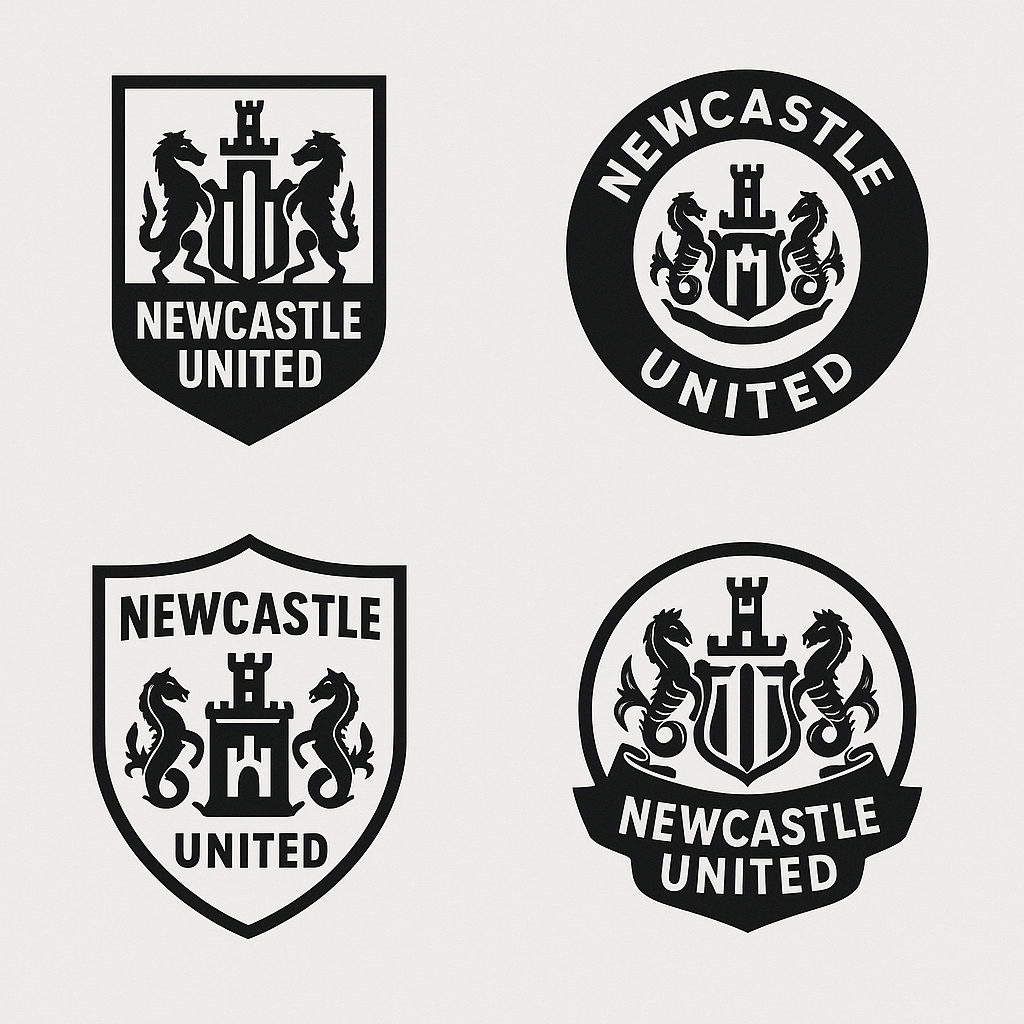
So, ah panicked a bit, not gonna lie. But then ah remembered, ah’ve got a clever mate. He lives in me phone, goes by the name ChatGPT. He’s not local, but he divvint half know his onions. Can write like Shakespeare one minute and solve algebra the next. So ah goes, “Eee, Chat lad, gizza hand wi’ this badge business will ya? Make us four new uns, proper smart, summat that’ll work on TikToks and stripy kits alike.”

Next thing ah know, he whirrs away like a robot in Fenwick’s window and bosh, oot comes four logos! Clean as a whistle, modern, but still keeping the soul of the Toon. They’ve got them seahorses lookin’ like they’ve just bench-pressed a Metro carriage, and the castle’s front and centre like it’s still waitin’ for the Normans. Honestly, it’s like if wor badge went to uni and came back with a graphics degree and a fresh trim.

One’s got a round badge, like a beer mat. Another’s dead sharp, like wor Ian’s elbows in five-a-side. There’s even one wi’ a shield that looks like it could deflect bad VAR decisions. Honestly, I was chuffed. Even me Bro Trev said, “Looks mint that, Mac. Reckon the lads’d wear that on Champions League nights.”

Now, ah divvint know if the club’ll go for one of these, or if they’ll end up asking some bloke in London who’s never tasted stottie cake in his life, but if they do nowt else, they should at least give ChatGPT an honorary season ticket, and a Greggs voucher.

So if ye see any new crests floating aboot on the socials, and they look like they’ve got the heart of the Toon and a bit of AI sparkle, ye kna who sorted it. Me and me clever little digital mate.

Howay the Lads, and Howay the Logos!

The Cameron Comparison: Will Danielle Smith Trigger Her Own Political Exit?

Danielle Smith’s political gambit with Alberta sovereignty bears an uncanny resemblance to David Cameron’s fateful decision to call a referendum on the United Kingdom’s membership in the European Union. Both leaders, faced with mounting internal pressures and populist insurgencies, sought to contain nationalist sentiment by giving it a structured outlet. In so doing, each gambled with the stability of their broader political project. Cameron, convinced that a plebiscite would put the Brexit question to bed and silence his party’s right-wing flank, ended up catalyzing the very crisis he had hoped to avoid, leading to his own political demise. Smith may be following the same treacherous path.

At the heart of both movements is the seductive notion of “taking back control”, from Brussels in the case of Brexit, and from Ottawa in Smith’s Alberta. The appeal is emotional and immediate: a narrative of betrayal by distant elites, a promise of restored autonomy, and the fantasy of economic self-sufficiency. Cameron allowed that narrative to play out on a national stage, legitimizing it with a referendum. Smith is doing something similar through legislation and rhetoric, invoking Alberta’s right to ignore or nullify federal laws under the guise of defending provincial jurisdiction.

Yet here lies the danger. Like Cameron, Smith has chosen to weaponize the language of sovereignty without a clear or viable endpoint. Her Alberta Sovereignty Within a United Canada Act is not a roadmap to secession, but it flirts with the logic of separation. The very act of mobilizing this discourse strengthens the hand of more radical forces in the province; those who see confederation not as a partnership, but as a prison. If Smith cannot deliver meaningful change within the framework of the Canadian constitution, and she likely cannot, she risks being outflanked by the separatists she once sought to co-opt. Just as UKIP’s rise drove Cameron’s decisions, the Maverick Party and other Alberta-first voices are shaping Smith’s hand, perhaps more than she realizes.

Politically, the parallels are striking and cautionary. Cameron misread the electorate and overestimated his ability to control the narrative. He expected the rational case for Remain to win out but failed to grasp the emotional and symbolic power of “Leave.” When the vote went against him, he resigned, leaving his party and country in turmoil. Smith may also be underestimating the Pandora’s box she is prying open. If public expectations are raised for a decisive break with Ottawa, one that cannot be delivered through mere provincial legislation, she may find herself either forced to escalate into unconstitutional territory or retreat in humiliation.

Moreover, Smith’s strategy could fracture the broader conservative coalition in Alberta. Urban moderates and business conservatives, critical to her electoral base, may grow weary of perpetual constitutional conflict, especially if it begins to affect investment, interprovincial relations, or federal funding. Meanwhile, the more extreme nationalist voices she has tried to placate will grow disillusioned if her sovereignty agenda produces no tangible results. Like Cameron, Smith is dancing between factions with incompatible goals, and she may end up satisfying none.

The tragedy of Cameron’s Brexit lies not just in the decision itself, but in the hubris that preceded it; the belief that one could flirt with nationalist fire and not get burned. Smith now faces a similar moment. In reaching for short-term political gain through an aggressive assertion of provincial autonomy, she may be sacrificing long-term credibility and coherence. The lesson from Brexit is not just about consequences, it’s about the limits of strategic populism. Smith, like Cameron, could soon discover that once sovereignty becomes the language of politics, it is no longer possible to control who speaks it, or how far they want to go.

From Reformist to Foot Soldier: The Political Evolution of Marco Rubio

For a time, Marco Rubio seemed to embody the hope that the Republican Party might modernize without losing its ideological spine. Young, charismatic, and the son of Cuban immigrants, he was hailed in the early 2010s as a conservative who could articulate traditional Republican values in a way that spoke to a broader, more diverse America. When he launched his presidential campaign in 2015, he positioned himself as a candidate of the future, one who could move past the culture wars and appeal to younger voters. To many in the media and even among some Democrats, Rubio seemed reasonable, serious, and, crucially, not dangerous.

This perception was always something of a projection. While Rubio carried himself with more polish and optimism than the emerging populist wing of the party, his actual positions were firmly in line with movement conservatism: staunchly anti-abortion, fiscally hawkish, anti-union, and reflexively interventionist on foreign policy.  Yet, because he wasn’t loud or cruel about it, and because he occasionally flirted with bipartisan gestures, most notably as a member of the 2013 “Gang of Eight” that attempted to pass comprehensive immigration reform, he was miscast as a moderate. The immigration effort was perhaps the high-water mark of his reputation as a bridge-builder, but the vicious backlash from conservative media and grassroots activists forced him into retreat. Rubio didn’t defend the bill; he distanced himself from it. This was an early sign of a pattern that would define his political choices; say the right thing when it’s safe, but retreat when it’s not.

Rubio’s realignment became undeniable with the rise of Donald Trump. In 2016, he famously called Trump a “con artist,” mocking his hands and personal behavior in an unusually caustic exchange; but after dropping out of the presidential race, he quickly endorsed Trump and began the long process of political adaptation. By the time Trump had cemented his control over the GOP, Rubio had made his peace with the new order. He supported Trump through both impeachment trials, echoed his talking points about “election irregularities” in 2020 without directly endorsing false claims, and has steadily absorbed the rhetoric and priorities of the MAGA movement, particularly on issues like “wokeism,” China, and the weaponization of federal institutions.

What surprises many observers now is not so much Rubio’s positions, many of which he has held, if more quietly, for years, but how fully he has embraced the tone and sensibility of the MAGA worldview. The man once billed as a “next-generation Republican” has become another foot soldier in the party’s turn toward grievance politics, culture war maximalism, and a brand of authoritarian-adjacent populism that defines today’s GOP. His evolution is not unique. It mirrors that of a party whose internal incentives now reward loyalty to Trump and punishment for dissent. Rubio is not leading that transformation; he’s adapting to it, and perhaps surviving because of it.

In truth, the notion that Rubio was ever a centrist or a true reformer was a comforting myth told by centrists and pundits who longed for a less chaotic Republican Party, but Rubio was never that man. He was always a disciplined conservative with big ambitions, more fluent in elite political language than many of his peers, but no less ideologically committed. The real shift, then, is not in Rubio’s principles, but in the conditions under which he operates. The surprise people express today is less about his transformation, and more about our own willingness to believe he was something else.

When Can We Expect the Alberta By-Election, and What’s the Process, Anyway?

Well, folks, the question on everyone’s lips in Ottawa and across the Prairies is this: when can we expect the by-election in Alberta’s Battle River–Crowfoot riding? Especially now that Pierre Poilievre is looking to claw his way back into the House of Commons after that stunning loss in Carleton. With Damien Kurek stepping aside to clear the path, the machinery of a federal by-election is now grinding into motion, but how soon is soon? And what exactly does the process look like?

Let’s walk it through.

Step 1: The Writs Must Be Returned
Before anything official can happen, the election results from the April 28 general vote need to be certified and the writs returned. According to Elections Canada, the official deadline for that is May 19, 2025. Until then, the government can’t formally acknowledge the vacancy in Battle River–Crowfoot, even if we all know Kurek’s seat is about to be up for grabs.

Step 2: Notifying the Vacancy
Once the results are certified and published in the Canada Gazette, the Speaker of the House issues a warrant to the Chief Electoral Officer, officially declaring the seat vacant. That’s the moment the countdown truly begins.

Step 3: Issuing the Writ
Here’s where the Canada Elections Act comes into play. The Governor General must call the by-election no fewer than 11 days and no more than 180 days after the vacancy is declared. That gives the Prime Minister a fair bit of discretion in setting the date, unless, of course, he’s under pressure to get the Leader of the Opposition back into Parliament sooner rather than later.

Mark Carney, now comfortably in the PM’s chair, has said he’s not playing games with this one. He told reporters on May 2 that the by-election would happen “as soon as possible…no games, nothing, straight.” That could mean we’re looking at a late June or early July contest, an unusually quick turnaround, but not out of the question.

Step 4: Campaign Period
By law, a federal campaign must last a minimum of 36 days. So once the writ drops, expect a quick-and-dirty sprint to the finish line.

And if you thought this was going to be a sleepy rural by-election, think again. The Longest Ballot Committee, a merry band of electoral reform activists, is threatening to run up to 200 candidates in the riding. It’s a stunt aimed squarely at exposing the flaws of our first-past-the-post system. Whether it derails Poilievre’s re-entry or just clogs the ballot box, it’s going to add a layer of political theatre to what might otherwise be a foregone conclusion.

Bottom Line
Barring delays, we’re likely to see the writ dropped sometime in late May or early June, putting election day in late June or early July. The political urgency, Poilievre’s comeback bid, Carney’s no-nonsense commitment, and a media circus brewing in east-central Alberta, suggests Ottawa isn’t going to wait the full 180 days.

So keep your calendars open and your popcorn handy. Battle River–Crowfoot may be heading into the national spotlight.

Sources
Canada Elections Act – Elections Canada
Battle River–Crowfoot federal by-election – Wikipedia
iPolitics – Longest Ballot Committee
OurCommons.ca – Election Candidates

Roll Britannia: The Greggs Chronicles

Once upon a time, in the wilds of Tyneside, there emerged a force so powerful, so delicious, that it would one day rival the might of empires. No, not the Romans. We’re talking about Greggs, the humble bakery, turned national obsession that has swept across the UK like gravy on a sausage roll.

It all began in 1939 when a man named John Gregg decided that Newcastle needed something more than coal, fog, and football. So, he did what any visionary would do: he got on a bike and started delivering fresh eggs and yeast to the good people of the North East. Little did he know that his humble yeast rounds would eventually help leaven the British soul.

Fast forward to the 1950s, and the first Greggs shop opened. It sold bread, cakes, and dreams. And by dreams, we mean hot pastries that could scald your mouth, but warm your heart. Greggs soon became a staple of the British high street, which is no small feat considering the fierce competition from fish & chips, kebabs, and aggressive seagulls.

Now, Greggs isn’t just a bakery. It’s a lifestyle. A philosophy. A national institution. While France has the baguette, and Italy has pizza, the UK has the Greggs sausage roll, a flaky, meaty miracle that unites builders, bankers, and students alike. It’s one of the few things in Britain that still works reliably and costs less than a cup of designer coffee.

But let’s not forget innovation. In 2019, Greggs stunned the nation with the Vegan Sausage Roll. Critics laughed. Piers Morgan nearly exploded. But the people? The people lined up. The plant-based pastry launched Greggs into a new orbit, attracting vegans, vegetarians, and confused carnivores who just wanted to see what all the fuss was about.

From there, things escalated. Greggs went viral, won awards, and, brace yourself, teamed up with Primark to launch a fashion line. That’s right: you can now wear your steak bake with pride, even if it’s printed on a hoodie. The combo meal of clothing and carbs is the 21st century’s answer to haute couture.

Let’s be honest: Greggs is taking over the UK one pasty at a time. No town is too small, no train station too remote. There’s probably a Greggs opening inside your kitchen cupboard as we speak. Resistance is futile. You will be fed.

Plans for world domination remain hush-hush, but we all know it’s coming. First, it’ll be Europe, somewhere easy, like Belgium. Then maybe America, where Greggs will stun Starbucks with sausage roll-based frappuccinos. By 2040, the UN will convene in the Greggs Lounge, sipping on baked bean lattes and resolving conflicts over custard slices.

So next time you bite into a cheese & onion bake, know this: you’re not just enjoying a snack. You’re part of a movement. A flaky, buttery, gloriously British movement.

Long live Greggs.

Public Consultation or Box-Ticking Exercise? A Critical Look at a Local Battery Storage Project

Last week, I attended a public consultation in my township concerning the proposed development and operation of a battery storage facility. While I support the idea of more distributed energy systems; including local generation, storage, and distribution, I left the session with more concerns than confidence.

The generational divide in the room was striking. The corporate representatives were mostly in their late 20s or early 30s, while the attending community members were primarily in their 50s and 60s. That’s not a critique of age, but it did highlight a gap in understanding and communication. One representative I spoke with didn’t even know the name of our village or the township they were in, and confused our location with the nearest city. That lack of local awareness is troubling.

When it came to questions about employment, the answers were just as vague. There are no local jobs being created by this facility. Pressed on this point, the company conceded that construction would likely be contracted out to a large regional firm. So much for community economic development.

Technically, this consultation was part of the process required to secure project approval. But calling it a “consultation” is generous. In practice, it was an information session for a project that already has funding and, by all appearances, a green light, once the required Environmental Assessment has been completed and approved. Input from residents was neither requested nor meaningfully incorporated. That’s not consultation—that’s optics.

There was discussion of the township gaining a $300,000 gift from the business, yet when this was explored further, it turns out that the gift is over the 20 year projected life of the facility; so by my calculations that’s $15,000/year for a township with an annual budget of around $4.5 million. 

I also learned that the company developing this project, which is ultimately owned by a private corporation through a series of businesses, partnered with a local First Nation to qualify for the contract. On paper, this is a positive step. I strongly support Indigenous involvement in provincial development, but I couldn’t help but ask: beyond a share of the profits, what is the First Nation partner actually gaining from this deal? Meaningful involvement? Job creation? Capacity building? Those questions went largely unanswered.

Many of the company reps struggled to answer even basic questions. When challenged, they became defensive, admitting they were not properly briefed or that statements about local benefits were merely “possibilities.” That kind of unpreparedness doesn’t inspire public trust.

Let me be clear: I’m not opposed to the project itself. I believe in the need for renewable energy infrastructure, and support the transition to a more decentralized grid. I have no “Not In My Backyard” objections here. My issue is with the process, and with the privatization of what should be a public utility. This kind of infrastructure should be owned and operated by the province for the benefit of its citizens, not by private firms whose primary accountability is to shareholders.

If this is the future of our energy system, we need a better framework, one rooted in public ownership, transparent processes, and genuine community engagement.

Between Sovereignty and Survival: Britain’s Nuclear Reality

The keel-laying of HMS Dreadnought in March 2025 marked a milestone in Britain’s strategic deterrent program and the future of its nuclear-powered ballistic missile submarine (SSBN) fleet. As the first of four vessels in the new Dreadnought-class, this submarine embodies both an engineering triumph and a signal of sustained commitment to the UK’s Continuous At-Sea Deterrent (CASD), which has remained unbroken since 1969. At 153.6 meters and 17,200 tonnes, the Dreadnought will be the largest submarine ever operated by the Royal Navy: a floating cathedral of stealth, survivability, and silent lethality.

The new class is expected to replace the aging Vanguard-class submarines by the early 2030s and will be in service well into the 2070s. Powered by the Rolls-Royce PWR3 nuclear reactor, a substantial evolution from the PWR2 used in the Vanguards, the Dreadnoughts promise longer life, reduced maintenance, and quieter operation, essential for a vessel designed to avoid detection at all costs. Innovations in stealth include a reshaped hull form, advanced sound-dampening technologies, and X-shaped stern rudders for more agile maneuvering in deep water. The integration of BAE Systems’ Active Vehicle Control Management (AVCM) fly-by-wire system and Thales’ Sonar 2076 gives the submarine cutting-edge sensory and navigation capabilities.

Comfort and crew sustainability have not been overlooked. Designed to accommodate 130 personnel, the submarine includes improved living quarters, separate facilities for female sailors, a small gym, and an artificial lighting system to simulate day and night cycles, no small consideration for the psychological health of crews spending months submerged in strategic silence. Operationally, the class will carry 12 missile tubes using the Common Missile Compartment (CMC), co-developed with the United States. These tubes will launch the Trident II D5 ballistic missile, a weapon system that is central to the debate over British nuclear sovereignty.

For all its sovereign trappings, the UK’s nuclear deterrent is not entirely domestically independent. The Dreadnought-class, like its predecessor, remains intimately tied to US strategic infrastructure, a reality that undermines, in the view of some, the claim of an “independent” deterrent. The Trident II D5 missiles aboard Dreadnought are not built in Britain, but rather drawn from a shared pool maintained by the US Navy at Kings Bay, Georgia. These missiles are periodically rotated, serviced, and upgraded in the United States. The UK owns no domestic facility for full-cycle missile maintenance, which introduces a logistical and, some would argue, strategic dependency.

Even the warheads, while built and maintained at the Atomic Weapons Establishment in Aldermaston, are widely understood to be based on the American W76 design. British scientists have not tested a warhead since 1991, relying instead on simulation and US data. Further, the PWR3 reactor at the heart of the Dreadnought-class, although built by Rolls-Royce, is significantly influenced by the US Navy’s S9G reactor used in its Virginia-class attack submarines. This level of integration, from missile tubes to propulsion, reflects decades of close US-UK military cooperation, formalized in arrangements like the 1958 Mutual Defence Agreement.

Supporters of the Dreadnought program argue that such collaboration is not a weakness but a pragmatic alliance. By sharing R&D burdens and pooling procurement, the UK can field a credible nuclear deterrent without spending the tens of billions required for full-spectrum independence. Operational command and control of the submarines, including launch authority, remains fully in British hands, with final decision-making retained by the Prime Minister. Indeed, the “letters of last resort” carried on each submarine are uniquely British in character: a final instruction from one head of government to another in the event of national annihilation.

Yet critics maintain that the veneer of sovereignty cannot obscure the fact that a central pillar of British defence policy is structurally dependent on American goodwill, technology, and supply chains. In any future divergence of interests between London and Washington, or under a more isolationist US administration, the UK’s deterrent capability could be compromised, not technically, perhaps, but in terms of assuredness and resilience.

The Dreadnought-class represents both continuity and compromise. It is a technical marvel and a credible means of sustaining Britain’s strategic nuclear posture; but it is also a reminder that sovereignty in the nuclear age is often a layered illusion, one maintained not through autarky, but through alliance, collaboration, and trust in the enduring strength of an Anglo-American strategic partnership that remains, for now, as silent and watchful as the vessels patrolling the deep.

Germany’s Classification of AfD as ‘Extremist’: A Modern Reckoning with a Troubled Past

On May 2, 2025, Germany’s Federal Office for the Protection of the Constitution (BfV) declared the far-right Alternative for Germany (AfD) party a “proven right-wing extremist organization.” This unprecedented designation of a party with seats in both the national and European parliaments is rooted in deep constitutional concern: the BfV’s 1,100-page report outlined how AfD promotes an ethnically defined notion of the German people, dehumanizes migrants, and undermines the dignity of minorities. For Germany, a country still haunted by its 20th-century descent into fascism, the move reflects a renewed commitment to uphold democratic values through preventive vigilance.

Germany’s decision does not exist in a vacuum. Post-war German identity has been shaped by an explicit and institutionalized rejection of Nazism and all forms of authoritarian extremism. The Basic Law—the German constitution—was crafted in response to the collapse of the Weimar Republic and the rise of Hitler’s regime, placing safeguards against the resurgence of anti-democratic ideologies. Within that framework, the BfV is mandated to monitor organizations and parties that threaten the constitutional order. That the AfD, founded in 2013 as a eurosceptic party, has evolved into a vessel for radical nationalism and xenophobia is not a matter Germany can take lightly. With rising electoral support, especially in the former East, AfD has shifted its discourse toward ethnic nativism and authoritarian populism, echoing tropes historically used to dismantle democratic norms.

Internationally, the decision drew immediate and sharp criticism from the United States. Secretary of State Marco Rubio called it “tyranny in disguise,” suggesting that classifying and surveilling a legitimate opposition party undermines democratic pluralism. Vice President JD Vance went further, framing the move as a betrayal of East German voters and likening it to a bureaucratic reconstruction of the Berlin Wall. These comments align with a broader shift in U.S. conservative circles, where cultural affinity with nationalist parties in Europe, including AfD, has grown. Yet, Germany’s Foreign Ministry stood firm, underscoring the independence of its investigative bodies and asserting that the classification was about constitutional defence, not political suppression.

Interestingly, while American officials decried the move, European far-right parties offered a different reaction. France’s National Rally and Italy’s League, both members of the Identity and Democracy (ID) group in the European Parliament, expelled the AfD from their ranks after controversial statements from an AfD leader about the Nazi SS. Marine Le Pen declared it was time to make a “clean break” with the party, suggesting that even among populist allies, AfD’s rhetoric had become too extreme.

The designation is not simply a domestic decision, it is a declaration of principle. Germany is choosing constitutional integrity over political expediency, informed by the weight of its history. In doing so, it opens a conversation about the boundaries of democratic tolerance: how far can free speech and party politics go before they endanger the very freedoms that sustain them?

Sowing Wild: Embracing Chaos Gardening in a Canadian Raised Bed

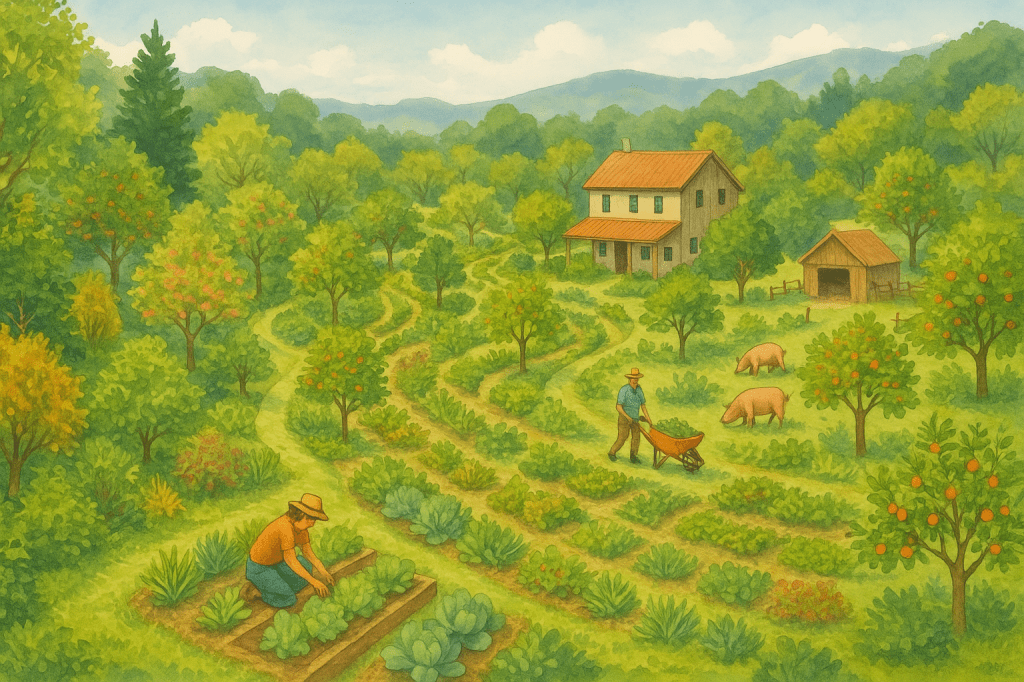
This spring, I’m trying something new, or perhaps, it’s something very old. I’m giving two of my 3’ x 8’ raised beds over to chaos. Not to neglect, but to intelligent disorder, a conscious step away from the regimented rows and into the wild wisdom of nature.

I’ve spent years designing gardens around principles of companion planting, guilds, crop rotation, and soil stewardship. These tools work, no doubt, but nature doesn’t plant in rows. She scatters. She layers. She invites diversity, and lets the strongest, most adaptive life flourish. And so, inspired by that, I’m preparing a chaos garden.

Here’s the plan: I’ve gathered a mixed jar of seed: vegetables, herbs, flowers, and a few rogue wild edibles that I’ve saved or collected over the years. Into it go radish, arugula, calendula, dill, kale, turnip, nasturtium, peas, and fennel. Some mustard for early leaves, some poppy for beauty, some chard for colour. Even a few tomato and squash seeds, just to see who wins the race.

I’ll loosen the soil, adding compost and manure, broadcast the mix by hand, rake it in gently, and water deeply. No rows. No labels. Just biodiversity in motion.

This kind of growing goes by many names: scatter plantingchaos gardening, even seed bombing when done guerrilla-style, but under the surface, it shares DNA with deeper systems thinking. It’s a living expression of polyculture, multiple species growing together in dynamic balance. It echoes permaculture’s ethic of cooperation with natural systems, and it sets the stage for self-seeding gardens, where plants aren’t just harvested, they’re invited to return.

Why do this?

First, because diversity builds resilience. Different plants fill different niches. Deep roots break soil; shallow roots hold moisture. Nitrogen fixers support leafy greens. Leafy greens shade the soil. Flowering herbs call in predators that keep pests in check.

Second, because it discourages monoculture pests and weeds. If you can’t find a pattern, neither can the cabbage moth.

Third, because it invites observation. I don’t know what will thrive, but I know I’ll learn something from what does.

And finally, because it’s joyful. There’s a delight in surprise, in watching an ecosystem unfold in real time, unbound by our expectations.

I won’t intervene much. I’ll harvest what’s ready, let the rest go to seed, and see what returns next year. My role is less conductor, more steward. Less controller, more curious partner.

I still have my perennial fruit and vegetables scattered across the hobby farm using permaculture layers, so I won’t be going hungry if the chaos fails to produce. 

In a world obsessed with order and output, these little beds will be a place of play, experimentation, and ecological trust. A microcosm of what happens when we let go, just a bit, and let the land speak back.

If you’re curious about trying this yourself, start small. Choose a bed or even a large container. Use what you have, and most of all, resist the urge to overthink it. Nature knows what to do.

This is the season I choose to sow chaos. I suspect it will be the most ordered thing I grow.

Here’s a curated list of vegetable, herb, and edible flower seeds well-suited for chaos planting in Canadian Hardiness Zone 5. These plants are generally fast-growing, cold-tolerant, or self-seeding—and they don’t mind a little competition.

Leafy Greens (Cut-and-Come-Again, Fast Growers)
These thrive in early spring/fall and often reseed:
Arugula – spicy, fast to mature, great for pollinators when it flowers
Lettuce (mixed looseleaf varieties) – tolerates partial shade, quick to sprout
Mustard Greens – bold flavor, early spring/fall performer
Tatsoi – cold-hardy Asian green, forms a rosette
Mizuna – feathery leaves, handles crowding well
Spinach – plant early; loves cool weather

Root Crops
These do surprisingly well when thinned during harvest:
Radish – very fast, natural “row marker” and soil loosener
Carrots – mix different colours/sizes for variety
Turnip – dual-purpose (roots + greens)
Beets – harvest baby greens or mature roots
Rutabaga – slower to mature, tolerates cooler temps

Legumes (Nitrogen Fixers)
Support other plants and create vertical interest:
Peas (sugar snap or shelling) – sow early, great for trellises or natural climbing
Fava Beans – cold-tolerant and nitrogen-rich
Bush Beans – not too tall, easy to scatter

Cabbage Family (Brassicas)
Pest-prone in rows, but thrive in mixed beds:
Kale – resilient, frost-tolerant, often overwinters or self-seeds
Pak Choi – fast-maturing and shade-tolerant
Broccoli Raab – leafy with small florets, matures quickly
Mustard – doubles as a trap crop for flea beetles

Herbs (Pollinator Magnets & Companion Plants)
They support insect diversity and natural pest control:
Dill – attracts ladybugs and beneficial wasps
Cilantro – bolts quickly, great for early pollinators
Parsley – slower growing, useful kitchen herb
Chervil – good for shade and cool conditions

Edible Flowers (Beauty + Function)
These help deter pests and support pollinators:
Calendula – self-seeds easily, blooms early and long
Nasturtiums – edible leaves and flowers, acts as aphid trap crop
Borage – self-seeds readily, attracts bees
Violas – small, edible blooms for salads

Others for Experimentation
A few crops that might surprise you:
Swiss Chard – colourful, resilient, good for succession
Zucchini or Pattypan Squash – use only a few seeds; they get large
Cherry Tomatoes – some may thrive if your season is long enough
Onions (green onions from seed) – slow, but good in dense plantings

Tips for Success in Zone 5 Chaos Planting
Sow early in spring (as soon as the soil is workable)
• Choose cold-hardy or short-season varieties (mature in 50–70 days)
Water evenly after sowing, then mulch lightly to retain moisture
• Harvest regularly and thin as needed, using what’s edible

Five Things We Learned This Week

Here is the latest edition of “Five Things We Learned This Week” for April 26–May 2, 2025, highlighting significant global developments across various sectors.

🕊️ 1. World Bids Farewell to Pope Francis

An estimated 250,000 mourners gathered in Vatican City to pay their final respects to Pope Francis, who passed away earlier this month. The funeral was attended by numerous world leaders and pilgrims from around the globe, reflecting the Pope’s profound impact on the international community.  

📉 2. U.S. Economy Contracts Amid Tariff Pressures

The U.S. economy experienced a contraction of 0.3% in the first quarter of 2025, marking the first decline since early 2022. This downturn is attributed to a surge in imports ahead of new tariffs introduced by President Trump, leading to a record trade deficit that significantly impacted GDP.  

🧬 3. Discovery of Disintegrating Exoplanet BD+05 4868Ab

Astronomers have identified BD+05 4868Ab, a small rocky exoplanet located 142 light-years from Earth, which is rapidly disintegrating due to extreme heat from its nearby host star. The planet exhibits a comet-like tail of vaporized minerals and is estimated to completely evaporate within 1–2 million years.  

📈 4. FTSE 100 Achieves Record 15-Day Winning Streak

The UK’s FTSE 100 index closed higher for the 15th consecutive day, marking its longest-ever streak of gains. This rally is attributed to easing U.S.-China trade tensions and stronger-than-expected U.S. job data, which boosted investor confidence across global markets.  

🧪 5. ITER Completes World’s Largest Superconducting Magnet System

Engineers at ITER have completed the construction of the world’s largest and most powerful pulsed superconducting electromagnet system. This milestone is a significant step toward achieving sustained nuclear fusion, with the system designed to confine plasma at 150 million °C, enabling ITER to produce 500 megawatts of fusion power from just 50 megawatts of input.  

Stay tuned for next week’s edition as we continue to explore pivotal global developments.