Unknown's avatar

About Chris McBean

Strategist, polyamorist, ergodox, permaculture & agroforestry hobbyist, craft ale & cider enthusiast, white settler in Canada of British descent; a wanderer who isn’t lost.

Is USA a Fascist State Struggling with Democracy? 

Is America flirting with fascism, or are such claims the product of alarmist hyperbole? It’s a question that divides dinner tables, social media feeds, and even academic circles. Some argue that the United States is a democracy fighting for its soul; others see it as a country standing perilously close to authoritarian rule. But to call America fascist – or even on the road to it – requires a careful unpacking of what fascism truly entails, and how it might resonate within the American political landscape.

Let’s be clear: fascism isn’t a vague insult for policies we don’t like. It’s an authoritarian ideology with specific hallmarks. Think Mussolini’s Italy, Hitler’s Germany – regimes steeped in violent nationalism, the suppression of dissent, and a drive to create a monolithic cultural identity. Robert Paxton, one of the leading scholars on the subject, described fascism as thriving on crises, exalting the group over the individual, and depending on a strong leader to restore a supposedly decaying nation. So, how does America stack up against these criteria? Let’s dig deeper.

Nationalism and Authoritarian Rhetoric
Nationalism is the drumbeat of every fascist regime, and it’s undeniable that America has had its moments of chest-thumping pride. But the “America First” rhetoric of recent years has pushed nationalism to a different level, stirring debate about its compatibility with democratic ideals. Take the Trump administration, where slogans like “Make America Great Again” dovetailed with a barrage of attacks on immigrants, minorities, and even the democratic process itself. Muslim travel bans, family separation policies at the southern border, and the vilification of immigrants as existential threats bear a troubling resemblance to the exclusionary policies of fascist regimes.

And then there’s the attack on the press—“the enemy of the people,” as Trump called it. Fascism thrives on controlling narratives, suppressing inconvenient truths, and manufacturing enemies to unite the populace. These tactics were echoed in efforts to discredit media outlets, undermine trust in elections, and dismiss dissenting voices. While America still enjoys a free press and opposition parties, these tactics are red flags in any democracy.

Civil Liberties Under Pressure
A free society requires robust protections for civil liberties, yet the U.S. has shown cracks in its foundation. Think about the use of force against peaceful protesters during the George Floyd demonstrations, or the revelations of mass surveillance by whistleblower Edward Snowden. Then there are laws in certain states aimed at curbing protests – an unsettling echo of fascist regimes that treated dissent as treason.

Still, America hasn’t crossed the line into wholesale repression. Dissent exists, opposition thrives, and courtrooms regularly challenge abuses of power. These are democratic lifelines, but they must be safeguarded vigilantly.

Corporate Power and Economic Control
Fascism often entails a symbiotic relationship between the state and corporations, where economic power is wielded for nationalist purposes. In America, the government doesn’t control corporations outright, but the influence of corporate money in politics is undeniable. Lobbying, dark money in elections, and the revolving door between big business and government raise questions about whether democracy is being eroded by oligarchic forces.

Economic inequality is another point of tension. Policies favoring the wealthy over the working class may not fit the fascist mold exactly, but they exacerbate social divisions, fueling the kind of crises that fascism preys upon.

Racial and Cultural Tensions
A defining feature of fascism is the enforcement of a singular racial or cultural identity, often to the detriment of minorities. The U.S. has a long history of systemic racism, from slavery and segregation to redlining and mass incarceration. Contemporary issues – like police brutality and racial inequality – continue to expose deep wounds in the fabric of American democracy.
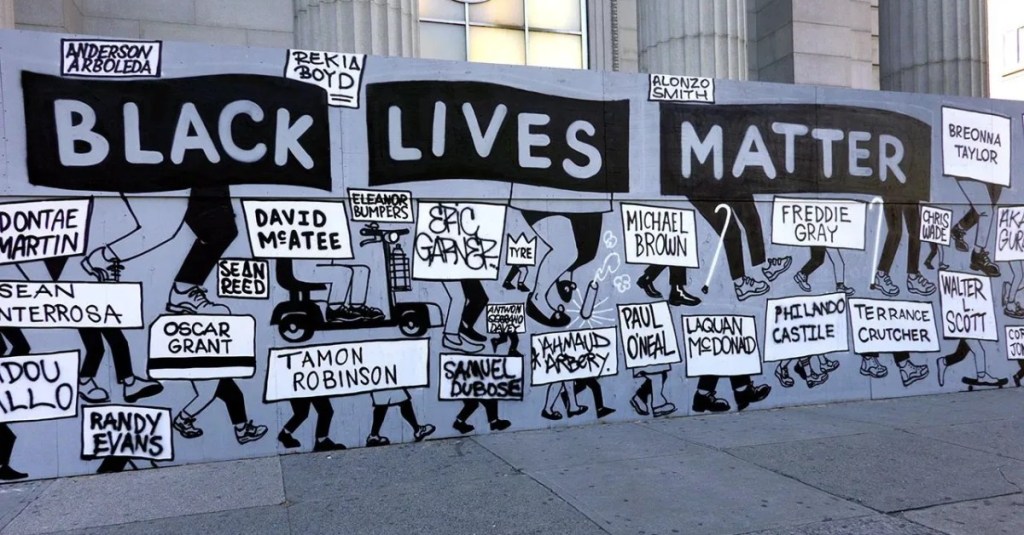
White nationalist groups, emboldened in recent years, represent another disturbing trend. The normalization of their rhetoric in certain political spaces harks back to fascist tendencies to scapegoat minorities for societal woes. Yet, these groups remain fringe elements rather than central powers, and their rise has been met with strong opposition from civil society.

America’s Democratic Struggle
Despite these troubling signs, it would be a mistake to paint America as fully fascist. The U.S. retains institutions that fascist regimes dismantle: a separation of powers, an independent judiciary, and regular elections. Social movements – from Black Lives Matter to grassroots environmental campaigns – demonstrate that the democratic spirit is alive and well.

America’s story is not one of fascism triumphant, but of democracy under pressure. Its history is riddled with contradictions, from its founding on ideals of liberty while maintaining slavery, to its championing of free speech while tolerating systemic inequality. Yet, those contradictions are precisely why it remains a battleground for change.

So, Is America Fascist?
Not yet – and perhaps not even close. But the warning signs are there. The flirtation with authoritarianism, the normalization of exclusionary rhetoric, and the entrenchment of corporate influence all demand vigilance. America isn’t Mussolini’s Italy or Hitler’s Germany, but it is a nation grappling with the forces that could pull it in that direction. The question isn’t just “Is America fascist?” – it’s “What are we doing to ensure it never becomes so?”

Americans must keep democracy’s flame alive by holding power to account, protecting civil liberties, and fighting for the inclusive ideals the country was built on. After all, democracy isn’t just a system – it’s a struggle. And that struggle is theirs to win.

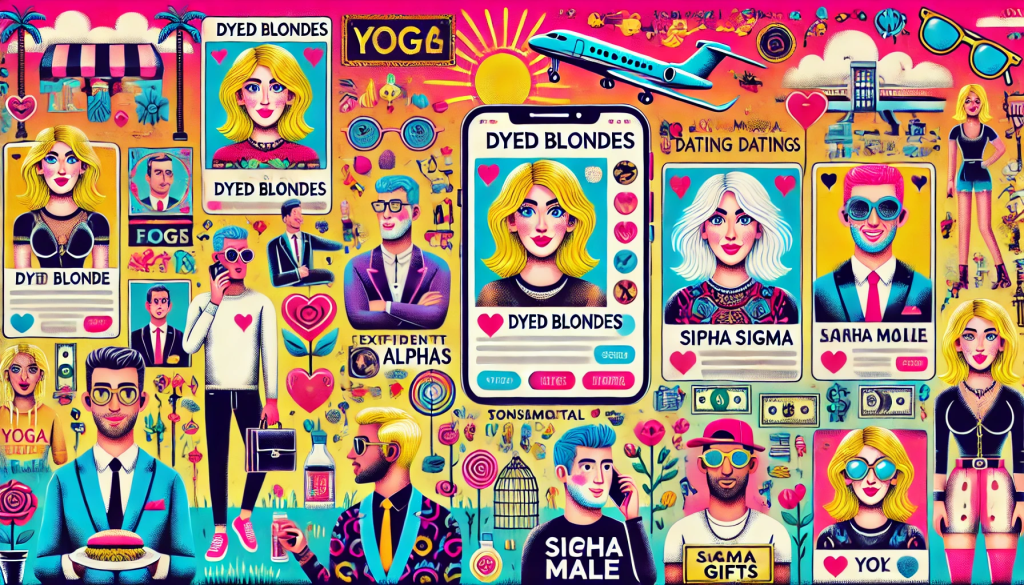
Do Dyed Blondes Have More Fun?

Ah, the age-old question: are blondes really living in a world of carefree bliss, or are we all just projecting our insecurities onto peroxide and highlights? Writing about this without sounding like an incel, a beta male, or someone too deeply invested in hair dye chemistry is no small feat. Yet, here we are, embarking on what might be less a quest for answers, and more an exercise in rhetorical hair-splitting.

Let’s start with dating apps – a modern battlefield of swipes and signals. Among the throngs of thumbnails, dyed blondes seem to project an aura of exclusivity, their profiles brimming with criteria that could rival a job application. Are they filtering for quality, or are we mere mortals simply grappling with a complex about their sun-kissed manes? If my success rate at guessing their dating parameters is any indication – 19 out of 20, for those keeping score – it’s safe to say there’s a pattern. Dyed blondes often seek monogamous, long-term relationships with a healthy side of yoga, financial security, and vacation photos fit for Instagram.

But here’s the real question: does their hair color influence their attitude? Are dyed blondes subconsciously channeling the remnants of Hollywood’s golden era when Marilyn reigned supreme? Or is blonde ambition simply a reflection of modern dating demands? Personally, I’ll take a redhead – natural or otherwise – any day, or even a creative shade of green, purple, or the noble dignity of natural gray.

Social media, of course, only stirs the pot. Take the “relationship expert” I’ve been observing—a dyed blonde, single mom in her early 30s, who doles out mononormative dating advice with the fervor of a self-proclaimed guru. Her brand is a blend of retrograde toxic masculinity, and transactional dating. With her newly enhanced assets, and a steady stream of high-profile suitors, she’s a case study in leveraging appearance for clout. It’s a spectacle to watch her bounce from Latin entrepreneurs to American bankers, her love life resetting every six to eight weeks. One wonders if she’s truly looking for love, or just excellent brand engagement.

Which brings us back to the blonde mystique: is there really a hierarchy of hair color? And if blondes are at the top, why aren’t they everywhere? While living in California, I was often asked by European friends, “Where are all the leggy blondes from the movies?” The reality, in tech-heavy Silicon Valley, leaned brunette, due mainly to the large Asian and Latin presence, with blonde sightings limited to the occasional intellectual property lawyer who, interestingly, also subscribed to the “if you want my time, pay for it” school of thought.

A friend in Montreal read an early draft of this piece and called me out for not showcasing my feminist credentials. She reminded me of her gray-haired friend, who used to be a dyed blonde, who faced male criticism for the change, but received overwhelming support from women for embracing her natural look. She also highlighted the rise of transactional dating, where “gold digging” is less taboo, and more a strategic career choice.

So, perhaps I’ve had this all wrong. Maybe it’s not that dyed blondes feel superior, but that men create the demand by fetishizing the hair color. Women, ever the astute adapters, respond accordingly. If dyed blondes are the aspirational choice for Alpha males chasing society’s markers of success, they’re simply playing to the market. And if, as a self-declared Sigma male, I prefer intelligence and curiosity over Instagram-ready jet-setting, I should be grateful for the self-selection happening on dating sites.

As for our social media influencer, she’s gone chestnut red since her latest breakup. Perhaps she’s starting her own rebellion against the hierarchy, or maybe she’s just running an A/B test on hair color ROI. Either way, it seems dyed blondes are navigating a complex world of expectations – just like the rest of us.

Stay tuned for the next post, where we tackle transactional dating, shifting power dynamics, and the role of social media in modern romance. For now, let’s toast to the dyed blondes, of all genders, who keep the world guessing – and swiping.

Taxing Digital Platforms: Restoring Fairness in Journalism

The rise of digital platforms like Google, X (formerly Twitter), and Meta (formerly Facebook) has revolutionized how we consume news, but it has also created a glaring economic imbalance. These tech giants generate billions in advertising revenue by hosting and sharing content created by news organizations, often without adequately compensating the original creators. Taxing large digital platforms that fail to share revenue with news publishers is an essential policy to restore fairness and support the future of journalism.

This approach addresses the inequity of the current system, where major platforms profit from the hard work of journalists without contributing to the sustainability of their industry. Traditional news outlets have seen their advertising revenue plummet, with much of it flowing into the coffers of tech companies instead. By requiring these platforms to share their profits, governments can ensure that news creators are compensated for the value they provide, helping to sustain high-quality journalism in an era of financial challenges.

Taxation could also play a critical role in combating misinformation. Digital platforms have frequently been criticized for enabling the spread of false information while undermining the reach of credible news sources. Redirecting tax revenue to support professional journalism would help ensure that quality reporting continues to play a vital role in informing the public and holding power to account. The importance of this goal has been demonstrated by global precedents. Countries like Australia and Canada have already implemented legislation to compel platforms to negotiate revenue-sharing agreements with news publishers, proving that such measures can work.

Recent developments have highlighted the potential for progress in this area. In a landmark move, Google has agreed to pay $100 million to a Canadian NGO to fund direct payments to journalists. This initiative represents a significant step toward addressing the economic imbalance in the news industry and demonstrates how collaboration between tech giants and governments can yield meaningful solutions. However, such efforts must be part of a broader, sustained commitment to supporting journalism worldwide.

Opposition from the tech giants is inevitable, as seen in Canada, where Meta and Google responded to the Online News Act by blocking access to news content. Such resistance underscores the need for governments to remain firm in their commitment to addressing this economic imbalance. While challenges remain, including defining who qualifies as a legitimate news creator and ensuring compliance, these hurdles are not insurmountable. A clear regulatory framework and effective oversight can prevent misuse of funds and ensure they are directed toward credible journalism.

Concerns about economic consequences, such as increased costs for advertisers or users, are valid but manageable. These platforms already operate with unprecedented profitability, and requiring them to pay their fair share does not threaten their sustainability. Instead, it acknowledges the value of the ecosystem they rely upon to thrive.

Ultimately, taxing large digital platforms is not just about economics; it is about fairness and accountability. By ensuring that news creators are compensated for their work, governments can create a more balanced digital economy while safeguarding the future of independent journalism. Supporting this policy is not only a practical step—it is a moral imperative.

The influence of Donald Trump and Elon Musk as owners of major digital platforms—Truth Social and X (formerly Twitter), respectively—poses a significant threat to journalism and the dissemination of credible information. Both individuals have used their platforms to amplify personal agendas, often undermining journalistic integrity by promoting misinformation and attacking media outlets that challenge their narratives. Musk’s approach to content moderation on X, including reinstating previously banned accounts and dissolving key trust and safety teams, has fueled the spread of falsehoods, while Trump’s Truth Social operates as a self-serving echo chamber.

This concentration of power in the hands of individuals who prioritize ideological control over transparency and accountability creates a hostile environment for independent journalism, erodes public trust in reliable reporting, and distorts the democratic discourse that journalism is meant to uphold. As governments and organizations work toward leveling the playing field through policies like revenue-sharing agreements and taxation, it is essential to confront the broader challenge posed by platform owners who prioritize personal interests over journalistic integrity. Only by addressing these issues in tandem can we safeguard the future of credible news and democratic accountability.

Please, Not Another Old White Male Academic

The Canadian Liberal Party finds itself at a crossroads, staring down the barrel of declining voter support, a fractured image, and leadership fatigue. Recent polling paints a grim picture for the governing party. According to a Nanos Research poll from November 2024, the Conservatives are riding high with 41% support, compared to the Liberals’ dismal 23%, while the NDP trails just behind at 20%. Similarly, an Abacus Data poll reveals an equally bleak scenario, with the Conservatives holding a commanding 22-point lead. For a party that once dominated Canadian politics, the question isn’t just about how to bounce back—it’s about survival.

The Curse of Intellectual Leadership
The Liberals’ current predicament has parallels to their past missteps. Two glaring examples—Stéphane Dion and Michael Ignatieff—serve as cautionary tales about the dangers of picking leaders who, while intellectually formidable, fail to connect with voters on a human level.

In 2006, the Liberals turned to Stéphane Dion, an academic and policy wonk with a passion for climate change. Dion’s “Green Shift” plan was ambitious, but lacked the messaging needed to win over Canadians worried about the economy. In the 2008 election, the party was hammered, falling to just 77 seats and 26.3% of the popular vote. Dion’s perceived aloofness, and inability to inspire confidence left the Liberals weak and divided, opening the door for Stephen Harper’s Conservatives to consolidate power.

The Liberals repeated this mistake with Michael Ignatieff, an accomplished academic and author, in 2008. Despite his intellectual prowess, Ignatieff struggled to shake the perception that he was a carpetbagger disconnected from the concerns of average Canadians. In the 2011 election, the party collapsed, capturing a mere 18.9% of the vote and just 34 seats—the worst performance in Liberal history. For the first time, the Liberals were relegated to third-party status, a stunning fall for Canada’s so-called “natural governing party.”

The Liberal Dilemma in 2025
Fast forward to today, and the Liberals seem poised to repeat history. With Justin Trudeau’s star power fading after nearly a decade in office, there is a real risk that the party might turn to yet another “safe” choice—a figure who mirrors the old archetype of a white male intellectual, disconnected from the realities of modern Canada. But the Canada of 2025 isn’t the Canada of 2006 or 2011. Demographics have shifted, and so have voter priorities.

Canada is now more diverse than ever. Over a quarter of the population identifies as part of a racialized group, and millennials and Gen Z make up the largest voting blocs. These voters expect leaders who reflect their lived experiences—not just in terms of identity but also in terms of relatable policies and vision. A leader who represents “business as usual” risks alienating not only racialized communities but also younger, progressive Canadians who are increasingly drawn to the NDP or Greens.

Recent polling reflects this growing discontent. The Liberals are hemorrhaging support to both the Conservatives and the NDP, with voters fed up with Trudeau’s perceived failures on affordability, housing, and climate action. Even Liberal loyalists are looking for something—or someone—new to rekindle their enthusiasm.

What the Liberals Need Now
The Liberals must understand that leadership is as much about identity and relatability as it is about policy and experience. A leader who embodies the diversity of Canada, speaks to the struggles of everyday people, and offers a compelling vision for the future could galvanize the party’s base and attract disillusioned voters. In contrast, opting for another “old white academic” risks reinforcing the image of a party out of touch with 21st-century Canada.

The successes of other leaders offer lessons. Jagmeet Singh’s historic leadership of the NDP has drawn younger and more diverse voters to his party, even if they haven’t translated into electoral dominance. Meanwhile, Pierre Poilievre has managed to connect with younger Conservatives through his populist messaging on affordability and housing.

The stakes for the Liberals couldn’t be higher. If they fail to read the room and make a bold choice, they risk not just losing the next election but fading into irrelevance altogether. As Dion and Ignatieff’s defeats demonstrated, intellectual credentials alone don’t win elections. Representation, relatability, and vision do.

For the Liberals, the time for reinvention is now—or never.

The Politics and Culture of the United Federation of Planets

The United Federation of Planets (UFP) in Star Trek is more than just a fictional interstellar government, it’s a lens through which we can explore the complexities of governance, culture, and morality. As an amalgamation of over 150 member planets, each with distinct identities, the Federation represents humanity’s highest aspirations: unity, cooperation, and progress. However, beneath its utopian veneer lies a tapestry of contradictions, challenges, and ethical dilemmas that reflect the very nature of politics and society.

Culturally, the Federation embodies a post-scarcity society where poverty, hunger, and economic inequality have been eradicated. This transformation, driven by technologies like replicators, allows individuals to pursue self-fulfillment rather than survival. Captain Picard famously encapsulates this ethos in Star Trek: First Contact, stating that humanity works to “better ourselves and the rest of humanity.” Yet, this idealism is not without critique. Characters like Quark, the ever-pragmatic Ferengi bartender from Deep Space Nine (DS9), often mock Federation citizens as naive and soft, sheltered by their comfortable post-scarcity lives, and ignorant of the struggles faced by more commerce-driven cultures, or from living within the hierarchical Dominion. 

The Federation’s diversity and multiculturalism are central to its identity. As a multi-species alliance, it strives to respect and integrate a variety of cultural traditions. Vulcan logic, Klingon honor, Bajoran spirituality – these are just a few examples of the unique perspectives that coexist within the Federation. Yet, this inclusivity is not without tension. The Next Generation episode “The Measure of a Man” highlights the Federation’s struggle to define universal principles in a diverse galaxy, as it debates whether the android Data qualifies as a sentient being. Similarly, DS9 delves into the cultural friction between the Federation’s secular humanism and Bajoran spiritualism, particularly during Bajor’s efforts to join the Federation. While the Federation promotes unity, it sometimes risks imposing its ideals, creating an undercurrent of what some might call “soft imperialism.”

Politically, the Federation operates as a parliamentary democracy, with the Federation Council serving as its legislative body. Member planets retain autonomy over their internal affairs, while the Council oversees interplanetary law and diplomacy. The President, based in Paris on Earth, functions as the head of state. This balance between centralized governance and local autonomy is a strength, but it also leads to conflict. In Deep Space Nine, Bajor’s hesitation to join the Federation stems from fears of losing cultural identity to Earth-centric norms, a recurring critique that the Federation, despite its claims of equality, often reflects Earth’s values more than those of its alien members.

Ethics play a central role in Federation politics, often taking precedence over realpolitik. The Prime Directive, which prohibits interference with the natural development of pre-warp civilizations, exemplifies this commitment to morality. However, its strict application frequently leads to moral quandaries. In the Next Generation episode “Pen Pals,” Captain Picard grapples with whether to save a planet facing natural destruction, knowing that intervention would violate the Directive. These dilemmas reveal the challenges of maintaining an ethical stance in an imperfect galaxy.

Yet, the Federation’s ideals are not invulnerable. Darker elements, such as Section 31, a covert intelligence agency introduced in DS9, operate outside the bounds of Federation law to protect its interests. This shadowy organization embodies the tension between the Federation’s noble aspirations and the harsh realities of interstellar politics. Similarly, the Dominion War in DS9 exposes the Federation’s capacity for militarization, challenging the perception of Starfleet as a purely exploratory and diplomatic force.

What makes the Federation compelling is its dual nature: it is both a beacon of hope and a reflection of humanity’s flaws. In Star Trek VI: The Undiscovered Country, the Federation negotiates peace with the Klingon Empire, showcasing its dedication to diplomacy even after decades of hostility. Yet, this same Federation harbors internal threats, as seen in the DS9 episodes “Homefront” and “Paradise Lost,” where a Starfleet admiral attempts a coup in response to Changeling infiltration. These stories remind us that even the most enlightened institutions are vulnerable to fear and corruption.

Ultimately, the Federation is not just a backdrop for Star Trek’s adventures; it is a character in its own right, embodying the complexities of governance, diversity, and ethical leadership. Its triumphs inspire us to imagine a better future, while its flaws remind us that such a future is not achieved without struggle. By exploring these themes, Star Trek offers not just escapism, but a profound commentary on the challenges and possibilities of building a just and inclusive society.

A Path to Sustainable and Inclusive Urban Living

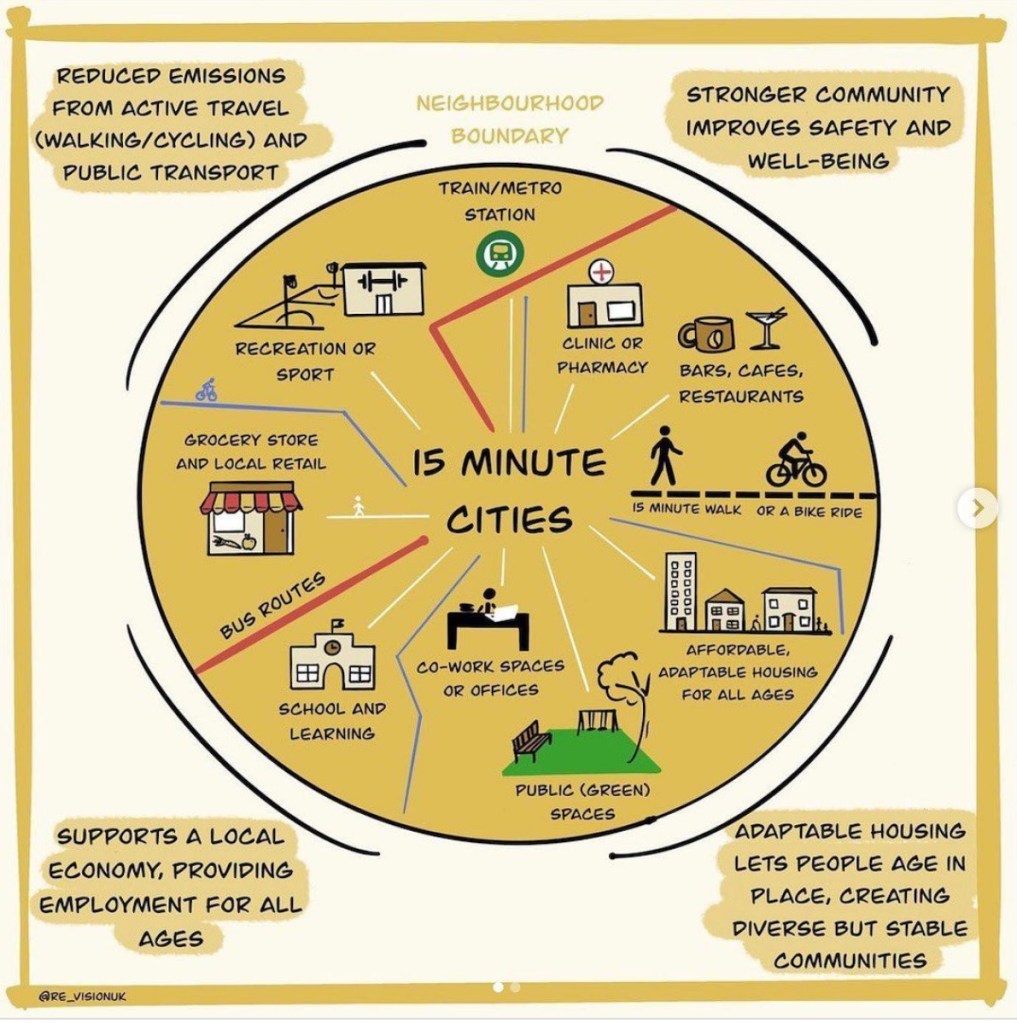
The 15-minute city concept is redefining urban planning by creating neighborhoods where residents can access essential services and amenities—such as schools, grocery stores, healthcare, parks, and cultural hubs—within a short walk or bike ride from their homes. This approach enhances livability, promotes sustainability, and fosters vibrant communities. While cities like Montreal and Vancouver are often highlighted as Canadian pioneers of this model, the concept has significant potential to transform smaller cities and suburban areas as well.

Modern suburban developments, with their sprawling layout, lack of sidewalks, and reliance on car travel, often isolate families and increase stress. Parents find themselves spending hours shuttling children to school, sports, and activities, leaving less time for connection with neighbors or the community. By contrast, the 15-minute city offers a remedy: neighborhoods designed for convenience, where daily needs are within walking distance, eliminating the dependency on cars and fostering tighter-knit communities.

Montreal’s Plateau-Mont-Royal exemplifies the 15-minute city with its dense urban fabric and mixed land use. The neighborhood integrates residential spaces with vibrant local businesses, green parks, and pedestrian-friendly streets. Residents can easily walk or bike to markets, cafes, schools, and public transit, making car ownership unnecessary for most. The Plateau demonstrates how retrofitting existing neighborhoods with human-scale design can create thriving, sustainable communities.

While Vancouver’s downtown core is often cited as a model of accessibility and vibrancy, Victoria has also embraced the 15-minute city concept through its commitment to walkable neighborhoods and cycling infrastructure. Areas like Fernwood and James Bay offer compact communities where residents can access markets, local cafes, healthcare, and schools without needing a car. The city’s investment in bike lanes and mixed-use development showcases how smaller cities can lead the way in creating vibrant, sustainable urban environments.

Stratford, a small Ontario city known for its arts and theater scene, has leveraged its human-scale design to embody the principles of the 15-minute city. Residents of Stratford can easily walk to schools, grocery stores, parks, and cultural venues. The city’s focus on local businesses and accessible public transit demonstrates how smaller municipalities can create thriving, close-knit communities while reducing environmental impact.

Growing up in Newcastle-upon-Tyne, I experienced firsthand the benefits of a 15-minute city before the term existed. Everything we needed—food shopping, schools, parks, and even the local fish-and-chip shop—was within walking distance. Pubs and restaurants were truly “local,” and an affordable public transit system connected us to the wider city. This lifestyle fostered independence, social connections, and a sense of belonging—qualities that modern urban planning seeks to replicate.

The 15-minute city has sparked debate, with critics fearing it may restrict personal freedom or create isolated “bubbles.” However, proponents argue that the model enhances choice by making essential services more accessible while reducing reliance on cars. Rather than limiting mobility, it offers more options for transportation, including walking, cycling, and transit. This model also aligns with public health goals, reducing long commutes and encouraging active lifestyles.

Danish urbanist Jan Gehl emphasizes designing cities around people, not cars. His research underscores the economic, social, and environmental benefits of walkable neighborhoods, from improved mental health to strengthened community bonds. By investing in pedestrian infrastructure and mixed-use development, cities can become more sustainable and equitable.

As Canadian cities grow, the 15-minute city offers a roadmap for livable, sustainable urban living. By prioritizing human-scale design and reducing car dependency, communities of all sizes can embrace this transformative model. Whether in a bustling metropolis or a small city like Stratford, the principles of the 15-minute city promise a more inclusive, resilient future for urban living.

Boeing – Too Big to Fail?

Boeing, once synonymous with innovation and reliability, now faces a cascade of crises that threaten its reputation and future. While the ongoing troubles of the 737 Max program dominate headlines—groundings, safety concerns, and public trust erosion—the company’s issues extend well beyond commercial aviation, notably into its ambitious space ventures.

The Boeing Starliner, a spacecraft designed to ferry astronauts to and from the International Space Station (ISS), has suffered a series of high-profile setbacks. Initially touted as a competitor to SpaceX’s Crew Dragon, Starliner’s development has been marred by delays, cost overruns, and technical failures. A critical uncrewed test flight in 2019 revealed significant software glitches, including one that could have led to the loss of the spacecraft. Although Boeing claimed to have resolved these problems, subsequent delays further damaged its credibility. The spacecraft’s repeated postponements have left NASA increasingly reliant on SpaceX, raising questions about Boeing’s ability to fulfill its commitments.

The spacecraft’s troubles became undeniable after a highly anticipated manned launch resulted in astronauts being stranded on the International Space Station. The spacecraft’s return leg—a critical phase—had to be completed unmanned due to technical malfunctions. This public embarrassment highlighted the systemic flaws in Boeing’s approach to quality control and execution. It also underscored the widening gap between Boeing and its competitor, SpaceX, which has consistently delivered reliable results in the same program.

Even more concerning is the financial impact of these failures. Boeing has already absorbed over a billion dollars in losses related to Starliner, a stark reminder of how far the company has fallen in the space sector—a domain it once dominated. With additional safety certifications looming, Starliner’s future remains uncertain. The program’s struggles not only jeopardize Boeing’s position in the lucrative space market, but also strain its long-standing relationship with NASA, a critical partner.

Internally, these challenges exacerbate a broader crisis of confidence. Employee morale has plummeted as the company wrestles with mounting quality control issues, whistleblower allegations of defective parts, and labor disputes disrupting production. Leadership changes, including the appointment of new CEOs, have done little to stem the tide of dissatisfaction.

Despite its sprawling influence, and “too big to fail” status, Boeing’s current trajectory highlights the precariousness of its position. The aerospace giant’s struggles are a cautionary tale about complacency in an industry where safety and reliability are paramount. If Boeing cannot resolve its systemic issues, its future—both in the skies and beyond—looks increasingly fragile.

New Year’s Eve: A Reflection on Old Traditions and New Paths

December 31st, New Year’s Eve, has rarely held much charm for me. The holiday feels drenched in sentimentality, forced cheer, and an overbearing expectation to reinvent oneself overnight. Years ago, I quietly stepped away from the revelry, trading the clinking of champagne glasses for moments of introspection. But it wasn’t always this way.

In my early thirties, I poured my energy into organizing rambunctious New Year’s celebrations with my university friends, and a few trusted work colleagues. These weren’t ordinary parties; they were full-blown, three-night events, held in ancient locations – castles in Northumberland, estates in the Lake District, or lodges in Snowdonia.

Planning began months in advance. We’d estimate guest numbers, scout properties, draft menus, and prepare endless shopping lists. My friend Vivienne and I spent weeks curating every detail; maps to the venue, suggested activities, which ranged from rock climbing to pub crawls, from shopping to board games, and even a schedule for who’d take turns cooking meals, washing dishes or restocking the booze. Everyone pitched in, and those who didn’t weren’t invited back, except for Nigel and Rosie, because we loved them anyway. 

The guest list was as colorful as the events themselves: a Scottish laird, a supermarket heiress, police officers, geologists, a Hercules Loadmaster, an Australian Homeopath, and enough PhDs to launch a think tank. That first year, we hosted 40 people. By the time I attended my last event, the crowd had grown to over 70.

Eventually, I passed the torch to others, especially after I moved continents. Yet, decades later, those New Year’s gatherings still persist, now infused with the energy of attendees’ children, and the nostalgia of enduring friendships. For many years, my holiday ritual involved crossing the Atlantic; first to visit family for Christmas, then to join these gatherings, where we’d reminisce over old stories and create new ones – especially stories answering the question “why did Andy always have a black eye?” 

But somewhere along the way, I began to feel restless. The same stories, the same faces, the same patterns – what once felt comforting, now seemed like a closed time loop, that I couldn’t escape. As I built a life, and family in North America, I realized it was time to step away, and embrace new traditions, ones that allowed for evolution and personal growth. 

It’s funny, I hadn’t planned to write about this today. I rarely share personal stories like this, and maybe that’s something I’ll change in the coming year.

To everyone I love, near and far: Happy New Year. May 2025 bring you peace, fulfillment, and a wondrously, meaningful life.

The Messy Truth About Style, Wealth, and Social Media in the Walmart Birkin Era

The Walmart Birkin debate, while seemingly chaotic, underscores the positive disruption social media has brought to the way society views fashion, wealth, and accessibility. This debate, which centers on inexpensive alternatives to luxury handbags like Hermès’ Birkin, reflects how social platforms like TikTok and Instagram have democratized access to trends, challenging long-standing ideas of exclusivity and prestige.

Social media has broken down barriers that once kept luxury fashion out of reach for most people. By showcasing Walmart’s Birkin-inspired bags and other accessible “dupes,” platforms have shifted the narrative, allowing everyday consumers to participate in trends without financial strain. This democratization of style isn’t just about affordability—it’s about creativity. People are mixing high-end and low-cost fashion to create their own unique looks, proving that style is more about personal expression than the price tag.

The debate also forces us to reconsider the value of luxury goods as status symbols. For years, owning a Birkin bag was a sign of wealth and social prestige. Now, as social media normalizes dupes, the exclusivity that defined luxury is being questioned. These conversations challenge us to think critically about the meaning of material wealth and the societal pressure to conform to unattainable standards. Is the value of a Birkin in its craftsmanship, or does its worth lie solely in its role as a symbol of privilege? Social media has provided a platform for this dialogue, encouraging a broader critique of wealth inequality and our collective obsession with status.

What makes this disruption even more compelling is how social media amplifies diverse voices. Historically, the luxury market was dominated by a narrow demographic, but now people from all walks of life are participating in this conversation. By sharing their perspectives and personal stories, they’re reshaping the cultural narrative around style and worth. This shift empowers consumers to reclaim fashion from the exclusivity of luxury brands and redefine what it means to be fashionable in their own terms.

Yes, the discourse is messy. The flood of memes, arguments, and polarized opinions on platforms like TikTok can feel overwhelming. But this chaos is a sign of progress. It’s a reflection of cultural disruption—a necessary step in dismantling outdated hierarchies in fashion. This kind of viral conversation challenges norms, fuels innovation, and encourages brands to respond to the evolving values of a new generation of consumers.

In many ways, the Walmart Birkin debate represents the best of what social media can achieve. While it may seem like a trivial squabble over handbags, it’s actually a meaningful reflection of broader societal shifts. It shows us that accessibility and inclusivity are reshaping industries and that style, at its core, belongs to everyone—not just the privileged few.

Proposed Policy Shift: A Holistic, Equity-Focused Approach to Pandemic Management

Pandemics have traditionally been managed through isolation measures, and the prioritization of high-risk groups for vaccination. While this approach proved effective during the COVID-19 crisis in Canada, it also revealed significant shortcomings. Widespread isolation led to a surge in mental health issues, while many citizens faced severe financial hardship.

A shift in policy is necessary—one that treats citizens not merely as individuals or isolated households, but as members of interconnected communities. This proposal outlines a comprehensive strategy for pandemic management that prioritizes public health, social resilience, and economic security through three key measures: targeted vaccination by sorting codes, the formation of social pods, and the implementation of Universal Basic Income (UBI).

Targeted Vaccination by Sorting Code
Current vaccination efforts often fall short in addressing systemic inequities. A more effective strategy would prioritize vaccine distribution based on sorting codes (e.g., postal or area codes), focusing on communities most at risk. High-priority areas—those with elevated infection rates, limited healthcare access, or greater socioeconomic vulnerability—would receive vaccines first. This approach ensures resources are allocated efficiently and equitably, reducing disparities and safeguarding the most affected populations.

Development of Social Pods
Isolation has long been the cornerstone of pandemic response, but it often exacerbates mental health crises and social disconnection. An alternative approach is to encourage the creation of social pods—small, stable groups of 3 to 12 individuals who interact exclusively with one another. These pods allow for safe social interaction, fostering emotional and practical support while reducing the spread of infection. School children continue their education and social development, adults maintain their social interaction, while seniors get the support they need from family and friends, all of which greatly reduces pressure on the healthcare system. Social pods also facilitate easier contact tracing and containment efforts, providing a more community-oriented approach to public health.

Universal Basic Income (UBI)
Pandemics often expose and intensify economic inequities, leaving many people unable to comply with public health measures due to financial pressures. Implementing a Universal Basic Income ensures that all individuals, regardless of employment status, have access to basic financial resources. By alleviating economic stress, UBI allows people to adhere to isolation or quarantine guidelines without facing financial ruin, reducing unsafe behaviors driven by desperation and ultimately curbing virus transmission.

This proposed shift in policy emphasizes the importance of addressing the interconnected health, social, and economic challenges posed by pandemics. By adopting targeted vaccination, fostering social cohesion through pods, and ensuring financial stability with UBI, governments can build a more equitable and resilient framework for pandemic management. This approach not only safeguards public health, but also strengthens community bonds and ensures no one is left behind in times of crisis