Unknown's avatar

About Chris McBean

Strategist, polyamorist, ergodox, permaculture & agroforestry hobbyist, craft ale & cider enthusiast, white settler in Canada of British descent; a wanderer who isn’t lost.

Beyond Raylan and Boyd: The Quiet Revolution of Justified’s Women

It is almost impossible to talk about Justified without the gravitational pull of Raylan Givens and Boyd Crowder. The lawman and the outlaw. The hat and the sermon. Their dynamic is electric, their scenes mesmerizing. But if we stop there, we miss something quieter, yet no less vital: the women of Harlan County. They are not background ornaments. They are architects, operators, and sometimes arbiters of the county’s power.

Justified is, at its core, a show about negotiation: of power, of survival, of legacy, and its women navigate that negotiation with courage, intelligence, and persistence. They do not always receive accolades for their choices. They are rarely celebrated in tidy narrative terms. But they endure. They plan. They adapt. And through them, the show demonstrates that influence in Harlan County is rarely a matter of brute force alone.

From the first season, Ava Crowder (Joelle Carter) establishes the stakes for women in this world. Killing Bowman Crowder, her husband’s brother, is an act of necessity, not spectacle. What follows is not freedom but responsibility. Ava spends the rest of the series managing consequences, trying to carve stability in a world that punishes female assertiveness. By the time she runs the bar, she is no longer reacting to Boyd’s schemes—she is shaping outcomes herself. Her story is not about redemption. It is about agency and the cost of holding it.

Winona Hawkins (Natalie Zea) embodies a different but equally compelling form of strength. She does not wield influence through violence. She wields it through clarity and boundaries. Winona sees Raylan for who he is and refuses to shrink herself to accommodate him. She plans for herself and her child, navigating danger without illusion. In a genre where women are often defined by attachment to men, Winona functions as a moral and strategic measure, someone whose decisions ripple outward, shaping the male protagonist as much as he shapes hers.

Mags Bennett (Margo Martindale) is the series’ most commanding female presence. Mags is authority incarnate, her power flowing from land, legacy, and an encyclopedic understanding of loyalty and leverage. She manipulates, protects, and threatens with equal grace. Her final act is not defeat but authorship. Through Mags, Justified demonstrates that women can embody menace and sophistication simultaneously, and that female power does not need narrative apology.

Loretta McCready (Kaitlyn Dever) represents the adaptive, forward-looking dimension of female agency. Starting as a teenager growing weed to survive in a county that offers her nothing, she inherits Mags’ fortune and invests it strategically, buying land and positioning herself for the future. Loretta anticipates change, particularly legalization, and adapts faster than the men around her. She is clever, deliberate, and allowed to grow without punishment, one of the quietest, but most revolutionary arcs on the show.

Ava and Loretta represent two sides of the same coin: inherited constraint and adaptive ambition. One negotiates consequences, the other seizes opportunity. Both highlight Justified’s commitment to showing women who act deliberately within systems that seek to contain them.

Rachel Brooks (Erica Tazel) offers another vision of female authority. Beginning as a competent U.S. Marshal and rising to lead the office, Rachel reins in Raylan not through theatrics, but through competence and moral authority. Her power is quiet, principled, and unassailable, demonstrating that leadership is not measured in gunfights or legend alone.

Even secondary figures contribute meaningfully. Ellen May survives through stubborn presence rather than dominance. Wendy Crowe navigates family chaos with foresight disguised as meekness. Katherine Hale exercises influence without violence, through strategy and capital. And Helen Givens, Raylan’s stepmother, though less visible on-screen, represents moral grounding and continuity. She shapes Raylan’s choices not through confrontation, but through the quiet weight of family and conscience, reminding viewers that influence in Justified often comes from wisdom, care, and endurance, not only action or ambition.

Taken together, these women redefine what it means to hold space in a crime drama. They are not there to soften male narratives. They are not props for mythology or morality. They negotiate survival, power, and legacy in ways subtle, sometimes morally ambiguous, and always consequential. Strength in Justified is not always loud or victorious. Sometimes it is simply the refusal to disappear.

Raylan and Boyd carry the mythic frame of the series. They give us the Western, the duel, the rhetoric. But the women carry its realism. They see clearly, act deliberately, and influence the county, the protagonists, and the story itself in ways that make Harlan feel lived-in, generational, and real. They are not secondary. They are operators, planners, and survivors. And in a show obsessed with consequence, that is nothing short of revolutionary.
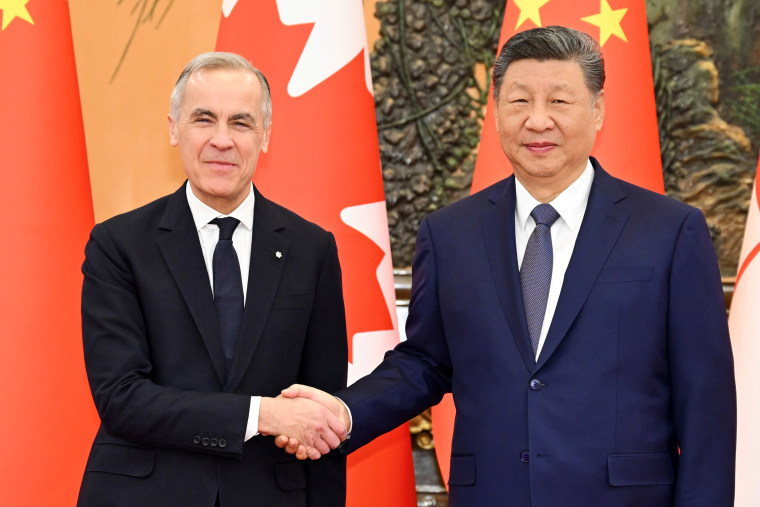

Canada’s Strategic Realignment in a Fragmenting Trade Order

The announcement of a preliminary trade agreement between Canada and the People’s Republic of China marks a consequential inflection point in the global economic architecture. After years of diplomatic estrangement rooted in the 2018 detention of Huawei’s chief financial officer and attendant reprisals, Ottawa and Beijing have agreed to reduce bilateral trade barriers through a calibrated package of tariff concessions. Canada will permit up to 49,000 Chinese-made electric vehicles to enter its market annually at a reduced tariff of 6.1 percent, a return to pre-friction levels from the 2020s. In exchange, China will sharply cut its punitive tariffs on Canadian canola seed from combined rates near 85 percent down to about 15 percent, while lifting discriminatory levies on key exports such as canola meal, lobsters, crabs, and peas. These changes are expected to unlock roughly $3 billion in new Canadian export orders and signal a thaw in a protracted trade dispute.  

This agreement emerges against a backdrop of intensifying US-China economic competition and a United States increasingly inclined toward protectionist measures. The United States maintains significant tariffs on Chinese electric vehicles and other strategically sensitive sectors, rooted in concerns about industrial policy, technological transfer, and national security. Canada’s decision to diverge from a more restrictive approach reflects both structural economic imperatives and evolving geopolitical realities. With roughly three-quarters of Canadian exports traditionally destined for the United States and less than four percent for China, Ottawa’s longstanding dependence on the US market has been a defining feature of its trade strategy. The latest negotiation illustrates a deliberate pursuit of diversification in the face of unpredictable US policy shifts.  

At the heart of this emerging alignment is a sober recognition of China’s dominant position in the global electric-vehicle and clean-technology ecosystem. China accounts for a majority share of global EV production, lithium-ion battery cell manufacturing, and solar panel capacity, a lead that Western policymakers have struggled to counteract through subsidies or industrial policy alone. By integrating Chinese EVs into the Canadian market through a regulated tariff-quota system, Ottawa positions itself to benefit from more competitive prices and accelerated adoption of low-emission vehicles, even as domestic industry voices warn of competitive displacement.  

The divergence between Ottawa and Washington on trade policy toward China carries deeper strategic significance. Historically, Canada has aligned closely with US economic and security policy, particularly within the framework of the United States–Mexico–Canada Agreement (USMCA). Canada’s recalibration suggests a growing willingness among middle powers to pursue “interest-based” engagement with Beijing that does not hew strictly to US strategic preferences. This trend is symptomatic of a broader fracturing in the global trade order, in which rising geopolitical competition has weakened the coherence of multilateral frameworks once anchored by US leadership. According to recent geopolitical scholarship, trade flows and global value chains increasingly reflect shifting alignments, with countries navigating between competing spheres of influence amid overlapping crises and supply chain stresses.  

For the United States, this development presents a diplomatic quandary. A unified North American stance on trade with China amplified US leverage in negotiations with Beijing. Canada’s independent course potentially dilutes that leverage and underscores the limits of expectation that allied economies will subordinate their economic interests to US strategic imperatives. Washington’s initial reaction has been measured but critical, framing Canada’s move as “problematic” even as it acknowledges Ottawa’s sovereign right to pursue its own agreements. Such rhetoric highlights the tension between aligning with US China-policy goals and defending national economic interests in a volatile global environment.  

At a structural level, the Canada–China deal exemplifies a broader reconfiguration of global trade relationships in an era of geopolitical competition. The traditional model of a US-centric trade order is giving way to a more multipolar economic landscape in which regional power centers and bilateral arrangements exert greater influence. Emerging trade partnerships, whether in clean technology, agriculture, or energy cooperation, reflect pragmatic calculations by states seeking stability, market access, and technological advantage. The interplay between geopolitical alignment and economic policy suggests that future trade patterns will be shaped less by universal norms and more by strategic hedging, selective engagement, and competitive statecraft.

In this context, the Canada–China agreement serves as both a practical economic arrangement and a geopolitical signal. It indicates an era in which middle powers aspire to greater autonomy in foreign economic policy, navigating between competing great powers and recalibrating long-standing alliances to safeguard national interests within a fragmented system of global trade.

Five Things We Learned This Week

🗞️ Five Things: Jan 10–16, 2026

Date: January 17, 2026
Range: Saturday to Friday


1️⃣ 🌍 Global Geopolitics & Conflict

Tensions in the Middle East continued as protests and clashes persisted, particularly around Iran and Gaza, while diplomatic efforts focused on preventing wider regional escalation. Elsewhere, global diplomacy saw deepening EU–India ties alongside renewed debates on trade and migration policy.

2️⃣ 📈 Trade & Economic Shifts

Canada and China reached a significant trade agreement involving reduced tariffs on Chinese electric vehicles and improved market access for Canadian exports. U.S. markets closed the week modestly higher ahead of the Martin Luther King Jr. holiday, with energy prices and earnings shaping investor sentiment.

3️⃣ 🏆 Major Sports & Championships

International sport dominated headlines with the World Athletics Cross Country Championships underway in Florida, the European Men’s Handball Championship launching across Scandinavia, and the World Indoor Bowls Championship beginning in England. The Masters snooker tournament also continued in London.

4️⃣ 📉 Tech, Digital & Social Disruption

Social media instability returned as X experienced a second widespread outage in days, prompting renewed scrutiny of platform resilience. Governments in Europe and Asia continued advancing digital safety and platform accountability regulations.

5️⃣ 🌡️ Climate & Science Alerts

Climate monitoring agencies confirmed that 2025 ranked among the three hottest years on record, reinforcing warnings about accelerating ice loss and extreme weather patterns. Scientists also highlighted upcoming late-January astronomical alignment opportunities for interstellar research.


📌 Notable Briefs from the Week

  • 🌋 Minor seismic swarms near Kilauea’s Halema‘uma‘u crater drew increased scientific monitoring in Hawaii.
  • 🌏 ASEAN regional developments reflected political, social, and environmental shifts across Southeast Asia.
  • 🎾 The 2026 Australian Open was set to begin on January 18, opening the year’s first Grand Slam.

Europe 2040 – Military Power Without Full Federation

Introduction
By 2040, Europe remains a politically and militarily fragmented continent. Despite holding one of the largest combined economies globally, the lack of a fully federated European model constrains its ability to project independent military power. While selective nations—France, Germany, and the United Kingdom—maintain significant capabilities, structural fragmentation, divergent national priorities, and complex governance systems limit Europe’s strategic autonomy. This essay examines the interplay of structural, economic, and political factors that define Europe’s military posture in 2040, assessing both its achievements and persistent limitations.

Fragmented Military Capabilities
Europe’s military architecture remains characterized by a multiplicity of national forces operating independently. France continues to maintain its nuclear triad and expeditionary capability, Germany fields technologically advanced armored and air units, and Italy projects regional influence in the Mediterranean. Other nations, such as Poland, Sweden, and Spain, contribute niche capabilities, particularly in cyber operations, rapid reaction forces, and intelligence. Smaller states provide specialized units, maritime patrol, or logistics support, creating a patchwork network of competencies rather than a unified force.

Coordination among these forces relies heavily on NATO and EU initiatives, such as PESCO and the European Defence Fund. While these programs enable some joint projects—like the Franco-German Main Ground Combat System or European satellite constellations—they remain voluntary, unevenly funded, and constrained by national political approval processes. Interoperability challenges persist. Differences in equipment, standards, and doctrines limit joint deployments, and multinational exercises rarely achieve the cohesion seen in fully unified forces like the U.S. military. Duplication of expensive programs—such as fifth-generation fighter jets, armored vehicles, and naval platforms—absorbs resources that could otherwise be used for operational readiness or strategic reach.

Reliance on Alliances
By 2040, Europe’s military security remains deeply intertwined with NATO, and by extension, the United States. U.S. nuclear and conventional capabilities continue to provide the ultimate deterrent, filling the strategic gaps that fragmented European forces cannot address independently. Europe has developed limited rapid-reaction forces, capable of responding to crises in Eastern Europe or North Africa. Yet sustained expeditionary operations beyond the continent’s periphery remain rare, and the logistical complexity of multinational operations constrains Europe’s ability to project power unilaterally.

The reliance on alliances introduces both opportunities and vulnerabilities. While NATO provides shared capabilities, it reinforces a strategic dependence that limits Europe’s ability to act independently, particularly in regions where U.S. interests diverge from European priorities. Additionally, coordination across multiple nations slows decision-making, delaying responses in rapidly evolving crises.

Political and Social Constraints
Europe’s military fragmentation reflects deep-seated political and social realities. National governments prioritize sovereignty, historical sensitivities, and domestic public opinion over centralized military integration. France maintains a strong independent nuclear posture, but attempts to build multinational European forces are constrained by reluctance among smaller states to cede influence. Germany, constrained by post-World War II norms and public skepticism about military engagements, limits its willingness to commit forces beyond NATO obligations. Smaller EU nations often prefer reliance on U.S. security guarantees rather than costly investments in expeditionary capabilities.

Demographic trends exacerbate these challenges. Aging populations across much of Western Europe reduce the pool of active-duty personnel, forcing militaries to rely increasingly on technology, automation, and private contractors. Recruitment shortfalls in countries like Italy, Spain, and Greece create gaps in capability, while wealthier states such as France and Germany struggle to integrate conscript-aged populations into modern, technologically advanced forces. Social constraints—such as skepticism about European military engagement—also influence political willingness to commit forces to conflicts outside Europe.

Technological and Strategic Achievements
Despite structural limitations, Europe in 2040 has achieved selective strategic successes. Investments in high-tech military domains—cyber defense, satellite-based intelligence, precision-guided long-range weapons, and autonomous systems—allow certain nations to exert disproportionate influence relative to conventional troop numbers. French and German space-based reconnaissance and missile capabilities, for example, provide leverage in regional security operations, particularly in Africa and Eastern Europe. Similarly, European cyber defense networks, though fragmented, are capable of coordinated responses to hybrid threats and disinformation campaigns.

Regional interventions have become more effective through voluntary coalition formations. French-led operations in North Africa and combined European deployments in Eastern Europe demonstrate the potential of pooled capabilities, even in the absence of federalized command structures. Nevertheless, these interventions remain short-term and limited in scale, reflecting political caution and resource constraints.

Europe in 2040 demonstrates the limits of military power without political federation. While individual nations retain significant capabilities, and regional coalition efforts allow for selective influence, fragmentation, political caution, and logistical inefficiency prevent Europe from achieving true global strategic autonomy. Economic wealth and technological sophistication partially offset these limitations, but Europe remains a secondary global military actor, capable of defending its interests and projecting influence regionally, but dependent on alliances for comprehensive global security. The trajectory suggests that without deeper political and military integration, Europe will remain influential but constrained, unable to rival the global reach of the United States or China.

The Quiet Obsolescence of the Realtor

For decades, the realtor profession has occupied a privileged position at the intersection of information, access, and emotion. It has thrived not because it delivered exceptional analytical insight, but because the housing market was fragmented, opaque, and intimidating. Artificial intelligence now attacks all three conditions simultaneously. What follows is not disruption in the Silicon Valley sense, but something more final: structural redundancy.

At its core, the modern realtor performs four functions. They mediate access to listings and comparables. They translate market information for buyers and sellers. They manage paperwork and timelines. They provide emotional reassurance during a stressful transaction. None of these functions are uniquely human, and none are protected by durable professional moats. AI does not need to outperform the best realtors to render the profession obsolete. It only needs to outperform the median one, consistently and cheaply.

Information asymmetry has always been the realtor’s true asset. Buyers rarely know whether a property is fairly priced. Sellers seldom understand how interest rates, seasonality, or neighbourhood micro-trends affect demand. Realtors position themselves as guides through this uncertainty. AI collapses this advantage. Large language models and predictive systems can already ingest sales histories, tax records, zoning changes, school catchment shifts, insurance risk data, and macroeconomic indicators, then produce probabilistic valuations with confidence ranges. This is not opinion. It is inference at scale. As these systems improve, the gap between what a realtor “feels” a home is worth and what the data suggests will become impossible to ignore.

Negotiation, often cited as a core human strength, is equally vulnerable. Most real estate negotiations follow predictable patterns. Anchoring strategies, concession timing, deadline pressure, and scarcity framing repeat across markets and price bands. AI systems trained on millions of historical transactions will recognize these patterns instantly and counter them without ego, fatigue, or miscalculation. More importantly, AI negotiators do not confuse persuasion with performance. They are indifferent to theatre. Their goal is outcome optimization within defined parameters, not rapport building for its own sake.

The administrative side of the profession is already living on borrowed time. Contracts, disclosures, financing contingencies, inspection clauses, and closing schedules are structured processes, not creative acts. AI excels at structured workflows. It does not forget deadlines. It does not miss addenda. It does not “interpret” forms differently depending on mood or experience level. Once regulators approve AI-verified transaction pipelines, the argument that a realtor is needed to shepherd paperwork will collapse almost overnight.

The final refuge is emotion. Buying or selling a home is deeply personal, and the stress involved is real. Yet this defence confuses emotional need with professional necessity. Emotional support does not require a commission-based intermediary whose financial incentive is to close any deal rather than the right deal. AI exposes this conflict of interest with uncomfortable clarity. As buyers and sellers gain access to transparent analysis and neutral negotiation tools, trust in commission-driven advice will erode. Emotional reassurance will not disappear, but it will migrate to fee-only advisors, lawyers, or entirely new roles untethered from transaction volume.

What survives will not resemble the profession as it exists today. A small ceremonial layer will remain. High-end luxury markets, where branding and lifestyle storytelling matter more than pricing precision, will continue to employ human intermediaries. In opaque or relationship-driven local markets, trusted facilitators may persist. These roles will look less like brokers and more like concierges. Compensation will shift from commissions to retainers or flat fees. The mass-market realtor, however, will find no such refuge.

The timeline for this transition is shorter than many in the industry are prepared to admit. Within five years, AI systems will routinely outperform average realtors in pricing accuracy, negotiation strategy, and transaction planning. Within a decade, end-to-end AI-mediated real estate platforms will be normal in most developed markets. The profession will not collapse in a single moment. It will erode quietly, then suddenly, as transaction volumes migrate elsewhere.

This trajectory mirrors other professions that mistook access and familiarity for irreplaceable value. Travel agents, once indispensable, now survive only in niche, high-touch segments. Stockbrokers followed a similar path as algorithmic trading and low-cost platforms eliminated their informational advantage. Realtors are next, and unlike law or medicine, they lack the regulatory and epistemic barriers to slow the process meaningfully.

The deeper lesson is not about technology, but about incentives. Professions built on controlling information and guiding clients through artificial complexity are uniquely vulnerable in an age of machine intelligence. When AI removes opacity, it also removes justification. The future housing transaction will be cheaper, faster, and less emotionally manipulative. It will involve fewer humans, different roles, and far lower tolerance for ritualized inefficiency.

In that future, the realtor does not evolve. The role dissolves. What remains is a thinner, more honest ecosystem, one where advice is separated from sales, and confidence comes from clarity rather than charisma.

Community Wealth Building and the Reassertion of Local Economic Power

Scotland’s proposed Community Wealth Building legislation should be read not as a technical reform of local government practice, but as a quiet intervention in the geopolitical and economic settlement that has shaped the North Atlantic world since the late twentieth century. It arrives at a moment when assumptions about globalisation, capital mobility, and the neutrality of markets are being reassessed across Europe and beyond. In this context, the Bill represents an attempt to recover economic agency at the level of the state and the community without retreating into protectionism or nostalgia.

For several decades, economic development across the United Kingdom and much of the West followed a broadly convergent logic. Growth was expected to flow from attracting external capital, integrating into global supply chains, and minimising friction for mobile firms. Local institutions were repositioned as facilitators rather than shapers of economic life. The consequences of this model are now widely acknowledged: hollowed-out local economies, fragile supply chains, stagnant wages, and deepening territorial inequality. Community Wealth Building emerges as a response to this structural failure, not as a rejection of markets, but as a refusal to treat them as self-justifying.

The Scottish Bill formalises this response by embedding Community Wealth Building into the routine machinery of governance. It does so through process rather than command. Ministers would be required to articulate a national strategy, while local authorities and designated public bodies would be tasked with producing coordinated action plans. This architecture reflects an understanding that economic power is already widely distributed across public institutions, but rarely aligned. Procurement, employment, land management, and investment decisions are typically made in isolation. The legislation seeks to bring these decisions into a shared strategic frame.

The Five Pillars as Instruments of Sovereignty

At the centre of this frame are the five pillars of Community Wealth Building: spending, workforce, land and property, inclusive ownership, and finance. These pillars correspond directly to the points at which wealth either embeds itself locally or leaks outward. Public spending can anchor local supply chains or reinforce distant monopolies. Employment can stabilise communities or entrench precarity. Land can function as a productive commons or a speculative asset. Ownership can concentrate power or distribute it. Finance can circulate locally or exit at the first sign of volatility.

The Bill’s significance lies in treating these domains not as discrete policy areas, but as interdependent levers of economic sovereignty. This is a departure from the fragmented governance model that characterised late neoliberal public administration, in which efficiency was prized over coherence and coordination.

The Preston Model as Proof of Concept

This approach has a clear and often-cited precedent in the Preston Model developed in Lancashire. Following the collapse of a major inward investment project, Preston City Council and a group of anchor institutions reoriented their procurement and economic strategy toward local suppliers and inclusive ownership models. By coordinating spending decisions and nurturing local capacity, Preston demonstrated that local economies retain more agency than is commonly assumed.

The results were incremental rather than transformative, but they were measurable and durable. Procurement spend retained within the local and regional economy increased substantially, job quality improved, and confidence in local economic stewardship was restored. The lesson of Preston was not ideological but institutional: resilience is often built through aligned, routine decisions rather than grand economic interventions.

From Voluntary Practice to Statutory Expectation

Scotland’s proposed legislation draws on this experience while addressing one of its principal limitations. The Preston Model depended heavily on political continuity and local leadership. By placing Community Wealth Building on a statutory footing, the Scottish Government seeks to ensure durability beyond electoral cycles. This reflects a broader European trend toward embedding economic governance within legal and institutional frameworks rather than relying on discretion and goodwill.

In this respect, the Bill aligns more closely with continental traditions of social market governance than with the United Kingdom’s recent reliance on deregulated competition and capital mobility. It represents a subtle but meaningful shift in how economic legitimacy is constructed.

Geopolitics, Resilience, and Strategic Autonomy

The geopolitical implications of this shift should not be underestimated. In an era defined by fractured supply chains, sanctions regimes, and strategic competition, economic resilience has become inseparable from national and regional security. Shorter supply chains, diversified ownership, and locally rooted finance reduce exposure to external shocks. Community Wealth Building thus complements wider debates about strategic autonomy unfolding across Europe and among middle powers navigating an increasingly unstable global order.

Although sub-state in form, Scotland’s legislation participates in this reorientation by strengthening the internal foundations of economic resilience. It does not promise insulation from global forces, but it does offer a means of engagement that is less extractive and more adaptive.

Cultural Memory and Economic Stewardship

Culturally, the Bill resonates with long-standing Scottish debates over land, ownership, and democratic control. From land reform movements to community buyouts, there exists a deep political memory of extraction and dispossession. Community Wealth Building translates these concerns into contemporary administrative language. It offers a way to address structural imbalance without framing the issue as a moral repudiation of global capitalism.

Instead, the economy is treated as a system that can be shaped through institutional design and stewardship. This framing avoids both nostalgia and utopianism, positioning reform as a matter of governance rather than ideology.

A Quiet Recalibration

Critics argue that the legislation lacks enforcement mechanisms and risks becoming aspirational. Such critiques assume that economic change only follows dramatic intervention. Historical experience suggests otherwise. Durable change more often arises from the cumulative effect of aligned institutions acting consistently over time. By normalising local economic stewardship across public bodies, the Bill establishes the conditions for gradual but compounding transformation.

Seen in this light, Scotland’s Community Wealth Building law forms part of a broader recalibration underway across the Western political economy. It signals a move away from the assumption that prosperity must be imported, and toward the idea that it can be cultivated. In a period marked by uncertainty and realignment, this modest ambition may prove to be its most consequential feature.

Sources

Sovereignty Requires Ships, Not Statements

There is a certain comforting myth Canadians like to tell themselves about the North. That sovereignty is something you declare, map, and defend with the occasional patrol and a strongly worded statement. It is a tidy story. It is also no longer true.

The Arctic is changing faster than our habits of thought. Ice patterns are less predictable, shipping seasons are longer, and great powers are no longer treating the polar regions as distant margins. They are treating them as operating environments. In that context, the Royal Canadian Navy’s quiet exploration of heavy, ice-capable amphibious landing ships deserves far more public attention than it has received.

These would not be symbols. They would be tools.

The idea is straightforward. Build Polar Class 2 amphibious ships capable of breaking ice, carrying troops and vehicles, and landing them directly onto undeveloped shorelines. In other words, floating bases that can operate independently across the Arctic archipelago, where ports are rare, airfields are limited, and weather regularly laughs at planning assumptions made in Ottawa.

This matters because Canada’s Arctic problem has never been about law. It has always been about logistics.

We claim a vast northern territory, but our ability to operate there is thin, seasonal, and fragile. We fly in when we can, sail in when ice allows, and leave when winter asserts itself. Presence is episodic. Capability is constrained. Persistence is mostly aspirational.

Russia, by contrast, has spent decades building the unglamorous machinery of Arctic power. Ice-strengthened amphibious ships. Heavy logistics vessels. A fleet designed not to visit the Arctic but to live in it. This is not about imminent conflict. It is about what serious states do when they intend to control their operating environment.

A Canadian Arctic mobile base would change the conversation. It would allow the movement of troops, Rangers, equipment, and supplies without waiting for ports that do not exist. It would support disaster response, search and rescue, medical care, and environmental protection in regions where help currently arrives late or not at all. It would give commanders options that do not depend on fragile airlift chains or ideal weather windows.

Just as importantly, it would allow Canada to stay.

Polar Class 2 capability is the dividing line between symbolism and seriousness. These ships could operate year-round in heavy ice, not just skirt the edges of the season. That is what credibility looks like in the Arctic. Not constant activity, but the unquestioned ability to act when required.

There is also a domestic dimension that should not be dismissed. Designing and building these vessels in Canadian shipyards would deepen national expertise in Arctic naval architecture and ice operations. It would anchor the National Shipbuilding Strategy in future capability rather than replacement alone. Sovereignty is reinforced when a country can design, build, crew, and sustain the tools it needs for its own geography.

None of this is cheap or easy. Crewing will be difficult. Sustainment will be demanding. Political patience will be tested the first time costs rise or timelines slip. That is always the case with real capability, which is why symbolic alternatives are so tempting.

But the alternative path is well worn and well known. Light patrol ships. Seasonal deployments. Carefully photographed exercises. Earnest speeches about the North delivered from comfortable distances.

At some point, a country has to decide whether its Arctic is a talking point or a responsibility.

Amphibious, ice-capable ships are not about militarizing the North. They are about acknowledging reality. The Arctic is not becoming less important. It is becoming more accessible, more contested, and more consequential. Sovereignty, in that world, is not what you say. It is what you can do, consistently, in all seasons.

The North does not need grand gestures. It needs presence that endures.

Why I Don’t Struggle With Dating

I’m in my late sixties now. I live on a small farm where the chickens have better time management than I do. I work when I feel like it, consult when the project’s interesting, and spend the rest of my time in the delightful company of women who know exactly who they are, and what they want. I’ve been called many things, some of them printable, but “a dragon” is a personal favourite. Apparently, I’m the kind of mythical creature who still believes in emotional literacy, direct communication, and showing up with actual feelings. Wild, I know.

And yes, I date. Often. With love, with humour, and above all, with a plan that includes snacks. Now, here’s the part where the other men clutch their pearls. “Dating? At your age? In this climate?” Yes, Geoffrey, in this climate. And I have a wonderful time doing it.

Because while a lot of men my age (and many younger too) are out there groaning that dating is broken, that women are too picky, too independent, too online, too much, I just smile into my coffee. Not because the world hasn’t changed. Of course it has, yet the tools for connection haven’t disappeared. They’ve just been upgraded. These days, you need emotional intelligence, a working knowledge of consent, and the radical ability to say what you mean without making it weird.

I suppose I had an advantage. I spent most of my adult life wandering: new countries, new jobs, new time zones. That sort of lifestyle trains you to find connection in the moment, to seek relationships that aren’t propped up by obligation or role, but by truth. Along the way, I stumbled into polyamory and, not long after, BDSM; not as lifestyle accessories, but as practices of honesty, intention, and trust. That’s what shaped me into the man I am today: romantic, responsible, and suspiciously good at calendar coordination.

Why don’t I struggle with dating? Simple: I know who I am, and I say so. I’m polyamorous. I’m a Dominant. I believe love is abundant, not scarce, and I show up with presence and clarity. I’m not interested in convincing anyone to like me. I’m interested in being myself and seeing who that naturally resonates with.

It’s like showing up to a party dressed as yourself, rather than as someone from the catalogue of “what men think women want.” It’s shockingly effective. Also, fewer dry-cleaning bills.

Meanwhile, the average bloke is still stuck in a loop: swiping furiously, confused why his “Hi” didn’t spark instant passion, grumbling that women only want six-foot investment bankers who play guitar on mountaintops. I hear it all the time:

“Women don’t like nice guys.”
“They only go for tall guys.”
“Dating’s a rigged game.”

Brother! You’re not playing the wrong game. You’re playing last season’s game. And you didn’t read the new instructions.

Today’s dating world rewards emotional fluency, not pickup artistry. Vulnerability, not vague texting. Boundaries, not bitterness. The new dating superpowers are things like “active listening,” “self-awareness,” and “being able to hear ‘no’ without falling apart.”

Most men I know who are struggling haven’t done the internal upgrade. They’re still trying to fix their dating lives with better profile photos and punchier icebreakers, instead of asking the truly dangerous question: Would I date me?

Here’s what my dating life looks like: maybe breakfast with one partner, a phone check-in with another, a lazy evening on the deck with the third. Nobody’s confused, nobody’s being played, and everyone’s emotionally fed. Why? Because they know I tell the truth. I listen. I own my shite when I get it wrong. That’s not magic, it’s just good relationship hygiene.

So if you’re a man out there feeling lonely, frustrated, or tempted to write another “Women today just don’t…” rant on Reddit, let me offer you something better: a challenge. Become someone you admire. Learn how to feel your feelings without fear. Learn to ask for what you want without pretending you don’t care. Practice showing up for others, even when there’s nothing in it for you.

Dating isn’t broken. You just need to update your operating system.

There is no shortage of love out here. No shortage of desire or connection. But there is a shortage of men willing to do the work to meet women as equals, as partners, as whole humans. That’s not a condemnation. It’s an invitation.

You don’t need to be rich, ripped, or romantic in six languages. You just need to be real. Because honesty is still the sexiest thing a man can offer.

Canadian Rural Access Inequalities 

Canada often celebrates its vast rural, remote, and northern regions as integral to its identity, yet the majority of financial resources and policy attention remain concentrated in urban centers. While cities drive much of the economy, neglecting rural and northern areas undermines the long-term sustainability of the country. These regions are critical for natural resource industries, agriculture, and preserving Canada’s cultural heritage, yet they face declining populations, crumbling infrastructure, and limited services.

Despite the guarantees of the Canadian Charter of Rights and Freedoms, which emphasizes equality and fairness, these regions frequently face disparities in healthcare, education, infrastructure, and other essential services. These inequities persist due to a combination of logistical, financial, and policy-related barriers. Below is a discussion of this premise, supported by examples and potential solutions.

Challenges Faced by Rural, Remote, and Northern Communities
1. Healthcare Disparities
Remote communities often experience significant shortages of healthcare professionals, facilities, and specialized care. For instance, residents in northern Manitoba or Nunavut might travel hundreds or even thousands of kilometers to access basic medical care.
Example: In Nunavut, life expectancy is 10 years shorter than the national average, largely due to limited access to healthcare and the high cost of transporting goods and services.

2. Education Inequities
Access to quality education is another persistent issue. Small, remote communities may have only one school, often underfunded and lacking specialized programs, teachers, or technology.
Example: Many First Nations reserves face underfunded schools, with per-student funding far below what urban or provincial schools receive.

3. Infrastructure Gaps
The lack of reliable infrastructure, such as roads, internet access, and public transit, further marginalizes these communities.
Example: In rural Ontario and northern Quebec, poor internet connectivity has hindered students’ access to online learning opportunities, particularly during the COVID-19 pandemic.

4. Economic Disparities
Many rural and northern regions rely on resource extraction industries, which are cyclical and often leave communities economically vulnerable. Diversification of local economies is limited by the lack of investment and infrastructure.

5. Climate Challenges
Northern communities are disproportionately affected by climate change. Melting permafrost damages homes and infrastructure, while extreme weather events increase the costs of living and delivering essential services.

Causes of Inequities
1. Geography and Population Density
The low population density of rural and northern regions increases the cost of delivering services, making it less appealing for private companies and harder for governments to justify investments.

2. Policy Gaps
Federal and provincial governments often adopt a one-size-fits-all approach to programs, which fails to consider the unique needs of remote communities. For example, healthcare and education funding formulas are typically based on population rather than geographic need.

3. Jurisdictional Challenges
Overlap between federal, provincial, and municipal responsibilities can lead to delays, inefficiencies, or outright neglect. Indigenous communities, in particular, face systemic inequities due to ongoing jurisdictional disputes (e.g., the federal government’s underfunding of Indigenous child welfare services).

Potential Solutions
1. Tailored Policies and Funding
Governments should allocate funding based on need rather than population. For example, increasing healthcare subsidies for rural and northern areas could attract professionals through loan forgiveness programs or financial incentives.

2. Invest in Infrastructure
Investing in critical infrastructure such as broadband internet, roads, and public transit would connect isolated regions with urban centers, enabling better access to services.
Example: The Universal Broadband Fund has made strides in improving rural internet access, but continued expansion is necessary.

3. Support for Indigenous Communities
Indigenous communities often face compounded challenges. Ensuring equitable funding for on-reserve schools, healthcare, and housing would address systemic inequities.
Example: Implementing the recommendations of the Truth and Reconciliation Commission could help bridge gaps in access to education and other services.

4. Decentralized Service Delivery
Adopting community-led approaches and decentralizing decision-making processes would empower local governments and organizations to tailor programs to their specific needs.

5. Mobile and Digital Solutions
Expanding the use of telemedicine and online learning platforms can bridge gaps in healthcare and education. However, this requires concurrent investment in digital infrastructure.

6. Sustainable Economic Development
Governments should invest in programs to diversify local economies by supporting industries such as tourism, renewable energy, and sustainable agriculture.

While Canada prides itself on its commitment to equality, rural, remote, and northern communities continue to lag behind due to systemic barriers and geographic realities. Addressing these challenges requires a combination of targeted policies, increased investment, and a commitment to collaboration across all levels of government. By focusing on long-term solutions, Canada can uphold the values enshrined in its Charter of Rights and ensure fair and equitable access to programs and services for all its citizens.

Rebalancing financial resources is essential to support infrastructure, healthcare, and economic development in these areas. Strategic investment would not only boost regional economies but also safeguard the Canada we pride ourselves on.

For further reading, the following sources provide valuable insights:
• “Life and Death in Northern Canada,” Canadian Medical Association Journal (CMAJ)
• “Broadband Connectivity in Rural and Remote Areas,” Canadian Radio-television and Telecommunications Commission (CRTC)
• Truth and Reconciliation Commission of Canada: Calls to Action

🗓️ Five Things We Learned This Week

Week of January 3 – January 9, 2026

The first full week of 2026 made it clear that the world did not ease into the new year quietly. From geopolitics and protest movements to shared moments of wonder in the night sky, this past week offered reminders of how quickly events continue to unfold across multiple fronts.


🇻🇪✈️ The United States Captured Venezuela’s President in a Shock Operation

On January 3, U.S. military forces carried out a rapid operation in Venezuela that resulted in the capture of President Nicolás Maduro and his wife. Reports indicate they were transported to the United States to face longstanding charges, immediately triggering international legal and diplomatic debate.

Why it matters: This unprecedented move fundamentally alters regional geopolitics and raises serious questions about sovereignty, international law, and escalation in the Western Hemisphere.


📣✊ Iran Cut Internet Access as Protests Expanded Nationwide

By January 9, Iranian authorities had imposed widespread internet restrictions as protests against economic conditions and political repression spread across multiple cities. The shutdowns accompanied an intensified security response.

Why it matters: Internet blackouts remain a defining tool of modern authoritarian control, highlighting the growing tension between digital connectivity, civil resistance, and state power.


🌕🔭 A Brilliant Wolf Supermoon Lit Up Early January Skies

On the nights of January 3 and 4, skywatchers around the world were treated to a striking Wolf Supermoon, appearing larger and brighter due to its close proximity to Earth.

Why it matters: Shared celestial events offer rare moments of collective experience, reminding us that some rhythms still transcend borders, politics, and conflict.


🎯🏆 Luke Littler Retained His World Darts Championship Title

The 2026 PDC World Darts Championship concluded on January 3, with Luke Littler successfully defending his title in a dramatic final that drew significant global viewership.

Why it matters: The growing popularity of international niche sports reflects shifting entertainment landscapes and the rise of new global sporting figures.


🕊️🌍 The United Nations Advanced Quiet Peacebuilding Efforts

Throughout the week of January 3 to 9, the UN Department of Political and Peacebuilding Affairs reported continued diplomatic engagements focused on de-escalation and dialogue in regions including the Middle East and Yemen.

Why it matters: While rarely headline-grabbing, sustained diplomacy remains essential to preventing conflict escalation and creating space for long-term stability.


Closing thoughts: This week’s five stories remind us that history does not pause for calendars. Power shifts, public resistance, human achievement, and cosmic wonder all unfolded simultaneously, shaping the opening chapter of 2026 in ways both dramatic and subtle.