Unknown's avatar

About Chris McBean

Strategist, polyamorist, ergodox, permaculture & agroforestry hobbyist, craft ale & cider enthusiast, white settler in Canada of British descent; a wanderer who isn’t lost.

Etlaq Spaceport: Strategic Ambition on the Arabian Coast

For years the commercial launch landscape has been dominated by a handful of highly visible spaceports in the United States, Europe, and increasingly East Asia. Yet in the background, Oman has been assembling something unusual: a purpose-built, strategically positioned gateway for small- and medium-lift access to orbit. The Etlaq Spaceport, located on Oman’s Al Wusta coast, represents a calculated national investment in the emerging multipolar space economy. Far from being a showpiece, Etlaq is designed as a workhorse facility for rapid, repeatable commercial launch operations in a region previously absent from the global map of operational spaceports.

Etlaq’s development traces back to Oman’s broader attempt to diversify its science and technology sectors. The country recognised early that the Middle East had both the geography and the climate to host a modern launch complex: plentiful open coastline, low population density in potential downrange zones, and political stability that makes long-term planning feasible. The resulting site incorporates modular pads, integrated payload processing halls, and clean transport corridors between facilities to simplify vehicle flow. Unlike older spaceports retrofitted over decades, Etlaq was engineered from its inception around commercial cadence expectations. Operators can move a vehicle through processing, integration, and fueling with minimal pad occupancy time, aligning the port with the market’s shift toward higher launch frequencies.

A major strategic turning point came with the introduction of Oman’s October 2025 regulatory framework, CAD5-01, which modernised licensing, insurance, and environmental requirements for launch providers. While the update appeared technical to the public, it was transformative behind the scenes. CAD5-01 offers a predictable, internationally aligned pathway for operators to certify their missions, mirroring best practices from the United States and Europe while preserving Oman’s flexibility to respond rapidly to commercial timelines. This regulatory clarity is exactly what new space companies look for when selecting a launch site. Combined with Etlaq’s equatorial advantage, CAD5-01 signaled that Oman intends to compete seriously for global launch contracts, not merely serve regional demand.

Etlaq’s ambitions are further reinforced by Oman’s participation in the Global Spaceport Alliance. The Alliance has become the connective tissue of the commercial launch industry, ensuring that spaceports around the world share interoperable standards, safety philosophies, and operational frameworks. For a facility as young as Etlaq, this membership is more than symbolic. It links Oman into a network of regulators, insurers, launch operators, and policy specialists who collectively define the expectations of 21st-century spaceport operations. The effect is twofold: Etlaq gains credibility with international clients and accelerates its own organisational maturity by aligning with procedures used at more established ports. Rather than growing in isolation, it develops in dialogue with the global industry.

What distinguishes Etlaq, however, is not only its integration but its strategic forward posture. As the global launch market becomes increasingly congested, companies are searching for sites that offer reliability, proximity to equatorial orbits, and streamlined regulatory cycles. Oman’s location provides relatively clear trajectories for low-inclination missions while avoiding many of the flight-path restrictions faced by older spaceports. This matters for an industry where minor delays cascade into major scheduling and insurance consequences. Etlaq’s designers have built the facility with the expectation of rapidly expanding demand, planning for additional pads, dedicated line-of-sight telemetry corridors, and expanded infrastructure to support higher-frequency operations.

Taken together, Etlaq is positioning itself as a pragmatic, globally integrated commercial launch node. It benefits from modern regulatory architecture, membership in a coordinating international alliance, and a geographic setting that offers advantages too often overlooked in the Middle East. Oman is not attempting to dominate the launch sector but to host a dependable, commercially attractive platform for the next generation of small-satellite missions, Earth-observation constellations, and responsive launch services.

In an era where the world needs more launch capacity, not less, Etlaq stands out as a quietly strategic entrant. It is the kind of spaceport built not for headlines but for sustained operational relevance, and that may prove more valuable in the long run.

Sources: 
en.wikipedia.org
etlaq.om
muscatdaily.com
thenationalnews.com
copernical.com
rssfeeds.timesofoman.com


Objective vs. Subjective Truth: Can Reality Be Independent of Perspective?

With many of our political leaders and wannabes being even more flexible with facts these days than usual, especially during elections and internal party races, I felt I needed to get back into the whole Truth vs.Transparency debate.  The notion that truth depends on perspective is a long-standing debate in philosophy, epistemology, and even science. This idea, often associated with relativism, suggests that truth is not absolute, but rather contingent on individual experiences, cultural backgrounds, or frameworks of understanding. However, this claim is not without challenges, as there are also arguments in favor of objective and universal truths. To fully explore this concept, we must examine different domains where truth operates: subjective experience, science, social and political contexts, and philosophical thought.

Perspective and Subjective Truth
In many aspects of human experience, truth is shaped by individual perspective. This is especially evident in perception, memory, and personal beliefs. Two people witnessing the same event might recall it differently due to factors such as their background, cognitive biases, emotional states, or even the angle from which they viewed the scene. This idea aligns with psychological research on eyewitness testimony, which has shown that memory is often reconstructive rather than a perfect recording of reality.

Similarly, in moral and ethical debates, truth is often perspective-dependent. For example, the moral acceptability of euthanasia, capital punishment, or animal rights varies across cultures and individuals. Some believe that these issues have absolute moral answers, while others argue that they are contingent on cultural norms, social circumstances, or personal values. This form of truth relativism suggests that moral truths exist only within particular frameworks and are not universally binding.

The same can be said for aesthetic judgments. Whether a painting is beautiful or a piece of music is moving depends entirely on the individual’s perspective, cultural exposure, and personal taste. In these cases, truth appears to be entirely relative, as there is no objective standard for determining beauty or artistic value.

Scientific and Objective Truth
While subjective truths are shaped by perspective, there are many instances where truth appears to be independent of personal viewpoints. In science, for instance, objective truths are discovered through empirical evidence and repeatable experimentation. The boiling point of water at sea level is 100°C, regardless of who measures it or what they believe. The theory of gravity describes forces that apply universally, irrespective of individual perspectives. These facts suggest that some truths exist independently of human perception and belief.

However, even in science, perspective plays a role in shaping how truths are understood. Scientific paradigms, as described by Thomas Kuhn in The Structure of Scientific Revolutions, shift over time. What is considered “true” in one era may later be revised. For example, Newtonian physics was once seen as the ultimate truth about motion and force, but Einstein’s theory of relativity redefined our understanding of space and time. This suggests that while some scientific truths may be objective, our understanding of them is influenced by perspective and historical context.

Social and Political Truths
In social and political discourse, truth is often contested, shaped by competing narratives and interests. Political ideologies influence how events are interpreted and presented. The same historical event can be described differently depending on the source; one news outlet may highlight a particular set of facts while another emphasizes a different aspect, leading to multiple “truths” about the same event.

This phenomenon is especially evident in propaganda, media bias, and misinformation. A politician may claim that an economic policy has been a success, citing certain statistics, while an opponent presents an alternative set of data to argue the opposite. In such cases, truth becomes less about objective reality and more about which perspective dominates public discourse.

Additionally, postmodern thinkers like Michel Foucault argue that truth is linked to power structures. Those in power determine what is accepted as truth, shaping knowledge production in ways that reinforce their authority. This perspective challenges the idea that truth is purely objective, suggesting instead that it is constructed through discourse and institutional influence.

Philosophical Challenges: Can Truth Ever Be Objective?
Philosophers have long debated whether truth is ultimately subjective or objective. Immanuel Kant, for example, argued that we can never access the world as it truly is (noumena), but only as it appears to us through our senses and cognitive structures (phenomena). This implies that all knowledge is shaped by human perception, making pure objectivity impossible.

On the other hand, Plato’s theory of forms suggests that there are absolute truths – unchanging, eternal realities that exist beyond the material world. Mathematical truths, for instance, seem to be independent of human perspective. The Pythagorean theorem is true regardless of culture, language, or opinion.

Existentialist philosophers like Jean-Paul Sartre take a different approach, arguing that meaning and truth are constructed by individuals rather than discovered. From this perspective, truth is not something external to be found but something we create through our actions and beliefs.

Is Truth Relative or Absolute?
The idea that truth depends on perspective holds significant weight in subjective, moral, and social contexts. In matters of perception, ethics, and politics, truth often appears to be relative, shaped by individual experiences, cultural backgrounds, and power dynamics. However, in science, mathematics, and logic, objective truths exist independently of human interpretation, though our understanding of them may evolve over time.

The challenge lies in distinguishing between what is truly relative and what is universally valid. While perspective influences many aspects of truth, dismissing the possibility of objective truth altogether leads to skepticism and uncertainty. A balanced approach recognizes that while some truths are shaped by perspective, others remain constant regardless of human interpretation.

A Year in the Wilds of The Rowanwood Chronicles

A reflective essay by the fellow who somehow decided that blogging about politics, climate, gender, and quantum mechanics was a relaxing hobby

I did not set out to become a blogger. No one does. Blogging is something that happens to you when you’ve said “someone should really write about this” one too many times and then realize the someone is you. That was my first year of The Rowanwood Chronicles. A steady accumulation of small irritations, large curiosities, and the occasional planetary existential dread finally pressuring me into a keyboard.

Over the past twelve months I have written about food systems, seismic faults, mononormativity, AI governance, and the demise of centralized social media platforms. This is, I admit, not a tidy list. Most writers pick a lane. I picked several highways, a few dirt roads, and one unmarked trail that led straight into a thicket of gender theory. Some readers have thanked me. Others have quietly backed away like I had started talking about cryptocurrency at a family barbecue. Fair enough.

The funny thing about running a blog with the byline “Conversations That Might Just Matter” is that you end up feeling mildly responsible for the state of the world. Somewhere in the back of my mind I became convinced that if I took one week off, climate policy would collapse, privacy laws would be gutted by corporate lawyers, and Canada would discover a massive geological fault running directly under my house. It is exhausting being the only person preventing civilization from tipping off its axis, but I have bravely carried on.

Along the way, I learned a few things.

First, people really do want long-form writing. They want context. They want to know why their health system is groaning like a Victorian heroine on a staircase. They want someone to explain decentralized social media without sounding like a blockchain evangelist who drinks only powdered mushroom tea. They want nuance rendered in plain language. I can do that. Sometimes even coherently.

Second, writing about politics is like trying to pet a squirrel. You can do it, but you have to keep your hands calm, your movements measured, and be prepared for the possibility that something small and unpredictable will bite you. Every time I published a political piece, I felt like I was tiptoeing across a frozen lake holding a hot cup of tea. Most of the time it held. Some days it cracked.

Third, the world is endlessly, maddeningly fascinating. One moment I was researching drought-related crop instability in the Global South. The next, I was reading government reports about flood plain management. Then I found myself knee-deep in a rabbit hole about the Tintina Fault, which sits there in the Yukon like an unbothered geological time bomb politely waiting its turn. Writing the blog became my excuse to satisfy every curiosity I have ever had. It turns out I have many.

What surprised me most was what readers responded to. Not the posts where I worked terribly hard to sound authoritative. Not the deeply researched pieces where I combed through reports like a librarian possessed. No. What people loved most were the pieces where I sounded like myself. Slightly bemused. Occasionally outraged. Often caffeinated. Always trying to understand the world without pretending to have mastered it.

That was the gift of the year. The realization that a blog does not need to be grand to be meaningful. It simply needs to be honest. Steady. And maybe a little mischievous.

I will admit that I sometimes wondered whether writing about governance, equity, and science from my small corner of Canada made any difference at all. But each time someone wrote to say a post clarified something for them, or started a discussion in their household, or helped them feel less alone in their confusion about the world, I remembered why I started.

I began The Rowanwood Chronicles because I wanted to understand things. I kept writing because I realized other people wanted to understand them too.

So here I am, a year older, slightly better informed, and armed with a list of future topics that spans everything from biodiversity corridors to the psychology of certainty. The world is complicated. My curiosity is incurable. And The Rowanwood Chronicles is still the place where I try to make sense of it all.

If nothing else, this year taught me that even in a noisy world full of predictions and outrage, there is room for thoughtful conversation. There is room for humour. There is room for stubborn optimism. And there is definitely room for one more cup of tea before I press publish.

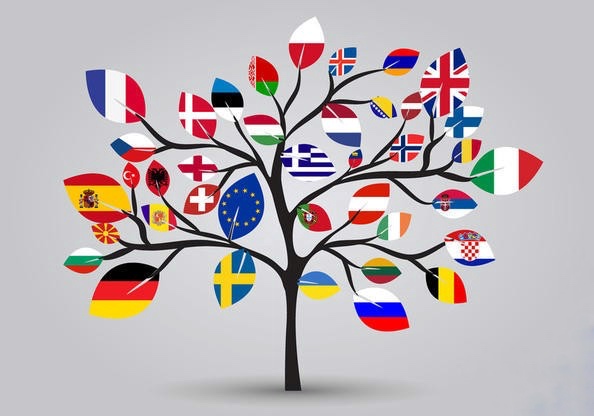
The EU as a Cultural Confederation: How Brussels Empowers Regional Voices Across Europe

When discussing the European Union, especially in British or nationalist-leaning media, the usual tropes are economic red tape, democratic deficits, and faceless bureaucrats imposing uniformity. What is strikingly underappreciated is the EU’s role as a tireless and strategic supporter of Europe’s regional cultures: its languages, music, visual arts, literature, and festivals. Far from being a homogenising force, the EU acts as a cultural confederation, empowering the peripheries and amplifying diversity through centralised frameworks and substantial funding.

The legal foundation for this approach is enshrined in Article 167 of the Treaty on the Functioning of the European Union, which commits the EU to respect its members’ national and regional diversity, and to promote the common cultural heritage. This commitment is not symbolic, it’s operationalised through policies and investment tools that strengthen cultural ecosystems often neglected by national governments. A striking example is the Creative Europeprogramme, with a budget of over €2.44 billion for 2021–2027. This fund supports regional festivals, translation projects, heritage preservation, and artistic mobility, placing local cultures on a continental stage.

Let’s consider some examples. In the north of Sweden, Sámi artists and musicians have received EU support to maintain traditional music forms like joik, while also experimenting with modern fusion styles. In the Basque Country, EU funding has gone into language revitalisation efforts, helping schools, theatres, and broadcasters produce content in Euskara, a language that for decades was banned under Franco’s Spain. In Friesland, the Netherlands, similar funding has supported children’s books, cultural programming, and visual arts in the Frisian language – another minority tongue that survives today in part because of EU cultural policy.

Beyond the arts, the EU’s European Regional Development Fund (ERDF) and European Social Fund (ESF) have proven vital in building cultural infrastructure in economically disadvantaged areas. For example, in Maribor, Slovenia, once a declining industrial town, ERDF funds helped regenerate derelict buildings into art spaces and performance venues during its tenure as European Capital of Culture in 2012. This led to a flourishing of local art initiatives, job creation in the creative sector, and a renewed sense of community identity. Similar transformations have occurred in Plzeň, Czech Republic and Matera, Italy, cities that gained international cultural status thanks to EU support.

One of the EU’s most visionary initiatives is the European Capitals of Cultureprogramme. This initiative does more than bring tourism; it energises local traditions and gives underrepresented regions international attention. Košice, a Slovak city with a rich but lesser-known cultural history, used its 2013 designation to invest in a multicultural arts centre in a former barracks, host Roma music festivals, and highlight the region’s Jewish and Hungarian heritage. Galway, in Ireland, similarly used its 2020 status to foreground Irish-language poetry, traditional music, and storytelling – even if the pandemic altered some of its plans. In each case, the EU served as both patron and platform.

Language diversity is another cornerstone of EU cultural engagement. Though language policy is largely a national prerogative, the EU reinforces regional and minority languages through programmes linked to the European Charter for Regional or Minority Languages. While this charter operates under the Council of Europe, EU institutions work to align policies that protect language rights and support educational initiatives. The Multilingualism Policy, the Erasmus+ programme, and Creative Europe’s translation grants all contribute to preserving Europe’s linguistic diversity.

Furthermore, the EU promotes intercultural exchange and mobility. Through Culture Moves Europe and Erasmus+, thousands of young artists, musicians, writers, and curators have studied, collaborated, and performed across borders. A young fiddler from Brittany can now collaborate with an Estonian folk singer or a Roma dancer from Hungary. These encounters not only enrich the individuals involved but also build cultural bridges that counter xenophobia and nationalist retrenchment.

Critics argue that the EU’s involvement in culture infringes on national sovereignty or encourages a superficial “Euro-culture.” But this misunderstands the structural genius of the EU’s approach. Rather than imposing cultural norms, the EU centralises support mechanisms while decentralising access, ensuring local actors are the ones defining, producing, and showcasing their culture. In effect, the EU empowers regions to bypass national gatekeepers and express their identities on their own terms.

This model has also proven resilient in times of crisis. Following Russia’s invasion of Ukraine, the EU mobilised cultural solidarity quickly, supporting Ukrainian artists and cultural heritage sites both inside and outside the country. Cross-border cooperation projects in Poland, Slovakia, and Romania sprang into action, demonstrating how EU cultural infrastructure can respond nimbly to geopolitical emergencies.

In a world where many nations are becoming more inward-looking and where minority cultures are under threat from political centralisation, the EU stands as a rare example of a supranational body committed to diversity in action, not just in rhetoric. It is not perfect. Bureaucratic hurdles remain, and access to funding can be unequal. But the direction of travel is clear: support local, fund the fringe, and celebrate the plural.

If the soul of Europe lies in its mosaics of culture, then the EU, quietly, consistently, and strategically, acts as its curator.

Sources:
European Commission – Creative Europe
European Commission – Regional Policy
Council of Europe – European Charter for Regional or Minority Languages
European Commission – European Capitals of Culture
European Commission – Culture Moves Europe
European Commission – Multilingualism and Language Policy

Five Things We Learned This Week

Five Things: November 22 to 28

Here are five global developments worth noting this week, drawn from a wide range of international reporting and not confined to any single news outlet.

1. 🌋 Iceland’s Grindavík Volcano Stabilizes After New Fissure Activity

Geologists in Iceland reported that seismic activity near Grindavík slowed after a brief eruption scare earlier in the week. Though magma movement remains active underground, emergency crews have stabilized the zone and residents are cautiously optimistic about returning home.

Sources: Icelandic Met Office, RÚV, BBC World

2. 🛰️ Japan’s SLIM Lander Powered Back On

Japan surprised the global space community by successfully re-establishing partial communications with the SLIM lunar lander, which had been offline due to power and temperature constraints. Engineers are assessing what new data can be captured before the next lunar night.

Sources: JAXA Briefing, NHK, SpaceNews

3. 📚 Argentina Announces Major National Library Restoration Effort

Argentina’s Ministry of Culture launched a significant restoration program for the National Library in Buenos Aires, including digitization of rare archives and structural modernization. The project is expected to take three years and employ over two hundred specialists.

Sources: Página/12, El País, Associated Press

4. 🛢️ North Sea Energy Transition Project Moves Ahead

The United Kingdom and Norway signed a new cooperative agreement expanding their joint North Sea energy transition corridor. The plan accelerates development of subsea cables, carbon capture networks, and offshore wind linkages expected to reduce regional emissions through 2035.

Sources: The Guardian, NRK, Financial Times

5. 🐘 Kenya Reports Significant Decline in Elephant Poaching

Conservation agencies in Kenya announced that elephant poaching has reached its lowest level in over two decades, crediting increased ranger patrols, community-based wildlife programs, and newly deployed drone surveillance.

Sources: Kenya Wildlife Service, Al-Jazeera, Africanews


Five Things is a weekly Rowanwood Chronicles feature tracking global developments from Saturday to Friday.

Montreal on Tap: How a Legendary Brewery School Will Shape Canada’s Craft Scene

Since its founding in 1872 in Chicago, the Siebel Institute has stood as a cornerstone of brewing education in North America. Its decision to relocate classroom operations to Montréal beginning January 2026 marks more than the closing of a historic chapter in U.S. brewing history. It signals a shift in where brewing knowledge, innovation, and the future of craft beer will be cultivated.  

At its new address on rue Sainte‑Catherine East, the school will be colocated with a baking and fermentation training facility run by its parent company. The move was explicitly justified by difficulties created by recent U.S. regulatory changes, especially obstacles for international students who, by the Institute’s own account, make up the majority of its student body.  

That this shift is happening now is significant. The Canadian craft beer scene is not fringe or marginal. On the contrary, the market has been growing steadily: in 2024 the Canadian craft beer industry produced about 1.8 million hectolitres, and industry analysts expect output to rise to 2.3 million hectolitres by 2033.  

The arrival of Siebel amplifies several emergent dynamics. First, it will bring a high level of technical brewing education, historically concentrated in the United States, into Canada. For Canadian, Québécois, and even international students, now studying in Montréal rather than Chicago, the barrier to access is lowered. Brewing will become more than an artisanal trade learned on the job; it becomes a discipline taught with academic rigour and breadth.

It reinforces Canada’s growing identity as a brewing hub. Québec already has a deep craft beer tradition, including well‑established brewpubs and microbreweries that trace local heritage while experimenting with modern styles. The consolidation of advanced brewing education in Montréal will likely accelerate innovation, experimentation, and quality, raising the bar for the entire Quebecois brewing community and influencing national trends. Indeed a Montreal brewer described Siebel as “one of the few schools in North America that offers classes on brewing.”  

The timing connects to broader consumer and economic trends. As Canadians increasingly favour locally brewed, artisanal beers; with taste, provenance, and authenticity valued the craft beer segment is poised for expansion.   By anchoring educational infrastructure in Canada, brewing knowledge and technical capacity become part of that expansion rather than imported after the fact.

The relocation underscores a cultural shift: brewing is no longer just a subculture of beer enthusiasts and hobbyists. It is becoming a discipline, a profession, and a pillar of local economies and regional identities. Labour, supply‑chain, agriculture, tourism, and community culture all circle back to the brewery. In that sense, Siebel’s move to Montréal should not be read as the quiet shuttering of a school, but as the planting of a seed: a seed for a more mature, more technically grounded, more globally competitive Canadian brewing industry.

The significance lies not merely in changing postal codes. It lies in the fact that a venerable American institution, one whose graduates helped shape generations of breweries, has chosen to anchor its future within Canada. That choice reflects where the industry sees opportunity, where students now find access, and where brewing’s next generation of artisans and innovators are likely to train.

The Hidden Cost of Closing Local Public Health Units

Update
The board of Southeast Public Health (SEPH) has passed a motion asking its CEO to reconsider a plan to shutter eight rural offices and explain what led to that decision. The call comes as officials across eastern Ontario speak out against the proposed closures, which were due to take effect in March. SEPH announced last week that it planned to terminated leases in Almonte, Gananoque, Kemptville, Napanee, Perth, Picton and Trenton. An eighth office in Cloyne which SEPH owns would be sold.

When you’ve lived long enough in a rural place, you develop a sense for which institutions actually bind a community together. Some of them are obvious; the hockey arena, the library, the one café where you run into half the town before nine in the morning. Others do their work quietly. Public health units fall into that latter category. They never announce their importance; they simply keep a community ticking along.

That’s why the proposed closure of the Kemptville public health unit has struck such a deep chord in eastern Ontario. To anyone outside the region, it probably looks like a simple administrative shuffle: move the services to Ottawa or Kingston and carry on. But those who live here know that distance has a way of turning a small inconvenience into a real barrier. Rural health research is clear on that point. Canadian Institute for Health Information (CIHI) notes that rural residents face travel burdens six times higher than people in cities, and that even modest distance cuts down uptake of preventive care. It’s not theory. It’s Thursday morning in North Grenville.

A public health visit is rarely glamorous. Nobody posts a celebratory photo after getting their drinking-water sample tested or updating their child’s vaccination record, but these are the tasks that keep a place running, in the same way tightening a hinge keeps a door from falling off. When the unit is close, as the Kemptville unit is, tucked neatly beside the hospital, parents can stop in between shifts, seniors can get help without arranging a ride, and newcomers can manage the long list of small bureaucratic necessities required to make a life in a new place. When that office moves forty, sixty or maybe eighty kilometres down the road, the entire calculation changes.

People take a full day off work. Children miss school. A family without a reliable car postpones the visit until “next month.” And a problem that could have been handled locally becomes an emergency that costs everyone more: the household, the employer, and the healthcare system itself. That is the part governments always seem to forget: the cost of a rural resident sitting in a car for two hours is not measured in fuel receipts alone. It’s measured in missed wages, lost productivity, and the slow erosion of trust in the very systems meant to safeguard public health.

There is also the quieter economic impact. Studies of rural healthcare closures show a pattern: when services disappear, the ripple effects spread. Local hiring dries up. Families choose to settle elsewhere. Seniors relocate to be closer to care. The community loses a little more gravity, a little more anchoring. Rural towns rarely collapse in dramatic fashion; they thin out one service at a time.

All of this feels especially unnecessary in a place like North Grenville. The region is one of the fastest-growing in eastern Ontario. School enrolment is up. Housing construction is steady. The local hospital is expanding, not shrinking. The public health unit is not some neglected outpost; it’s a well-used, well-located service connected directly to the community’s primary health campus. Closing it now is the policy equivalent of removing the front steps during a house renovation: technically possible, but it makes entering the home far harder for everyone.

Public health is fundamentally about prevention, and prevention only works when it’s woven into daily life. When it’s close, familiar, and easy to reach. Kemptville has all of those conditions already. The proposal to centralize services somewhere down Highway 416 or the 401 misunderstands the landscape entirely. Rural communities don’t need systems pulled farther away. They need them held closer, strengthened, and modernized in place.

The truth is simple: local public health units are part of rural infrastructure. Not decorative. Not optional. They are as important as roads, schools, and clean water. You invest in them because they prevent larger problems; social, economic, and medical from taking root.

And in a growing rural township like North Grenville, the smart money isn’t on withdrawal. It’s on staying put.

From Theatrical Cuts to Timeless Epics: The Redemption of Ridley Scott’s Films

Ridley Scott’s career stands as a case study in the tension between artistic vision and commercial imperatives. Though widely acclaimed for his mastery of visual storytelling and world-building, from the haunting dystopia of Blade Runner to the gritty historicism of Gladiator, Scott’s films have repeatedly suffered at the hands of financially driven studio interventions. These constraints often result in compromised theatrical releases, only later redeemed through director’s cuts that reveal the depth, complexity, and thematic intent originally envisioned.

Nowhere is this more evident than in Kingdom of Heaven (2005). The theatrical version, running just under 2.5 hours, was significantly truncated by studio pressure to ensure more showtimes and, theoretically, higher box office returns. As a result, essential character development, political nuance, and emotional stakes were lost, leaving critics and audiences with what felt like a hollow epic. The 194-minute Director’s Cut, released later to DVD and Blu-ray, restored key plotlines, including Queen Sibylla’s tragic dilemma regarding her leprous son and Balian’s morally fraught backstory. What emerged was not only a more coherent and moving film, but also one of the most lauded historical epics of the 21st century. The stark contrast between versions illustrates how financial motives can diminish a director’s ability to craft a fully realized narrative.

Blade Runner (1982) provides another striking example. Warner Bros., fearing the film was too slow and cerebral for mainstream audiences, famously added a voice-over and a studio-imposed “happy ending.” These changes undercut the philosophical ambiguity that Scott intended. The subsequent Director’s Cut(1992) and especially the Final Cut (2007) removed these additions, clarified narrative elements, and reinserted key scenes (like the unicorn dream), transforming the film into a dense, meditative exploration of identity and what it means to be human. Today, Blade Runner is considered a science fiction masterpiece, thanks largely to the restoration of Scott’s vision.

Even Legend (1985), Scott’s early fantasy film, suffered studio intervention. The original cut was deemed too long and dark for U.S. audiences, prompting a reduction in runtime and the replacement of Jerry Goldsmith’s evocative score with a more “pop” soundtrack by Tangerine Dream. The restored Director’s Cut, with its full score and character development intact, is now widely preferred and reevaluated as a dark fairy tale with mythic power.

These examples illustrate a consistent pattern: studio efforts to appeal to broad audiences often dilute the very elements that make Ridley Scott’s work enduring: moral ambiguity, visual poetry, and sophisticated storytelling. Director’s cuts, in contrast, serve as redemptive texts, offering deeper emotional resonance and artistic integrity. They suggest that when Scott is allowed the space and time to fully realize his ideas, the results are not only more cohesive but frequently timeless.

In a cinematic landscape increasingly dominated by franchise formulae and market-tested content, Scott’s struggles remind us of the cost of prioritizing short-term profit over long-term artistic legacy. The critical acclaim for his restored works is not merely about better editing, it is a plea for studios to trust the artists they hire.

Britain’s Return to Europe: A Vision Rooted in Purpose, Not Nostalgia

Across the United Kingdom, a quiet reckoning is underway. Eight years after the Brexit referendum, the promise of a bold new chapter outside the European Union lies in tatters. Instead of renewed sovereignty and global resurgence, the country finds itself diminished: economically weaker, diplomatically isolated, and socially fragmented. For many, it is no longer a question of whether we should rejoin the EU, but how, and when.

Yet to speak of rejoining is to confront difficult truths. The journey back will not be quick. It will demand political leadership, public engagement, and diplomatic humility. But for a nation with Britain’s history, talents, and spirit, the path, though long, is both viable and vital. What lies at the end of that path is not simply a restoration of past privileges, but a reclaiming of our rightful place among Europe’s community of nations.

The first step must be political courage. While public opinion is shifting, particularly among younger generations and those long unconvinced by the false dawn of Brexit, the political establishment remains hesitant. The shadow of the 2016 referendum still looms large. Yet true leadership does not bow to ghosts; it charts a course forward. A future government must be willing to speak frankly to the British people: about the costs of Brexit, about the realities of international cooperation, and about the immense benefits of restoring our partnership with Europe.

Equally crucial is the task of restoring trust, both at home and abroad. The manner in which the UK left the EU, marked by bluster and broken commitments, left scars in Brussels and beyond. If Britain is to re-enter the fold, it must do so not as a reluctant exception-seeker, but as a committed and respectful partner. There can be no return to the days of opt-outs and special deals. We must approach accession not with entitlement, but with earnest intent, ready to meet the responsibilities of membership and contribute fully to the shared European project.

Legally and procedurally, rejoining would require a formal application under Article 49 of the Treaty on European Union. This would involve, in principle, a willingness to engage with all facets of membership, including the euro and Schengen, even if transitional arrangements are negotiated. There can be no illusions of a “lite” version of membership. The EU today is not the same bloc we left, it is more integrated, more self-assured. Britain must return on terms of mutual respect, not exception.

But if the process is demanding, the rewards are profound. Economically, the toll of Brexit is undeniable. The Office for Budget Responsibility estimates a 4% permanent reduction in GDP, an astonishing figure that translates into stagnating wages, struggling businesses, and faltering public services. Rejoining the Single Market would ease the friction that now stifles trade; full membership would restore investor confidence, supply chain resilience, and long-term economic momentum.

The argument is not merely about pounds and pence. On the world stage, Britain has not become more powerful post-Brexit, it has become peripheral. While we remain a respected military ally through NATO, our absence from the EU’s decision-making tables has cost us influence on climate policy, digital regulation, and global standards. In an era defined by democratic backsliding and geopolitical rivalry, our values: openness, rule of law, multilateralism, are best defended as part of a European alliance, not apart from it.

There is also a human dimension to this story, one often lost in policy debates. Brexit severed the everyday connections that bound us to our neighbours: the right to study in Paris, to work in Berlin, to fall in love in Lisbon without visas or barriers. Young Britons have had opportunities stripped from them. Scientists and artists find collaboration curtailed. Rejoining is not just an economic necessity, it is a moral obligation to restore the freedoms our citizens once took for granted.

And we cannot overlook the unity of the United Kingdom itself. Brexit has aggravated constitutional fault lines. Scotland and Northern Ireland voted to remain. The subsequent fallout, particularly around the Northern Ireland Protocol, has exposed the fragility of our Union. A return to the EU would not solve every issue, but it would provide a stable framework in which our nations might rediscover common cause, rather than drift further apart.

This journey will take time. It may begin with small, confident steps: rejoining Erasmus, aligning regulatory frameworks, re-entering common programmes. But these must be steps along a clearly signposted road, not gestures to nowhere. The destination, full EU membership, must be embraced not as a retreat to the past, but as a leap toward the future.

Britain belongs in Europe. Not just because of shared geography, but because of shared values: democracy, dignity, justice, and peace. We left on the back of a broken promise. We can return with purpose. And when we do, it will not be as the Britain that left, but as a Britain renewed, ready to lead once more, not from the sidelines, but from the heart of Europe.

Why Canada Needs Scandinavian-Style Healthcare

Canada stands at a crossroads. After decades of underfunding, patchwork reforms, and increasing pressure on provincial systems, it has become clear that tinkering around the edges will not save our healthcare. The discussion is no longer about marginal policy adjustments. It is about fundamental structure, equity, and national priorities.

The emergence of more private clinics across the provinces signals a shift that should alarm anyone who believes healthcare is a public good rather than a marketplace. These clinics, often operating in legal grey areas, effectively allow those with means to bypass wait times. Whenever that happens, the wealthy exit the shared system and the political incentive to invest in the public infrastructure weakens. The logic is simple. When elites can buy their way into faster care, they stop fighting for the kind of universal system that benefits everyone.

If Canada wants the best possible healthcare, the solution is not more private clinics. It is adopting the guiding principles of the Scandinavian model. Denmark, Norway, Sweden, Finland, and Iceland have built systems where high-quality care is universal, publicly funded, and delivered within a single unified framework. These countries consistently outperform Canada in access, outcomes, preventative care, and equity. Their success is not accidental. It comes from three structural principles that Canada must embrace if it wants to lead the world rather than trail behind it:

  1. A single-tier system with no private escape hatch. Everyone, including the wealthy, participates in the same system, which creates constant political pressure to maintain high quality. You get better healthcare when everyone — especially the most influential — depends on the same hospitals and clinics.
  2. High and stable public investment. Scandinavian countries fund healthcare at levels that match the real needs of their populations. Healthcare workers, equipment, and facilities are not considered costs to minimize but critical infrastructure, as essential as clean water or transportation.
  3. Integrated national planning. Instead of fragmented provincial systems, Scandinavian countries operate with cohesive national strategies. Canada’s provincial patchwork creates duplication, competition for resources, and wildly inconsistent service quality. A national framework would produce unified standards, better resource allocation, and greater accountability.

Canada can choose this path. It can reaffirm that healthcare is a public good, not a commodity. But doing so requires political courage and a public willingness to reject the slow creep of privatization. Allowing a private system to grow alongside the public system is not harmless. It undermines the very foundation of universal care.

If Canada truly wants world-class healthcare, the answer is not creating more private lanes. It is building a system where private lanes are unnecessary because the public system is so strong, so well-funded, and so well-managed that everyone is treated with the same quality and dignity. The Scandinavian model proves that this is both possible and sustainable.

To protect universal healthcare, Canada must follow those lessons. We need a single, high-functioning system that everyone pays into and everyone relies on. Only then will the political will align with the real needs of Canadians. Only then can we build the best healthcare system in the world.


Sources and Studies

  • Canadian Institute for Health Information. “Health Spending in Canada.”
  • OECD Health Statistics. “Health at a Glance” reports.
  • World Health Organization. “Universal Health Coverage: Evidence from Nordic Countries.”
  • European Observatory on Health Systems and Policies. “Nordic Health System Profiles.”
  • Commonwealth Fund. “International Health Policy Survey” annual comparative studies.
  • Government of Canada. “Canada Health Act Annual Report.”
  • University of Toronto Institute of Health Policy. “Public vs Private Delivery: Impacts on Wait Times and Equity.”
  • Fraser Institute critique reports on privatization proposals, for contrast and analysis.
  • Norwegian Ministry of Health. “Organisation of the Norwegian Health Services.”
  • Swedish National Board of Health and Welfare. “Equity and Quality in the Swedish Health System.”
  • Danish Ministry of Health. “Health System Performance and Financing.”