The Global Food Supply Chain Is Shifting – And Canada Must Be Ready

The global food supply chain is undergoing a period of extraordinary change, driven by a volatile blend of climate instability, geopolitical realignment, digital transformation, and shifting consumer expectations. For Canada, a country both reliant on agricultural exports and dependent on imports to feed its population, these changes represent both a serious threat and a historic opportunity.

The most immediate and destabilizing force is climate change. Across the globe, extreme weather events are disrupting food production and transportation infrastructure. Prolonged droughts in the United States and Brazil, floods in South Asia, and wildfires across the Mediterranean have all contributed to rising food prices and shortages of staple goods. In 2024 and early 2025, the prices of cocoa, coffee, and vegetable oils more than doubled in global markets, illustrating how climate-linked shocks in one region can rapidly ripple across supply networks. Analysts expect this volatility to become the new normal, not an exception.

Geopolitical tensions are compounding these risks. The ongoing consequences of the Russia–Ukraine war continue to affect global grain and seed oil availability, particularly in Africa and the Middle East. Meanwhile, China’s imposition of new tariffs on Canadian agricultural products – part of a tit-for-tat trade war triggered by Canadian duties on Chinese electric vehicles and steel, has jeopardized billions in exports. Canadian pork and canola producers are among the hardest hit. In a trade landscape increasingly shaped by protectionism, food is becoming both a diplomatic tool and a strategic vulnerability.

At the same time, the global food system is entering a period of accelerated digitalization. Technologies such as blockchain, artificial intelligence, and real-time logistics platforms are now being deployed to manage traceability, reduce waste, and predict bottlenecks. From major logistics hubs in Rotterdam and Singapore to field trials in Alberta and Manitoba, data is becoming as essential as soil and seed. For Canada, which has long relied on traditional supply chain models and seasonal rhythms, there is growing pressure to integrate these tools more aggressively.

This digital shift is mirrored by a rising emphasis on sustainability. Multinational retailers and food companies are increasingly turning to regenerative agriculture and eco-friendly logistics. In North America, McDonald’s has begun pilot programs supporting rotational grazing and soil health restoration across its supply network, including with Canadian producers. Meanwhile, packaging waste, energy usage, and transportation emissions are now key metrics for investors, regulators, and consumers alike.

All of these shifts have profound implications for Canada’s agri-food sector. In the face of increasingly fragile international supply routes, there is a renewed focus on domestic resilience. A recent report from KPMG Canada recommends a more self-sufficient food system built around regional logistics hubs, shared storage infrastructure, and enhanced collaboration between producers, distributors, and retailers. The goal is not isolationism, but redundancy – a system better able to absorb shocks without collapsing.

This necessity for resilience also aligns with an emerging opportunity. As supply routes between Asia and the United States become less predictable, Canadian ports, particularly in British Columbia and Atlantic Canada, stand to gain. Shipping rerouted to avoid U.S. tariffs or congestion may open new pathways for Canadian grain, seafood, and value-added agri-food exports. However, capitalizing on this requires investment in cold chain logistics, port capacity, and integrated digital customs processes.

There is also a growing consensus that Canada must move up the value chain. For too long, the country has exported raw commodities – wheat, canola, pulses, only to buy back processed goods at higher prices. In a more competitive and unstable global market, the future lies in branding, processing, and differentiated products. Whether it is high-protein pasta made from prairie durum or oat beverages from Manitoba, value-added agri-food is increasingly seen as the path to long-term competitiveness and economic security.

Another critical challenge is food waste. Canada loses an estimated 35 million tonnes of food annually, roughly 58 percent of all produced, with a combined value of $21 billion. Much of this is the result of poor cold chain management, especially in the face of climate disruption. Heatwaves and floods damage infrastructure, interrupt power supply, and compromise the safety of perishable goods. Strengthening the cold chain, from rural harvest sites to urban distribution centres, will be essential in adapting to a warming climate and preventing unnecessary losses.

At the consumer level, expectations are changing quickly. Demand for traceable, ethically produced, and environmentally sustainable food is no longer limited to niche markets. From compostable packaging to plant-based proteins, Canadian shoppers are pushing producers and retailers to adopt new standards. In response, supply chain managers are planning major shifts toward sustainable logistics, predictive inventory systems, and just-in-time models that minimize waste and maximize transparency.

Taken together, these global supply chain shifts mark a turning point. Canada can either cling to legacy systems and find itself squeezed by rising volatility, or it can invest boldly in infrastructure, innovation, and regional self-sufficiency. The case for action is clear. A resilient, technologically advanced, and sustainable food system is not only possible, it is becoming necessary for the country’s economic and social well-being.

Sources:
• KPMG Canada, Building a More Resilient Food System in Canada (June 2025): https://kpmg.com/ca/en/home/insights/2025/06/building-a-more-resilient-food-system-in-canada.html
The Guardian, “Extreme Weather to Cause Further Food Price Volatility,” (Feb 2025): https://www.theguardian.com/environment/2025/feb/15/extreme-weather-likely-to-cause-further-food-price-volatility-analysts-say
Business Insider, “Fresh Chinese Tariffs on Canadian Agricultural Products,” (Mar 2025): https://www.businessinsider.com/fresh-chinese-tariffs-canada-open-new-front-trade-war-2025-3
Reuters, “McDonald’s Shifts to Regenerative Agriculture,” (Apr 2025): https://www.reuters.com/sustainability/land-use-biodiversity/no-lettuce-no-big-mac-why-beth-hart-is-steering-mcdonalds-towards-regenerative-2025-04-14
• National Collaborating Centre for Environmental Health, Climate Change Impacts on Canada’s Food Cold Chain: https://ncceh.ca/resources/evidence-reviews/climate-change-impacts-canadas-food-supply-cold-chain
• Eastern College, “Supply Chain Trends in 2025”: https://easterncollege.ca/blog/supply-chain-trends-in-2025-what-canada-needs-to-know

A Virtual Satellite for the World: Understanding the Promise and Limits of AlphaEarth

Geomatics, as my regular readers know, is a field in which I have worked for over four decades, spanning the intelligence community, Silicon Valley technology firms, and the geomatics private sector here in Ottawa. I’ve seen our discipline evolve from analog mapping and painstaking photogrammetry to real‑time satellite constellations and AI‑driven spatial analytics. This post marks the first in a new series exploring AI and geospatial data modeling, and I thought it fitting to begin with AlphaEarth Foundations – Google DeepMind’s ambitious “virtual satellite” model that promises to reshape how we approach broad‑area mapping and analysis.

Last week, Google DeepMind publicly launched AlphaEarth Foundations, its new geospatial AI model positioned as a “virtual satellite” capable of mapping the planet in unprecedented analytical form. Built on a fusion of multi-source satellite imagery, radar, elevation models, climate reanalyses, canopy height data, gravity data, and even textual metadata, AlphaEarth condenses all of this into a 64‑dimensional embedding for every 10 m × 10 m square on Earth’s land surface. The initial public dataset spans 2017 to 2024, hosted in Google Earth Engine and ready for direct analysis. In one stroke, DeepMind has lowered the barrier for environmental and land‑cover analytics at continental to global scales.

The value proposition is as much about efficiency as it is about accuracy. Google claims AlphaEarth delivers mapping results roughly 16 times fasterthan conventional remote sensing pipelines while cutting compute and storage requirements. It’s also about accuracy: in benchmark comparisons, AlphaEarth shows about 23–24% improvement over comparable global embedding models. In a field where percent‑level gains are celebrated, such a margin is significant. This efficiency comes partly from doing away with some of the pre‑processing rituals that have been standard for years. Cloud masking, seasonal compositing, and spectral index calculation are baked implicitly into the learned embeddings. Analysts can skip the pixel‑level hygiene and get straight to thematic mapping, change detection, or clustering.

That acceleration is welcome in both research and operational contexts. Environmental monitoring agencies can move faster from data ingestion to insight. NGOs can classify cropland or detect urban expansion without building a bespoke Landsat or Sentinel‑2 pipeline. Even large corporate GIS teams will find they can prototype analyses in days instead of weeks. The model’s tight integration with Google Earth Engine also means it sits within an established analytical environment, where a community of developers and analysts already shares code, workflows, and thematic layers.

Yet, as with any sensor or model, AlphaEarth must be understood for what it is, and what it is not. At 10 m ground sample distance, the model resolves features at the meso‑scale. It will confidently map an agricultural field, a city block, a wide river channel, or a forest stand. But it will not resolve a single vehicle in a parking lot, a shipping container, a rooftop solar array, or an artisanal mining pit. In urban contexts, narrow alleys vanish, backyard pools disappear, and dense informal settlements blur into homogeneous “built‑up” pixels. For tactical intelligence, precision agriculture at the plant or row scale, cadastral mapping, or detailed disaster damage assessment, sub‑meter resolution from airborne or commercial VHR satellites remains indispensable.

There’s also the mixed‑pixel problem. Each embedding represents an averaged, high‑dimensional signature for that 100 m² cell. In heterogeneous landscapes, say, the interface between urban and vegetation, one dominant surface type tends to mask the rest. High‑entropy pixels in peri‑urban mosaics, riparian corridors, or fragmented habitats can yield inconsistent classification results. In intelligence work, that kind of ambiguity means you cannot use AlphaEarth as a primary targeting layer; it’s more of an AOI narrowing tool, guiding where to point higher‑resolution sensors.

Another operational constraint is temporal granularity. The public dataset is annual, not near‑real‑time. That makes it superb for long‑term trend analysis: mapping multi‑year deforestation, tracking city expansion, monitoring wetland loss, but unsuitable for detecting short‑lived events. Military deployments, rapid artisanal mine expansion, seasonal flooding, or ephemeral construction activity will often be smoothed out of the annual composite. In agricultural monitoring, intra‑annual phenology, crucial for crop condition assessment, will not be visible here.

Despite these constraints, the model has clear sweet spots. At a national scale, AlphaEarth can deliver consistent, high‑accuracy land‑cover maps far faster than existing workflows. For environmental intelligence, it excels in identifying broad‑area change “hotspots,” which can then be queued for targeted VHR or drone collection. In humanitarian response, it can help quickly establish a baseline understanding of affected regions – even if building‑by‑building damage assessment must be done with finer resolution imagery. For climate science, conservation planning, basin‑scale hydrology, and strategic environmental monitoring, AlphaEarth is an accelerant.

In practice, this positions AlphaEarth as a mid‑tier analytical layer in the geospatial stack. Below it, raw optical and radar imagery from Sentinel‑2, Landsat, and others still provide the source pixels for specialists who need spectral and temporal precision. Above it, VHR commercial imagery and airborne data capture the sub‑meter world for operational and tactical decisions. AlphaEarth sits in the middle, offering the efficiency and generality of a learned representation without the cost or data‑management burden of raw imagery analysis.

One of the less‑discussed but important aspects of AlphaEarth is its accessibility. By releasing the embeddings publicly in Earth Engine, Google has created a shared global layer that can be tapped by anyone with an account: from a conservation biologist in the Amazon to a municipal planner in East Africa. The question is how long that access will persist. Google has a mixed track record in maintaining long‑term public datasets and tools, and while Earth Engine has shown staying power, analysts in mission‑critical sectors will want to maintain independent capabilities.

For the geomatics professional, AlphaEarth represents both a new capability and a familiar trade‑off. It accelerates the broad‑area, medium‑resolution part of the workflow and lowers the barrier to global‑scale thematic mapping. But it is no substitute for finer‑resolution sensors when the mission demands target‑scale discrimination or rapid revisit. As a strategic mapping tool, it has immediate value. As a tactical intelligence asset, its role is more about guidance than decision authority. In the right slot in the geospatial toolkit, however, AlphaEarth can shift timelines, expand analytical reach, and make broad‑area monitoring more accessible than ever before.

Maplewashing: The Hidden Deception in Canadian Grocery Aisles

Maple leaves on packaging, “Product of Canada” claims, and patriotic hues of red and white, these symbols of national pride are meant to instill trust and confidence in Canadian consumers. Yet behind some of these labels lies a troubling trend: the misrepresentation of imported food as domestically produced. Known colloquially as “maplewashing,” this practice is drawing increased scrutiny as Canadians seek greater transparency, and authenticity in their grocery choices.

At its core, maplewashing is a form of food fraud. Products sourced from the United States or other countries are being marketed with suggestive imagery or ambiguous labeling that implies Canadian origin. In some cases, food items imported in bulk are processed or repackaged in Canada, allowing companies to legally label them as “Made in Canada” or “Product of Canada” under current regulatory loopholes. This manipulation undermines consumer confidence and disadvantages local producers who adhere strictly to Canadian sourcing standards.

The Canadian Food Inspection Agency (CFIA) defines food fraud as any deliberate misrepresentation of food products, including their origin, ingredients, or processing methods. While the CFIA has made progress in addressing such issues, the agency still faces challenges in policing the retail landscape. Consumers have reported examples of apples from Washington state sold under Canadian branding, and frozen vegetables with packaging that evokes Canadian farms but are sourced entirely from overseas. These practices erode the integrity of the food system and compromise informed consumer choice.

In response to growing concern, some major retailers have attempted corrective measures. Loblaw Companies Ltd., for instance, has piloted initiatives to label tariff-affected American products with a “T” to signal their origin. Other grocers have begun offering clearer signage or dedicated sections for verified Canadian goods. Despite these efforts, enforcement remains patchy, and misleading labels continue to circulate freely on supermarket shelves.

Digital tools have emerged as allies in the fight against maplewashing. Smartphone apps now allow consumers to scan barcodes and trace the country of origin of a product, giving them the ability to verify claims independently. These apps, combined with mounting consumer pressure, are gradually raising the bar for accountability in food labeling.

Still, the systemic nature of the problem requires more than consumer vigilance. Regulatory reform is essential. Advocacy groups have called on the federal government to tighten definitions for what qualifies as “Product of Canada.” Under current guidelines, a product can be labeled as such if 98% of its total direct costs of production are incurred in Canada. Critics argue that this threshold allows too much flexibility for products with foreign origins to slip through.

Maplewashing is not merely a matter of misplaced labels. It is a breach of trust between food producers, retailers, and the Canadian public. As more shoppers demand transparency and local accountability, there is an opportunity to rebuild confidence through clearer standards, stronger enforcement, and a renewed commitment to honest labeling. Food should tell the truth about where it comes from, and no amount of patriotic packaging should be allowed to obscure that.

Sources:
Canadian Food Inspection Agency – Food Fraud
New York Post – Canadian shoppers frustrated at confusing US food labels
Business Insider – Canadian stores labeling American imports to warn consumers
Barron’s – Canadian boycott of American goods

Transparency on Tap: Why All Canadian Cider Should List Sugar Content

Back in December 2024, I wrote about the need for Ontario Cider to be labeled with its sugar content, and now with removal of interprovincial trade barriers there is a more urgent requirement for this change to be implemented nationwide.

As Canada steadily dismantles its long-standing patchwork of interprovincial trade barriers, from wine to eggs to trucking regulations, we must also address the smaller, subtler obstacles to open commerce and informed consumer choice. One such barrier, hidden in plain sight, is the inconsistent requirement for sugar labelling in Canadian craft cider.

Currently, cider producers are not required to list residual sugar content on their bottles or cans: not in Ontario, not in Quebec, not in B.C., or anywhere else in Canada. This lack of transparency undermines both public health goals and consumer trust. It also creates an uneven playing field for craft producers committed to lower-sugar products who must compete in a marketplace where consumers are left guessing.

Sugar Content: A Consumer Right
Residual sugar in cider can vary wildly, from dry, brut-style ciders with under 5 g/L to sweet dessert ciders with over 60 g/L. Yet without disclosure, consumers are flying blind. For diabetics, keto adherents, or simply those who want to monitor their sugar intake, this is more than a minor inconvenience, it’s a barrier to safe and informed consumption.

By contrast, wine labels often include sweetness descriptors like “dry” or “off-dry,” and many producers voluntarily publish grams per litre. Even big-brand soda discloses exact sugar content, so why are fermented apple products exempt?

A Barrier to Fair Trade
The newly energized national push to eliminate interprovincial trade barriers, backed by premiers and the federal government alike, is about more than just moving goods freely. It’s about creating a common regulatory language so producers in Nova Scotia can sell into Alberta without retooling their labels or marketing. If one province (say, Ontario) were to mandate sugar content on cider labels and others did not, that becomes a de facto barrier.

If Health Canada or the Canadian Food Inspection Agency mandated a national requirement for sugar content in grams per litre on all cider products, we’d level the playing field and remove an ambiguity that hinders cross-provincial commerce. More importantly, we’d be empowering Canadian consumers to make more informed decisions in a market that’s become increasingly diverse, from bone-dry craft ciders to syrupy-sweet fruit blends.

The Health Argument Is National Too
According to Statistics Canada, the average Canadian consumes about 89 grams of sugar per day, well above the World Health Organization’s recommended maximum of 50 grams. Alcoholic beverages, especially “alcopops” and flavoured ciders, are a hidden contributor. The federal government has already moved to require nutrition labels on prepackaged foods and some alcohol categories; cider should be next.

A Simple, Feasible Fix
Requiring sugar content on cider labels is not technically difficult. The metric, grams per litre, is already measured during fermentation and used internally by cideries to define style and taste profile. A national labelling requirement would cost little to implement and make a meaningful difference to consumers.

One Label, One Standard
As Canada moves toward true internal free trade, let’s make sure consumer transparency travels alongside it. Listing sugar content on cider labels isn’t just good policy for public health, it’s a smart, simple step toward harmonizing our food and drink economy. When it comes to cider, it’s time Canadians knew exactly what they’re drinking, no matter where it’s made.

On a personal note, my interest goes beyond the health issue, it’s that I much prefer ciders with less than 5 g/L and that currently just because a can or bottle says “Dry” doesn’t mean the cider is actually dry. 

Canada’s Non-Timber Forest Products Industry: A Sleeping Giant in the Agrifood Sector

Back in 2010-2012, I was working with clients such as the Canadian Model Forest Network, Agriculture and Agri-Food Canada, and Natural Resources Canada to help define and develop this industry. I thought it was time to update myself on its progress.  

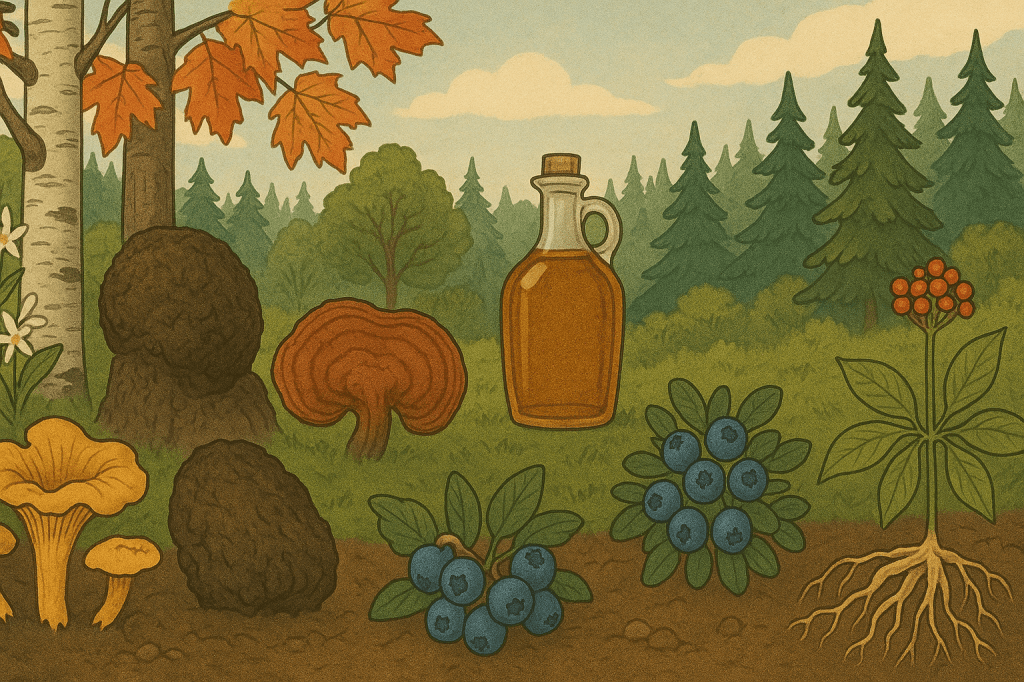
When Canadians think of forests, they typically picture lumber, pulp, and paper. Yet, beyond the timber trade lies an equally vital and dramatically underdeveloped resource sector: non-timber forest products (NTFPs). These include wild mushrooms, berries, medicinal herbs, tree saps, florals, and natural resins; goods that have been harvested for centuries by Indigenous peoples and rural communities, but remain economically marginal in modern Canada. As the agrifood sector seeks to diversify income sources, adapt to climate risks, and respond to consumer demand for sustainable and culturally authentic products, NTFPs represent an untapped reservoir of opportunity.

Canada, after all, is one of the most forested countries on Earth, with over 347 million hectares of forest covering approximately 38% of its landmass. Within these ecosystems is a treasure trove of bioresources, many of which are already enjoying renewed interest in global markets: from functional foods and nutraceuticals to cosmetics and natural health products. The challenge is not whether Canada has the raw materials. It is whether the country can align policy, investment, and Indigenous partnerships to turn these undervalued goods into robust regional economies.

At present, the NTFP sector is dominated by one clear leader: maple syrup. Worth over $1 billion annually, and with Quebec supplying more than 70% of the world’s maple syrup, this industry is the flagship of Canada’s non-timber forest economy. Wild blueberries, predominantly from Quebec, Nova Scotia, and New Brunswick, form another lucrative market, with production values exceeding $300 million in 2023. Yet outside of these headline commodities, the remaining NTFP sector is diffuse, localized, and largely informal. Wild mushrooms like morels, chanterelles, and lobster mushrooms are harvested across British Columbia, Ontario, and the Maritimes, often exported to European and Asian buyers, but little coordinated infrastructure exists to support consistent volumes or traceable quality. Medicinal plants such as chaga, Labrador tea, and devil’s club are well known to Indigenous communities, but underutilized in formal markets.

The potential for growth in this sector is significant. Globally, the market for natural health and functional food products is expanding rapidly. Medicinal mushrooms, in particular, are on track to reach $19 billion by 2030, according to 2024 projections by Global Market Insights. Canada’s forests host many of these species, including chaga, reishi, lion’s mane, and turkey tail, all of which are in high demand in wellness and integrative medicine circles. Similarly, birch sap, a staple in parts of Eastern Europe and Russia, is beginning to attract attention in North America as a low-sugar, antioxidant-rich beverage. There is considerable room for Canadian producers to position their NTFPs in these emerging global niches, especially if backed by origin branding, sustainability certification, and cultural narratives that resonate with eco-conscious consumers.

Despite this promise, the NTFP sector remains constrained by structural barriers. Chief among these is the fragmented and often inconsistent regulatory environment across provinces. Many NTFPs fall outside the scope of forestry tenure agreements and agricultural marketing boards, leaving harvesters in a grey zone with unclear land access rights or commercialization protocols. In some provinces, the rules for harvesting and selling wild mushrooms or herbal plants vary from one jurisdiction to another, complicating efforts to build coordinated value chains. The lack of aggregation infrastructure and cold storage capacity further limits the ability of small-scale producers to move beyond seasonal, informal markets.

Another limiting factor is the scarcity of applied research and product development capacity tailored to NTFPs. Few Canadian universities or government research agencies have dedicated programs for wild plant or fungal product development, and even fewer link with Indigenous knowledge systems in ways that are respectful, reciprocal, and rights-based. Traditional knowledge about the ecological cycles, medicinal uses, and sustainable harvest of forest plants remains vastly underrecognized in Canada’s commercial landscape. Until this knowledge is better integrated and protected through co-management and intellectual property frameworks, the sector will remain vulnerable to exploitation and underperformance.

Equity and land tenure issues must also be addressed. Indigenous communities are among the most active stewards and knowledge-holders of NTFPs, yet they often face structural barriers to entering or scaling in commercial markets. The promise of NTFPs as a tool for Indigenous economic development is well documented, but to realize that potential, governments must ensure clear access rights, provide targeted funding for Indigenous-led enterprises, and support co-governance models that reflect Indigenous sovereignty over forest resources.

Looking ahead, the Canadian NTFP sector needs a concerted strategy. This means intergovernmental coordination to harmonize regulations, investment in processing and aggregation infrastructure, and the development of national standards for quality assurance. Just as importantly, there must be a storytelling effort, one that situates NTFPs not merely as exotic forest goods, but as emblematic of Canada’s commitment to sustainable agriculture, reconciliation, and regional resilience. Products like Labrador tea, spruce tips, and wild fiddleheads should not be relegated to niche farmers’ markets; they should be among Canada’s most proudly exported biocultural goods.

If Canada is to meet its agrifood diversification and climate adaptation goals, the time has come to give non-timber forest products their due. The market is maturing, the environmental case is strong, and the social and economic benefits, particularly for Indigenous and rural communities, are substantial. We must move beyond pilot projects and showcase stands. With vision and investment, Canada’s NTFP industry could blossom from a peripheral activity into a pillar of the national agrifood economy.

Sources
• Natural Resources Canada. (2021). Non-Timber Forest Products in Canada: An Overview. https://www.nrcan.gc.ca/
• Agriculture and Agri-Food Canada. (2023). Statistical Overview of the Canadian Fruit Industry 2023. https://agriculture.canada.ca/
• Global Market Insights. (2024). Medicinal Mushroom Market Size, Share & Trends Analysis. https://www.gminsights.com/
• Indigenous Forestry Initiative. (2023). Case Studies in Indigenous-Led NTFP Enterprises. https://www.canada.ca/en/environment-climate-change/services/indigenous-forestry-initiative.html

Can Food Belts Enhance Ontario’s Food Security Future?

Ontario is facing an escalating food security crisis, with food banks reporting unprecedented demand and rural communities increasingly unable to afford basic nutrition. In response, a new policy proposal is gaining traction among local leaders and agricultural advocates: the creation of provincially designated “food belts” to permanently protect farmland and strengthen local food systems.

Recent data paint a sobering picture. More than one million Ontarians accessed food banks between April 2023 and March 2024, a 25% increase over the previous year and nearly double the figures from four years prior. According to Feed Ontario’s 2024 Hunger Report, food bank use has surged across every region, including traditionally self-sufficient rural areas like Grey-Bruce, where the cost of a nutritious food basket consumes over 40% of a family’s income on Ontario Works. In Northumberland County, the monthly shortfall between assistance levels and basic expenses surpasses $1,300 even before rent is considered.

Amid this growing crisis, Ontario Green Party Leader Mike Schreiner has introduced the concept of food belts, designated agricultural zones protected from development, designed to ensure ongoing food production close to population centres. The idea has received support from municipal officials, including Markham and Waterloo Region councillors, who are increasingly alarmed by the pace at which farmland is being lost to suburban sprawl.

Between 2016 and 2021, Ontario lost over 620,000 acres of farmland, according to the 2021 Census of Agriculture. That represents more than 1,200 farms, not phased out due to productivity or retirement, but lost to development and land speculation. Once prime agricultural land is paved over, it is virtually impossible to restore, raising serious concerns about the province’s long-term food capacity.

In Waterloo Region, where one in eight households now reports food insecurity, the link between land use and hunger is becoming clearer. Eleven percent of those turning to food banks come from households with at least one working adult, reflecting broader structural challenges beyond poverty alone. At the same time, 50% of food banks have been forced to reduce services, while 40% have cut back on the amount of food distributed, according to Feed Ontario.

Food belts are proposed as a systemic solution. Modeled in part on the province’s existing Greenbelt, food belts would differ by prioritizing food production rather than simply preserving green space. Enabling legislation, potentially through amendments to Ontario’s Planning Act or the Provincial Policy Statement, would establish a policy framework, followed by municipal implementation through Official Plans and comprehensive land-use reviews.

The food belt model would involve identifying prime agricultural lands for protection, particularly in high-growth regions such as the Greater Golden Horseshoe. Within these zones, land use would be restricted to agricultural and food-related purposes, including greenhouses, food processing, and housing for seasonal farm workers. Non-agricultural development would be prohibited or tightly regulated.

To support farmers within the belts, advocates suggest a suite of provincial incentives. These could include property tax relief, grants for sustainable practices, support for young and new farmers, and investment in local food infrastructure such as processing facilities and distribution hubs. The intent is to foster both agricultural stability and economic opportunity in rural areas.

Crucially, food belts would not operate in isolation. Stakeholder engagement would be central to their design and implementation, involving farmers, Indigenous communities, conservationists, and municipal planners. A provincial oversight body could monitor compliance, enforce regulations, and report on agricultural output and environmental indicators within the belts.

Beyond farmland protection, proponents argue that food belts represent a strategic investment in Ontario’s long-term food resilience. By shortening supply chains, reducing reliance on imported goods, and anchoring food production within commuting distance of major urban centres, food belts could help the province navigate future disruptions caused by climate change, inflation, and geopolitical instability.

“Simply put, we cannot eat subdivisions,” Schreiner has said, warning that continued inaction could erode Ontario’s ability to feed itself. The Green Party’s position echoes findings from agricultural policy experts who have long cautioned that land-use planning must be treated as a food security issue, not just an environmental or economic concern.

As of 2024, Ontario’s policy landscape lacks a formal mechanism to establish food belts, though growing public and political interest may push the province to act. For now, the concept remains in the realm of advocacy and municipal discussion, but pressure is mounting.

With food insecurity no longer confined to urban poverty and food banks unable to keep pace, the proposal for food belts offers a rare convergence of long-term strategy and immediate relevance. Whether Queen’s Park chooses to seize the moment remains to be seen. What is clear, however, is that Ontario’s food future will depend not only on how the land is farmed, but on whether that land remains farmland at all.

Sources
• CBC News: https://www.cbc.ca/news/canada/kitchener-waterloo/foodbelt-reaction-schreiner-markham-councillors-1.7536995
• Feed Ontario Hunger Report 2024: https://feedontario.ca/research/hunger-report-2024
• Statistics Canada, Census of Agriculture 2021: https://www150.statcan.gc.ca/n1/daily-quotidien/220511/dq220511b-eng.htm
• Greenbelt Act, 2005: https://www.ontario.ca/laws/statute/05g01
• Grey Bruce Public Health: https://www.publichealthgreybruce.on.ca
• HKPR Health Unit (Northumberland): https://www.hkpr.on.ca

How a 15-Acre Hobby Farm Near Ottawa Is Helping To Save the World

Tucked into the gently rolling landscape near Ottawa, where Canadian Hardiness Zone 5 cradles forests through cold winters and warm, green summers, a 15-acre hobby farm hums with quiet purpose. At first glance, it seems like a peaceful retreat, 11 acres of mixed forest, 4 acres of open land, but beneath the stillness lies a powerful, invisible engine of climate action.

This isn’t just a hobby farm. It’s a carbon sink, a micro-forest sanctuary, and a quietly defiant response to the global climate crisis.

The land is a mosaic of native species, maple, black cherry, beech, oak, and poplar stand shoulder to shoulder with pine, fir, and spruce. Half the forest is allowed to run wild, a dense tangle of trees and undergrowth where time and nature make their own rules. The other half is gently managed with selective thinning and nurturing to promote health and resilience. Together, they form a thriving biome that plays a vital role in absorbing and storing carbon dioxide from the atmosphere.

In a world scrambling to limit greenhouse gas emissions, this modest forest is making a real difference.

Tree Math: Carbon Accounting for a Better Future
According to forest carbon research by Natural Resources Canada and other experts, mixed temperate forests like this one can sequester between 2.5 and 6.0 tonnes of CO₂ per acre per year, depending on age, species, and management.

Here, the forest has been evaluated more precisely:
• The 5.5 acres of managed forest, with its encouraged regrowth and carefully tended canopy, sequesters an estimated 5.5 tonnes of CO₂ per acre per year.
• The 5.5 acres of wild, dense forest, with its thick stands of aging trees and self-regulating ecosystems, sequesters a more modest, but still powerful 3.5 tonnes of CO₂ per acre.

Together, that means this forest is pulling approximately 49.5 tonnes of CO₂ out of the atmosphere every year. That’s not just a number – it’s a force.

It’s the equivalent of:
• Offsetting the annual carbon emissions of 10 passenger vehicles
• Neutralizing the electricity use of about 7 Canadian homes
• Canceling out the emissions of nearly 250 propane BBQ tanks or over 110,000 smartphone charges

Each year, the trees breathe in carbon, storing it in wood, roots, and soil. They do this without fanfare. They don’t ask for credit, but they are doing the slow, essential work of saving the planet – tree by tree.

Rooted in Regeneration: Permaculture and Agroforestry
Beyond the forest, the remaining four acres of the property form a living laboratory for regenerative land use, guided by the principles of permacultureand agroforestry.

Here, perennial fruit and vegetable beds are woven through flowering hedgerows and small windbreaks of nut and berry trees. Apple, plum, and pear trees grow beside hardy perennial crops like rhubarb, asparagus, and sun chokes. Herbs spiral outward in patterns that mimic natural ecosystems, encouraging pollinators and providing continuous yield with minimal intervention.

This is no ordinary garden, it’s a climate-positive food forest in the making. Carefully designed guilds of plants mimic the structure of natural woodland ecologies. Deep-rooted plants draw nutrients from the subsoil. Groundcovers protect against erosion. Legumes fix nitrogen. Every element supports another. Even fallen branches and leaf mulch are repurposed into hugelkultur mounds, which retain water and build soil carbon over time.

Together, the forest and farm create a system that captures carbon, regenerates soil, and produces food, not in spite of nature, but in deep collaboration with it.

A Local Action With Global Implications
Climate action often feels like something that happens elsewhere, in government chambers, UN conferences, or corporate boardrooms. But on this hobby farm, the frontlines are right here, in bark and branches, under loamy soil and perennial cover. While politicians debate net-zero goals and global emissions caps, these 15 acres are already doing their part.

And the story doesn’t end with sequestration. The whole property becomes a model, not of scale, but of intentionality. It proves that one person, on one piece of land, can be part of the solution.

A Blueprint for the Future
If every small landowner in Ontario set aside just part of their land for forest preservation, regenerative farming, or agroecological food production, the collective carbon sink would grow exponentially. The 49.5 tonnes of CO₂ absorbed here could be multiplied by thousands of similar efforts. This hobby farm is not just saving the world, it’s showing others how to do it too.

So next time someone says the climate crisis is too big for individuals to affect, point them to this patch of trees and garden beds outside Ottawa. Tell them about the forest that quietly pulls nearly 50 tonnes of CO₂ from the sky every year. Tell them about the permaculture orchard that feeds people and soil alike. Tell them about the hobby farm that’s making a difference.

Because real change doesn’t always look like a protest march or a giant wind turbine. Sometimes, it looks like a sapling taking root in Zone 5, and being given the time and space to grow.

Sowing Wild: Embracing Chaos Gardening in a Canadian Raised Bed

This spring, I’m trying something new, or perhaps, it’s something very old. I’m giving two of my 3’ x 8’ raised beds over to chaos. Not to neglect, but to intelligent disorder, a conscious step away from the regimented rows and into the wild wisdom of nature.

I’ve spent years designing gardens around principles of companion planting, guilds, crop rotation, and soil stewardship. These tools work, no doubt, but nature doesn’t plant in rows. She scatters. She layers. She invites diversity, and lets the strongest, most adaptive life flourish. And so, inspired by that, I’m preparing a chaos garden.

Here’s the plan: I’ve gathered a mixed jar of seed: vegetables, herbs, flowers, and a few rogue wild edibles that I’ve saved or collected over the years. Into it go radish, arugula, calendula, dill, kale, turnip, nasturtium, peas, and fennel. Some mustard for early leaves, some poppy for beauty, some chard for colour. Even a few tomato and squash seeds, just to see who wins the race.

I’ll loosen the soil, adding compost and manure, broadcast the mix by hand, rake it in gently, and water deeply. No rows. No labels. Just biodiversity in motion.

This kind of growing goes by many names: scatter plantingchaos gardening, even seed bombing when done guerrilla-style, but under the surface, it shares DNA with deeper systems thinking. It’s a living expression of polyculture, multiple species growing together in dynamic balance. It echoes permaculture’s ethic of cooperation with natural systems, and it sets the stage for self-seeding gardens, where plants aren’t just harvested, they’re invited to return.

Why do this?

First, because diversity builds resilience. Different plants fill different niches. Deep roots break soil; shallow roots hold moisture. Nitrogen fixers support leafy greens. Leafy greens shade the soil. Flowering herbs call in predators that keep pests in check.

Second, because it discourages monoculture pests and weeds. If you can’t find a pattern, neither can the cabbage moth.

Third, because it invites observation. I don’t know what will thrive, but I know I’ll learn something from what does.

And finally, because it’s joyful. There’s a delight in surprise, in watching an ecosystem unfold in real time, unbound by our expectations.

I won’t intervene much. I’ll harvest what’s ready, let the rest go to seed, and see what returns next year. My role is less conductor, more steward. Less controller, more curious partner.

I still have my perennial fruit and vegetables scattered across the hobby farm using permaculture layers, so I won’t be going hungry if the chaos fails to produce. 

In a world obsessed with order and output, these little beds will be a place of play, experimentation, and ecological trust. A microcosm of what happens when we let go, just a bit, and let the land speak back.

If you’re curious about trying this yourself, start small. Choose a bed or even a large container. Use what you have, and most of all, resist the urge to overthink it. Nature knows what to do.

This is the season I choose to sow chaos. I suspect it will be the most ordered thing I grow.

Here’s a curated list of vegetable, herb, and edible flower seeds well-suited for chaos planting in Canadian Hardiness Zone 5. These plants are generally fast-growing, cold-tolerant, or self-seeding—and they don’t mind a little competition.

Leafy Greens (Cut-and-Come-Again, Fast Growers)
These thrive in early spring/fall and often reseed:
Arugula – spicy, fast to mature, great for pollinators when it flowers
Lettuce (mixed looseleaf varieties) – tolerates partial shade, quick to sprout
Mustard Greens – bold flavor, early spring/fall performer
Tatsoi – cold-hardy Asian green, forms a rosette
Mizuna – feathery leaves, handles crowding well
Spinach – plant early; loves cool weather

Root Crops
These do surprisingly well when thinned during harvest:
Radish – very fast, natural “row marker” and soil loosener
Carrots – mix different colours/sizes for variety
Turnip – dual-purpose (roots + greens)
Beets – harvest baby greens or mature roots
Rutabaga – slower to mature, tolerates cooler temps

Legumes (Nitrogen Fixers)
Support other plants and create vertical interest:
Peas (sugar snap or shelling) – sow early, great for trellises or natural climbing
Fava Beans – cold-tolerant and nitrogen-rich
Bush Beans – not too tall, easy to scatter

Cabbage Family (Brassicas)
Pest-prone in rows, but thrive in mixed beds:
Kale – resilient, frost-tolerant, often overwinters or self-seeds
Pak Choi – fast-maturing and shade-tolerant
Broccoli Raab – leafy with small florets, matures quickly
Mustard – doubles as a trap crop for flea beetles

Herbs (Pollinator Magnets & Companion Plants)
They support insect diversity and natural pest control:
Dill – attracts ladybugs and beneficial wasps
Cilantro – bolts quickly, great for early pollinators
Parsley – slower growing, useful kitchen herb
Chervil – good for shade and cool conditions

Edible Flowers (Beauty + Function)
These help deter pests and support pollinators:
Calendula – self-seeds easily, blooms early and long
Nasturtiums – edible leaves and flowers, acts as aphid trap crop
Borage – self-seeds readily, attracts bees
Violas – small, edible blooms for salads

Others for Experimentation
A few crops that might surprise you:
Swiss Chard – colourful, resilient, good for succession
Zucchini or Pattypan Squash – use only a few seeds; they get large
Cherry Tomatoes – some may thrive if your season is long enough
Onions (green onions from seed) – slow, but good in dense plantings

Tips for Success in Zone 5 Chaos Planting
Sow early in spring (as soon as the soil is workable)
• Choose cold-hardy or short-season varieties (mature in 50–70 days)
Water evenly after sowing, then mulch lightly to retain moisture
• Harvest regularly and thin as needed, using what’s edible

Identity, Governance, and Privacy: The Controversy Over National IDs

The question of whether governments should mandate compulsory citizen photo identification is a complex one, balancing concerns over security, efficiency, privacy, and civil liberties. Proponents argue that such a system strengthens national security by reducing identity fraud, streamlining public services, and ensuring greater integrity in processes such as voting and law enforcement. Opponents, however, raise concerns about privacy risks, potential discrimination, and the financial and administrative burdens associated with implementation.

One of the strongest arguments in favor of compulsory identification is its role in preventing fraud and enhancing security. A standardized ID system makes it easier to verify identities in a wide range of scenarios, from accessing government benefits to conducting financial transactions. Proponents argue that this not only reduces the risk of identity theft but also ensures that public services reach their intended recipients without duplication or misuse. In the realm of law enforcement, such a system can help police quickly verify identities, track criminals, and even assist in locating missing persons. A national ID could also facilitate international travel within certain regions and improve border security by preventing unauthorized entries.

From a governance perspective, a universal identification system can improve the efficiency of public administration. Countries with well-integrated ID systems often experience fewer bureaucratic hurdles in service delivery, whether in healthcare, taxation, or social welfare. Standardizing identity verification can also strengthen the electoral process by reducing the potential for voter fraud and ensuring that only eligible citizens participate. Advocates suggest that, in an increasingly digital world, a government-issued ID could serve as a foundational tool for secure online verification, further modernizing access to services.

Concerns about privacy and government overreach remain central to opposition arguments. Critics warn that a compulsory ID system could expand state surveillance, allowing authorities to track individuals in ways that may infringe on civil liberties. The centralization of personal data also raises the risk of misuse, whether through state overreach or cyberattacks that compromise sensitive information. Given the increasing sophistication of cyber threats, a national ID database could become a high-value target for hackers, putting millions of people at risk of identity fraud.

Social equity is another significant concern. Some populations, including the homeless, elderly, and marginalized communities, may face barriers in obtaining and maintaining identification, potentially excluding them from essential services. If not carefully designed, an ID requirement could reinforce systemic inequities, disproportionately affecting those who already struggle with bureaucratic processes. Additionally, there is a risk of such a system being used to justify racial profiling or discrimination, particularly in law enforcement contexts.

Beyond ethical considerations, the financial cost of implementing and maintaining a compulsory ID program is substantial. Governments would need to invest in secure infrastructure, database management, and ongoing monitoring to prevent fraud or duplication. Citizens might also bear financial burdens in obtaining and renewing their identification, making it a potential source of economic hardship for some. Critics argue that as digital identification methods become more sophisticated, traditional photo IDs may soon become obsolete, making such an investment unnecessary.

The debate over compulsory citizen photo identification ultimately hinges on whether the benefits of security and efficiency outweigh the risks to privacy, civil liberties, and social equity. Any government considering such a system would need to address these concerns through clear legal safeguards, accessible implementation strategies, and a careful assessment of technological advancements. While a well-designed ID system could offer significant advantages, it must be developed in a way that protects citizens’ rights and ensures broad inclusivity.

Urban Agriculture: A Practical Solution for Food Security in Uncertain Times

While I am extremely fortunate to live on a small hobby farm, I started learning about growing my own food as a pre-teen living in an apartment with a concrete yard using containers. My grandparents lived on a half acre with a greenhouse and cold frames, and this expanded my learning opportunities until I could get my own space.  Wherever I have settled in the world, I have grow some level of my food, whether it’s been window sill herb gardens, raised beds on a small city lot, or a few acres of orchards, perennial fruit and veg, with rows of annual harvests. 

There was a time when backyard gardening was seen as a hobby, something for retirees with time on their hands, or for children learning about where their food comes from, but in recent years, urban agriculture has become much more than a pastime. As food prices continue to rise and supply chains face disruptions, more people are turning whatever outdoor space they have – balconies, patios, backyards, and even front lawns – into productive gardens. The shift isn’t just about saving money; it’s about taking control of food security in an increasingly uncertain world.

The past few years have revealed vulnerabilities in the global food system. The pandemic exposed just how fragile supply chains can be, with empty grocery store shelves becoming a common sight. At the same time, extreme weather events linked to climate change have devastated farmland, reducing crop yields and further driving up prices. For many families, fresh, nutritious food has become harder to afford. The solution, in part, lies closer to home. Urban agriculture, even on a small scale, can help reduce dependence on imported produce while ensuring access to healthy food.

One of the biggest misconceptions about growing food is that it requires a large plot of land. In reality, a surprising amount can be harvested from small spaces. Balconies and patios can support potted herbs, tomatoes, and peppers. Small backyards can accommodate raised beds, which improve soil quality and provide better growing conditions. In denser urban areas, community gardens have emerged as a way for neighbors to grow food together, share resources, and build a sense of connection. Some residents are even experimenting with hydroponic systems, allowing them to grow fresh greens indoors year-round.

Beyond the personal benefits, urban agriculture plays a vital role in strengthening communities. When people grow food together, they build relationships and foster a shared sense of responsibility for local food production. Many community gardens serve as educational spaces where people learn about sustainability, organic farming techniques, and seasonal eating. Some initiatives even donate surplus produce to local food banks, ensuring that those in need have access to fresh, healthy food.

The environmental benefits are equally compelling. Green spaces in urban areas help reduce heat, mitigate stormwater runoff, and provide much-needed habitats for pollinators like bees and butterflies. Growing food locally also reduces the environmental impact of transportation, cutting down on emissions associated with long-distance shipping.

While urban agriculture isn’t a replacement for large-scale farming, it is an essential piece of the puzzle when it comes to food resilience. As more people recognize the value of growing their own food – whether for economic reasons, environmental concerns, or simply the satisfaction of harvesting something fresh from their own backyard – cities are beginning to adapt. Local governments are easing zoning restrictions, supporting community garden initiatives, and encouraging green infrastructure.

The future of food may be more localized than ever before. Urban agriculture is proving that solutions don’t have to come from massive farms or distant suppliers. Sometimes, they start with a single tomato plant growing just outside the door.