Category Archives: Being Human: Relationships & Reflection
Exploring the emotional, relational, and existential threads that make us human. From love and loss to connection, identity, and meaning, this category gathers essays and insights on how we live together, grow, and navigate the complex beauty of the human experience.
Grief is often imagined as singular. One loss, one relationship, one sanctioned form of mourning. This model works tolerably well in lives structured around exclusivity and clear social scripts. It fails, however, in lives where love is plural, interwoven, and ethically negotiated rather than socially assumed. In such lives, grief rarely arrives alone. It arrives layered.
Polyamorous grief is not a different emotion. It is the same grief, carrying more weight. What distinguishes it is not intensity, but structure.
Loss in polyamorous contexts rarely travels in straight lines. When one relationship changes or ends, the effects ripple outward. Bonds shift. Roles recalibrate. The emotional ecosystem reorganizes itself. Grief appears not only for what has been lost, but for what must now be reconfigured. There is sorrow for the person, and sorrow for the shape the world had taken around them.
This kind of grief is often compounded by invisibility. Not all losses are publicly legible. Some relationships were private by necessity or choice. Some were never named in ways others recognize as “real.” The absence of social acknowledgment does not lessen grief. It sharpens it. Pain unrecognized must still be carried, but now without witnesses.
There is also a particular tension between abundance and loss. Outsiders often assume that multiple connections dilute grief, as though love were a substance divided into smaller portions. In practice, the opposite is true. When love is plural, loss is experienced across multiple relational planes. One absence may echo differently in each bond it touched. The presence of other partners does not cancel grief. It often amplifies awareness of what is missing.
Polyamorous grief also resists sequencing. There is rarely a clean order in which feelings arrive. Relief, guilt, sadness, anger, longing, gratitude, and fear often coexist. The expectation that grief should follow a predictable path creates unnecessary strain. What is needed instead is permission for contradiction. Coherence, not linearity.
In healthy polyamorous systems, grief becomes a shared ethical task. Care must be taken not to rank losses or compare pain. Each person’s grief is real, even when its expression differs. The work lies in allowing multiple truths to exist simultaneously without forcing them into false equivalence. This is not easy. It requires emotional literacy, patience, and a willingness to tolerate discomfort without rushing to resolve it.
There is also grief for futures that will not arrive. Polyamory often involves explicit imagination: plans named aloud, possibilities discussed, trajectories held lightly but sincerely. When a relationship ends or a person is lost, these imagined futures dissolve. The mourning of unrealized potential is no less real for having remained hypothetical. It is part of the loss.
What steadies polyamorous grief, when it is steadied at all, is coherence. Grief becomes more bearable when relationships are grounded in clarity rather than assumption. When commitments were named. When endings are acknowledged rather than erased. When love is not retroactively denied in order to make loss easier to explain.
Coherence does not soften grief. It makes it survivable.
In coherent systems, grief is allowed to move. It is not required to justify itself. It is not asked to compete. It is given time and space to integrate into the ongoing fabric of connection. Bonds adapt. Some loosen. Some strengthen. The system changes, but it does not collapse.
Polyamorous grief, at its best, teaches something difficult and enduring: that love does not fail because it ends, and that grief does not indicate weakness in the structure that held the love. Loss is not proof that the experiment was flawed. It is evidence that something meaningful was allowed to exist.
Grief in plural lives asks for a particular kind of maturity. Not resilience as endurance, but resilience as integration. The ability to carry love forward without pretending it never mattered. The ability to let relationships change shape without erasing their history.
Peace, in the presence of polyamorous grief, does not come from closure. It comes from coherence. From the quiet knowledge that even in loss, the parts of life are still allowed to speak to one another honestly.
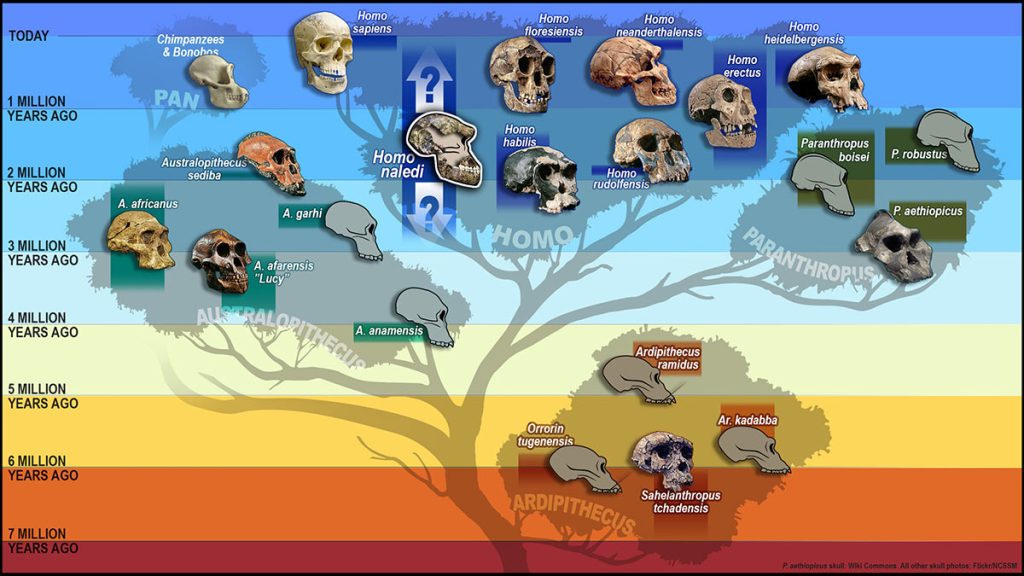
We now know that least eight human species walked the Earth roughly two hundred thousand years ago. Homo sapiens shared the planet with Homo neanderthalensis, Homo heidelbergensis, Homo floresiensis, Homo naledi, Denisovans, and others whose fossil traces remain incomplete or disputed. These populations overlapped in time, geography, and in some cases behavior. They hunted similar prey, shaped stone tools, buried their dead, and adapted to radically different ecological niches. None of them understood themselves as species. That distinction would only become visible after most of them were gone.
Paleoanthropology has repeatedly demonstrated that human evolution is not a clean sequence, but a braided stream. Species diverged, converged, interbred, and vanished in patterns that resist simple narratives of progress. Genetic evidence now confirms that Homo sapiens did not replace other humans through isolation alone, but through partial interbreeding followed by demographic dominance. The boundary between species was porous, unstable, and context-dependent. Speciation, as it occurred in the human lineage, was neither tidy nor immediately legible to those living within it.
Homo sapiens itself emerged slowly, marked less by sudden anatomical novelty than by shifts in cognition, social organization, and symbolic capacity. Early sapiens were not obviously superior in strength or survival skills. Their eventual dominance appears to have been driven by abstract reasoning, cooperative flexibility, and the ability to operate within increasingly complex symbolic systems. These advantages were invisible in the short term and decisive only over long spans of time. Dominance, in evolutionary terms, is always clearer in retrospect.
The modern assumption that human evolution has effectively ceased rests on a misunderstanding of how evolution operates. Evolution does not stop when a species becomes culturally complex. It accelerates when environments change faster than inherited adaptations can comfortably track. The current human environment has shifted more dramatically in the last century than during any comparable period since the emergence of symbolic cognition. This shift is not merely technological. It is cognitive, perceptual, and ecological.
People today live in a world shaped more by complex systems and ideas than by the physical environment. Day-to-day survival increasingly depends on dealing with symbols like money, rules, screens, and data instead of direct human contact or practical tasks in the real world. We often respond to information rather than people, and to problems that are spread out over time and distance and filtered through technology.
These conditions are very different from the ones human brains evolved for. As a result, the gap between how we are wired and how we now live is not a small issue, but a basic feature of modern life.
Within this context, neurodivergent humans are typically framed as statistical outliers within Homo sapiens. Their traits are classified as disorders or deficits, defined by deviation from neurotypical norms of social intuition, emotional regulation, sensory processing, and attentional control. These norms are treated as universal human baselines rather than historically contingent adaptations. Paleoanthropology offers no support for this assumption. Across the human lineage, variation in cognition has been the raw material of adaptation, not an error to be corrected.
Species are not defined solely by reproductive isolation. While this criterion is useful in some contexts, it fails to capture the complexity of speciation in organisms with overlapping ranges, long generation times, and strong cultural mediation. Human evolution in particular demonstrates that species can remain genetically compatible while diverging behaviorally, cognitively, and ecologically. Neanderthals and sapiens interbred, yet maintained distinct adaptive strategies for tens of thousands of years. Genetic permeability did not prevent species distinction. It accompanied it.
A more functional definition of species emphasizes adaptive coherence. A species can be understood as a population that shares a stable strategy for engaging with its environment, reinforced across generations by ecological fit, social organization, and assortative reproduction. By this definition, neurodivergent humans exhibit early markers of speciation. Their traits do not appear randomly or independently. They cluster into a coherent cognitive architecture that interacts with contemporary environments in systematically different ways.
Common features of this architecture include altered sensory thresholds, atypical dopamine regulation, nonlinear associative thinking, heightened pattern recognition, reduced dependence on social reward, and the capacity for sustained focus detached from immediate interpersonal feedback. These traits are often treated as impairments because they conflict with institutions designed around neurotypical cognition. However, from an evolutionary perspective, impairment is inseparable from context. Traits that are maladaptive in one environment may be advantageous in another.
Paleoanthropological evidence suggests that early Homo sapiens may themselves have appeared cognitively unusual relative to contemporaries. Increased abstraction, symbolic behavior, and reduced reliance on immediate sensory cues may have seemed inefficient or socially disruptive in environments favoring embodied skill and direct coordination. What later proved adaptive was not immediately recognized as such. Divergence is often misclassified as dysfunction until selection pressures reveal its utility.
The contemporary environment amplifies this dynamic. Technological systems magnify cognitive differences rather than smoothing them. Pattern recognition scales. Hyperfocus compounds. Reduced sensitivity to social signaling becomes an advantage in machine-mediated contexts. Neurodivergent humans increasingly occupy niches where their cognitive architecture is not merely tolerated but essential. These niches are expanding, not contracting.
At the same time, cultural mechanisms delay recognition of divergence. Diagnostic frameworks emphasize normalization. Educational and occupational systems reward masking. Neurodivergent individuals are pressured to simulate neurotypical behavior to survive socially and economically. Masking functions as a short-term adaptation, allowing individuals to pass within the dominant species. It does not eliminate divergence. It obscures it.
Crucially, neurodivergent humans are now able to find one another across distance, forming communities, collaborations, and reproductive pairings that were historically unlikely. Assortative mating among neurodivergent individuals is increasing, even when unacknowledged. Over time, such patterns reinforce divergence by stabilizing cognitive traits across generations. Paleoanthropology suggests that similar processes operated in the emergence of earlier human species, long before reproductive isolation became absolute.
This argument does not imply hierarchy or inevitability. Evolution does not produce winners in a moral sense. It produces strategies that persist or fail under specific conditions. Multiple human species once coexisted. Their fates were shaped by climate instability, technological shifts, competition, and chance. Coexistence was unstable, but not impossible. Replacement was not intentional. It was emergent.
The ethical discomfort provoked by the idea of a new human species is itself revealing. Modern societies are deeply invested in the concept of a singular humanity progressing linearly toward improvement. Speciation disrupts this narrative. It suggests that difference is not a temporary deviation but an enduring feature of human evolution. The impulse to medicalize or suppress divergence reflects fear of fragmentation rather than scientific caution.
Extinction, when it occurs, rarely announces itself. Species disappear not through catastrophe alone but through gradual mismatch. They persist as long as their adaptive strategies align with prevailing conditions. When those conditions shift, decline appears ordinary until it becomes irreversible. Paleoanthropology repeatedly shows that the disappearance of human species was likely experienced by those living through it as continuity, not collapse.
The greatest constraint on human evolution in the present era may not be genetic but cultural. Systems optimized for a single cognitive profile suppress variation precisely when environmental volatility demands it. By narrowing the range of acceptable cognition, contemporary societies risk reducing humanity’s adaptive capacity at a moment of unprecedented change.
If a new human species is emerging, it will not announce itself in language or law. It will be identified through diagnoses, productivity metrics, and behavioral correction. Its members will be told they are defective versions of something else. History suggests that this is not how defectiveness appears. It is how divergence appears when judged by the standards of the outgoing form.
Evolution is always legible in hindsight and opaque in the present. Species are named after they dominate or after they vanish. Those living through transitions rarely recognize their significance. If neurodivergent humans represent the early formation of a new human species, the evidence will not be found in declarations of identity but in the slow accumulation of adaptive coherence.
Humanity has never been singular for long. The silence surrounding this possibility may simply be the eighth time it has forgotten that fact.
This week, Aston Students’ Union handed over The Green (originally called Aston Brook Green) to Midland Heart, ending forty-five years of student-led housing. On paper, it is just a change of management. A shift in responsibility. Another entry in the long story of how universities house their students.
In practice, it marks the end of something rarer.
For nearly half a century, The Green was a place where students were not treated primarily as customers, nor as problems to be managed. They were treated as adults capable of running a community. Affordability, stability, and shared responsibility mattered more than luxury or profit. That was what defined the place.
I lived there as an undergrad from 1983 to 1985, and was elected Chairperson of the Aston Students’ Union for the final year. At the time, it did not feel historic. It felt ordinary. And that, looking back, was the most telling detail of all.
What The Green Was The Green began in the early 1980s, a Students’ Union project built on converted Victorian terraces a short walk from campus. Midland Heart owned the properties, but the Students’ Union ran the show. Wardens, offices, rules, social events – they were all there, but in a way that trusted students to be responsible rather than policing them.
Rent was low, all utility bills included. Students with part-time jobs could manage it easily, and that alone changed the atmosphere. The buildings were basic: functional kitchens, shared bathrooms, laundry rooms that smelled faintly of detergent and late-night pasta. It did not matter. Residents understood that sufficiency was enough, and that the space could be transformed by their participation in it. The walk to and from the campus was about 15 mins, and best done in groups at night, as the canal area was in its early stages of redevelopment and Chester St was badly lit.
Life in the Early Years For those of us there in the early to mid 1980s, it was almost magical in its ordinariness. Students acted as wardens, organised events, kept an eye on one another. Rules existed, but the emphasis was on community, not judgment.
Daily life was modest: cooking, cleaning, laundry, repairing what broke. The terraces were designed to encourage chance meetings, small conversations, accidental friendships. Staff were approachable. Advice and guidance were available, quietly, without ceremony.
Aston Brook Green had a rhythm. Work and study punctuated life, but social bonds carried it along. Each year, new residents arrived and old ones left, yet the sense of continuity persisted, held together by wardens, traditions, and the expectations everyone shared. House parties, new romances, and late night study groups were all part of daily life at The Green.
Why It Worked The Green succeeded not because of facilities, or because it was convenient, or even because it was cheap. It succeeded because it trusted its residents, because it assumed that young adults could act responsibly if given the space.
Affordability mattered. When students were not preoccupied with paying exorbitant rent, they had capacity to engage, contribute, and create. They learned more than their courses could teach: how to live together, how to manage conflict, how to take care of each other. According to the Students’ Union, over its lifetime The Green supported around 6,750 students (about 150 residents each year) and ended up saving students millions of pounds compared with typical student rents in the area.
For decades, it proved that student housing could be about more than profit. That a minimal, trusting system could produce safety, respect, and stability. That is worth remembering.
What Is Lost With the handover, that model changes. Students will still live in the same buildings, but under management focused on efficiency, risk, and oversight. The ethos of self-governance, of trust and shared responsibility, will no longer be the organizing principle.
The loss is subtle, but significant. It is not just the buildings. It is a way of living together, quietly assumed, practiced over generations. It is the disappearance of a model in which students mattered as participants, not simply tenants.
Memory as Stewardship Remembering Aston Brook Green is itself a form of society care. To recall its open spaces, its tiny kitchens, its community laundry units is to recognize that something unusual once existed. Affordable, student-led housing is possible. Community, trust, and sufficiency can coexist with study, work, and the pressures of young adulthood.
Forty-five years is a long time. The Green was not just a place to live. It was a framework for learning how to live together with intention. It nurtured generations of students. Its legacy endures, in memory and in principle, even as the keys change hands.
What if humanity suddenly became fully telepathic. Not the occasional spooky hunch or party trick, but full-time, universal, always-on mind sharing. No mute button. No privacy settings. This would not be an upgrade like glasses or Wi-Fi. It would be more like removing the walls from every house on Earth and then acting surprised when everyone feels awkward.
Telepathy would not give us a new way to communicate so much as take away the barriers that currently make social life possible. Modern civilization quietly assumes that thoughts are private, speech is optional, and silence is allowed. Telepathy flips that table. Even if we developed good manners about it, the basic fact would remain. Everyone can hear the background noise in everyone else’s head. Privacy would no longer be the default. It would be a skill. Possibly an advanced one.
The first casualty would be the private self. The modern identity is mostly an internal narration. I am who I tell myself I am, plus maybe a slightly edited version for public release. In a telepathic world, identity becomes a group project. You are not only who you think you are. You are also who other people experience you to be from the inside. The autobiography is now co-authored, whether you like it or not.
Psychologically, this would be rough. Very rough. All the stray thoughts, unflattering impulses, half-baked judgments, and unresolved contradictions would be on display. The comforting illusion that other people are mentally tidy would vanish almost immediately. But something interesting might happen after the initial collective mortification. Once everyone knows, firsthand, that minds are chaotic, inconsistent, and occasionally ridiculous, the idea that a person can be defined by their worst thought becomes hard to maintain. Hypocrisy stops being shocking and starts being recognisable. Compassion, no longer a lofty ideal, becomes simple realism.
Relationships would change faster than anything else. Romantic, family, and even casual connections currently rely on selective disclosure, strategic silence, and the occasional “I’m fine” that absolutely is not fine. Telepathy removes these tools. There is no hiding resentment. No unspoken longing. No passive-aggressive cheerfulness. Emotional reality shows up on time, every time.
This would eliminate entire classes of relational harm. Gaslighting collapses when intent is visible. Manipulation struggles when motives are obvious. Consent becomes clearer because desire and hesitation are directly perceived instead of guessed at. On the downside, relationships become harder to maintain casually. Holding someone else’s unfiltered mental life takes effort. Emotional labour stops being a metaphor and becomes an actual daily task. Social circles would likely shrink. Fewer relationships, deeper ones, and absolutely no room for emotional freeloading.
Culture would also have to adjust. Much of what we call culture is a shared performance held together by controlled narratives and selective expression. Telepathy makes this difficult. Propaganda loses its edge when internal contradictions light up like a dashboard warning. Charisma without sincerity evaporates. Leadership becomes less about how well you speak and more about whether your beliefs, intentions, and actions actually line up.
Art would survive, but it would have to work harder. When everyone can already feel what everyone else feels, simple expression becomes redundant. Art shifts from saying “this is my inner world” to asking “what else could our inner worlds become”. Its job moves from communication to transformation. Humour, thankfully, remains essential. Shared absurdity, sudden insight, and collective recognition of how strange all this is would be vital pressure valves. In a world with very little psychic privacy, laughter might be the last refuge.
Power structures would not vanish, but they would be exposed. Hierarchies depend on information asymmetry. So do bureaucracies, surveillance systems, and most forms of exploitation. When intention is visible, coercion becomes harder to dress up as politeness. Power still exists, but it has to be honest about itself.
New rules would emerge to cope. Societies would need norms around mental boundaries, attentional consent, and the right not to be overwhelmed. Silence and solitude would become protected resources. Crime would change shape. Some harms would decline as empathy increases and escalation becomes visible early. New harms would appear, including psychic intrusion and emotional flooding. Justice would focus less on discovering what happened and more on repairing what everyone already knows.
At the civilisational level, coordination becomes easier. Shared understanding lowers the cost of cooperation. Large projects, crisis response, and collective problem-solving accelerate. Humanity begins to function less like a collection of arguing tribes and more like a single, slightly neurotic superorganism.
And yet, something precious would need defending. Individuality would no longer be assumed. It would have to be actively protected. Silence, distance, and mental rest would become scarce and possibly sacred. Borders would matter less as lived experience replaces abstraction. Nationalism, which relies on imagined differences and curated stories, would struggle to survive sustained psychic contact with real human lives. The idea of “the other” becomes difficult to maintain when you can feel their Tuesday afternoon.
Which brings us to the central problem of a telepathic civilisation. Connection would be solved. That part is easy. The real challenge would be learning when not to connect. Creativity, dissent, and novelty often arise from friction, misunderstanding, and partial knowledge. Total transparency risks smoothing the world flat.
The future of such a species would not depend on its ability to hear one another. That would be effortless. It would depend on its wisdom in choosing when to close the door, dim the noise, and let a little mystery survive.
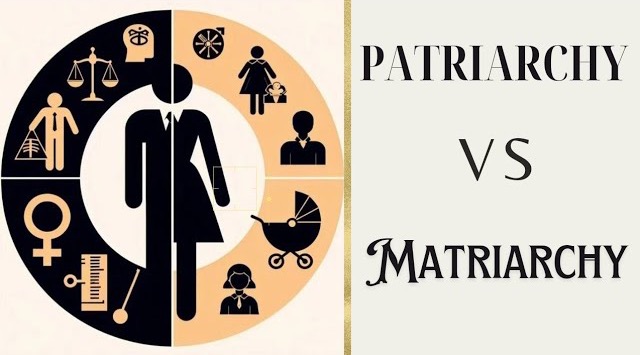
In the long sweep of human history, few structures have shaped daily life as thoroughly as systems of gendered power. Patriarchy and matriarchy are often presented as opposites, but this framing obscures more than it reveals. One is a historically dominant system of centralized authority. The other is a set of social arrangements that redistribute power, responsibility, and meaning in fundamentally different ways. Understanding the distinction is less about reversing hierarchy and more about examining which values a society chooses to place at its core.
Patriarchy is best understood not simply as male leadership, but as a worldview. Authority is concentrated, legitimacy flows downward, and social order is maintained through hierarchy. Political power, economic control, inheritance, and cultural narratives tend to align around masculine-coded traits such as dominance, competition, and control. Caregiving and relational labor are treated as secondary, often invisible, despite being essential to social survival. Even when patriarchal systems soften over time, their underlying logic remains intact. Power is something to be held, defended, and exercised over others.
Matriarchy, by contrast, is frequently misunderstood as a mirror image of patriarchy. Anthropological evidence suggests otherwise. Societies described as matriarchal or matrilineal rarely exclude men or invert domination. Instead, they organize authority around kinship, continuity, and shared responsibility. Descent and inheritance often pass through the maternal line, anchoring identity in stable social bonds. Decision-making tends to be collective, with influence distributed across elders, family networks, and community councils rather than vested in singular rulers.
The most compelling argument for matriarchal systems lies not in claims of moral superiority, but in outcomes. Where patriarchy centralizes power, matriarchy diffuses it. This structural difference reduces the risk of authoritarian drift and limits the social damage caused by individual ambition. Authority becomes situational rather than absolute, exercised in service of group continuity rather than personal dominance.
Care occupies a radically different position in these systems. In patriarchal cultures, care is often framed as a private obligation or charitable act. In matriarchal societies, care functions as infrastructure. Child-rearing, elder support, emotional labor, and social repair are recognized as essential to collective resilience. Policies and customs evolve to protect long-term wellbeing rather than prioritize short-term extraction, whether economic or political.
Violence, too, is treated differently. Patriarchal systems have historically rewarded aggression, conquest, and coercion with status and legitimacy. Militarization becomes a cultural ideal rather than a last resort. Matriarchal societies, while not free of conflict, tend to favor mediation, kinship accountability, and reconciliation. Social cohesion is preserved by repairing relationships rather than punishing transgression alone.
Identity formation reveals another contrast. Patriarchy emphasizes individual achievement and competitive success. Worth is measured by rank, wealth, or dominance. Matriarchal systems emphasize relational identity. Individuals are defined by their roles within a web of mutual dependence. This orientation fosters cooperation and shared accountability, particularly during periods of crisis or scarcity.
Gender roles themselves often prove more flexible in matriarchal contexts. Patriarchy enforces rigid norms while presenting them as natural or universal. Matriarchal systems decouple masculinity from rule and femininity from subservience. Men retain agency and dignity without being positioned as default authorities. Leadership becomes contextual rather than gender-mandated.
It is important to note that few contemporary thinkers advocate for a pure matriarchy imposed upon modern states. The more serious project is post-patriarchal rather than anti-male. It asks whether societies organized around care, continuity, and distributed authority are better equipped to face complex global challenges than those organized around dominance and extraction.
From a cultural perspective, the question is not which gender should rule. It is which values should shape the structures that govern collective life. History suggests that systems prioritizing care, shared power, and relational responsibility produce more stable and humane outcomes. In an era defined by ecological strain, demographic shifts, and social fragmentation, these lessons are less ideological than practical.
It has long been argued that culture is not destiny, but design. Patriarchy is one design among many, not an inevitability. Matriarchal principles offer an alternative blueprint, not for reversing oppression, but for dismantling it altogether.
This is the 500th post on Rowanwood Chronicles, and I want to pause for a moment rather than rush past the number.
Five hundred posts means months of thinking in public. It means essays written early in the morning with coffee going cold, notes drafted in train stations and kitchens, arguments refined and re-refined, and ideas that only became clear because I was willing to write them out imperfectly first. It means following threads of geopolitics, technology, culture, relationships, power, science fiction, and lived experience wherever they led, even when they led somewhere uncomfortable or unfashionable.
This blog was never intended to be a brand or a platform. It has always been a workshop. A place to test ideas, to connect dots, to push back against lazy thinking, and to explore what it means to live ethically and deliberately in a complicated world. Some posts have aged well. Others mark exactly where my thinking was at the time, and I am content to leave them there as signposts rather than monuments.
What has surprised me most over these five hundred posts is not how much I have written, but how much I have learned from the responses, private messages, disagreements, and quiet readers who later surfaced to say, “That piece helped me name something.” Writing in public creates a strange kind of community, one built less on agreement than on shared curiosity.
To those who have been reading since the early days, thank you for staying. To those who arrived last week, welcome. To those who argue with me in good faith, you have sharpened my thinking more than you know. And to those who read quietly without ever commenting, you are still part of this.
I have no intention of slowing down. There are still too many systems to interrogate, futures to imagine, and human stories worth telling. Five hundred posts in, Rowanwood Chronicles remains what it has always been: a place to think carefully, write honestly, and refuse simple answers.
I’m in my late sixties now. I live on a small farm where the chickens have better time management than I do. I work when I feel like it, consult when the project’s interesting, and spend the rest of my time in the delightful company of women who know exactly who they are, and what they want. I’ve been called many things, some of them printable, but “a dragon” is a personal favourite. Apparently, I’m the kind of mythical creature who still believes in emotional literacy, direct communication, and showing up with actual feelings. Wild, I know.
And yes, I date. Often. With love, with humour, and above all, with a plan that includes snacks. Now, here’s the part where the other men clutch their pearls. “Dating? At your age? In this climate?” Yes, Geoffrey, in this climate. And I have a wonderful time doing it.
Because while a lot of men my age (and many younger too) are out there groaning that dating is broken, that women are too picky, too independent, too online, too much, I just smile into my coffee. Not because the world hasn’t changed. Of course it has, yet the tools for connection haven’t disappeared. They’ve just been upgraded. These days, you need emotional intelligence, a working knowledge of consent, and the radical ability to say what you mean without making it weird.
I suppose I had an advantage. I spent most of my adult life wandering: new countries, new jobs, new time zones. That sort of lifestyle trains you to find connection in the moment, to seek relationships that aren’t propped up by obligation or role, but by truth. Along the way, I stumbled into polyamory and, not long after, BDSM; not as lifestyle accessories, but as practices of honesty, intention, and trust. That’s what shaped me into the man I am today: romantic, responsible, and suspiciously good at calendar coordination.
Why don’t I struggle with dating? Simple: I know who I am, and I say so. I’m polyamorous. I’m a Dominant. I believe love is abundant, not scarce, and I show up with presence and clarity. I’m not interested in convincing anyone to like me. I’m interested in being myself and seeing who that naturally resonates with.
It’s like showing up to a party dressed as yourself, rather than as someone from the catalogue of “what men think women want.” It’s shockingly effective. Also, fewer dry-cleaning bills.
Meanwhile, the average bloke is still stuck in a loop: swiping furiously, confused why his “Hi” didn’t spark instant passion, grumbling that women only want six-foot investment bankers who play guitar on mountaintops. I hear it all the time:
“Women don’t like nice guys.” “They only go for tall guys.” “Dating’s a rigged game.”
Brother! You’re not playing the wrong game. You’re playing last season’s game. And you didn’t read the new instructions.
Today’s dating world rewards emotional fluency, not pickup artistry. Vulnerability, not vague texting. Boundaries, not bitterness. The new dating superpowers are things like “active listening,” “self-awareness,” and “being able to hear ‘no’ without falling apart.”
Most men I know who are struggling haven’t done the internal upgrade. They’re still trying to fix their dating lives with better profile photos and punchier icebreakers, instead of asking the truly dangerous question: Would I date me?
Here’s what my dating life looks like: maybe breakfast with one partner, a phone check-in with another, a lazy evening on the deck with the third. Nobody’s confused, nobody’s being played, and everyone’s emotionally fed. Why? Because they know I tell the truth. I listen. I own my shite when I get it wrong. That’s not magic, it’s just good relationship hygiene.
So if you’re a man out there feeling lonely, frustrated, or tempted to write another “Women today just don’t…” rant on Reddit, let me offer you something better: a challenge. Become someone you admire. Learn how to feel your feelings without fear. Learn to ask for what you want without pretending you don’t care. Practice showing up for others, even when there’s nothing in it for you.
Dating isn’t broken. You just need to update your operating system.
There is no shortage of love out here. No shortage of desire or connection. But there is a shortage of men willing to do the work to meet women as equals, as partners, as whole humans. That’s not a condemnation. It’s an invitation.
You don’t need to be rich, ripped, or romantic in six languages. You just need to be real. Because honesty is still the sexiest thing a man can offer.
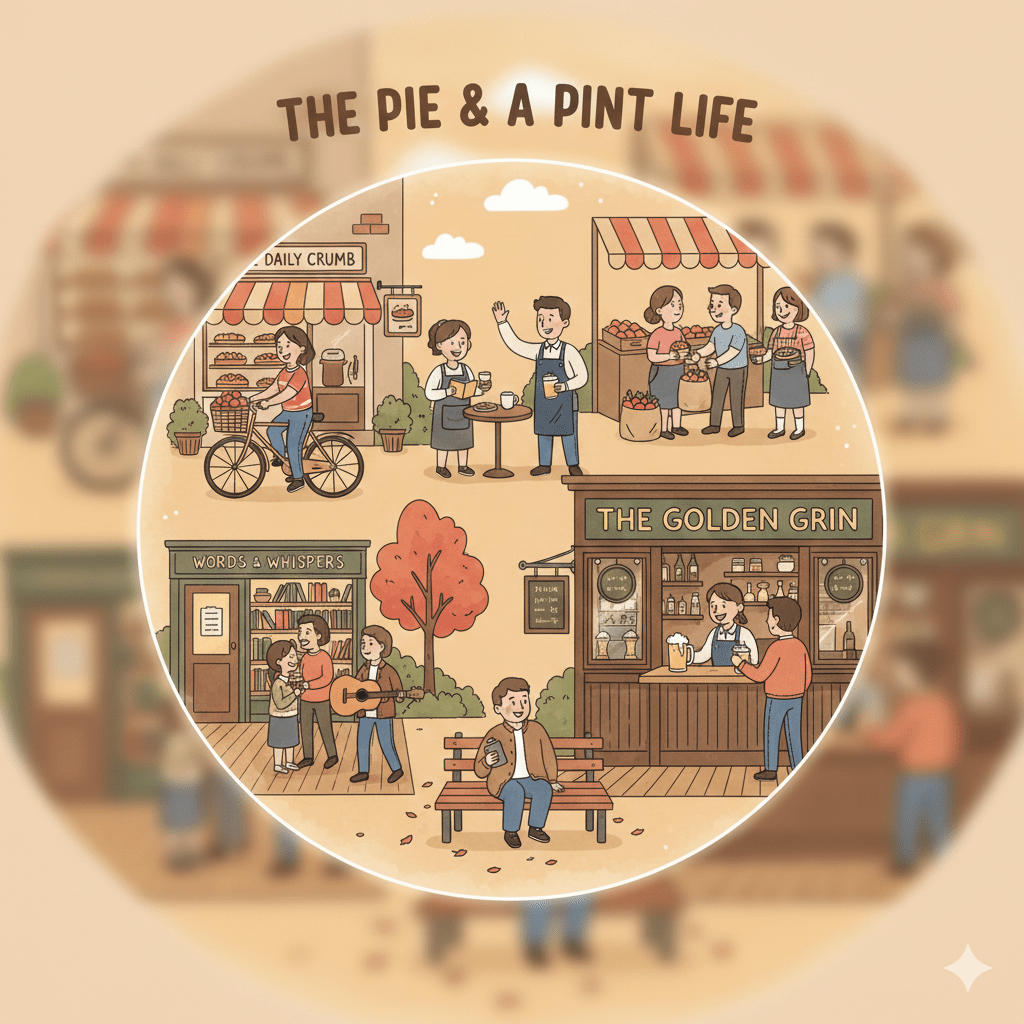
There’s a certain romance to the idea of a life lived in fifteen-minute circles. Not a metaphorical fifteen minutes, no, I mean a geography, a rhythm, a practical enchantment where everything one might need for daily sustenance and delight rests just a short stroll or a gentle bike ride away. I call it the “pie and a pint” model of living. The pie represents all the tangible necessities of life: food fresh from the market, clothing that fits just so, perhaps even a bookshop that smells faintly of vanilla and old paper. The pint, meanwhile, is the social lifeblood: laughter, conversation, music, the gentle buzz of humanity swirling around the edges of one’s existence.
It is, I admit, a model born of a lazy idealism, the sort that insists life can be both comfortable and endlessly charming. Imagine leaving home in the morning and, in the span of a quarter-hour, acquiring a warm pastry and a loaf of bread that smells faintly of honey. On the way back, one might linger by the corner café, exchanging pleasantries with a barista who knows your name and your preferred roast. At the market, the butcher waves. The grocer slides a bag of oranges across the counter as though performing a small, daily miracle. Every errand becomes a small ritual, a comforting loop that roots one in the neighborhood and the hours of the day.
The pint, of course, is the flourish to the pie’s sustenance. Perhaps it’s an evening spent in a local pub, the kind where the wooden floors creak with memory, and the beer tastes better because it was poured by someone who knows you, not just your credit card number. Or perhaps it’s a quiet chair in a communal park, a flask of something warming tucked beneath a coat, as the world meanders by. This is the part of life that reminds one why human existence is worth the effort: stories exchanged, music shared, glances that say more than words ever could. The pie fills the stomach, the pint fills the heart.
The beauty of this model is its intimacy. Fifteen minutes, one discovers, is long enough to venture, to explore, but short enough to return. One becomes familiar with the rhythms of place, the subtle shifts in light across a street corner, the seasonal hints in the produce at the market. There is less rush, less constant negotiation with time. A walk to acquire a loaf of bread is also a walk to notice the scarlet leaves tumbling along the sidewalk, to hear a snippet of laughter from a nearby table, to greet a neighbor with a wave and a nod. Life, when framed in such increments, folds into itself, gentle and satisfying.
Of course, one must admit this model is not without whimsy. It presumes a city or town willing to play along, one that fits neatly into the radius of desire. It presumes the world will conspire to place the essential and the pleasurable within reach, and for those willing to walk fifteen minutes, or perhaps pedal gently, the world indeed becomes a smaller, sweeter place. It is a model both humble and audacious: humble in its insistence on simple joys, audacious in its refusal to accept life as a matter of endless commuting and distant errands.
So here it is: the pie and a pint life. A life that honors the mundane and the magical alike, that balances sustenance with delight, that finds happiness not in distant horizons but in the familiar arcs of the day. Fifteen minutes may not sound like much, but in those fifteen minutes, one can hold the universe in the grasp of a warm hand and a warm heart. It is a small radius, yes, but sometimes, the smallest circles hold the greatest magic.
I occasionally find myself in discussion groups, talking about relationship dynamics and the choices people make, so perhaps it’s time I turn the lens inward, and share more about how I approach life, particularly when it comes to romantic relationships. For me, what I desire in such a partnership isn’t simply about affection or companionship. It’s about creating a bond rooted in shared ethics, values, and priorities. For me, these foundational elements are essential for building depth, harmony, and longevity in any relationship.
Ethics at the Core Ethics shape who we are; they define our principles and guide how we navigate the world. In relationships, alignment in ethics fosters trust and respect. Integrity is key; partners who embrace honesty create emotional safety, allowing the relationship to flourish. Without it, feelings of betrayal and insecurity can take root.
Fairness and respect also stand out. When partners honour each other’s boundaries, needs, and individuality, the relationship becomes a space of equality and support. Misalignment here can lead to power imbalances and resentment. Additionally, shared ethical perspectives on broader issues, such as social justice, environmental concerns, or interpersonal conduct, create a deeper sense of connection. It’s not just about compatibility in the small, everyday things; it’s about seeing the world through similar lenses.
Shared Values Values are the compass points of our lives, reflecting what we hold dearest. When partners align in their values, they’re better equipped to navigate life’s challenges and create a shared future. Core values like family, ambition, and personal growth can either unite or divide couples. For example, two people deeply invested in family will find it easier to agree on time spent with loved ones or decisions about raising children.
Lifestyle choices also come into play. Whether it’s a shared passion for travel, commitment to health, or dedication to community, these mutual priorities smooth the day-to-day rhythms of a relationship. Conversely, mismatched values, be they cultural, religious, or practical, can lead to friction unless both partners are willing to communicate and adapt.
Alignment in Priorities If ethics and values form the foundation of a relationship, priorities are how these ideals take shape in everyday life. Partners need to align not only in long-term aspirations but also in short-term goals. Whether it’s career ambitions, health milestones, or financial planning, harmony in priorities ensures a sense of direction and teamwork.
The balance of time and energy is equally vital. A couple’s ability to negotiate how they spend their time, be it between work, hobbies, or family, can either strengthen the bond or create tension. Flexibility matters too. Life is unpredictable, and partners must adapt to shifting circumstances, whether that means embracing parenthood, navigating career changes, or even relocating.
Why Alignment Matters When ethics, values, and priorities align, relationships thrive. Shared principles foster emotional intimacy, as partners understand each other on a fundamental level. This alignment also enhances communication, minimizing misunderstandings and creating a solid foundation for navigating life’s complexities. While disagreements are inevitable, a shared framework reduces the risk of major, relationship-ending conflicts.
Cultivating Alignment Building alignment doesn’t happen by chance; it requires effort and intention. Open communication is essential. Regular conversations about personal ethics, values, and priorities allow partners to identify shared ground and address potential conflicts. Active listening deepens this connection, fostering empathy and respect.
Of course, no two people will align perfectly, which is where compromise comes in. The willingness to adapt and meet halfway bridges gaps that might otherwise feel insurmountable. Finally, shared experiences, whether joyful or challenging, solidify bonds over time, creating a relationship that evolves alongside its participants.
A Foundation for Fulfillment At its heart, desiring alignment in ethics, values, and priorities reflects a desire for a relationship that is both loving and rooted in mutual respect. Differences are inevitable, but with open communication, adaptability, and a commitment to nurturing alignment, partners can create a connection that stands the test of time. This balance fosters trust, deepens intimacy, and lays the groundwork for a partnership that is not only fulfilling but enduring.
In the end, alignment isn’t about perfection. It’s about building a shared life that honors both individuals while creating something greater together. That, to me, is the essence of a meaningful romantic connection.








 The Rowanwood Chronicles