Why Your Dismissive-Avoidant Partner Loves You From Across the Room (With the Door Slightly Ajar)

Ah, the dismissive-avoidant attachment style. The human equivalent of a cat: they might love you, they might not, but either way, they’re going to knock your emotional mug off the table just to see what happens.

Dismissive-avoidants are the folks who will cuddle you on the couch and then, without warning, evaporate like steam in a British mystery novel. You think things are going great, you’re texting every day, you’ve met each other’s pets, you’ve even shared fries. Suddenly, they’re “just really needing some space” and have gone to “work on themselves” in the wilderness with no signal and no return date.

Now, don’t get me wrong, they’re not bad people. They just learned, somewhere along the way, that feelings are kind of like bees: unpredictable, swarming, and best avoided if possible. These folks often grew up in homes where vulnerability was about as welcome as a raccoon at a wedding. So, they built themselves emotional panic rooms and installed locks with 87-digit codes.
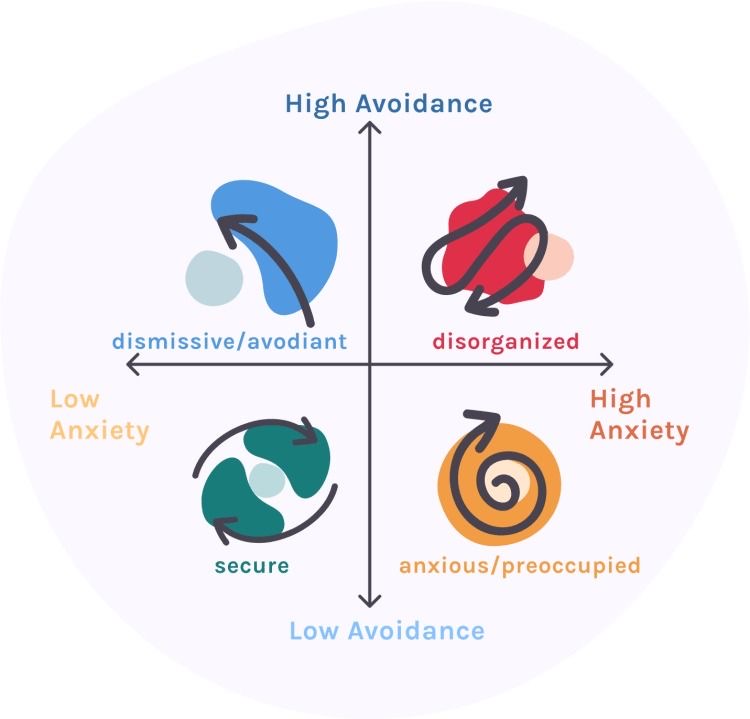
Dating a dismissive-avoidant can be a little like dating a haunted house. There’s a lot going on inside, but they don’t want you poking around in the attic. Ask them how they feel, and they’ll either crack a joke or vanish in a puff of logic. “I don’t need to talk about feelings. Feelings are just electrical impulses. You know what else are electrical impulses? Traffic lights. And I don’t cry at those, do I?”

These are the champions of “I’m not really looking for anything serious” and “I just want to see where this goes”, which is often directly into a brick wall labeled unavailable. But don’t let that deter you, because dismissive-avoidants do fall in love. It just takes a while. And by a while, I mean longer than it takes for an avocado to go from rock-hard to brown mush.

They actually value connection deeply, but only if it doesn’t interfere with their need for independence, alone time, or the ability to escape through a metaphorical skylight at any moment. They’re like emotional ninjas: stealthy, elusive, and weirdly attractive.

If you’re dating one, the key is patience, and a good sense of humor. Celebrate the small wins: they made eye contact while discussing their emotions? Break out the champagne. They admitted they missed you (after a three-week silence)? Start planning the wedding.

Just remember: when they say, “I don’t really do emotions,” what they mean is, “Emotions are terrifying and I don’t know how to do them without short-circuiting like a 1996 printer.”

So love them gently, laugh a lot, and maybe invest in a nice doormat that says “Welcome-ish.”, because with a dismissive-avoidant, you never know when they’ll show up, but when they do, it’s almost always in their own charming, weirdly tender way. Just don’t ask them to define the relationship too soon. That’s how you get ghosted via interpretive dance.
From Work Husbands to Instagram Crushes: Embracing the Messy Beauty of Human Bonds

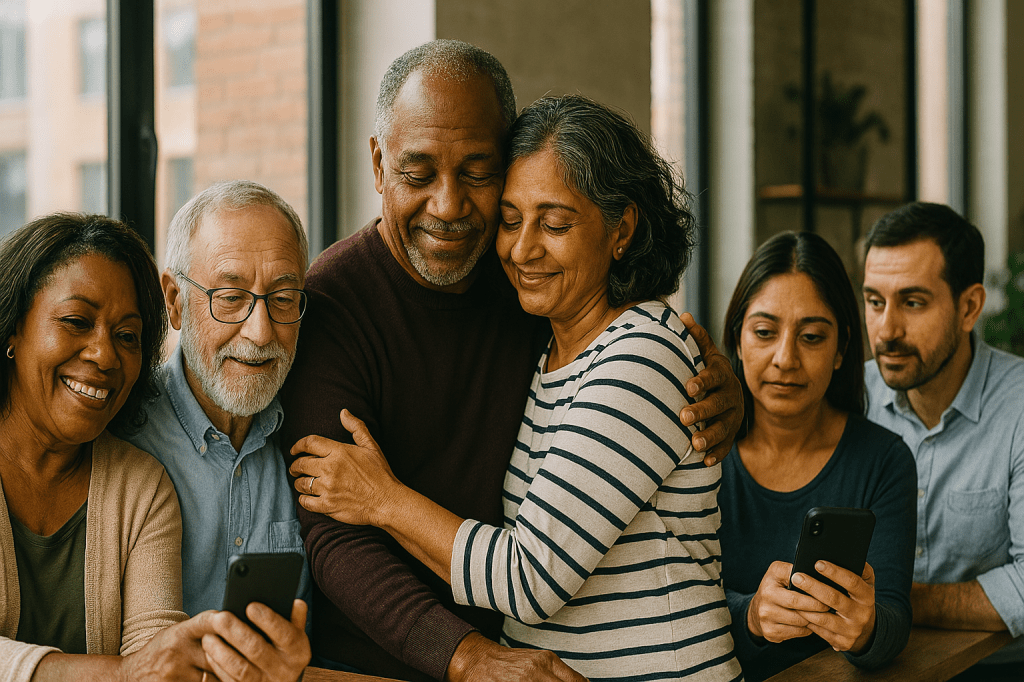
There’s been a lot of talk lately about “microcheating”, that nebulous zone between platonic friendship and outright infidelity that’s often fueled by digital intimacy. You’ve probably seen the headlines or heard a podcast warn you about the dangers of liking your ex’s selfie or texting a coworker late at night. Critics point to social media as the villain, a tool for secret flirtations and emotional betrayal, but let’s take a breath and be honest; people have always had emotionally rich, complicated connections outside of their primary partnerships. We just used to call them something else.

Take, for example, the decades-old concept of the “work wife” or “work husband.” Long before we were DM’ing heart emojis or watching each other’s stories on Instagram, we were confiding in coworkers, sharing emotional labor, cracking inside jokes, and supporting each other through the grind of daily life. These relationships have always lived in a gray area, close enough to be intimate, but generally understood to stop short of romantic or sexual; and yet, we largely accepted them as harmless, even beneficial. We chuckled at the idea of having “two spouses”, one at home, and one who understands your work stress better than anyone else. No one called it microcheating back then, it was just life.

The moral panic around microcheating today says more about our evolving discomfort with complexity than it does about the relationships themselves. In a world that’s increasingly networked, emotionally porous, and socially dynamic, we are clinging to a monogamous template that often doesn’t serve how we actually live or love. When people form emotional attachments through social media, or deepen their connections with someone outside their marriage, the problem isn’t necessarily the connection, it’s the secrecy, the shame, the absence of clear agreements. If anything, these “infractions” point to a need for more openness, more dialogue, and more room for complexity in how we relate to each other.

As someone who supports and lives polyamory, believing that humans are naturally wired for multiple meaningful relationships, I find it fascinating how society polices these invisible lines. Why is it okay to rely on your “work husband” for emotional validation every day, but suspicious if you develop a deep bond with someone online? Why is one seen as harmless routine, and the other as emotional betrayal? It often comes down to how much control we believe we’re entitled to exert over our partners’ inner lives. Frankly, that control is rarely about love, it’s often more about fear.

The truth is, what is being called microcheating is a symptom of a culture that wants the emotional richness of multiple connections, but refuses to grant itself the language or permission to explore them consciously. People are starving for intimacy, for shared secrets, for someone who listens without judgment. They find it where they can, sometimes in a DM thread, sometimes across the break room coffee machine. Rather than pathologizing these relationships, we should be making space for them. We should be encouraging couples, and moresomes, to talk about what kinds of emotional connections they’re open to, what boundaries feel respectful, and how to share space without falling into surveillance or possessiveness.

In polyamorous circles, we understand that love and connection aren’t zero-sum. My emotional intimacy with one person doesn’t diminish what I share with another, rather it expands my capacity. So when I see the hysteria over someone maintaining a friendship that’s “too close,” I wonder, what would change if we trusted each other more? If we understood that our partners are complex, full-hearted beings who may love more than one person deeply, and that’s not a threat, but a gift?

The rise of microcheating discourse reflects a growing tension between our social conditioning, and our relational reality. Maybe instead of drawing stricter lines, we should be blurring them with intention. Naming the feelings! Creating agreements! Inviting more truth into the room, because whether it’s a work spouse, an online confidante, or someone you just really vibe with over coffee, there’s nothing inherently wrong with emotional closeness. What matters is the integrity with which we hold it.

Attachment Styles: A Pigeonhole for Every Relationship Problem

I wrote this piece in response to a comment from one of my readers.  I hope they like it; it’s a follow up on the post “A Pigeonhole for Every Personality” 

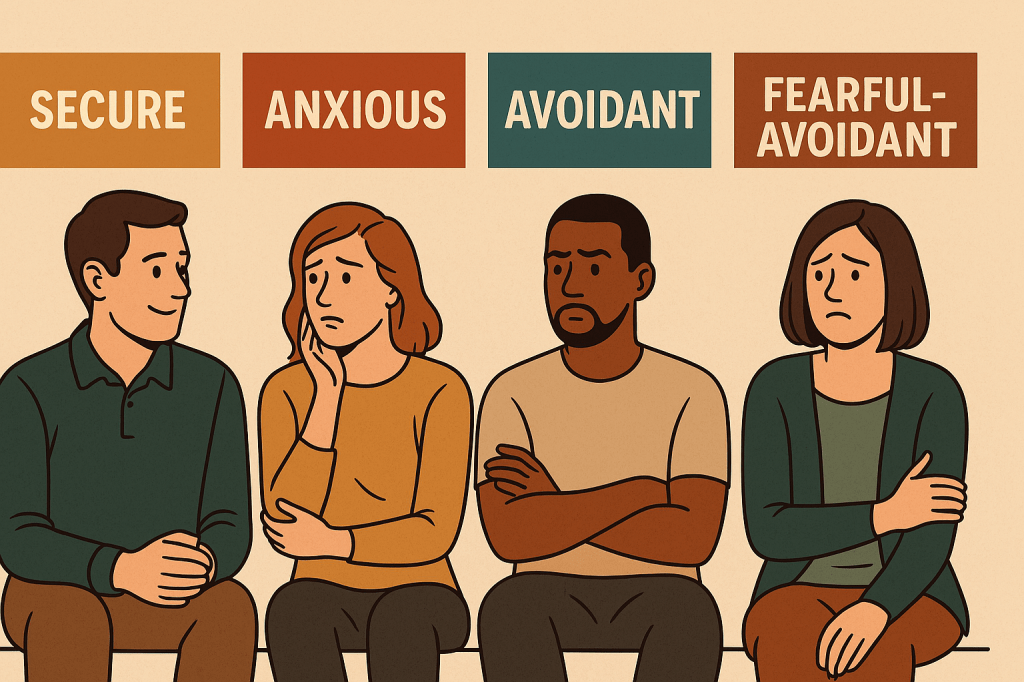
If there’s one thing western society loves almost as much as personality tests, it’s diagnosing relationship dynamics with attachment styles. Suddenly, every awkward text message delay, every weird argument over who forgot to buy oat milk, and every vague feeling of existential dread about love can be neatly categorized into one of four labels: SecureAnxiousAvoidant, or the truly thrilling combo package—Fearful-Avoidant.

It’s like the Myers-Briggs of romance, except instead of deciding whether you’re an introvert or extrovert, you get to figure out whether you cling to your partner like a koala in a windstorm, or bolt for the door the second someone gets emotionally vulnerable.

The concept of attachment styles comes from psychologist John Bowlby, who first theorized that the way we bonded with our caregivers as infants shapes how we approach relationships in adulthood. Sounds reasonable, right? But the internet has turned this into an all-consuming diagnostic tool, where every failed romance is either the fault of an anxious partner texting too much or an avoidant partner texting… never.

The Pigeonholes of Love
Let’s start with the holy grail: Secure Attachment. If you have this, congratulations! You are a unicorn. You text back promptly, communicate your needs like a functional adult, and somehow don’t panic when your partner asks, “Hey, can we talk?” You were probably raised by parents who hugged you at the right times, and never forgot to pick you up from soccer practice. The rest of us admire you, resent you a little, and assume you exist mostly in fiction.

Then there’s Anxious Attachment, a.k.a. the Overthinker’s Club. These are the people who send, “Hey, everything okay?” when you don’t respond within 15 minutes, then follow up with, “Sorry, never mind, ignore me,” followed by, “Actually, I just wanted to check in,” and finally, “I guess you hate me now.” They crave closeness, but also kind of expect to be abandoned at any moment, which makes dating them an emotional rollercoaster with no seatbelts.

On the flip side, we have Avoidant Attachment, the poster child for ghosting. These folks see a heartfelt emotional conversation the way most people see an unsolicited call from their car insurance provider: something to be avoided at all costs. Their love language is “mysterious silence” and they’d rather disappear into the woods than have a deep talk about feelings. Commitment feels suffocating, which is why they often end up dating people with anxious attachment, because nothing says “healthy relationship” like one person desperately clinging, and the other desperately pulling away.

And then, for the truly chaotic, we have Fearful-Avoidant Attachment, also known as “Anxious and Avoidant, Because Why Not?” These individuals desperately want connection but also deeply fear it, making every relationship a high-stakes game of emotional Jenga. They text “I miss you” and then immediately throw their phone into the sea. They want love, but also, love is terrifying. It’s exhausting for everyone involved.

Escaping the Labels
Like every other personality test, attachment styles are useful, until they become a life sentence. Sure, maybe your childhood shaped your relationship habits, but that doesn’t mean you’re doomed to spend eternity analyzing your texts like a forensic scientist. People can change, grow, and even, brace yourself, go to therapy.

So, the next time someone tells you they’re anxiously attached or avoidantly wired, smile, nod, and remember;  nobody fits neatly into a box. Except maybe Secure people. But honestly, who trusts them?

A Pigeonhole for Every Personality

Have you noticed how obsessed western society is with pigeonholing people into neat little personality categories? From zodiac signs to Myers-Briggs types, it seems we can’t rest until we’ve crammed ourselves, and everyone else, into a box labeled with letters, numbers, or vague, semi-mystical descriptors. Aries male? Oh, you must be stubborn and impulsive. ENFP? Wow, you’re totally creative and scatterbrained. Big Five score leaning high in agreeableness? People-pleaser alert!

And yet, here I stand, a man who simply cannot be boxed. Yes, yes! We all think that! Whenever I take the Myers-Briggs test, my Introvert/Extrovert (I/E) score hovers awkwardly in the middle, waffling like a hungover short-order cook. “You’re not answering honestly,” the test experts claim. Well, excuse me for periodically liking a quiet evening at home and the occasional raucous dinner party. I’m sorry my human complexity doesn’t fit neatly into your binary little grid.

So, after decades of this existential crisis, I’ve decided to take matters into my own hands. I’ve created a new label for myself: ANTJ. It stands for “Ambivert (Neither This nor That Junkie),” and it’s a perfect match for my 60-plus years of observational data. An ANTJ thrives on ambiguity, refuses to commit to being either an introvert or extrovert, and gleefully resists every attempt to pigeonhole them.

The world’s addiction to personality tests doesn’t stop at Myers-Briggs. The Enneagram insists we’re all one of nine archetypes, like “The Helper” or “The Achiever,” while the DISC assessment asks whether we’re more “dominant” or “conscientious.” Gallup’s StrengthsFinder suggests that some of us are “Woo” types (which, hilariously, stands for Winning Others Over—basically extroverts on steroids). Even HEXACO dives deep into whether we score high on “honesty-humility.”

But here’s the kicker: these labels are treated like gospel. Once you’ve slapped on your type, whether you’re a “Type 7 Enthusiast” or an “Analytical Green”, you’re expected to live your life accordingly. Changing? Growing? Evolving? Don’t you dare! You’re an Aries male, so start yelling at someone, whilst buying a motorcycle already.

Frankly, I refuse to play along. I’m an ANTJ, a free agent in the world of personality classification. Want me to be outgoing? Sure, I’ll host a dinner party with great wine and bad karaoke. Want me to be introspective? Absolutely, and I’ll write you a heartfelt essay about it afterward.

So, to my fellow fence-sitters, I say this: embrace the waffle. Be an ANTJ, a proud dweller of the in-between. Just don’t let anyone box you in, or worse, force you to buy a subscription to yet another fucking personality test.

The Library in My Mind: How I Built a Memory Palace

Back in the late ‘80s, while waiting for my security clearance, the UK government put me through a variety of training courses – everything from project management and information technology to people skills. One of the more intriguing courses focused on building a library-style memory palace, a way to organize and recall information by mentally structuring it like a library. The idea of turning my mind into a well-ordered archive fascinated me – each piece of knowledge neatly stored and easily retrievable.

This technique has deep historical roots. It’s often traced back to Simonides of Ceos, a Greek poet from the 5th century BCE. According to legend, Simonides was called outside during a banquet, and while he was away, the building collapsed, killing everyone inside. The bodies were unrecognizable, but he realized he could recall exactly where each guest had been seated. This discovery led to the idea that spatial memory could be used as a structured recall system. The method was later refined by Roman orators like Cicero, who mentally placed key points of their speeches within familiar spaces and retrieved them by “walking” through those locations in their minds. Monks and scholars in the Middle Ages adapted the technique for memorizing religious texts and legal codes, and today, it’s still widely used – by memory champions, actors, lawyers, and even fictional detectives like Sherlock Holmes.

Inspired by this, I built my own mental library. I imagined a grand study—towering bookshelves, stained-glass windows, and a long oak table at the center. To stay organized, I divided it into sections: science, history, philosophy, personal experiences, and creative ideas. Each book represented a concept, placed where I could easily “find” it when needed.

At first, it felt awkward, like navigating an unfamiliar house. To train myself, I spent a few minutes each day mentally walking through the space, reinforcing connections. I used vivid imagery – a glowing tome for quantum physics, a worn parchment for ancient history. Storytelling also helped. I imagined Einstein seated in the physics section, Shakespeare near literature, and a wise, hooded monk in philosophy. When I struggled to recall something, I’d “ask” them, making the process more interactive.

Before long, the system became second nature. When writing, I could mentally browse my research shelves without flipping through endless notes. Before discussions, I’d “walk” through key sections to refresh my memory. Even decision-making improved – I’d place pros and cons in different areas and “see” them from multiple perspectives before making a choice.

The best part? My library keeps evolving. I add new shelves, reorganize sections, and revise old knowledge as I learn. It’s a living system, shaping the way I think and process information.

This isn’t a technique reserved for scholars or memory champions. Anyone can build a mental library, whether for learning, storytelling, or just keeping thoughts in order. With a little practice, it becomes second nature – a space you can visit anytime, where knowledge is always at your fingertips.

The Often Hidden, and Misunderstood Dominant/submissive Dynamic in Human Relationships

At the core of every human interaction lies a subtle dance of power and vulnerability – a dynamic of dominance and submission. This concept, while often misunderstood or dismissed, is deeply embedded in the way we connect with one another, influencing everything from romantic relationships to professional interactions and even friendships. It’s not always about control or acquiescence in the traditional sense, but about the ebb and flow of influence, support, and leadership.

The Universal Nature of Power Dynamics
Power dynamics exist on a spectrum, manifesting in ways both explicit and implicit. In romantic partnerships, for instance, one partner might naturally take the lead in decision-making or planning, while the other might shine in nurturing emotional intimacy. Neither role is inherently superior – both are essential to a healthy balance. This interplay isn’t about domination in a harsh sense; it’s about trust. Submission, in this context, is a choice to yield or follow, often driven by respect for the other’s strengths.

Even in friendships, these dynamics are present. Think about your closest friends: Is there someone who often initiates plans or provides guidance when you’re struggling? Conversely, is there someone who seeks comfort or advice from you? These roles might shift over time or depend on the situation, but the dynamic persists.

Why Dominance and Submission Are Not Always About Control
Dominance often carries a negative connotation, evoking images of manipulation or authoritarian behavior. But in healthy dynamics, dominance is less about control and more about leadership, confidence, or decisiveness. Similarly, submission isn’t about weakness—it’s about trust, vulnerability, and the willingness to let someone else take the reins when appropriate.

Consider a workplace setting. A manager might take on the dominant role by providing direction, while employees adopt a submissive role by following that direction to achieve shared goals. However, a good manager also knows when to step back and listen, showing that dominance and submission are situational and reciprocal.

The Fluidity of These Roles
The most successful relationships – romantic, platonic, or professional – are those where dominance and submission flow naturally and aren’t rigidly fixed. A romantic partner who typically leads financially might lean on their counterpart for emotional stability. A friend who usually gives advice might need a shoulder to cry on. Recognizing this fluidity allows for deeper, more authentic connections because each person feels valued for their unique contributions.

The Pitfalls of Imbalance
Problems arise when one person perpetually dominates or perpetually submits, leaving no room for reciprocity. An overly dominant person may come across as controlling or dismissive, while an overly submissive person may lose their sense of self or feel unfulfilled. Healthy dynamics require mutual respect, clear communication, and a willingness to adapt to each other’s needs.

Embracing the Dynamic
Recognizing the Dominance/submission dynamic in your relationships doesn’t mean you need to label or overanalyze every interaction. Instead, it’s an opportunity to better understand yourself and the people around you. Who tends to take charge, and in what situations? When do you feel most comfortable leading, and when do you find strength in stepping back?

Ultimately, this dynamic is not about power for its own sake – it’s about balance. Every human connection thrives on give-and-take, on moments of leadership and surrender. Embracing this truth can help you build deeper, more meaningful relationships grounded in trust, respect, and mutual support.

In what areas of your life do you see this dynamic at play?

The World is Big, But Not That Big

We’ve all heard the stories, someone flies halfway across the world, wanders into a famous landmark, and suddenly hears their name being called. They turn around, and there’s an old friend, a former coworker, or even a distant cousin grinning back at them. 

It’s happened to me, on the steps of Sydney Opera House, where I bumped into an old college friend, and again in Washington D.C., while wandering around the Air and Space Museum. What are the odds? Well, higher than you might think.

The thing about the world’s top travel destinations is that they are, by definition, magnets for people just like you—curious, adventurous, and eager to soak in the sights. Whether it’s the Eiffel Tower, Times Square, or the Great Wall of China, these places attract millions every year. If you and your friends share even vaguely similar travel dreams, it’s not so surprising that your paths might cross in one of these iconic spots.

Think about it. Travel is often dictated by a handful of factors—school holidays, peak vacation seasons, and well-worn routes recommended by guidebooks and influencers. When you consider that most people take trips during long weekends, summer breaks, or major holidays, it becomes even more likely that someone you know is wandering the same bustling streets or snapping a selfie at the same lookout point.

Social media has also played its part in shaping our collective wanderlust. A well-timed Instagram post of Santorini’s blue domes or the sunrise over Angkor Wat can send a ripple effect through your social circle. Before you know it, three of your acquaintances have booked their own trips, each unknowingly setting themselves up for a coincidental reunion abroad.

But here’s the best part—none of this happens if you don’t put yourself out there. You won’t have a serendipitous encounter in the Piazza San Marco if you never leave your living room. You won’t bump into your college roommate in Tokyo’s Shibuya Crossing if you never take the plunge and book the flight. Travel isn’t just about seeing the world—it’s about being in it, fully immersed, and sometimes that means reconnecting with familiar faces in the most unexpected places.

So, if you’re hesitating to plan that trip because you think the world is too vast, take this as a sign. It’s big, yes, but it’s also small in the most magical ways. Pack your bags, set off on your adventure, and don’t be too surprised if, somewhere along the way, you hear a voice calling your name in the middle of a crowded street in Rome. It’s just one of travel’s little reminders that we’re all more connected than we think.

Living the SoPoRA Life: A Light-Hearted Take on Choosing Autonomy

Ever feel like your life is an endless RSVP? Invitations roll in: “Come to this event! Join me for that activity! Let’s grab a drink!” It’s lovely to be included, truly. But what’s less lovely are the interrogations that follow when I politely decline.

“What are you doing instead?”
“Are you feeling okay?”
“Wait… who’s more important than me?”

Ah, the joys of boundary-setting in a world that thrives on FOMO and social expectations.

This isn’t my first rodeo with the honesty vs. transparency debate, but today I want to shift the focus. It’s not about what I say to others – it’s about how I choose to live my daily life. For me, it’s far simpler (and far more satisfying) to opt in when I genuinely want to connect than to constantly opt out to preserve my space.

If the world were a little more straightforward, I’d label my lifestyle as that of a Solo Polyamorous Relationship Anarchist (or SoPoRA for short). What does that mean? It’s a big mouthful, sure, but at its core, it’s a fancy way of saying I value my autonomy and independence while cherishing meaningful, non-hierarchical connections with others.

Solo Polyamory is all about embracing the beauty of being my own primary partner, while maintaining multiple, consensual relationships. It’s not about having less love – it’s about loving without turning my life into a game of musical chairs, where one partner automatically claims the “primary” seat.

And Relationship Anarchism? That’s the freedom to reject societal scripts about how relationships should work. No automatic rankings of romantic partners above friends. No forcing connections into neat little boxes labeled “partner,” “friend,” or “fling.” Instead, each relationship is uniquely crafted based on mutual agreement and organic growth.

Now, before you picture me as some lone wolf prowling around in emotional isolation, let me clarify: this choice doesn’t mean I don’t value connection – it just means I thrive on creating it without compromising my independence. 

But what this looks like practically, I hear you ask? Well, I love my space – my home is my sanctuary, and it’s where I recharge. I set firm personal boundaries to maintain my autonomy – this isn’t selfish – it’s self-care. Communication is my superpower – I prioritize honesty, consent, and mutual understanding with anyone I’m involved with.

Solo Polyamory and Relationship Anarchism require a level of self-awareness and emotional intelligence that can feel like a full-time job some days. But the rewards? Oh, they’re worth it. There’s a joy in living authentically, in crafting connections that adapt as people grow, and in knowing every “yes” you give is genuine.

So, the next time I politely decline an invitation, know this: it’s not about you. It’s about me choosing to live a life that feels full, free, and fulfilling – one beautifully crafted, consensual connection at a time.

The Social and Financial Case Supporting Independent Community Hospices

When it comes to end-of-life care, the importance of community hospices cannot be overstated. These facilities offer patient-centered care that prioritizes comfort, dignity, and the autonomy of individuals nearing the end of life. Historically, religious and hospital-affiliated hospices have played significant roles in providing this care. However, these institutions often come with ideological or institutional restrictions that can limit patients’ options, especially for those seeking Medical Assistance in Dying (MAID). Independent community hospices fill this crucial gap, offering inclusive, secular, and comprehensive services that respect the diverse needs and choices of patients.

The growing divide between hospitals and hospices highlights the critical role that independent hospices play in our healthcare system. While hospitals are designed to handle acute medical needs, they are often ill-equipped to provide the holistic, compassionate care that terminal patients require. This mismatch puts a strain on both the hospital system and patients. When hospices are underfunded or unavailable, hospitals become overburdened, diverting resources from acute care and struggling to meet the specialized needs of terminally ill patients. Independent community hospices help alleviate this burden by providing dedicated, specialized care for end-of-life patients, allowing hospitals to focus on their primary mission of acute care.

A key issue that continues to hinder hospice care is funding. In Ontario, the cost of operating a hospice bed is far less than that of a critical care hospital bed, reflecting the differences in care intensity and resource demands. The daily cost of a hospice bed ranges from $439 to $628, a price that is subsidized through community donations, as government funding typically covers only 60% of expenses. This is a stark contrast to the significantly higher costs of hospital care. For instance, an ICU bed in Canada averages around $3,500 per day, while the cost of a general hospital ward ranges from $850 to $1,100 per day. This significant financial disparity underscores the cost-effectiveness of hospice care, which offers a more home-like environment at a fraction of the expense associated with hospital-based critical care.

In Ontario, many palliative care patients still die in hospitals, with over 52% of deaths occurring in hospital settings in 2017/18. The average length of stay for palliative patients in these settings is around 13.5 days. If a significant portion of these patients were transitioned to independent hospices, the potential cost savings could be substantial – reaching millions of dollars annually. This not only speaks to the financial efficiency of hospices, but also to the human side of the equation: patients would have the opportunity to spend their final days in a setting that better aligns with their personal values and comfort.

Another compelling reason to support independent hospices is their commitment to inclusivity. Religious-affiliated facilities, while providing valuable care, may impose beliefs that do not align with all patients’ values, potentially alienating those from different backgrounds. Independent hospices, however, embrace Canada’s rich cultural and spiritual diversity, ensuring that all patients receive care that is free of judgment and tailored to their personal wishes. For rural and underserved populations, these hospices help reduce barriers to access, ensuring that equitable care is available to those who may otherwise face challenges in receiving it due to geographic or institutional constraints.

The case for investing in independent community hospices is both an economic and moral imperative. Not only do these facilities provide compassionate, patient-centered care, but they also offer a more affordable alternative to hospital-based care, ease the strain on hospitals, and ensure that patients’ right to choose is respected. It is essential for both governments and communities to prioritize the development and funding of independent hospices, ensuring that end-of-life care remains dignified, accessible, and inclusive for all Canadians.

Do Dyed Blondes Have More Fun?

Ah, the age-old question: are blondes really living in a world of carefree bliss, or are we all just projecting our insecurities onto peroxide and highlights? Writing about this without sounding like an incel, a beta male, or someone too deeply invested in hair dye chemistry is no small feat. Yet, here we are, embarking on what might be less a quest for answers, and more an exercise in rhetorical hair-splitting.

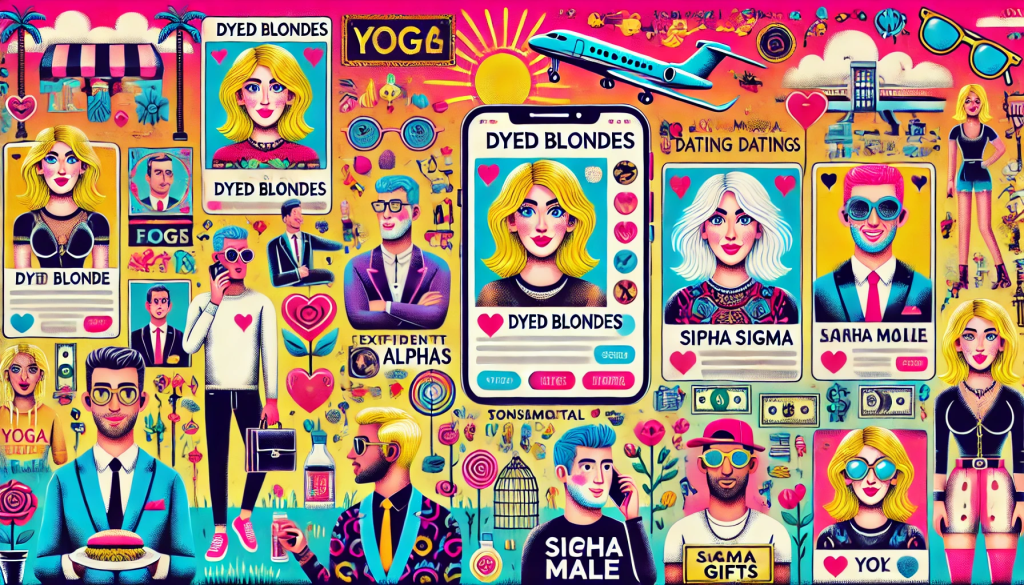
Let’s start with dating apps – a modern battlefield of swipes and signals. Among the throngs of thumbnails, dyed blondes seem to project an aura of exclusivity, their profiles brimming with criteria that could rival a job application. Are they filtering for quality, or are we mere mortals simply grappling with a complex about their sun-kissed manes? If my success rate at guessing their dating parameters is any indication – 19 out of 20, for those keeping score – it’s safe to say there’s a pattern. Dyed blondes often seek monogamous, long-term relationships with a healthy side of yoga, financial security, and vacation photos fit for Instagram.

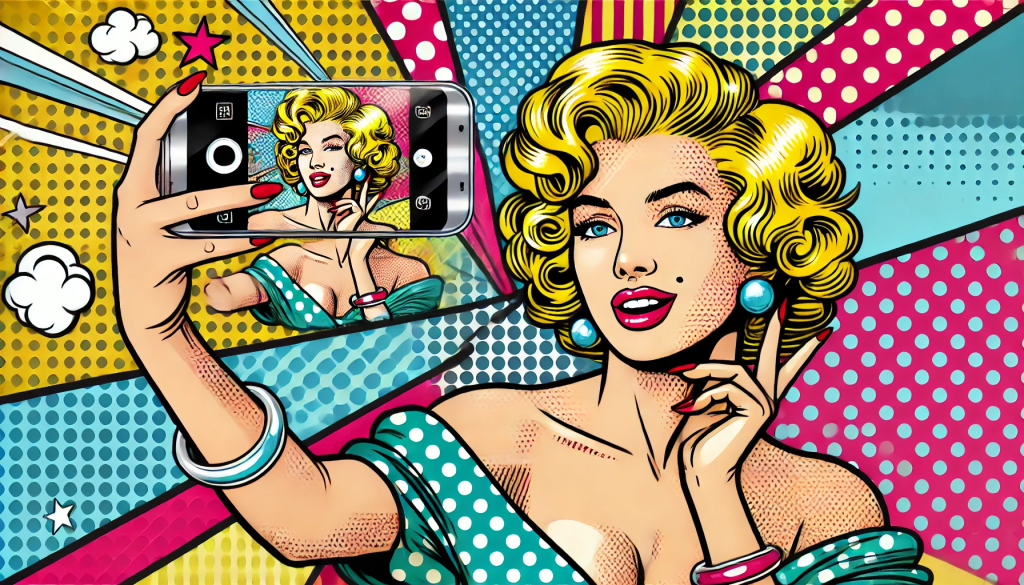
But here’s the real question: does their hair color influence their attitude? Are dyed blondes subconsciously channeling the remnants of Hollywood’s golden era when Marilyn reigned supreme? Or is blonde ambition simply a reflection of modern dating demands? Personally, I’ll take a redhead – natural or otherwise – any day, or even a creative shade of green, purple, or the noble dignity of natural gray.

Social media, of course, only stirs the pot. Take the “relationship expert” I’ve been observing—a dyed blonde, single mom in her early 30s, who doles out mononormative dating advice with the fervor of a self-proclaimed guru. Her brand is a blend of retrograde toxic masculinity, and transactional dating. With her newly enhanced assets, and a steady stream of high-profile suitors, she’s a case study in leveraging appearance for clout. It’s a spectacle to watch her bounce from Latin entrepreneurs to American bankers, her love life resetting every six to eight weeks. One wonders if she’s truly looking for love, or just excellent brand engagement.

Which brings us back to the blonde mystique: is there really a hierarchy of hair color? And if blondes are at the top, why aren’t they everywhere? While living in California, I was often asked by European friends, “Where are all the leggy blondes from the movies?” The reality, in tech-heavy Silicon Valley, leaned brunette, due mainly to the large Asian and Latin presence, with blonde sightings limited to the occasional intellectual property lawyer who, interestingly, also subscribed to the “if you want my time, pay for it” school of thought.

A friend in Montreal read an early draft of this piece and called me out for not showcasing my feminist credentials. She reminded me of her gray-haired friend, who used to be a dyed blonde, who faced male criticism for the change, but received overwhelming support from women for embracing her natural look. She also highlighted the rise of transactional dating, where “gold digging” is less taboo, and more a strategic career choice.

So, perhaps I’ve had this all wrong. Maybe it’s not that dyed blondes feel superior, but that men create the demand by fetishizing the hair color. Women, ever the astute adapters, respond accordingly. If dyed blondes are the aspirational choice for Alpha males chasing society’s markers of success, they’re simply playing to the market. And if, as a self-declared Sigma male, I prefer intelligence and curiosity over Instagram-ready jet-setting, I should be grateful for the self-selection happening on dating sites.

As for our social media influencer, she’s gone chestnut red since her latest breakup. Perhaps she’s starting her own rebellion against the hierarchy, or maybe she’s just running an A/B test on hair color ROI. Either way, it seems dyed blondes are navigating a complex world of expectations – just like the rest of us.

Stay tuned for the next post, where we tackle transactional dating, shifting power dynamics, and the role of social media in modern romance. For now, let’s toast to the dyed blondes, of all genders, who keep the world guessing – and swiping.