The Brexit Quagmire: Britain’s Long March to Nowhere

I wrote this piece a while back when it became clear that the Labour government wasn’t going to acknowledge the mess that Brexit has left the country, and then planning on doing something about it.  

It’s been more than eight years since the UK voted to leave the European Union, and the country remains tangled in the wreckage of that decision. Those who championed Brexit—promising economic renewal, restored sovereignty, and an end to Brussels’ supposed meddling—have either slunk away from public life or now conveniently blame everything, but Brexit itself, for the country’s dismal state. Meanwhile, the UK economy limps along, its political class is in shambles, and its global standing is diminished.

Let’s start with the economy. The Office for Budget Responsibility (OBR) has repeatedly confirmed that Brexit has shaved at least 4% off the UK’s GDP—a staggering hit equivalent to the cost of COVID-19, but without the excuse of a global pandemic. Investment has stalled, businesses struggle with trade barriers, and the labour market is in disarray. The much-touted trade deals—supposedly the jewels of an independent Britain—have been underwhelming at best. The Australia deal, for example, was so lopsided that even its Conservative architect, George Eustice, admitted it was a mistake.

Meanwhile, Britain’s political leadership is paralysed by the Brexit-induced culture war that still defines Tory policy. Rishi Sunak, the latest in a conveyor belt of weak Conservative prime ministers, finds himself hostage to the hard-right fringes of his party, who still cling to Brexit as a nationalist totem. Labour, under Keir Starmer, tiptoes around the issue, unwilling to reopen old wounds but acutely aware that Brexit is a disaster.

And then there’s Northern Ireland. The supposed “solution” to the Brexit border dilemma—the Windsor Framework—hasn’t ended unionist resentment or calmed the waters. Businesses in Northern Ireland enjoy a unique advantage of dual access to UK and EU markets, but politically, the province remains deeply fractured. The Democratic Unionist Party (DUP) continues to throw tantrums over Brexit’s impact, while the broader UK-EU relationship remains one of managed hostility rather than genuine partnership.

In short, Britain is poorer, politically broken, and increasingly irrelevant on the world stage. The great post-Brexit “Global Britain” experiment has failed, leaving a country adrift, governed by a party unable to admit its mistakes and an opposition too cautious to offer real alternatives. And yet, despite mounting evidence of economic self-harm, Brexit remains a political third rail. No major party dares to say what most people now quietly accept: Brexit was a colossal error, and the UK is paying the price.

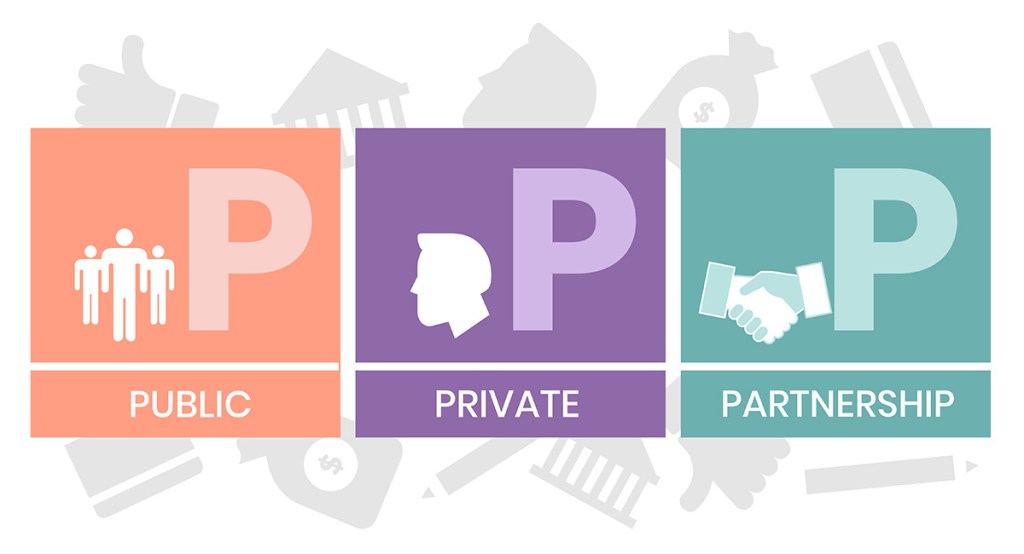
Public-Private Partnerships: A Disaster For Tax Payers?  

Public-Private Partnerships (P3) are often presented as an optimal solution for improving public services through private sector efficiency and innovation. However, the reality frequently falls short of this ideal. Critics argue that P3 can lead to a lack of accountability and transparency, increased costs, and social inequality. These issues are not merely theoretical; real-world examples demonstrate the substantial risks and failures associated with the P3 model.

The Public-Private Partnership  between the City of Ottawa and the Ottawa Sports and Entertainment Group (OSEG) concerning the Lansdowne complex has faced criticism over financial, planning, and public engagement issues.

One of the most significant criticisms of P3 is the lack of accountability and transparency. Private companies, driven primarily by profit, may prioritize financial returns over public welfare. This conflict of interest can lead to cost overruns and poor service delivery. The United Kingdom’s National Audit Office (NAO) highlighted this issue in its report on the Private Finance Initiative (PFI) and PF2 projects. According to the NAO, privately financed public projects often result in higher costs and offer less value for money compared to traditional public sector financing. For instance, the NAO found that hospitals built under PFI schemes were significantly more expensive than those funded directly by the government, burdening taxpayers with long-term financial obligations.

PPPs can exacerbate social inequality by shifting the focus from universal access to profitability. In sectors like healthcare, education, and transportation, this shift can lead to the exclusion of low-income populations. A World Bank study on P3s in the health sector in low-income countries revealed that these partnerships often resulted in higher costs for patients. This increase in costs limited access to essential health services for the poorest segments of society. For example, in Lesotho, a P3 hospital project led by a private consortium resulted in costs that were three times higher than those of other public hospitals, severely straining the country’s health budget and limiting access for the poorest citizens.

Another critical issue with P3s is the potential undermining of public sector capabilities. When private companies take over roles traditionally filled by the government, there is a risk of eroding public sector skills and capacities. This dependency can make it difficult for the public sector to resume these roles in the future. The International Monetary Fund (IMF) has warned that P3s, if not carefully managed, can result in significant contingent liabilities for governments, potentially leading to fiscal instability. The case of the Jakarta Water Supply in Indonesia is a prime example. The P3 aimed to improve water services, but led to a deterioration in service quality and increased tariffs, while the private operators failed to meet investment targets. Eventually, the government had to take back control, illustrating the pitfalls of eroded public sector capabilities and the financial burden of failed partnerships.

The long-term contracts typical of P3s can limit future policy flexibility. Governments may find themselves locked into agreements that do not adapt well to changing public needs or economic conditions. This rigidity can stifle innovation and responsiveness, which are essential for effective public service delivery. The Melbourne CityLink in Australia exemplifies this problem. The toll road project involved a long-term contract that included compensation clauses if competing infrastructure reduced toll revenues. This agreement restricted the government’s ability to develop alternative transportation solutions, illustrating how PPPs can constrain public policy and innovation.

While P3s promise increased efficiency and innovation, they often fall short in practice. Higher costs, reduced access to services, diminished public sector capacity, and inflexibility in policy making are common issues. It is crucial to critically assess the implications of P3s before embracing this model for public service delivery, ensuring that public interests remain paramount.

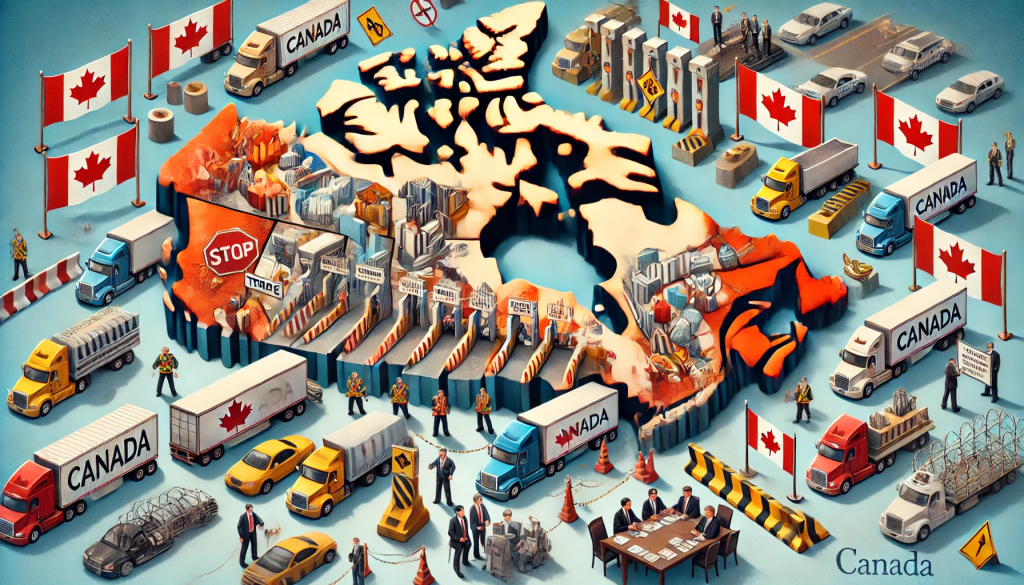
Breaking Down Barriers: The Push for a Truly Unified Canadian Market

Pierre Poilievre has finally proposed a plan to address the Trump administration’s February 2025 tariffs, seemingly based on an International Monetary Fund (IMF) report. This raises the question: what progress has Canada made on internal trade barriers in response to the IMF’s findings, and what still needs to be done?

Over the past five years, Canada has tackled some of the regulatory and geographic hurdles that have long hindered economic efficiency. The 2019 IMF report highlighted these four barriers—regulatory fragmentation, restrictive provincial controls on goods like alcohol, technical inconsistencies in industry standards, and vast geographic challenges. While reforms have occurred, largely under the Canadian Free Trade Agreement (CFTA), major inefficiencies remain.

The COVID-19 pandemic underscored the fragility of Canada’s fragmented market, prompting temporary regulatory flexibility. Licensing restrictions were eased for healthcare workers, and supply chain barriers were lifted to prevent shortages. This period proved that interprovincial trade barriers could be swiftly reduced when necessary. Yet, once the crisis subsided, most provinces reinstated pre-pandemic restrictions, missing an opportunity for lasting reform.

The CFTA, in place since 2017, has encouraged regulatory alignment, particularly in vehicle weight standards, and professional certifications. However, progress has been slow, with key industries such as construction, trucking, and food processing still burdened by differing provincial rules. One of the more visible steps forward has been the relaxation of alcohol trade restrictions. In 2018, provincial premiers agreed to lift some limits on interprovincial alcohol transportation, while trying to address the mixed market of monopolistic liquor boards and private sector businesses. 

The economic potential of eliminating these barriers is staggering. A report commissioned by Alberta’s government found that mutual recognition across provinces could boost GDP by up to 7.9%, adding as much as $200 billion annually. Internal Trade Minister Anita Anand reinforced this in a January 2025 CBC interview, stating that reducing trade barriers “could lower prices by up to 15 per cent, boost productivity by up to seven per cent, and add up to $200 billion to the domestic economy.” Yet, political inertia and regional protectionism have stalled deeper reforms.

In the short to medium term, Canada must prioritize mutual recognition agreements to streamline licensing and regulatory requirements. The construction industry, for example, faces costly delays due to inconsistent building codes across provinces—an easily fixable issue. Beyond regulatory alignment, reducing paperwork and red tape, particularly for small and medium-sized enterprises, would remove unnecessary friction from the system. A Federal-Provincial-Territorial (FPT) taskforce focused on simplifying these processes, combined with digital infrastructure investments for e-licensing, could provide meaningful relief.

Addressing natural barriers is a longer-term challenge, but progress is possible. Expanding interprovincial transportation networks and improving digital connectivity in rural areas would allow businesses to access larger markets more efficiently.

Ultimately, Canada needs sustained political will to drive internal trade reform. While agreements like the CFTA have laid the groundwork, stronger enforcement mechanisms, and a shift away from provincial protectionism are required. If provinces remain uncooperative, federal intervention may become necessary to unlock the full economic potential of a truly open market. Canada cannot afford to let bureaucratic inertia continue to suppress its economic growth.

The Power of AgriFood Supply Management: Protecting Canadian Grocery Costs

Canada’s supply management system for dairy, poultry, and eggs is about to prove its worth as U.S. tariffs threaten to drive up food prices across the country. Unlike the free-market volatility seen in other parts of the grocery sector, supply-managed goods benefit from a carefully controlled production and pricing system that shields both farmers and consumers from external shocks. While some food categories, particularly those reliant on global trade, are expected to see price hikes due to shifting tariff policies, supply management will help ensure that Canadian shoppers don’t feel the full brunt of these disruptions when it comes to staples like milk, cheese, chicken, and eggs. This is part of the reason why the Bloc Québécois has been fighting to protect Canadian agrifood supply management from future trade negotiations with the U.S. 

At the heart of this system is production control, which ensures that Canadian farmers produce only as much as the domestic market demands. This prevents overproduction, which can drive prices down unsustainably, and underproduction, which leads to shortages and skyrocketing costs. By maintaining a predictable balance between supply and demand, Canada avoids the kind of dramatic price swings that often plague food markets when international trade is disrupted. If American producers face steep tariffs on their agricultural exports to Canada and Mexico, they will likely respond by raising production or looking for alternative markets, creating instability in global food supply chains. However, because Canada’s system prioritizes production for domestic consumption, our supply-managed sectors will be largely insulated from this volatility.

Another key advantage of this system is import restrictions, which limit how much foreign dairy, poultry, and eggs can enter the Canadian market. These restrictions act as a buffer, shielding the domestic food supply from sudden external price shocks. If U.S. tariffs make it more expensive for American farmers to produce and export their goods—whether due to higher costs for feed, fertilizers, equipment, or transportation—the price of their products will rise accordingly. But because Canada strictly controls how much foreign dairy and poultry can enter the market, these increases won’t directly impact the availability or affordability of Canadian supply-managed goods. While consumers in the U.S. could see price hikes on essential groceries due to their country’s changing trade policies, Canadian shoppers will find more stability in their supply-managed products.

Perhaps the most critical component of Canada’s approach is price regulation at the farm level, which guarantees that producers receive a fair, cost-based price for their goods. This system prevents the kind of unpredictable swings that occur in unregulated markets, where external factors like trade wars, economic downturns, or climate disruptions can send food prices soaring overnight. By ensuring that Canadian farmers earn a predictable and stable income, the system also reduces the likelihood of sudden price hikes at the grocery store. Even as global food markets react to U.S. tariffs with rising costs, supply-managed products will remain steady, providing much-needed price relief for Canadian households.

That’s not to say that supply management is a perfect shield against inflation. Many inputs required for farming—such as animal feed, fuel, transportation, and packaging—are still subject to global market forces, meaning that rising costs in these areas could indirectly influence retail prices. Additionally, supply management does not cover all food categories. Sectors like beef, pork, grains, and processed foods remain more exposed to international price fluctuations, meaning that consumers will still feel some of the effects of U.S. tariff policies. However, compared to a fully unregulated system, Canada’s approach offers a crucial layer of protection for both farmers and consumers.

As the impact of U.S. tariffs unfolds, Canadians may start to appreciate the stability that supply management provides. While some critics argue that the system limits consumer choice and keeps prices higher than they would be in a fully open market, the reality is that it prevents the extreme price fluctuations that can wreak havoc on household budgets. In uncertain economic times, a reliable and predictable food supply isn’t just a convenience—it’s a necessity. Canada’s supply management system ensures that, at least when it comes to dairy, eggs, and poultry, Canadian shoppers can count on consistent pricing, regardless of what happens in the broader global economy.

Made in Canada: Leveraging Transparency to Strengthen and Grow the Economy

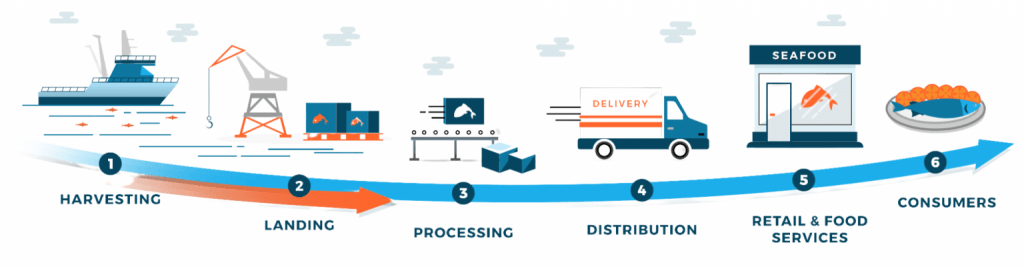
As a business consultant, I spent nearly two years managing the Canadian multi-livestock traceability project office in response to the BSE “mad cow” outbreak. Later, I became the first General Manager of the Canadian Livestock Identification Agency, helping to expand this approach nationally, and then with the aid of federal funding, pushed into Latin America,. What became clear was the transformative power of full value chain traceability. It not only opens doors to new markets, but also helps countries differentiate their products, and navigate technical and political trade barriers like tariffs.

For Canadian retailers and manufacturers, U.S. tariffs have long created challenges—raising costs, shrinking margins, and destabilizing cross-border trade. But technology offers a way to turn these obstacles into opportunities. Imagine a system where every Canadian product carries a scannable code revealing its value chain, from sourcing to production and even its environmental footprint. This transparency wouldn’t just empower consumers—it would give Canadian products a competitive edge by showcasing their quality, sustainability, and tariff-free origins.

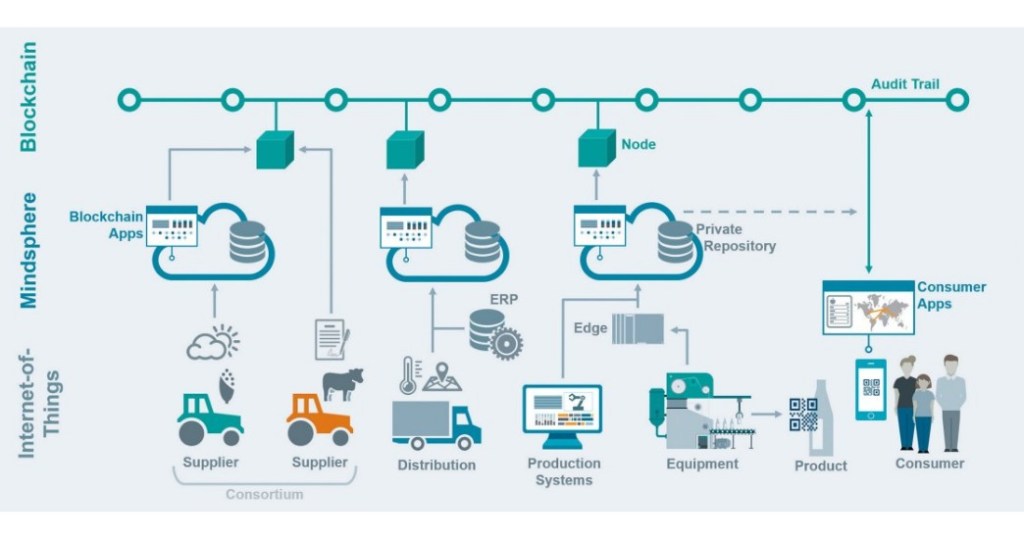
Traceability technology, backed by blockchain, makes this vision possible. By assigning every product a unique QR code or barcode, manufacturers could provide consumers with instant access to detailed information. A quick scan might show that a product was made in Canada, outline ethical practices in its supply chain, and even display its carbon footprint. Such transparency doesn’t just satisfy curiosity—it allows consumers to align purchases with their values, all while supporting the Canadian economy.

Blockchain adds an essential layer of trust to this system. Unlike traditional databases, blockchain technology is inherently secure, creating an unchangeable record of every step in a product’s journey. From raw materials in British Columbia to manufacturing in Ontario, each stage is logged and verified. In an age where consumers demand proof of sustainability and ethical practices, blockchain offers the credibility that builds trust and eliminates doubt.

For shoppers, the benefits of this system are clear. It provides a powerful tool for identifying Canadian-made goods, particularly in tariff-sensitive sectors like food, textiles, and electronics. When trade restrictions drive prices higher, consumers could actively choose local, tariff-free products, keeping money in Canada while avoiding inflated costs. Retailers, in turn, could spotlight these products as premium, ethical choices, differentiating them from imports.

From a business perspective, adopting traceability technology is more than a tool for compliance—it’s a way to build brand loyalty. Shoppers are more likely to trust and return to brands that are transparent about their supply chains. Companies investing in traceability could also attract eco-conscious and ethically driven consumers, both domestically and internationally, creating new opportunities to expand market share.

This technology is real today, and ready to use. Japan has been a pioneer in retail traceability, leveraging advanced technology to ensure transparency and quality in its supply chains. From QR codes on produce that detail farm origins to blockchain systems tracking seafood to combat fraud, Japan’s focus on traceability reflects its commitment to consumer trust, food safety, and sustainable practices.

The Canadian government has a role to play in fostering this transformation. Policymakers could accelerate adoption through regulations requiring supply chain transparency, and by offering tax incentives to early adopters. Public campaigns could educate consumers about the benefits of traceability, while certification programs could establish recognizable “Made in Canada” labels, further encouraging local pride and support.

While small businesses may face challenges in adopting this technology, such as costs and competition concerns, these barriers can be addressed through subsidies, partnerships, and thoughtful frameworks. By striking a balance between transparency and proprietary protections, Canada can ensure accessibility while preserving competitive advantages.

This system isn’t just about tariffs—it’s about redefining how Canadians shop and consume. Traceability technology positions Canada as a leader in ethical, sustainable retail practices. It empowers consumers with unprecedented insight into the products they buy, while strengthening the economy through local innovation and production.

Ultimately, this approach reinforces what makes Canadian products stand out. Whether it’s sustainability, fair labor practices, or national pride, traceability ensures that “Made in Canada” is more than just a label—it’s a commitment to quality, transparency, and trust.

Paraguay – South America’s Hidden Gem 

I’ve been lucky to travel extensively, both for business and pleasure, but one place keeps calling me back, Paraguay. This landlocked gem in the heart of South America is a tapestry of history, culture, and natural beauty that quietly enchants all those who visit. It doesn’t clamor for attention like its more famous neighbors, but that’s part of its charm. Paraguay offers something richer – an intimate connection with its past and its people, especially through its extraordinary historical landmarks.

Paraguay’s history begins with the indigenous Guaraní people, whose deep spiritual connection to the land and vibrant oral traditions still echo today. The arrival of Spanish colonists in 1537 marked a turning point, with Asunción becoming one of South America’s first European settlements. Yet, it’s the Jesuit Missions, meticulously planned towns blending Guaraní culture with European architecture, that stand out as the country’s most compelling historical legacy. These ruins, like Trinidad del Paraná and Jesús de Tavarangüé, are hauntingly beautiful reminders of a unique social experiment where Jesuits and Guaraní communities coexisted for over 150 years. Walking among these intricately carved stone facades and vast courtyards feels like stepping into another era.

After gaining independence from Spain in 1811, Paraguay entered a tumultuous period under leaders like José Gaspar Rodríguez de Francia, who isolated the country to foster self-sufficiency. The devastating Paraguayan War of the 19th century nearly erased the nation’s population, but Paraguay emerged resilient. That resilience is palpable in the faces of its people, the melodies of its harp music, and its delicious, hearty cuisine.

Cultural fusion defines Paraguay. Guaraní traditions intertwine with Spanish influences, creating a unique national identity. Guaraní, alongside Spanish, is an official language, and this blend carries through to the arts. The delicate ñandutí lacework and the lilting strains of guaranía music reflect both history and heart. Cuisine also tells a story. From sopa paraguaya (a savory cornbread) to chipa (chewy cheese bread), every dish is a nod to the land’s indigenous roots and European techniques.

Paraguay’s natural beauty is no less captivating. The remnants of the Atlantic Forest in the east give way to the vast, semi-arid Gran Chaco in the west, home to unique wildlife and endless skies. The country’s commitment to renewable energy, particularly through the monumental Itaipú Dam, further showcases its connection to the land and forward-thinking potential.

But what sets Paraguay apart is its quiet authenticity. There are no glitzy landmarks clamoring for selfies. Instead, the country invites you to slow down, sip tereré with locals, and explore at your own pace. Whether it’s the ethereal Jesuit ruins, the rustic charm of Asunción’s historic districts, or the serenity of the Gran Chaco under a canopy of stars, Paraguay’s magic lies in its ability to make you feel like you’ve discovered a secret no one else knows.

For those craving something off the beaten path, Paraguay is a treasure waiting to be uncovered: a place where history, culture, and nature whisper their stories, leaving an indelible mark on your heart.

Navigating Relationships: Understanding Boundaries, Rules, and Agreements

Learning to navigate personal, professional and community dynamics is a set of skills we must all acquire over time. Personal boundaries, rules, and agreements play distinct, yet interconnected roles in defining relationships, promoting autonomy, and fostering mutual respect. While all three establish guidelines for behavior, their purpose and application differ significantly.

Personal boundaries are internal, self-determined limits that individuals set to protect their emotional, physical, and mental well-being. These boundaries reflect personal values, needs, and comfort levels. For example, someone might set a boundary by choosing not to discuss certain personal topics at work. Boundaries are non-negotiable because they are intrinsic to the individual’s sense of self and are communicated to others as a means of self-respect and preservation.

Rules, on the other hand, are often imposed by one person or a governing entity and tend to define acceptable behavior in a specific context. Unlike boundaries, which are individual and internal, rules are external and often apply universally within a group or relationship. For example, a parent might establish a household rule requiring all family members to eat dinner together. Rules can sometimes feel restrictive, as they are not always collaboratively created.

Agreements are mutual understandings or decisions made between individuals, often through negotiation and consent. They rely on open communication and shared values to foster cooperation and harmony. For example, in a relationship, partners might agree to prioritize quality time together every weekend. Unlike rules, agreements are flexible and evolve based on the needs of all parties involved.

In essence, boundaries define the self, rules impose structure, and agreements promote collaboration. Recognizing these differences allows individuals to navigate relationships more effectively, and respectfully. This is a very old post for me, and one I have used for many years, when dating and partnership conversations turn to honest, open, clear and direct communication.  

Why Every Woman Should Have a FWB While Hunting for Mr. Right (Or Maybe Just Mr. Not-So-Wrong)

Let’s cut to the chase, ladies. Finding “The One” in today’s dating hellscape is like trying to find a decent avocado at a big-box grocery store—rare, questionable, and often too much effort. While you’re out there swiping, mingling, and dodging unsolicited shirtless selfies, there’s a case to be made for keeping a trusty friend-with-benefits (FWB) in the picture. Now hear me out, and don’t judge until I finish. 

The Safety Net of Sanity
Dating is stressful. The constant parade of first dates, awkward small talk, and deciding whether “I’m an entrepreneur” means he has an actual job or just resells sneakers on eBay can leave even the most composed among us clutching our wine glasses like life rafts. A good FWB is like the emotional support animal of modern dating: no drama, no long-term expectations, just reliable comfort. You don’t have to wonder if he’ll text back because, frankly, you don’t care. You’re not analyzing his Instagram likes. He’s just… there. Like your favorite pair of yoga pants—comfy, reliable, and never demanding more than you’re willing to give.

Keeping the Spark Alive
So, let’s get real, everyone deserves a little intimacy while waiting for love to show up (if it ever does). And the FWB arrangement lets you bypass all the nonsense. There’s no need to impress him with your career achievements or flawless skincare routine because he’s already in on the secret: you’re human, and you both know what you’re there for. Bonus points if your FWB is a decent conversationalist who actually laughs at your jokes instead of pretending he’s too cool to find you funny.

The Ego Boost
Nothing will remind you of how fabulous you are like having someone who’s more than happy to meet you for late-night “Netflix and chill.” Sure, he’s not offering moonlit strolls or deep discussions about your childhood dreams, but sometimes all you need is someone to make you feel sexy while Mr. Right is busy ghosting you after three weeks of excellent banter.

Practical Considerations
You know what’s great about an FWB? They don’t monopolize your weekends. They don’t care if you’re out dating other people. And they sure as hell aren’t asking why you haven’t introduced them to your parents yet. It’s a low-maintenance situation that leaves you with plenty of bandwidth to focus on swiping left on anyone who lists “alpha male” in their bio.

The Rules of Engagement
Now, before you dive in, let’s be clear: this isn’t a Hallmark movie where you and your FWB accidentally fall in love and spend eternity baking cookies together. That’s rom-com nonsense, and we’re too grown for that. Keep it casual. Keep it light. And for heaven’s sake, pick someone who knows the difference between FWB and BF, as well being skilled and experienced enough to guide you to climax! If he starts bringing you flowers or asking about your five-year plan, it’s time to cut him loose.

When Mr. Right Appears
Ah, but what happens when your dreamboat finally sails into view? Simple: you retire your FWB like an old pair of running shoes. Sure, it was fun, but the relationship was built on convenience, not forever. Thank him for his service and move on. If he’s really your friend, he’ll understand—and probably applaud your upgrade.

Ladies, life is too short to wait around with an empty dance card. A good FWB can be the perfect stopgap while you’re searching for your great love—or at least a guy who doesn’t text “u up?” at 3 a.m. So go ahead, embrace the arrangement. After all, it’s your world—he’s just visiting.

Celebrating the Whimsical Haggis 

The haggis (Haggis scoticus), a mysterious and elusive creature, is said to inhabit the remote Scottish Highlands. Long regarded as a cryptid akin to the Loch Ness Monster, the haggis is believed to be a small, fur-covered mammal uniquely adapted to Scotland’s rugged terrain. Its most distinctive feature is its asymmetrical legs, with one side longer than the other. This adaptation allows it to navigate steep hillsides effortlessly but confines it to running in a single direction around slopes—a limitation that has fueled stories of clever hunters capturing them by startling them into reversing course.

Haggises are thought to dwell in heather-clad hills and secluded glens, blending perfectly with their surroundings. Their diet consists of heather shoots, moss, and grasses, and they are rumored to forage near farms for grains like barley, which connects them to their culinary namesake. Some accounts suggest the haggis is nocturnal, emerging under the cover of darkness to avoid predators and humans.

Sightings of the haggis have been rare, often dismissed as folklore or misidentifications of other animals. Yet, local hunters and Highlanders insist on its existence, with tales of encounters passed down through generations. Scientific expeditions to confirm the haggis’s reality have been inconclusive, adding to its mystique.

The haggis remains an integral part of Scottish identity, celebrated in both folklore and tradition. For many, the creature is a symbol of Scotland’s wild beauty and the enduring mystery of its untamed landscapes.

Brewing Success: How Supporting SMEs Can Fuel Ontario’s Economic Growth

In support of my recent posts on Canadian economic sustainability and growth, in the presence of a Trump America, here is a piece about an industry close to my heart. 

The story of craft brewing in Ontario is one of evolution, passion, and the persistent balancing act between government support and industry challenges. What began as a niche market for independent brewers has grown into a thriving sector that contributes significantly to the province’s economy. In 2023, Ontario’s craft brewing industry was estimated to be worth over $2 billion annually, with more than 270 craft breweries operating across the province. Despite already capturing approximately 10% of Ontario’s beer market, analysts suggest the industry has the potential to grow even further as consumers increasingly prioritize local, high-quality, and innovative products.

Ontario’s journey with craft beer began in the early 2000s when the government recognized the potential of small breweries to contribute to local economies and create jobs. The establishment of the Ontario Craft Brewers (OCB) association in 2003 marked a turning point. It provided a collective voice for independent brewers, allowing them to advocate for policies and resources that could help them compete with multinational corporations dominating the beer market. A few years later, the provincial government launched the Ontario Craft Brewers Opportunity Fund, a bold $8 million investment aimed at giving small breweries a much-needed leg up. This fund allowed many breweries to upgrade their equipment, improve packaging, and expand their marketing efforts. For many brewers just starting out, these investments were not only helpful; they were essential.

Beyond direct funding, tax incentives played an important role in shaping the industry’s early years. Breweries producing under a certain volume threshold benefitted from reduced excise duties, enabling them to reinvest savings into their operations. These measures helped level the playing field, allowing smaller breweries to compete in a market dominated by large-scale producers.

As the industry grew, so too did the government’s approach to supporting it. By the 2010s, Ontario’s craft beer market was booming, and policies shifted to focus on accessibility and expansion. One of the most significant changes came in 2015, when the province modernized beer retailing laws to allow sales in grocery stores. This move not only increased consumer access to craft beer, but also mandated that 20% of shelf space in participating stores be reserved for Ontario’s craft brewers. This was a game-changer for visibility, allowing small brewers to reach a broader audience, and compete more directly with large brands.

The government’s involvement didn’t stop there. In 2019, as part of the Canadian Agricultural Partnership (CAP), federal and provincial governments allocated over $1 million to help craft brewers adopt cutting-edge technologies, expand their production facilities, and tap into international markets. Rural breweries in particular benefitted from these programs, which often included support for tourism development, event spaces, and collaborations with local farmers. By emphasizing sustainable growth, these initiatives also supported environmental goals, such as reducing energy consumption and waste during brewing.

Despite these successes, government policies have not always aligned with the realities of small breweries. The “Buck-a-Beer” initiative introduced in 2018 is a prime example. While the program aimed to make beer more affordable for consumers by encouraging brewers to sell bottles for $1, it was widely criticized by craft brewers. For most, the economics simply didn’t work: producing high-quality beer at that price point would mean sacrificing either their profits or their standards. Instead, many brewers pushed for continued support in the form of grants and investments that prioritized long-term sustainability over short-term cost-cutting.

Today, Ontario’s craft beer industry is at an exciting crossroads. It has firmly established itself as a key economic driver, employing thousands of people and supporting local supply chains, from hop growers to independent retailers. With its current market size valued at over $2 billion, the sector has significant room to grow. Export programs are helping brewers break into international markets, while domestic consumers continue to seek out innovative, locally-produced beers. There’s also increasing interest in sustainable brewing practices, which could open up new opportunities for breweries willing to invest in eco-friendly technologies.

Still, challenges remain. Many small brewers are calling for expanded distribution infrastructure, particularly in rural areas, and more funding to support water conservation and waste management in brewing processes. Others advocate for greater access to affordable financing for equipment upgrades and facility expansions, arguing that these investments are critical to scaling up production to meet demand.

Ontario’s craft beer industry is a testament to what can be achieved when passion meets strategic support. From humble beginnings to a multi-billion dollar sector, it has proven its resilience and capacity for innovation. With thoughtful policies, ongoing investments, and a continued emphasis on quality and sustainability, the potential for future growth is as bright as the golden ales lining the shelves of Ontario’s breweries.