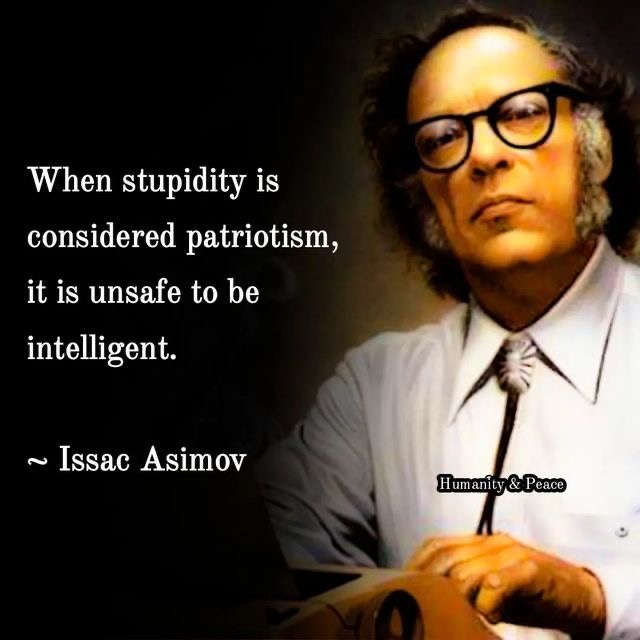
Asimov’s Warning Is Just As Valid Today 

Isaac Asimov’s assertion about the “cult of ignorance” in the United States, where the false equivalence of ignorance and knowledge undermines democracy, is disturbingly evident in many elected U.S. leaders. This trend, marked by anti-intellectualism and the rejection of expertise, is not only a historical thread, but also a contemporary issue with serious consequences. When political leaders prioritize personal beliefs or populist rhetoric over evidence-based decision-making, the nation’s progress is stymied.

One glaring example is the response to the COVID-19 pandemic, during which several federal leaders publicly rejected scientific consensus and medical expertise. President Donald Trump, for instance, consistently downplayed the severity of the virus, promoted unproven treatments like hydroxychloroquine, and suggested bizarre remedies such as injecting disinfectant. His administration’s frequent clashes with public health experts, including Dr. Anthony Fauci, showcased a dangerous preference for misinformation over evidence-based policy. This rejection of expertise delayed critical responses, contributing to the unnecessary loss of lives and eroding public trust in institutions.

Climate change denial is another prominent example of Asimov’s warning in action. Despite decades of scientific research and warnings about the catastrophic effects of global warming, U.S. federal leaders like Senator James Inhofe have openly dismissed the issue. Inhofe’s infamous act of bringing a snowball to the Senate floor in 2015 to mock climate change science epitomized the rejection of intellectual rigor in favor of simplistic and misleading arguments. Under President Trump, the United States withdrew from the Paris Climate Accord in 2017, a decision that disregarded global consensus and expert recommendations. This move not only hampered international climate action, but also showcased a willingness to prioritize political posturing over long-term environmental sustainability.

Education policy also reflects this strain of anti-intellectualism. Federal and state leaders have fueled culture wars over curricula, targeting topics like evolution, climate science, and systemic racism. Florida Governor Ron DeSantis, for example, has led efforts to restrict discussions of race and gender in schools, framing them as “woke indoctrination.” His administration’s actions, including banning Advanced Placement African American Studies, reflect a fear of critical thinking and a broader trend of politicizing education. Such measures not only undermine intellectual growth, but also perpetuate ignorance by denying students access to nuanced perspectives.

Another aspect of this “cult of ignorance” is the weaponization of populist rhetoric. Politicians like Marjorie Taylor Greene and Lauren Boebert frequently champion “common sense” over expertise, dismissing intellectual rigor as elitist. Greene’s baseless claims about space lasers causing wildfires or her rejection of vaccine science exemplify how some leaders amplify misinformation to appeal to their base. This rhetoric undermines trust in institutions, promotes conspiratorial thinking, and fosters a climate where ignorance is celebrated over informed debate.

The Trump administration’s broader approach to governance further illustrates Asimov’s critique. From rejecting intelligence assessments on foreign interference in elections to downplaying the impact of climate policies, the administration often sidelined expertise in favor of politically convenient narratives. This pattern was not limited to one administration. Leaders across political spectrums have, at times, embraced anti-intellectualism, whether through denial of scientific consensus, opposition to educational reform, or a reluctance to address systemic issues.

Asimov’s warning resonates because it touches on the core principle that democracy requires an informed citizenry and leaders willing to engage with complex realities. Yet, when leaders dismiss expertise and elevate ignorance to a virtue, they erode the foundations of democratic governance. The COVID-19 pandemic, climate change denial, and educational censorship demonstrate how the conflation of ignorance with knowledge can have dire consequences for public health, global stability, and intellectual progress.

Reversing this trend demands a renewed commitment to intellectual integrity and informed leadership. Politicians must prioritize evidence-based policymaking, foster trust in expertise, and resist the allure of populist rhetoric that sacrifices long-term progress for short-term gains. Only by respecting knowledge and promoting critical thinking can the United States counteract the “cult of ignorance” Asimov so aptly described and ensure a democratic future guided by reason and understanding.

Honesty vs Transparency

In my world, there is a strong push towards total interpersonal transparency these days. It’s a hard marketing sell by the “authentic living” leadership and coaching community – “Tell it all, be proactive, share everything, spare no detail, be vulnerable”.  As you can imagine, this doesn’t sit well with me, and while I am all for honest, open, clear and direct communication, I am also for keeping parts of my life private, and the lives of my close intimate friends and partners too. 

As I evolve and mature, it’s becoming easier to maintain my personal boundaries, although they are often seen by the uninitiated as rules, and please remember this is my social circle, not necessarily my close or particular friends, and yes, there is a difference. Before moving on to exploring the difference between honesty and transparency, let’s do a quick side bar, and clear up personal boundaries vs rules. 

My Personal Boundaries are empowering and enforceable because they are all about my actions, my choices, and there are consequences for others; whereas Rules are disempowering and often unenforceable, because they are about you and therefore out of my control. Perhaps I need to write a dedicated post of this subject. I will think more!  

As I have said, my privacy is very important to me, as is the privacy of my partners and particular friends, so for me the difference between honesty and transparency is that honesty is what I share with people as my perceived truth, whereas transparency is what others feel they need to know about me.  A good example of this would be how we share our tombstone data.  I like to share the minimum possible such a name, address, email and perhaps phone number (this is honesty), whereas many social media apps want all of the above plus DoB, hair colour, gender and inside leg measurement (for sake of transparency).  For me, the issue is that, if you’re transparent, you may not succeed in educating people as to what they really need to learn about you, whereas my truth is my truth and it informs people about my reality. When I am accused of being secretive, I am often simply exercising my right to privacy. People frequently dress up their invasive demands for information about my life as a need for “full transparency and disclosure”.  

This happened this week, when someone asked me why I wasn’t willing to attend a social event? I had already answered that I wasn’t available, and yet they pushed for full transparency demanding more disclosure, including what exactly I was doing with my time and with whom? My honesty was that I wasn’t available, and that’s a hard “No”, which is all they really needed to understand to access my truth; whereas if I had fully disclosed how I was engaged during that time, this information would have opened up a conversation about social and friendship priorities, which I wasn’t prepared to explore. My choices are my choices!    

There is a concept called a Disclosure Agreement that can be made with partners and particular friends about what we will and will not disclose about our relationships with other people. Perhaps it’s time for this concept to become a more common practice, especially in the days of megacorporation-controlled social media where anything and everything can be disclosed and shared on the InterWeb in an instant? 

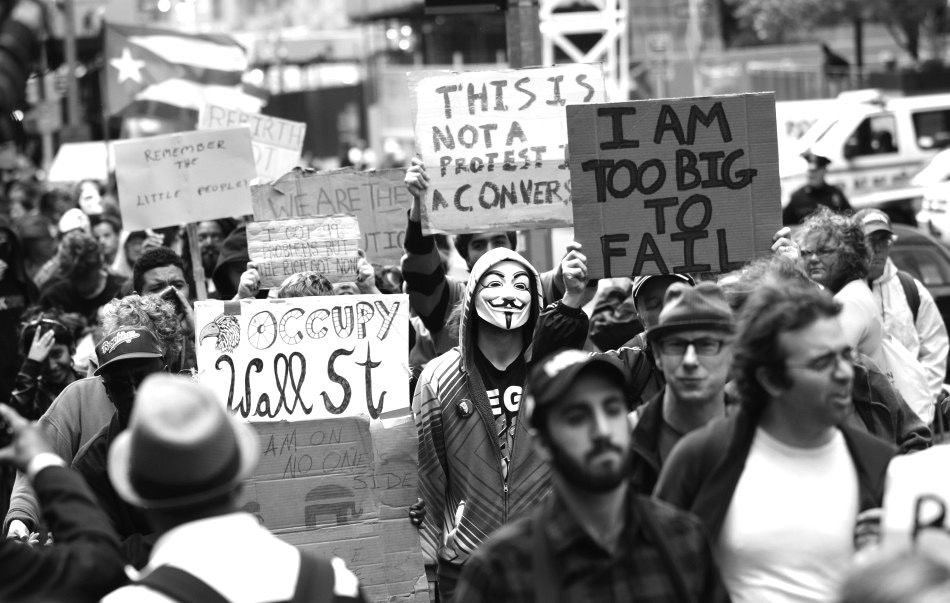
Suppressing Political Protest is the Thin End of the Wedge

In recent years, Canadian municipalities have introduced bylaws aimed at limiting political and social protests, raising serious concerns about free expression. In Calgary, for example, a 2023 bylaw was passed that restricts “targeted protests” near certain facilities, such as libraries and recreation centers. Similarly, the City of Windsor imposed rules on protests in public spaces, citing the need for safety and order during events like the trucker convoy protests of 2022. While these measures are often justified as necessary for public safety, they risk suppressing legitimate dissent and silencing marginalized voices.

Ottawa is considering a bylaw aimed at restricting protests near schools, churches, and other “vulnerable institutions” in response to rising hate crimes and incidents like protests at LGBTQ+ events. This initiative, supported by Mayor Mark Sutcliffe, would establish buffer zones, limiting protests to protect marginalized communities. However, critics argue it may infringe on free speech rights. A balanced alternative could involve clear guidelines and designated protest areas to ensure safety without fully limiting the right to protest. 

These bylaws undermine the democratic principle of free expression, enshrined in the Canadian Charter of Rights and Freedoms. Restricting peaceful protest under the guise of maintaining public order opens the door to governmental overreach. Moreover, marginalized groups—often the most reliant on public protests to bring attention to their causes—are disproportionately affected. When governments prioritize the convenience of public space over the expression of dissent, they erode the foundations of a healthy democracy.

In Canada, public protests are managed under existing laws, which criminalizes unlawful assembly, riots, and acts of violence during protests. Municipalities can enforce local bylaws on noise control, traffic obstruction, and permits for large gatherings. For example, cities like Ottawa already require permits for protests that involve blocking roads or using sound amplification, ensuring public safety without infringing on freedom of expression.

These laws are sufficient because they balance the right to protest with public safety concerns, penalizing unlawful behavior while protecting peaceful dissent. Rather than additional restrictions, enforcing these existing measures effectively addresses disruptions without eroding civil liberties.

We need to Implement Personal Online Data Stores (PODS)

At some level, most of us worry about our personal information being collected, sold, and used by big businesses and other players. We have all heard that “if the app is free then we are the product”. So, what can be done to improve the situation?

Tim Berners-Lee, the inventor of the World Wide Web, has envisioned a transformative shift in the way individuals manage and share their personal data through a decentralized web, embodied by his Solid project. A key component of this initiative is the concept of a “digital wallet.” Unlike conventional digital wallets focused solely on financial transactions, Berners-Lee’s vision extends far beyond, providing a secure and efficient means for individuals to control their personal data and online identity.

In Berners-Lee’s model, users store their personal information in PODS (personal online data stores) rather than dispersing it across multiple platforms owned by corporations. This digital wallet consolidates all types of data—such as identity documents, health records, financial information, and browsing histories—under the user’s control. The wallet enables selective data sharing, meaning users can provide only the specific information required for a transaction or interaction. For instance, to verify their age for purchasing alcohol, users can confirm their eligibility without revealing unrelated personal details like their home address or full birthdate.

The benefits of this concept are both practical and revolutionary. First and foremost, it significantly enhances privacy. In today’s internet landscape, users often have little choice but to share large amounts of personal data with third parties, leaving them vulnerable to misuse. By giving individuals the ability to control which data are shared, and with whom, Berners-Lee’s digital wallet mitigates unnecessary exposure, and limits the risks associated with data misuse or exploitation.

Second, it reduces the likelihood and impact of data breaches. Currently, large corporations store vast amounts of user data in centralized servers, making them attractive targets for hackers. Decentralizing data storage and empowering individuals to maintain their own data reduces the likelihood of massive breaches, as there is no single repository for hackers to target. This shift also aligns with increasing public concern over cybersecurity and data protection.

Another advantage lies in fostering competition and innovation in the digital economy. Today, tech giants often lock users into proprietary ecosystems, making it difficult to switch services without losing access to valuable data. A decentralized approach, with data stored in user-controlled wallets, eliminates these barriers. Users can easily move between competing platforms while retaining full access to their information, encouraging fair competition and reducing monopolistic control.

The PODS concept also empowers individuals to monetize their data, should they choose to share it. Users can negotiate directly with companies or researchers for specific data-sharing agreements, ensuring transparency and potentially earning compensation for their contributions. This represents a fundamental shift from the current model, where corporations profit from user data without adequately compensating the individuals whose information they exploit.

Ultimately, Berners-Lee’s digital wallet aligns with his broader mission to decentralize the web and return agency to its users. By prioritizing privacy, security, and user empowerment, this concept challenges the existing power dynamics of the internet, offering a blueprint for a fairer and more equitable digital landscape. If widely adopted, it could revolutionize how people manage their digital identities and interact online, fostering trust, innovation, and a renewed sense of autonomy in the digital age.

Now just how we get Big Tech to hand back our data, when it’s currently a major source of revenue, I have no idea, but it’s going to take significant political will. Belgium is currently exploring a healthcare data initiative with 7 million citizens using the PODS model, along with primary care providers and hospitals.  Perhaps we may just have to accept that our data to date is lost in the ether, but moving forward with our next generations, a decentralized web will bring more personal privacy and autonomy? 

The Pros and Cons of Rural High-Speed Internet

November 2024 sees the installation of high-speed fibre internet at the farm. It wasn’t the advertised “simply plug and play” because it never is for a rural property, but we final got there after they realized they still had to hang the fiber along my rural road. As much as I love supporting local businesses, my current ISP has stated on multiple occasions that they have no intention of upgrading my network node. At half the monthly cost of the current line-of-site connection, and literally 150 times faster with unlimited usage, the choice to switch to a “no contract” special offer by one of the big telecoms was a no brainer.

The long-awaited surge of high-speed internet into rural Ontario is poised to change the socio-economic dynamics of these communities. For years, rural areas have lagged behind urban centers in digital connectivity, with the slow or unreliable internet often acting as a barrier to growth. The introduction of high-speed internet marks a shift, bridging the digital divide that has left so many rural residents, and businesses feeling isolated from modern opportunities.

For families, high-speed internet means improved access to online education, healthcare, and government services that are increasingly reliant on a robust digital infrastructure. Students who once struggled with spotty connections for virtual learning can now participate more fully in the digital classroom. Telehealth, a growing need in rural areas where healthcare access can be limited, will become more feasible, offering faster, more reliable consultations with healthcare providers.

Economically, this new connectivity can be transformative. Local businesses, particularly in agriculture and tourism, stand to benefit from streamlined operations, easier access to markets, and the potential to attract remote workers or digital entrepreneurs looking for affordable, peaceful living conditions. Rural Ontario’s ability to compete in a digital-first economy will get a significant boost, encouraging innovation and investment. The North Grenville Mayor Nancy Pickford has proposed that the Kemptville Campus should become an off-site work location for federal employees, while voicing concerning about the Ottawa “back to office work” mandate that would negatively impact the Township’s growing economy. The newly installed fibre in the rural township will enable Pickford’s vision to possibly keep those citizens working and shopping locally.

There are some who feel that the arrival of high-speed internet raises questions about the preservation of rural life. While connectivity opens doors, it may also accelerate the urbanization of these communities, changing the slow-paced, close-knit nature that defines rural living. Local towns and villages, here in eastern Ontario, are expanding rapidly with new suburban-style housing, in part because of the improved infrastructure, including high-speed internet. As rural Ontario embraces the digital world, it must also find a way to balance progress with its traditional values.

Update – Seems the ISP didn’t connect the farm to the correct junction box, and so now I am getting polite messages suggesting I finalize the self-installation process, even though the connection is currently up and running. The technician said he was going to deal with the issue, and so let’s see what happens.

Final Update – All is working perfectly. Apparently because the farm was connected to the wrong box the network assumed I had two hub connections, not just the one I was contracted for, and there was some interference happening. The ISP customer support reset a few switches, and all is now working as it should be. Having 1,500 Mbps instead of 10 Mbps is eye opening.

Are We Done With Daylight Savings?

Ah, Daylight Savings Time. Twice a year, like clockwork (pun intended), we engage in a tradition as baffling as trying to teach a cat algebra. “Spring forward, fall back!” they chant, as if repeating it somehow makes the madness logical. It’s like someone thought, “Let’s just confuse everyone and ruin a perfectly good sleep schedule. Twice a year.” Brilliant idea.

We stumble out of bed, fumbling with microwaves and car dashboards, muttering, “Is it really 7 a.m., or fake 7 a.m.?” Because let’s be honest, no one remembers to change the clock on the microwave, so we spend six months living in a Schrödinger’s Time Zone.

And why? Once upon a time, it was about saving candles or coal or something. Today, it’s just a high-tech version of the same headache, except now we’ve got to remember to reset not only the microwave, but our smart fridges, thermostats, and Fitbits too. And don’t get me started on pets. Try explaining to your cats why dinner’s an hour late just because of “the government.” Then there’s the collective brain fog as we adjust. Studies even show heart attacks and car accidents spike right after the change—so much for saving lives.