Parking Fees in Eastern Ontario Hospitals Are a Hidden Tax on Patients

Eastern Ontario has always prided itself on community and care. From the small-town generosity of Kemptville and Almonte to the bustling networks of support in Ottawa, people here know what it means to stand by one another in times of crisis. Yet a troubling trend is quietly eroding that sense of fairness: hospital parking fees.

In the past year, residents across our region have seen new charges introduced at hospitals once known for their accessibility. Kemptville District Hospitalbrought in a “Scan to Pay” system in July 2024, charging a flat $6 per day. This month, Almonte General Hospital, long a point of pride for offering free parking, is rolling out a gated system at $5 per day. In Ottawa, families face even steeper costs: the Children’s Hospital of Eastern Ontario charges up to $15.60 per day, while Montfort Hospital’s daily rates range from $15 to $19, depending on in-and-out access.

For anyone who has supported a loved one through serious illness, these numbers tell a painful story. A cancer patient attending daily treatments in Ottawa could easily spend hundreds of dollars a month just to park. Families visiting sick children at CHEO or aging parents at Montfort are forced into impossible choices: pay the fee, or cut back elsewhere on essentials like groceries, fuel, or rent.

Defenders of these charges argue they are needed to cover parking lot maintenance or to discourage casual use of hospital spaces. But such reasoning sidesteps the ethical reality. The cost of public infrastructure should be borne by the public collectively, through fair taxation—not downloaded onto patients and families at their most vulnerable. To frame fees as a deterrent is worse: it implies that comforting a dying parent or spending time with a hospitalized child is somehow frivolous.

These fees are also inherently regressive. A single parent in Almonte living on Ontario Works pays the same $5 daily rate as a professional with six-figure earnings. But for the former, it may mean skipping meals or delaying bill payments. That is not just inconvenient, it is structurally unjust.

Eastern Ontario families know that healing rarely happens in isolation. Hospital visits often involve not just the patient but an entire network of care: parents, children, siblings, and friends. Parking fees act as barriers to this essential support system. They isolate patients, deepen stress, and send the message that community presence is only for those who can afford it.

Across the region, people are noticing. In Almonte, the introduction of paid parking has sparked conversations about fairness. In Kemptville, residents question why a community-driven hospital is now charging a flat rate for access. In Ottawa, families with children in long-term care quietly count the mounting costs. This is not just an inconvenience, it is a creeping inequity that undermines the very ethos of universal health care.

Eastern Ontario should lead by example. Scotland and Wales have already abolished hospital parking fees, recognizing them as barriers inconsistent with the values of public health care. We can do the same here. Local hospital boards and provincial leaders should treat these charges not as a revenue stream, but as a moral question: do we want to tax people for being sick and for supporting those they love?

Hospital parking fees in Eastern Ontario are not minor nuisances. They are hidden taxes that punish patients and families precisely when compassion should be our guiding principle. If we truly believe in fairness and universality, these fees must go.

Sources
• Kemptville District Hospital. “KDH Announces a New Barrier-Free Parking System.” July 2024.
• Mississippi Mills. “Almonte General Hospital to Implement Paid Parking.” August 2025.
• CHEO. “Parking Information.” April 2025.
• Montfort Hospital. Parking Information. 2025.
• Canadian Medical Association. “Parking Fees at Health Care Facilities.” CMA Policy, 2016.
• Canadian Centre for Policy Alternatives. “User Fees: A Threat to Public Services and Equity.” CCPA Report, 2014.


Publicly Funded, Religiously Filtered Health Care? It’s Time Ontario Let Go

Imagine a sexual assault survivor rushing to the nearest emergency department, only to learn the hospital refuses to provide emergency contraception on religious grounds. Instead of treatment, she’s given a referral or sent elsewhere. Every passing hour erodes the medicine’s effectiveness. That’s not theoretical. That’s happening in Ontario today, at taxpayer-funded Catholic hospitals.

Ontarians pay taxes to fund health care. When the province funds a hospital, that hospital should deliver the “standard of care”, not a version filtered through religious doctrine. Yet, Catholic hospitals, because of conscience protections enshrined by the Charter and history, often refuse to provide emergency contraception or abortion directly. They may offer referrals, but not timely, on-site treatment.

Let’s be clear: no individual clinician’s conscience should be dismissed. Personal conscience protections are vital, and should remain, but institutions are not persons. Catholic hospitals choose to operate within the public health system, serving a broad and diverse population. When they choose public funding, they must also choose to meet public expectations: evidence-based, timely care.

A survivor’s access to medical care must not hinge on the hospital’s religious affiliation. Ontario’s policy is explicit: survivors deserve immediate access to emergency contraception and trauma-informed care. Yet religious exemptions turn policy into patchwork, a postcode lottery in survival care.

This isn’t about dismantling Catholic health care providers. It’s about accountability. The province can maintain agreements with religious institutions, but with conditions. Hospital funding contracts must mandate on-site delivery of all provincially endorsed, time-sensitive reproductive health services. If a facility cannot reconcile that with its religious identity, it should opt out of the public system and operate privately.

Ontario must uphold the principle that public funding buys uniform, high-quality, evidence-based health care for every resident. No one’s care should be delayed or denied because of a logo on a door. Ontarians, especially survivors of trauma, deserve more than patchwork conformity. They deserve consistency, dignity, and timely treatment.

It’s time to close the conscience loophole.

Canada Post’s Red Flag Fumble: Why “Clarifications” Can Backfire

Canada Post has a knack for finding itself in the headlines for all the wrong reasons. This week’s rural delivery flap (pun intended) has all the makings of another avoidable PR bruise. The issue? Mail carriers in rural areas have been told not to raise the red flag on mailboxes to signal incoming mail. According to Canada Post, the flag’s intended use has always been one-way: customers put it up to show there’s outgoing mail for pickup. The new instruction, they insist, is simply a “clarification” of longstanding policy, not a change in service.

For many rural residents, especially those with long driveways or mobility challenges, that little red flag has been a simple, effective communication tool for decades. It’s the rural equivalent of the notification icon on your phone – no need to trek through the snow or heat just to find an empty mailbox. Taking that away may align with corporate guidelines, but it’s a practical step backward in terms of customer experience.

Canada Post’s position is that the flag’s misuse by some carriers created inconsistency across the country. Some postal workers raised the flag for incoming mail, others didn’t, and now they’re enforcing a uniform standard. That sounds fine in a policy manual, but in real life, it translates into removing a service habit people value, without offering a replacement. And while this might be a small operational tweak from their perspective, it has outsized symbolic weight in the communities it affects.

The reaction has been swift and pointed. Rural customers, already feeling underserved compared to their urban counterparts, see this as yet another example of Ottawa making decisions without understanding life outside the city. The Canadian Union of Postal Workers says it wasn’t even consulted before the clarification went out. That’s not just a failure of courtesy; it’s a failure of internal communication that risks alienating frontline staff, the very people who are the public face of Canada Post.

For a federal agency that has spent years trying to modernize its image and service model, this is a curious hill to die on. Public trust in Canada Post has already been dented by service delays, price hikes, and reduced delivery frequency in some areas. Now, they’ve added a decision that feels to many, like a needless reduction in convenience. The optics are terrible: instead of talking about new rural service improvements, the conversation is about a flag on a box.

Good public relations isn’t just about press releases and branding campaigns. It’s about anticipating how policy changes, even small ones, will land with the people you serve. A true customer-first approach would have looked for alternatives: maybe a text notification service for rural deliveries, or an opt-in program where carriers could continue flag use. Instead, Canada Post has doubled down on the technical definition of a mailbox flag, while ignoring the human element of how that signal has been woven into daily routines.

The irony is that the red flag rule may be correct in theory, but in practice, it’s a perfect example of winning the policy argument while losing the public. For rural Canadians, this feels like one more example of an institution not listening. And for Canada Post, it’s another case of stepping on their own toes – this time, with both boots planted firmly in the gravel of a country driveway.

Sources: CP24Halifax CityNewsCJDC TV

Five Things We Learned This Week

Here’s your brand‑new edition of “Five Things We Learned This Week” for July 26 – August 1, 2025 – each highlight is entirely fresh and occurred within the past seven days:

1. Kamchatka Megaquake and Volcanic Eruptions Shake the Pacific

• On July 30, a massive 8.8 magnitude megathrust earthquakestruck off Russia’s Kamchatka Peninsula – one of the strongest ever recorded – triggering global tsunami alerts; fortunately, the eventual tsunami impact was limited.

• Multiple volcanoes erupted in response, including Krasheninnikov (for the first time in centuries) and others like Klyuchevskaya and Shiveluch – fueling a volcanic spike across the region.

2. USGS Issues Aftershock Forecast Following the Megaquake

• The USGS released a detailed aftershock forecast following the Kamchatka quake, projecting:

• a 2% chance of an additional magnitude-8 quake,

24% chance of a magnitude 7 or higher,

• and over 99% chance of further magnitude 4+ aftershocks in the coming week. 

3. A Tragic Campground Accident in Canada

• On July 31, at Cumberland Lake Park Campground in British Columbia, a falling tree tragically killed a 26-year-old mother and her 5-month-old baby; authorities confirmed the tree was decayed, with no foul play suspected. A memorial is planned for August 10.

4. Markets Brace for Trump’s Broad Tariffs

• On August 1, global markets reacted strongly after steep U.S. tariffs were imposed on key trading partners like Canada, Brazil, India, and Taiwan, triggering concerns over trade tensions and inflation; notably, Amazon’s shares fell 7% following underwhelming earnings, while pharma stocks fell after Trump demanded drug price cuts.

5. Britain’s Eurosceptic Move: State of Palestine Recognition

• On July 30Canada announced recognition of the State of Palestine, becoming one of the few Western countries to do so and signaling a geopolitical shift in global alignments.

These five items span global shifts in geology, safety, markets, diplomacy, and hard-to-forget human stories – all contained within July 26 to August 1, 2025 and entirely new to this series.

Beyond the Speed Camera: A Cultural Shift for North American Traffic Enforcement

North America’s deeply ingrained car culture has long embraced speed as a symbol of freedom and autonomy. High-horsepower vehicles dominate the market, and speed limits are often treated as negotiable suggestions. This cultural perspective undermines enforcement efforts: motorists slow only when cameras are visible and accelerate the moment they’re out of sight. As a result, stealth enforcement tactics – unmarked police vehicles, hidden speed traps – have become widespread, but they foster mistrust and do little to change underlying behaviour.

The Pitfalls of Stealth Enforcement

Municipalities across Canada and the United States have become reliant on stealth tactics and revenue‑driven ticketing. Cameras and unmarked units generate significant income, yet they fail to instil lasting compliance. In some US jurisdictions, removing speed cameras produced no long-term decline in collisions – drivers simply reverted to previous behaviours. Meanwhile, a survey of Queensland drivers found that self-reported speeding compliance was significantly higher in the presence of overt enforcement compared to covert operations – even when mobile.

European Approach: High Visibility and Trust

Contrary to the stealth model, many European nations embrace overt enforcement supported by community engagement and road design:

  • Marked police vehicles and speed display signs
    Well-lit patrol vehicles provide visual deterrence. Radar speed signs in the UK, US, and Canada consistently reduce average speeds by 2–6 mph among speeding vehicles (source).
  • Transparent automated enforcement
    In the UK, camera sites reduce injury collisions by 22% and fatalities by 42% (source). LSE researchers estimated that adding 1,000 more cameras could save nearly 200 lives annually (same source).
  • Data-backed strategy
    France’s speed camera expansion between 2000–2010 led to a 75% drop in violations and a 51% reduction in road deaths (source). In British Columbia, enforcement yielded a net annual social benefit of CAD 109 million (same source).

North American Challenges & Mixed Results

North American experience remains inconsistent:

  • Chicago’s camera deployment (2015–2017) yielded a 12% reduction in injury and fatal crashes.
  • Edmonton saw a 33% reduction in violations and a 16% decline in crashes (source).
  • New York City’s 24/7 school zone camera monitoring reduced speeding violations by 72% and injuries by 8%, with revenue hitting USD 187 million in 2020 (source).

Data‑Driven Enforcement: Best Practices

  • Fixed cameras reduce injury crashes by 20–25% and total crashes by 11–44% (source).
  • In South Australia, intersection cameras cut casualty crashes by up to 21% (same source).
  • New South Wales saw a 40% drop in casualty crashes, saving over USD 500 million in societal costs (source).
  • Visible enforcement in London and Queensland yields longer-lasting compliance (source).

A Safer-Culture Roadmap

Focus AreaEuropean‑Style MeasuresAnticipated Impact
Enforcement StyleUse marked patrol cars; deploy visible speed displaysSustained behaviour change
Automated CamerasInstall with clear signage; data-led site selectionInjury crashes ↓ 20–25%
Road DesignAdd roundabouts, narrow lanes, digital speed alertsPassive speed reduction
Community RelationRedirect fine revenues to road safety; publish statsTrust and buy-in
Driver EducationEmphasize harm prevention in campaignsImproved risk perception

Cultural Shift: From Contest to Collaboration

Instead of positioning motorists as adversaries, a preventive and empathetic approach invites collaboration. The objective shifts from catching rule-breakers to fostering shared responsibility: communities and authorities work together to create safer streets. Sweden’s Vision Zero, which places corrective road design and visible enforcement at its core, demonstrates what is possible when responsibility is shared across systems – not relegated to individual error.

Conclusion: Road Safety Through Culture

North America’s car culture elevates speed as a value – reinforced by stealth enforcement and revenue-driven policing. European-style, overt policing, paired with transparent automated systems and smart infrastructure, yield measurable reductions in speeding and crashes, while fostering public trust. Clear data from Chicago, Edmonton, New York City, and international studies support the transition: visibility and prevention work, in both behaviour and safety impacts.

To truly transform driving culture, municipalities must align enforcement, education, and engineering toward a shared goal: safer roads. While hidden cameras and unmarked units might bolster short-term revenue, only a visible, accountable system will inspire lasting compliance – and save lives.

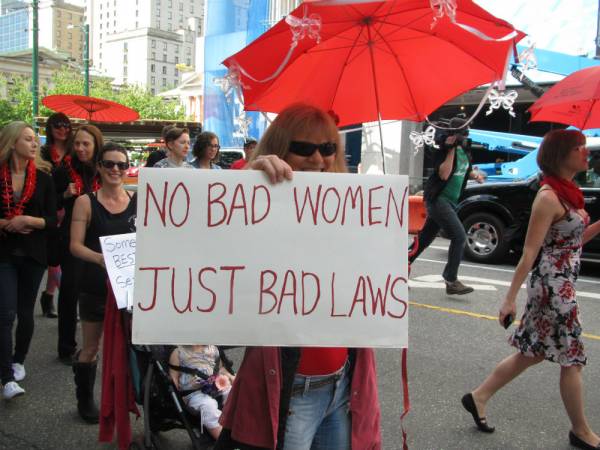
When a Sex Worker Calls a Lawyer a Whore: Feminism, Hypocrisy, and the Weight of Words

I recently witnessed a moment that was, in equal measure, jarring, ironic, and deeply revealing: a sex worker called a lawyer a whore. The word hit the air like a slap, not just because of who said it, but because of what it exposed. This wasn’t just a spat. It was a cultural moment that pulled back the curtain on how we still weaponize language soaked in misogyny, even among those who should, by all rights, know better.

Now, let’s pause here. The term whore has long been used to shame, control, and degrade women, especially those who dare to transgress sexual norms. Yet, in recent years, many sex workers have reclaimed it, asserting their agency and challenging the stigma. To hear someone from within that world hurl it as an insult is, on the surface, ironic. But beneath that irony lies something far more complex: a commentary on respectability, power, and the hypocrisy that still riddles both feminist and professional spaces.

When a sex worker calls a lawyer a whore, they’re not talking about sex. They’re talking about compromise, about selling out, about being willing to do anything for money or power while cloaking it in the illusion of respectability. It’s a sharp dig at the moral contradictions we tolerate in professional life. After all, lawyers and especially those in corporate or political circles, are often paid handsomely to defend the indefensible. They play the game in tailored suits and courtrooms, while sex workers do it in ways society still deems unacceptable. Yet only one of them gets a LinkedIn profile and a pension.

This, to me, is the hypocrisy at the heart of modern feminism. Too often, it uplifts professional women while distancing itself from those who work outside “respectable” labour categories. Mainstream feminism has made great strides, but it still struggles to make room for those whose empowerment doesn’t come with a university degree or a boardroom badge. Sex workers, domestic labourers, and other marginalized women are too often left out of the conversation, unless they serve as cautionary tales or symbols to be rescued.

And this is why the insult stung so sharply. The word “whore” still holds power, not because of what it means, but because of the shame we still attach to it. When used against a lawyer, it highlights the deep discomfort we have with the idea that all labour, whether it involves a courtroom or a bedroom, is transactional. That both women may be “selling themselves” in some fashion, but only one gets to pretend it’s noble.

Feminism, if it means anything today, must confront this hypocrisy head-on. It must stop drawing lines between the respectable and the reviled, the educated and the erotic. It must challenge the systems that make one woman a whore and another a hero, when both may be navigating the same capitalist dance – just with different music.

In that sense, maybe the insult wasn’t ironic at all. Maybe it was deadly accurate.

Five Things We Learned This Week

Here’s the fresh edition of “Five Things We Learned This Week” for July 12–18, 2025, featuring entirely new developments—no repeats, all within the past seven days:

🌊 1. Central Texas Flash Floods Devastate Communities

• Between July 4–7, unprecedented flash floods in Central Texas, including Camp Mystic, resulted in at least 129 deaths, with over 160 people still missing  .

• The disaster inflicted estimated economic losses of $18–22 billion, raising critical questions about climate-linked extreme weather and resilience amid weakened federal emergency infrastructure  .

🔥 2. Deadly European Heatwave Continues—Over 2,300 Deaths

• A severe heatwave that began in late May continued into mid-July, claiming approximately 2,300 lives—with Spain, the U.K., and Portugal most affected  .

• Record-breaking high temperatures (e.g., up to 46.6 °C in Portugal on June 29) prompted heat-health alerts, hosepipe bans, and drought declarations across parts of the U.K.  .

⚖️ 3. Thailand’s Prime Minister Suspended Amid Political Turmoil

• On July 1, Thailand’s Constitutional Court suspended PM Paetongtarn Shinawatra over an alleged leaked call—further destabilizing the already fragile 8-minister coalition  .

• This development deepens the ongoing political crisis and could trigger early elections or realignment in Thai governance   .

🇸🇾 4. Israeli Airstrikes Hit Key Syrian Military Sites

• On July 16, Israeli jets conducted strikes on the Syrian Presidential Palace and General Staff headquarters in Damascus  .

• The attack marks a significant escalation in Israel’s regional military operations and further strains tensions amid Syria’s protracted conflict  .

🏊‍♂️ 5. Singapore Hosts World Aquatics Championships

• From July 10–13, Singapore successfully hosted the 2025 World Aquatics Championships, attracting global athletes and fans to the city-state  .

• The event showcased elite competition in swimming, diving, water polo, and synchronized swimming, reinforcing Singapore’s capacity to host world-class sporting events  .

Each of these highlights occurred between July 12–18, 2025, and provides truly fresh insight across climate disasters, health crises, political shifts, military action, and international sport. Would you like full links or deeper analysis on any of these?

Volunteerism in Canada: A Changing Landscape Across Time and Geography

Volunteerism has long been woven into the fabric of Canadian society. From informal acts of neighbourly support to highly structured programs run through non-profits and public institutions, the practice of giving time and effort without monetary reward has played a vital role in community building, social cohesion, and service delivery. Yet, as Canada changes, demographically, economically, and technologically, so too does the nature of volunteering. In particular, the contrast between rural and urban participation in volunteerism highlights both opportunity and strain within the sector.

A Historical Perspective: State Support and Civic Energy
Canada’s federal government has historically recognized the value of volunteerism and made substantial efforts to coordinate and support the sector. The most significant of these efforts came in the early 2000s with the Voluntary Sector Initiative (VSI), a groundbreaking partnership between the federal government and the voluntary sector. It aimed to improve relations, support innovation, and enhance governance in the non-profit field. Within it, the Canada Volunteerism Initiative (CVI) funded research, capacity-building, and public engagement campaigns. Although the VSI ended in 2005, it laid important groundwork by formalizing the relationship between civil society organizations and the federal state.

Departments such as Human Resources Development Canada (HRDC), later restructured into Employment and Social Development Canada (ESDC), have overseen volunteer policy and programming. Recent federal initiatives, like the Canada Service Corps (launched in 2018), focus on youth engagement in service projects and offer microgrants to promote local volunteering. The New Horizons for Seniors Program also supports older Canadians’ participation in community volunteerism. While there is no standalone federal department solely dedicated to volunteerism, it remains embedded within broader social development frameworks.

Recent Trends: Decline and Resilience
Data from the late 2010s and early 2020s reveal both strengths and stresses within the Canadian volunteer ecosystem. As of 2018, over 13 million Canadians, 41% of the population, were engaged in formal volunteerism, contributing a staggering 1.7 billion hours annually. Yet post-pandemic surveys show troubling signs: 55% to 65% of charities report difficulty recruiting and retaining volunteers, with many forced to cut programs due to shortages.

Notably, volunteer patterns are shifting. Traditional, long-term roles are declining in favour of more episodic or informal volunteering, especially among youth. Factors such as time constraints, economic insecurity, digital preferences, and burnout have reshaped how Canadians approach community service. While organizations like Volunteer Canada continue to offer leadership, training, and research, there is growing urgency to adapt volunteer roles to new realities; flexible schedules, virtual engagement, and better inclusion of marginalized groups.

The Rural – Urban Divide: Participation and Capacity
Perhaps the most persistent, and revealing, dimension of volunteerism in Canada is the divide between rural and urban communities. Historically, rural Canadians have had higher participation rates in formal volunteering. Data from the late 1990s and early 2000s show that 37% of rural residentsvolunteered, compared with 29% in urban centres. Among those with post-secondary education, rural volunteers also outpaced urban peers: 63% of rural university grads volunteered versus 42% in urban areas. Similarly, 67% of college-educated rural residents participated in community groups, compared to 55% in cities.

This elevated participation reflects the central role that volunteering plays in small towns and rural communities, where fewer formal services exist, and much of the civic infrastructure, libraries, community centres, fire services, food banks, is volunteer-run. Yet this strength is also a vulnerability. In recent years, many rural communities have reported a sharp decline in volunteer numbers. A 2025 report from rural Alberta described the “plummeting” of local volunteers, warning that essential community functions were under threat.

The rural sector also faces structural challenges. Of Canada’s ~136,000 non-profit organizations in 2022, only 21.3% were located in rural or small-town settings, compared to 78.7% in urban areas. This limits both the reach and coordination capacity of the rural volunteer system, even as demand for services grows. Moreover, rural organizations often lack the staff or infrastructure to recruit and manage volunteers effectively. Data from Volunteer Toronto’s 2025 report confirms that non-profits with dedicated volunteer managers are 16 times more successful in engaging people, resources many rural groups simply don’t have.

The Broader Role of Volunteerism: Health, Identity, and Belonging
Beyond economics and logistics, volunteerism holds deeper meaning in Canadian life. Research has long shown strong links between volunteering and well-being. Volunteers report lower stress levelsbetter mental health, and a greater sense of purpose. For newcomers, volunteering offers social integration. For youth, it builds skills and confidence. For seniors, it combats isolation.

Moreover, volunteering shapes Canadian identity. The nation’s reputation for kindness and civic responsibility is deeply connected to the widespread assumption that people help each other, often through organized groups. Volunteerism is one of the few activities that bridges socio-economic, linguistic, and cultural divides.

A Call for Renewal
Volunteerism in Canada is both a legacy and a living system. While the numbers remain impressive, the sector is showing signs of strain, especially in rural areas and among long-time service organizations. A national renewal is underway: a National Volunteer Action Strategy is being developed with support from the federal government, aiming to modernize the sector and reverse declining trends.

As Canada continues to evolve, so too must its approach to volunteerism. This means investing in recruitment, training, and support, especially where capacity is low. It means listening to the needs of volunteers themselves and creating flexible, inclusive ways to contribute. Most of all, it means recognizing volunteerism not just as charity or goodwill, but as vital infrastructure in the Canadian democratic and social landscape.

Sources
• Volunteer Canada (2023–2024 reports): https://volunteer.ca
• Statistics Canada: General Social Survey and 2018 formal volunteering stats
• Canada Service Corps and ESDC evaluation documents (2023–2024)
• Volunteer Toronto Snapshot (2025): https://www.volunteertoronto.ca
• Senate report “Catalyst for Change” (2023)
• Rural Alberta volunteer crisis coverage: https://rdnewsnow.com

Why Ottawa’s Merivale Amazon Warehouse is a Strategic Blunder

Ottawa’s approval of a massive Amazon warehouse on Merivale Road, a sprawling 3.1 million sq ft, 75‑acre facility, marks a strategic misstep in land-use planning. As the city’s largest such development yet, it will usher in heavy fleet operations directly into residential southern suburbs, undermining broader policy goals and community health.

🚚 Traffic Overload & Safety Impacts
Warehouses of this scale generate hundreds of heavy truck movements daily, estimated at around 500 trips, likely running 24/7. Local roads like Merivale and Fallowfield, designed for commuter cars and transit, cannot absorb this freight volume. Congestion, pavement deterioration, and heightened collision risks for pedestrians and cyclists will become daily realities. Safety margins shrink when trailers and semis share space with school buses and family vehicles.

🌬️ Air Quality & Environmental Inequity
Diesel trucks are major sources of PM2.5, nitrogen oxides, and greenhouse gases: pollutants strongly linked with respiratory and cardiovascular diseases. Locating such an operation mere hundreds of metres from homes, schools, and parks imposes environmental harm on vulnerable communities, violating the principles of environmental justice. Moreover, the warehouse’s massive rooflines and parking surfaces will intensify stormwater runoff, local flooding, and the urban heat-island effect, undermining efforts to green the suburbs.

🔊 Noise Pollution & Public Health
24/7 operations bring diesel engines, reverse beepers, dock doors, HVAC systems, and bright lighting, the sort of noises that erode sleep quality. The WHO has linked long-term noise exposure to stress-related illnesses, elevated blood pressure, and heart disease. Neighbouring communities have no indication this will be mitigated; Ottawa’s approvals lack clear buffers or acoustic controls.

🏙️ Contradiction of Ottawa’s “15-Minute Community” Vision
Ottawa’s Official Plan champions compact, walkable “15‑minute neighbourhoods,” minimizing reliance on cars. The Merivale warehouse is antithetical to that ambition. Its scale and related freight footprint impose highway-like impacts in areas meant for gentle suburban life. The contradiction runs deeper when paired with the city’s own Transportation Master Plan, which envisions pulling truck routes away from residential streets once new crossings are in place. This facility predates those crossings and will lock in freight patterns that degrade local mobility aspirations.

🌉 The Bridge under Discussion: Freight Over Neighbourhoods?
In parallel, federal planners are advancing a proposed eastern bridge – nicknamed the “sixth crossing”, between Aviation Parkway and Gatineau’s Montée Paiement. While billed as a transit and multimodal asset, this bridge is tailored to freight use. Approximately 3,500 heavy trucks currently traverse downtown each weekday, mostly over the Macdonald‑Cartier Bridge via sensitive King Edward and Rideau corridors. The new crossing aims to divert truck traffic, possibly 15% by 2050, though some analysts argue only a downtown bypass tunnel would deliver meaningful relief  .

That bridge will funnel freight to the very warehousing complexes like Merivale, entrenching heavy-traffic routes into suburbs and potentially accelerating new industrial developments near residential pockets. Existing policy suggests new freight corridors would better serve truly industrial zones, not communities striving to normalize suburban calm and accessibility.

🌍 Global Benchmarks in Logistics Zoning
Ottawa stands apart from leading planning cities:
Utrecht and Paris locate logistics hubs on disused rail corridors or city peripheries, banning heavy trucks from neighbourhood cores.
California municipalities such as Upland and Fontana enforce conditional-use permits that cap truck movements, define delivery windows, and mandate fleet electrification.
Surprise, Arizona funnels warehousing into designated “Railplex” industrial zones, away from homes.

These policies uphold spatial separation between living spaces and freight operations, a principle Ottawa has ignored in the Merivale decision.

🛠️ Remedying Policy Drift
To realign with its 15-minute community goals and transit ambitions, Ottawa must:
1. Designate logistics zones near transport infrastructure, highways, rail spurs, and existing industrial nodes, while rezoning suburban fringe away from heavy industrial uses.
2. Implement conditional-use frameworks with strict operational caps: truck movement limits, depot hours, landscaped acoustic buffers, fleet electrification mandates, and real-time monitoring.
3. Reassess the eastern bridge’s role, ensuring freight routing doesn’t reward encroachment into suburban or environmentally sensitive areas. A genuine local truck bypass tunnel could separate through-traveling freight from city and suburbs alike.
4. Embed community consultation in both warehouse and bridge planning, matching global best practices and committing to binding environmental and health protections.

🚨 Intersection of Land‑Use and Infrastructure
The Merivale Amazon warehouse exemplifies a policy failure: a freight mega-site allowed inside a suburban living zone, eroding air, noise, traffic, and trust in civic plans. Compounding this is the emerging freight-focused eastern bridge: infrastructure seemingly tailor-made to serve such warehouses while bypassing genuine solutions. Ottawa must resist a slippery slope toward suburban industrialization. Recommitment to the Official Plan, strategic rezoning, nuanced permitting, and freight-oriented infrastructure could offer a path forward, where warehouses belong beside highways, not homes. Without that, this warehouse and bridge duo risk cementing a future at odds with the healthy, sustainable city Ottawa says it wants.

Progressive Momentum and the Future of AOC: A Shift in the Democratic Landscape

Zohran Mamdani’s stunning victory in the New York City Democratic primary has sent a clear and reverberating message through the political establishment. It signals a shift in power from entrenched centrism toward a dynamic, youth-driven progressive movement. For Alexandria Ocasio-Cortez (AOC), the implications are profound. As Mamdani steps into the mayoral spotlight, AOC stands poised at the edge of a political evolution that could take her from the House of Representatives to the Senate, or even the White House.

Mamdani’s campaign was more than a local political contest. It was a referendum on the viability of democratic socialism in America’s most populous city. His unapologetically leftist platform: free public transit, rent freezes, municipal grocery stores, drew a wide coalition of voters, particularly young, immigrant, and working-class New Yorkers. That coalition mirrors the one AOC has cultivated since her own upset win in 2018. With Mamdani now demonstrating that these politics can succeed citywide, the progressive agenda that AOC has long championed is entering a new, legitimized phase.

This changing tide places renewed focus on Chuck Schumer’s Senate seat. The Senate Majority Leader will be 77 in 2028, and while he maintains strong institutional support, he represents a more moderate vision of Democratic leadership that no longer captures the imagination of a rising generation of voters. Ocasio-Cortez, by contrast, has maintained her status as the face of a new political movement; media-savvy, policy-driven, and fiercely independent. Mamdani’s victory has demonstrated that progressives can now build coalitions that go beyond isolated districts and may be ready to compete statewide. A challenge to Schumer, once seen as audacious, now feels increasingly plausible.

The broader question is whether AOC might aim even higher. Born on October 13, 1989, she will turn 39 in 2028, making her fully eligible to run for president that year. While such a move would be bold, the current political trajectory is anything, but conventional. Ocasio-Cortez enjoys massive name recognition, unmatched popularity among millennial and Gen Z voters, and an ability to dominate national media cycles in a way that few sitting members of Congress can. With the Democratic base increasingly eager for generational change, her candidacy could resonate far beyond the progressive echo chamber.

Of course, there are considerable challenges. Both Mamdani and AOC have faced criticism over their positions on Israel and Palestine, particularly within New York’s large and politically active Jewish community. Mamdani’s past references to the “globalization of the Intifada” and his support for the BDS movement sparked intense scrutiny, and AOC has similarly faced backlash over her foreign policy stances. These positions may energize parts of the left, but they risk alienating swing voters, older Democrats, and party power brokers, especially in a national contest.

Additionally, Mamdani’s victory, while significant, came within New York City, a progressive stronghold. AOC would need to broaden her base significantly to succeed in statewide or national contests. Yet, Mamdani’s success does signal that progressives now possess the organizational muscle to win more than just symbolic victories. That’s a new development, and it’s likely to embolden Ocasio-Cortez and her allies as they assess the landscape heading into 2028.

The Democratic Party finds itself at a crossroads. The Biden era, defined by incremental centrism and institutional caution, is increasingly out of step with the priorities of a younger, more progressive electorate. Mamdani’s victory illustrates that boldness can win, not just hearts and headlines, but actual votes. That fact changes the calculus for Ocasio-Cortez. She is no longer simply the insurgent voice of the future. She now stands as one of the few national figures capable of uniting a fractured base around a coherent, transformative agenda.

In the aftermath of Mamdani’s win, the question is no longer whether AOC has a path to higher office, it’s which path she will choose. Whether she targets the Senate or sets her sights on the presidency, the progressive movement she helped ignite has reached a new phase of viability. The stage is set. The moment, increasingly, seems hers to seize.