When a Sex Worker Calls a Lawyer a Whore: Feminism, Hypocrisy, and the Weight of Words

I recently witnessed a moment that was, in equal measure, jarring, ironic, and deeply revealing: a sex worker called a lawyer a whore. The word hit the air like a slap, not just because of who said it, but because of what it exposed. This wasn’t just a spat. It was a cultural moment that pulled back the curtain on how we still weaponize language soaked in misogyny, even among those who should, by all rights, know better.

Now, let’s pause here. The term whore has long been used to shame, control, and degrade women, especially those who dare to transgress sexual norms. Yet, in recent years, many sex workers have reclaimed it, asserting their agency and challenging the stigma. To hear someone from within that world hurl it as an insult is, on the surface, ironic. But beneath that irony lies something far more complex: a commentary on respectability, power, and the hypocrisy that still riddles both feminist and professional spaces.
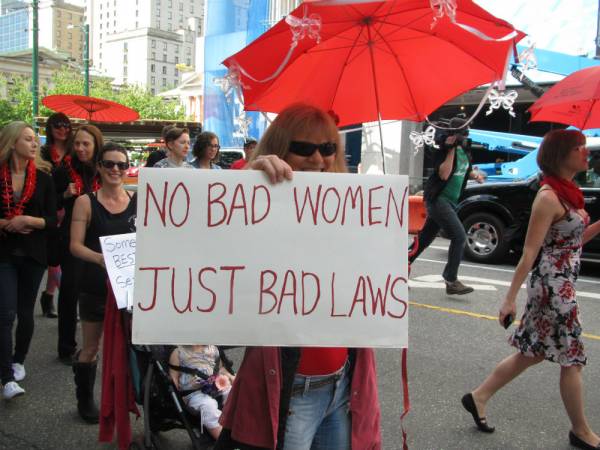
When a sex worker calls a lawyer a whore, they’re not talking about sex. They’re talking about compromise, about selling out, about being willing to do anything for money or power while cloaking it in the illusion of respectability. It’s a sharp dig at the moral contradictions we tolerate in professional life. After all, lawyers and especially those in corporate or political circles, are often paid handsomely to defend the indefensible. They play the game in tailored suits and courtrooms, while sex workers do it in ways society still deems unacceptable. Yet only one of them gets a LinkedIn profile and a pension.

This, to me, is the hypocrisy at the heart of modern feminism. Too often, it uplifts professional women while distancing itself from those who work outside “respectable” labour categories. Mainstream feminism has made great strides, but it still struggles to make room for those whose empowerment doesn’t come with a university degree or a boardroom badge. Sex workers, domestic labourers, and other marginalized women are too often left out of the conversation, unless they serve as cautionary tales or symbols to be rescued.

And this is why the insult stung so sharply. The word “whore” still holds power, not because of what it means, but because of the shame we still attach to it. When used against a lawyer, it highlights the deep discomfort we have with the idea that all labour, whether it involves a courtroom or a bedroom, is transactional. That both women may be “selling themselves” in some fashion, but only one gets to pretend it’s noble.

Feminism, if it means anything today, must confront this hypocrisy head-on. It must stop drawing lines between the respectable and the reviled, the educated and the erotic. It must challenge the systems that make one woman a whore and another a hero, when both may be navigating the same capitalist dance – just with different music.

In that sense, maybe the insult wasn’t ironic at all. Maybe it was deadly accurate.

Five Things We Learned This Week

Here’s the fresh edition of “Five Things We Learned This Week” for July 12–18, 2025, featuring entirely new developments—no repeats, all within the past seven days:

🌊 1. Central Texas Flash Floods Devastate Communities

• Between July 4–7, unprecedented flash floods in Central Texas, including Camp Mystic, resulted in at least 129 deaths, with over 160 people still missing  .

• The disaster inflicted estimated economic losses of $18–22 billion, raising critical questions about climate-linked extreme weather and resilience amid weakened federal emergency infrastructure  .

🔥 2. Deadly European Heatwave Continues—Over 2,300 Deaths

• A severe heatwave that began in late May continued into mid-July, claiming approximately 2,300 lives—with Spain, the U.K., and Portugal most affected  .

• Record-breaking high temperatures (e.g., up to 46.6 °C in Portugal on June 29) prompted heat-health alerts, hosepipe bans, and drought declarations across parts of the U.K.  .

⚖️ 3. Thailand’s Prime Minister Suspended Amid Political Turmoil

• On July 1, Thailand’s Constitutional Court suspended PM Paetongtarn Shinawatra over an alleged leaked call—further destabilizing the already fragile 8-minister coalition  .

• This development deepens the ongoing political crisis and could trigger early elections or realignment in Thai governance   .

🇸🇾 4. Israeli Airstrikes Hit Key Syrian Military Sites

• On July 16, Israeli jets conducted strikes on the Syrian Presidential Palace and General Staff headquarters in Damascus  .

• The attack marks a significant escalation in Israel’s regional military operations and further strains tensions amid Syria’s protracted conflict  .

🏊‍♂️ 5. Singapore Hosts World Aquatics Championships

• From July 10–13, Singapore successfully hosted the 2025 World Aquatics Championships, attracting global athletes and fans to the city-state  .

• The event showcased elite competition in swimming, diving, water polo, and synchronized swimming, reinforcing Singapore’s capacity to host world-class sporting events  .

Each of these highlights occurred between July 12–18, 2025, and provides truly fresh insight across climate disasters, health crises, political shifts, military action, and international sport. Would you like full links or deeper analysis on any of these?

Volunteerism in Canada: A Changing Landscape Across Time and Geography

Volunteerism has long been woven into the fabric of Canadian society. From informal acts of neighbourly support to highly structured programs run through non-profits and public institutions, the practice of giving time and effort without monetary reward has played a vital role in community building, social cohesion, and service delivery. Yet, as Canada changes, demographically, economically, and technologically, so too does the nature of volunteering. In particular, the contrast between rural and urban participation in volunteerism highlights both opportunity and strain within the sector.

A Historical Perspective: State Support and Civic Energy
Canada’s federal government has historically recognized the value of volunteerism and made substantial efforts to coordinate and support the sector. The most significant of these efforts came in the early 2000s with the Voluntary Sector Initiative (VSI), a groundbreaking partnership between the federal government and the voluntary sector. It aimed to improve relations, support innovation, and enhance governance in the non-profit field. Within it, the Canada Volunteerism Initiative (CVI) funded research, capacity-building, and public engagement campaigns. Although the VSI ended in 2005, it laid important groundwork by formalizing the relationship between civil society organizations and the federal state.

Departments such as Human Resources Development Canada (HRDC), later restructured into Employment and Social Development Canada (ESDC), have overseen volunteer policy and programming. Recent federal initiatives, like the Canada Service Corps (launched in 2018), focus on youth engagement in service projects and offer microgrants to promote local volunteering. The New Horizons for Seniors Program also supports older Canadians’ participation in community volunteerism. While there is no standalone federal department solely dedicated to volunteerism, it remains embedded within broader social development frameworks.

Recent Trends: Decline and Resilience
Data from the late 2010s and early 2020s reveal both strengths and stresses within the Canadian volunteer ecosystem. As of 2018, over 13 million Canadians, 41% of the population, were engaged in formal volunteerism, contributing a staggering 1.7 billion hours annually. Yet post-pandemic surveys show troubling signs: 55% to 65% of charities report difficulty recruiting and retaining volunteers, with many forced to cut programs due to shortages.

Notably, volunteer patterns are shifting. Traditional, long-term roles are declining in favour of more episodic or informal volunteering, especially among youth. Factors such as time constraints, economic insecurity, digital preferences, and burnout have reshaped how Canadians approach community service. While organizations like Volunteer Canada continue to offer leadership, training, and research, there is growing urgency to adapt volunteer roles to new realities; flexible schedules, virtual engagement, and better inclusion of marginalized groups.

The Rural – Urban Divide: Participation and Capacity
Perhaps the most persistent, and revealing, dimension of volunteerism in Canada is the divide between rural and urban communities. Historically, rural Canadians have had higher participation rates in formal volunteering. Data from the late 1990s and early 2000s show that 37% of rural residentsvolunteered, compared with 29% in urban centres. Among those with post-secondary education, rural volunteers also outpaced urban peers: 63% of rural university grads volunteered versus 42% in urban areas. Similarly, 67% of college-educated rural residents participated in community groups, compared to 55% in cities.

This elevated participation reflects the central role that volunteering plays in small towns and rural communities, where fewer formal services exist, and much of the civic infrastructure, libraries, community centres, fire services, food banks, is volunteer-run. Yet this strength is also a vulnerability. In recent years, many rural communities have reported a sharp decline in volunteer numbers. A 2025 report from rural Alberta described the “plummeting” of local volunteers, warning that essential community functions were under threat.

The rural sector also faces structural challenges. Of Canada’s ~136,000 non-profit organizations in 2022, only 21.3% were located in rural or small-town settings, compared to 78.7% in urban areas. This limits both the reach and coordination capacity of the rural volunteer system, even as demand for services grows. Moreover, rural organizations often lack the staff or infrastructure to recruit and manage volunteers effectively. Data from Volunteer Toronto’s 2025 report confirms that non-profits with dedicated volunteer managers are 16 times more successful in engaging people, resources many rural groups simply don’t have.

The Broader Role of Volunteerism: Health, Identity, and Belonging
Beyond economics and logistics, volunteerism holds deeper meaning in Canadian life. Research has long shown strong links between volunteering and well-being. Volunteers report lower stress levelsbetter mental health, and a greater sense of purpose. For newcomers, volunteering offers social integration. For youth, it builds skills and confidence. For seniors, it combats isolation.

Moreover, volunteering shapes Canadian identity. The nation’s reputation for kindness and civic responsibility is deeply connected to the widespread assumption that people help each other, often through organized groups. Volunteerism is one of the few activities that bridges socio-economic, linguistic, and cultural divides.

A Call for Renewal
Volunteerism in Canada is both a legacy and a living system. While the numbers remain impressive, the sector is showing signs of strain, especially in rural areas and among long-time service organizations. A national renewal is underway: a National Volunteer Action Strategy is being developed with support from the federal government, aiming to modernize the sector and reverse declining trends.

As Canada continues to evolve, so too must its approach to volunteerism. This means investing in recruitment, training, and support, especially where capacity is low. It means listening to the needs of volunteers themselves and creating flexible, inclusive ways to contribute. Most of all, it means recognizing volunteerism not just as charity or goodwill, but as vital infrastructure in the Canadian democratic and social landscape.

Sources
• Volunteer Canada (2023–2024 reports): https://volunteer.ca
• Statistics Canada: General Social Survey and 2018 formal volunteering stats
• Canada Service Corps and ESDC evaluation documents (2023–2024)
• Volunteer Toronto Snapshot (2025): https://www.volunteertoronto.ca
• Senate report “Catalyst for Change” (2023)
• Rural Alberta volunteer crisis coverage: https://rdnewsnow.com

Why Ottawa’s Merivale Amazon Warehouse is a Strategic Blunder

Ottawa’s approval of a massive Amazon warehouse on Merivale Road, a sprawling 3.1 million sq ft, 75‑acre facility, marks a strategic misstep in land-use planning. As the city’s largest such development yet, it will usher in heavy fleet operations directly into residential southern suburbs, undermining broader policy goals and community health.

🚚 Traffic Overload & Safety Impacts
Warehouses of this scale generate hundreds of heavy truck movements daily, estimated at around 500 trips, likely running 24/7. Local roads like Merivale and Fallowfield, designed for commuter cars and transit, cannot absorb this freight volume. Congestion, pavement deterioration, and heightened collision risks for pedestrians and cyclists will become daily realities. Safety margins shrink when trailers and semis share space with school buses and family vehicles.

🌬️ Air Quality & Environmental Inequity
Diesel trucks are major sources of PM2.5, nitrogen oxides, and greenhouse gases: pollutants strongly linked with respiratory and cardiovascular diseases. Locating such an operation mere hundreds of metres from homes, schools, and parks imposes environmental harm on vulnerable communities, violating the principles of environmental justice. Moreover, the warehouse’s massive rooflines and parking surfaces will intensify stormwater runoff, local flooding, and the urban heat-island effect, undermining efforts to green the suburbs.

🔊 Noise Pollution & Public Health
24/7 operations bring diesel engines, reverse beepers, dock doors, HVAC systems, and bright lighting, the sort of noises that erode sleep quality. The WHO has linked long-term noise exposure to stress-related illnesses, elevated blood pressure, and heart disease. Neighbouring communities have no indication this will be mitigated; Ottawa’s approvals lack clear buffers or acoustic controls.

🏙️ Contradiction of Ottawa’s “15-Minute Community” Vision
Ottawa’s Official Plan champions compact, walkable “15‑minute neighbourhoods,” minimizing reliance on cars. The Merivale warehouse is antithetical to that ambition. Its scale and related freight footprint impose highway-like impacts in areas meant for gentle suburban life. The contradiction runs deeper when paired with the city’s own Transportation Master Plan, which envisions pulling truck routes away from residential streets once new crossings are in place. This facility predates those crossings and will lock in freight patterns that degrade local mobility aspirations.

🌉 The Bridge under Discussion: Freight Over Neighbourhoods?
In parallel, federal planners are advancing a proposed eastern bridge – nicknamed the “sixth crossing”, between Aviation Parkway and Gatineau’s Montée Paiement. While billed as a transit and multimodal asset, this bridge is tailored to freight use. Approximately 3,500 heavy trucks currently traverse downtown each weekday, mostly over the Macdonald‑Cartier Bridge via sensitive King Edward and Rideau corridors. The new crossing aims to divert truck traffic, possibly 15% by 2050, though some analysts argue only a downtown bypass tunnel would deliver meaningful relief  .

That bridge will funnel freight to the very warehousing complexes like Merivale, entrenching heavy-traffic routes into suburbs and potentially accelerating new industrial developments near residential pockets. Existing policy suggests new freight corridors would better serve truly industrial zones, not communities striving to normalize suburban calm and accessibility.

🌍 Global Benchmarks in Logistics Zoning
Ottawa stands apart from leading planning cities:
Utrecht and Paris locate logistics hubs on disused rail corridors or city peripheries, banning heavy trucks from neighbourhood cores.
California municipalities such as Upland and Fontana enforce conditional-use permits that cap truck movements, define delivery windows, and mandate fleet electrification.
Surprise, Arizona funnels warehousing into designated “Railplex” industrial zones, away from homes.

These policies uphold spatial separation between living spaces and freight operations, a principle Ottawa has ignored in the Merivale decision.

🛠️ Remedying Policy Drift
To realign with its 15-minute community goals and transit ambitions, Ottawa must:
1. Designate logistics zones near transport infrastructure, highways, rail spurs, and existing industrial nodes, while rezoning suburban fringe away from heavy industrial uses.
2. Implement conditional-use frameworks with strict operational caps: truck movement limits, depot hours, landscaped acoustic buffers, fleet electrification mandates, and real-time monitoring.
3. Reassess the eastern bridge’s role, ensuring freight routing doesn’t reward encroachment into suburban or environmentally sensitive areas. A genuine local truck bypass tunnel could separate through-traveling freight from city and suburbs alike.
4. Embed community consultation in both warehouse and bridge planning, matching global best practices and committing to binding environmental and health protections.

🚨 Intersection of Land‑Use and Infrastructure
The Merivale Amazon warehouse exemplifies a policy failure: a freight mega-site allowed inside a suburban living zone, eroding air, noise, traffic, and trust in civic plans. Compounding this is the emerging freight-focused eastern bridge: infrastructure seemingly tailor-made to serve such warehouses while bypassing genuine solutions. Ottawa must resist a slippery slope toward suburban industrialization. Recommitment to the Official Plan, strategic rezoning, nuanced permitting, and freight-oriented infrastructure could offer a path forward, where warehouses belong beside highways, not homes. Without that, this warehouse and bridge duo risk cementing a future at odds with the healthy, sustainable city Ottawa says it wants.

Progressive Momentum and the Future of AOC: A Shift in the Democratic Landscape

Zohran Mamdani’s stunning victory in the New York City Democratic primary has sent a clear and reverberating message through the political establishment. It signals a shift in power from entrenched centrism toward a dynamic, youth-driven progressive movement. For Alexandria Ocasio-Cortez (AOC), the implications are profound. As Mamdani steps into the mayoral spotlight, AOC stands poised at the edge of a political evolution that could take her from the House of Representatives to the Senate, or even the White House.

Mamdani’s campaign was more than a local political contest. It was a referendum on the viability of democratic socialism in America’s most populous city. His unapologetically leftist platform: free public transit, rent freezes, municipal grocery stores, drew a wide coalition of voters, particularly young, immigrant, and working-class New Yorkers. That coalition mirrors the one AOC has cultivated since her own upset win in 2018. With Mamdani now demonstrating that these politics can succeed citywide, the progressive agenda that AOC has long championed is entering a new, legitimized phase.

This changing tide places renewed focus on Chuck Schumer’s Senate seat. The Senate Majority Leader will be 77 in 2028, and while he maintains strong institutional support, he represents a more moderate vision of Democratic leadership that no longer captures the imagination of a rising generation of voters. Ocasio-Cortez, by contrast, has maintained her status as the face of a new political movement; media-savvy, policy-driven, and fiercely independent. Mamdani’s victory has demonstrated that progressives can now build coalitions that go beyond isolated districts and may be ready to compete statewide. A challenge to Schumer, once seen as audacious, now feels increasingly plausible.

The broader question is whether AOC might aim even higher. Born on October 13, 1989, she will turn 39 in 2028, making her fully eligible to run for president that year. While such a move would be bold, the current political trajectory is anything, but conventional. Ocasio-Cortez enjoys massive name recognition, unmatched popularity among millennial and Gen Z voters, and an ability to dominate national media cycles in a way that few sitting members of Congress can. With the Democratic base increasingly eager for generational change, her candidacy could resonate far beyond the progressive echo chamber.

Of course, there are considerable challenges. Both Mamdani and AOC have faced criticism over their positions on Israel and Palestine, particularly within New York’s large and politically active Jewish community. Mamdani’s past references to the “globalization of the Intifada” and his support for the BDS movement sparked intense scrutiny, and AOC has similarly faced backlash over her foreign policy stances. These positions may energize parts of the left, but they risk alienating swing voters, older Democrats, and party power brokers, especially in a national contest.

Additionally, Mamdani’s victory, while significant, came within New York City, a progressive stronghold. AOC would need to broaden her base significantly to succeed in statewide or national contests. Yet, Mamdani’s success does signal that progressives now possess the organizational muscle to win more than just symbolic victories. That’s a new development, and it’s likely to embolden Ocasio-Cortez and her allies as they assess the landscape heading into 2028.

The Democratic Party finds itself at a crossroads. The Biden era, defined by incremental centrism and institutional caution, is increasingly out of step with the priorities of a younger, more progressive electorate. Mamdani’s victory illustrates that boldness can win, not just hearts and headlines, but actual votes. That fact changes the calculus for Ocasio-Cortez. She is no longer simply the insurgent voice of the future. She now stands as one of the few national figures capable of uniting a fractured base around a coherent, transformative agenda.

In the aftermath of Mamdani’s win, the question is no longer whether AOC has a path to higher office, it’s which path she will choose. Whether she targets the Senate or sets her sights on the presidency, the progressive movement she helped ignite has reached a new phase of viability. The stage is set. The moment, increasingly, seems hers to seize.

Time for a Change: Rethinking Canada’s Outdated School Calendar

For generations, Canadian schools have followed a familiar rhythm: two long semesters separated by a ten-week summer break. This model, which mirrors the American academic calendar, has been treated as a given, but as family structures, work patterns, and educational needs evolve, cracks are beginning to show in this once-stable system. Increasingly, educators, parents, and community leaders are asking whether it still serves students well, or whether Canada should adopt a more balanced approach to the school year, such as the three-term model used in the United Kingdom.

The long summer break is a historical holdover from an agrarian society. At a time when most families worked the land, it made sense to release children from classrooms during planting and harvest seasons. In modern Canada, where the vast majority of children live in urban or suburban areas and are no longer expected to work the land, that rationale has faded. What remains is a tradition that no longer aligns with today’s educational or social realities.

One of the most significant drawbacks of the extended summer holiday is the well-documented problem of “summer slide”, a regression in academic achievement that occurs when students are away from structured learning for too long. This effect is especially pronounced among students from low-income families, who may have fewer opportunities for summer enrichment such as camps, travel, or private tutoring. Research by the Brookings Institution and other educational bodies has shown that summer learning loss can account for up to two-thirds of the achievement gap between students from different socioeconomic backgrounds by the time they reach high school. Compressing the summer break and redistributing time off across the year could help mitigate this decline and promote more equitable learning outcomes.

This is where the UK model offers a compelling alternative. British schools typically divide the academic year into three terms: the Autumn term, the Spring term, and the Summer term. Each term lasts roughly 12 to 13 weeks and is separated by a one- or two-week “half-term” break in the middle, as well as a longer holiday between terms. Specifically, the Autumn term runs from early September to mid-December, with a one-week break in late October and a two-week Christmas holiday. The Spring term resumes in early January and runs to Easter, with a mid-February break. The Summer term begins after Easter and ends in mid- to late July, with a break in late May and then a final six-week summer holiday.

This structure creates a school calendar that is more evenly distributed across the year. The frequent breaks reduce the mental and emotional fatigue that can accumulate over long semesters. Students benefit from regular intervals of rest and reset, which helps maintain focus and engagement. Teachers, too, report reduced burnout, and a greater ability to manage workloads and lesson planning. The predictability of this system also makes it easier for families to plan holidays, arrange childcare, and balance work obligations.

In Canada, there are already signs of a shift. Some schools have experimented with balanced-year calendars, particularly in Ontario and British Columbia. These models usually feature a shortened summer break, typically five to six weeks, and more frequent breaks during the school year. Feedback from these pilot programs has been largely positive. Students return from breaks more refreshed and are better able to retain information across the academic year. Educators note a smoother teaching rhythm with fewer interruptions caused by fatigue or disengagement. Families appreciate the greater flexibility in scheduling vacations and the reduced pressure to fill an entire summer with costly activities.

Beyond the educational and practical benefits, rethinking the school year is also a matter of social equity. When only a portion of the population can afford enriching summer experiences, gaps in learning and personal development inevitably widen. A more evenly spaced calendar can create more frequent and accessible opportunities for intervention, support, and enrichment that are available to all students, not just the most privileged.

Of course, change will not be without challenges. Teachers’ unions, school boards, and provincial ministries would need to collaborate closely to implement new calendars. Working parents would require advance notice to plan around a revised schedule. But these challenges are not insurmountable. Other countries, including Australia and Germany, have successfully adopted modified calendars that better suit modern life while preserving high educational standards.

Canada has a proud tradition of public education that adapts to meet the needs of its citizens. The time has come to revisit the structure of the academic year. Updating the calendar to reflect 21st-century realities would not mean abandoning heritage, but rather honoring the purpose of education itself: to provide all students with the best possible chance to learn, grow, and succeed. A shift toward a term-based calendar, inspired by models like that of the UK, could be a transformative and forward-looking step in that direction.

Sources
• Brookings Institution: “Summer learning loss – what is it, and what can we do about it?” (2020) — https://www.brookings.edu/articles/summer-learning-loss-what-is-it-and-what-can-we-do-about-it/
• EdCan Network (Canadian Education Association): “Rethinking the School Calendar” (2014) — https://www.edcan.ca/articles/rethinking-the-school-calendar/
• Public Health Ontario: “Balanced School Day: Literature Review” (2015) — https://www.publichealthontario.ca/-/media/documents/b/2015/balanced-school-day.pdf

A Turning Point for Democrats: Embracing or Repelling the Mamdani Moment

As I write this, I’m still struck by the fact that this is even a controversy. The policies Zohran Mamdani is proposing: free public transit, universal childcare, publicly owned services, are standard practice across much of Europe and other G7 nations, yet many Democrats are voicing concern that New Yorkers, and perhaps Americans more broadly, still aren’t ready to embrace what they call “socialist” ideas.

In June 2025, New York voters spoke clearly. Fifty-six percent of Democratic primary voters chose Zohran Mamdani, a 33-year-old democratic socialist, to carry the party’s nomination for mayor. His platform includes free public transit, universal childcare, rent freezes, and publicly owned grocery stores. To many, this was a breath of fresh air in a city suffocating under the weight of rising costs and entrenched inequality. To others, it was a red flag waving at the edge of a cliff. Now, Democrats face a decision that could define the party for years to come.

Mamdani’s victory was not a fluke. His campaign, reportedly the largest volunteer mobilization in the city’s history, reached over 750,000 doors with 30,000 committed canvassers. He ran on small donations and working-class energy, uniting activists, renters, and disaffected youth. Against him stood Andrew Cuomo, backed by unions, wealthy donors, and a legacy machine. Yet Cuomo could not withstand the wave of grassroots momentum.

The question now facing Democrats is not only how Mamdani won, but what they should do about it. Cuomo is already considering an independent run. Mayor Eric Adams, expelled from the Democratic fold, is still in the race and is quietly collecting business support. This sets up a potential three-way general election, one that could split the left-leaning vote and throw the door open for the candidate who best reassures moderate, outer-borough voters. Democrats must decide if Mamdani’s energy is transferable to the broader electorate or if his policies will cost them the mayoralty.

Mamdani offers a bold, future-oriented vision. He speaks of climate policy not as abstraction but as urban necessity. His platform calls for retrofitting buildings, expanding transit access, and protecting tenants, all framed as investments in equity and resilience. He proposes paying for this with new taxes on the wealthy and on corporations that profit from the city’s infrastructure and labour. For progressives, he represents hope. For moderates, he presents risk.

Critics argue that Mamdani’s platform is more idealism than governance. Taxing millionaires at the city level is legally complex and politically fragile. Governor Hochul has already signaled opposition to any such proposal. Implementing rent freezes and creating city-owned grocery stores would require significant legislative cooperation and administrative capacity. There are also concerns about whether such sweeping programs are financially viable under New York City’s budget constraints.

National Republicans have already begun to label Mamdani as a communist, a charge that PolitiFact has debunked. He is a democratic socialist, not a revolutionary. He believes in using democratic institutions to expand access to public goods and services. Nevertheless, the right will use his image to galvanize resistance, not only in New York but nationwide. Democrats, particularly those eyeing swing districts in 2026, will be watching closely.

The party also faces internal tensions. Some centrist Democrats worry about alienating suburban and immigrant voters who may view Mamdani’s platform as radical. Others remember Buffalo in 2021, when India Walton won the Democratic primary only to be defeated in the general election by a write-in campaign for incumbent Byron Brown. Business leaders in New York have already begun organizing to prevent a Mamdani administration. They are joined by conservative Democrats and Republicans who see this as an existential challenge.

Mamdani’s base, however, is broader than many expected. He performed well not only in left-leaning Brooklyn neighborhoods but also in parts of Queens, the Bronx, and Staten Island. He attracted support from Hispanic, Black, and Asian voters, many of whom feel excluded from the city’s economic gains. Still, his positions on Israel, elite school admissions, and Indian politics have alienated parts of the Jewish, Korean, and Hindu communities. Holding this coalition together in the general election will be a test of political skill and message discipline.

This race is not just about New York City. It is a referendum on the direction of the Democratic Party. After disappointing results in 2024, especially in swing districts and rural areas, Democrats are torn between a progressive future and a centrist past. Mamdani’s success presents a new model: bold ideas, grassroots energy, and unapologetic populism. If he wins in November, the party may shift permanently. If he loses, the lesson may be that ideology cannot overcome institutional resistance and suburban caution.

Democrats now face three decisions. First, whether to support Mamdani fully or distance themselves from his agenda. Second, whether to adopt parts of his platform as a new standard or treat it as a local anomaly. Third, how to communicate his vision without triggering a backlash that could hurt candidates elsewhere.

In many ways, the choice has already been made. Mamdani is now the party’s nominee in the country’s largest and most diverse city. Whether his campaign signals renewal or foreshadows division will depend on the next five months. The general election in November will not just determine who leads New York, but what kind of party the Democrats want to be.

Canada Day 2025: We the Land, We the People, We the Future

Each year, as summer settles across this vast country, Canada Day offers more than a pause to celebrate; it becomes a mirror. It reflects where we’ve been, how far we’ve come, and what still lies ahead. In 2025, that mirror shows a country in motion: humbled by hard truths, energized by change, and cautiously hopeful about its collective future.

Canada’s greatest strength has always been its people, more specifically, the way those people form communities, across difference, distance, and time. Whether it’s neighbourhoods organizing around mutual aid during crises, newcomers finding belonging through language and culture, or Indigenous and non-Indigenous Canadians working to build bridges of understanding, the story of Canada has always been about finding common cause in uncommon diversity.

A Country That Listens
The last decade has been a time of awakening. We have begun, in earnest, to face the truths long buried beneath the official narratives. The unmarked graves at residential school sites shook the conscience of the nation. The calls to action from the Truth and Reconciliation Commission and the National Inquiry into Missing and Murdered Indigenous Women and Girls have challenged us to move beyond apologies; to action, to justice, and to shared governance.

This year, as we mark Canada Day, many communities will fly the flag not just alongside fireworks, but beside Indigenous symbols and ceremonies. This is not tokenism, it is a recognition that Canada cannot be whole until its relationship with First Nations, Inuit, and Métis peoples is grounded in truth, respect, and partnership. We are not “including” Indigenous peoples in Canada. They are foundational to it. The land we gather on, from coast to coast to coast, has always been home to Indigenous Nations whose stewardship, governance, and wisdom predate Confederation by millennia.

Art by Mervin Windsor

Building Communities Worth Belonging To
Canada is changing, and so too is our idea of what belonging looks like. From the refugee who opens a bakery in a prairie town, to the queer teen finding affirmation in a Pride flag at city hall, to the elder reconnecting with their Anishinaabe language after decades of suppression, these are the quiet revolutions that define who we are becoming.

What binds us is not sameness, but a shared commitment to live well together. In our towns and cities, on reserves and in rural areas, Canadians are building communities that emphasize care, inclusion, and responsibility to one another. That might mean ensuring affordable housing, supporting local food systems, protecting public health care, or reimagining schools and services that honour different ways of knowing and being.

This is no small task in an era of global uncertainty, but across Canada, there is a growing understanding that prosperity isn’t measured solely in GDP, but in how well we support one another, and how wisely we care for the land we share.

A Collective Future Rooted in Respect
Canada Day is no longer a day of uncritical pride. It has become a space of reflection; of mourning, of gratitude, and of possibility. That shift is healthy. It shows maturity. It means we are ready to move past mythologies and start shaping a future based on partnership and mutual responsibility.

We must reject any vision of Canada that seeks to divide, exclude, or erase. Instead, we can choose a model of governance that is not merely tolerant, but collaborative. One where Indigenous laws sit alongside Canadian law, where treaties are living agreements, not dusty documents, and where decisions about land, water, and resources are made together, with full consent and shared benefit.

This is already happening. Across the North, in B.C., in the courts and in the communities, new models of co-governance are emerging. Indigenous youth are leading language revitalization and climate action. Urban reserves are revitalizing local economies. Land acknowledgements are being matched with land back initiatives. These are not threats to Canada, they are Canada’s best chance at becoming whole.

Choosing Hope
As we gather this Canada Day; on picnic blankets, around bonfires, in ceremonies, and in celebrations, let us remember that patriotism need not mean perfection. It can mean care. It can mean commitment. And it can mean an unwavering belief that we can do better – together.

The maple leaf is not just a symbol of peace and modesty. It’s a living thing, growing, branching, changing with the seasons. So too is this country.

Let us plant our feet not in nostalgia, but in the present. Let us honour the ancestors, Indigenous and settler alike, whose sacrifices shaped this land. Let us listen deeply to the truths we once ignored, and let us walk, side by side, into a future that is more just, more joyful, and more deeply rooted in shared respect.

Happy Canada Day – to the land, to the people, and to the promise of what we can build, together.

Volunteer Loyalty: Where does it Lie?

I’m currently researching a new piece on Canadian volunteerism, which will be available soon. In the meantime, here’s a post I originally wrote in February 2014. 

I was talking with a healthcare sector client recently about the issue of volunteer loyalty. The client, a senior manager of a healthcare service provider, was upset because they felt that a volunteer was showing ‘mixed’ loyalty by speaking directly to the board chair about an issue within the organization.

The question is “where does the volunteer’s loyalty lie?” As I pointed out to the manager, the volunteer is not an employee, they are giving freely of their time, and so the “manager/staff” relationship doesn’t exist. Yes, the volunteer’s time and activities are being managed by a staff member, but this is a community-based organization where everyone knows everyone else and their families. The volunteer wasn’t breaking any confidence, and was keeping the conversation ‘in house’, so what was the real issue? Was it perhaps that the manager was treating the volunteer like an employee, even a direct report, and therefore had expectations of loyalty, discretion and a management hierarchy?

In today’s society, so many not-for-profit organizations rely heavily on volunteers to help accomplish their program and service goals. Although volunteers work alongside or perhaps in some situations replace employees in the delivery of services, administration and other functions, incorporating volunteer labour into an organization’s daily operations can offer unique challenges to any manager.

Volunteer loyalty is an emotional bond to an organization’s values, beliefs, goals, and the community it serves. This loyalty is a leading indicator of how volunteers feel about the organization, and how they feel they are being treated by staff and clients alike.

Volunteer loyalty is to the organisation, to the community, and not to management.

Volunteer loyalty is of increasingly important value to not-for-profit organizations, and managers need to comprehend why volunteers give of their time, how to measure this loyalty, and then how to improve volunteer loyalty, if they wish to retain these important resources.

Pride Without the Glitter: Why Canada’s Queer Community is Reclaiming Its Roots

There’s a quiet, but growing conversation taking place within Canada’s queer communities, one that asks whether it might be time to scale back the spectacle of Pride, and get back to what it was really about in the first place. The parades are still colourful, the parties still loud, but something’s shifting. With corporate sponsorship drying up and the political climate growing colder, many in the 2SLGBTQIA+ community are rethinking what Pride should look like in this new era.

For years, Pride events in cities like Toronto, Vancouver, and Montreal have felt less like grassroots activism, and more like mobile advertising campaigns. Walk down the route and you’ll see branded floats from banks, telcos, and beer companies. TD Bank, to name just one example, once earned applause for being an early supporter of queer inclusion, but these days, its giant green float can feel more like marketing than allyship. Many of us, especially those who’ve been around long enough to remember when participating in a Pride parade involved appreciable risk, can’t help but feel the soul has been somewhat bleached out of the rainbow.

Image source: Catalina Vásquez on Behance

Part of the shift is financial. With the Trump-era backlash and culture wars bleeding across the border, some corporations, particularly U.S.-based multinationals, are scaling back their public-facing support of Pride. In 2024, Reuters reported that global brands have “significantly reduced” their LGBTQ-themed campaigns in markets like Canada to avoid conservative backlash. These decisions affect more than just parade floats; they impact grants, community programming, and the broader financial ecosystem that’s supported major Pride festivals for years.

Yet, this isn’t necessarily bad news. In fact, many long-time activists see it as an opportunity to re-centre Pride around the people it’s meant to serve. Before there were glitter canons and wristbands with logos, Pride was a protest. The first Canadian marches, in the wake of the 1981 Toronto bathhouse raids, were acts of raw defiance, calling out police brutality and demanding civil rights. Nobody was handing out swag. No corporations were clambering to associate their brand with queer people. That history matters.

Now, with funding drying up and public support shifting, a new generation of organizers is looking backward to move forward. Smaller Pride celebrations are cropping up across the country that focus less on parade floats and more on community picnics, protest marches, zine fairs, and teach-ins. In places like Peterborough and Hamilton, organizers have made the deliberate choice to scale down the main event in favour of something that feels more connected, less commercial.

We’re at a cultural crossroads. Pride doesn’t need to be louder to be more meaningful. In fact, the moment may call for exactly the opposite. There’s power in returning to the grassroots, not out of nostalgia, but out of necessity. If Pride becomes less about the glitter and more about the grit again, that might just be the most radical thing we’ve done in decades.

Sources
• CBC News (June 2024): “Pride organizers across Canada reassess role of corporate sponsorship”
• Reuters (June 2024): “Global brands rethink LGBTQ marketing amid backlash”
• Xtra Magazine (May 2023): “The Fight Over Pride: Protest or Party?
• The Canadian Encyclopedia (2022): “How the Bathhouse Raids Sparked Toronto Pride”