The Politics and Culture of the United Federation of Planets

The United Federation of Planets (UFP) in Star Trek is more than just a fictional interstellar government, it’s a lens through which we can explore the complexities of governance, culture, and morality. As an amalgamation of over 150 member planets, each with distinct identities, the Federation represents humanity’s highest aspirations: unity, cooperation, and progress. However, beneath its utopian veneer lies a tapestry of contradictions, challenges, and ethical dilemmas that reflect the very nature of politics and society.

Culturally, the Federation embodies a post-scarcity society where poverty, hunger, and economic inequality have been eradicated. This transformation, driven by technologies like replicators, allows individuals to pursue self-fulfillment rather than survival. Captain Picard famously encapsulates this ethos in Star Trek: First Contact, stating that humanity works to “better ourselves and the rest of humanity.” Yet, this idealism is not without critique. Characters like Quark, the ever-pragmatic Ferengi bartender from Deep Space Nine (DS9), often mock Federation citizens as naive and soft, sheltered by their comfortable post-scarcity lives, and ignorant of the struggles faced by more commerce-driven cultures, or from living within the hierarchical Dominion. 

The Federation’s diversity and multiculturalism are central to its identity. As a multi-species alliance, it strives to respect and integrate a variety of cultural traditions. Vulcan logic, Klingon honor, Bajoran spirituality – these are just a few examples of the unique perspectives that coexist within the Federation. Yet, this inclusivity is not without tension. The Next Generation episode “The Measure of a Man” highlights the Federation’s struggle to define universal principles in a diverse galaxy, as it debates whether the android Data qualifies as a sentient being. Similarly, DS9 delves into the cultural friction between the Federation’s secular humanism and Bajoran spiritualism, particularly during Bajor’s efforts to join the Federation. While the Federation promotes unity, it sometimes risks imposing its ideals, creating an undercurrent of what some might call “soft imperialism.”
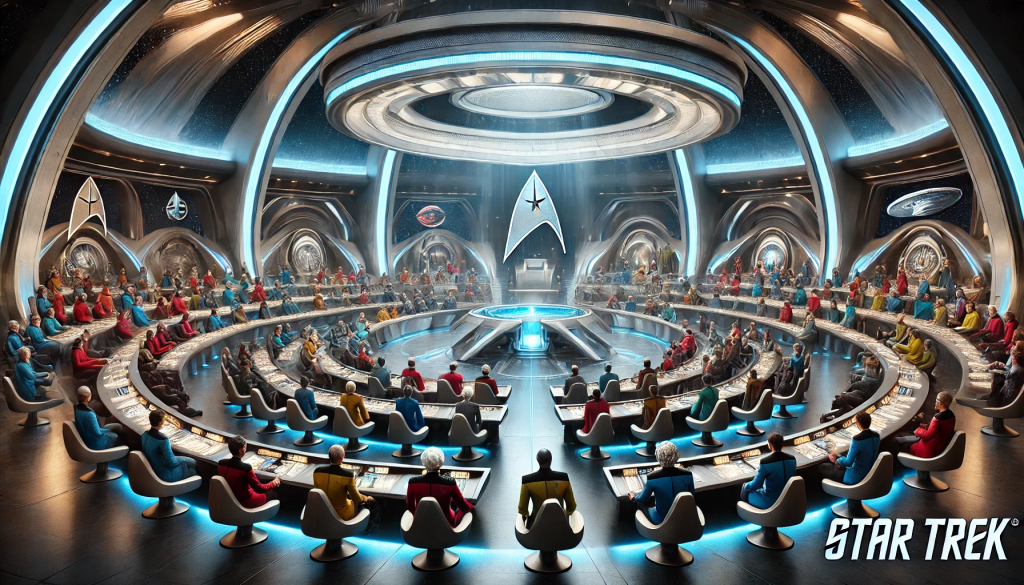
Politically, the Federation operates as a parliamentary democracy, with the Federation Council serving as its legislative body. Member planets retain autonomy over their internal affairs, while the Council oversees interplanetary law and diplomacy. The President, based in Paris on Earth, functions as the head of state. This balance between centralized governance and local autonomy is a strength, but it also leads to conflict. In Deep Space Nine, Bajor’s hesitation to join the Federation stems from fears of losing cultural identity to Earth-centric norms, a recurring critique that the Federation, despite its claims of equality, often reflects Earth’s values more than those of its alien members.

Ethics play a central role in Federation politics, often taking precedence over realpolitik. The Prime Directive, which prohibits interference with the natural development of pre-warp civilizations, exemplifies this commitment to morality. However, its strict application frequently leads to moral quandaries. In the Next Generation episode “Pen Pals,” Captain Picard grapples with whether to save a planet facing natural destruction, knowing that intervention would violate the Directive. These dilemmas reveal the challenges of maintaining an ethical stance in an imperfect galaxy.

Yet, the Federation’s ideals are not invulnerable. Darker elements, such as Section 31, a covert intelligence agency introduced in DS9, operate outside the bounds of Federation law to protect its interests. This shadowy organization embodies the tension between the Federation’s noble aspirations and the harsh realities of interstellar politics. Similarly, the Dominion War in DS9 exposes the Federation’s capacity for militarization, challenging the perception of Starfleet as a purely exploratory and diplomatic force.

What makes the Federation compelling is its dual nature: it is both a beacon of hope and a reflection of humanity’s flaws. In Star Trek VI: The Undiscovered Country, the Federation negotiates peace with the Klingon Empire, showcasing its dedication to diplomacy even after decades of hostility. Yet, this same Federation harbors internal threats, as seen in the DS9 episodes “Homefront” and “Paradise Lost,” where a Starfleet admiral attempts a coup in response to Changeling infiltration. These stories remind us that even the most enlightened institutions are vulnerable to fear and corruption.

Ultimately, the Federation is not just a backdrop for Star Trek’s adventures; it is a character in its own right, embodying the complexities of governance, diversity, and ethical leadership. Its triumphs inspire us to imagine a better future, while its flaws remind us that such a future is not achieved without struggle. By exploring these themes, Star Trek offers not just escapism, but a profound commentary on the challenges and possibilities of building a just and inclusive society.

New Year’s Eve: A Reflection on Old Traditions and New Paths

December 31st, New Year’s Eve, has rarely held much charm for me. The holiday feels drenched in sentimentality, forced cheer, and an overbearing expectation to reinvent oneself overnight. Years ago, I quietly stepped away from the revelry, trading the clinking of champagne glasses for moments of introspection. But it wasn’t always this way.

In my early thirties, I poured my energy into organizing rambunctious New Year’s celebrations with my university friends, and a few trusted work colleagues. These weren’t ordinary parties; they were full-blown, three-night events, held in ancient locations – castles in Northumberland, estates in the Lake District, or lodges in Snowdonia.

Planning began months in advance. We’d estimate guest numbers, scout properties, draft menus, and prepare endless shopping lists. My friend Vivienne and I spent weeks curating every detail; maps to the venue, suggested activities, which ranged from rock climbing to pub crawls, from shopping to board games, and even a schedule for who’d take turns cooking meals, washing dishes or restocking the booze. Everyone pitched in, and those who didn’t weren’t invited back, except for Nigel and Rosie, because we loved them anyway. 

The guest list was as colorful as the events themselves: a Scottish laird, a supermarket heiress, police officers, geologists, a Hercules Loadmaster, an Australian Homeopath, and enough PhDs to launch a think tank. That first year, we hosted 40 people. By the time I attended my last event, the crowd had grown to over 70.

Eventually, I passed the torch to others, especially after I moved continents. Yet, decades later, those New Year’s gatherings still persist, now infused with the energy of attendees’ children, and the nostalgia of enduring friendships. For many years, my holiday ritual involved crossing the Atlantic; first to visit family for Christmas, then to join these gatherings, where we’d reminisce over old stories and create new ones – especially stories answering the question “why did Andy always have a black eye?” 

But somewhere along the way, I began to feel restless. The same stories, the same faces, the same patterns – what once felt comforting, now seemed like a closed time loop, that I couldn’t escape. As I built a life, and family in North America, I realized it was time to step away, and embrace new traditions, ones that allowed for evolution and personal growth. 

It’s funny, I hadn’t planned to write about this today. I rarely share personal stories like this, and maybe that’s something I’ll change in the coming year.

To everyone I love, near and far: Happy New Year. May 2025 bring you peace, fulfillment, and a wondrously, meaningful life.

The Next James Bond Adventure

With no indication as to when the next James Bond film will arrive, as Amazon Prime Video, the new owners of the intellectual property, continue to bicker with the franchise producer Barbara Broccoli, I figured I’d take a shot at writing the next chapter myself. And honestly, any similarity to real world people is purely coincidental. 

Title: Bond 26 – Selene Ascending 

Outline:
Set in the year 2030, the world is at the dawn of interplanetary expansion, led by tech tycoons who promise a new golden age. Among them is Elias Mercer (E.M.), a magnetic and controversial white Zimbabwean billionaire who has made Erebus Industries the leader in space exploration. While the world sees him as a visionary, Mercer harbors an audacious and dangerous plan: to control humanity’s future in space, starting with the Moon, Mars, and the wealth of the asteroid belt.

James Bond, a rugged, black, 30-something ex-Special Forces operative from a northern working-class English background, (think the Napoleonic character Richard Sharp in a tux), is recruited by MI6 for his unorthodox skills and adaptability. Bond’s charm, wit, and no-nonsense demeanor make him a refreshing and formidable 00 agent.

Act 1: A New Frontier
The film begins with Bond infiltrating a high-tech heist at a cutting-edge mining facility in Cornwall, England, where Erebus Industries agents steal classified plans for a new propulsion technology. Bond manages to retrieve part of the data, revealing that Mercer’s true target is Asteroid 16 Psyche, a metallic asteroid worth trillions of dollars in rare metals. Capturing it would make Mercer unimaginably rich and provide the raw materials to revolutionize space-based manufacturing, giving him complete dominance over off-world technology.

MI6 assigns Bond to investigate Mercer, whose Selene Station, an orbital base around the Moon, is central to his plans. Selene serves as a launch post for Mars missions and the construction site for massive interplanetary spacecraft.

Bond travels to Cairo, Egypt, to meet Dr. Yasmine Naim, a brilliant Egyptian astrophysicist who once worked on Mercer’s asteroid capture project, but left due to his ruthless methods. Yasmine, fiercely intelligent and driven, is initially reluctant to help, fearing Mercer’s reach and influence. Bond’s grit and sincerity earn her trust, and she provides vital intel: Mercer plans to use Selene Station to help reroute 16 Psyche’s orbit into lunar proximity, where he can mine it directly.

Act 2: The High-Stakes Chase
Bond and Yasmine travel to a secret Erebus facility in Tanzania, where Mercer’s team is developing the technology needed to capture and redirect 16 Psyche. In a high-octane sequence, Bond disrupts a test of the asteroid’s propulsion system, escaping with evidence that Mercer’s operation risks catastrophic orbital instability for Earth and the Moon.

As they evade Mercer’s relentless enforcers, Yasmine explains the stakes: capturing 16 Psyche could lead to breakthroughs in space-based manufacturing, such as constructing spacecraft in zero gravity, shielding from deadly solar radiation, and limitless clean energy. However, Mercer’s monopolization of such resources would give him the power to dictate humanity’s entire future in space.

The duo infiltrates Selene Station, smuggling aboard one of Mercer’s supply rockets. The station is a marvel of engineering, with enormous Mars-bound spacecraft under construction and a control hub for 16 Psyche’s propulsion.

Act 3: Battle for the Stars
On Selene Station, Bond and Yasmine uncover Mercer’s endgame: to redirect 16 Psyche into lunar orbit and use its wealth to cement his control over the space economy. However, the asteroid’s trajectory risks destabilizing the Moon’s orbit, triggering devastating tidal effects on Earth.

In a tense showdown, Bond and Yasmine sabotage Selene’s guidance systems. Bond engages Mercer in a brutal zero-gravity fight within the station’s command module. Mercer, armed with a powered exosuit designed for lunar construction, proves a formidable opponent, but Bond’s tactical ingenuity prevails.

Meanwhile, Yasmine uses her expertise to override the station’s systems, sending 16 Psyche back into its original orbit. However, Mercer initiates a self-destruct protocol, planning to take Bond, Yasmine, and hundreds of workers with him. In a desperate race against time, Bond and Yasmine escape in a lunar shuttle, watching as Selene Station is consumed in a fiery explosion.

Epilogue
Back on Earth, Mercer’s empire collapses as his plans are exposed. Bond and Yasmine part ways, her returning to her research, inspired to use her knowledge for the betterment of humanity. Bond returns to MI6, his northern grit and sharp wit ready for whatever challenge lies ahead.

The final scene shows Bond standing on a windswept moor in northern England, a man of Earth prepared to defend it, even among the stars.

Why my ‘70s NAIM Audio HiFi still Hits the Right Notes

In an age of slick streaming platforms and high-tech gadgets, I’m still loyal to my ‘70s NAIM Audio stereo system. This vintage setup, revered for its unmatched sound and no-nonsense durability, delivers a listening experience that many modern systems struggle to emulate. That warm, enveloping sound pulls me into the heart of every track, making even the simplest songs feel like intimate performances.

The beauty of my NAIM system, a NAC 12 pre-amp, coupled with a NAP 120 power amp, lies in its timeless craftsmanship. Built with meticulous care and engineered for longevity, it has weathered decades of use without faltering. While today’s tech often succumbs to planned obsolescence, my NAIM stereo just keeps on going, proving that true quality never goes out of style. This philosophy reflects the legacy of Julian Vereker, NAIM Audio’s founder and the mastermind behind the brand’s commitment to capturing the soul of music.

Vereker wasn’t just an engineer; he was a passionate music lover. His mission? To craft audio gear that faithfully preserves the emotion of a performance. This ethos, rooted in what audiophiles call the “British hi-fi sound,” eschews flashy effects in favor of clarity, precision, and fidelity. Listening to my NAIM system feels authentic – no overhyped bass or unnecessary frills, just the music as it was meant to be heard.

There’s also something irresistibly nostalgic about spinning my favorite albums on this classic setup. The tactile joy of turning physical dials and the sleek, minimalist design of the components make the experience as much about connection as it is about sound. In a world that often prioritizes convenience over quality, my NAIM system serves as a reminder of an era when hi-fi wasn’t just gear – it was an art form.

Yet even as I revel in my vintage setup, I can’t help but admire NAIM’s latest creation: the NAIT 50 anniversary system. Launched to celebrate the company’s 50th year, it blends NAIM’s rich heritage with modern upgrades, staying true to Vereker’s vision while embracing contemporary tech. It’s a perfect nod to the past and a bold step forward, proof that the brand’s dedication to excellence hasn’t wavered.

For me, my 1970s NAIM stereo is more than equipment – it’s a time machine and a testament to enduring craftsmanship. It proves that some things really do get better with age, and it reminds me that investing in quality always pays off. With the NAIT 50 carrying Vereker’s legacy into the future, NAIM continues to show that great sound is, and always will be, timeless.

Comedy Meets Legacy: Why Lower Decks Is Star Trek’s Most Endearing Spin-Off

Star Trek: Lower Decks is a delightfully refreshing addition to the Star Trek franchise, masterfully blending humor, heart, and reverence for its source material. Created by Mike McMahan, this animated series shifts the spotlight to the junior officers aboard the USS Cerritos, offering a comedic, yet affectionate, exploration of the daily lives and misadventures of Starfleet’s unsung heroes.

The show centers on ensigns Mariner, Boimler, Tendi, and Rutherford, whose quirks and chemistry drive the narrative. Mariner’s rebellious streak and Boimler’s neurotic ambition create a dynamic that is both hilarious and heartfelt, while Tendi’s boundless enthusiasm and Rutherford’s tech-savvy charm add layers of warmth and relatability. Together, they navigate everything from mundane maintenance tasks to chaotic alien encounters, showcasing the humor in the often-overlooked corners of Starfleet life.

The series doesn’t just celebrate Star Trek’s legacy, it revels in it. Packed with clever references and Easter eggs, Lower Decks is a treasure trove for longtime fans, while remaining accessible to newcomers. Its vibrant animation and fast-paced humor offer a fresh aesthetic that feels innovative yet unmistakably Star Trek.

A standout moment in the series is its crossover with Star Trek: Strange New Worlds, where the animated chaos of Boimler and Mariner collides with the live-action gravitas of Captain Pike and his crew. The episode brilliantly bridges the tonal and stylistic gap between the two shows, resulting in a celebration of Starfleet’s shared values that is as nostalgic as it is original.

Beneath the laughs, Lower Decks delivers heartfelt storytelling about teamwork, growth, and the unsung heroes of the Federation. It proves that Star Trek’s optimistic vision of the future remains as compelling and adaptable as ever.

The series culminated this week in a heartfelt and triumphant final episode, delivering a perfect blend of humor, nostalgia, and emotional closure that leaves fans both satisfied and longing for more. Star Trek: Lower Decks will undoubtedly be missed, but its legacy as a bold and joyful chapter in the Star Trek universe will live long and prosper.

Is this the End Of Civilization as We Know It?

Within the Hitchhiker’s Guide to the Galaxy, a trilogy told in five parts, Douglas Adams postulates that a rapid increase in the number of high street shoe shops is a clear indicator of the impending collapse of a civilization. Today, I am suggesting that Adams got it wrong; and instead of shoe stores, it’s the never ending construction and use of indoor storage facilities that is the harbinger of our society’s inevitable doom. 

H2G2 Cover

Why are we so fixated upon storing possessions that will rarely see the light of day again? Boxes of paperwork, generations of photos, and great grandma’s old wooden chest are just some of the items our kids will be dealing with at the end of our days.  Current monthly rentals run in the order of $200 to $500 for storing all our knickknacks, and the cubic capacity for conserving our personal histories continues to rise. 

During the pandemic, an acquaintance actually bought a second house because his primary residence was full, and he had run out of room to store his constantly growing collection of furniture, art and books.  Last year, I filled a large dumpster with a small part of my life’s detritus, and it was difficult to see the difference. This year, I gifted hundreds of books and DVDs to a local charity, and I finally felt some weight lifted from my shoulders. My closets are next, and the hardest part will be the kilts. 

In Sweden, they have the gentle art of death cleaning, where seniors or those battling a terminal illness organize and declutter their homes so as to save their loved ones from the burden of this cumbersome chore while grieving their loss. A more sensible life activity I cannot name, and it is the anthesis of IKEA and its flat pack storage frenzy.   

Paperwork can be digitised, meta-tagged and stored safely in the cloud. Photos likewise, and both collections can be searched and retrieved instantly, if and when needed; whereas great grandma’s chest should either be offered to the kids, or if they don’t want it, (and we all know they don’t want it) sold or gifted to someone who really has a use for it.  

Adams describes civilisation’s collapse because, in the end, all that could be bought were shoes, and so eventually we took to the trees and evolved wings.  Perhaps if we all just dealt with this overflow of physical possessions, communities could use these multi-storey repositories to provide housing and other amenities to help combat the current homelessness and lack of social housing infrastructure. 

Let’s adopt Scandinavian ways, and modify the tradition, so that starting today, indoor storage buildings gain a more meaningful use while decluttering our lives, and lifting all that weight from our shoulders.  In the meantime, I may have found a good home for my kilts within the next generation, and surprisingly, my business suits are being eyed too! 

Let’s Talk About Villeneuve’s Dune Universe 

I love the two Dune movies by Denis Villeneuve, and I am totally looking forward to the next chapter, but while I understand the need to simplify the story thread in order to make it work on the big screen, there are some things that need to be either clarified or expanded upon because the North American cultural filter really does distort the true message of Frank Herbert.   

Paul is much more than a manipulative noble. He’s a unique blend of influences: Mentat logic, Bene Gesserit discipline, Atreides honor, Fremen resilience, and Harkonnen cunning. His motivations go far beyond revenge; they stem from a profound awareness of humanity’s need to evolve. Paul doesn’t see his followers as mere tools, but as a complex mix of dangerous power and familial bonds.

Chani, meanwhile, isn’t just a warrior or a symbol of resistance. As a priestess and the daughter of Liet, her identity is deeply tied to the dream of transforming Dune into a flourishing paradise – not merely freeing the Fremen from oppression. She takes on the responsibilities of sisterhood and motherhood with Jamis’s widow and children, embracing them as her own. Chani supports Paul in his journey, urging him forward rather than standing in his way. Her love for Jessica and Alia, as well as her strategic acceptance of Paul marrying Irulan to help curb violence, highlights her strength and adaptability in a survivalist society. She’s a powerful figure shaped by her world, not a reflection of modern individualist ideals.

The Emperor, far from being a frail figure in decline, is rejuvenated by spice, and fully intent on ruling for decades. His ascension to the throne wasn’t simple or clean; he and Count Hasimir Fenring conspired together to poison his older brother thus seizing power. Irulan was never meant to be his heir or confidant; her marriage to Paul was a calculated move to pacify a rival, not that he had much choice. The Sardaukar, his elite soldiers, were formidable warriors, and used to almost destroy the Atreides because the Emperor saw that their martial training could put Duke Leto on the throne.  

Baron Harkonnen is no brutish simpleton. His villainy is sharp and calculated, and his control over his family is absolute. He wouldn’t allow his nephews to act out of turn or be blindsided by an Emperor’s arrival. The film adaptation misses much of his cunning and cruelty, leaving him underdeveloped despite ample material in the books.

The Dune universe isn’t a story of Western saviors reshaping a foreign land. Instead, it’s an intricate tale of a galactic empire steeped in Islamic and feudal traditions, where Western influences have been absorbed into a deeply anti-technological society. Power revolves around the Bene Gesserit, the Noble Houses (the Landsraad), and the Throne, with capitalism playing a significant role especially among the Harkonnens, the Ixians, and the Combine Honnete Ober Advancer Mercantiles (CHOAM). The Fremen represent a mystical and fiercely independent branch of this society, not a passive population waiting for rescue.

Other key elements also feel underexplored in adaptations: the Mentats, the Spacing Guild (which holds immense power by controlling interstellar travel), and Count Fenring, a character rich with intrigue. Perhaps the developing streaming channel shows on HBO will explore these important groups and individuals, using the prequel books as a guide?  The timeline compressions in the movie, where Paul’s journey from exile to commanding a planetary rebellion happens in the span of a pregnancy, lose the gradual buildup that Herbert carefully crafted.

Herbert’s story also draws a clear distinction between feminine and masculine power in his universe. While Jessica and Chani represent different approaches – Jessica wielding the strategic, subtle power of the Bene Gesserit and Chani embodying the pragmatic strength of the Fremen; modern retellings often blur these lines. Herbert’s narrative thrives on the tension and synergy between these power dynamics, especially in characters like Paul and Alia, who combine both elements. Modern interpretations sometimes lose this balance, favoring a more uniform portrayal of power that doesn’t fully reflect the original story’s complexity.

Ultimately, the developing Dune franchise is an epic achievement in storytelling and filmmaking. While adaptations might not capture every nuance, they still offer a breathtaking vision of Herbert’s world. The beauty and ambition of these films are undeniable, even if certain character dynamics or narrative layers are simplified. It’s worth watching and appreciating the scope of what it achieves – even as we continue to discuss what it leaves out.

My Love Affair with the Northumbrian Smallpipes

I want to share my love of Northumbrian smallpipes with you. Yes, it is partly because I was born and raised in that part of the world, but I have always been a huge fan of the folk music and instruments of the British Isles.  In my late teen/early twenties, I was a member of an electric folk band called ‘Pastime with Good Company’ playing a variety of the ‘fill’ instruments such as mandolin, crumhorn, and bodhran, along with the odd backing vocals. We were paid in beer for the first year or two, and it was just great fun seeing the same friendly faces at the Blackbird, the King’s Arms or a Working Men’s club. 

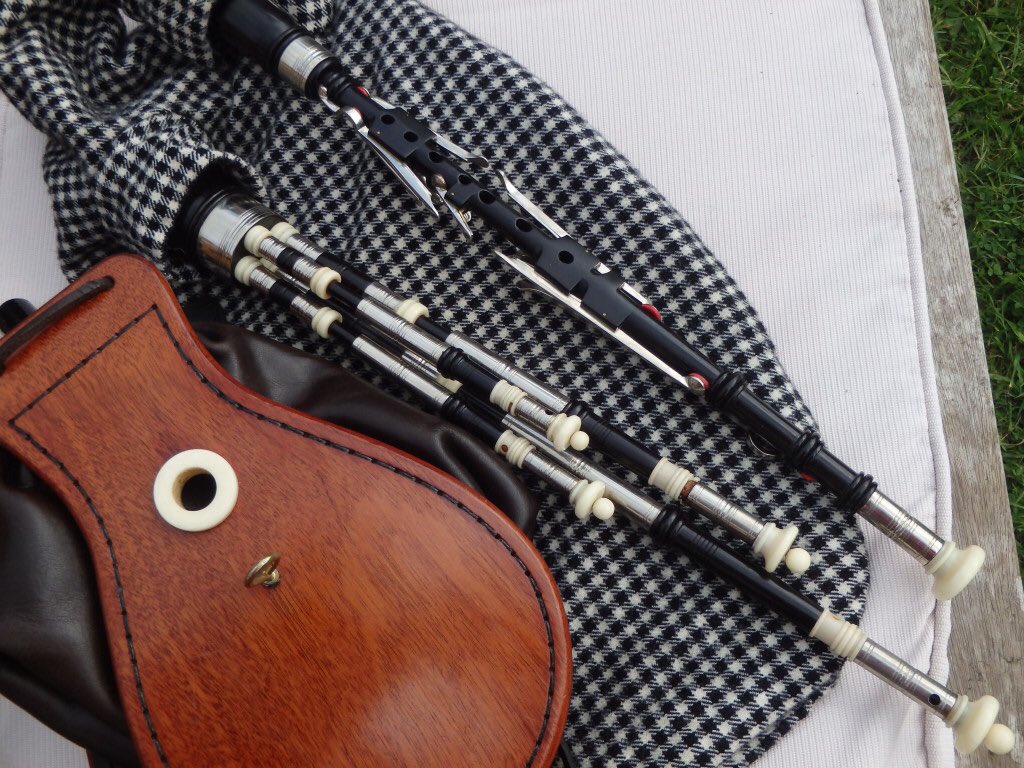
The Northumbrian smallpipes are a traditional folk instrument from Northeast England with a rich and varied history. These small pipes are known for their sweet, melodious sound, and are distinguished by their closed-finger holes, allowing for a staccato playing style unique among bagpipes.

Dating back to the 17th century, their evolution was heavily influenced by various cultural and musical trends over the centuries. The modern version, with its distinctive closed chanter and keyed system, emerged in the early 19th century, thanks to innovations by pipemakers such as John Dunn and Robert Reid.

Throughout its history, the Northumbrian piping tradition has been shaped by many notable musicians. One key figure is Billy Pigg (1902-1968), renowned for his virtuosic playing and composition. Pigg’s influence on the Northumbrian piping repertoire is profound, with many of his compositions still widely played today. He was a central figure in reviving interest in the instrument during the mid-20th century, often performing at folk festivals and on radio broadcasts.

Another significant figure is Richard Butler, an old work colleague and friend, who served as the Duke of Northumberland’s Piper for four decades until his death in 2022. I remember watching and listening to Richard practice most lunchtimes, while I munched on my date and cream cheese stottie, drinking tea from one of the lab’s old enamel mugs. Butler was an esteemed piper and educator, known for his deep knowledge of the instrument and his contributions to Northumbrian music. He played at many high-profile events, including performances for British royalty, as well as producing educational materials for the pipes, ensuring the tradition’s continuation through his teaching and published works. 

The history of the Northumbrian smallpipes is marked by the role of ducal piper at Alnwick Castle. This tradition dates back to the 18th century, with pipers playing at various ceremonial and public functions. Notable past pipers, before Richard, include William Green and Tom Clough, both of whom made significant contributions to the repertoire and technique of Northumbrian piping. Andrew Davison is the current official Piper to His Grace the Duke of Northumberland, and Chairman of the Northumbrian Pipers’ Society.

Kathryn Tickell, a modern-day ambassador of the Northumbrian smallpipes, has further elevated the instrument’s profile. Born in 1967, Tickell learned to play from her family and local pipers. Her career has seen her perform internationally, collaborate with various artists, and release numerous acclaimed albums. Tickell’s contributions have been pivotal in bringing the Northumbrian pipes to new audiences and ensuring their ongoing relevance in contemporary music. Her work with Sting and Jon Lord has always been favourites of mine, but it’s her ability to blend the pipes with more modern instruments and the human voice that pleases me the most.

The Northumbrian smallpipes continue to build their storied history, enriched by the contributions of many talented musicians including Ian Gelston, Alice Robinson, and Andrew Lawrenson. From the early pipers who developed the instrument to modern virtuosos like Kathryn Tickell, the tradition continues to thrive, bridging the past with the present. Richard Butler’s legacy exemplifies the dedication required to preserve and advance this unique musical tradition.

When I get a moment, I will update this post with links to some of my favourite pieces.

Dr. Phlox – The Polyamorous, Nuanced, Enterprising Physician

In my humble opinion, Dr. Phlox from Star Trek: Enterprise is one of the greatest characters in the Star Trek franchise due to his unique perspective, compassionate nature, and nuanced approach to ethics and culture. As a Denobulan, Phlox’s background adds richness to the series, offering insights into alien cultures while serving as a mirror for humanity’s struggles and growth.

Phlox’s unflinching optimism and humour are essential in balancing the darker, more perilous tone of Enterprise. In “Dear Doctor,” his moral dilemma about whether to cure a pre-warp civilization’s genetic condition highlights his deep commitment to the principles of non-interference, even at great personal cost. His reasoning forces Captain Archer and the audience to grapple with the complexities of the Prime Directive, even before it was formally established.

In “Doctor’s Orders,” Phlox’s resilience and ingenuity shine as he singlehandedly pilots the Enterprise through a dangerous region of space. The episode showcases his resourcefulness and unyielding commitment to his crewmates, even when isolation and stress threaten his sanity.

Phlox’s open-mindedness about relationships and culture provides a refreshing counterpoint to the often-rigid human norms. His polyamorous family life, discussed in episodes like “Stigma,” challenges human biases and promotes acceptance, underscoring the franchise’s core values of diversity and understanding.

Dr. Phlox embodies compassion, intellect, and moral courage, qualities that resonate with Star Trek’s aspirational vision of the future. His distinctive personality and profound contributions to Enterprise make him a standout character in the Star Trek universe.

NUFC Needs A New Stadium Complex

For all true Geordies, there is only one sports team that holds a place in our hearts. Newcastle United is an integral part of the region’s identity, as is the stadium St James’ Park, home to the team since 1892, yet SJP is constrained by its urban location, surrounded by Leazes Terrace, roads, and nearby developments. While SJP holds huge sentimental value for the club, the city and the fans, perhaps it’s time to consider developing a new stadium complex in a less restricted area of the city?

While upgrading St James’ Park might seem like a cheaper option, retrofitting an older structure can often become a costly and prolonged endeavour. Unforeseen complications in renovation projects frequently inflate budgets beyond initial estimates.

Conversely, a new stadium, although more expensive initially, would be designed with modern construction techniques that ensure cost predictability, energy efficiency, and future adaptability. Additionally, a state-of-the-art facility could significantly boost the local economy by attracting major events like concerts, international matches, and other large-scale events that St James’ Park cannot readily accommodate.

With Newcastle United’s ambitious ownership and growing status in the Premier League, the club will need facilities that reflect its aspirations. A new stadium with a capacity of 70,000, even 80,000 plus, could match or exceed competitors like Tottenham Hotspur and Manchester City in terms of matchday revenue, sponsorship opportunities, and global visibility.

A brownfield site near the River Tyne presents a compelling option for Newcastle United’s new stadium complex. Its unique location and redevelopment potential make it an attractive alternative to expanding St James’ Park. The site’s proximity to the River Tyne places it within reach of Newcastle’s city centre, ensuring the new stadium remains a core part of the city’s identity. Excellent transport links, including nearby Metro stations, bus routes, and road infrastructure, would allow fans easy access while avoiding the current congestion challenges of St James’ Park.

The redevelopment of a brownfield site aligns with urban planning principles of repurposing underutilized land rather than consuming greenfield areas, minimizing environmental disruption. The larger area could also accommodate additional amenities, such as a dedicated fan zone, expansive parking, and training facilities, turning the stadium into a multifunctional venue for year-round events. The new stadium could incorporate features like solar panels, green roofs, and rainwater harvesting systems, reducing its environmental footprint. The proximity to the River Tyne also presents opportunities for innovative eco-design, such as utilizing the river for heating and cooling systems through heat pump technology.

A stadium beside the River Tyne would give Newcastle United a visually striking and iconic location. The riverside view could become a signature image for the club, much like Anfield’s Shankly Gates or the view of the Thames from Fulham’s Craven Cottage.

While St James’ Park holds sentimental value for Newcastle fans, the limitations imposed by its location, age, and structure suggest that a new stadium would better serve the club’s aspirations and fans’ needs. It is an opportunity to honor Newcastle United’s history while embracing a bold, modern vision for its future.

Sources
Brownfield Regeneration UK (2023). “Case Studies in Urban Redevelopment.
Newcastle Chronicle (2024). “Potential Sites for Newcastle United’s New Stadium.
The Guardian (2022). “Stadiums as Catalysts for Urban Growth.”
Environment Agency (2023). “Managing Flood Risks in Riverside Developments.”
The Athletic (2024). “Newcastle United’s Long-Term Stadium Plans.”
Smith, J. (2023). “Stadium Expansion vs. New Build: Challenges for Premier League Clubs.” Football Architecture Journal.
Jones, R. (2022). “Economic Impacts of Modern Football Stadiums on Urban Development.” Sports Economics Quarterly.
Newcastle Chronicle (2024). “Why St James’ Park Expansion Is Almost Impossible.”