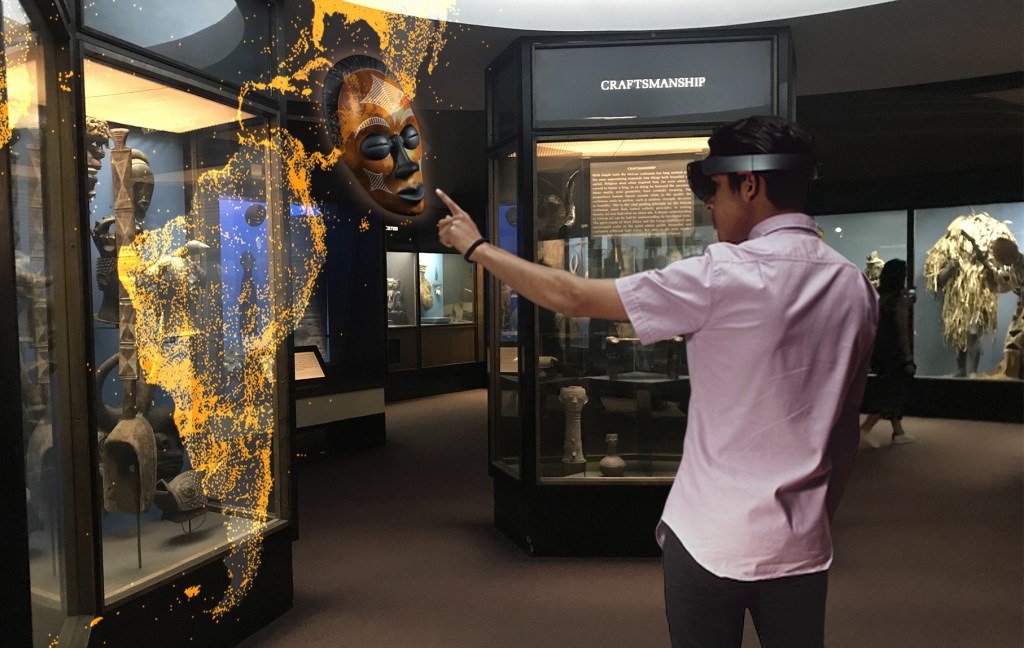
The Future of Museums, Part One: Reckoning with the Past

Museums occupy a cherished yet complicated place in our cultural landscape. They are, at their best, sanctuaries of human achievement and memory; places where we marvel, learn, and connect. They are guardians of our collective stories, offering glimpses into lives, ideas, and aesthetics across time and geography. Yet increasingly, those guardianship roles are being scrutinized. In this post, the first of a two-part reflection, I want to explore how museums must reckon with their past in order to remain relevant, ethical, and inspirational institutions in a post-colonial world.

Modern museums serve multiple purposes. They are educators, preserving and interpreting both natural and human histories. Through exhibitions, talks, and online media, they help us understand not only what came before us, but also how those pasts continue to shape the present. They are also preservers of culture, entrusted with tangible and intangible heritage, from tools and textiles to oral traditions and sacred rites. Increasingly, they are also spaces of community engagement and social inclusion. The best of today’s museums are no longer content to speak about people; they strive to speak with them, creating room for conversations around identity, migration, environment, and justice. And let’s not forget their economic impact: museums draw visitors, support local artisans, and boost cultural tourism. Their value is not only educational, but civic and economic.

And yet, many of the very objects that give museums their gravitas are also at the heart of a profound ethical challenge. Too many were acquired in contexts of coercion, extraction, or outright theft during the height of imperial expansion. The British Museum’s possession of the Elgin Marbles or the Rosetta Stone, icons of antiquity mired in controversy, is not exceptional; it is emblematic. These artifacts, however artfully displayed, carry the invisible weight of colonial conquest. For many communities of origin, their removal constitutes not just a historical grievance, but an ongoing erasure of identity.

Western museums often point to their capacity to conserve, study, and exhibit these artifacts responsibly. They argue, sometimes sincerely, that global access to human history is a noble goal. But this defense rings hollow in a world where digital preservation is commonplace and where the moral imperative to return stolen cultural property grows louder each year. The question isn’t simply who can care for these artefacts, it’s who should.

Repatriation, the return of cultural property to its place of origin, has shifted from a theoretical debate to a global movement. France’s pledge to return looted artifacts to Benin, Germany’s restitution of the Benin Bronzes, and the Smithsonian’s newly developed ethical return policies are not fringe gestures. They are signals of a deeper cultural shift. Repatriation, after all, is not just about boxes being shipped back across oceans. It’s about truth-telling. It’s about nations acknowledging histories of violence and dispossession, and about institutions committing to restorative justice.

This new ethical landscape demands changes in practice. Provenance research, once an obscure archival task, must now be a public commitment. Shared custodianship models, where institutions collaborate with origin communities to co-curate, rotate, or jointly own artifacts, offer ways forward that don’t sacrifice conservation. And above all, museums must embrace the decolonization of their own internal cultures: rethinking who gets to tell the stories, who sits on the boards, and whose voices shape the narrative.

Museums can still be temples of learning and wonder. But for them to truly serve society in the 21st century, they must relinquish their roles as colonial trophy cases. The future lies in humility, transparency, and cooperation. In part two of this series, I’ll look at how new technologies and evolving curatorial philosophies are helping museums reinvent themselves for the world to come.

Ottawa At Night: A Bright Step Into the Capital’s After-Hours Scene

Ottawa has long laboured under the stereotype of being a sleepy government town where the sidewalks roll up at dusk. Nightlife in the nation’s capital has been quietly evolving through careful curation of venues, live music, food offerings, and niche late-night culture. The City has now created a central portal aimed at aggregating entertainment options while offering clear, accessible safety information. The result is a civic initiative that feels both timely and responsible.

The site functions as a hub rather than a hype machine. Design choices favour clarity and usability. Visitors encounter a cleanly organized venues directory, a safety section that points to trusted public health resources, and a business area that consolidates permits and licensing guidance. The tone is professional and approachable, which suits a municipal platform whose aim is to broaden participation in the night economy while maintaining public safety.

The venues directory is the site’s core. Category and location filters provide a practical way to find music venues, bars, lounges, and cultural spaces. Each listing supplies essentials such as name and address alongside genre tags that communicate the nightly atmosphere. This structure is especially helpful for patrons seeking a particular sound or vibe, from intimate jazz rooms to late-night electronic sets and drag performances. The directory reflects a diverse cultural offering that will surprise those who still picture Ottawa as monochrome after dark.

Safety receives thoughtful attention. The site links to harm reduction guidance and public health materials rather than attempting to recreate clinical advice. That approach builds credibility. Safety information is presented as a core part of the proposition rather than an afterthought, which sends a clear message that expanding the night economy must be done with public wellbeing in mind.

Resources for businesses demonstrate the City’s recognition of nightlife as an economic driver. Permit information, licensing details, and strategic planning documents are gathered in one place. This helps operators navigate civic requirements and signals that the municipality intends to partner with the private sector rather than simply regulate it. The inclusion of an Insiders section, which points to local newsletters and scene curators, is a welcome nod to the grassroots networks that actually animate the night scene.

In its current incarnation, the site succeeds at centralizing information and legitimizing after-dark culture as a civic priority. It feels like a strong launch platform that sets the groundwork for a more dynamic, user-focused service. To evolve into the indispensable tool that patrons, promoters, and visitors will rely upon, the site should add features that make discovery spatial, immediate, and deeply searchable.

Upgrades and Improvements to Make Ottawa At Night Truly Useful

  1. Map-Based User Interface A split-screen map and list view would turn a static directory into an exploratory tool. Clustered markers in denser neighbourhoods, clickable venue callouts, and the ability to draw a search box on the map would speed discovery for both tourists and locals planning a multi-stop evening.
  2. Cuisine Filtering Food choice often drives evening plans. Add structured cuisine tags such as Italian, Indian, Thai, Ethiopian, Mexican, Middle Eastern, Caribbean, and vegetarian or vegan options. Include kitchen hours so a user can find venues serving late dinners or small plates before a show.
  3. Enhanced Search Facets Extend search beyond music and neighbourhood. Offer filters for price range, accessibility, outdoor patio, open now, family friendly, gender neutral washrooms, and age restrictions. Granular facets reduce decision friction and increase confidence when choosing a venue.
  4. Integrated Event Calendar An events calendar with ticket links and add-to-calendar functionality would give the site a living pulse. Allow users to filter events by date, genre, and venue, and permit venues to post recurring nightlies. This transforms the portal from a directory into an event discovery engine.
  5. Transit and Ride Integration Embed late-night transit data, suggested pickup points for ride-share services, and walking times between venues. Clear routing information reduces the uncertainty that often dampens spontaneous nights out and improves safety outcomes.
  6. Accessibility and Safety Tags Make accessibility and safety facts prominent. Tag wheelchair access, accessible washrooms, service animal policy, quiet areas, and proximity to safe pick-up locations. Visibility of these details broadens inclusion for patrons with differing needs.
  7. User Ratings and Short Reviews Introduce a lightweight review system with verification for venue owners. Short, moderated reviews provide social proof while preserving a professional tone. Combine editorial descriptions with user impressions for balanced listings.
  8. Venue Claiming and Live Updates Allow venues to claim listings and update hours, menus, and event schedules through a verified portal. A moderated workflow keeps data accurate without imposing heavy administrative burden on City staff.
  9. Open Data and API Publish an exportable dataset and a simple API so local apps, tourism operators, and researchers can reuse the listings and events. Open data multiplies civic investment and supports the broader night economy ecosystem.
  10. Personalized Itinerary Builder Add an itinerary tool that chains dinner, a show, and a late-night bar with travel time calculated automatically. Shareable itineraries make planning with friends effortless and encourage multi-venue nights.
  11. Popularity Signals Provide anonymized crowd-level indicators, initially based on scheduled events rather than live tracking. Event-driven signals give a sense of atmosphere without creating privacy concerns.
  12. Multilingual Expansion Offer partial translations of key pages in languages frequently used by visitors to the city. This increases accessibility for international tourists and supports broader cultural engagement.

Review source and official site: https://ottawaatnight.ca

Along with general information about the site for the public, this review aims to provide constructive, actionable recommendations that can be handed to designers or civic teams for implementation.

My Favorite Films Part III: Music, Story, and Cinematic Art

This third installment continues my celebration of cinema as a multisensory art form, with music once again our guide. These seven films span epochs, genres, and emotions, from epic battles to transcendent romance, each bound by the way soundscapes enrich story, character, and image. They are films where music isn’t background noise; it’s atmosphere, character, and memory, and I return to them because they resonate as deeply for my ears as they do for my eyes and heart.

12. Kingdom of Heaven (Director’s Cut)
2005 (Director’s Cut 2005) | Director: Ridley Scott | Writer: William Monahan

A blacksmith becomes a knight in Jerusalem, defending the city during the Crusades as faith, politics, and identity clash in epic conflict. The Director’s Cut restores 45 minutes of character depth and narrative clarity.

Why I like it: The Director’s Cut deepens the emotional stakes and moral tension, making every battle and moment of faith feel earned. Harry Gregson-Williams’s score elevates the walls of Jerusalem and the heart of its defenders. It’s a historical epic that resonates emotionally through its music, visuals, and a compassion-filled narrative.

13. Vicky Cristina Barcelona
2008 | Director/Writer: Woody Allen

Two American friends vacation in Barcelona, entangled in romance with a charismatic painter and his unstable ex-wife, a messy, sensual exploration of desire and self.

Why I like it: The vibrant Spanish setting and passionate performances draw me in, and the music, weaving classical and flamenco tones, makes the city sing. It’s playful, messy, and beautiful; like love itself, a collision of impulse, emotion, and art that I find utterly irresistible.

14. Dune: Part One & Part Two
2021 & 2024 | Director: Denis Villeneuve | Writers: Jon Spaihts, Denis Villeneuve, Eric Roth; Frank Herbert for Part Two

Set on the desert planet Arrakis, Paul Atreides becomes the prophesied leader, navigating politics, prophecy, and rebellion. The saga crescendos with alliances, revenge, and evolving destinies amid cosmic danger.

Why I like it: Villeneuve’s vision pairs epic scale with intimate emotion, and Hans Zimmer’s haunting score makes the spice-laden dunes thrum inside me. Part Two’s deeper political and emotional arc, “a love story first” even amid war, anchors its grandeur in human feeling, perfectly in tune with my love of story carried by sound and scope.

15. Across the Universe
2007 | Director: Julie Taymor | Writers: Dick Clement, Ian La Frenais, Julie Taymor

A psychedelic musical romance set against 1960s America, weaving 34 Beatles songs into a story of love, politics, and the counterculture era.

Why I like it: A film where soundtrack is substance – the Beatles’ music tells the emotions of war, youth, and love. Taymor’s visuals are feverish and inventive, and the songs don’t just play – they pulse. It’s a vivid dream of political and romantic energy that lives in my heart like a favorite song.

16. Cairo Time
2009 | Director/Writer: Ruba Nadda

A Canadian woman waiting for her husband in Cairo forms a quiet, unexpected connection with a local friend; an atmospheric film of longing and place.

Why I like it: It’s a film of small moments made powerful, the hush of Cairo mornings, unspoken longing, and ambient sound that’s almost music. Niall Byrne’s score gently underscores longing and cultural nuance. It’s a quiet romance, rich in atmosphere and subtle emotion.

17. Henry V
1989 | Director/Writer: Kenneth Branagh

Shakespeare’s history play brought to cinematic life. King Henry rallies his soldiers against overwhelming odds, blending heroic oratory with battlefield grit.

Why I like it: Branagh’s passionate performance, poetic language, and sweeping visuals are all heightened by Patrick Doyle’s stirring score. It moves me when words alone could not. It’s bravery made beautiful, sound and speech united in grand purpose.

18. Orlando
1992 | Director/Writer: Sally Potter

A gender-fluid soul wanders across centuries, shifting identity and time, in a cinematic ode to self, history, and transformation.

Why I like it: Orlando is visual poetry, and its minimalist, haunting score echoes Woolf’s timelessness. The film flows like a piece of ambient music, dreamlike and meditative, reminding me how cinema can feel like breathing through centuries. It’s as much emotion as art, ebbing in time and sound.

Closing Thoughts
These seven films span conflict, identity, wonder, and connectionyet what binds them for me is the music. Whether epic orchestras, Beatles melodies, ambient ambience, or subtle composition, each soundtrack shapes the story’s soul. They remind me that a film becomes unforgettable not just through how it looks or what happens, but how it feels. In this part of my personal canon, sound is the membrane between scene and heart, and these films resonate there.

The Billion-Dollar Bonk: A Light-Hearted Look at How Much Men Spend Chasing the Booty

Let’s face it, men across the globe, are hopelessly, hilariously, and historically committed to spending absurd amounts of money trying to see, touch, or vaguely interact with sex. Whether it’s through in-person escapades, premium subscriptions to people named “CandyHearts69,” or an emotional relationship with a chatbot named “Mia the Naughty Elf,” men have collectively built a sexual spending empire that could probably fund world peace, colonize Mars, and still leave room for snacks.

Sex Work Is Work… and Business Is Booming
According to a 2023 report by Statista, the global commercial sex industry (we’re talking in-person, real-world sex work here) rakes in over $180 billion USD annually. That’s “billion” with a “B,” as in “Bonkers.” To put that in perspective, that’s more than the GDP of Hungary. That’s more than people spend on coffee. More than on Netflix. More than on avocado toast. Basically, if sex work were a country, it’d be hosting the Olympics by now.

Of that amount, it’s estimated that 90–95% of clients are male, making men the financial backbone of the world’s oldest profession. In other words, if the sex economy were a chair, men would be all four legs, the cushion, and probably the wobbly bit under the seat nobody can tighten.

Porn – The Only Subscription Men Never Cancel
Now, onto the virtual wonderland that is online porn. This is where the numbers get truly pants-down ridiculous.

According to a 2022 report from the University of Nevada, the online pornography industry brings in about $15 billion USD per year. That includes everything from subscriptions to OnlyFans, cam sites, custom videos, and, yes, that one guy still buying DVDs in 2025.

OnlyFans alone had 190 million users as of 2023 and paid out over $5 billion to creators in a single year. The majority of subscribers? You guessed it – men. The platform is less “OnlyFans” and more “OnlyDudes-Willing-To-Pay-$12.95-a-Month-To-Be-Called-Baby.”

Cam sites like Chaturbate and Stripchat bring in hundreds of millions annually, where men tip tokens for things like “wiggle,” “bounce,” “moan,” or the sacred “ask-me-about-my-feet” tier. For some reason, knowing it’s live makes it feel more “authentic,” like artisan cheese or handcrafted bread, but much sweatier.

Let’s Not Forget the Analog Guys
There’s a whole other demographic of men still spending money in more traditional ways: strip clubs, bachelor party dancers, and sketchy motel rooms with plastic plants and a mirror on the ceiling. While harder to quantify, strip clubs in the U.S. alone generate over $6 billion a year (IBISWorld, 2023). That’s just men throwing cash into the air to temporarily feel like a 2003 rap video.

Don’t get us started on massage parlors with “happy endings,” where the happiness is subjective and the endings are suspiciously pricey.

A Global Brotherhood of Bonkonomics
Let’s break it down globally, shall we?
Japan: Home of the “soapland” and cosplay cafes, Japanese men drop $24 billion USD a year on the adult entertainment industry (Deloitte Japan, 2022).
Germany: Legal sex work contributes $20 billion USD annually, making it both efficient and very, very naked.
United States: Between porn, sex work (legal and not-so-much), and clubs, American men alone contribute $35–50 billion to the sex economy.
United Kingdom: British men spend about £5 billion (≈$6.3 billion USD) annually, presumably while apologizing and calling everyone “love.”

Everywhere, men are paying for sex in some form like it’s a gym membership: full of guilt, poorly hidden, and rarely used to its full potential.

What Could That Money Buy?
So, what could men have done instead?
• Bought every citizen on Earth a decent sandwich.
• Rebuilt Notre Dame in solid gold.
• Cloned David Beckham 48,000 times.
• Paid off the student debt of every art history major in North America – twice.

But no. We have chosen nipples over Nobel Prizes. We live in a world where men will argue over who pays for dinner, then quietly drop $300 a month on a cam girl who once said “hi” with a winky face.

A Round of Applause (and Possibly Penicillin)
Let’s not judge too harshly. After all, sex, paid or not, is part of being human. Yet the sheer economic scale of men’s pursuit of orgasms is an impressive, bewildering testament to male dedication, desire, and sheer… enthusiasm. Whether through a screen or in person, whether it’s emotional support from an AI waifu or a dancer named Sapphire who knows how to make eye contact feel like a confessional, men will continue to spend.

Because in the end, some things are eternal: death, taxes, and a man handing over his credit card to see some booty.

Sources
• Statista, “Size of the global commercial sex industry,” 2023.
• University of Nevada, “Pornography Industry Report,” 2022.
• IBISWorld, “Strip Clubs in the US – Market Size 2023.”
• Deloitte Japan, “Adult Industry Revenue Report,” 2022.
• The Independent (UK), “Britons Spend £5 Billion a Year on Adult Services,” 2023.

My Favorite Films Part II: Music, Story, and Cinematic Art

Continuing my exploration of favorite films, this second collection also celebrates the interplay of music, storytelling, and cinematic artistry. These are films where the soundtrack does more than accompany the action – it shapes every emotion, enhances every character, and magnifies the power of performance and visual design. Each film here is a complete sensory experience, one that I return to because it moves me as much musically as it does narratively.

6. Pride and Prejudice (2005)
2005 | Director: Joe Wright | Writer: Deborah Moggach (from Austen)

Elizabeth Bennet challenges social norms and her own prejudices as she sparrs with Mr. Darcy, finding unexpected love.

Why I like it: Elizabeth’s intelligence, independence, and wit speak to me. Dario Marianelli’s piano-driven score guides every heartbeat, from tension to longing, heightening the romantic and social stakes. I love how the music works with the performances and cinematography to make subtle emotion tangible. It’s a film where intellect, feeling, and music are inseparable, mirroring my own appreciation for stories that engage both mind and heart.

7. Casino Royale
2006 | Director: Martin Campbell | Writers: Neal Purvis, Robert Wade, Paul Haggis (from Fleming)

James Bond earns his license to kill, facing betrayal, love, and his own emotional awakening in a deadly high-stakes game.

Why I like it: I enjoy seeing Bond stripped to his raw humanity, vulnerable yet cunning. The soundtrack – from Chris Cornell’s theme to tense orchestration – heightens every moment of risk and emotion. I love the fusion of storytelling, music, and action: the score amplifies tension and heartbreak alike, letting me experience the stakes as fully as the characters do.

8. Kill Bill Vol. 1 & 2
2003, 2004 | Director/Writer: Quentin Tarantino

A betrayed assassin, the Bride, embarks on a relentless, stylish quest for vengeance and, ultimately, peace.

Why I like it: The film is an operatic spectacle, and the music – spanning Ennio Morricone, Japanese pop, and rock – propels every fight, escape, and revelation. I revel in the intensity, style, and layered storytelling. The Bride’s journey is one of transformation, resilience, and autonomy, and the soundtrack ensures each beat lands with cinematic and emotional precision, making it unforgettable.

9. Possession (2002)
2002 | Director: Neil LaBute | Writers: David Henry Hwang, Laura Jones, Neil LaBute (from A. S. Byatt)

Modern scholars unravel the secret romance of two Victorian poets, uncovering parallels to their own lives and loves.

Why I like it: I love the way intellect, history, and romance intertwine. The haunting, lyrical music echoes the poets’ passion and underscores the emotional resonance across centuries. I’m drawn to stories where words, love, and discovery ripple through time, and the soundtrack ensures that every revelation and longing feels deeply felt.

10. Aliens
1986 | Director: James Cameron | Writers: James Cameron (screenplay); story by Cameron, David Giler, Walter Hill

Ellen Ripley returns to confront the alien menace, finding both terror and her fierce maternal strength.

Why I like it: Ripley’s courage and care inspire me. James Horner’s score heightens every moment of terror, heroism, and triumph. I’m drawn to the tension, the bonds of chosen family, and the way music amplifies every heartbeat, making suspense, action, and maternal devotion resonate with a visceral emotional power.

11. Moulin Rouge!
2001 | Director: Baz Luhrmann | Writers: Baz Luhrmann, Craig Pearce

A tragic love story set in a bohemian Paris cabaret, where art, passion, and sacrifice collide.

Why I like it: I’m swept up by the music, theatricality, and raw emotion. Every mash-up of pop and classical music is a sensory thrill, giving voice to passion and heartbreak. I love how the visuals, performance, and music coalesce, making the spectacle deeply moving and utterly alive, a perfect expression of art as a full-bodied experience.

Closing Thoughts
These films reaffirm my belief that cinema is a holistic art form, where music, narrative, performance, and visuals converse with one another to create a lasting emotional impact. From romance to action, from historical epic to modern tragedy, each selection captivates me through its unique harmony of sound and sight. Together with Part I, they form a personal canon – movies that I return to for inspiration, reflection, and the simple, enduring pleasure of being carried by story and music.

Five Things We Learned This Week

Week of August 16–22, 2025

Every week the world offers lessons, surprises, and turning points that reshape how we see science, politics, climate, sport, and society. From discoveries at the edge of our solar system to debates in global trade, here are five things that stood out this past week.

🪐 Science – Webb spotted a new moon of Uranus.

Astronomers using the James Webb Space Telescope identified S/2025 U1, a previously unknown moon orbiting Uranus. The object, just a few kilometers across, was detected with Webb’s NIRCam instrument. ESA released the images on August 19, marking the first Uranian moon discovery in more than two decades.

🔥 Climate – Wildfire smoke blanketed Iberia.

Southern Europe’s summer turned grim as a new round of wildfires in Portugal and northwest Spain sent thick plumes of smoke across the region. A Copernicus Sentinel-3 pass on August 17 captured the scale of the blazes, and ESA published the analysis on August 20, warning of worsening fire conditions linked to heatwaves and drought.

💱 Economy – New Zealand cut rates.

The Reserve Bank of New Zealand lowered its Official Cash Rate to 3.0% on August 20, citing subdued domestic activity and a steady decline in inflation. The move positions New Zealand as one of the first advanced economies to begin a rate-cut cycle in 2025, with global markets watching closely.

🌐 Trade – Planned US–India talks were called off.

Diplomatic calendars shifted this week when scheduled trade negotiations between the US and India were abruptly canceled on August 16. The talks were expected to tackle tariff relief and market access, but both sides agreed to delay in light of “scheduling conflicts” – a move analysts say underscores ongoing frictions.

⚽ Sports – Arsenal nicked Old Trafford.

The Premier League opened with drama as Arsenal edged Manchester United 1–0 on August 17. Riccardo Calafiori’s first-half header silenced Old Trafford and gave Arsenal an early statement win in the title race. The match was hailed as a tactical masterclass and set the tone for an intense season ahead.

From the outer reaches of Uranus’ orbit to the heat-scorched forests of Iberia, from economic shifts in the Pacific to football roars in Manchester, the week reminded us how interconnected, and unpredictable, our world remains.

We’ll be back next Saturday with another round of lessons, insights, and surprises. Until then, may your week be full of curiosity and connection.

My Favorite Films Part I: Music, Story, and Cinematic Art

For me, a film is never just a story on a screen. I experience it as a convergence of senses and artistry: the framing of a shot, the cadence of dialogue, the nuance of performance, the sweep of production design – but always, equally, the music. A soundtrack can transform a scene, turning ordinary emotion into something transcendent, guiding my heart as much as the narrative guides my mind. This first part of my favorite films highlights those that move me through story, music, and cinematic craftsmanship, forming an immersive experience I return to again and again.

1. The Lord of the Rings (Extended Editions)
2001–2003 | Director: Peter Jackson | Writers: Fran Walsh, Philippa Boyens, Peter Jackson, Stephen Sinclair

A sweeping fantasy epic where hobbits, warriors, and kings unite to destroy the One Ring, resisting corruption and forging unlikely bonds amid war.

Why I like it: I’m captivated by the depth of the world and the moral stakes of loyalty, courage, and chosen family. Howard Shore’s score is integral, a musical backbone that elevates battle, sorrow, and triumph alike. The extended editions let me linger on every character nuance, visual detail, and the orchestral music that carries the emotional weight, making the story as immersive for the heart as it is for the eyes.

2. Blade Runner (Final Cut)
2007 (original 1982) | Director: Ridley Scott | Writers: Hampton Fancher, David Peoples

In a rain-soaked, neon Los Angeles, a weary detective hunts rogue replicants, blurring the line between human and artificial life.

Why I like it: I’m drawn to its meditation on identity and mortality, a story that lingers in the mind long after the credits. Vangelis’s haunting synthesizer score defines the atmosphere, turning every raindrop and neon reflection into a sonic experience. The music, cinematography, and acting fuse seamlessly, making me feel the melancholy, tension, and beauty of a world that’s both alien and intimately human.

3. Monsoon Wedding
2001 | Director: Mira Nair | Writer: Sabrina Dhawan

A chaotic Delhi wedding gathers extended family, exposing secrets, desires, and generational tensions while celebrating resilience and love.

Why I like it: The interwoven stories of love, family, and tradition resonate deeply with my own life. The music – Bollywood, classical, and folk – animates the chaos, making every dance, argument, and revelation pulse with rhythm and emotion. I return to this film for its warmth, humor, and humanity, and the soundtrack ensures I’m dancing emotionally as well as mentally, caught up in the joy and mess of life.

4. Lawrence of Arabia
1962 | Director: David Lean | Writers: Robert Bolt, Michael Wilson

A sweeping desert epic tracing T. E. Lawrence’s transformation from eccentric officer to legendary leader of the Arab Revolt.

Why I like it: The grandeur of the deserts and Lawrence’s moral complexity enthrall me. Maurice Jarre’s score turns the desert into a character, giving voice to both isolation and transcendence. I admire the cinematic sweep, the subtlety of performance, and the orchestral music that amplifies every moment of tension, courage, and reflection. The film reminds me of the vastness of human experience, both visually and musically.

5. The Martian
2015 | Director: Ridley Scott | Writer: Drew Goddard (novel by Andy Weir)

Stranded on Mars, astronaut Mark Watney survives through ingenuity, humor, and science until Earth can bring him home.

Why I like it: I love the optimism, wit, and relentless problem-solving. The use of 70s pop songs adds humor and heart, making the isolation bearable and delightfully human. Music becomes part of survival, and every track resonates with hope, playfulness, and ingenuity. The combination of scientific ingenuity, visual storytelling, and musical choices perfectly balances intellect, emotion, and entertainment for me.

Final Thoughts
These five films exemplify how music and narrative can intertwine to create something larger than the sum of their parts. From sweeping epics to intimate tales, each one offers a fully immersive experience, engaging my imagination, my emotions, and my ear for melody and harmony. They remind me that cinema is a multidimensional art, where sight, sound, and story can linger in memory long after the screen goes dark.

Five Things We Learned This Week

Here’s the latest edition of “Five Things We Learned This Week” for Aug 9–15, 2025, showcasing five entirely new global developments—each occurring in the past seven days:

A whirlwind of weather, science, space – and a fresh kickoff in football. Here are five globally-relevant moments from the past seven days.

1. 🏛️ No Ukraine peace deal at the Alaska summit

U.S. President Donald Trump and Russia’s Vladimir Putin met in Anchorage on Aug 15. After nearly three hours, both sides left without a ceasefire agreement, though Trump called it “very productive.” Why it matters: It was the highest-level direct talk since the war’s escalation, and the lack of a deal keeps pressure on Europe and NATO to sustain support for Kyiv. Source:Reuters video report (published Aug 16, covering the Aug 15 meeting).  

2. 🌪️ Erin became 2025’s first Atlantic hurricane – and quickly strengthened

By late Aug 15, Erin intensified from a tropical storm to a hurricane over the central Atlantic, with forecasters warning of further strengthening over warm waters. Why it matters: It ends an unusually quiet start to the Atlantic season and reinforces how hot oceans can turbo-charge storms even far from land. Sources: National Hurricane Center advisories on Aug 15; overview reporting.    

3. 🧠 A brain implant restored near-conversational speech after paralysis

Scientists reported a wireless brain–computer interface that let a person with paralysis produce natural-sounding speech at everyday speeds, with substantial accuracy, in trials published Aug 14–15Why it matters: It’s a major step toward practical communication for people who can’t speak, showing rapid gains in speed and intelligibility. Sources: Nature news explainer (Aug 14) and Stanford Medicine release (Aug 15).   

4. 🛰️ Europe launched MetOp-SG-A1 on Ariane 6 to supercharge weather & air-quality data

An Ariane 6 rocket lifted off from Kourou at 21:37 local time on Aug 12 (00:37 UTC Aug 13), placing MetOp-SG-A1 into orbit. The satellite carries Copernicus Sentinel-5 instruments to monitor pollutants and ozone daily. Why it matters: Better global forecasting and climate chemistry tracking are coming from Europe’s new polar-orbiting workhorse. Sources: Arianespace press release; Airbus press note.   

5. ⚽ The Premier League kicked off – with Liverpool’s late surge

The 2025–26 Premier League season opened Aug 15, and Liverpool pulled a dramatic 4–2 win over Bournemouth at Anfield after a second-half swing. Why it matters: Beyond the points, the opener set the tone for a tightly-bunched title race predicted across England’s top flight. Sources:ESPN match report; The Guardian coverage.  

From Shearer’s Graft to Owen’s Fannyin’ — Isak’s Lost the Plot! 

By Big Mac, the OAP Blogger from Byker

Whey aye, what’s this pure pish wi’ Isak then? I’m tellin’ ye, it’s a bleedin’ disgrace! This lad could’ve been a Shearer, graftin’ away, proper Toon number 9! Man, no messing about. But noo? Nah, he’s lookin’ more like an Owen, all flash, no heart, and ready to scarper the minute he don’t get his own way. Absolute belta for takin’ the piss, if ye ask me.

Alan Shearer, now he was the real deal. A Geordie through and through, who gave every sodden drop of sweat for the Toon. None of this faffin’ about or sulkin’ when the wind changed. And then there’s Owen, a decent player maybe, but no loyalty, just a selfish git who legged it when the going got tough. Isak’s startin’ to show his true colours, and it’s nae pretty.

And it’s no just Isak who struggles wi’ loyalty and grit when movin’ on. Look at Andy Carroll, his move tae Liverpool was meant tae be a big thing, record fee and all that faff. But what happened? The poor lad ended up a right shower. Injuries kept him off the pitch, and when he did play, it was like he’d lost his feet. Never looked comfortable, like he was playin’ someone else’s game. After a while, he was shuttled off on loan and eventually sold, leavin’ Toon fans scratchin’ their heads and wonderin’ why we bothered. That’s the trouble wi’ takin’ a chance on big money moves, sometimes it just turns into a right mess.

And José Enrique? Another one who looked like he might boss it, but ended up just battlin’ injuries and poor form. When he did get on the pitch, he was all over the shop, no consistency, no confidence, just a shadow o’ the player we knew at the Toon. Fans hoped he’d sort the left-back spot, but instead he faded away and was eventually released like dead weight. Another lad who couldn’t hack it when the pressure was on, if ye ask me.

I’m well up to me neck wi’ these money-grabbing, ego-crazed wankers thinkin’ Newcastle’s just a stepping stone for their little careers. This club’s got soul, man. It’s about pride, passion, and honour. If ye can’t hack that, if ye’re too daft or too selfish to get that, then do us all a favour, jog on back to wherever ye came from.

Isak’s actin’ like a sulky bairn, whinin’ and moanin’ because things ain’t goin’ his way. Well, that’s pure shite and we won’t stand for it. We want players who’ll fight tooth and nail for every ball, who respect the badge like it’s their own family. The fans won’t tolerate no flash git more interested in his own arse than the team.

The Toon’s on the rise, new money, new dreams, but it means now more than ever we need men with balls who know what this club means. If Isak’s too thick or too soft to understand, the door’s wide open. We deserve better, and by gad, we’ll get it.

Highschool History Textbook from 2050

Today, I stumbled across an old Canadian high school history textbook from 2050 in a used bookstore. Chapter 14 tells the story of the Canada-US War of 2026–2028, what we now call The War for the North. I thought I’d share how, twenty years ago, young Canadians were being taught about the war I fought in to keep our country strong and free. – William McIntosh, July 2070

🇨🇦 Chapter 14: The War for the North (2026–2028) and the Rise of a New Canadian Identity

“We were underestimated. But we had history on our side, the land beneath our feet, and the will of a people who knew the difference between conquest and home.”
Élise Fontaine, Prime Minister of Canada, Address at the Treaty of Yellowknife, March 4, 2028.

🔍 Introduction

By the mid-2020s, the global order was under pressure from resource scarcity, climate change, cyber warfare, and political polarization. Few imagined that the world’s longest undefended border would become the front line of the first major conflict between two G7 democracies. The U.S. invasion of Canada in 2026 marked the most profound crisis since Confederation.

⚠️ 14.1 Preludes to Invasion: Political Tensions and Resource Nationalism

In 2024, the U.S. re-elected a nationalist populist government amid unrest and ecological collapse. Canada’s resources and Arctic stability became targets.

  • 💧 Resource envy: Canada held 20% of global freshwater, lithium reserves, and Arctic access.
  • 🔥 Domestic distraction: The U.S. struggled with protests and secessionist movements.
  • 📣 Militarized rhetoric: “Reunifying the continent” became a nationalist slogan.

The trigger event was a false-flag explosion near Sault Ste. Marie in June 2026, used to justify Operation Northern Unity.

💣 14.2 Invasion and Occupation: The First Six Months

July 4, 2026: U.S. airstrikes hit Canadian bases at Trenton, Bagotville, and Cold Lake. By day’s end:

  • 🛣️ Crossings in Ontario, Manitoba, and BC were seized.
  • 🏭 SW Ontario: Hamilton, London, Windsor, Kitchener – was occupied.
  • 🏙️ Toronto was surrounded but held out with civilian resistance.

🛡️ 14.3 Canada Fights Back: Asymmetric Warfare and National Unity

Civilian Resistance

  • 🔧 Grassroots militias and defence networks formed rapidly.
  • 🪶 Indigenous groups, including the Gwich’in and Cree, used terrain mastery to disrupt U.S. troops.
  • 🏙️ Cities resisted with sabotage, information warfare, and protests.

Military Strategy

  • 🏔️ Canadian command regrouped in northern bunkers near Sudbury, Labrador, and the Yukon.
  • 💻 Cyber teams at CSIS and DND disrupted U.S. logistics.
  • 🌍 International volunteers arrived from Europe, Australia, and even the U.S.

🌐 14.4 Global Realignment and Rising Costs

As the war dragged on, geopolitics shifted:

  • 🇨🇳 China and 🇷🇺 Russia armed Canadian resistance.
  • 🇮🇳 India signed new defence and trade pacts with Canada.
  • 🇪🇺 The EU imposed sanctions on the U.S.

By 2027, the U.S. was facing:

  • ☠️ 40,000+ military casualties
  • 💥 Domestic unrest and economic collapse
  • 🛑 Cyberattacks targeting U.S. energy and finance sectors

🕊️ 14.5 The Treaty of Yellowknife (March 4, 2028)

With global pressure rising, peace talks began. Canada’s demands included:

  1. Total U.S. withdrawal
  2. Restoration of all borders
  3. Transfer of Alaska to Canada
  4. War crimes tribunal
  5. Reparations for civilian and infrastructure damage

Treaty Terms:

  • 🇨🇦 U.S. withdrawal in 90 days
  • 🇨🇦 Alaska becomes a Canadian territory (province by 2035)
  • 🚢 Joint Arctic monitoring established
  • 💵 CAD $750B in reparations over 15 years

🌲 14.6 The War’s Legacy: 2028–2050

  1. Canadian Identity: National unity strengthened. Indigenous leadership elevated.
  2. Global Power: Canada joined the Global Forum Bloc and Arctic Security Council.
  3. U.S. Decline: NATO collapsed; the U.S. turned inward. A new North American Council formed.
  4. Alaska’s Future: Self-Governing in 2030, full Canadian province by 2035.

👤 Key Figures

NameRole
Élise FontaineCanadian PM-in-exile, architect of the Treaty
Michael HerreraU.S. interim president who signed the peace accord
Elder Noah KaskamanCree strategist from the Shield region
Brigadier Rachel AubéLed Canadian cyber defence
Emma SinghHamilton resistance leader, first MP for postwar Alaska

✍️ Primary Source

“We did not ask for this war. But we rose to it, not with hatred, but with the firm conviction that home must never be handed over. And now, from the Northwest Passage to the shores of Lake Erie, this land stands free, and forever ours.”

📝 Review Questions

  • What were the main strategic motivations behind the U.S. invasion of Canada in 2026?
  • How did geography and asymmetric tactics aid Canadian resistance efforts?
  • What global events influenced the outcome of the conflict?
  • Discuss the significance of Alaska’s integration into Canada.
  • How did this war change Canada’s role in the world order?

📚 Further Reading

  • From Shield to Sovereignty: Indigenous Leadership in the Canadian Resistance (Carla Tuniq, 2040)
  • Northern Stars: Canada and the Arctic Century (Brandon Lee-Sommers, 2045)
  • The Collapse of Empire: America’s Lost War in the North (James Kilpatrick, 2039)