The New Silk Spine: How the INSTC Is Redrawing Global Trade Maps

A quiet revolution in global logistics is underway, and it’s not coming from Beijing or Washington. It’s emerging from the heart of Eurasia, led by a consortium of countries who have historically occupied the margins of global trade narratives. The International North-South Transport Corridor (INSTC), a sprawling multimodal freight route linking India to Northwest Europe via Iran, Azerbaijan, and Russia, is reshaping both the geography and politics of trade.

The INSTC is more than just a 7,200-kilometre link between Mumbai and St. Petersburg. It’s a strategic recalibration, a corridor of asphalt, rails, and sea routes that bypasses the traditional maritime choke points like the Suez Canaland offers a faster, cheaper, and more resilient alternative. Cargo that once took 40 days to traverse via Suez may now move in under 25 days, with costs slashed by up to 40%. For countries like India, long constrained by maritime dependency and geopolitical roadblocks like Pakistan, the INSTC represents autonomy, reach, and leverage. By anchoring investments in Iran’s Chabahar Port and pushing road and rail links through the Caucasus into Russia, India is not just moving goods, it’s asserting presence.
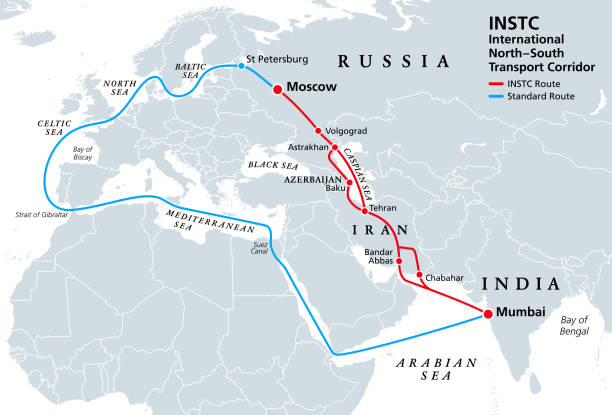
Russia, reeling from Western sanctions, views the corridor as a vital artery to keep its economy tethered to global markets. With access to Europe constrained and pipelines of trade to Asia opening up, Moscow is embracing the INSTC as part of a broader pivot eastward. Iran, too, has seized its role as a key junction with zeal, positioning its territory as the bridge between warm water ports and the heart of Eurasia. Though battered by sanctions, Tehran is pushing infrastructure upgrades with a clear eye toward regional transit supremacy.

Europe is beginning to take notice. Countries like Germany and Finland are assessing the corridor’s potential to stabilize and diversify their supply chains, especially as global shipping lanes grow riskier and more expensive. Yet as enthusiasm grows in Eurasia, apprehension is mounting in the United States. The INSTC threatens U.S. strategic control over global commerce by undermining the relevance of the Panama and Suez canals, long cornerstones of American naval and economic dominance. It also boosts BRICS, a grouping increasingly seen as a challenger to the Western-led order.

Washington’s response has been twofold: diplomatic containment and competitive investment. The India-Middle East-Europe Corridor (IMEC), announced as part of the G7’s Build Back Better World initiative, is in part a direct counterweight to the INSTC. At the same time, U.S. policymakers are pressuring allies to tread carefully around Iran and Russia’s involvement, while watching closely how India—a key U.S. partner—manages its balancing act between the West and BRICS.

What is unfolding is not just a redrawing of trade routes, but a redrawing of power. The INSTC may not have the headline flash of China’s Belt and Road Initiative, but it is modular, strategic, and increasingly influential. It marks the emergence of a new Eurasian logic, one that connects the Indian Ocean to Northern Europe, not through blue-water naval lanes, but across land and short-sea corridors, driven by the very nations that were once bypassed. If the remaining gaps in infrastructure and policy can be bridged, this corridor will be more than a route, it will be a lasting statement.

Five Things We Learned This Week for April 19–25, 2025

Here is the latest edition of “Five Things We Learned This Week” for April 19–25, 2025, spotlighting key global developments across science, economics, and geopolitics.

🌐 1. Global Trade Turmoil Intensifies Amid U.S. Tariffs

The U.S. administration’s sweeping tariff policy is causing substantial disruptions in the global supply chain, with experts warning that the worst may be yet to come. Following the implementation of a 10% baseline tariff globally and a 145% tariff on Chinese imports, freight booking volumes have plummeted, with U.S. imports from China down 36%. Stockpiling efforts by businesses have temporarily shielded consumers, but inventories are depleting, and new orders are on hold awaiting a resolution. This is likely to lead to empty shelves and price hikes beginning as early as May or June, with particularly sharp impacts on low-margin consumer goods.  

🧬 2. Discovery of a New Color and Martian ‘Skull’ Formation

Scientists have identified a previously unknown color, expanding our understanding of the visible spectrum. In another intriguing development, NASA’s Mars Reconnaissance Orbiter captured images of a rock formation resembling a human skull, sparking discussions about pareidolia and geological processes on Mars.  

📉 3. IMF Downgrades Global Economic Growth Forecast

The International Monetary Fund (IMF) has revised its global growth projection for 2025 down to 2.3%, citing escalating trade tensions and policy uncertainties. The IMF warns that these factors could further hinder growth and elevate risks to the global economy.   

🧪 4. Breakthrough in Plant Healing with Bacterial Band-Aid

Researchers have developed a bacteria-based “Band-Aid” that aids in plant healing. This innovation utilizes bacterial cellulose patches to speed up plant recovery, improve grafting success, and assist in preservation efforts, potentially revolutionizing agricultural practices.  

🛰️ 5. NASA’s Lucy Spacecraft Reveals Asteroid Secrets

NASA’s Lucy spacecraft has returned images of the main belt asteroid Donaldjohanson, revealing it to be a contact binary and larger than previously estimated. This discovery provides valuable insights into the formation and evolution of asteroids in our solar system.  

Stay tuned for next week’s edition as we continue to explore pivotal global developments.

The Quiet Leader: Alberta’s Hidden Role in North America’s Prosperity

In an era of mounting economic uncertainty, geopolitical tension, and post-pandemic recovery, Alberta has quietly emerged as North America’s top subnational performer in a critical and often overlooked metric: the Human Development Index (HDI). For policy watchers and socio-economic analysts, this isn’t just a number to file under “interesting trivia.” Alberta’s position at the top of the HDI rankings among all Canadian provinces, American states, and Mexican territories marks a significant case study in the relationship between natural resource wealth, public policy, and long-term human development outcomes.

As of the most recent figures, Alberta boasts an HDI score of 0.947, narrowly edging out perennial Canadian leaders like British Columbia and Ontario, and standing shoulder to shoulder with wealthy U.S. states like Massachusetts (0.956). The HDI, developed by the United Nations, is a composite measure of life expectancy, education, and per capita income. It is often used as a more holistic gauge of prosperity than GDP alone, as it reflects not only how much wealth a region generates, but how that wealth translates into actual well-being.

Alberta’s strong showing may come as a surprise to some, especially given the narrative often pushed about the province being overly reliant on fossil fuels or politically out of step with the rest of the country, but the truth is more nuanced. Alberta’s prosperity, particularly in the past two decades, has allowed it to make significant investments in healthcare, education, and infrastructure. Its high-income levels have supported strong public services, when policy has aligned with long-term development goals, and its young, well-educated workforce has given the province a demographic advantage. This is not to ignore Alberta’s volatility or the challenges of a boom-and-bust economy, but rather to acknowledge that, when things align, the outcomes can be extraordinary.

Education is a particular strength. Alberta consistently ranks among the top in Canada, and even internationally, in literacy, math, and science scores, according to the OECD’s PISA results. Its public healthcare system, while strained like others across Canada, remains broadly effective and accessible. Meanwhile, high wages, especially in the energy and trades sectors, boost the per capita income metric significantly, even when adjusted for cost of living.

Of course, HDI doesn’t capture everything. Alberta’s Indigenous communities, rural populations, and recent immigrants often experience very different outcomes than the provincial average. Income inequality, climate vulnerability, and questions around economic diversification remain pressing concerns, but as an overall measure of human potential realized, Alberta’s HDI score offers a compelling counter-narrative to those who dismiss it as a one-note petro-state.

The implications of Alberta’s top-tier HDI rating should not be understated. For federal policymakers, it underscores the importance of regional economic engines in lifting national development indicators. For other provinces and territories, it poses a question: what mix of resources, governance, and vision leads to sustained human flourishing? And for Alberta itself, it’s a reminder that the province’s legacy need not be only pipelines and politics, it can also be about how to build a society where people truly thrive.

Mark Carney’s Canada: One Economy, Thirteen Obstacles

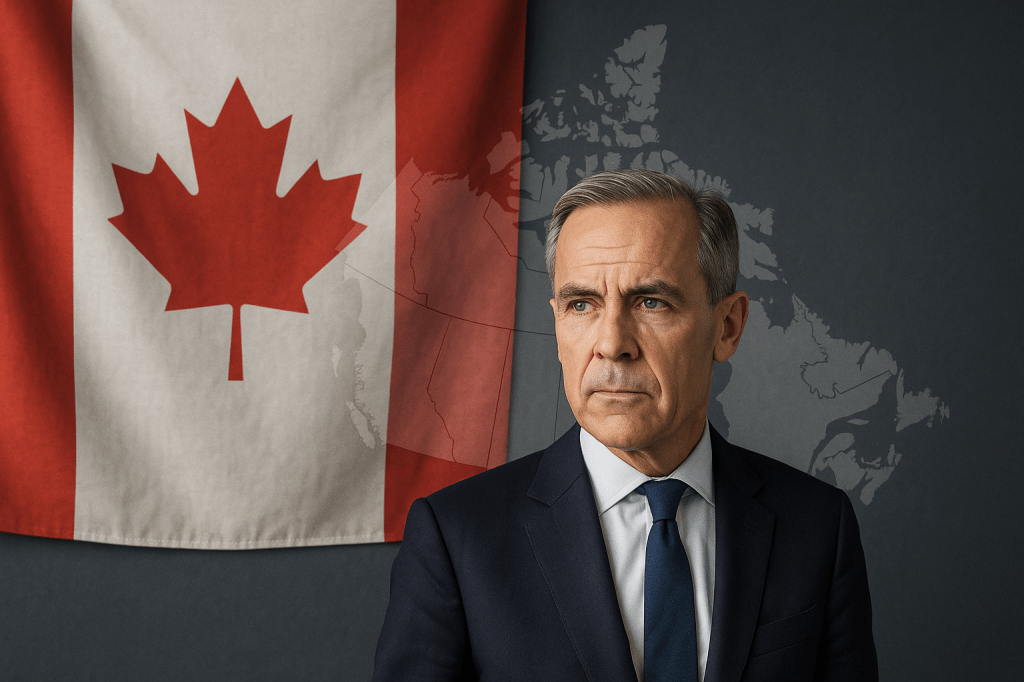
Mark Carney’s call for “one Canadian economy, not thirteen” isn’t just the idle musing of a former central banker with time on his hands, it’s the warning shot of a man who has sat at the helm of two of the world’s most powerful financial institutions and seen, up close, how countries succeed and fail. Carney’s frustration with Canada’s fragmented economic landscape is both practical and philosophical. He knows the potential this country holds – vast natural resources, educated people, global ties, but he also sees how much of it is squandered by a patchwork system where ten provinces and three territories act like neighbouring fiefdoms instead of building blocks of a common national purpose.

The problem, as Carney lays it out, is that Canada often behaves more like a loose confederation of mini-economies, than a modern unified state. Each region guards its turf: labour standards vary wildly, professional credentials don’t always carry across provincial lines, and tax regimes are a bureaucratic maze. Even something as basic as securities regulation, the rules that govern how companies raise money and protect investors, is balkanized, with no single national regulator, making Canada unique among developed nations in all the wrong ways. This isn’t just inefficiency; it’s economic self-sabotage.

Carney has always had a policy wonk’s precision, but in recent years he’s added the rhetorical flair of someone preparing to step onto the political stage. When he talks about the climate transition, for example, he doesn’t mince words: Canada will fail to meet its emissions targets if each province charts its own course. British Columbia might be ahead on carbon pricing, while Alberta and Saskatchewan cling to fossil fuels, and Quebec stands off in its own hydro-powered world. Without a shared strategy, Carney argues, we’re running thirteen separate races instead of pulling together in the global marathon toward sustainability.

Underlying Carney’s vision is a call for greater productivity and global competitiveness. He sees a Canada that could lead in clean energy, advanced manufacturing, digital innovation, but only if it acts in concert. That means building national infrastructure, fixing interprovincial trade barriers (which some federal estimates say cost the economy up to $130 billion a year), and aligning provincial policies on education, investment, and labour force development. It’s not just about growing the economy, it’s about making sure that growth is fair, inclusive, and forward-looking.

Of course, Carney knows the hurdles. This is Canada, after all. The constitution gives provinces enormous authority over key economic levers like natural resources and education. Regionalism runs deep, from the grievances of Western alienation to the distinct society of Quebec. Even the idea of a national strategy can provoke suspicion, seen less as vision and more as Ottawa’s overreach. And the political will to forge consensus is in short supply, especially in an age where short-term gains too often outweigh long-term planning.

Still, Carney keeps beating the drum. His is a voice urging Canada to get serious about itself. To stop coasting on inherited wealth and institutional stability, and start acting like a country that actually wants to lead in the 21st century. Whether as a private citizen, a public thinker, or elected Prime Minister, Carney is pushing us to imagine what Canada could become if it truly operated as one economy, not thirteen.

Sources:
Mark Carney, Value(s): Building a Better World for All (Knopf Canada, 2021)
Government of Canada – Interprovincial Trade Barriers: https://www.canada.ca/en/intergovernmental-affairs/services/barriers-interprovincial-trade.html
Canadian Securities Administrators: https://www.securities-administrators.ca/

Five Things We Learned This Week for April 12 – 18th, 2025

Here’s the inaugural edition of my new weekly segment, “Five Things We Learned This Week,” highlighting significant global events and discoveries from April 12–18, 2025.

🌍 1. Travel Disruptions Across Europe

Travelers in Europe faced significant disruptions due to widespread strikes. In France, the Sud Rail union initiated strikes affecting SNCF train controllers, with potential weekend service interruptions extending through June 2. In the UK, over 100 ground handling staff at Gatwick Airport began a strike on April 18, impacting airlines like Norwegian and Delta. Additionally, approximately 80,000 hospitality workers in Spain’s Canary Islands staged a two-day strike over pay disputes, affecting popular tourist destinations.  

🧬 2. Potential Signs of Life on Exoplanet K2-18b

Astronomers detected large quantities of dimethyl sulfide and dimethyl disulfide in the atmosphere of K2-18b, a planet located 124 light-years away. On Earth, these compounds are typically produced by biological processes, making this the strongest evidence to date suggesting potential life beyond our solar system.  

📉 3. Global Economic Concerns Amid Tariff Tensions

The International Monetary Fund (IMF) and the European Central Bank (ECB) warned of a slowdown in global economic growth due to escalating trade tensions, particularly from recent U.S. tariffs. The ECB responded by reducing its main interest rate for the seventh time this year, citing “exceptional uncertainty.” U.S. markets remain volatile, with the S&P 500 down 14% from February highs.   

🌱 4. Earth Day 2025: “Our Power, Our Planet”

Earth Day on April 22 will spotlight the theme “Our Power, Our Planet,” emphasizing the push for renewable energy to triple clean electricity by 2030. Events worldwide aim to educate and mobilize communities toward sustainable practices and climate action.  

🐺 5. Genetic Revival of Dire Wolf Traits

Colossal Biosciences announced the birth of genetically modified grey wolves named Romulus, Remus, and Khaleesi. These wolves exhibit characteristics of the extinct dire wolf, marking a significant step in de-extinction science and raising discussions about the ethical implications of such genetic endeavors.  

Stay tuned for next week’s edition as we continue to explore pivotal global developments. Question – Should I include a link to some source material with each item or is the summary what you are looking for? 

The Dragon at the Gate: China’s Quiet Reversal of the Peking Accord

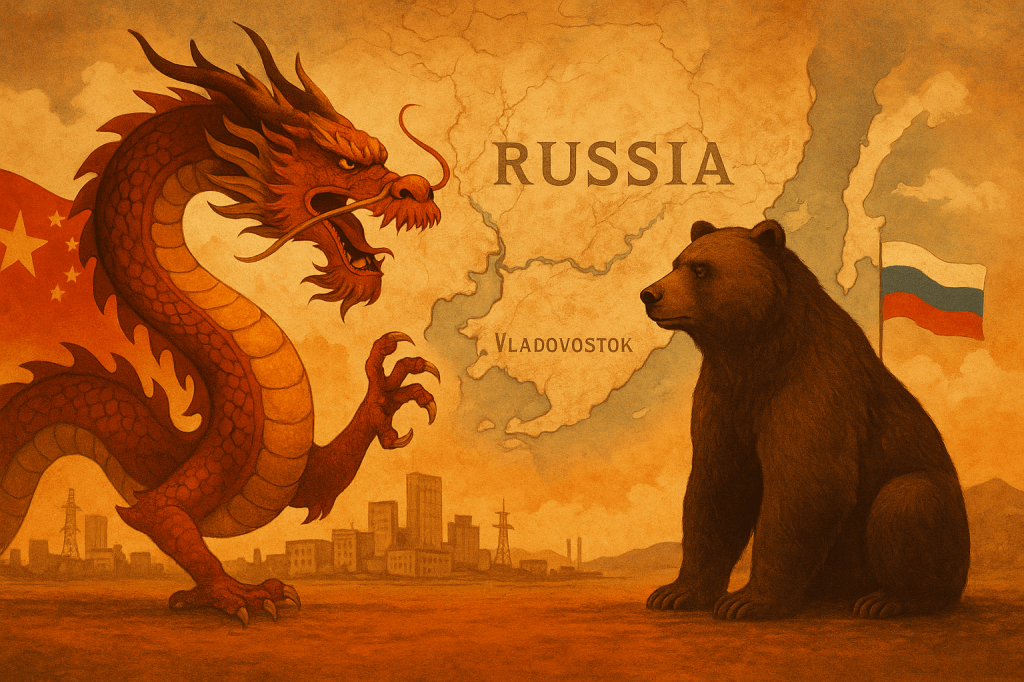
It’s a strange sight to behold – the old bear, once feared across continents, now leaning heavily on the dragon, who circles with a slow, calculating grace. Russia, once the hammer of the East, has been brought to heel by a grinding war in Ukraine, and while the West cuts ties and imposes sanctions, China, with the patience of a millennia-old civilization, sees opportunity, not just to profit, but perhaps to reshape history.

There’s a sense of irony that hangs over this moment. In 1860, the Qing dynasty signed the Peking Accord under duress, ceding vast swathes of land to the Russian Empire. That territory, now known as the Russian Far East, includes strategic regions like Vladivostok and the Amur Basin, lands that had once been part of China’s imperial periphery. The Chinese state, pragmatic in diplomacy, but deeply historical in self-conception, has never fully forgotten these losses. While official maps no longer lay claim to those regions, nationalist narratives in China occasionally whisper about redrawing what was once erased.

Fast forward to today, and the tables have turned. The war in Ukraine has battered Russia’s economy, and severed its connections to Europe. In desperation, Moscow has tilted eastward, selling gas, oil, and influence to Beijing at discount prices. This is not a partnership of equals. Russia needs Chinese markets, Chinese currency, and Chinese technology. China, meanwhile, gains leverage with every shipment of discounted crude, and every signed memorandum that ties the Russian economy tighter to the yuan. Where once they competed in Central Asia and the Arctic, now Russia finds itself the junior partner in a relationship it once dominated.

But China’s strategy isn’t conquest, it’s saturation. In the underpopulated stretches of Siberia and the Russian Far East, Chinese traders, laborers, and companies are embedding themselves quietly, but firmly. Towns along the border increasingly do their business in yuan, and many look more to Harbin or Heihe, cities in China’s Heilongjiang Province, than to Moscow. Infrastructure projects, often funded with Chinese capital, and executed by Chinese firms, are weaving a new economic fabric, one that binds these regions more to Beijing than to the Kremlin.

This isn’t a territorial war. China doesn’t need tanks to reverse the Peking Accord. It just needs time, capital, and a weakened Russia with few other friends. What we may be witnessing is not the formal return of lost lands, but something more subtle and enduring; a slow-motion annexation by way of economy, trade, and cultural seepage. A kind of imperial inversion, done not with gunboats, but with invoices and supply chains.

In geopolitics, history never dies, it just waits for the moment when the balance tilts. With every sanctioned ruble, and every Chinese-funded deal, the echoes of the 19th century grow louder. Russia may not yet realize it, but the dragon is already at the gates. Not to conquer, but to reclaim, softly, surely, and without ever having to fire a shot.

Building the Future: Kemptville’s Affordable Housing Vision

In communities across Canada, the housing crisis has become more than a policy debate, it’s a daily struggle. While costs rise and waitlists grow, the Municipality of North Grenville, just south of Ottawa, is offering a bold response. Its $25 million proposal to convert Bell Hall, a vacant dormitory on the Kemptville Campus, into more than 60 affordable rental units is both practical and symbolic, a microcosm of what’s possible when local governments lead.

The campus itself is a 630-acre hub of community, education, and sustainability activities. Once part of the University of Guelph’s agricultural network, it’s now owned by the municipality and governed by a 2021 master plan that prioritizes adaptive reuse, environmental responsibility, and deep community engagement. Bell Hall fits that vision precisely; a municipally owned, appropriately zoned, fully serviced building, already standing and waiting to be converted.

This is not a speculative plan. Developed over months with input from senior staff and not-for-profit partners, the Bell Hall project targets the real needs of North Grenville’s most vulnerable; seniors, veterans, and working families being priced out of their hometown. It offers not just housing, but stability, dignity, and a sense of belonging.

And yet, despite being shovel-ready, the proposal remains stalled in a growing backlog at the Canada Mortgage and Housing Corporation (CMHC). It’s a familiar story for municipalities across the country, many of whom are reporting delays due to limited federal processing capacity, particularly in underwriting. As federal priorities shift with the political winds, viable projects are left in limbo.

Mayor Nancy Peckford recently sounded the alarm in the Ottawa Citizen, arguing that the issue is not preferential treatment, but systemic inefficiency. Her call for transparency and faster turnaround is resonating with other small communities also ready to build. In an age where housing need is immediate, the logic is simple: when a plan meets all the criteria, and the groundwork is laid, it should move forward.

Some critics are suggesting that municipalities are just now “stepping up” on housing, but local governments have long managed zoning and development approvals. What’s new is the scale and pace of their engagement, assembling land, forming partnerships, applying for federal tools, and leading where senior governments lag.

North Grenville’s approach is part of a broader shift in small-town Canada, where pressures once confined to major cities are now spreading. The housing crisis isn’t urban anymore, it’s national. In this context, Bell Hall becomes more than a local project. It’s a test of the federal-municipal partnership that modern housing policy demands.

There’s also economic logic behind the urgency. A 2023 Deloitte report estimated that expanding community housing could add $70 billion to Canada’s GDP over five years. In places like Kemptville, where growth is manageable and materials can be sourced locally, the multiplier effects are significant with jobs, procurement, community stabilization, and reduced strain on health and social services.

And this is just one community. Rural municipalities across Eastern Ontario are facing similar challenges – aging populations, limited rental stock, and infrastructure that hasn’t kept pace. A regional alliance, or even a coordinated appeal, could elevate the urgency of rural housing and draw more attention to what’s at stake.

North Grenville is ready. Bell Hall is ready. The question is whether the federal system is ready to respond with the speed and seriousness the moment demands. If the next government wants to prove its commitment to housing, here is the perfect place to start.

Beyond Free Market Myths: Why Canada Needs the EU’s Stability

Mark Carney’s approach, alongside the broader European Union model, represents a forward-thinking vision that prioritizes long-term economic stability, environmental responsibility, and social equity; values that are increasingly crucial in a world facing climate change, global financial shifts, and geopolitical instability. Contrary to the claim, that these policies have led to economic and social decline, the EU has consistently ranked among the world’s largest and most stable economic blocs, demonstrating resilience in the face of global crises. Canada, by aligning with the EU’s principles, positions itself for a more sustainable and equitable future rather than shackling itself to the short-term volatility of unregulated free-market capitalism.

Economic Resilience Over Deregulated Instability
The argument against Carney relies on a false dichotomy; that Canada must choose between European-style economic management and a purely free-market U.S.-oriented model. However, the 2008 financial crisis demonstrated the perils of unchecked capitalism, particularly in the U.S., where financial deregulation led to one of the worst economic collapses in history. In contrast, Carney’s leadership at the Bank of Canada helped the country navigate that crisis more effectively than most, avoiding the catastrophic failures seen elsewhere. Similarly, his tenure at the Bank of England reinforced the importance of prudent regulatory oversight.

The EU, despite criticism, remains a powerhouse. It is the world’s third-largest economy, behind only the U.S. and China, and has consistently maintained a high standard of living, strong labor protections, and a more balanced wealth distribution than laissez-faire models allow. Canada benefits from closer ties with such an entity, particularly as economic nationalism rises in the U.S., where protectionist trade policies under both Democratic and Republican administrations have shown a clear shift away from open-market ideals.

Climate Leadership as an Economic Advantage
Critics of Carney’s climate policies fail to acknowledge that global markets are increasingly rewarding sustainable investments. Major institutional investors, including BlackRock and major European banks, are shifting towards green finance, recognizing that the transition away from fossil fuels is not just an environmental imperative, but a financial necessity. Canada’s economy, still heavily reliant on resource extraction, must evolve rather than double down on outdated industries.

The EU’s leadership in climate policy is not an economic burden; it is an opportunity. The European Green Deal has set the standard for sustainable economic transformation, spurring innovation in renewables, clean technology, and advanced manufacturing. Canada, with its vast natural resources and technological expertise, is well-positioned to benefit from this shift rather than clinging to an increasingly obsolete model of oil dependency.

A Stronger Canada Through Strategic Alliances
The portrayal of the EU as an anti-democratic bureaucracy ignores the reality that it is a collection of sovereign states voluntarily participating in a shared economic and political framework. The EU has been a stabilizing force, promoting peace, economic integration, and democratic norms across the continent. Canada’s engagement with such an entity strengthens its global influence, diversifies its economic relationships, and reduces over-reliance on any single partner, such as the increasingly unpredictable U.S.

Aligning with the EU does not mean abandoning national sovereignty but rather embracing a model of cooperative governance that has proven effective in mitigating economic shocks and geopolitical tensions. Given the uncertainty surrounding U.S. policies, including isolationist tendencies and shifting trade dynamics, Canada’s strategic interest lies in expanding partnerships rather than limiting them.

Carney’s vision is not a step towards economic decline, but a necessary evolution towards a more resilient, sustainable, and balanced economy. The argument for unregulated capitalism ignores the lessons of past crises, dismisses the realities of climate-driven economic transformation, and underestimates the benefits of diversified global partnerships. Rather than resisting European-style policies, Canada should embrace them as part of a modern, forward-looking strategy that ensures long-term prosperity, environmental sustainability, and social stability.

Carney’s Distinction: Spending vs Investing

Mark Carney’s recent remarks at the housing development announcement have sparked an intriguing debate on fiscal responsibility that could well shape our nation’s political discourse this election season. In a climate where every policy decision is scrutinized, Carney’s clear differentiation between mere spending and genuine investment stands out as both a pragmatic and visionary approach.

At the event, Carney took the podium with a measured resolve, declaring, “This is not merely spending.” The announcement, a multi-billion-dollar initiative aimed at creating thousands of affordable homes, was not just a government outlay but, as Carney argued, a strategic investment in the country’s future. He reminded us that spending provides short-term relief, a temporary boost that often fades without leaving a lasting impact. In contrast, investing builds physical assets, from homes that shelter citizens to infrastructure that drives long-term economic growth.

During the press conference, a journalist pressed Carney for clarity: “But what exactly distinguishes spending from investing, especially in these turbulent economic times?” Carney’s response was incisive. “Consider this housing initiative. If we were simply spending, we’d be issuing subsidies or providing temporary relief. That money would dissipate, leaving us to confront the same issues a year or two down the line. What we’re doing here is building assets that not only meet immediate needs, but also stabilize our market for decades to come.” His explanation resonated, emphasizing that when the government borrows money for tangible investments, it’s laying the groundwork for future prosperity, rather than just adding to the current debt burden.

Critics have raised valid concerns about increasing deficits, asking, “But what about government deficits? Isn’t this just adding to our debt load?” Carney acknowledged the worry, noting that borrowing for short-term fixes often leads to a perilous cycle of debt. However, he argued, borrowing to invest in enduring assets, such as new housing, yields dividends in the form of job creation, improved living standards, and a robust, resilient economy. “Debt for spending is dangerous because it leaves nothing behind,” he stated. “Debt for investment, however, is different. When we invest in projects that drive economic growth, we’re not just managing debt, we’re transforming it into a catalyst for long-term stability.”

As someone who has witnessed countless policy debates, I find Carney’s distinction particularly refreshing. In an era dominated by immediate solutions, and short-lived political gains, his perspective challenges leaders to think beyond the next election cycle. The choice, as Carney laid it out, is stark: Will our policymakers continue to opt for fleeting spending that merely masks underlying problems, or will they embrace investments that secure a prosperous future?

This is more than a fiscal debate, it’s a much needed, fundamental question about our nation’s priorities. As voters and citizens, Canadians must demand that our leaders consider the long-term impacts of their decisions. The current housing development initiative, if executed wisely, is a testament to the power of strategic investment over transient spending, such as tax cuts for the rich, or removing the carbon tax. It promises to deliver not just immediate relief, but a foundation upon which a stronger, more resilient economy can be built. Again, this goes beyond the usual election cycle promises, and short-term thinking, that politicians usually indulge in, to get the votes they need to stay in power. 

In these uncertain times, Carney’s message is a timely reminder that every dollar spent should be scrutinized for its future value. As the election nears, his call to invest in our collective future rather than merely spending for today is one that deserves our full attention, and, perhaps, our support.

What Did You Expect? The Fall of Mill Street and the Fate of Craft Breweries in Corporate Hands

Fans of Mill Street Brewery are in shock after Labatt announced it was shutting down the North York brewery, and shifting production to its industrial-scale facility in London, Ontario. Thirty-nine workers will lose their jobs, and it’s unclear if many of Mill Street’s small-batch beers will survive. The three remaining brewpubs—in Toronto, Ottawa, and Pearson Airport—will continue to operate, but anyone who’s followed the beer industry knows what’s coming next. This is just another chapter in a long and predictable story.

When Labatt, itself owned by global behemoth AB InBev, acquired Mill Street a decade ago, craft beer lovers were divided. Some saw it as an opportunity for Mill Street to grow with the backing of a major player. Others saw it for what it really was: the beginning of the end. This wasn’t a rescue mission—it was an extraction.

We’ve seen this play out before. Lakeport Brewing, once a Hamilton-based success story built on discount beer, was scooped up by Labatt in 2007 for $201 million. Just three years later, Labatt shut down the brewery, put 143 people out of work, and moved production to London. More tellingly, when potential buyers showed interest in taking over the plant, and keeping it running, Labatt refused. The brewing equipment was dismantled, ensuring that no one else could compete.

Sapporo’s 2006 acquisition of Sleeman Breweries led to a similar fate for Sleeman’s Halifax operation, which was shuttered in 2013. The difference? Unlike Labatt, Sapporo allowed the equipment to be sold off, helping fuel the rise of Collective Arts Brewing in Hamilton, but the lesson remains the same: when a craft brewery is acquired by a major player, it’s no longer a craft brewery – It’s a brand.

Mill Street was never going to be an exception. It started with real craft credentials—a small brewery in Toronto’s Distillery District, a reputation for eco-conscious brewing, and flagship beers like Tankhouse Ale and Organic Lager that set it apart in the early 2000s. By the time Labatt took over, it had already expanded significantly, adding brewpubs and scaling up production. That growth made it an attractive acquisition target, but it also meant Mill Street was now operating in the corporate world, where efficiencies trump tradition and scale wins over local identity.

Now, as production consolidates in London, the brewery’s original spirit is all but gone. Sure, the remaining brewpubs will still pour Mill Street beer, just as other corporate-owned brewpubs do with “craft” labels that are little more than marketing exercises. But the North York brewery’s closure isn’t just about job losses—it’s the final confirmation that Mill Street, as craft beer fans knew it, no longer exists.

If you’re surprised, you weren’t paying attention. Once an independent brewery sells to a major corporation, it’s only a matter of time before the “craft” part disappears. This isn’t a betrayal—it’s just business as usual.