A deep dive into economic thinking: from inflation, inequality, and taxation to market trends and fiscal policy. With clarity and context, these essays make complex financial dynamics relevant to everyday life and long-term national wellbeing.
Historic trilateral negotiations involving Ukraine, Russia, and the United States opened in Abu Dhabi, marking the first such talks since the 2022 full-scale invasion. Discussions focused on humanitarian access, territorial questions, and confidence-building measures amid continued fighting.
2️⃣ 🔬 Fusion Energy Edges Closer to Reality
Scientists reported major advances in fusion research, with tokamak projects such as ITER, EAST, and KSTAR achieving improved plasma stability and sustained reaction times. The progress has renewed optimism around fusion as a future source of clean, abundant energy.
3️⃣ 💼 Davos Signals: AI and Economic Resilience
At the World Economic Forum in Davos, IMF and ECB leaders emphasized the resilience of the global economy while warning that artificial intelligence could dramatically reshape labor markets. Calls focused on reskilling, regulation, and renewed multilateral cooperation.
4️⃣ 📡 Space & Science Momentum
NASA advanced preparations for the Artemis II crewed lunar flyby mission, while astronomers reported new findings on interstellar chemistry and planetary formation. Together, these developments highlight accelerating momentum in space science and exploration.
5️⃣ 📚 Innovation & Higher Education Shifts
Canada’s AI ecosystem saw a significant boost as research institute Mila partnered with Inovia Capital to launch a $100 million Venture Scientist Fund, aimed at bridging academic research and startup development. Universities also expanded sustainability and climate research hubs.
📌 Notable Context From the Week
🌍 Nordic countries increased diplomatic and security coordination around Greenland amid rising geopolitical tensions.
🧪 Scientists reported breakthroughs in quantum materials, solar physics, and potential habitability indicators on Europa.
🌦️ Severe weather and infrastructure challenges continued to affect regions of South Asia and North America.
This is the 500th post on Rowanwood Chronicles, and I want to pause for a moment rather than rush past the number.
Five hundred posts means months of thinking in public. It means essays written early in the morning with coffee going cold, notes drafted in train stations and kitchens, arguments refined and re-refined, and ideas that only became clear because I was willing to write them out imperfectly first. It means following threads of geopolitics, technology, culture, relationships, power, science fiction, and lived experience wherever they led, even when they led somewhere uncomfortable or unfashionable.
This blog was never intended to be a brand or a platform. It has always been a workshop. A place to test ideas, to connect dots, to push back against lazy thinking, and to explore what it means to live ethically and deliberately in a complicated world. Some posts have aged well. Others mark exactly where my thinking was at the time, and I am content to leave them there as signposts rather than monuments.
What has surprised me most over these five hundred posts is not how much I have written, but how much I have learned from the responses, private messages, disagreements, and quiet readers who later surfaced to say, “That piece helped me name something.” Writing in public creates a strange kind of community, one built less on agreement than on shared curiosity.
To those who have been reading since the early days, thank you for staying. To those who arrived last week, welcome. To those who argue with me in good faith, you have sharpened my thinking more than you know. And to those who read quietly without ever commenting, you are still part of this.
I have no intention of slowing down. There are still too many systems to interrogate, futures to imagine, and human stories worth telling. Five hundred posts in, Rowanwood Chronicles remains what it has always been: a place to think carefully, write honestly, and refuse simple answers.
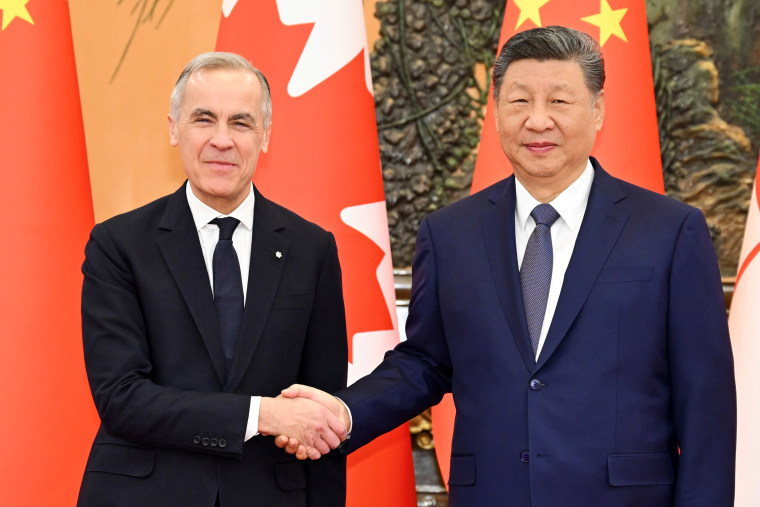
The announcement of a preliminary trade agreement between Canada and the People’s Republic of China marks a consequential inflection point in the global economic architecture. After years of diplomatic estrangement rooted in the 2018 detention of Huawei’s chief financial officer and attendant reprisals, Ottawa and Beijing have agreed to reduce bilateral trade barriers through a calibrated package of tariff concessions. Canada will permit up to 49,000 Chinese-made electric vehicles to enter its market annually at a reduced tariff of 6.1 percent, a return to pre-friction levels from the 2020s. In exchange, China will sharply cut its punitive tariffs on Canadian canola seed from combined rates near 85 percent down to about 15 percent, while lifting discriminatory levies on key exports such as canola meal, lobsters, crabs, and peas. These changes are expected to unlock roughly $3 billion in new Canadian export orders and signal a thaw in a protracted trade dispute.
This agreement emerges against a backdrop of intensifying US-China economic competition and a United States increasingly inclined toward protectionist measures. The United States maintains significant tariffs on Chinese electric vehicles and other strategically sensitive sectors, rooted in concerns about industrial policy, technological transfer, and national security. Canada’s decision to diverge from a more restrictive approach reflects both structural economic imperatives and evolving geopolitical realities. With roughly three-quarters of Canadian exports traditionally destined for the United States and less than four percent for China, Ottawa’s longstanding dependence on the US market has been a defining feature of its trade strategy. The latest negotiation illustrates a deliberate pursuit of diversification in the face of unpredictable US policy shifts.
At the heart of this emerging alignment is a sober recognition of China’s dominant position in the global electric-vehicle and clean-technology ecosystem. China accounts for a majority share of global EV production, lithium-ion battery cell manufacturing, and solar panel capacity, a lead that Western policymakers have struggled to counteract through subsidies or industrial policy alone. By integrating Chinese EVs into the Canadian market through a regulated tariff-quota system, Ottawa positions itself to benefit from more competitive prices and accelerated adoption of low-emission vehicles, even as domestic industry voices warn of competitive displacement.
The divergence between Ottawa and Washington on trade policy toward China carries deeper strategic significance. Historically, Canada has aligned closely with US economic and security policy, particularly within the framework of the United States–Mexico–Canada Agreement (USMCA). Canada’s recalibration suggests a growing willingness among middle powers to pursue “interest-based” engagement with Beijing that does not hew strictly to US strategic preferences. This trend is symptomatic of a broader fracturing in the global trade order, in which rising geopolitical competition has weakened the coherence of multilateral frameworks once anchored by US leadership. According to recent geopolitical scholarship, trade flows and global value chains increasingly reflect shifting alignments, with countries navigating between competing spheres of influence amid overlapping crises and supply chain stresses.
For the United States, this development presents a diplomatic quandary. A unified North American stance on trade with China amplified US leverage in negotiations with Beijing. Canada’s independent course potentially dilutes that leverage and underscores the limits of expectation that allied economies will subordinate their economic interests to US strategic imperatives. Washington’s initial reaction has been measured but critical, framing Canada’s move as “problematic” even as it acknowledges Ottawa’s sovereign right to pursue its own agreements. Such rhetoric highlights the tension between aligning with US China-policy goals and defending national economic interests in a volatile global environment.
At a structural level, the Canada–China deal exemplifies a broader reconfiguration of global trade relationships in an era of geopolitical competition. The traditional model of a US-centric trade order is giving way to a more multipolar economic landscape in which regional power centers and bilateral arrangements exert greater influence. Emerging trade partnerships, whether in clean technology, agriculture, or energy cooperation, reflect pragmatic calculations by states seeking stability, market access, and technological advantage. The interplay between geopolitical alignment and economic policy suggests that future trade patterns will be shaped less by universal norms and more by strategic hedging, selective engagement, and competitive statecraft.
In this context, the Canada–China agreement serves as both a practical economic arrangement and a geopolitical signal. It indicates an era in which middle powers aspire to greater autonomy in foreign economic policy, navigating between competing great powers and recalibrating long-standing alliances to safeguard national interests within a fragmented system of global trade.
Tensions in the Middle East continued as protests and clashes persisted, particularly around Iran and Gaza, while diplomatic efforts focused on preventing wider regional escalation. Elsewhere, global diplomacy saw deepening EU–India ties alongside renewed debates on trade and migration policy.
2️⃣ 📈 Trade & Economic Shifts
Canada and China reached a significant trade agreement involving reduced tariffs on Chinese electric vehicles and improved market access for Canadian exports. U.S. markets closed the week modestly higher ahead of the Martin Luther King Jr. holiday, with energy prices and earnings shaping investor sentiment.
3️⃣ 🏆 Major Sports & Championships
International sport dominated headlines with the World Athletics Cross Country Championships underway in Florida, the European Men’s Handball Championship launching across Scandinavia, and the World Indoor Bowls Championship beginning in England. The Masters snooker tournament also continued in London.
4️⃣ 📉 Tech, Digital & Social Disruption
Social media instability returned as X experienced a second widespread outage in days, prompting renewed scrutiny of platform resilience. Governments in Europe and Asia continued advancing digital safety and platform accountability regulations.
5️⃣ 🌡️ Climate & Science Alerts
Climate monitoring agencies confirmed that 2025 ranked among the three hottest years on record, reinforcing warnings about accelerating ice loss and extreme weather patterns. Scientists also highlighted upcoming late-January astronomical alignment opportunities for interstellar research.
📌 Notable Briefs from the Week
🌋 Minor seismic swarms near Kilauea’s Halema‘uma‘u crater drew increased scientific monitoring in Hawaii.
🌏 ASEAN regional developments reflected political, social, and environmental shifts across Southeast Asia.
🎾 The 2026 Australian Open was set to begin on January 18, opening the year’s first Grand Slam.
Scotland’s proposed Community Wealth Building legislation should be read not as a technical reform of local government practice, but as a quiet intervention in the geopolitical and economic settlement that has shaped the North Atlantic world since the late twentieth century. It arrives at a moment when assumptions about globalisation, capital mobility, and the neutrality of markets are being reassessed across Europe and beyond. In this context, the Bill represents an attempt to recover economic agency at the level of the state and the community without retreating into protectionism or nostalgia.
For several decades, economic development across the United Kingdom and much of the West followed a broadly convergent logic. Growth was expected to flow from attracting external capital, integrating into global supply chains, and minimising friction for mobile firms. Local institutions were repositioned as facilitators rather than shapers of economic life. The consequences of this model are now widely acknowledged: hollowed-out local economies, fragile supply chains, stagnant wages, and deepening territorial inequality. Community Wealth Building emerges as a response to this structural failure, not as a rejection of markets, but as a refusal to treat them as self-justifying.
The Scottish Bill formalises this response by embedding Community Wealth Building into the routine machinery of governance. It does so through process rather than command. Ministers would be required to articulate a national strategy, while local authorities and designated public bodies would be tasked with producing coordinated action plans. This architecture reflects an understanding that economic power is already widely distributed across public institutions, but rarely aligned. Procurement, employment, land management, and investment decisions are typically made in isolation. The legislation seeks to bring these decisions into a shared strategic frame.
The Five Pillars as Instruments of Sovereignty
At the centre of this frame are the five pillars of Community Wealth Building: spending, workforce, land and property, inclusive ownership, and finance. These pillars correspond directly to the points at which wealth either embeds itself locally or leaks outward. Public spending can anchor local supply chains or reinforce distant monopolies. Employment can stabilise communities or entrench precarity. Land can function as a productive commons or a speculative asset. Ownership can concentrate power or distribute it. Finance can circulate locally or exit at the first sign of volatility.
The Bill’s significance lies in treating these domains not as discrete policy areas, but as interdependent levers of economic sovereignty. This is a departure from the fragmented governance model that characterised late neoliberal public administration, in which efficiency was prized over coherence and coordination.
The Preston Model as Proof of Concept
This approach has a clear and often-cited precedent in the Preston Model developed in Lancashire. Following the collapse of a major inward investment project, Preston City Council and a group of anchor institutions reoriented their procurement and economic strategy toward local suppliers and inclusive ownership models. By coordinating spending decisions and nurturing local capacity, Preston demonstrated that local economies retain more agency than is commonly assumed.
The results were incremental rather than transformative, but they were measurable and durable. Procurement spend retained within the local and regional economy increased substantially, job quality improved, and confidence in local economic stewardship was restored. The lesson of Preston was not ideological but institutional: resilience is often built through aligned, routine decisions rather than grand economic interventions.
From Voluntary Practice to Statutory Expectation
Scotland’s proposed legislation draws on this experience while addressing one of its principal limitations. The Preston Model depended heavily on political continuity and local leadership. By placing Community Wealth Building on a statutory footing, the Scottish Government seeks to ensure durability beyond electoral cycles. This reflects a broader European trend toward embedding economic governance within legal and institutional frameworks rather than relying on discretion and goodwill.
In this respect, the Bill aligns more closely with continental traditions of social market governance than with the United Kingdom’s recent reliance on deregulated competition and capital mobility. It represents a subtle but meaningful shift in how economic legitimacy is constructed.
Geopolitics, Resilience, and Strategic Autonomy
The geopolitical implications of this shift should not be underestimated. In an era defined by fractured supply chains, sanctions regimes, and strategic competition, economic resilience has become inseparable from national and regional security. Shorter supply chains, diversified ownership, and locally rooted finance reduce exposure to external shocks. Community Wealth Building thus complements wider debates about strategic autonomy unfolding across Europe and among middle powers navigating an increasingly unstable global order.
Although sub-state in form, Scotland’s legislation participates in this reorientation by strengthening the internal foundations of economic resilience. It does not promise insulation from global forces, but it does offer a means of engagement that is less extractive and more adaptive.
Cultural Memory and Economic Stewardship
Culturally, the Bill resonates with long-standing Scottish debates over land, ownership, and democratic control. From land reform movements to community buyouts, there exists a deep political memory of extraction and dispossession. Community Wealth Building translates these concerns into contemporary administrative language. It offers a way to address structural imbalance without framing the issue as a moral repudiation of global capitalism.
Instead, the economy is treated as a system that can be shaped through institutional design and stewardship. This framing avoids both nostalgia and utopianism, positioning reform as a matter of governance rather than ideology.
A Quiet Recalibration
Critics argue that the legislation lacks enforcement mechanisms and risks becoming aspirational. Such critiques assume that economic change only follows dramatic intervention. Historical experience suggests otherwise. Durable change more often arises from the cumulative effect of aligned institutions acting consistently over time. By normalising local economic stewardship across public bodies, the Bill establishes the conditions for gradual but compounding transformation.
Seen in this light, Scotland’s Community Wealth Building law forms part of a broader recalibration underway across the Western political economy. It signals a move away from the assumption that prosperity must be imported, and toward the idea that it can be cultivated. In a period marked by uncertainty and realignment, this modest ambition may prove to be its most consequential feature.
Even in the quiet stretch between Christmas and New Year’s, the world did not pause. Across science, politics, climate, conservation, and global systems, this past week offered reminders that change continues — sometimes quietly, sometimes decisively.
✈️ India’s Air Travel Crisis Revealed Systemic Fragility
In the days following Christmas, India’s largest airline faced widespread cancellations and delays after stricter pilot fatigue rules collided with already stretched staffing. By December 30, operations had stabilized, but only after tens of thousands of passengers were affected.
Why it matters: The disruption exposed how regulatory enforcement, labor shortages, and tight scheduling can cascade into national-scale failures — a warning for aviation systems worldwide.
🌍 The United Nations Expanded Climate Adaptation Financing
On December 29, the UN announced a significant expansion of its climate adaptation finance framework, directing additional concessional funding toward countries already experiencing severe climate impacts.
Why it matters: While mitigation often dominates headlines, adaptation funding is where climate policy becomes tangible for vulnerable communities facing floods, drought, and displacement.
🐘 Kenya Reported Its Lowest Elephant Poaching Levels in Decades
Kenyan wildlife authorities confirmed on December 28 that elephant poaching has dropped to historic lows, crediting community-based conservation programs, improved ranger coordination, and aerial surveillance.
Why it matters: This rare conservation success shows that sustained investment, local engagement, and enforcement can reverse even long-running environmental crises.
⚖️ The U.S. Supreme Court Halted a Major Immigration Enforcement Rule
On December 30, the U.S. Supreme Court temporarily blocked the rollout of a new federal immigration enforcement policy, pending further legal review.
Why it matters: The decision reinforces judicial limits on executive power and reshapes the near-term landscape for immigration enforcement, labor policy, and civil rights debates.
🔭 The James Webb Telescope Detected Water Vapor on a Rocky Exoplanet
NASA scientists confirmed between December 31 and January 1 that Webb telescope data shows strong evidence of water vapor in the atmosphere of TRAPPIST-1e, one of the most promising Earth-like exoplanets identified so far.
Why it matters: This finding strengthens the case for studying potentially habitable worlds beyond our solar system and marks another leap forward in observational astronomy.
Closing thoughts: From airline systems and courtrooms to savannas and distant star systems, this week’s stories remind us that progress, risk, and discovery do not respect holiday calendars. Paying attention — even during the quiet weeks — remains an act of civic and intellectual care.
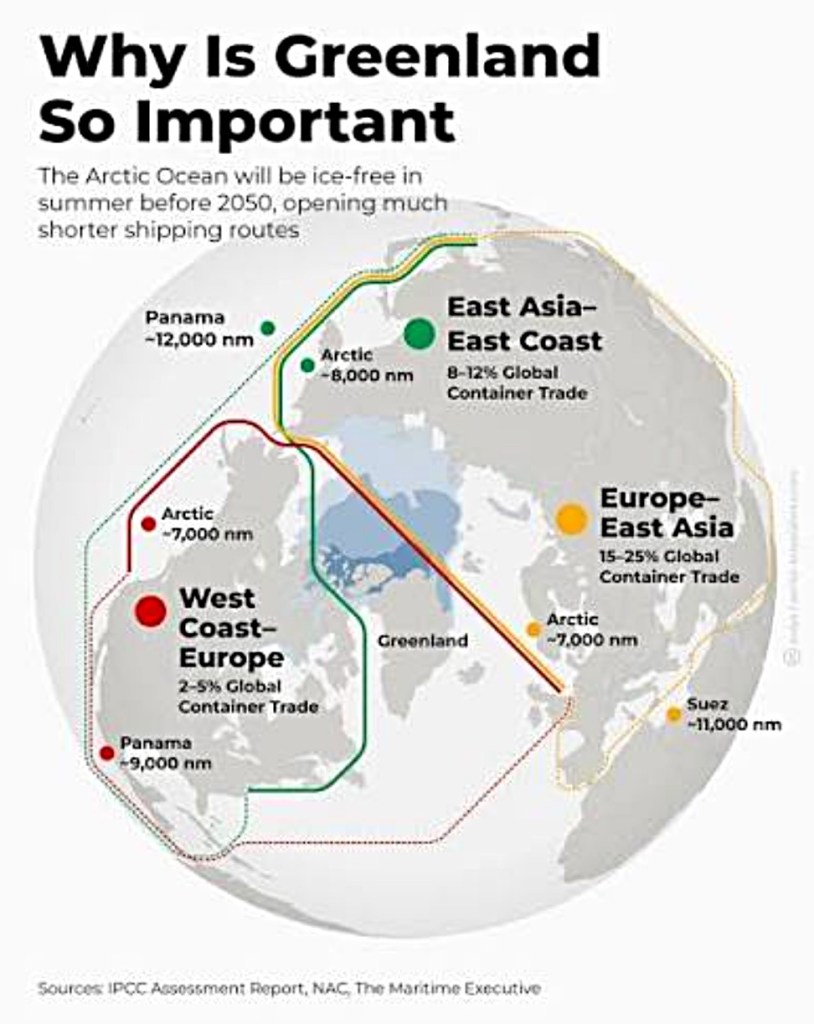
There is a deceptively simple geographic fact that sits quietly beneath much of the current Arctic maneuvering. In the entire Arctic region, there is effectively only one deep-water port that remains reliably ice-free year-round without the benefit of icebreakers, and that port is Nuuk, Greenland. This is not a trivia point. It is a structural constraint that shapes strategy, logistics, and power projection across the high north.
Nuuk’s status is the product of oceanography rather than politics. The West Greenland Current carries relatively warm Atlantic water northward along Greenland’s western coast, keeping the approaches to Nuuk navigable even through winter. By contrast, most other Arctic ports, including those in northern Canada, are either seasonally accessible or require sustained icebreaking support. Russia is often cited as an exception, but ports like Murmansk rely heavily on infrastructure, icebreaker fleets, and state subsidy to maintain year-round access. Nuuk stands apart in that its ice-free condition is natural, persistent, and proximate to the North Atlantic.
From a United States perspective, this matters enormously. American interest in Greenland is not primarily about territory in the nineteenth-century sense. It is about access, logistics, and denial. An ice-free port in the Arctic functions as a fixed node in what is otherwise a hostile operating environment. It enables sustained naval presence, resupply, maintenance, and potentially dual-use civilian and military shipping without the constant friction of ice conditions. In a future where Arctic sea lanes become more commercially viable and militarily contested, control or influence over such a node is strategically priceless.
This helps explain why U.S. engagement with Greenland has intensified well beyond rhetoric. Investments in airports, telecommunications, scientific infrastructure, and diplomatic presence all serve a dual purpose. They embed American interests into Greenland’s development trajectory while ensuring that any future expansion of Arctic activity occurs within a framework friendly to U.S. security priorities. The infamous proposal to “buy” Greenland was widely mocked, but it reflected a blunt articulation of a real strategic anxiety: the United States does not want its primary Arctic foothold to drift politically or economically toward rivals.
Canada’s position is more complex and, in some ways, more constrained. Canada has the longest Arctic coastline of any nation, yet no equivalent year-round ice-free deep-water port in its Arctic territory. This creates a persistent asymmetry. Canadian sovereignty claims rest on presence, governance, and stewardship rather than on continuous maritime access. The North is Canadian not because it is heavily used, but because it is administered, inhabited, and regulated.
As a result, Canada’s northern strategy cannot simply mirror that of the United States. Where Washington focuses on access and power projection, Ottawa must focus on resilience, legitimacy, and long-term habitation. Investments in northern communities, Indigenous governance, search and rescue, environmental monitoring, and seasonal port infrastructure are not secondary to sovereignty. They are sovereignty. Canada’s emphasis on the Northwest Passage as internal waters is inseparable from its need to demonstrate effective control without relying on year-round commercial shipping.
At the same time, the existence of Nuuk as the only naturally ice-free Arctic port creates both a vulnerability and an opportunity for Canada. The vulnerability lies in over-reliance on allied infrastructure. In any future crisis or competition scenario, Canadian Arctic operations would almost certainly depend on U.S. logistics routed through Greenland. The opportunity lies in cooperation. Joint development of northern capabilities, shared situational awareness, and integrated Arctic planning allow Canada to compensate for geographic disadvantages without surrendering policy autonomy.
What this ultimately reveals is that the Arctic is not opening evenly. It is opening selectively, along corridors dictated by currents, ice dynamics, and climate variability. Nuuk sits at the intersection of those forces. It is a reminder that geography still matters, even in an age of satellites and cyber power. For the United States, Greenland is a keystone. For Canada, it is a neighbor whose strategic weight must be acknowledged, managed, and integrated into a broader vision of a stable, governed, and genuinely Canadian North.
In that sense, the conversation about ice-free ports is not really about shipping. It is about who gets to shape the rules of the Arctic as it transitions from a frozen margin to a contested frontier.
Canada has long built its agri-food reputation on food safety and quality. Rigorous inspection systems, traceability protocols, and high sanitation standards have made Canadian products trusted both domestically and on the global market. But while these strengths remain critical, they are no longer sufficient. In an era of accelerating climate disruption, geopolitical instability, supply chain fragility, and rising inequality, Canada must now turn its focus to food security – the guarantee that all people, at all times, have reliable access to enough affordable, nutritious food.
Food safety ensures that the food we consume is free from contamination. Food quality ensures it meets certain standards of freshness, nutrition, and presentation. These are the cornerstones of consumer trust. Yet, neither concept addresses the structural risks facing our food system today. Food security asks a different set of questions: Can Canadian households afford the food they need? Can our food system withstand climate shocks, trade disputes, and infrastructure breakdowns? Are our supply chains inclusive, decentralized, and flexible enough to adapt to major disruptions?
Recent events have underscored the fragility of our current system. During the COVID-19 pandemic, disruptions to cross-border trucking and meat processing plants exposed just how centralized and brittle key segments of Canada’s food supply have become. In British Columbia, floods in 2021 cut off rail and road access to Vancouver, leading to supermarket shortages within days. In the North and many Indigenous communities, chronic underinvestment has made access to affordable, fresh food unreliable at the best of times, and catastrophic during crises.
Moreover, food insecurity is rising, not falling. In 2023, over 18 percent of Canadian households reported some level of food insecurity, with that number climbing higher among single mothers, racialized Canadians, and people on fixed incomes. Food banks, once seen as emergency stopgaps, are now regular institutions in Canadian life. This is not a failure of food safety or quality. It is a failure of access and equity – core dimensions of food security.
Part of the problem lies in how Canada conceptualizes its agri-food system. At the federal level, agriculture is still often framed as an export sector rather than a foundational pillar of domestic well-being. Policy is shaped by trade metrics, not food sovereignty. We excel at producing wheat, pork, and canola for overseas markets, but remain heavily reliant on imports for fruits, vegetables, and processed goods. Controlled-environment agriculture remains underdeveloped in most provinces, leaving the country vulnerable to droughts, supply chain blockages, and foreign policy flare-ups.
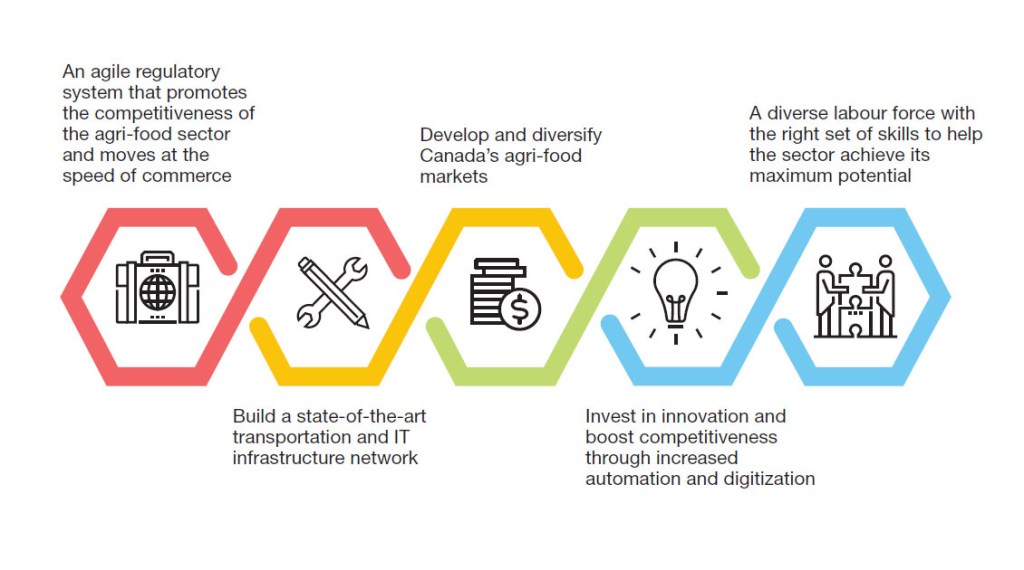
To move toward food security, Canada must first reframe its priorities. This means investing in local and regional food systems that shorten supply chains and embed resilience close to where people live. It means modernizing food infrastructure: cold storage, processing capacity, and distribution networks, particularly in underserved rural and northern communities. It means supporting small and medium-scale producers who can provide diversified, adaptive supply within regional ecosystems. It also means integrating food policy with social policy. Income supports, housing, health, and food access are intertwined. Any serious food security strategy must address affordability alongside production.
Several provinces have begun to lead. Quebec has developed a coordinated framework focused on food autonomy, greenhouse expansion, regional processing, and public education. British Columbia is experimenting with local procurement strategies and urban farming initiatives. But the federal government has not yet articulated a cohesive national food security agenda. The 2019 Food Policy for Canada set out promising goals, but lacked the legislative weight and funding to shift the structure of the system itself.
Now is the time to act. Climate events will increase in frequency and severity. Global trade dynamics are growing more volatile. Technological transformation and consumer expectations are evolving rapidly. A resilient, secure food system cannot be improvised in moments of crisis. It must be designed, invested in, and governed intentionally.
Canada’s record on food safety and quality is a strength to build on. But it is not enough. Food security is the challenge of this decade. Meeting it will require a new policy imagination, one that centres equity, redundancy, and sustainability as the foundations of a food system truly built to serve all Canadians.
Each week, we step back from the churn of daily headlines and look at five developments that help frame what is actually happening in the world. Even in the quiet stretch between holidays, global events continue to unfold across security, economics, climate, and sport.
✈️ 🇺🇸 1. U.S. conducts airstrikes against Islamic State targets in Nigeria
The United States carried out coordinated airstrikes against Islamic State-linked militants in northwest Nigeria on December 25, working alongside Nigerian forces to target insurgent camps. Officials described the operation as part of broader counterterrorism cooperation in West Africa.
Why it matters: The strikes mark a notable escalation of U.S. involvement in regional security efforts and reflect growing concern over extremist expansion in the Sahel and surrounding regions.
⚖️ 📉 2. U.S. stock markets remain resilient through holiday trading
Despite shortened trading weeks around Christmas, U.S. markets remained near record highs between December 24 and 26. Investors continued to focus on artificial intelligence investment, corporate earnings outlooks, and expectations of future interest-rate cuts.
Why it matters: Sustained market confidence during thin holiday trading suggests investors are looking past short-term uncertainty and positioning for longer-term structural growth themes.
🌨️ ❄️ 3. Major winter storm disrupts travel and power across North America
A powerful winter storm swept across eastern Canada and the northeastern United States over Christmas weekend, bringing heavy snow, freezing rain, flight cancellations, and widespread power outages. Several regions declared states of emergency as infrastructure strained under extreme conditions.
Why it matters: Severe winter weather continues to test transportation systems, energy grids, and emergency preparedness, reinforcing concerns about infrastructure resilience in a changing climate.
🏆 🏅 4. Women’s Handball World Championship concludes in Europe
The 2025 Women’s Handball World Championship wrapped up during the holiday week, following weeks of competition hosted jointly by Germany and the Netherlands. Thirty-two national teams participated, drawing growing international attention to the sport.
Why it matters: The tournament highlights the continued rise of women’s international sport and the expanding audience for competitions beyond the traditional global sports calendar.
🏟️ 🎯 5. World Darts Championship advances through holiday rounds
The 2025–26 World Darts Championship continued through its early rounds between December 20 and 26, featuring a 128-player field and a multi-million-pound prize fund. The event remains one of the most watched and commercially successful competitions in the sport.
Why it matters: Darts illustrates how so-called niche sports can build massive global followings, blending entertainment, professionalism, and evolving athlete careers.
Closing thought: From counterterrorism operations and market confidence to winter storms and international sport, this week reminds us that the world does not slow down for the holidays. The forces shaping 2026 are already in motion — sometimes quietly, sometimes dramatically — even as the calendar turns.
Five Things is a weekly Rowanwood Chronicles feature tracking global developments from Saturday to Friday.
Each week, we step back from the noise and look at five developments that actually tell us something about where the world is heading. This past week brought a mix of policy shifts, environmental tension, geopolitical maneuvering, regional sport, and a reminder that the universe is still very much larger than our daily concerns.
🇺🇸 1. U.S. launches pilot programs to cut Medicare drug costs
On December 19, the U.S. Centers for Medicare and Medicaid Services announced two new pilot programs aimed at lowering prescription drug costs for Medicare recipients. The initiatives, known as GLOBE and GUARD, will benchmark U.S. drug prices against those paid in comparable countries, with implementation planned for 2026.
Why it matters: This represents one of the most concrete efforts yet to confront runaway pharmaceutical pricing in the United States, with direct implications for millions of seniors and for how health care costs are managed in aging societies.
🌲 2. European Union delays landmark anti-deforestation law
EU member states agreed this week to delay implementation of the bloc’s anti-deforestation regulation by one year. The law targets imports linked to forest loss, including cocoa, palm oil, soy, and beef, and is intended to reduce Europe’s global deforestation footprint.
Why it matters: The delay highlights the tension between environmental ambition and economic pressure, raising concerns that climate and biodiversity commitments are still vulnerable to political hesitation.
💥 3. EU approves indefinite freeze on Russian state assets
European governments approved an indefinite extension of the freeze on Russian central bank assets held within the EU. This decision clears the way for expanded financial support to Ukraine, including the use of interest generated from frozen assets.
Why it matters: This move strengthens Ukraine’s financial position while signaling that economic sanctions against Russia are becoming more entrenched and structurally permanent.
🏆 4. Southeast Asian Games continue amid political tension
The 2025 Southeast Asian Games continued this week in Thailand, with thousands of athletes competing across dozens of events. Cambodia withdrew from the Games amid political disputes, but the competition has remained a focal point of regional sporting life.
Why it matters: Regional sports events often reveal as much about diplomacy and politics as they do about athletics, especially in parts of the world where sport plays a key role in national identity.
🪐 5. Interstellar comet makes rare close pass by Earth
Astronomers observed interstellar comet 3I/ATLAS as it made its closest approach to Earth on December 19. It is only the third confirmed interstellar object ever detected passing through our solar system.
Why it matters: Objects like 3I/ATLAS offer rare scientific opportunities to study material formed around other stars, expanding our understanding of how planetary systems evolve across the galaxy.
Closing thought: From the politics of medicine and forests to the frozen assets of war and visitors from beyond our solar system, this week reminded us that scale matters. Some decisions ripple through households, others reshape global alliances, and a few quietly remind us that we are part of something far larger than ourselves.



 The Rowanwood Chronicles