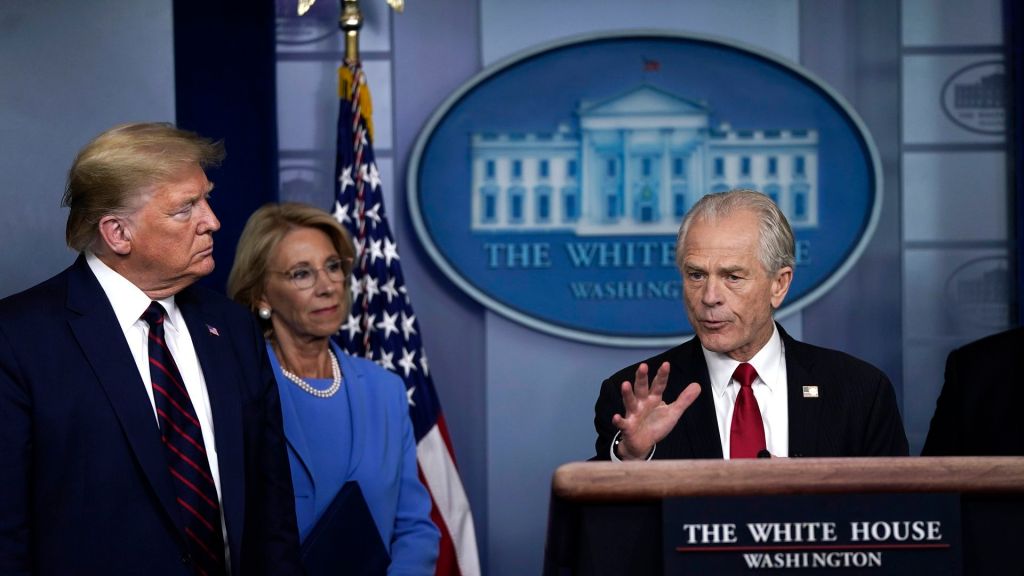
When the Bully Yells, He’s Losing: What Navarro’s Rhetoric Really Means for Canada

When Peter Navarro, former White House trade adviser and Trump loyalist, publicly urged Canadians to pressure their government into “negotiating fairly” before U.S. tariffs hit on August 1, the message wasn’t strength, it was panic. Navarro’s over-the-top rhetoric, painting Canada as an obstinate, underpowered negotiator, is less about truth and more about fear. If the United States were truly in control of the trade talks, it wouldn’t need to bluster. It wouldn’t need to insult. And it certainly wouldn’t be begging Canadians to do its dirty work.

Let’s be clear: Canada is not on its knees. We’re not some brittle middle power gasping for access to American markets. We’re a G7 economy with sophisticated supply chains, deep global trade ties, and a well-earned reputation for playing the long game. When Washington starts lashing out with threats and playground-level taunts, it’s a sign we’ve landed a punch.

Navarro’s claim that Canada is being “very challenging” at the negotiating table is revealing. It means our team is doing its job. Canadian trade officials, seasoned, careful, and resolute, have held their ground in defense of fair access, environmental standards, and domestic protections. That makes the Americans nervous. And when Americans get nervous in a Trump-style administration, they yell louder, not smarter.

The proposed 35% tariffs, to be imposed on Canadian goods not covered by the USMCA, are intended as a hammer. But even a hammer needs a target that won’t hit back. And this time, Canada has alternatives: deepening trade with the EU and Asia-Pacific, strengthening regional innovation hubs, and leveraging our vast resources in climate-sensitive sectors that the U.S. increasingly needs but doesn’t yet control.

Navarro also made a critical tactical error. By calling on Canadian citizens to push back against their own government, he misunderstands our national character. Canadians don’t take kindly to being told what to do, especially not by foreign officials acting like economic schoolyard bullies. The effect will likely be the opposite: renewed support for Ottawa’s position and a strengthening of political will across party lines to resist being steamrolled.

Historically, Canada has negotiated from the shadows, careful to avoid open confrontation. But this isn’t 1987. Today’s Canada is assertive, strategically patient, and unafraid of outlasting American tantrums. Navarro’s comments, while aggressive on the surface, are deeply revealing underneath. They betray a U.S. trade team that’s frustrated, boxed in, and afraid of losing leverage.

So yes, when the U.S. starts yelling, Canada should listen, but not to obey. To smile, stand tall, and quietly note: we’ve got them worried.

Sources:
• Bloomberg Law, “Navarro Urges Canada to ‘Negotiate Fairly’ Before August Tariff Deadline,” July 11, 2025.
• AInvest, “Trump Announces 35% Tariff on Canadian Goods,” July 11, 2025.
• Government of Canada, Global Affairs briefings on trade diversification (2023–2025).

Volunteerism in Canada: A Changing Landscape Across Time and Geography

Volunteerism has long been woven into the fabric of Canadian society. From informal acts of neighbourly support to highly structured programs run through non-profits and public institutions, the practice of giving time and effort without monetary reward has played a vital role in community building, social cohesion, and service delivery. Yet, as Canada changes, demographically, economically, and technologically, so too does the nature of volunteering. In particular, the contrast between rural and urban participation in volunteerism highlights both opportunity and strain within the sector.

A Historical Perspective: State Support and Civic Energy
Canada’s federal government has historically recognized the value of volunteerism and made substantial efforts to coordinate and support the sector. The most significant of these efforts came in the early 2000s with the Voluntary Sector Initiative (VSI), a groundbreaking partnership between the federal government and the voluntary sector. It aimed to improve relations, support innovation, and enhance governance in the non-profit field. Within it, the Canada Volunteerism Initiative (CVI) funded research, capacity-building, and public engagement campaigns. Although the VSI ended in 2005, it laid important groundwork by formalizing the relationship between civil society organizations and the federal state.

Departments such as Human Resources Development Canada (HRDC), later restructured into Employment and Social Development Canada (ESDC), have overseen volunteer policy and programming. Recent federal initiatives, like the Canada Service Corps (launched in 2018), focus on youth engagement in service projects and offer microgrants to promote local volunteering. The New Horizons for Seniors Program also supports older Canadians’ participation in community volunteerism. While there is no standalone federal department solely dedicated to volunteerism, it remains embedded within broader social development frameworks.

Recent Trends: Decline and Resilience
Data from the late 2010s and early 2020s reveal both strengths and stresses within the Canadian volunteer ecosystem. As of 2018, over 13 million Canadians, 41% of the population, were engaged in formal volunteerism, contributing a staggering 1.7 billion hours annually. Yet post-pandemic surveys show troubling signs: 55% to 65% of charities report difficulty recruiting and retaining volunteers, with many forced to cut programs due to shortages.

Notably, volunteer patterns are shifting. Traditional, long-term roles are declining in favour of more episodic or informal volunteering, especially among youth. Factors such as time constraints, economic insecurity, digital preferences, and burnout have reshaped how Canadians approach community service. While organizations like Volunteer Canada continue to offer leadership, training, and research, there is growing urgency to adapt volunteer roles to new realities; flexible schedules, virtual engagement, and better inclusion of marginalized groups.

The Rural – Urban Divide: Participation and Capacity
Perhaps the most persistent, and revealing, dimension of volunteerism in Canada is the divide between rural and urban communities. Historically, rural Canadians have had higher participation rates in formal volunteering. Data from the late 1990s and early 2000s show that 37% of rural residentsvolunteered, compared with 29% in urban centres. Among those with post-secondary education, rural volunteers also outpaced urban peers: 63% of rural university grads volunteered versus 42% in urban areas. Similarly, 67% of college-educated rural residents participated in community groups, compared to 55% in cities.

This elevated participation reflects the central role that volunteering plays in small towns and rural communities, where fewer formal services exist, and much of the civic infrastructure, libraries, community centres, fire services, food banks, is volunteer-run. Yet this strength is also a vulnerability. In recent years, many rural communities have reported a sharp decline in volunteer numbers. A 2025 report from rural Alberta described the “plummeting” of local volunteers, warning that essential community functions were under threat.

The rural sector also faces structural challenges. Of Canada’s ~136,000 non-profit organizations in 2022, only 21.3% were located in rural or small-town settings, compared to 78.7% in urban areas. This limits both the reach and coordination capacity of the rural volunteer system, even as demand for services grows. Moreover, rural organizations often lack the staff or infrastructure to recruit and manage volunteers effectively. Data from Volunteer Toronto’s 2025 report confirms that non-profits with dedicated volunteer managers are 16 times more successful in engaging people, resources many rural groups simply don’t have.

The Broader Role of Volunteerism: Health, Identity, and Belonging
Beyond economics and logistics, volunteerism holds deeper meaning in Canadian life. Research has long shown strong links between volunteering and well-being. Volunteers report lower stress levelsbetter mental health, and a greater sense of purpose. For newcomers, volunteering offers social integration. For youth, it builds skills and confidence. For seniors, it combats isolation.

Moreover, volunteering shapes Canadian identity. The nation’s reputation for kindness and civic responsibility is deeply connected to the widespread assumption that people help each other, often through organized groups. Volunteerism is one of the few activities that bridges socio-economic, linguistic, and cultural divides.

A Call for Renewal
Volunteerism in Canada is both a legacy and a living system. While the numbers remain impressive, the sector is showing signs of strain, especially in rural areas and among long-time service organizations. A national renewal is underway: a National Volunteer Action Strategy is being developed with support from the federal government, aiming to modernize the sector and reverse declining trends.

As Canada continues to evolve, so too must its approach to volunteerism. This means investing in recruitment, training, and support, especially where capacity is low. It means listening to the needs of volunteers themselves and creating flexible, inclusive ways to contribute. Most of all, it means recognizing volunteerism not just as charity or goodwill, but as vital infrastructure in the Canadian democratic and social landscape.

Sources
• Volunteer Canada (2023–2024 reports): https://volunteer.ca
• Statistics Canada: General Social Survey and 2018 formal volunteering stats
• Canada Service Corps and ESDC evaluation documents (2023–2024)
• Volunteer Toronto Snapshot (2025): https://www.volunteertoronto.ca
• Senate report “Catalyst for Change” (2023)
• Rural Alberta volunteer crisis coverage: https://rdnewsnow.com

Five Things We Learned This Week

Here’s the latest edition of “Five Things We Learned This Week” for July 5–11, 2025, featuring all-new insights within the past seven days—no repeats from previous lists:

⚖️ 1. Trump Intensifies Trade War with 30–50% Tariffs

  • Between July 7–11, President Trump sent letters threatening 30% tariffs on EU & Mexico (starting Aug 1), 35% on Canada, and 50% on imported copper, along with an extra 10% on BRICS allies  .
  • Global markets responded with caution—stocks dipped, safe-haven assets steadied, and commodity currencies showed volatility  .
  • Trade partners expressed strong concern, calling the moves disruptive amid ongoing negotiations  .

🛢️ 2. Oil Prices Jump Over 2% amid Tight Markets and Tariff Fears

  • On July 11, Brent rose ~2.5% ($1.72/barrel) to $70.36, and WTI climbed 2.8% to $68.45, sparked by IEA warnings of tighter supply, OPEC+ compliance, and trade policy risks  .
  • U.S. rig counts fell for the 11th straight week, intensifying concerns about future output ().

🌍 3. UN Adopts Climate–Human Rights Resolution

  • On July 8, the UN Human Rights Council passed a climate change motion that ties environmental harm to human rights—adopted by consensus after the Marshall Islands withdrew a controversial fossil-fuel phase-out amendment  .
  • The resolution calls for “defossilizing our economies” and sets a benchmark for framing climate action as a global human-rights priority  .

💼 4. BRICS Summit Highlights Climate Funding Demands

  • On July 7, at their Rio meeting, BRICS leaders urged wealthy nations to fund climate transitions in developing countries, while also affirming continued fossil fuel usage in their economies  .
  • Brazil’s President Lula warned against denialism, contrasting BRICS multilateralism with U.S. isolationism ().

🎤 5. Reuters NEXT Asia Summit Tackles Trade, AI & Global Stability

  • July 7, the Reuters NEXT Asia forum in Singapore convened ~350 global leaders to debate pressing issues—covering AI innovation, trade disputes, and geopolitical uncertainty  .
  • Discussions stressed AI’s dual potential for disruption and opportunity, with trade tensions—especially tariffs—looming large.

Each of these five highlights occurred between July 5–11, 2025, and brings fresh, global perspectives to this week’s roundup. Want full article links or deeper analysis? Just say the word!

Why Ottawa’s Merivale Amazon Warehouse is a Strategic Blunder

Ottawa’s approval of a massive Amazon warehouse on Merivale Road, a sprawling 3.1 million sq ft, 75‑acre facility, marks a strategic misstep in land-use planning. As the city’s largest such development yet, it will usher in heavy fleet operations directly into residential southern suburbs, undermining broader policy goals and community health.

🚚 Traffic Overload & Safety Impacts
Warehouses of this scale generate hundreds of heavy truck movements daily, estimated at around 500 trips, likely running 24/7. Local roads like Merivale and Fallowfield, designed for commuter cars and transit, cannot absorb this freight volume. Congestion, pavement deterioration, and heightened collision risks for pedestrians and cyclists will become daily realities. Safety margins shrink when trailers and semis share space with school buses and family vehicles.

🌬️ Air Quality & Environmental Inequity
Diesel trucks are major sources of PM2.5, nitrogen oxides, and greenhouse gases: pollutants strongly linked with respiratory and cardiovascular diseases. Locating such an operation mere hundreds of metres from homes, schools, and parks imposes environmental harm on vulnerable communities, violating the principles of environmental justice. Moreover, the warehouse’s massive rooflines and parking surfaces will intensify stormwater runoff, local flooding, and the urban heat-island effect, undermining efforts to green the suburbs.

🔊 Noise Pollution & Public Health
24/7 operations bring diesel engines, reverse beepers, dock doors, HVAC systems, and bright lighting, the sort of noises that erode sleep quality. The WHO has linked long-term noise exposure to stress-related illnesses, elevated blood pressure, and heart disease. Neighbouring communities have no indication this will be mitigated; Ottawa’s approvals lack clear buffers or acoustic controls.

🏙️ Contradiction of Ottawa’s “15-Minute Community” Vision
Ottawa’s Official Plan champions compact, walkable “15‑minute neighbourhoods,” minimizing reliance on cars. The Merivale warehouse is antithetical to that ambition. Its scale and related freight footprint impose highway-like impacts in areas meant for gentle suburban life. The contradiction runs deeper when paired with the city’s own Transportation Master Plan, which envisions pulling truck routes away from residential streets once new crossings are in place. This facility predates those crossings and will lock in freight patterns that degrade local mobility aspirations.

🌉 The Bridge under Discussion: Freight Over Neighbourhoods?
In parallel, federal planners are advancing a proposed eastern bridge – nicknamed the “sixth crossing”, between Aviation Parkway and Gatineau’s Montée Paiement. While billed as a transit and multimodal asset, this bridge is tailored to freight use. Approximately 3,500 heavy trucks currently traverse downtown each weekday, mostly over the Macdonald‑Cartier Bridge via sensitive King Edward and Rideau corridors. The new crossing aims to divert truck traffic, possibly 15% by 2050, though some analysts argue only a downtown bypass tunnel would deliver meaningful relief  .

That bridge will funnel freight to the very warehousing complexes like Merivale, entrenching heavy-traffic routes into suburbs and potentially accelerating new industrial developments near residential pockets. Existing policy suggests new freight corridors would better serve truly industrial zones, not communities striving to normalize suburban calm and accessibility.

🌍 Global Benchmarks in Logistics Zoning
Ottawa stands apart from leading planning cities:
Utrecht and Paris locate logistics hubs on disused rail corridors or city peripheries, banning heavy trucks from neighbourhood cores.
California municipalities such as Upland and Fontana enforce conditional-use permits that cap truck movements, define delivery windows, and mandate fleet electrification.
Surprise, Arizona funnels warehousing into designated “Railplex” industrial zones, away from homes.

These policies uphold spatial separation between living spaces and freight operations, a principle Ottawa has ignored in the Merivale decision.

🛠️ Remedying Policy Drift
To realign with its 15-minute community goals and transit ambitions, Ottawa must:
1. Designate logistics zones near transport infrastructure, highways, rail spurs, and existing industrial nodes, while rezoning suburban fringe away from heavy industrial uses.
2. Implement conditional-use frameworks with strict operational caps: truck movement limits, depot hours, landscaped acoustic buffers, fleet electrification mandates, and real-time monitoring.
3. Reassess the eastern bridge’s role, ensuring freight routing doesn’t reward encroachment into suburban or environmentally sensitive areas. A genuine local truck bypass tunnel could separate through-traveling freight from city and suburbs alike.
4. Embed community consultation in both warehouse and bridge planning, matching global best practices and committing to binding environmental and health protections.

🚨 Intersection of Land‑Use and Infrastructure
The Merivale Amazon warehouse exemplifies a policy failure: a freight mega-site allowed inside a suburban living zone, eroding air, noise, traffic, and trust in civic plans. Compounding this is the emerging freight-focused eastern bridge: infrastructure seemingly tailor-made to serve such warehouses while bypassing genuine solutions. Ottawa must resist a slippery slope toward suburban industrialization. Recommitment to the Official Plan, strategic rezoning, nuanced permitting, and freight-oriented infrastructure could offer a path forward, where warehouses belong beside highways, not homes. Without that, this warehouse and bridge duo risk cementing a future at odds with the healthy, sustainable city Ottawa says it wants.

The BRICS Strategy in 2025: From Dialogue to Direction

In July 2025, the BRICS nations – Brazil, Russia, India, China, South Africa, and an expanded circle now including Egypt, Ethiopia, Iran, Saudi Arabia, the UAE, and Indonesia, met in Rio de Janeiro for their 17th annual summit. The gathering marked a decisive shift from rhetorical ambition to institutional strategy, as the bloc attempts to redefine global governance, build financial alternatives to the West-led systems, and frame itself as the political voice of the Global South. While the summit was shaped by ongoing geopolitical crises and internal contradictions, it revealed a maturing vision that extends far beyond its original economic coordination mandate.

At the core of this year’s summit was a demand for structural reform in global governance. BRICS leaders called for the United Nations Security Council to be expanded and for the voting structure of institutions such as the International Monetary Fund (IMF) and World Bank to be reweighted to better reflect the global South’s demographic and economic realities. This long-standing frustration with Western-dominated institutions has now sharpened into a diplomatic agenda. What was once a diffuse critique has evolved into coordinated proposals, particularly on the economic front.

One of the summit’s central themes was the steady progress toward de-dollarization. While calls for a BRICS common currency were conspicuously downplayed in Rio, leaders focused instead on more pragmatic steps: local-currency trade settlements, expanded use of central bank digital currencies (CBDCs), and the interoperability of national payment systems through the still-developing BRICS Pay infrastructure. A new cross-border clearing and settlement framework, informally called BRICS CLEAR, was introduced to complement these efforts. These initiatives are designed not only to bypass the U.S. dollar in bilateral and multilateral trade, but also to shield BRICS economies from the volatility and political conditionality associated with Western sanctions and SWIFT-based systems.

To support these ambitions, the New Development Bank (NDB), already capitalized with billions of dollars from member states, is being repurposed. A guarantee facility is in development, modeled loosely on the World Bank’s Multilateral Investment Guarantee Agency (MIGA), to underwrite public and private projects across member states. This is particularly relevant for emerging markets seeking infrastructure finance without the governance conditions typically imposed by the IMF or World Bank. With these tools, the bloc seeks to develop its own version of Bretton Woods-style architecture, updated for multipolar geopolitics.

Climate and sustainability also featured heavily on the summit agenda. Brazil, as host, proposed the “Tropical Forest Forever Facility,” a $125 billion climate financing mechanism aimed at conserving rainforest regions across Latin America, Africa, and Asia. The proposal is a direct challenge to Western narratives that have often placed environmental responsibility solely on the shoulders of developing nations without matching financial commitments. The initiative also serves as a preview of the Global South’s priorities heading into COP30, which will also be hosted by Brazil.

Sustainable development received structural attention beyond climate. The BRICS Business Council and Women’s Business Alliance jointly launched a 2025–2030 action plan focused on strengthening small and medium-sized enterprises (SMEs) across member states. This includes access to digital markets, cross-border licensing, and gender-equity strategies in entrepreneurship. The bloc appears intent on grounding its geopolitical ambitions in concrete developmental outcomes at the community and enterprise level.

Notably, the summit also launched a framework for artificial intelligence governance. Although still in early stages, the agreement seeks to establish common principles around transparency, ethical use, and protection against algorithmic bias. This aligns with recent UN discussions and serves to position BRICS as a rule-setting body rather than just a rule-taking coalition. With China and India both advancing in AI development, and with Brazil and South Africa playing increasing roles in data regulation, this initiative represents an important test of cross-ideological cooperation in technology governance.

Despite these achievements, internal tensions were evident. Neither President Xi Jinping nor President Vladimir Putin attended in person. India’s leadership walked a diplomatic tightrope, supporting reformist language while resisting deeper integration that might conflict with its ties to the West. Brazil, under President Lula, tempered the bloc’s anti-Western tone, particularly around tariffs and NATO criticism, wary of provoking trade retaliation. These divergences underscore the coalition’s central contradiction: it is an alliance of ambition, not ideology.

Nonetheless, BRICS continues to expand. Indonesia became a full member in January 2025, joining Iran, Egypt, Ethiopia, and others admitted in the prior year. Observers note that the group’s size risks diminishing its coherence, yet the appeal of a multipolar forum remains strong. As the G7 struggles with internal disunity and the Western alliance faces political upheaval, BRICS offers a platform that aligns with the aspirations of many developing nations, even if it cannot yet match Western institutions in capacity or cohesion.

Looking ahead, the bloc’s short-term focus will be on operationalizing its financial and development tools, settlement systems, climate funds, SME supports, and asserting diplomatic pressure for reform in global governance bodies. Over the medium term, its success will depend on the extent to which it can balance economic pragmatism with political heterogeneity. While its vision of a multipolar world is not universally embraced, BRICS has matured into a serious force in global affairs, one increasingly capable of setting its own agenda.

Billionaires Shouldn’t Exist – And Here’s Why That’s Not Radical

When New York State Assemblymember Zohran Mamdani recently declared, “I don’t believe we should have billionaires,” he wasn’t indulging in empty populism, he was articulating a moral position whose time has come. The existence of billionaires, in an era defined by mass homelessness, food insecurity, and climate collapse, is not merely unfortunate, it is an ethical indictment of the systems that allowed them to exist in the first place.

Mamdani joins a growing chorus of progressive thinkers, economists, and ethicists who argue that no individual should have the right, or the capacity, to accumulate and hoard a billion dollars or more. This isn’t about envy or political expediency. It’s about the increasingly clear understanding that billionaire wealth isn’t just excessive, it’s extractive, destabilizing, and morally indefensible.

Billionaire Wealth Is Built on Exploitation
To amass a billion dollars, one must either inherit extreme wealth or systematically profit from the undervalued labour of others. Most billionaires, especially those in tech and finance, profit not through invention or hard work, but through ownership of capital, tax avoidance, and labor suppression. As economist Thomas Piketty demonstrated in Capital in the Twenty-First Century, returns on capital consistently outpace economic growth, meaning that wealth accumulates faster than wages rise, thus enriching the few while immiserating the many (Piketty, 2014).

This is not a bug in capitalism; it’s a feature. While billionaires build personal rockets and collect rare yachts, tens of millions lack clean water, reliable housing, or access to medical care. The wealthiest 1% of the global population now owns nearly half of the world’s wealth, while the bottom 50% hold just 2% (Credit Suisse Global Wealth Report, 2022).

Morality Demands Redistribution, Not Charity
Some argue that billionaires are philanthropists who “give back.” But ethical redistribution is not about generosity, it’s about justice. Charity, even when well-intentioned, is discretionary. It allows the wealthy to decide which causes are “worthy,” often with tax write-offs and public accolades. It is fundamentally undemocratic.

As philosopher Peter Singer wrote in his essay Famine, Affluence, and Morality, if we can prevent something bad from happening without sacrificing anything of comparable moral importance, we are morally obligated to do so (Singer, 1972). Billionaires could eradicate global hunger, fund universal education, and fight climate change many times over. That they do not is a moral failure, one built into the very logic of their class interests.

The Billionaire Class Undermines Democracy
More than just a matter of inequality, billionaires represent a profound threat to democracy. They use their wealth to shape elections, control media narratives, lobby governments, and suppress movements that challenge their power. As Mamdani put it, they spend “millions of dollars” to influence outcomes that serve their continued dominance. That’s not civic participation, it’s oligarchy.

This is evident in the staggering political spending from figures like Elon Musk, Jeff Bezos, and the Koch brothers, whose influence often counters popular will on issues like climate regulation, taxation, and labor rights. When money becomes speech, those with the most money speak loudest, and everyone else is drowned out.

Making Billionaires Illegal Is Not Extremism – It’s Ethics
To say that billionaires should be “illegal” is not to suggest rounding them up and seizing their mansions. It means creating systems in which it is structurally impossible to accumulate wealth beyond a certain point. This might include steeply progressive taxation, strict inheritance limits, and aggressive corporate regulation. As proposed by economists like Gabriel Zucman and Emmanuel Saez, a global wealth tax would not only generate trillions in public funds, but also dismantle the foundations of permanent wealth aristocracy (Zucman & Saez, 2019).

When Mamdani says billionaires “shouldn’t exist,” he invites us to imagine a society where wealth is shared, not hoarded; where innovation is public, not privatized; and where dignity isn’t auctioned to the highest bidder. This vision isn’t utopian, it’s already partly realized in countries with higher levels of equality and lower poverty rates, such as Norway, Denmark, and the Netherlands.

A Future Without Billionaires Is a Future With Hope
We are standing at a crossroads: ecological collapse looms, fascism festers, and inequality grows by the hour. Allowing the existence of billionaires in this context is more than complacent, it’s complicit. As the climate crisis worsens and democratic institutions strain under the weight of elite influence, we must ask: how much longer can we afford billionaires?

The answer, increasingly, is: not one more day.

Sources
• BBC News. (2025). Zohran Mamdani says he doesn’t believe that we should have billionaires. https://www.bbc.com/news/articles/cvge57k5p4yo
• Piketty, T. (2014). Capital in the Twenty-First Century. Harvard University Press.
• Credit Suisse. (2022). Global Wealth Report 2022. https://www.credit-suisse.com/about-us/en/reports-research/global-wealth-report.html
• Singer, P. (1972). Famine, Affluence, and Morality. Philosophy & Public Affairs.
• Zucman, G., & Saez, E. (2019). The Triumph of Injustice: How the Rich Dodge Taxes and How to Make Them Pay. W.W. Norton & Company.

Five Things We Learned This Week

Here’s the latest edition of “Five Things We Learned This Week” for June 28–July 4, 2025, showcasing five entirely new global developments—each occurring in the past seven days:

🧭 1. Trump Signs Sweeping Tax & Spending Bill

• On July 4, President Trump signed a landmark tax-and-spending package into law, following its narrow passage in Congress  .

• This $3.3 trillion bill includes large tax cuts and federal spending boosts, with analysts warning of significant long-term increases in national debt  .

🌍 2. Japan Warms for Possible Quakes, Authorities Calm Public

• On July 4, Japan’s disaster agency alerted residents of potential strong aftershocks off the southwest coast, though downplaying doomsday fears  .

• Authorities emphasized preparedness over panic, urging early warning systems remain active.

🇨🇳 3. China Signals Investment in Brazil‑Led Forest Fund

• At the end of the week, Reuters reported that China plans to back the “Tropical Forests Forever” fund led by Brazil—marking a strategic shift toward joint environmental efforts  .

• This move is viewed as a rare diplomatic gesture amid global climate partnerships.

📈 4. Global Equity Funds See Largest Inflows in 8 Months

• Global equity funds recorded a massive $43.15 billion inflow for the week ending July 2, driven by U.S. stock highs and surging interest in AI and tech sectors  .

• U.S. equity funds accounted for $31.6 billion, with robust gains also seen in European and Asian markets  .

🇲🇩 5. Moldova Leaders Emphasize EU Integration Ahead of Election

• On July 4, Moldova’s President Maia Sandu declared that citizens hold the future of the EU bid in their own hands as the country nears parliamentary elections  .

• Her appeal underscores Moldova’s ongoing push for formal European Union membership.

These five developments span U.S. fiscal policy, earthquake readiness, international environmental funding, global investment trends, and Eastern European geopolitics—all fresh this week. Want source links or deeper insights? Let me know!

A Turning Point for Democrats: Embracing or Repelling the Mamdani Moment

As I write this, I’m still struck by the fact that this is even a controversy. The policies Zohran Mamdani is proposing: free public transit, universal childcare, publicly owned services, are standard practice across much of Europe and other G7 nations, yet many Democrats are voicing concern that New Yorkers, and perhaps Americans more broadly, still aren’t ready to embrace what they call “socialist” ideas.

In June 2025, New York voters spoke clearly. Fifty-six percent of Democratic primary voters chose Zohran Mamdani, a 33-year-old democratic socialist, to carry the party’s nomination for mayor. His platform includes free public transit, universal childcare, rent freezes, and publicly owned grocery stores. To many, this was a breath of fresh air in a city suffocating under the weight of rising costs and entrenched inequality. To others, it was a red flag waving at the edge of a cliff. Now, Democrats face a decision that could define the party for years to come.

Mamdani’s victory was not a fluke. His campaign, reportedly the largest volunteer mobilization in the city’s history, reached over 750,000 doors with 30,000 committed canvassers. He ran on small donations and working-class energy, uniting activists, renters, and disaffected youth. Against him stood Andrew Cuomo, backed by unions, wealthy donors, and a legacy machine. Yet Cuomo could not withstand the wave of grassroots momentum.

The question now facing Democrats is not only how Mamdani won, but what they should do about it. Cuomo is already considering an independent run. Mayor Eric Adams, expelled from the Democratic fold, is still in the race and is quietly collecting business support. This sets up a potential three-way general election, one that could split the left-leaning vote and throw the door open for the candidate who best reassures moderate, outer-borough voters. Democrats must decide if Mamdani’s energy is transferable to the broader electorate or if his policies will cost them the mayoralty.

Mamdani offers a bold, future-oriented vision. He speaks of climate policy not as abstraction but as urban necessity. His platform calls for retrofitting buildings, expanding transit access, and protecting tenants, all framed as investments in equity and resilience. He proposes paying for this with new taxes on the wealthy and on corporations that profit from the city’s infrastructure and labour. For progressives, he represents hope. For moderates, he presents risk.

Critics argue that Mamdani’s platform is more idealism than governance. Taxing millionaires at the city level is legally complex and politically fragile. Governor Hochul has already signaled opposition to any such proposal. Implementing rent freezes and creating city-owned grocery stores would require significant legislative cooperation and administrative capacity. There are also concerns about whether such sweeping programs are financially viable under New York City’s budget constraints.

National Republicans have already begun to label Mamdani as a communist, a charge that PolitiFact has debunked. He is a democratic socialist, not a revolutionary. He believes in using democratic institutions to expand access to public goods and services. Nevertheless, the right will use his image to galvanize resistance, not only in New York but nationwide. Democrats, particularly those eyeing swing districts in 2026, will be watching closely.

The party also faces internal tensions. Some centrist Democrats worry about alienating suburban and immigrant voters who may view Mamdani’s platform as radical. Others remember Buffalo in 2021, when India Walton won the Democratic primary only to be defeated in the general election by a write-in campaign for incumbent Byron Brown. Business leaders in New York have already begun organizing to prevent a Mamdani administration. They are joined by conservative Democrats and Republicans who see this as an existential challenge.

Mamdani’s base, however, is broader than many expected. He performed well not only in left-leaning Brooklyn neighborhoods but also in parts of Queens, the Bronx, and Staten Island. He attracted support from Hispanic, Black, and Asian voters, many of whom feel excluded from the city’s economic gains. Still, his positions on Israel, elite school admissions, and Indian politics have alienated parts of the Jewish, Korean, and Hindu communities. Holding this coalition together in the general election will be a test of political skill and message discipline.

This race is not just about New York City. It is a referendum on the direction of the Democratic Party. After disappointing results in 2024, especially in swing districts and rural areas, Democrats are torn between a progressive future and a centrist past. Mamdani’s success presents a new model: bold ideas, grassroots energy, and unapologetic populism. If he wins in November, the party may shift permanently. If he loses, the lesson may be that ideology cannot overcome institutional resistance and suburban caution.

Democrats now face three decisions. First, whether to support Mamdani fully or distance themselves from his agenda. Second, whether to adopt parts of his platform as a new standard or treat it as a local anomaly. Third, how to communicate his vision without triggering a backlash that could hurt candidates elsewhere.

In many ways, the choice has already been made. Mamdani is now the party’s nominee in the country’s largest and most diverse city. Whether his campaign signals renewal or foreshadows division will depend on the next five months. The general election in November will not just determine who leads New York, but what kind of party the Democrats want to be.

Why Canada’s Digital Services Tax Is Poking the Bear – And Why Australia and New Zealand Are Still Holding the Stick

It was only a matter of time before Canada threw its toque into the ring on the global debate over taxing tech giants. After years of polite patience, Ottawa finally said enough is enough and committed to implementing a Digital Services Tax (DST), retroactively, no less, dating back to January 1, 2022. The goal? To make Big Tech pay its fair share for the billions they earn from Canadians’ online clicks, swipes, and searches. Predictably, this move hasn’t exactly gone down well south of the border, especially with Donald Trump, who’s already threatening retaliatory tariffs faster than you can say “Google it.”

Canada’s DST is a 3% levy on revenues from digital services; think online marketplaces, advertising platforms, and social media, that target Canadian users. The tax only kicks in for companies making over €750 million globally and more than $20 million in Canadian digital revenues. So, yes, this is about Amazon, Google, Meta, and Apple. Not your cousin’s Shopify side hustle.

The reasoning behind the move is, frankly, hard to argue with. For years, digital multinationals have made huge profits in countries where they have lots of users but no physical offices. Since our tax codes were written in the days of rotary phones, these companies have legally side-stepped corporate taxes in places like Canada while hoovering up data and ad dollars with industrial-grade efficiency. The DST is intended as a band-aid solution until a global fix comes together, though that band-aid is now being applied with an increasingly firm hand.

In truth, the global tide may finally be turning on Silicon Valley’s long, tax-free world tour. For over a decade, Big Tech has surfed a wave of international growth, scaling into nearly every market on Earth without paying local dues. Armed with sophisticated tax avoidance schemes, usually routed through Ireland or the Netherlands, the giants of the digital economy have profited handsomely while governments watched domestic retailers struggle to compete. But now, faced with growing public backlash and creaking public coffers, countries from France to India to Canada are drawing a line. The message is clear: if you make money off our citizens, you’re going to help fund the roads, schools, and social programs that keep them clicking.

The global fix in question is the OECD’s “Two-Pillar” solution, a diplomatic marathon attempting to modernize international tax rules. Pillar One aims to reallocate taxing rights to market countries (like Canada), while Pillar Two would establish a global minimum corporate tax of 15%. Canada has said it would delay DST collection if the OECD deal is implemented, but with the U.S. dragging its heels on ratification, Ottawa is preparing to go it alone.

That’s where Trump comes in. Never one to let a perceived slight slide, he’s treating Canada’s DST as a direct assault on U.S. interests. After all, the companies getting dinged are almost entirely American. Trump’s threats to slap retaliatory tariffs on Canadian exports are classic “America First” bluster, but they’re not without precedent. The U.S. already opened Section 301 investigations into several other countries’ DSTs, accusing them of unfairly targeting American firms. Biden’s administration cooled the rhetoric, but the sentiment remains.

Of course, Canada isn’t the only country to stick its neck out on this. France was the pioneer, pushing ahead with a 3% DST despite fierce U.S. pushback. Italy, Spain, and the UK followed suit. Even India got into the act with its “equalisation levy,” predating many Western attempts. Each of these nations, like Canada, grew tired of waiting for multilateral action while Silicon Valley giants dodged their tax nets with Olympic-level agility.

Interestingly, not everyone in the Anglosphere has been quite so bold. Take Australia. A few years back, it flirted with a DST, there were consultations, white papers, and worried glances toward Washington. But ultimately, Canberra decided to give the OECD process a shot and beefed up its anti-avoidance laws instead. Its Multinational Anti-Avoidance Law and Diverted Profits Tax now let the tax office go after digital firms that try to shuffle profits offshore. It’s the equivalent of hiring a tough new accountant rather than inventing a new tax altogether.

New Zealand, meanwhile, has taken a “just in case” approach. Legislation for a 3% DST was passed in 2023, but it’s sitting in a drawer for now, ready to go if the OECD talks collapse. The Kiwis have been clear they don’t want to pull the trigger unless absolutely necessary, probably because they’d prefer not to find themselves on the receiving end of a tweetstorm or tariff tantrum from the next American administration.

So here we are: Canada, gloves off and calculator in hand, is forging ahead, determined to claw back a fair share from the tech titans. Australia and New Zealand, pragmatic as ever, are hedging their bets and keeping trade relationships intact, at least for now. But even their patience has limits. The longer the OECD deal stalls, the more tempting it becomes to follow Canada’s lead.

In the end, this is a fight not about code or commerce, but about fairness in the digital age. The world’s tax systems were built for an era of railroads and oil refineries, not cloud storage and influencer revenue. Until the global rules catch up, expect more countries to test their own digital tax solutions. Whether that means poking the American bear or just poking around in policy drawers remains to be seen. But one thing’s certain: tech giants might finally be running out of places to hide.

Why Mamdani’s “Democratic Socialist” Label Is a Strategic Win in the NYC Mayoral Race

In a city where political identities are often blurred by the pragmatism of urban governance, the decision by New York City mayoral candidate Zohran Mamdani to brand himself as a Democratic Socialist rather than the more conventional Social Democrat is not just a semantic flourish, it is a calculated and resonant act of political self-definition. With this move, Mamdani has signaled both clarity of purpose and a refusal to soften the ideological edges that increasingly define contemporary progressive movements.

The term “Social Democrat” has long carried the weight of historical compromise. It evokes images of European-style welfare capitalism: generous but measured; systemic but rarely disruptive. In the American context, it has often been used to describe politicians whose policies emphasize equity within capitalism without directly challenging its underlying structures. This has made it a safe label, palatable to centrists and progressives alike, but also, increasingly, a vague one. In contrast, “Democratic Socialist” offers sharper contours. It suggests not merely redistribution, but reimagination: of public housing as a universal right, of transit as a decommodified public service, and of the city itself as a collective endeavor rather than a marketplace.

Mamdani’s use of the term places him firmly in the lineage of figures like Bernie Sanders and Alexandria Ocasio-Cortez, both of whom have successfully mainstreamed democratic socialism in American electoral politics. In doing so, he taps into an energized political current, particularly among younger voters, renters, union members, and New Yorkers disillusioned by the city’s deepening inequality and chronic dysfunction. For a generation raised amid austerity, pandemic precarity, and climate anxiety, the usual reformist language has begun to ring hollow. Mamdani’s brand of politics, by contrast, offers a promise of structural transformation, not just technocratic adjustment.

Importantly, this positioning also exerts strategic pressure on the rest of the field. In a crowded race where multiple candidates will profess progressive values, Mamdani’s unambiguous ideological label sets a benchmark. It forces other candidates to articulate whether their vision for the city includes systemic change or simply more efficient management. It also inoculates Mamdani from accusations of policy inconsistency or opportunism, his brand is explicit, unapologetic, and tied to a coherent political tradition.

The risks are not insignificant. “Socialism” remains a loaded term in American discourse, and Mamdani’s opponents will undoubtedly attempt to weaponize it. Yet recent electoral cycles suggest that voters, especially in urban areas, are increasingly unmoved by such attacks. If anything, they may interpret them as evidence that the candidate is willing to speak uncomfortable truths. In this context, reclaiming the term “Democratic Socialist” is not a liability, but an asset; a demonstration of conviction in an era fatigued by ideological hedging.

In choosing that label, Mamdani has not only clarified his own platform but reshaped the ideological stakes of the mayoral race. It is a move that marks him not merely as a candidate of the left, but as one committed to a transformative vision of what New York City could be.