Carriers, Claims, and Crude: Why the Caribbean Is Becoming 2025’s Most Dangerous Flashpoint

In the windswept corridors of Latin American geopolitics, the tensions between the United States and Venezuela have quietly transformed into something far more consequential than a mere counternarcotics campaign. As of late 2025, the scale of U.S. military deployment in the Caribbean, centered around the gargantuan USS Gerald R. Ford carrier strike group, marks not just a show of force, but a deeply calculated exertion of power.   Beyond the stated mission of interdiction of drug trafficking, this posture suggests a layered strategy: pressuring Maduro, reasserting Washington’s influence in the region, and signaling to Latin American capitals that the era of passive U.S. tolerance may be drawing to a close.

From Caracas’s perspective, this is viewed not as a benign counternarcotics mission but as a direct existential threat. The Venezuelan leadership has responded by mobilizing broadly; ground, riverine, naval, aerial, missile, and militia forces have reportedly been readied for “maximum operational readiness.” Estimates suggest on the order of 200,000 troops could be involved, underscoring how deeply Maduro’s government perceives the risk. In public discourse, the Venezuelan regime frames this as defending sovereignty, not only against cartel-linked accusations but also against what it claims is a looming imperial design.

This confrontation cannot be fully understood, however, without examining Guyana and the long-running territorial dispute over the Essequibo region. Essequibo is no trivial piece of geography: historically claimed by Venezuela, it comprises more than two-thirds of Guyana’s land mass and borders rich offshore blocks. In recent years, ExxonMobil, Hess, CNOOC, and others have developed significant oil infrastructure just off Guyana’s coast, especially in the Stabroek Block.  

Tensions flared visibly in March 2025, when a Venezuelan coast guard vessel sailed deep into waters claimed by Guyana, radioed warnings to floating production storage and offloading (FPSO) platforms, and asserted those vessels were operating in “Venezuelan” maritime territory. Guyana’s foreign ministry publicly protested, noting that the incursion violated not only its sovereign economic zone, but also a 2023 International Court of Justice order that prohibited Venezuela from taking actions that might change the status quo. Guyana also emphasized that its exploration and production activities are lawful under international law, and referenced its rights under the 1899 arbitral award.  

From a strategic lens, Venezuela’s behavior in Essequibo aligns too neatly with its military mobilization against the U.S. The annexation drive, or at least the territorial claim, is not ideological romanticism, but realpolitik rooted in energy security. On multiple occasions, President Maduro has authorized Venezuelan companies, including PDVSA, to prepare for fossil fuel and mineral extraction in the disputed Essequibo territory. In Caracas’ calculus, asserting control over Essequibo could transform its geopolitical position: it reclaims a historical claim, undermines Guyana’s sovereignty, and potentially gives Venezuela leverage over lucrative offshore oil fields.

The U.S. is not blind to this. Washington’s backing of Guyana is deliberate and multilayered. Secretary of State Marco Rubio’s warnings to Maduro, at a joint press conference with Guyanese President Irfaan Ali, make clear that the U.S. considers any Venezuelan aggression against Guyana, especially against ExxonMobil-supported oil platforms, as a red line. For Guyana, which has very limited military capacity, the American presence is both a shield, and a bargaining chip; for the U.S., it’s a way to protect strategic investments, ensure energy flows, and project influence in a region increasingly contested by non-Western actors.

Yet, this is not a zero-sum game with only force on the table. Venezuela’s framing of U.S. activity as an imperial threat resonates powerfully with its domestic base, allowing Maduro to marshal nationalist sentiment and justify radical mobilization measures. The Bolivarian militias, riverine units, and civilian enlistment signal a willingness to wage not just conventional defense, but also hybrid and asymmetric warfare. The mobilization is as symbolic as it is practical.

At the same time, Guyana is investing in a diplomatic-legal offensive. The Guyanese government has formally protested Venezuelan naval incursions and made repeated appeals to the ICJ. International support for Guyana is gathering pace: the Organization of American States and other regional bodies have backed its territorial integrity. In parallel, Washington’s military buildup, dressed as counternarcotics, is likely calculated to saturate the region with deterrence against both terrorist/criminal maritime networks and more ambitious Venezuelan designs.

The risk now is of miscalculation. If Caracas underestimates Washington’s resolve, or if Guyana feels compelled to resist more aggressively, escalation could spiral. But equally, if the U.S. overplays its hand, moving from deterrence to coercion, it risks pushing Venezuela further into isolation or desperation, which could destabilize not only Caracas, but the broader region.

In the broader sweep of history, this crisis may well mark a turning point. Venezuela’s push into Guyana is not just about land; it’s about energy, influence, and the assertion of sovereignty in a global order where resources still drive power. For the U.S., the operation may begin as counternarcotics, but the strategic subtext is unmistakable: protecting American economic interests, reestablishing hemispheric primacy, and shaping the future of Latin America in an era of renewed geopolitical competition.

At Rowanwood, we often say that old maps matter: not just for their lines, but for what those lines mean when power shifts. Here, in the tropical currents of the Caribbean and the oil-laden jungles of Essequibo, the maps are being redrawn – quietly, dangerously, and with very real stakes for the future.

Tewin and the Shape of Ottawa’s Future

At the moment, I don’t feel I know enough about this developing issue to take a position, so I plan on monitoring the situation and perhaps look at the bigger picture.  

Four years ago, Ottawa city council voted to expand the urban boundary into lands southeast of the city to create a massive new suburban community called Tewin. The project, a partnership between the Algonquins of Ontario (AOO) and Taggart Group, envisions housing for up to 45,000 people on 445 hectares of land. This expansion was one of the most controversial planning decisions of the last decade, both for its symbolic weight and its long-term implications. Today, councillor Theresa Kavanagh has re-opened the debate, proposing that Tewin be stripped from Ottawa’s Official Plan. Her efforts highlight the difficult choices cities face between growth, climate goals, and Indigenous reconciliation.

The Promise of Tewin
Supporters of Tewin present it as a once-in-a-generation opportunity. For the Algonquins of Ontario, the project represents an unprecedented role in shaping Ottawa’s future. After centuries of dispossession, Tewin offers not only revenue streams and jobs but also visibility in the city’s urban fabric. This symbolic dimension, land not merely ceded or lost, but built upon in partnership, is difficult to dismiss.

Developers and some councillors also argue that Ottawa must accommodate population growth. With Canada’s immigration targets rising, pressure on housing supply is intense. Tewin promises tens of thousands of new homes, potentially designed with modern sustainability standards. Proponents emphasize that large master-planned communities can integrate parks, schools, and infrastructure in ways that piecemeal infill cannot. In this vision, Tewin is not sprawl, but a carefully designed city-within-a-city.

The Cost of Sprawl
Yet the critiques are no less powerful. City staff initially ranked the Tewin lands poorly during their 2020 evaluations, citing soil unsuitability, distance from infrastructure, and limited transit access. Servicing the site: extending water, sewers, and roads will cost nearly $600 million, much of it beyond the city’s 2046 planning horizon. These are funds that could otherwise reinforce existing communities, transit networks, and climate-resilient infrastructure.

Urban sprawl carries environmental and social costs. Tewin sits far from rail lines and job centres, ensuring that most residents will be dependent on cars. This contradicts Ottawa’s stated climate action commitments, which emphasize compact growth and reduced vehicle emissions. Critics also note that adding a massive suburb undermines efforts to intensify existing neighbourhoods, where transit and services are already in place.

Indigenous Voices, Indigenous Divisions
The Indigenous dimension of Tewin complicates the debate. On the one hand, the Algonquins of Ontario have secured a rare position as development partners, advancing reconciliation through economic participation. On the other hand, not all Algonquin communities recognize AOO’s legitimacy, and some argue that consultation has been narrow and exclusionary. The project thus embodies both progress and tension in the city’s relationship with Indigenous peoples. To reject Tewin outright risks appearing to dismiss Indigenous economic aspirations; to proceed with it risks deepening divisions and ignoring long-standing calls for more inclusive engagement.

A City at the Crossroads
Councillor Kavanagh’s push to remove Tewin from the Official Plan is more than a single motion. It reopens a philosophical question: what kind of city does Ottawa wish to become? If it seeks to embody climate leadership, resilient infrastructure, and walkable communities, Tewin appears to be a step backward. If it seeks to honour Indigenous partnership and ensure abundant housing supply, the project has undeniable appeal.

Ultimately, Tewin forces Ottawa to confront a contradiction at the heart of Canadian urbanism. We are a country that has promised climate action, but remains tethered to car-dependent suburbs. We are a nation that aspires to reconciliation, but often struggles to reconcile competing Indigenous voices. To move forward, Ottawa must do more than weigh costs and benefits; it must articulate a vision of growth that is both just and sustainable.

In this sense, Tewin is not merely a development proposal. It is a mirror held up to the city itself, reflecting both its aspirations and its unfinished work.

Sources:
• CTV News Ottawa. “Tewin development project passes latest hurdle but some say it still doesn’t belong.” August 2024. Link
• Ontario Construction News. “Ottawa councillor sparks renewed debate over controversial Tewin development.” April 2025. Link
• CTV News Ottawa. “Councillor withdraws motion to remove 15,000-home development from Ottawa’s Official Plan until after byelection.” April 2025. Link
• Horizon Ottawa. “Stop the Tewin Development.” Accessed October 2025. Link

Five Things We Learned This Week

Week of October 25–31, 2025

A week of extreme weather, big geopolitical tests, market moves and wrenching human stories. Here are five items you should know from Oct 25 – 31, 2025.

🌪️ Hurricane Melissa devastates parts of the Caribbean (Oct 28–30)

Hurricane Melissa slammed Jamaica and battered Cuba and Haiti, becoming Jamaica’s strongest-ever recorded storm and causing dozens of deaths, widespread flooding and tens of thousands displaced. Recovery and humanitarian relief are now the immediate priorities.

Why it matters: The storm’s intensity underscores how warming seas are amplifying disaster risk for island nations.

Source: Reuters Caribbean Service, BBC Weather Centre (Oct 28–30 2025).

💱 U.S. raises tariffs on Canada by 10% (Oct 25)

In a surprise move on Oct 25 the U.S. announced a 10% tariff increase on many Canadian goods — a sharp escalation in trade friction between the two neighbours and one likely to reverberate across supply chains and markets.

Why it matters: Trade spats between major partners affect jobs, currency values and consumer prices across North America.

Source: Bloomberg Markets, Globe and Mail Business (Oct 25 2025).

🔬 Russia says it tested a new nuclear-powered cruise missile (Oct 26)

Moscow reported a successful test of its nuclear-powered Burevestnik cruise missile on Oct 26, a claim that, if true, carries major implications for strategic stability and arms-control debates.

Why it matters: Such weapons could bypass existing defence systems and complicate future nuclear treaty negotiations.

Source: BBC World Service, Al Jazeera Defense Desk (Oct 26 2025).

📉 Fed cuts rates but Powell warns December is not guaranteed (Oct 29)

On Oct 29 the Federal Reserve cut its policy rate by 25 basis points; Chair Jerome Powell cautioned markets that another cut in December was not assured, a comment that pushed volatility and trimmed some of the initial market rally.

Why it matters: Interest-rate signals guide global credit flows and influence currencies and investment strategy worldwide.

Source: Reuters Finance, Wall Street Journal (Oct 29 2025).

⚖️ Red Cross hands over body of a deceased hostage from Gaza (Oct 27)

The International Committee of the Red Cross transferred the body of a deceased hostage from Gaza to Israeli authorities on Oct 27, a grim and sensitive development in the ongoing aftermath of the conflict and hostage exchanges.

Why it matters: Humanitarian operations in conflict zones require trust and neutrality — both fragile but essential qualities for any future peace process.

Source: Associated Press, Haaretz, ICRC statement (Oct 27 2025).

Closing thoughts: This week juxtaposed planetary fury and planetary politics: a rapidly intensifying hurricane underlines climate vulnerability while tariffs, weapons tests and uneasy ceasefire aftermaths show how geopolitics and economics can shift quickly. All events have been verified to fall inside Oct 25 – 31 2025.

The Last Whales of Marineland: Law, Ethics, and the Only Path Forward

Marineland sits on the edge of Niagara Falls, a relic of a different era when families came to gape at orcas and belugas performing tricks. Today, the park is closed to the public, its lights dimmed, its tanks mostly empty. Yet the whales remain, silent witnesses to decades of human fascination and exploitation. Among them, the belugas are the last of a long line of captive cetaceans in Canada, and their plight is both a moral and legal reckoning.

For decades, Marineland claimed it brought education and awareness of marine life to Canadians and tourists alike. The reality, as revealed over the last ten years, is more troubling. Since 2019, more than a dozen beluga whales have died at the facility under circumstances that have raised concern among veterinarians, animal welfare groups, and the public. Many were young, far from what should have been a full lifespan, and the explanations provided, while sometimes citing medical causes, fail to address the broader pattern. Photographs and drone footage of barren tanks, water quality issues, and the whales’ unusual behaviors suggest chronic stress and confinement that no educational benefit can justify. The deaths, taken in context, reveal not isolated accidents but the systemic consequences of keeping large, intelligent marine mammals in tanks.

Canada responded to such practices in 2019 by passing the Ending the Captivity of Whales and Dolphins Act. The law bans the breeding, acquisition, import, and export of cetaceans for entertainment. Existing captive animals were “grandfathered” under certain conditions, but new acquisitions or transfers for display are prohibited. In short, sale or export of the remaining belugas from Marineland is illegal. When Marineland recently applied to send its whales to an aquarium in China, the federal government denied the request. The law is unambiguous: the only permissible outcome is relocation to a sanctuary, not further captivity for human amusement.

Legal clarity, however, does not erase the ethical responsibility. These belugas were born or captured for human entertainment. They did not choose this life, and society now bears responsibility for their welfare. Ethics demand that we consider not only physical health but also psychological well-being. Belugas are social, intelligent, and sentient. Repeated confinement, environmental monotony, and loss of companions cause suffering that is both preventable and morally unacceptable. Our laws protect them from further exploitation, but ethical obligation compels us to act now to repair the harm already done.

The only credible path forward lies in the Nova Scotia Whale Sanctuary, being developed by the Whale Sanctuary Project in Port Hilford. This facility is designed as a coastal enclosure, allowing belugas and orcas to live in natural water while receiving veterinary care and human supervision. The sanctuary is not fully operational yet, and relocating large marine mammals is a complex, expensive, and logistically challenging process. Still, this project represents the only legal, ethical, and practical solution for Marineland’s remaining whales. No other facility in Canada can legally or humanely accommodate them, and any alternative that returns them to captivity or commercial display is prohibited under law and would violate ethical principles.

The urgency of the situation cannot be overstated. Marineland is closed to the public and financially strained. Without immediate support, the welfare of these whales is at risk. Government funding and oversight are essential to ensure the whales remain healthy during the transition period. Independent veterinarians and cetacean welfare experts must assess each animal, monitor conditions, and guide care until sanctuary relocation is possible. These steps are not optional; they are necessary to prevent further suffering and to ensure that the legal and ethical framework guiding this process is actually implemented.

Longer-term, the whales’ relocation to Nova Scotia should be accompanied by permanent decommissioning of Marineland’s marine mammal facilities. This is not merely about ending an era; it is about acknowledging responsibility. Marineland profited for decades from holding these whales in suboptimal conditions. It should bear the costs of relocation, long-term care, and veterinary support. Society, in turn, must recognize that the attraction of seeing whales perform tricks is no longer a justification for their suffering.

For the public, the story of Marineland is instructive. It is a reminder that what we once accepted as entertainment can be morally indefensible in retrospect. The law now codifies that view, but ethics demand we go further. The whales’ continued captivity is a human failure, and the only way to right it is through care, sanctuary, and accountability. The Nova Scotia project is more than a refuge; it is a statement that humans are capable of taking responsibility for the consequences of their curiosity, their amusement, and their commerce.

In the end, the last whales of Marineland are a test of our society’s commitment to justice for nonhuman animals. There is no alternative that is lawful, humane, and morally defensible. Relocation to the sanctuary, guided by expert care and public accountability, is the only path that respects both the law and the ethical duty we owe to these sentient creatures. In that effort, we find not only a solution but a measure of ourselves: the ability to act responsibly for those who cannot choose their own fate. For the belugas, the sanctuary is not a luxury – it is justice.

A Transatlantic Lens: Exploring the Biggest Differences Between Europe and North America

The feedback I have been getting is that readers have been enjoying my serialised essays exploring subject matter to greater depth. This series of posts is for my friends on both sides of the Atlantic who love to debate this topic, often over European old growth wine and Alberta beef steaks.

Living in North America since the early 1990s as a European, I’m constantly struck by the quirks, surprises, and sometimes baffling differences between the continents. Over the next few weeks, I’ll explore ten key contrasts: spanning work, cities, food, and politics, and share what these differences mean in everyday life.

The Ten Differences

1. Social Safety Nets

In Europe, healthcare, pensions, and social support are expected parts of life. In North America, it’s more “your responsibility,” with benefits often tied to your job. It’s a mindset shift—comfort versus risk, security versus self-reliance, and it shapes so much of daily life.

2. Urban Planning and Transport

European cities invite walking, biking, and public transit. North American life often demands a car for everything. That difference affects how people socialize, shop, and spend their days. Suddenly, running errands isn’t quick, it’s a logistical decision.

3. Work-Life Balance

Europeans enjoy generous vacations and shorter workweeks. North Americans often work longer hours with less guaranteed downtime. Life here can feel like a constant race, while in Europe, there’s a stronger sense of living, not just working.

4. Cultural Formality and Etiquette

Europeans prize subtlety, traditions, and social cues. North Americans are casual, direct, and friendly—but sometimes painfully blunt. Adjusting between the two takes awareness: what feels warm here might feel sloppy there, and what feels polite there can seem distant here.

5. Business Practices

European companies lean toward consensus, careful planning, and stability. North American firms move fast, take risks, and chase growth. The difference shows up in meetings, negotiations, and career paths; you quickly learn when to push and when to wait.

6. Education Systems

Europe often offers low-cost or free higher education and emphasizes broad learning. North America favors expensive, specialized programs. The gap affects opportunities, student debt, and the way people approach learning for life versus learning for a career.

7. Food Culture

In Europe, meals are rituals – slow, social, and seasonal. Here, convenience and speed often rule, and portions are huge. That doesn’t just shape diets; it changes how people connect over meals and how they experience daily life.

8. Political Culture

European politics embrace multiple parties, coalitions, and compromise. North America leans on two parties and polarized debates. This difference affects trust, civic engagement, and how people view the government’s role in society.

9. History and Architecture

Europeans live among centuries of history in their streets, buildings, and laws. North America feels newer, faster, and more forward-looking. The environment subtly teaches what matters: continuity versus reinvention, roots versus growth.

10. Attitudes Toward Environment

Europe integrates sustainability into daily life: cycling, recycling, and urban planning. North American approaches vary, often prioritizing convenience or growth over ecology. Cultural attitudes toward responsibility shape everything from transportation to policy priorities.

These ten contrasts are just a glimpse of life across the Atlantic. In the weeks ahead, I’ll dive deeper into each, sharing stories, observations, and reflections. The goal isn’t just comparison, it’s understanding how culture shapes choices, habits, and even identity. Stay tuned for the journey.

Five Things We Learned This Week

Week of September 20–26, 2025

The past seven days brought wins on the pitch, hard lessons about infrastructure security, big sporting firsts and renewed climate focus. Below are five date-checked items from Saturday, September 20 to Friday, September 26, 2025, drawn from primary reporting so you can follow the facts and the context.


🏈 NFL to host regular-season games in Rio starting 2026

The NFL committed at least three regular-season games in Rio de Janeiro over a five-year span beginning in 2026, with the first expected at Maracanã Stadium. Why it matters: This is a major step in the NFL’s globalization strategy and signals serious investment in Brazil’s fan base.

🏟 Sold-out Twickenham cements the UK as a hub for women’s sport

The Women’s Rugby World Cup final at Twickenham drew more than 80,000 spectators, breaking attendance records and underlining the UK’s strength as a venue for top-tier women’s events. Why it matters: It shows that women’s sports can fill major stadiums and attract large audiences, changing the economics of media rights and sponsorship.

🖥 Cyberattack disrupts check-in systems at major European airports

A cyberattack on September 20 disrupted check-in and boarding systems at airports including Brussels, Berlin and London Heathrow, forcing manual processing and flight delays. Why it matters: The incident exposed vulnerabilities in travel infrastructure and the real costs of digital disruption in critical services.

🌍 New York prepares for a record Climate Week amid political headwinds

New York readied dozens of events, UN forums and activist actions for Climate Week starting late September, despite political tensions around environmental policy. Why it matters: Climate Week remains a key forum for mobilizing civic and corporate pressure on climate action and policy.

🚴 UCI Road World Championships held in Kigali, marking the first time in Africa

The UCI Road World Championships began on September 21 in Kigali, Rwanda, the first time the event was hosted on African soil and including new women’s U23 categories. Why it matters: Hosting the worlds in Africa reflects cycling’s geographic diversification and could accelerate development of talent and interest across the continent.


Closing thoughts: This week combined sporting milestones with urgent reminders about infrastructure resilience and the continuing centrality of climate diplomacy. Sport continues to expand its global footprint while attackers probe digital weak points and activists press for policy action. We will keep watching how these threads evolve and what they mean locally and globally.

Sources

Building Home and Sovereignty: Indigenous-Led Modular Housing Across Canada

Indigenous-led housing initiatives across Canada are demonstrating how culturally rooted design, workforce development and modular building technology can be combined to produce durable, energy-efficient homes while returning economic agency to Indigenous communities. A clear example is the Keepers of the Circle project in Kirkland Lake, a women-led social enterprise building a 24,000 square foot modular factory to produce prefabricated panels and whole homes for northern communities. The project positions the facility as a year-round training centre focused on Indigenous women and 2SLGBTQQIA+ people and aims to deliver passive, off-grid capable homes that reduce mould, overcrowding and winter construction constraints.  

Modular construction matters in the North because it shifts much of the work indoors, shortens on-site assembly time and allows for higher quality control and better insulation choices than conventional stick-built homes. Projects that couple those technical advantages with local control multiply the social return. For example, NUQO and other Indigenous-owned modular firms emphasize culturally informed design and female leadership in construction, showing that modularity can be adapted to Indigenous aesthetics and community needs rather than imposed as a one-size-fits-all solution.  

At a larger urban scale, the Squamish Nation’s Sen̓áḵw development shows another side of Indigenous-led housing. Sen̓áḵw is an unprecedented City-building project on reserve land in Vancouver that will deliver thousands of rental units while generating long-term revenue for the Nation and reserving units for community members. It signals how Indigenous land stewardship paired with contemporary development can both address housing supply and shift municipal relationships with Nations.

Innovation is not limited to factory scale or towers. Community-driven designs such as Skeetchestn Dodeca-Homes merge Secwepemc cultural principles with modular technology to create homes tailored for rural and on-reserve realities. These initiatives highlight the importance of design sovereignty, where communities set performance, materials and spatial priorities that reflect family structures and cultural practice.  

Practical collaborations are emerging to accelerate delivery. Rapid-response modular programs and partnerships with existing manufacturers have been used to deploy units quickly to remote communities, showing a template for scale if funding, transportation and on-reserve financing barriers are addressed. Yet systemic obstacles remain, including the complex financing rules for on-reserve mortgages, patchwork funding across provinces and the logistics of shipping large components into remote regions.  

Taken together, the landscape suggests a pragmatic pathway: support Indigenous-led factories and design teams to ensure cultural fit and local jobs, expand funding mechanisms and credit products tailored to on-reserve realities, and prioritize modular, high-performance assemblies that cut costs over a building’s life. When Indigenous governance, training and technical innovation work in tandem the result is not just more housing but a model of reconciliation that builds capacity, preserves culture and produces homes that last.

Sources
Keepers of the Circle modular factory page.
NUQO modular housing company.
Squamish Nation Sen̓áḵw project page.
Skeetchestn Dodeca-Homes project page.
ROC Modular rapid-response and modular housing examples.  

Five Things We Learned This Week

Week of August 30 – September 5, 2025

The last seven days served up political shocks, seismic tragedy, market drama, and a fresh burst of cosmic wonder. Here are five items worth bookmarking from around the world, each happening inside the Aug 30 – Sep 5 window.

🛡️ 1. Israel strike in Sanaa killed senior Houthi ministers

On August 30, an Israeli strike on Sanaa hit the Houthi-run government, killing the prime minister and several senior ministers according to Houthi authorities. This was the first reported strike to kill top Houthi officials, and it sharpened regional tensions at a time of already high volatility.

Why it matters: hitting senior leaders raises the risk of escalation across the Red Sea corridor and complicates humanitarian access for Yemenis already suffering a long crisis.  

🌍 2. Catastrophic earthquake in Afghanistan kills hundreds

On September 1, a powerful earthquake struck Afghanistan, flattening villages and killing hundreds with thousands injured. Rescue teams and air evacuation missions were mobilized as the international community rushed aid. The death toll and destruction made this one of the most devastating natural disasters of the year in the region.

Why it matters: the scale of destruction deepens the humanitarian emergency and highlights the urgent need for coordinated international relief and long-term rebuilding assistance.  

📈 3. U.S. jobs data showed a sharp slowdown, markets reacted

On September 5, the U.S. Labor Department released August payrolls showing far weaker job growth than expected and an unemployment rate that rose to around 4.3. Markets quickly priced stronger odds of Fed easing, and chip and AI-related stocks powered moves in major indices as investors refocused on rate cut timing.

Why it matters: softer jobs data materially increases the likelihood of Federal Reserve rate cuts this month, which would ripple through currency, bond, and equity markets worldwide.  

🌐 4. White House signs order to put lower Japanese auto tariffs into effect

On September 4–5, the White House signed an executive order implementing lower tariffs on certain Japanese auto imports, following earlier negotiations. The move is part of a broader, shifting U.S. tariff posture and comes as Washington balances trade leverage with strategic industrial partnerships.

Why it matters: the order signals selective liberalization within a larger protectionist trade environment, and it could reshape supply chains and auto industry planning for 2026 and beyond.  

🔭 5. Webb released spectacular newborn-star images that lit up science feeds

Between Sept 3 and Sept 5, NASA and news outlets published new James Webb Space Telescope images showing dense clusters of newborn stars, including extraordinary detail in the Lobster Nebula and Pismis 24 star-forming regions. The images were widely shared and discussed by astronomers for the clarity they bring to early stellar evolution.

Why it matters: the images provide data to test star formation models and keep Webb at the center of rapid advances in understanding how stars and clusters form.   

Another week, another snapshot of a world in motion. Some stories inspire hope, others demand action, but all of them remind us how interconnected our lives have become. Join us again next week as we gather the moments that matter most – the ones that shape the days ahead.

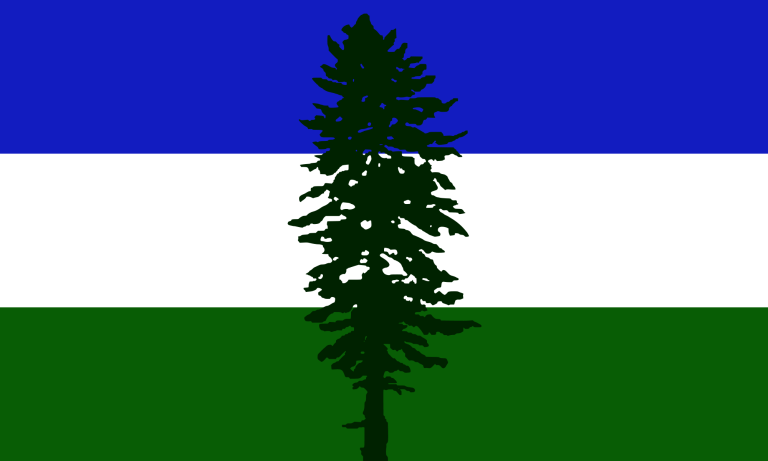
Cascadia Rising: Ecology, Identity, Politics

I began this article over a year ago, and at the time my biggest challenge was finding its focus. I wasn’t sure what the central thread should be, so I followed the flow of ideas and shaped it into a summary of recent activities and announcements. In many ways, it became a placeholder; something to capture the moment and hold space until I had the chance to return and explore the subject in greater depth.

1. Bioregional Roots & Indigenous Foundations
The idea of Cascadia springs from the interconnected ecosystems spanning the Cascade Range; anchored by rivers like the Fraser, Columbia, and Snake, a landscape long inhabited by diverse Indigenous nations: Chinook, Haida, Nootka, Tlingit, and dozens more, whose vibrant cultures predate colonial borders by millennia.   

In Indigenous understanding, stewardship over land and salmon-rich waters isn’t just practical; it’s spiritual. Their societies are woven into place, honoring ecosystems as kin. This pre-colonial history sets a vital foundation for any modern Cascadia vision.

Today, Cascadian movements forefront Indigenous sovereignty and truth and reconciliation, advocating for dialogue-led, consensus-based confederation models where First Nations guide governance and cultural revitalization, like restoring Chinuk Wawa as a regional lingua franca.  

2. Bioregionalism & Mapping as Decolonizing Tools
Bioregionalism – which Cascadia champions, breaks from traditional politics, centering its framework on natural boundaries and ecological integrity. Indigenous mapping traditions inform this, such as bioregional atlases by Tsilhqotʼin, Nisga’a, Tsleil-Waututh, and others that helped affirm territorial claims in court.  

Through community-driven cartography, highlighting traditional ecosystems, language, stories; bioregional maps act as instruments of empowerment, healing, and planning rooted in place-based knowledge.  

3. Elizabeth May’s Provocative Invitation & BC’s Identity
In January 2025, Green Party of Canada leader Elizabeth May reignited Cascadian conversation with a striking, partly rhetorical offer: that California, Oregon, and Washington might consider joining Canada; with BC naturally included in the idea, based on shared values like universal healthcare, reproductive rights, and climate justice.  

Her gesture wasn’t an actual policy, but served as an emblematic spark, fueling grassroots discussions across the region; especially in BC, where many already feel culturally closer to the U.S. West Coast than to central Canada. This made the concept of transnational Cascadia feel suddenly plausible.  

4. Governor Newsom & West Coast Climate Leadership
Cascadia’s vision isn’t purely conceptual, it’s grounded in concrete policy collaboration:
• In May 2025Governor Gavin Newsom was appointed co-chair of the U.S. Climate Alliance, joining a bipartisan coalition of 24 governors spearheading high-impact, state-driven climate action, encompassing nearly 60% of the U.S. economy and 55% of its population.
Newsom also announced a major cap-and-invest (formerly cap-and-trade) budget proposal, extending California’s program through 2045 and earmarking billions toward firefighting, high-speed rail, and climate adaptation projects.   
• The three regional partners – California, Québec, and Washington, have also agreed to explore linkage of their carbon markets, signaling potential for a broader, cross-border climate economy.  
• Simultaneously, West Coast governors (Newsom, Oregon’s Tina Kotek, and Washington’s Bob Ferguson) signed a joint statement promising to defend their states’ climate policies against federal rollback, demonstrating regional resolve and cohesion.  

5. Indigenous and Climate Confluence in Cascadia’s Future
Modern Cascadia stands at the intersection of Indigenous resurgence and regional policymaking. Here’s how they converge:
Indigenous frameworks act as ethical and governance cornerstones; urging truth, place-based authority, and cultural restoration, especially in BC where colonial histories persist.
Bioregionalism and community mapping form tools for inclusion and urban planning that honor traditional ecological knowledge.
Cross-border cooperation on climate, via co-carbon markets and alliances, offers practical scaffolding for aligning policy with ecological realities.
Political solidarity, as seen in Newsom’s climate leadership and the West Coast climate defense, underscores Cascadia’s capacity as a functional mega-region, not merely a cultural idea.

Cascadia Reimagined: A Vision of Inclusive, Place-Based Governance
Cascadia today is evolving, not as a secessionist movement, but as an integrated regional model that:
• Places Indigenous sovereignty and ecological connection at its core.
• Encourages cross-jurisdictional collaboration on climate, economy, and culture.
• Utilizes bioregional mapping as a decolonizing and planning tool.
• Builds grassroots resonance through symbols, discourse, and identity.
• Innovates policy frameworks connecting shared values, particularly across BC and U.S. West Coast states.

Elizabeth May’s invitation, Governor Newsom’s climate strategy, and Indigenous leadership together signal a Cascadia imbued with governance relevance, moral thickness, and aspirational scope.

Sources
• Cascadia Bioregional Movement. Indigenous Sovereignties. Cascadia Bioregion. https://cascadiabioregion.org/indigenous-sovereignties
• Cascadia Bioregion. The Cascadia Movementhttps://cascadiabioregion.org/the-cascadia-movement
• Cascadia Bioregion. Independence and Public Opinionhttps://cascadiabioregion.org/independence-2
• CascadiaNow! Building a Resilient Cascadiahttps://www.cascadianow.org
• Brandon Letsinger. It’s Time for a Cascadia Political Movementhttps://brandonletsinger.com/political-movement/its-time-for-a-cascadia-political-movement
• KIRO 7 News. Canadian Lawmaker Offers to Take Washington, Oregon, California as New Provinces. January 10, 2025. https://www.kiro7.com/news/local/canadian-lawmaker-offers-take-washington-oregon-california-new-provinces/LPFT7I4AYBGCLHBKVOB2TIFQOQ
• Cascadia Daily News. Washington Joining Canada? Don’t Bet Your Timbits. January 10, 2025. https://www.cascadiadaily.com/2025/jan/10/washington-joining-canada-dont-bet-your-timbits
• OPB (Oregon Public Broadcasting). West Coast Governors Say They Will Defend Their Climate Policies Against Trump Attack. April 10, 2025. https://www.opb.org/article/2025/04/10/west-coast-governors-we-will-defend-our-climate-policies-against-trump-attack
• Office of Governor Gavin Newsom. Governor Newsom Appointed Co-Chair of U.S. Climate Alliance. May 9, 2025. https://www.gov.ca.gov/2025/05/09/governor-newsom-appointed-co-chair-of-u-s-climate-alliance
• U.S. Climate Alliance. News & Eventshttps://usclimatealliance.org/news-events
• CalMatters. Newsom’s Budget Leans on Cap-and-Invest to Fund High-Speed Rail and Firefighting. May 2025. https://calmatters.org/environment/climate-change/2025/05/california-governor-climate-budget-cap-trade-high-speed-rail
• ClearBlue Markets. California Cap-and-Invest Program: Extension Proposed in California Budget. 2025. https://www.clearbluemarkets.com/knowledge-base/california-cap-and-invest-program-program-extension-proposed-in-california-budget
• Washington Department of Ecology. Shared Carbon Market Agreement between California, Québec, and Washington. March 20, 2024. https://ecology.wa.gov/about-us/who-we-are/news/2024/mar-20-shared-carbon-market

When 10 Meters Isn’t Enough: Understanding AlphaEarth’s Limits in Operational Contexts

In the operational world, data is only as valuable as the decisions it enables, and as timely as the missions it supports. I’ve worked with geospatial intelligence in contexts where every meter mattered and every day lost could change the outcome. AlphaEarth Foundations is not the sensor that will tell you which vehicle just pulled into a compound or how a flood has shifted in the last 48 hours, but it may be the tool that tells you exactly where to point the sensors that can. That distinction is everything in operational geomatics.

With the public release of AlphaEarth Foundations, Google DeepMind has placed a new analytical tool into the hands of the global geospatial community. It is a compelling mid-tier dataset – broad in coverage, high in thematic accuracy, and computationally efficient. But in operational contexts, where missions hinge on timelines, revisit rates, and detail down to the meter, knowing exactly where AlphaEarth fits, and where it does not, is essential.

Operationally, AlphaEarth is best understood as a strategic reconnaissance layer. Its 10 m spatial resolution makes it ideal for detecting patterns and changes at the meso‑scale: agricultural zones, industrial developments, forest stands, large infrastructure footprints, and broad hydrological changes. It can rapidly scan an area of operations for emerging anomalies and guide where scarce high‑resolution collection assets should be deployed. In intelligence terms, it functions like a wide-area search radar, identifying sectors of interest, but not resolving the individual objects within them.

The strengths are clear. In broad-area environmental monitoring, AlphaEarth can reveal where deforestation is expanding most rapidly or where wetlands are shrinking. In agricultural intelligence, it can detect shifts in cultivation boundaries, large-scale irrigation projects, or conversion of rangeland to cropland. In infrastructure analysis, it can track new highway corridors, airport expansions, or urban sprawl. Because it operates from annual composites, these changes can be measured consistently year-over-year, providing reliable trend data for long-term planning and resource allocation.

In the humanitarian and disaster-response arena, AlphaEarth offers a quick way to establish pre‑event baselines. When a cyclone strikes, analysts can compare the latest annual composite to prior years to understand how the landscape has evolved, information that can guide relief planning and longer‑term resilience efforts. In climate-change adaptation, it can help identify landscapes under stress, informing where to target mitigation measures.

But operational users quickly run into resolution‑driven limitations. At 10 m GSD, AlphaEarth cannot identify individual vehicles, small boats, rooftop solar installations, or artisanal mining pits. Narrow features – rural roads, irrigation ditches, hedgerows – disappear into the generalised pixel. In urban ISR (urban Intelligence, Surveillance, and Reconnaissance), this makes it impossible to monitor fine‑scale changes like new rooftop construction, encroachment on vacant lots, or the addition of temporary structures. For these tasks, commercial very high resolution (VHR) satellites, crewed aerial imagery, or drones are mandatory.

Another constraint is temporal granularity. The public AlphaEarth dataset is annual. This works well for detecting multi‑year shifts in land cover but is too coarse for short-lived events or rapidly evolving situations. A military deployment lasting two months, a flash‑flood event, or seasonal agricultural practices will not be visible. For operational missions requiring weekly or daily updates, sensors like PlanetScope’s daily 3–5 m imagery or commercial tasking from Maxar’s WorldView fleet are essential.

There is also the mixed‑pixel effect, particularly problematic in heterogeneous environments. Each embedding is a statistical blend of everything inside that 100 m² tile. In a peri‑urban setting, a pixel might include rooftops, vegetation, and bare soil. The dominant surface type will bias the model’s classification, potentially misrepresenting reality in high‑entropy zones. This limits AlphaEarth’s utility for precise land‑use delineation in complex landscapes.

In operational geospatial workflows, AlphaEarth is therefore most effective as a triage tool. Analysts can ingest AlphaEarth embeddings into their GIS or mission‑planning system to highlight AOIs where significant year‑on‑year change is likely. These areas can then be queued for tasking with higher‑resolution, higher‑frequency assets. In resource-constrained environments, this can dramatically reduce unnecessary collection, storage, and analysis – focusing effort where it matters most.

A second valuable operational role is in baseline mapping. AlphaEarth can provide the reference layer against which other sources are compared. For instance, a national agriculture ministry might use AlphaEarth to maintain a rolling national crop‑type map, then overlay drone or VHR imagery for detailed inspections in priority regions. Intelligence analysts might use it to maintain a macro‑level picture of land‑cover change across an entire theatre, ensuring no sector is overlooked.

It’s important to stress that AlphaEarth is not a targeting tool in the military sense. It does not replace synthetic aperture radar for all-weather monitoring, nor does it substitute for daily revisit constellations in time-sensitive missions. It cannot replace the interpretive clarity of high‑resolution optical imagery for damage assessment, facility monitoring, or urban mapping. Its strength lies in scope, consistency, and analytical efficiency – not in tactical precision.

The most successful operational use cases will integrate AlphaEarth into a tiered collection strategy. At the top tier, high‑resolution sensors deliver tactical detail. At the mid‑tier, AlphaEarth covers the wide‑area search and pattern detection mission. At the base, raw satellite archives remain available for custom analyses when needed. This layered approach ensures that each sensor type is used where it is strongest, and AlphaEarth becomes the connective tissue between broad‑area awareness and fine‑scale intelligence.

Ultimately, AlphaEarth’s operational value comes down to how it’s positioned in the workflow. Used to guide, prioritize, and contextualize other intelligence sources, it can save time, reduce costs, and expand analytical reach. Used as a standalone decision tool in missions that demand high spatial or temporal resolution, it will disappoint. But as a mid‑tier, strategic reconnaissance layer, it offers an elegant solution to a long-standing operational challenge: how to maintain global awareness without drowning in raw data.

For geomatics professionals, especially those in the intelligence and commercial mapping sectors, AlphaEarth is less a silver bullet than a force multiplier. It can’t tell you everything, but it can tell you where to look, and in operational contexts, knowing where to look is often the difference between success and failure.