Five Things We Learned This Week

Here’s the latest edition of “Five Things We Learned This Week” for June 28–July 4, 2025, showcasing five entirely new global developments—each occurring in the past seven days:

🧭 1. Trump Signs Sweeping Tax & Spending Bill

• On July 4, President Trump signed a landmark tax-and-spending package into law, following its narrow passage in Congress  .

• This $3.3 trillion bill includes large tax cuts and federal spending boosts, with analysts warning of significant long-term increases in national debt  .

🌍 2. Japan Warms for Possible Quakes, Authorities Calm Public

• On July 4, Japan’s disaster agency alerted residents of potential strong aftershocks off the southwest coast, though downplaying doomsday fears  .

• Authorities emphasized preparedness over panic, urging early warning systems remain active.

🇨🇳 3. China Signals Investment in Brazil‑Led Forest Fund

• At the end of the week, Reuters reported that China plans to back the “Tropical Forests Forever” fund led by Brazil—marking a strategic shift toward joint environmental efforts  .

• This move is viewed as a rare diplomatic gesture amid global climate partnerships.

📈 4. Global Equity Funds See Largest Inflows in 8 Months

• Global equity funds recorded a massive $43.15 billion inflow for the week ending July 2, driven by U.S. stock highs and surging interest in AI and tech sectors  .

• U.S. equity funds accounted for $31.6 billion, with robust gains also seen in European and Asian markets  .

🇲🇩 5. Moldova Leaders Emphasize EU Integration Ahead of Election

• On July 4, Moldova’s President Maia Sandu declared that citizens hold the future of the EU bid in their own hands as the country nears parliamentary elections  .

• Her appeal underscores Moldova’s ongoing push for formal European Union membership.

These five developments span U.S. fiscal policy, earthquake readiness, international environmental funding, global investment trends, and Eastern European geopolitics—all fresh this week. Want source links or deeper insights? Let me know!

Five Things We Learned This Week

Here’s the latest edition of “Five Things We Learned This Week” for June 21–27, 2025, featuring fresh global developments—no repeats, all within the seven-day window:

🌩️ 1. Massive Tornado & Derecho Outbreak Sweeps Northern U.S. & Canada

• Between June 19–22, a severe weather event delivered 26+ tornadoes and hurricane-force derechos across the northern U.S. and southern Canada   .

• The EF3 tornado near Enderlin, North Dakota, was the deadliest in the state since 1978, claiming three lives; overall, seven fatalities and numerous injuries were confirmed  .

• Canadian provinces, including Saskatchewan, recorded at least eight additional tornado touchdowns during the event  .

🔭 2. Vera C. Rubin Observatory Unveils First “First Light” Cosmic Images

• On June 23, the observatory released its inaugural ultra-high-resolution snapshot capturing the Virgo Cluster, Trifid and Lagoon Nebulae, and about 2,000 new asteroids  .

• This marks a major milestone in Earth’s most powerful digital telescope operations, offering a transformative look at deep-space science ().

🛰️ 3. ESA’s Solar Orbiter Reveals the Sun’s South Pole

• On June 11, images from the European Space Agency’s Solar Orbiter provided the first-ever detailed view of the Sun’s south pole  .

• The data sheds new light on solar magnetic dynamics and the mechanics of the solar cycle—opening avenues for better space weather forecasts  .

🤖 4. DeepMind’s AlphaGenome Accelerates DNA Sequencing

• Announced this week, AlphaGenome—an AI model by DeepMind—can analyze million-base-pair DNA sequences with single-base resolution, significantly advancing genetic diagnostics  .

• This leap forward holds huge potential for research into genetic disorders like spinal muscular atrophy  .

🎤 5. Glastonbury Festival Rocked by Historic Lineup Kicking Off June 25

• The Glastonbury Festival began on June 25, headlined by The 1975, Neil Young, and Olivia Rodrigo, with over 90 hours of coverage via BBC TV, radio, and iPlayer  .

• The festival preview included broadcasts of Pyramid Stage sets in UHD, accessibility services, and even children’s content on CBeebies  .

Each of these highlights occurred within June 21–27, 2025, and are completely new to our weekly summary; spanning weather, astronomy, solar science, AI genomics, and music festival culture. Would you like this week’s story links or deeper commentary?

Backroom Ontario: How the Ford Government Governs in the Shadows

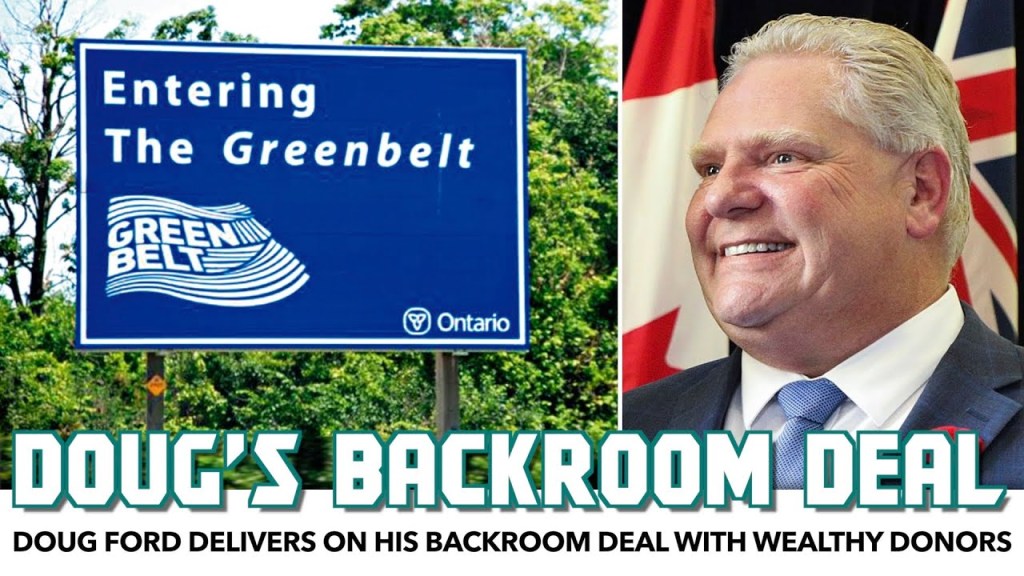
The Ford government’s recent actions paint a troubling portrait of a leadership increasingly comfortable with obfuscation, procedural shortcuts, and performative consultation. Across multiple files, from environmental policy to Indigenous relations, Queen’s Park has displayed a consistent pattern of backhanded governance, marked by secrecy, evasion, and a disregard for both democratic norms and legal obligations.

The Greenbelt scandal exemplifies this tendency in sharp relief. Ontario’s Information and Privacy Commissioner recently condemned the Ford government for deliberately making it difficult to track internal decision-making on land development. Staff used code words such as “GB,” “special project,” and most egregiously, “G*” in email subject lines, deliberately sabotaging searchability within the government’s own filing systems. Coupled with the use of private email accounts and a notable absence of meeting minutes or documentation, the evidence suggests not mere carelessness, but a concerted effort to obscure deliberations over one of the province’s most politically explosive issues.

This level of secrecy isn’t just bureaucratic mismanagement, it’s political damage control in real time. The government’s reversal of Greenbelt development plans did little to reassure the public, especially in the absence of any credible explanation or documentation as to how those decisions were made in the first place. When even watchdogs with statutory authority can’t access the paper trail, public accountability becomes a hollow phrase.

Meanwhile, Bill 5, part of the so-called “Unleashing the Economy Act”, reveals an equally unsettling willingness to bypass consultation and oversight in the name of economic development. This omnibus legislation fast-tracks industrial and mining projects across northern Ontario, including the ecologically sensitive Ring of Fire region, by reducing or eliminating requirements for municipal and environmental approvals. Most critically, it sidelines the constitutional duty to consult Indigenous communities.

First Nations leaders, particularly in Treaty 9 territory, were quick to denounce the bill. Chiefs burned environmental documents in protest and staged rallies in Thunder Bay, accusing the province of engaging in “consultation theatre”, informing communities of decisions only after they were made. Even a last-minute amendment to include optional post-passage consultations did little to mollify concerns. The government’s approach sends a clear message: consultation is something to be endured, not engaged.

What ties the Greenbelt and Bill 5 controversies together is not just their shared disregard for transparency and inclusion, but the mechanisms used to enforce that disregard. Whether through technical manipulation of record-keeping systems, suppression of documentation, or legislative sleight-of-hand, the government repeatedly avoids open debate and sidesteps legal and ethical responsibilities. It’s a governance style rooted in control, not collaboration.

These are not isolated incidents. The Ford administration has shown a consistent pattern of centralizing power through Minister’s Zoning Orders (MZOs), a tool meant for rare and urgent cases. Since 2019, the Premier has issued MZOs at an unprecedented rate, frequently overriding municipal decisions, and benefiting well-connected developers. Auditor General reports have raised red flags, and opposition parties have warned that such orders erode local democracy and set dangerous precedents. Still, the pattern continues, unimpeded.

Other examples confirm the trend. In 2018, the Ford government launched a controversial “snitch line” encouraging parents to report teachers who used an updated sex-ed curriculum, a move widely condemned as punitive and authoritarian. In 2019, sudden changes to autism services blindsided thousands of families, leading to mass protests and eventual policy reversals. Yet, even in those reversals, the government refused to acknowledge fault, framing retreats as “adjustments” rather than admissions of flawed policy-making.

This is politics by backchannel, a deliberate erosion of democratic norms dressed in the language of efficiency. Public engagement is reduced to afterthought; opposition voices are ignored or demonized; and when watchdogs raise the alarm, they are met with silence or spin. In each case, the common denominator is the Ford government’s willingness to weaponize the machinery of governance against transparency.

The implications are serious. Trust in institutions erodes when those in power show contempt for the very mechanisms designed to hold them accountable. The duty to consult Indigenous communities is not an optional courtesy, it is a constitutional requirement. Environmental stewardship and municipal autonomy are not bureaucratic hurdles, they are democratic protections. To dismiss them is not just arrogant, but reckless.

Unless reined in, this mode of governance threatens to become normalized. The lesson emerging from Queen’s Park is clear: when political expedience trumps process, communities lose their voice, environmental safeguards are gutted, and Indigenous sovereignty is sidelined. This should alarm all Ontarians, regardless of political stripe.

The Ford government’s backhanded approach may win short-term headlines or developer applause, but the long-term costs, to transparency, legitimacy, and public trust, are steep. If Ontario is to retain even the appearance of responsible government, it must reject this cynical model and restore meaningful consultation, clear record-keeping, and respect for constitutional obligations as non-negotiable principles of provincial governance. Anything less is a betrayal of public service.

Harvesting the Sun Twice: The Rise of Agrivoltaics in Canada

In the ever-evolving landscape of Canadian agriculture, a quiet revolution is taking place; one that blends innovation, resilience, and sustainability. At the heart of this shift is agrivoltaics, the practice of integrating solar energy production with agricultural activities on the same land. In a country where arable land is precious and climate resilience is no longer optional, agrivoltaics offers a compelling vision of how farmers can feed both people and power grids. And unlike many experimental technologies, agrivoltaics is already proving itself on the ground, from Alberta’s prairies to Ontario’s rolling farmland.

The principle behind agrivoltaics is deceptively simple. Instead of choosing between land for crops or solar panels, farmers are using both, strategically placing elevated or spaced-out solar panels to allow for the continued cultivation of crops or the grazing of livestock beneath them. The benefits are multifaceted: improved land-use efficiency, supplemental income from energy generation, lower evaporation rates, enhanced biodiversity, and in some cases, even better crop yields. What once might have seemed like a fringe idea is now a serious pillar in the conversation about Canada’s agricultural and energy future.

Alberta, often associated with its energy sector, has become a surprising hotspot for agrivoltaic innovation. In Strathmore, east of Calgary, a project involving Beecube, UKKO, and local landowners demonstrates how solar farms can coexist harmoniously with apiculture. Here, solar panels provide shelter for bees while the surrounding wildflowers benefit from reduced water loss thanks to the panel shade. This model is not only sustainable but financially shrewd; the land generates solar income while continuing to support honey production, which in turn supports pollination in surrounding agricultural operations.

Meanwhile, in Bon Accord, Alberta, sheep graze under solar panels installed by the municipality. This partnership reduces the need for mechanical mowing, cutting emissions and maintenance costs, while simultaneously supporting local agriculture. Although challenges such as predator management and animal health persist, the project has shown that dual land-use can be both productive and community-minded.

Further south in Lethbridge, the Davidson family farm installed a 2 MW solar array over four hectares of their land. Their early results are promising: water use decreased, yields of shade-tolerant crops like lettuce and spinach improved, and the system helped buffer temperature extremes; an increasingly important advantage as Alberta experiences hotter, drier summers. The financial returns from the energy production are steady and predictable, offering farmers some insulation from commodity price swings.

Ontario has also emerged as a stronghold of agrivoltaic leadership, particularly in the east of the province. At Kinghaven Farms, a thoroughbred horse breeding operation near King City, solar panels quietly generate over 1.8 MW of energy across five different installations. Yet the land remains active agriculturally, supporting bees and pasture for livestock. This is no boutique operation, it’s a model of scalable, pragmatic sustainability, supported in part by Ontario’s long-standing feed-in-tariff and net metering frameworks.

Arnprior’s solar project, spearheaded by EDF Renewables, adds another layer of ecological complexity. The site combines solar power generation with pollinator-friendly vegetation and sheep grazing. With over 50 sheep maintained on-site, the project saves upwards of $30,000 annually on vegetation management. Moreover, the carefully chosen native flora creates a haven for butterflies, bees, and other beneficial insects, turning what could have been a sterile industrial site into a vibrant ecosystem.

The push for agrivoltaics has even begun to intersect with reconciliation and Indigenous economic development. In Perth, Ontario, Golden Leaf Agrivoltaics has launched a partnership with local Indigenous communities to design systems that blend traditional agricultural knowledge with renewable energy. This initiative is as much about cultural renewal as it is about sustainability, offering a space where land stewardship and technological advancement meet on equal footing.

Across these projects, several themes emerge. First, agrivoltaics is not a one-size-fits-all solution. What works in the dry expanses of southern Alberta may not translate directly to the wetter, colder climates of northern Ontario or Quebec. The underlying philosophy, making land work smarter, not harder, holds universal appeal. Second, success depends on collaboration: between farmers and engineers, municipalities and private firms, and, increasingly, energy utilities and Indigenous governments. Agrivoltaics is as much about social innovation as it is about technical design.

Critically, agrivoltaics helps solve one of the thorniest problems in modern planning: land-use conflict. As pressure mounts to deploy renewable energy at scale, particularly in provinces phasing out coal or expanding electric vehicle infrastructure, prime farmland is at risk of being repurposed for solar and wind farms. Agrivoltaics offers a middle ground, enabling land to serve multiple purposes without sacrificing food security.

There are challenges, of course. Start-up costs can be high, regulatory frameworks inconsistent, and skepticism remains among some traditional growers. Yet as demonstration projects continue to yield data, and dollars, those barriers are gradually eroding. Agrivoltaics is no longer a theoretical solution; it is a practical, proven tool for a climate-challenged, energy-hungry world.

In Canada, where vast geography too often isolates best practices, agrivoltaics represents a unifying opportunity. It merges rural and urban priorities, economic pragmatism with ecological restoration. With the right policies, education, and incentives, Canada could lead the world in this field, not just in acreage, but in imagination.

Sources
CBC News – BeeCube/UKKO agrivoltaics project
Organic Agriculture Centre of Canada – Renewable Energy Integration
Compass Energy Consulting – Agrivoltaics in Ontario
Sun Cycle Farms – Agrivoltaic Demonstration Projects
Golden Leaf Agrivoltaics – Community and Indigenous Engagement

Five Things We Learned This Week

Here is the latest edition of “Five Things We Learned This Week” for May 31–June 6, 2025, highlighting significant global developments across various sectors.

🧬 1. Breakthrough in HIV Treatment Using mRNA Technology

Researchers have achieved a significant milestone in HIV treatment by successfully delivering mRNA into white blood cells that harbor hidden HIV. Utilizing specially formulated nanoparticles known as LNP X, the mRNA instructs these cells to reveal the concealed virus, marking a pivotal step toward a potential cure. This advancement opens new avenues for eradicating latent HIV infections that have long evaded traditional therapies.  

🚀 2. China’s Tianwen-2 Asteroid Mission Launches Successfully

On May 28, the China National Space Administration successfully launched the Tianwen-2 mission aboard a Long March 3B rocket. This ambitious endeavor aims to collect samples from the near-Earth asteroid 469219 Kamoʻoalewa and explore the main-belt comet 311P/PANSTARRS. The mission underscores China’s growing capabilities in deep-space exploration and its commitment to advancing planetary science.  

 3. MIT Develops High-Energy Sodium-Air Fuel Cell

Engineers at the Massachusetts Institute of Technology have developed a new type of fuel cell that utilizes a reaction between sodium metal and air. This innovative design offers three times the energy per pound compared to the best current lithium-ion batteries, potentially revolutionizing energy storage for electric vehicles and aviation. The breakthrough could lead to lighter, more efficient power sources, accelerating the transition to cleaner transportation technologies.  

🏆 4. Brittany Force Sets Speed Record at NHRA New England Nationals

At the NHRA New England Nationals, drag racer Brittany Force delivered a remarkable performance, setting a new speed record in the Top Fuel category. Her achievement highlights the ongoing advancements in drag racing technology and the increasing competitiveness of the sport. Force’s success also emphasizes the growing prominence of female athletes in motorsports.  

 5. Major League Soccer Hosts 13 Matches in a Single Day

On May 24, Major League Soccer (MLS) featured an unprecedented lineup of 13 matches across the United States. This action-packed day showcased the league’s depth and the growing popularity of soccer in North America. Fans were treated to a full spectrum of competition, reflecting MLS’s commitment to expanding its reach and enhancing the spectator experience.  

Stay tuned for next week’s edition as we continue to explore pivotal global developments.

Canada’s Non-Timber Forest Products Industry: A Sleeping Giant in the Agrifood Sector

Back in 2010-2012, I was working with clients such as the Canadian Model Forest Network, Agriculture and Agri-Food Canada, and Natural Resources Canada to help define and develop this industry. I thought it was time to update myself on its progress.  

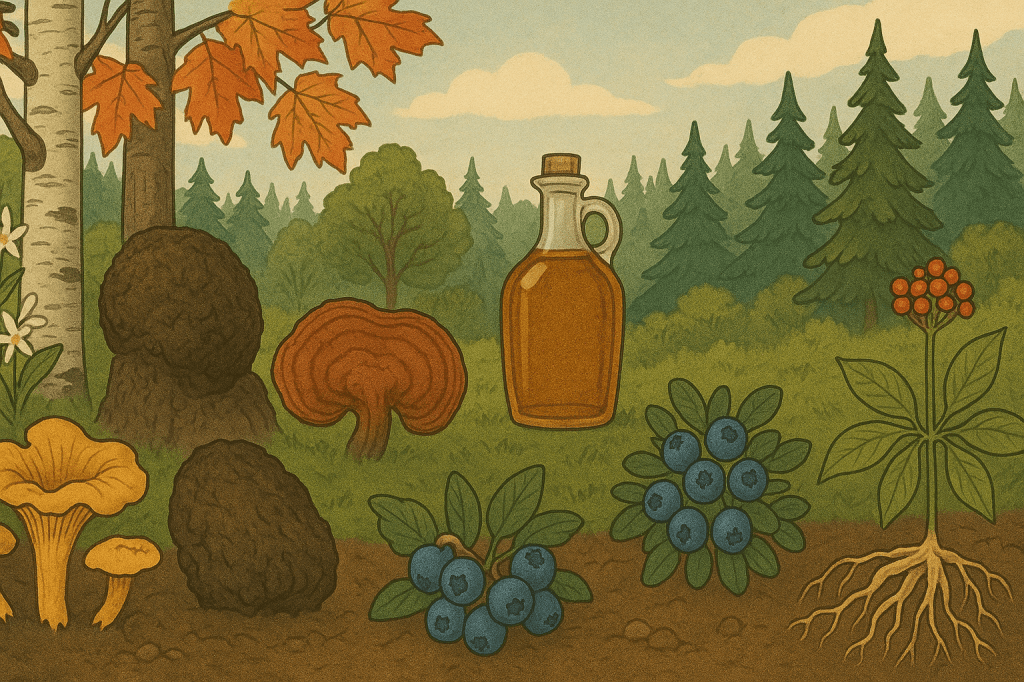
When Canadians think of forests, they typically picture lumber, pulp, and paper. Yet, beyond the timber trade lies an equally vital and dramatically underdeveloped resource sector: non-timber forest products (NTFPs). These include wild mushrooms, berries, medicinal herbs, tree saps, florals, and natural resins; goods that have been harvested for centuries by Indigenous peoples and rural communities, but remain economically marginal in modern Canada. As the agrifood sector seeks to diversify income sources, adapt to climate risks, and respond to consumer demand for sustainable and culturally authentic products, NTFPs represent an untapped reservoir of opportunity.

Canada, after all, is one of the most forested countries on Earth, with over 347 million hectares of forest covering approximately 38% of its landmass. Within these ecosystems is a treasure trove of bioresources, many of which are already enjoying renewed interest in global markets: from functional foods and nutraceuticals to cosmetics and natural health products. The challenge is not whether Canada has the raw materials. It is whether the country can align policy, investment, and Indigenous partnerships to turn these undervalued goods into robust regional economies.

At present, the NTFP sector is dominated by one clear leader: maple syrup. Worth over $1 billion annually, and with Quebec supplying more than 70% of the world’s maple syrup, this industry is the flagship of Canada’s non-timber forest economy. Wild blueberries, predominantly from Quebec, Nova Scotia, and New Brunswick, form another lucrative market, with production values exceeding $300 million in 2023. Yet outside of these headline commodities, the remaining NTFP sector is diffuse, localized, and largely informal. Wild mushrooms like morels, chanterelles, and lobster mushrooms are harvested across British Columbia, Ontario, and the Maritimes, often exported to European and Asian buyers, but little coordinated infrastructure exists to support consistent volumes or traceable quality. Medicinal plants such as chaga, Labrador tea, and devil’s club are well known to Indigenous communities, but underutilized in formal markets.

The potential for growth in this sector is significant. Globally, the market for natural health and functional food products is expanding rapidly. Medicinal mushrooms, in particular, are on track to reach $19 billion by 2030, according to 2024 projections by Global Market Insights. Canada’s forests host many of these species, including chaga, reishi, lion’s mane, and turkey tail, all of which are in high demand in wellness and integrative medicine circles. Similarly, birch sap, a staple in parts of Eastern Europe and Russia, is beginning to attract attention in North America as a low-sugar, antioxidant-rich beverage. There is considerable room for Canadian producers to position their NTFPs in these emerging global niches, especially if backed by origin branding, sustainability certification, and cultural narratives that resonate with eco-conscious consumers.

Despite this promise, the NTFP sector remains constrained by structural barriers. Chief among these is the fragmented and often inconsistent regulatory environment across provinces. Many NTFPs fall outside the scope of forestry tenure agreements and agricultural marketing boards, leaving harvesters in a grey zone with unclear land access rights or commercialization protocols. In some provinces, the rules for harvesting and selling wild mushrooms or herbal plants vary from one jurisdiction to another, complicating efforts to build coordinated value chains. The lack of aggregation infrastructure and cold storage capacity further limits the ability of small-scale producers to move beyond seasonal, informal markets.

Another limiting factor is the scarcity of applied research and product development capacity tailored to NTFPs. Few Canadian universities or government research agencies have dedicated programs for wild plant or fungal product development, and even fewer link with Indigenous knowledge systems in ways that are respectful, reciprocal, and rights-based. Traditional knowledge about the ecological cycles, medicinal uses, and sustainable harvest of forest plants remains vastly underrecognized in Canada’s commercial landscape. Until this knowledge is better integrated and protected through co-management and intellectual property frameworks, the sector will remain vulnerable to exploitation and underperformance.

Equity and land tenure issues must also be addressed. Indigenous communities are among the most active stewards and knowledge-holders of NTFPs, yet they often face structural barriers to entering or scaling in commercial markets. The promise of NTFPs as a tool for Indigenous economic development is well documented, but to realize that potential, governments must ensure clear access rights, provide targeted funding for Indigenous-led enterprises, and support co-governance models that reflect Indigenous sovereignty over forest resources.

Looking ahead, the Canadian NTFP sector needs a concerted strategy. This means intergovernmental coordination to harmonize regulations, investment in processing and aggregation infrastructure, and the development of national standards for quality assurance. Just as importantly, there must be a storytelling effort, one that situates NTFPs not merely as exotic forest goods, but as emblematic of Canada’s commitment to sustainable agriculture, reconciliation, and regional resilience. Products like Labrador tea, spruce tips, and wild fiddleheads should not be relegated to niche farmers’ markets; they should be among Canada’s most proudly exported biocultural goods.

If Canada is to meet its agrifood diversification and climate adaptation goals, the time has come to give non-timber forest products their due. The market is maturing, the environmental case is strong, and the social and economic benefits, particularly for Indigenous and rural communities, are substantial. We must move beyond pilot projects and showcase stands. With vision and investment, Canada’s NTFP industry could blossom from a peripheral activity into a pillar of the national agrifood economy.

Sources
• Natural Resources Canada. (2021). Non-Timber Forest Products in Canada: An Overview. https://www.nrcan.gc.ca/
• Agriculture and Agri-Food Canada. (2023). Statistical Overview of the Canadian Fruit Industry 2023. https://agriculture.canada.ca/
• Global Market Insights. (2024). Medicinal Mushroom Market Size, Share & Trends Analysis. https://www.gminsights.com/
• Indigenous Forestry Initiative. (2023). Case Studies in Indigenous-Led NTFP Enterprises. https://www.canada.ca/en/environment-climate-change/services/indigenous-forestry-initiative.html

Can Food Belts Enhance Ontario’s Food Security Future?

Ontario is facing an escalating food security crisis, with food banks reporting unprecedented demand and rural communities increasingly unable to afford basic nutrition. In response, a new policy proposal is gaining traction among local leaders and agricultural advocates: the creation of provincially designated “food belts” to permanently protect farmland and strengthen local food systems.

Recent data paint a sobering picture. More than one million Ontarians accessed food banks between April 2023 and March 2024, a 25% increase over the previous year and nearly double the figures from four years prior. According to Feed Ontario’s 2024 Hunger Report, food bank use has surged across every region, including traditionally self-sufficient rural areas like Grey-Bruce, where the cost of a nutritious food basket consumes over 40% of a family’s income on Ontario Works. In Northumberland County, the monthly shortfall between assistance levels and basic expenses surpasses $1,300 even before rent is considered.

Amid this growing crisis, Ontario Green Party Leader Mike Schreiner has introduced the concept of food belts, designated agricultural zones protected from development, designed to ensure ongoing food production close to population centres. The idea has received support from municipal officials, including Markham and Waterloo Region councillors, who are increasingly alarmed by the pace at which farmland is being lost to suburban sprawl.

Between 2016 and 2021, Ontario lost over 620,000 acres of farmland, according to the 2021 Census of Agriculture. That represents more than 1,200 farms, not phased out due to productivity or retirement, but lost to development and land speculation. Once prime agricultural land is paved over, it is virtually impossible to restore, raising serious concerns about the province’s long-term food capacity.

In Waterloo Region, where one in eight households now reports food insecurity, the link between land use and hunger is becoming clearer. Eleven percent of those turning to food banks come from households with at least one working adult, reflecting broader structural challenges beyond poverty alone. At the same time, 50% of food banks have been forced to reduce services, while 40% have cut back on the amount of food distributed, according to Feed Ontario.

Food belts are proposed as a systemic solution. Modeled in part on the province’s existing Greenbelt, food belts would differ by prioritizing food production rather than simply preserving green space. Enabling legislation, potentially through amendments to Ontario’s Planning Act or the Provincial Policy Statement, would establish a policy framework, followed by municipal implementation through Official Plans and comprehensive land-use reviews.

The food belt model would involve identifying prime agricultural lands for protection, particularly in high-growth regions such as the Greater Golden Horseshoe. Within these zones, land use would be restricted to agricultural and food-related purposes, including greenhouses, food processing, and housing for seasonal farm workers. Non-agricultural development would be prohibited or tightly regulated.

To support farmers within the belts, advocates suggest a suite of provincial incentives. These could include property tax relief, grants for sustainable practices, support for young and new farmers, and investment in local food infrastructure such as processing facilities and distribution hubs. The intent is to foster both agricultural stability and economic opportunity in rural areas.

Crucially, food belts would not operate in isolation. Stakeholder engagement would be central to their design and implementation, involving farmers, Indigenous communities, conservationists, and municipal planners. A provincial oversight body could monitor compliance, enforce regulations, and report on agricultural output and environmental indicators within the belts.

Beyond farmland protection, proponents argue that food belts represent a strategic investment in Ontario’s long-term food resilience. By shortening supply chains, reducing reliance on imported goods, and anchoring food production within commuting distance of major urban centres, food belts could help the province navigate future disruptions caused by climate change, inflation, and geopolitical instability.

“Simply put, we cannot eat subdivisions,” Schreiner has said, warning that continued inaction could erode Ontario’s ability to feed itself. The Green Party’s position echoes findings from agricultural policy experts who have long cautioned that land-use planning must be treated as a food security issue, not just an environmental or economic concern.

As of 2024, Ontario’s policy landscape lacks a formal mechanism to establish food belts, though growing public and political interest may push the province to act. For now, the concept remains in the realm of advocacy and municipal discussion, but pressure is mounting.

With food insecurity no longer confined to urban poverty and food banks unable to keep pace, the proposal for food belts offers a rare convergence of long-term strategy and immediate relevance. Whether Queen’s Park chooses to seize the moment remains to be seen. What is clear, however, is that Ontario’s food future will depend not only on how the land is farmed, but on whether that land remains farmland at all.

Sources
• CBC News: https://www.cbc.ca/news/canada/kitchener-waterloo/foodbelt-reaction-schreiner-markham-councillors-1.7536995
• Feed Ontario Hunger Report 2024: https://feedontario.ca/research/hunger-report-2024
• Statistics Canada, Census of Agriculture 2021: https://www150.statcan.gc.ca/n1/daily-quotidien/220511/dq220511b-eng.htm
• Greenbelt Act, 2005: https://www.ontario.ca/laws/statute/05g01
• Grey Bruce Public Health: https://www.publichealthgreybruce.on.ca
• HKPR Health Unit (Northumberland): https://www.hkpr.on.ca

The Essequibo Equation: Venezuela’s Bid, Guyana’s Boom

The morning sun hangs low over the Atlantic, glinting off the towers rising in Georgetown, Guyana’s modest, but fast-transforming capital. A decade ago, few would have imagined this small South American nation, wedged between Brazil, Venezuela, and Suriname, would be at the center of a geopolitical and environmental drama with global stakes. Guyana is flush with oil – Black Gold. The kind that redraws maps, tilts economies, and ignites old rivalries. For Venezuela, long mired in economic freefall and domestic strife, it is an irresistible provocation.

Let’s be clear, what’s happening in Guyana is one of the most remarkable economic stories in the Western Hemisphere. Since ExxonMobil discovered vast offshore reserves in 2015, production has accelerated with almost reckless speed. By next year, output is projected to hit 900,000 barrels a day, and it could top 1.3 million before the end of the decade. For a country of under 800,000 people, that is transformative wealth, and unlike its oil-rich neighbours, some of whom squandered such windfalls, Guyana is making a bold promise; to become a net-zero emitter of greenhouse gases by 2050, even as it becomes a fossil fuel giant.

On the surface, this seems contradictory. How can you drill for oil while committing to climate leadership? Guyana’s government argues that its forest cover, nearly 85% of the national territory, is a massive carbon sink. It also claims that the revenues from oil will fund sustainable development, clean energy projects, and climate resilience. Whether this can be done without falling into the corruption, debt, and inequality traps that have cursed so many petro-states remains to be seen. So far, international financial institutions are cautiously optimistic. The government is under intense scrutiny, and the pressure to deliver transparency and social equity is mounting.

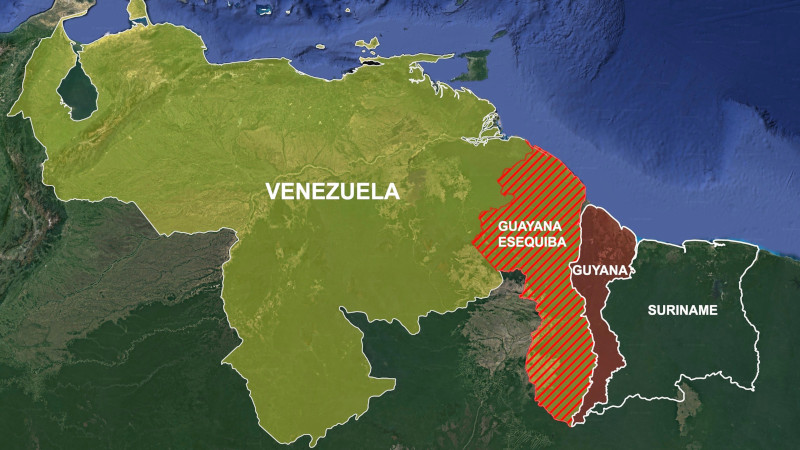
Guyana’s newfound wealth has stirred a long-simmering conflict with its neighbor to the west – Venezuela. The heart of the matter is the Essequibo region, a vast, resource-rich area that makes up nearly two-thirds of Guyana’s landmass. Venezuela has claimed it ever since the 1899 arbitration award, backed by the United States and Britain, granted the territory to what was then British Guiana. For over a century, the dispute remained largely symbolic, flaring up occasionally, but never seriously threatening borders.

Now, the stakes are very real. In 2023, Venezuela’s President Nicolás Maduro ramped up the rhetoric, holding a referendum in which voters overwhelmingly backed a proposal to annex Essequibo. Caracas argues that the arbitration was flawed and that the entire region was unlawfully taken. The timing, of course, is not coincidental. As Guyana’s oil fields, many lying off the Essequibo coastline, begin to pump billions into government coffers, Venezuela sees an opportunity to redirect domestic attention from its own failures, and tap into a nationalist cause with broad appeal.

Guyana, for its part, has responded not with sabre-rattling, but with legal precision. It brought the case before the International Court of Justice, which ruled in 2023 that it had jurisdiction. Earlier this year, in May 2025, the ICJ went further, ordering Venezuela to halt its plans to conduct elections in the disputed territory, a direct rebuke to Maduro’s annexation agenda. Venezuela has ignored the court, as it has ignored much of international law in recent years, and tensions are rising on the ground.

This is no longer a war of words. Just this month, Guyanese soldiers patrolling the border were attacked multiple times in under 24 hours. These were not large-scale military incursions, but they are warnings, probing gestures, testing the resolve of a much smaller neighbor. Guyana has responded by strengthening its military posture and drawing closer to its Western allies, including the United States and Brazil. The regional implications are grave: any escalation could destabilize the northern tier of South America, drag in other powers, and endanger vital shipping routes and energy flows.

As someone who has watched the ebb and flow of South American politics for decades, I see in this moment both peril and possibility. Guyana stands on a razor’s edge: it could become a model of how a small nation leverages its natural wealth responsibly, or it could descend into conflict, corruption, and dependence. Venezuela’s claim is, in essence a gamble, hoping that the world is too distracted to enforce international norms, and that might still makes right. Yet Guyana is not alone, and the legal, diplomatic, and moral momentum is on its side.

Whether that will be enough is another question entirely. Oil has always been more than a commodity in this region of the world. It is a force that reshapes nations and, sometimes, breaks them. For Guyana, the challenge now is not only to survive Venezuela’s ambitions, but to thrive in spite of them, and perhaps, just perhaps, to chart a new course for oil-rich states in the 21st century.

Five Things We Learned This Week

Here is the latest edition of “Five Things We Learned This Week” for May 10–16, 2025, spotlighting significant global developments across various sectors.

🧬 1. CERN’s ALICE Experiment Transmutes Lead into Gold

In a groundbreaking achievement, CERN’s ALICE experiment successfully converted lead into gold. This scientific milestone demonstrates the potential of particle physics to manipulate atomic structures, echoing the age-old alchemical quest with modern technology.  

🧠 2. Genetic Links to Obsessive–Compulsive Disorder Identified

A comprehensive study involving over 2 million participants has identified 250 genes associated with obsessive–compulsive disorder (OCD). This discovery offers new insights into the genetic underpinnings of OCD, paving the way for targeted therapies and improved understanding of the condition.  

💰 3. Reserve Bank of India Plans Record Payout to Government

The Reserve Bank of India (RBI) is expected to transfer a record surplus of up to ₹3 lakh crore to the government for the financial year 2024–25. This anticipated payout, nearly 50% higher than the previous year’s, will provide a significant fiscal boost to the government, aiding in budgetary commitments and economic initiatives.  

 4. U.S. Clean Energy Tax Incentives Face Potential Rollback

A Republican-led initiative in the U.S. House of Representatives aims to significantly cut tax credits for clean energy established under the Inflation Reduction Act. The proposed rollback could hinder progress toward reducing carbon emissions and halt the recent surge in clean energy investments, potentially impacting the U.S.’s position in the global clean tech market.   

✈️ 5. Australian Transport Workers Union Threatens Major Industrial Action

The Transport Workers Union (TWU) in Australia has announced plans for a significant industrial campaign that could disrupt the nation’s transport sector, including airline operations. The union aims to coordinate the expiry of over 200 enterprise agreements in 2026 to maximize workers’ bargaining power, targeting major companies such as Qantas, Aldi, Amazon, and Virgin Australia.  

Stay tuned for next week’s edition as we continue to explore pivotal global developments.

How a 15-Acre Hobby Farm Near Ottawa Is Helping To Save the World

Tucked into the gently rolling landscape near Ottawa, where Canadian Hardiness Zone 5 cradles forests through cold winters and warm, green summers, a 15-acre hobby farm hums with quiet purpose. At first glance, it seems like a peaceful retreat, 11 acres of mixed forest, 4 acres of open land, but beneath the stillness lies a powerful, invisible engine of climate action.

This isn’t just a hobby farm. It’s a carbon sink, a micro-forest sanctuary, and a quietly defiant response to the global climate crisis.

The land is a mosaic of native species, maple, black cherry, beech, oak, and poplar stand shoulder to shoulder with pine, fir, and spruce. Half the forest is allowed to run wild, a dense tangle of trees and undergrowth where time and nature make their own rules. The other half is gently managed with selective thinning and nurturing to promote health and resilience. Together, they form a thriving biome that plays a vital role in absorbing and storing carbon dioxide from the atmosphere.

In a world scrambling to limit greenhouse gas emissions, this modest forest is making a real difference.

Tree Math: Carbon Accounting for a Better Future
According to forest carbon research by Natural Resources Canada and other experts, mixed temperate forests like this one can sequester between 2.5 and 6.0 tonnes of CO₂ per acre per year, depending on age, species, and management.

Here, the forest has been evaluated more precisely:
• The 5.5 acres of managed forest, with its encouraged regrowth and carefully tended canopy, sequesters an estimated 5.5 tonnes of CO₂ per acre per year.
• The 5.5 acres of wild, dense forest, with its thick stands of aging trees and self-regulating ecosystems, sequesters a more modest, but still powerful 3.5 tonnes of CO₂ per acre.

Together, that means this forest is pulling approximately 49.5 tonnes of CO₂ out of the atmosphere every year. That’s not just a number – it’s a force.

It’s the equivalent of:
• Offsetting the annual carbon emissions of 10 passenger vehicles
• Neutralizing the electricity use of about 7 Canadian homes
• Canceling out the emissions of nearly 250 propane BBQ tanks or over 110,000 smartphone charges

Each year, the trees breathe in carbon, storing it in wood, roots, and soil. They do this without fanfare. They don’t ask for credit, but they are doing the slow, essential work of saving the planet – tree by tree.

Rooted in Regeneration: Permaculture and Agroforestry
Beyond the forest, the remaining four acres of the property form a living laboratory for regenerative land use, guided by the principles of permacultureand agroforestry.

Here, perennial fruit and vegetable beds are woven through flowering hedgerows and small windbreaks of nut and berry trees. Apple, plum, and pear trees grow beside hardy perennial crops like rhubarb, asparagus, and sun chokes. Herbs spiral outward in patterns that mimic natural ecosystems, encouraging pollinators and providing continuous yield with minimal intervention.

This is no ordinary garden, it’s a climate-positive food forest in the making. Carefully designed guilds of plants mimic the structure of natural woodland ecologies. Deep-rooted plants draw nutrients from the subsoil. Groundcovers protect against erosion. Legumes fix nitrogen. Every element supports another. Even fallen branches and leaf mulch are repurposed into hugelkultur mounds, which retain water and build soil carbon over time.

Together, the forest and farm create a system that captures carbon, regenerates soil, and produces food, not in spite of nature, but in deep collaboration with it.

A Local Action With Global Implications
Climate action often feels like something that happens elsewhere, in government chambers, UN conferences, or corporate boardrooms. But on this hobby farm, the frontlines are right here, in bark and branches, under loamy soil and perennial cover. While politicians debate net-zero goals and global emissions caps, these 15 acres are already doing their part.

And the story doesn’t end with sequestration. The whole property becomes a model, not of scale, but of intentionality. It proves that one person, on one piece of land, can be part of the solution.

A Blueprint for the Future
If every small landowner in Ontario set aside just part of their land for forest preservation, regenerative farming, or agroecological food production, the collective carbon sink would grow exponentially. The 49.5 tonnes of CO₂ absorbed here could be multiplied by thousands of similar efforts. This hobby farm is not just saving the world, it’s showing others how to do it too.

So next time someone says the climate crisis is too big for individuals to affect, point them to this patch of trees and garden beds outside Ottawa. Tell them about the forest that quietly pulls nearly 50 tonnes of CO₂ from the sky every year. Tell them about the permaculture orchard that feeds people and soil alike. Tell them about the hobby farm that’s making a difference.

Because real change doesn’t always look like a protest march or a giant wind turbine. Sometimes, it looks like a sapling taking root in Zone 5, and being given the time and space to grow.