Why the West Applies a Double Standard on Israel

In international relations, consistency is often sacrificed at the altar of strategic interest. Nowhere is this more glaring than in the West’s treatment of Israel. While Western leaders are quick to condemn human rights violations, breaches of international law, and military aggression in most parts of the world, Israel remains a conspicuous exception. The recent conflicts in Gaza, the continued expansion of settlements in the West Bank, and the killing of civilians have drawn sharp criticism from human rights organizations, yet Western governments offer little more than qualified support, often couched in the language of “self-defence.”

Were any other nation to behave in a similar manner, bombing dense civilian areas under the claim of rooting out terrorism, occupying territory for over half a century, or engaging in collective punishment, the outcry from Washington, London, Ottawa, or Berlin would be swift and uncompromising. Yet, in Israel’s case, the pattern is predictable: diplomatic shielding, media reframing, and a reflexive invocation of antisemitism to deflect criticism.

This moral dissonance is not accidental. It is the result of historical, strategic, and political factors that have entrenched Israel’s exceptional status in the Western imagination. Foremost among these is the enduring legacy of the Holocaust. The genocide of six million Jews in Europe left a deep scar on the conscience of Western democracies, particularly Germany and the United States. In the aftermath of World War II, support for the establishment of a Jewish homeland was seen not only as a matter of justice, but of redemption. That sense of obligation persists, even when it conflicts with the principles of international law and universal human rights.

Israel has also embedded itself as a crucial strategic ally in Greater West Asia (GWA). It is a technologically advanced, militarily powerful, and politically stable partner in a region that has long been plagued by authoritarianism and volatility. Intelligence cooperation, arms development, and a shared interest in containing Iran have bound Israel and Western states, especially the United States, into a tightly knit alliance. This alliance, while often described in ideological terms as a partnership of democracies, is grounded in hard power and realpolitik.

Domestic western politics further reinforce this bond. In the United States, support for Israel transcends party lines, bolstered by a powerful pro-Israel lobby led by organizations such as AIPAC. Members of Congress routinely pledge unwavering support, while criticism of Israel can be politically perilous. In Canada, the U.K., and Australia, similar dynamics play out, albeit on a smaller scale. Politicians who speak out against Israeli policies risk being labelled antisemitic or accused of enabling terrorism. This silencing effect extends into media and academia, where critiques of Israeli actions are often met with institutional resistance.

Media framing plays a pivotal role in sustaining public support. Western coverage of conflicts involving Israel is often shaped by narratives of defence and victimhood. Rockets fired by Hamas are headline news; the destruction of entire apartment blocks in Gaza tends to be relegated to the fine print. Palestinian voices are underrepresented or presented through a security lens. When civilian casualties occur, they are regrettable but justifiable; when Israeli lives are lost, they are a tragedy and a rallying cry. This asymmetry in storytelling has a powerful effect on public perception and, by extension, policy.

Underlying all of this is the West’s enduring habit of applying different standards to allies and adversaries. Russia’s invasion of Ukraine has rightly been condemned as a violation of sovereignty, and a threat to international order. Iran’s domestic repression and regional aggression are frequently highlighted in official communiqués. Yet when Israel imposes a blockade on Gaza, builds illegal settlements, or enacts policies that human rights organizations have labeled apartheid, the West remains largely silent. The principle of international law becomes selectively invoked, its moral force diluted by political convenience.

This selective morality undermines the credibility of Western foreign policy. It sends a clear message to the world: rules apply, but not to everyone. For countries in the Global South, this hypocrisy is not lost. It fuels resentment, breeds cynicism, and erodes the legitimacy of institutions meant to uphold international norms. It also weakens the West’s ability to advocate for human rights elsewhere, as its own inconsistencies become fodder for authoritarian propaganda.

None of this is to deny Israel’s right to exist or to defend its citizens from violence, but rights come with responsibilities. The consistent failure of Western governments to hold Israel accountable when it breaches international standards does neither Israel nor the broader international community any favours. In fact, it encourages impunity, hardens divisions, and prolongs a conflict that desperately needs resolution.

A rules-based order cannot survive on exceptions. If the West truly believes in human rights, international law, and the dignity of all peoples, then it must apply those standards universally, without fear, favour, or exception.

References:

  • Human Rights Watch. (2021). A Threshold Crossed: Israeli Authorities and the Crimes of Apartheid and Persecution. https://www.hrw.org/report/2021/04/27/threshold-crossed
  • Amnesty International. (2022). Israel’s apartheid against Palestinians: a cruel system of domination and a crime against humanity. https://www.amnesty.org/en/documents/mde15/5141/2022/en/
  • Mearsheimer, J. & Walt, S. (2007). The Israel Lobby and U.S. Foreign Policy. Farrar, Straus and Giroux.
  • Finkelstein, N. (2003). The Holocaust Industry. Verso.
  • Pappé, I. (2006). The Ethnic Cleansing of Palestine. Oneworld.
Five Things We Learned This Week

Here’s the fresh edition of “Five Things We Learned This Week” for June 14–20, 2025, featuring entirely new events—no repeats from earlier editions:

🕊️ 1. Israel‑Iran Exchanges Calm Markets, Not Conflict

• Despite new strikes and missile exchanges during the week of June 14‑20, Reuters reports that markets showed cautious optimism, with volatility easing amid hope for de-escalation  .

• The Federal Reserve maintained a hawkish stance, while the Swiss National Bank cut rates to zero, and the Bank of Japan adopted a dovish tone  .

🦶 2. Ancient New Mexico Footprints Confirm Earlier Human Arrival

• Radiocarbon dating of sediments around the White Sands fossil footprints confirms they are between 20,700–22,400 years old  .

• This consolidates evidence that humans were present in North America well before the previously estimated timelines.

🇺🇸 3. Mass ICE Raids Trigger Protests, National Guard Deploys in LA

• On June 6–9, mass ICE operations in Los Angeles spurred protests and unrest. California activated over 4,100 National Guard troops plus federal forces in response   .

• Over 575 arrests, injuries among police/officers, and journalists were reported, spotlighting tensions around deportation enforcement .

🇹🇭 4. Thai Coalition Government Cracks in Political Crisis

• As of June 18, Thailand’s 8‑minister Bhumjaithai Party exited the ruling coalition, citing scandal and a leaked call—threatening PM Shinawatra’s government  .

• This marks a sharp political shift and potential for early elections amid instability.

💡 5. AI-Driven Tech Fights Mosquito‑Borne Diseases

• Researchers at the University of South Florida unveiled an AI-enabled mosquito trap that identifies and targets disease‑carrying mosquitoes in real time, reported on June 11   .

• The innovation offers a promising, focused approach to reduce transmission of illnesses like Zika and dengue.

These five items—spanning geopolitics, archaeology, civil unrest, national politics, and health tech—are all within June 14–20 and entirely new to this series. Let me know if you’d like full article links or expanded analysis!

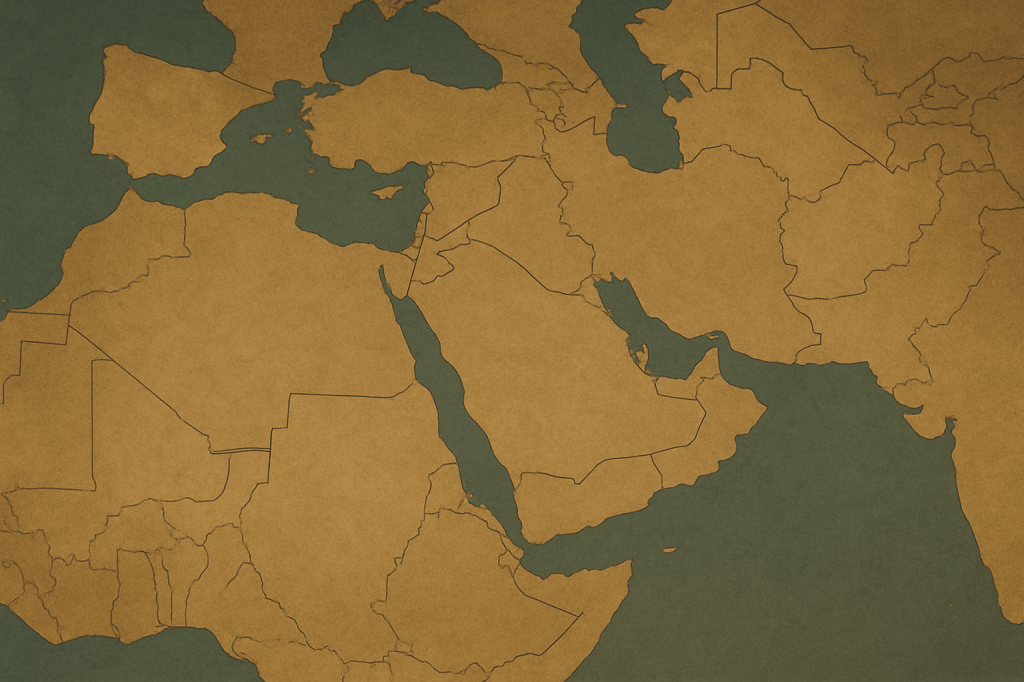
Rethinking the “Middle East”: Why Greater West Asia Works Best

The term Middle East has long been used in Western discourse to refer to the region spanning from Egypt and Turkey through to Iran and the Arabian Peninsula. This label is neither geographically accurate nor politically neutral. As calls grow for more inclusive and less Eurocentric terminology, there is a strong case for renaming the region altogether. A number of alternatives have been proposed, each with merits and limitations, but Greater West Asia emerges as the most appropriate and equitable option.

The Problems with “Middle East”

Eurocentrism

The label “Middle East” reflects a 19th-century British imperial perspective. From London, it was east of Europe, but west of British India—hence “middle.” It is not a term rooted in the cultures or languages of the people it describes, but in the navigation maps and strategic concerns of empires.

Vagueness and Inconsistency

The boundaries of the “Middle East” shift depending on context. Does it include North Africa? Is Afghanistan in or out? Turkey? This imprecision reduces its utility and fosters confusion.

Cultural Baggage

The term is often associated with conflict, terrorism, and religious strife in Western media, reinforcing stereotypes rather than offering a neutral geographic description.

Possible Alternatives

West Asia

This term corrects the geographic problem, situating the region accurately within the continent of Asia, but it has not gained widespread traction. Some critics argue it may be too narrow, excluding North Africa and the Caucasus.

Southwest Asia and North Africa (SWANA)

A politically motivated term intended to center Indigenous and decolonial perspectives. It explicitly includes North Africa and parts of Asia, but its complexity and unfamiliarity outside activist and academic circles limit its uptake.

MENA (Middle East and North Africa)

Common in policy and development discourse, but it retains the problematic “Middle East” and is more of a bureaucratic construct than a corrective.

Arab World / Muslim World

These terms are culturally specific and exclude non-Arab and non-Muslim populations in the region such as Persians, Jews, Christians, Kurds, Druze, and others. They entrench religious or ethnic majoritarian narratives.

Why Greater West Asia Works Best

Geographically Accurate

“West Asia” correctly places the region within the Asian landmass, and “Greater” allows for a broader scope including the Levant, Anatolia, the Arabian Peninsula, the Iranian Plateau, and parts of the Caucasus and even North Africa, if contextually needed.

Free of Cultural, Religious, or Ethnic Ties

The term avoids privileging one group over another: Arab, Persian, Turkish, Jewish, Kurdish, or otherwise. This neutrality is vital in a region that is home to dozens of languages, religions, and ethnic identities.

De-centres the West

Using “Greater West Asia” acknowledges the geographic reality from a global, not Eurocentric, perspective. It also strips away the legacy of colonial nomenclature imposed by British and French cartographers and strategists.

Scalability and Clarity

The prefix “Greater” allows for flexible boundaries while “West Asia” provides the core anchor. This mirrors successful regional terms like “Greater Europe” or “Greater Southeast Asia.”

Conclusion

Renaming the “Middle East” is more than a semantic exercise; it’s about decolonizing our geographic imagination. Of the alternatives, Greater West Asia is the most inclusive, descriptive, and politically neutral. It offers a clean break from imperial labels and better reflects the region’s complexity and humanity, without reducing it to a cultural monolith or geopolitical battleground. It’s time we updated our vocabulary accordingly.

Israel’s Nuclear Arsenal: The Open Secret of the Middle East

For decades, Israel has maintained an official policy of “nuclear ambiguity”, neither confirming nor denying its possession of nuclear weapons. Yet this studied silence stands in stark contrast to a substantial body of verifiable evidence, much of it sourced from credible whistle-blowers, declassified intelligence, military analysis, and satellite data. In practice, the Israeli nuclear arsenal has become one of the worst-kept secrets in international security. The absence of formal acknowledgment is strategic, not evidentiary. Israel’s nuclear capability is both real and operational, undergirded by a robust triad of delivery systems and supported by a long history of secrecy, scientific sophistication, and political calculation.

The story begins with the Dimona nuclear reactor in the Negev Desert, built in the late 1950s with clandestine French assistance. Officially described as a textile plant, it was in fact a plutonium production facility. By the mid-1960s, U.S. intelligence had concluded that Israel possessed the technical capability to produce nuclear weapons. In 1969, after a series of secret meetings, the United States and Israel reached a tacit agreement: Israel would not publicly test or declare its nuclear weapons, and the U.S. would cease pressuring it to sign the Non-Proliferation Treaty (NPT). This diplomatic fiction has endured for over fifty years.

However, the most damning evidence came in 1986, when Mordechai Vanunu, a former technician at Dimona, provided The Sunday Times with detailed photographs and descriptions of Israel’s nuclear warheads. Vanunu claimed Israel had produced enough weapons-grade plutonium for over 200 nuclear devices, including thermonuclear warheads, statements later corroborated by Western intelligence assessments. Vanunu’s disclosures confirmed what many had suspected: that Israel was not merely in possession of a handful of crude bombs but had developed a sophisticated and sizeable arsenal.

Independent experts such as the Federation of American Scientists (FAS) and the Stockholm International Peace Research Institute (SIPRI) have consistently estimated that Israel holds between 90 and 400 nuclear warheads. These are believed to be deployable through a triad of systems: land-based ballistic missiles, air-delivered bombs, and submarine-launched cruise missiles. The Jericho III, a long-range intercontinental ballistic missile, is believed to have a range of up to 6,500 kilometers, potentially extending to 11,500 kilometers depending on payload. These missiles are housed in hardened silos, well-concealed and dispersed for survivability. Additionally, Israel’s fleet of Dolphin-class submarines, purchased from Germany and believed to be modified to launch nuclear-capable Popeye Turbo cruise missiles, offers a potent second-strike capability.

The Israeli Air Force also plays a central role in the country’s nuclear deterrence. Modified F-15I and F-16I aircraft are capable of carrying nuclear payloads, further broadening the strategic options available to decision-makers in Tel Aviv. The ability to deliver nuclear weapons from sea, air, and land ensures that Israel retains a survivable deterrent, reinforcing the credibility of its nuclear posture even in the event of a first strike by an adversary.

Israel’s refusal to sign the NPT or to subject its nuclear facilities to International Atomic Energy Agency (IAEA) safeguards further confirms its unique position in the global nuclear order. While this policy isolates Israel diplomatically in certain forums, it has not resulted in significant punitive measures, due in large part to its close alliance with the United States and the widespread, if unspoken, acceptance of its strategic rationale. From the perspective of Israeli leadership, nuclear weapons serve as the ultimate insurance policy against existential threats in a region fraught with hostility and volatility.

From time to time, Israeli political and military leaders have let the mask slip. Former Prime Minister Ehud Barak acknowledged the existence of the arsenal in indirect but unmistakable terms. Other officials have alluded to it in speeches or interviews, especially when referring to red lines for Iran or Israel’s qualitative military edge. These statements are often quickly walked back or couched in hypothetical language, but the implications are unmistakable.

Perhaps the most compelling argument for Israel’s nuclear capability is the simple fact that no serious analyst or international observer denies it. The international community, especially the intelligence and military establishments of major powers, operates on the assumption that Israel is a nuclear-armed state. Its capabilities, though untested in public, are viewed as credible and strategically integrated. The lack of open testing has not diminished deterrence; rather, the veil of ambiguity enhances it, allowing Israel to maintain strategic deterrence without the diplomatic fallout of formal admission.

The accumulated evidence of Israel’s nuclear weapons program is overwhelming and irrefutable. The country’s longstanding policy of ambiguity may serve its diplomatic and strategic interests, but it does not conceal the reality of its capabilities. With a mature triad, hundreds of warheads, and decades of operational readiness, Israel stands as a de facto nuclear power in a region where deterrence often serves as the only firewall against catastrophe.

Sources
• Wired, “Israel’s Secret Nuke Arsenal Exposed”, October 5, 2011: https://www.wired.com/2011/10/1005israel-secret-nuclear-arsenal-exposed
• Federation of American Scientists (https://fas.org)
• Stockholm International Peace Research Institute (https://sipri.org)
• Nuclear Threat Initiative (https://nti.org)
• The Sunday Times archive on Mordechai Vanunu (1986)
• GlobalSecurity.org and IISS assessments of Jericho III and Dolphin-class platforms
• U.S. Congressional Research Service Reports on Middle East security and nuclear proliferation

Five Things We Learned This Week

Here is the fresh weekly edition of “Five Things We Learned This Week”covering June 7–13, 2025, with entirely new insights from around the globe:

🕊️ 1. Israel’s Airstrike on Iran Triggers Global Market Volatility
• Israel launched airstrikes targeting Iran’s nuclear and military facilities on June 13, reportedly killing senior officials including IRGC chief Hossein Salami.
• The strikes sparked fears of wider conflict, with Iran launching ~100 drones in response.
• Oil prices surged – Brent rose over 10%, closing 6% up at $73/barrel; prompting spikes in gold and bonds and a sell-off in equities across the U.S., Europe, and Asia.

🇵🇱 2. Poland Elects New President Amid Regional Shifts
• On June 1, Karol Nawrocki was elected President of Poland, defeating Rafał Trzaskowski in a closely watched runoff.
• The result reflects a shift toward conservative governance with potential impacts on EU relations and regional dynamics.

✈️ 3. Catastrophic Air India Boeing 787 Crash in India
• On June 12, Air India Flight 171, a Boeing 787, crashed shortly after takeoff from Ahmedabad, tragically killing 229 on board and 28 on the ground; remarkably, one passenger survived.
• This is the first fatal accident involving the Dreamliner, triggering international investigations into aviation safety and Boeing’s procedures.

🧬 4. mRNA-Driven Breakthrough in HIV Cure Research
• A team at Melbourne’s Doherty Institute used innovative LNP‑X nanoparticles to deliver mRNA that flushes hidden HIV out of white blood cells.
• This “shock and kill” approach, once deemed impossible, is now seen as a major step toward eradicating latent HIV infections  .

🌊 5. World Environment Day Yields Concrete Commitments
June 5 marked World Environment Day with the “Beat Plastic Pollution” theme, hosted in Jeju, South Korea. 
• Governments, companies, and individuals pledged to accelerate a shift toward a circular economy and reduce single-use plastics globally.

These fresh insights showcase the week’s geopolitical upheaval, scientific breakthroughs, aviation tragedy, and environmental action. Let me know if you’d like deeper analysis or sources!

Canada’s Strategic Shift: Weighing the Costs and Benefits of Joining Europe’s ReArm Program

Canada’s decision to signal its intention to join Europe’s ReArm initiative marks a significant pivot in its strategic and procurement priorities, with implications that extend well beyond the defense sector. This pan-European effort, catalyzed in the wake of Russia’s invasion of Ukraine and the shifting tenor of transatlantic politics, aims to coordinate defense procurement, scale industrial capacity, and strengthen European security autonomy. For Canada, a non-European NATO member with strong ties to both the U.S. and Europe, alignment with ReArm offers both substantial opportunity and strategic complexity.

At the forefront of the appeal is diversification. Canada has long relied on the United States for upwards of 75% of its military procurement. While the U.S. – Canada defense relationship, particularly through NORAD, remains indispensable, the risks of a politically volatile or inward-focused Washington have grown. Europe’s response, particularly Germany’s ramped-up defense commitments, and the €800 billion EU proposal to stimulate continental arms production, presents an alternative axis of reliability. Canada’s participation could signal to both NATO allies and global partners that it seeks greater resilience in its defense posture.

One of the most concrete areas of cooperation could lie in the domain of submarine procurement. The CBC reports that Canada is exploring options for the German-Norwegian Type 212CD submarine, a next-generation conventional submarine being co-developed by ThyssenKrupp Marine Systems and Kongsberg. This class boasts extended underwater endurance through air-independent propulsion and quiet operation ideal for Arctic patrols, long a capability gap in Canadian naval strategy. The possibility of Canada becoming a formal partner in the 212CD project would not only address its aging Victoria-class fleet but also create industrial synergies through potential domestic assembly and technology transfer agreements.

Beyond submarines, ReArm opens the door to collaborative fighter jet production. Canada’s inclusion in discussions around final assembly of Swedish Saab Gripen fighters suggests that Ottawa is seeking industrial offset opportunities beyond its existing Lockheed Martin F-35 commitments. These talks, while preliminary, reflect a desire to reassert domestic defense manufacturing after years of outsourcing.

Still, the risks are considerable. Aligning procurement strategies with European standards could create friction in interoperability with American systems, particularly relevant given NORAD modernization and Canada’s Arctic commitments. There is also the question of cost. Canada’s new defense policy promises to increase military spending to 1.76% of GDP by 2030, a notable jump, but still short of NATO’s 2% target. Adding ReArm investments could strain the federal budget, and force trade-offs in domestic priorities.

Geopolitically, joining a European initiative risks being interpreted in Washington as a soft decoupling. While this may be overstated, managing the optics with U.S. defense officials will require careful diplomacy. At the same time, any major procurement projects pursued under ReArm would need to be justified as both value-for-money, and strategically essential in a Canadian context.

ReArm represents a chance for Canada to assert greater agency in its defense strategy, while leveraging European innovation and industrial momentum, but this is no risk-free proposition. Ottawa will need to walk a careful line: embracing new partnerships without compromising old ones, and ensuring that each procurement project is grounded in long-term strategic logic, not simply in search of novelty.

Five Things We Learned This Week

Here is the latest edition of “Five Things We Learned This Week” for May 31–June 6, 2025, highlighting significant global developments across various sectors.

🧬 1. Breakthrough in HIV Treatment Using mRNA Technology

Researchers have achieved a significant milestone in HIV treatment by successfully delivering mRNA into white blood cells that harbor hidden HIV. Utilizing specially formulated nanoparticles known as LNP X, the mRNA instructs these cells to reveal the concealed virus, marking a pivotal step toward a potential cure. This advancement opens new avenues for eradicating latent HIV infections that have long evaded traditional therapies.  

🚀 2. China’s Tianwen-2 Asteroid Mission Launches Successfully

On May 28, the China National Space Administration successfully launched the Tianwen-2 mission aboard a Long March 3B rocket. This ambitious endeavor aims to collect samples from the near-Earth asteroid 469219 Kamoʻoalewa and explore the main-belt comet 311P/PANSTARRS. The mission underscores China’s growing capabilities in deep-space exploration and its commitment to advancing planetary science.  

 3. MIT Develops High-Energy Sodium-Air Fuel Cell

Engineers at the Massachusetts Institute of Technology have developed a new type of fuel cell that utilizes a reaction between sodium metal and air. This innovative design offers three times the energy per pound compared to the best current lithium-ion batteries, potentially revolutionizing energy storage for electric vehicles and aviation. The breakthrough could lead to lighter, more efficient power sources, accelerating the transition to cleaner transportation technologies.  

🏆 4. Brittany Force Sets Speed Record at NHRA New England Nationals

At the NHRA New England Nationals, drag racer Brittany Force delivered a remarkable performance, setting a new speed record in the Top Fuel category. Her achievement highlights the ongoing advancements in drag racing technology and the increasing competitiveness of the sport. Force’s success also emphasizes the growing prominence of female athletes in motorsports.  

 5. Major League Soccer Hosts 13 Matches in a Single Day

On May 24, Major League Soccer (MLS) featured an unprecedented lineup of 13 matches across the United States. This action-packed day showcased the league’s depth and the growing popularity of soccer in North America. Fans were treated to a full spectrum of competition, reflecting MLS’s commitment to expanding its reach and enhancing the spectator experience.  

Stay tuned for next week’s edition as we continue to explore pivotal global developments.

Five Things We Learned This Week

Here is the latest edition of “Five Things We Learned This Week” for May 24–30, 2025, highlighting significant global developments across various sectors.

🧠 1. AI Threatens to Displace Half of White-Collar Jobs

Dario Amodei, CEO of AI firm Anthropic, has warned that artificial intelligence could eliminate up to 50% of entry-level white-collar jobs within the next five years. Tasks such as document summarization, report analysis, and computer coding are increasingly being performed by AI at levels comparable to a smart college student. Amodei predicts that U.S. unemployment rates could reach 20% by 2030 if proactive measures aren’t taken. He advocates for policy interventions, including taxing AI labs, to mitigate potential economic disruptions.  

🏗️ 2. Kmart Announces $500 Million Fulfillment Center in Australia

Kmart has unveiled plans to invest $500 million in constructing a new 100,000 square meter Omnichannel Fulfillment Centre at ESR’s Intermodal Precinct in Moorebank, Australia. Scheduled for completion by the end of 2027, the facility aims to modernize logistics, enhance supply chains, and support Kmart’s $20 billion revenue goal over the next decade. The project is expected to create over 1,300 jobs during its construction and operational phases.  

🇲🇳 3. Political Turmoil Escalates in Mongolia

Mid-May saw the onset of sustained protests in Ulaanbaatar, Mongolia, with demonstrators calling for the resignation of the prime minister over corruption allegations involving his family. On May 21, the ruling Mongolian People’s Party expelled the Democratic Party from the coalition government after several of its lawmakers supported the protests, effectively dissolving the coalition less than a year after its formation.  

🎶 4. Rio de Janeiro Hosts Massive Free Music Festival

The “Todo Mundo no Rio” (Everyone in Rio) music festival transformed Copacabana Beach into a massive stage, attracting over 2.1 million attendees. The event featured performances by international artists and is part of a series of annual megashows promoted by the City of Rio de Janeiro to establish May as a month of cultural celebration.  

🧬 5. Advancements in Gene Editing with CRISPR 3.0

Scientists have developed CRISPR 3.0, a new gene-editing technique that allows for highly precise DNA edits without causing unintended mutations. This advancement holds promise for curing genetic disorders and advancing personalized medicine by enabling more accurate and safer genetic modifications.  

Stay tuned for next week’s edition as we continue to explore pivotal global developments.

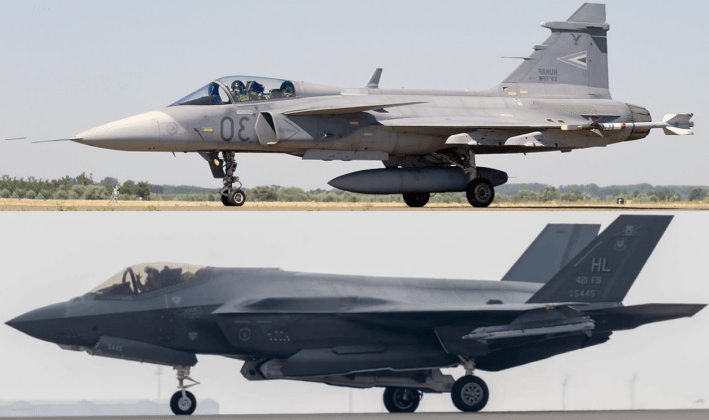
F-35A vs Gripen E: Why Canada Needs a Mixed Air Fleet

Canada is finalizing a long-term commitment to its next-generation fighter fleet. While the Lockheed Martin F-35A Lightning II has dominated the headlines and procurement process, many analysts and defence strategists continue to argue for a more balanced approach that reflects Canada’s non-aggressive, defence-oriented military posture. Enter the JAS 39 Gripen E, Sweden’s cost-effective and resilient multirole fighter.

In this article, we compare the F-35A and Gripen E across key domains, and propose a strategic mixed-fleet solution tailored to Canada’s unique geography, alliances, and policy values.

F-35A vs Gripen E: A Comparative Analysis

FeatureF-35A Lightning IIJAS 39 Gripen E
OriginUnited StatesSweden
RoleStealth multirole strike & ISRAgile, cost-effective air defense
Stealth5th-gen stealth with internal weapons baysLow-observable 4.5-gen fighter; external weapons only
SensorsFusion: AESA radar, DAS, EOTS, HMDAESA radar, IRST, electronic warfare suite
Speed & AgilityMach 1.6, less agileMach 2.0, supercruise, high agility
Operating Cost~$35,000/hr~$8,000 – $10,000/hr
MaintenanceComplex, centralized logisticsModular, road-capable, easy maintenance
InteroperabilityDeep NATO/NORAD integrationFlexible, sovereign-capable system
Best Suited ForHigh-end coalition warfareDomestic sovereignty & intercept missions

The F-35A excels in stealth, sensor fusion, and networked warfare. It’s optimized for first-strike and multi-domain operations in complex allied theatres. The Gripen E, by contrast, is designed for national airspace protection, low-cost deployment, and high survivability through speed and agility.

For most countries, the choice between them is binary. But for Canada, a mixed fleet provides the best of both worlds.

Canada’s Defence Posture: Defence, Not Offence

Canada’s 2017 defence policy, Strong, Secure, Engaged (source), emphasizes:

  • Sovereignty protection, particularly in the Arctic
  • Fulfillment of NORAD and NATO responsibilities
  • Commitment to peacekeeping and allied security, not aggression or projection

This makes a single-type, stealth-heavy force both expensive and strategically limiting. The F-35A’s sophistication comes with high costs and logistical burdens. The Gripen’s versatility and affordability make it ideal for Canada’s domestic priorities, especially Arctic response and cost-effective patrols.

The Ideal Fleet Mix: 48 F-35A + 36 Gripen E

A proposed balanced force of 84 aircraft could look like this:

  • 48 F-35A Lightning II – Two combat squadrons for NATO/NORAD + First-strike SEAD missions
  • 36 JAS 39 Gripen E – Two intercept/sovereignty squadrons for Cold Lake & Bagotville + Pilot training

This mix satisfies Canada’s allied obligations while keeping operational costs under control and increasing resilience and redundancy.

Mission-by-Mission Alignment

Mission TypeAircraft Best Suited
NATO expeditionary combatF-35A
Arctic sovereignty patrolsGripen E
NORAD interceptsGripen E (routine), F-35A (high threat)
Peacekeeping air policingGripen E
First-strike SEAD missionsF-35A
Pilot trainingGripen E (cost-effective)

Additional Benefits of a Mixed Fleet

  • Economic efficiency: Gripen costs 3–4x less to operate, allowing more flying hours and Arctic readiness.
  • Strategic autonomy: Saab offers greater technology transfer and offset potential, unlike the F-35 program.
  • Operational resilience: Gripens can operate from rural or improvised runways in the North.
  • Supplier diversification: Reduces geopolitical and logistical risk from relying on a single supplier (U.S.).

Potential Challenges & Mitigations

ConcernMitigation
Dual logistics systemsSegmented basing and dedicated maintenance crews
InteroperabilityGripen is NATO-compatible and can integrate via standard datalinks
Training duplicationGripen used for advanced pilot training and tactical development

Final Word

A dual-fighter strategy is neither nostalgic nor redundant, it is forward-thinking. By balancing cutting-edge stealth with efficient sovereignty defence, Canada can build an air force that is:

  • Strategically aligned with its defensive posture
  • Economically sustainable over decades
  • Technologically capable of high-end conflict
  • Operationally flexible across vast geography

This isn’t just a compromise, it’s a model of how Canada can lead by example in blending technology, sovereignty, and peacekeeping into a cohesive air defence strategy.

Sources

Tags: #CanadianDefence #F35 #Gripen #NORAD #NATO #ArcticDefence #MilitaryPolicy #Peacekeeping #AirPower

Quiet Competence: The Technocratic Leadership of Mark Carney and Keir Starmer

In an era marked by political turmoil, populism, and polarized electorates, the emergence of two distinctly technocratic leaders, Canada’s Mark Carney and the United Kingdom’s Keir Starmer, signals a subtle, but significant shift in governance. Both men have stepped into their roles as Prime Ministers in the last year, bringing with them a pragmatic, policy-driven style that eschews grandstanding for steady, results-oriented leadership.

Mark Carney’s ascension to the Canadian premiership in March 2025 was, by many measures, unconventional. Known primarily for his extraordinary track record as an economic steward, having helmed two of the world’s most influential central banks, Carney entered politics without prior elected office experience. Yet this outsider status may be his greatest asset. Carney’s approach is quintessentially technocratic: data-driven, nuanced, and focused on long-term stability rather than short-term political gain.

Early in his tenure, Carney moved decisively, but quietly to abolish the consumer carbon tax, a move that was politically contentious, but signaled his willingness to recalibrate policies based on public sentiment and economic realities. Simultaneously, he maintained other industrial carbon levies, showing a measured balancing act between environmental priorities and economic concerns. His focus on national sovereignty, especially in the context of complex geopolitical pressures from the United States, demonstrates his comfort in navigating both domestic and international arenas with calculated precision.

Across the Atlantic, Keir Starmer’s rise to UK Prime Minister in mid-2024 was accompanied by a return to a more traditional, sober style of governance after over a decade of Conservative rule. Starmer’s background as a human rights lawyer and former Director of Public Prosecutions clearly informs his methodical and legalistic approach to leadership. His government has tackled thorny domestic challenges, from public sector strikes to immigration policy reform, without resorting to populist rhetoric or headline-grabbing gestures.

Starmer’s pragmatism is evident in his recent reforms: ending winter fuel payments for millions, launching an early prisoner release scheme to reduce overcrowding, and instituting new border security measures. These decisions, while controversial, reflect a focus on institutional reform and social justice framed within achievable policy frameworks. Unlike more flamboyant predecessors, Starmer projects a sense of quiet competence, aiming to rebuild public trust through consistency and fairness rather than drama.

What unites Carney and Starmer is their shared embrace of technocratic governance, an approach that values expertise, incremental progress, and policy refinement over ideological battles or media theatrics. Both leaders seem intent on “getting on with the job,” navigating complex political landscapes with a steady hand. This approach is particularly noteworthy given the current political climate, where many leaders lean heavily on spectacle or populist appeals.

Their quiet competence is not without risks. Technocratic leaders can be perceived as detached or insufficiently charismatic, which can make it challenging to galvanize broad popular enthusiasm. Yet, for electorates fatigued by volatility and crisis, Carney and Starmer offer a reassuring alternative: governance that promotes substance over style and incremental progress over sweeping promises.

The early months of Mark Carney’s and Keir Starmer’s premierships illustrate the power of quiet, data-driven leadership in modern politics. Their technocratic approaches may not dominate headlines, but they offer a compelling model for steady, pragmatic governance in an era that sorely needs it.