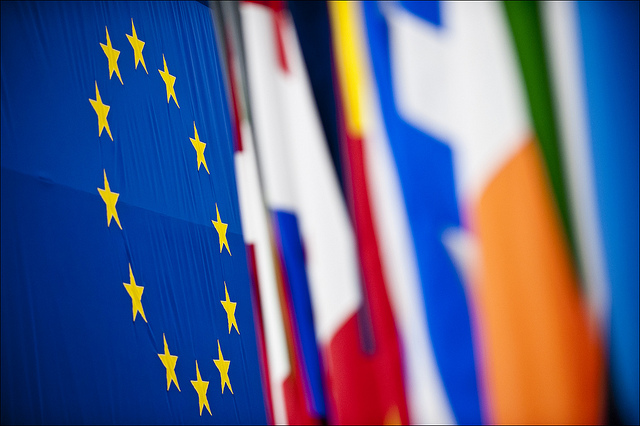
A Commonwealth Without Borders: The Future of Free Movement?

The idea of free movement between Canada, New Zealand, Australia, and the UK has gained increasing attention in recent years. Often discussed under the banner of CANZUK, the proposal envisions a system similar to the European Union’s freedom of movement, allowing citizens of these four nations to live and work freely across their borders. At first glance, the case for such an arrangement seems compelling. These countries share deep historical ties, legal and political traditions rooted in the British system, and comparable economic standards. Advocates argue that freer movement would not only reinforce cultural and economic connections but also provide practical benefits, such as addressing labor shortages and strengthening diplomatic relationships.

The idea is not without precedent. Australia and New Zealand already enjoy a form of free movement under the Trans-Tasman Travel Arrangement (TTTA), which has allowed their citizens to live and work in either country with relatively few restrictions for decades. This arrangement has functioned smoothly, with both nations benefiting from a flexible labor market and strong cross-border ties. Extending a similar model to include Canada and the UK, proponents argue, would be a natural evolution of these existing relationships. Many supporters also point to the European Union’s Schengen Zone as proof that such agreements can work on a larger scale, allowing economic migration without overwhelming social systems.

However, beyond the rhetoric of shared heritage and common values, the proposal faces considerable economic and political challenges. While these nations are broadly comparable in terms of economic development, there are still notable differences in wages, cost of living, and employment opportunities. Australia and Canada, for instance, consistently rank among the most desirable destinations for migrants due to their higher wages and strong job markets. Without proper safeguards, this could lead to an uneven flow of migration, with workers from the UK and New Zealand gravitating towards the more prosperous economies of Canada and Australia, potentially creating labor shortages in their home countries.

Another critical concern is the impact on housing and infrastructure. Canada and Australia are already grappling with severe housing affordability crises, particularly in major cities like Toronto, Vancouver, Sydney, and Melbourne. An influx of migrants, even from culturally similar nations, could put additional strain on these markets, driving up housing prices and exacerbating shortages. While proponents argue that increased migration could also help address labor shortages in construction and other essential industries, critics warn that these benefits may take years to materialize, while the immediate impact on housing demand would be felt almost instantly.

The political landscape also complicates the feasibility of such a proposal. While public opinion polls have shown reasonable support for closer ties between these nations, immigration remains a contentious issue in all four. Brexit was, in part, driven by the UK’s desire to regain control over its borders, and many voters would likely resist any proposal that reintroduces a form of free movement, even if limited to Commonwealth nations. In Canada and Australia, immigration policy is a key electoral issue, and governments are unlikely to relinquish control over who enters their borders. National security concerns also play a role, as harmonizing immigration and vetting policies across four different governments would be a bureaucratic challenge.

Despite these obstacles, the concept of closer mobility between these nations is unlikely to disappear. While full free movement may be politically unrealistic in the near term, policymakers could explore intermediate steps, such as streamlined work visas, mutual residency pathways, or limited agreements for specific professions. Such measures would allow for greater mobility without the risks of an uncontrolled migration flow. Ultimately, while the dream of a CANZUK free movement zone remains an enticing one, its success will depend on whether political leaders can balance economic opportunity with the realities of national interests and public sentiment.
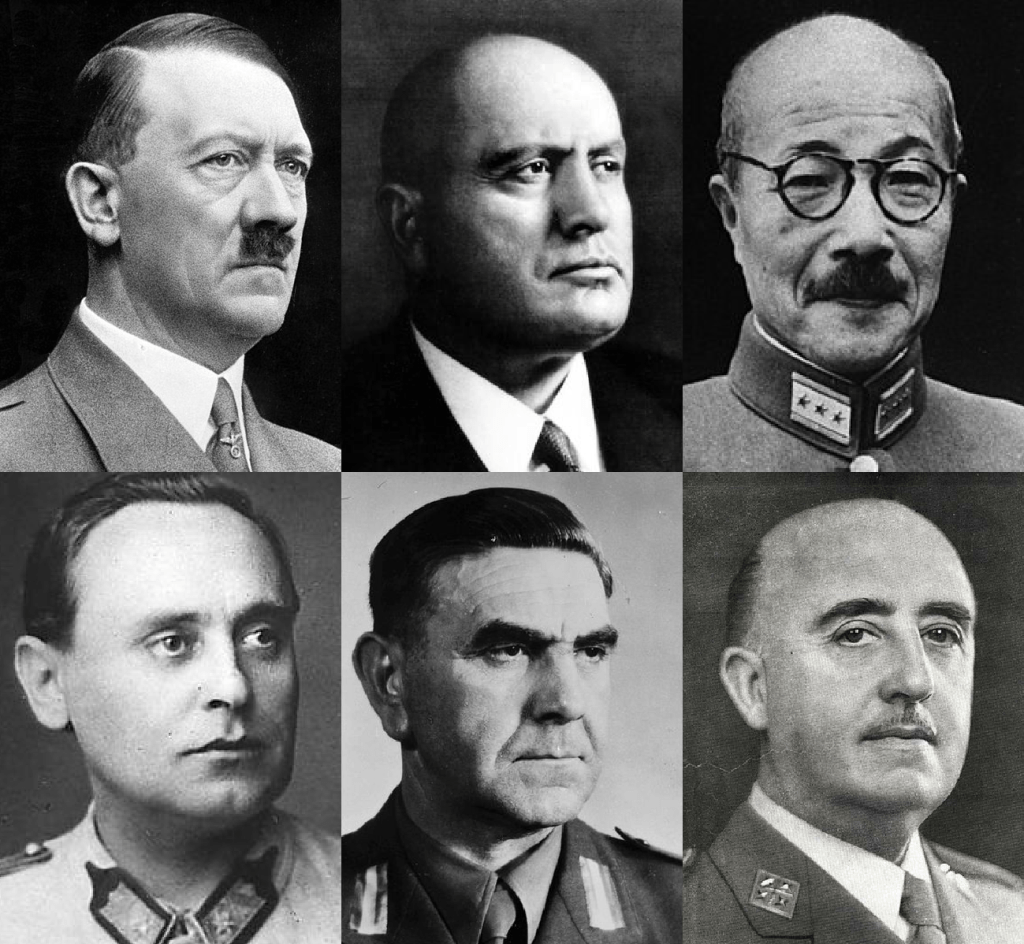
The Delusions of Authoritarians: Why it never ends well for Fascist Leaders

Fascist and authoritarian leaders rarely see themselves as doomed figures in history. On the contrary, they often believe they are exceptional – capable of bending the course of history to their will. Whether through the cult of personality, the rewriting of historical narratives, or sheer force, they assume they can control how they will be remembered. This delusion has led many to catastrophic ends, yet new generations of authoritarians seem undeterred, convinced that they will be the ones to succeed where others failed. Trump and his allies fit squarely into this pattern, refusing to believe that history might judge them harshly or that their actions could lead to their own downfall.

Mussolini provides one of the most vivid examples of this phenomenon. He envisioned himself as a modern-day Caesar, reviving the grandeur of the Roman Empire through Fascism. His brutal repression of dissent, his alliance with Hitler, and his reckless military ambitions ultimately led to disaster. When the tide of World War II turned, Mussolini found himself abandoned, hunted, and finally executed by his own people; his corpse hung upside down in Milan as a stark rejection of his once-grandiose vision. And yet, to the very end, he believed he was the victim of betrayal rather than the architect of his own demise.

Hitler, too, was utterly convinced of his historical greatness. He meticulously curated his own image, producing propaganda that cast him as Germany’s savior. Even as the Third Reich collapsed around him, he ranted in his bunker about how the German people had failed him rather than the other way around. His ultimate act, suicide rather than surrender, was an attempt to control his narrative, ensuring he would never be paraded as a prisoner. But history did not grant him the legacy he sought. Instead of being remembered as a visionary, he became the ultimate symbol of genocidal tyranny.

The pattern continued into the later 20th century. Nicolae Ceaușescu, the Romanian dictator, had convinced himself that his people adored him. He built extravagant palaces while his citizens starved, crushed opposition, and developed a personality cult that portrayed him as a paternal figure of national strength. When the moment of reckoning arrived in 1989, he seemed genuinely shocked that the crowd in Bucharest turned on him. Within days, he and his wife were tried and executed by firing squad, their supposed invincibility revealed as an illusion.

Even those who manage to hold onto power longer do not always escape history’s judgment. Augusto Pinochet ruled Chile through terror for nearly two decades, believing that his iron grip would secure him a revered place in history. But his crimes – torture, executions, forced disappearances eventually caught up with him. Though he escaped trial for most of his life, his reputation was destroyed. His legacy became one of shame rather than strength.

Trump, like these figures, operates in a world where loyalty and spectacle take precedence over reality. He dismisses mainstream historians as biased, preferring the adulation of his base over any broader judgment. He likely assumes that as long as he can retain power, whether through elections, legal battles, or intimidation, he can dictate how history views him. But history has a way of rendering its own verdict. Those who believe they can shape their own myth while trampling on democratic institutions, rule of law, and public trust often find themselves remembered not as saviors, but as cautionary tales.

Abandoned Sovereignty: How Canada Gave Up on Its Own Defence Industry

I began writing this piece over a year ago, and now it seems time to publish. I have seen first hand, during my time working for the UK feds, the way most members of NATO, not just Canada, have purchased U.S. military equipment, often under political pressure, and to the detriment of their own defence industries.  NATO interoperability standards should mean that any compatible equipment should be a viable option, considered through open competitive bidding, yet the geopolitical reality is something completely different. 

Canada has long faced intense pressure—political, economic, and social—to purchase U.S. military equipment for its armed forces, a reality that has shaped its defense procurement decisions for decades. This pressure is deeply rooted in history, from Cold War-era alliances to modern-day trade dependencies, and it has left Canada with little choice, but to align its military acquisitions with American interests. The consequences of this alignment go beyond procurement choices; they have also played a role in the erosion of Canada’s own defense research and development capabilities.

The political pressure to buy American is most evident in Canada’s commitment to joint defense initiatives, particularly NORAD and NATO. From the early days of the Cold War, Canada’s defense policies have been deeply entwined with those of the United States. The integration of North American air defense under NORAD meant that Canada’s fighter aircraft, radar systems, and missile defense strategies had to be compatible with those of the U.S. When Canada scrapped its own Avro Arrow fighter program in 1959, ostensibly for cost reasons, it conveniently cleared the way for the adoption of American aircraft like the CF-101 Voodoo, locking the Royal Canadian Air Force (RCAF) into a reliance on U.S. technology that continues to this day.

This trend persisted throughout the latter half of the 20th century. Canada’s navy, which once built world-class destroyers and anti-submarine vessels, saw its shipbuilding industry decline, and by the 1990s, the country was purchasing used British submarines while remaining dependent on American-built weapons and sensors. Similarly, Canada’s decision to buy the CF-18 Hornet fighter in the 1980s followed a pattern of choosing U.S. aircraft over European or domestic alternatives. While the CF-18 has served well, it locked Canada into the U.S. military supply chain for parts, upgrades, and replacements. Now, with the planned acquisition of F-35 stealth fighters, that dependence is only deepening.

Economically, Canada’s military procurement is heavily influenced by its integration with the U.S. defense industrial base. The Defense Production Sharing Agreement (DPSA), signed in 1956, allowed Canadian defense firms to bid on U.S. military contracts, but it also cemented Canada’s role as a supplier of components rather than a leader in weapons development. This effectively sidelined Canadian military research and engineering projects, making it far more difficult to revive independent initiatives. When the Arrow was canceled, it wasn’t just a single aircraft project that was lost—it was an entire aerospace industry that could have positioned Canada as a technological leader rather than a perpetual customer of American defense contractors.

The economic argument for buying American is always framed in terms of cost-effectiveness and interoperability, but the reality is that it often comes with trade-offs. The purchase of American equipment frequently involves hidden costs—maintenance contracts, dependency on U.S. technology, and restrictions on modifications. The recent push to buy American-made submarines, replacing the troubled British-built Victoria-class boats, is another example of how Canada’s choices are limited by its reliance on U.S. and NATO systems. In many cases, American weapons systems are the only viable option simply because Canada has not maintained the capability to produce its own alternatives.

Public sentiment in Canada is often skeptical of major military purchases, and this can create social and political tensions. Many Canadians are uncomfortable with high military spending, particularly when it benefits American defense giants like Lockheed Martin or Boeing. This unease has been reinforced by past procurement scandals, such as the costly and controversial EH-101 helicopter cancellation in the 1990s, which resulted in years of delays in replacing Canada’s aging Sea Kings. Yet, despite public resistance, successive Canadian governments—Liberal and Conservative alike—have found it almost impossible to escape the gravitational pull of American defense procurement.

Interoperability with U.S. forces is the most frequently cited justification for this dependence, and in some cases, it is a valid one. Canadian troops often train and deploy alongside U.S. forces, making shared equipment a practical necessity. However, this argument is often overstated to justify buying American even when other options exist. The recent decision to acquire P-8 Poseidon maritime patrol aircraft from Boeing, rather than exploring alternatives like the Airbus C295 or continuing to develop Canadian-built options, reflects this bias. The same was true with the decision to buy Sikorsky CH-148 Cyclone helicopters, a troubled program that has suffered significant delays and technical issues.

Over time, Canada’s ability to independently design and produce advanced military hardware has been systematically dismantled. The cancellation of the Arrow was just the first in a series of decisions that saw Canadian innovation sacrificed in favor of American procurement. The loss of the CF-105 program, the shelving of independent drone development efforts, and the abandonment of domestic tank production have left Canada as a nation that buys rather than builds. While there are still areas of strength—such as armored vehicle production through General Dynamics Land Systems Canada—the overall trajectory has been one of increasing dependence on the U.S.

The reality is that Canada’s defense procurement strategy is shaped as much by geopolitics as by practical military needs. The U.S. is both Canada’s closest ally, and its largest trading partner, and any significant deviation from American military procurement norms risks diplomatic and economic fallout. The fear of upsetting Washington is a powerful deterrent against seeking alternatives, whether from European manufacturers or through domestic production.

In the end, Canada’s military procurement is not just a matter of choosing the best equipment—it is a strategic and political decision that reflects the country’s place in the global order. Until Canada makes a concerted effort to rebuild its defense research and production capabilities, it will remain at the mercy of U.S. military priorities. Whether that is an acceptable trade-off is a question that Canadian policymakers—and the public—must continue to grapple with.

Update
Since writing the core of this piece, there has been some signs that Canada is trying to rekindle its own defence industry with its ship building program for the new River class destroyers, the conversation about purchasing European designed and built submarines, and early discussions regarding reducing the F-35 purchase program, in favour of the Swedish Saab Gripen. The Swedish proposal, which promised that aircraft assembly would take place in Canada, and that there would be a transfer of intellectual property, which would allow the aircraft to be maintained in this country, was very different from the U.S. F-35 program, where major maintenance, overhaul and software upgrades would happen in the States. The second Trump administration might just be the catalyst that Canada needs to seek alternative solutions rather than the business as usual approach we have seen over the last 75 years.  

America’s Arrogance Knows No Bounds: Trump’s 51st State Fantasy as repeated by Rubio is an Insult to Canadian Sovereignty

Marco Rubio, speaking after the G7 foreign ministers’ summit in Charlevoix, had the gall to suggest that Trump’s annexation fantasy was just an “economic argument” that “stands for itself.” Really? An economic argument? As if Canada’s entire existence hinges on whether the U.S. slaps a few tariffs on our exports.

When pressed about Trump’s repeated claims that the Canada-U.S. border is an “artificial line,” Rubio shrugged it off. According to him, there’s merely a “disagreement” between Trump and the Canadian government. No, Marco, it’s not a “disagreement.” It’s an outrageous, imperialist insult that no Canadian should tolerate.

Apparently, this all started back in December 2024 when then-Prime Minister Justin Trudeau met with Trump at Mar-a-Lago. Rubio claims Trudeau said Canada couldn’t survive if the U.S. imposed tariffs, and Trump, ever the megalomaniac, took that as an opening to suggest annexation. Now, let’s be clear: Trudeau has never confirmed saying anything remotely like that. But Trump, in his usual dishonest fashion, took it and ran – repeating the “51st state” nonsense so many times that even Trudeau, at first dismissing it as a joke, was forced to take it seriously.

Fast forward to today, and we have Trump sitting in the Oval Office with NATO Secretary-General Mark Rutte, once again declaring that Canada “only works as a state.” And what did Rutte, representing one of the world’s most powerful alliances, say? Nothing. Not a word. That’s NATO for you – silent when it comes to one of its founding members being treated like an American colony-in-waiting.

Thankfully, our new Prime Minister, Mark Carney, didn’t mince words. His response? “We will never, ever in any way, shape, or form be part of the United States.” Simple, direct, and exactly what needed to be said.

The sheer arrogance of Trump and his lackeys is breathtaking. Canada is a sovereign nation. We are not some economic vassal of the United States, nor are we waiting around for Washington to “save” us. The idea that our country exists only at the whim of American economic policy is an insult to everything we stand for.

Germany’s Foreign Minister, Annalena Baerbock, voiced strong support for Canada in response to U.S. President Donald Trump’s economic threats and remarks about making Canada an American state. She emphasized that sovereign borders must be respected, including those of Ukraine, Greenland, and Canada, and reaffirmed Germany’s close friendship with Canada. 

Make no mistake – this is not about economics. It’s about power, control, and America’s delusional belief that it can swallow up anything it wants. Canada has fought too hard, for too long, to let some washed-up real estate con artist and his yes-men dictate our future.

America can keep its chaos, its dysfunction, and its toxic brand of politics. Canada is, and always will be, its own nation. And the sooner Washington gets that through its thick skull, the better.

Thatcher’s Flawed Philosophy: How Community Really Does Defines Us

Margaret Thatcher’s infamous declaration that “there is no such thing as society” has sparked decades of debate and remains a contentious cornerstone of her political philosophy. Her emphasis on self-interest over community solidarity, however, neglects a fundamental truth: humans are inherently social beings, and society is not an abstract ideal but a lived reality. To dismiss the concept of society is to deny the interconnectedness that defines human existence. 

From the earliest days of our evolution, humans have depended on cooperation and collective effort for survival. Group solidarity enabled us to hunt, share resources, build shelters, and ultimately thrive. Language, culture, and complex societal structures emerged from this cooperation, underscoring that our progress has always been rooted in community. Thatcher’s rejection of society as a meaningful entity ignores this profound evolutionary history.

Modern science further reinforces the critical role of social connections. Studies in sociology, psychology, and anthropology repeatedly demonstrate that strong social ties contribute to better mental and physical health, greater happiness, and longer life expectancy. Conversely, social isolation and loneliness have devastating consequences, leading to increased rates of mental illness, substance abuse, and even early mortality. Community is not just a philosophical idea; it is an essential foundation for individual and collective well-being.

History provides countless examples of the power of community to create positive change. Civil rights movements, environmental activism, labor struggles—these are not the outcomes of individuals acting in isolation but of people coming together in solidarity to challenge injustice and fight for shared goals. Such movements illustrate that progress is often born from collective action rather than solitary self-interest.

Even Thatcher’s own notion of self-interest fails to account for the human capacity for empathy, reciprocity, and altruism. While individuals may act in their own interests, they do so within a framework of interconnected relationships. Acts of kindness and generosity are not rare deviations from human nature but deeply ingrained aspects of it. Recognizing the well-being of others as intertwined with our own is not only logical but vital to the fabric of any functioning society.

Thatcher’s dismissal of society as a nonentity represents a reductionist and ultimately flawed view of human nature. Far from being atomized individuals, we are part of a larger web of connections that sustains us. Acknowledging the reality and importance of community is essential if we are to build resilient societies that prioritize the common good and provide a sense of belonging for everyone. Society does exist—and it is the very foundation upon which we stand.

The Failing Republic: Why the U.S. is Losing Its Separation of Powers

The United States was designed as a carefully balanced system, drawing from Polybius’ theory of anakyklosis, the ancient idea that governments cycle through different forms of rule as they degenerate. The Founders sought to prevent this cycle from repeating in America by creating a mixed government – a system that combined elements of monarchy (the presidency), aristocracy (the Senate and judiciary), and democracy (the House of Representatives and popular elections). This balance was supposed to be maintained through separation of powers and checks and balances, preventing any single branch from becoming dominant. However, over time, this system has eroded, leading to political dysfunction, growing authoritarian tendencies, and an increasing sense that American democracy is failing to sustain itself.

One of the most obvious signs of this breakdown is the expansion of executive power. The U.S. presidency, originally designed to be a limited office constrained by Congress, has grown into an institution that wields enormous influence over both domestic and foreign policy. Congress’ constitutional power to declare war has been effectively ignored for decades, with presidents engaging in military actions without formal approval. Executive orders, once meant for administrative matters, now serve as a way for presidents to bypass legislative gridlock and unilaterally shape national policy. Emergency powers, originally intended for genuine crises, have been used to consolidate authority, further tipping the balance away from Congress and toward the executive. What was once a system of monarchy constrained by law is increasingly resembling the early stages of tyranny, where power becomes concentrated in the hands of a single leader.

Meanwhile, the institutions meant to act as a wise, stabilizing force, the Senate and the judiciary, have themselves become distorted. The Senate, originally designed to serve as a check on populist excess, has become a bastion of partisan gridlock, where legislative action is often blocked not through debate and compromise but through procedural loopholes like the filibuster. The Supreme Court, meant to provide legal stability, has evolved into a de facto policymaking body, issuing rulings that shape national laws based on the ideological leanings of its justices rather than broad democratic consensus. The fact that justices serve lifetime appointments ensures that political biases from decades past continue shaping the present, often overriding the will of the electorate. Rather than serving as an aristocratic check on instability, the judiciary and Senate have increasingly acted as oligarchic strongholds, where entrenched power resists democratic accountability.

At the same time, the democratic elements of the system have begun to decay into their own worst tendencies. Gerrymandering has allowed political parties to carve up districts in ways that virtually guarantee electoral outcomes, stripping voters of meaningful representation. Populist rhetoric has taken over political campaigns, where leaders appeal not to reasoned debate but to emotional manipulation and fear-mongering. The rise of social media-driven outrage politics has further fueled division, turning every issue into an existential battle where compromise is seen as betrayal. The January 6th attack on the Capitol was not just an isolated event but a symptom of a deeper problem, the slide of democracy into oligarchy, or mob rule, where decisions are no longer made through structured governance but through force, intimidation, and the manipulation of public anger.

This erosion of balance has led to a state of chronic political paralysis. Congress, once the heart of American governance, now struggles to pass meaningful legislation, forcing presidents to govern through executive action. Public trust in institutions is collapsing, with many Americans believing that elections, courts, and government bodies are rigged against them. And looming over it all is the increasing potential for authoritarianism, as political leaders, on both the left and right, flirt with the idea that democratic norms can be bent, ignored, or rewritten to serve their interests. This is precisely the pattern that anakyklosis predicts: when democracy becomes too unstable, people turn to strong leaders who promise to restore order, often at the cost of their freedoms.

If the United States is to avoid falling deeper into this cycle, it must take deliberate action to restore the balance of power. Congress must reclaim its authority over war, legislation, and oversight. The judiciary, particularly the Supreme Court, may need reforms such as term limits to prevent long-term ideological entrenchment. Electoral integrity must be strengthened, ensuring fair representation through independent redistricting commissions and protections against voter suppression. And perhaps most importantly, the American public must become more politically literate, resisting the pull of demagoguery and demanding a return to governance based on reason, debate, and compromise.

Without these changes, the U.S. risks following the path of so many republics before it, where democracy fades, power consolidates, and the cycle of anakyklosis completes its turn once again.

Does National Service Strengthen Democracy?

Over the decades, my views on national service have shifted in ways I never anticipated. In the 1970s, I opposed it as a right-wing strategy to control young people. By the 1990s, after working in military settings that fostered aggressive elitism, I argued that civilians should remain separate from the patriarchal uniformed culture. Then, in the 2010s, I found myself engaged in change management projects within uniformed teams plagued by misogyny and racism. Now, after six decades of reflection, I find myself reconsidering my stance yet again.

National service has long been debated as a tool for unity, civic responsibility, and military readiness. But its potential to erode military elitism and foster a stronger connection between soldiers and society is often overlooked. Professional militaries, especially in nations where service is voluntary, tend to cultivate exclusivity—a culture where soldiers see themselves as distinct, even superior, to the civilians they serve. This divide reinforces the notion of the military as a separate class, rather than an integrated part of society. National service disrupts this dynamic by compelling a broader cross-section of the population to serve, reshaping military identity from an elite institution to a shared civic duty.

In voluntary systems, the military often attracts those who seek discipline, structure, or prestige—creating an insular culture with its own rigid hierarchy. Civilians, in turn, either glorify or distance themselves from this world, reinforcing the idea that service is for a dedicated few rather than a collective obligation. By contrast, when participation is mandatory across social classes and career paths, the military becomes more representative of society. The uniform is no longer a symbol of an exclusive warrior class, but a temporary role worn by people from all walks of life.

This integration fosters deeper civilian-military interaction. In countries like Switzerland and Israel, where service is universal, military experience is common rather than exceptional. Nearly everyone has served or knows someone who has, preventing the formation of a professional military caste detached from the society it protects. In contrast, nations with fully voluntary forces risk developing a military with its own insular traditions and perspectives, further widening the civilian-military gap.

Scandinavian countries offer compelling examples of how national service can shape military culture. Norway introduced gender-neutral conscription in 2015, significantly increasing female participation and reinforcing the country’s commitment to equality. Sweden, after briefly abolishing conscription, reinstated a selective system in 2017 to address recruitment shortages. While both countries prioritize inclusivity, Norway enforces universal service more strictly, while Sweden selects only those necessary for military needs. These models highlight how national service can be adapted to different societal priorities while still promoting integration.

This shift from exclusivity to civic duty is essential for preventing an isolated, professionalized force with an “us vs them” mentality. In a national service system, military service is just one form of contribution, alongside disaster relief, infrastructure projects, and community assistance. This broader framework erodes the idea that military life is inherently superior, reinforcing the principle that national service—whether military or civilian—is about collective responsibility, not personal status.

The benefits of this integration extend beyond military culture. Veterans who return to civilian life find themselves in a society where their experience is widely shared, reducing post-service isolation and preventing the hero-worship that can distort public perceptions of the military. When nearly everyone has served in some capacity, soldiers are seen not as a privileged class, but as fellow citizens fulfilling a duty like everyone else.

Perhaps most importantly, national service strengthens democracy itself. By grounding military power in the citizenry, it prevents the rise of a professional warrior class detached from national values. It ensures that defense, like governance, remains a shared responsibility rather than the domain of a select few. In this way, national service transforms military duty from an elite pursuit into a universal expectation—one that keeps soldiers connected to, rather than separate from, the society they serve.

A Resilient Europe: Why the EU Will Withstand Political Upheaval

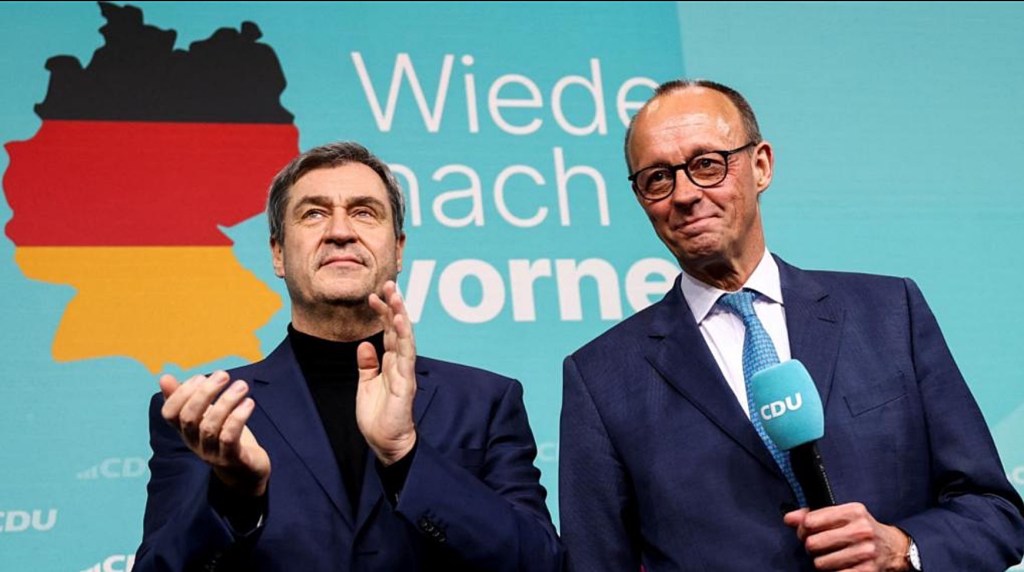
Germany’s federal election has sent ripples across Europe, highlighting both the challenges and the resilience of the continent’s democratic institutions. In a tightly contested race, the conservative CDU/CSU, led by Friedrich Merz, secured a narrow victory, while the far-right Alternative für Deutschland (AfD) achieved its most significant post-war result, gaining nearly 19.5% of the vote. This outcome underscores a growing political divide in Germany, but also reaffirms the enduring strength of its democratic processes. Despite fears of radicalism, mainstream parties have reaffirmed their commitment to upholding democratic norms, with Merz explicitly ruling out any coalition with the AfD.

The election was precipitated by the collapse of Chancellor Olaf Scholz’s coalition government, a victim of economic stagnation and internal disputes. While the Social Democrats (SPD) suffered their worst post-war result, the stability of Germany’s institutions ensures that the country remains a pillar of the European project. The transition to new leadership will undoubtedly come with challenges, but Germany’s role as a leading economic and political force within the EU remains unshaken.

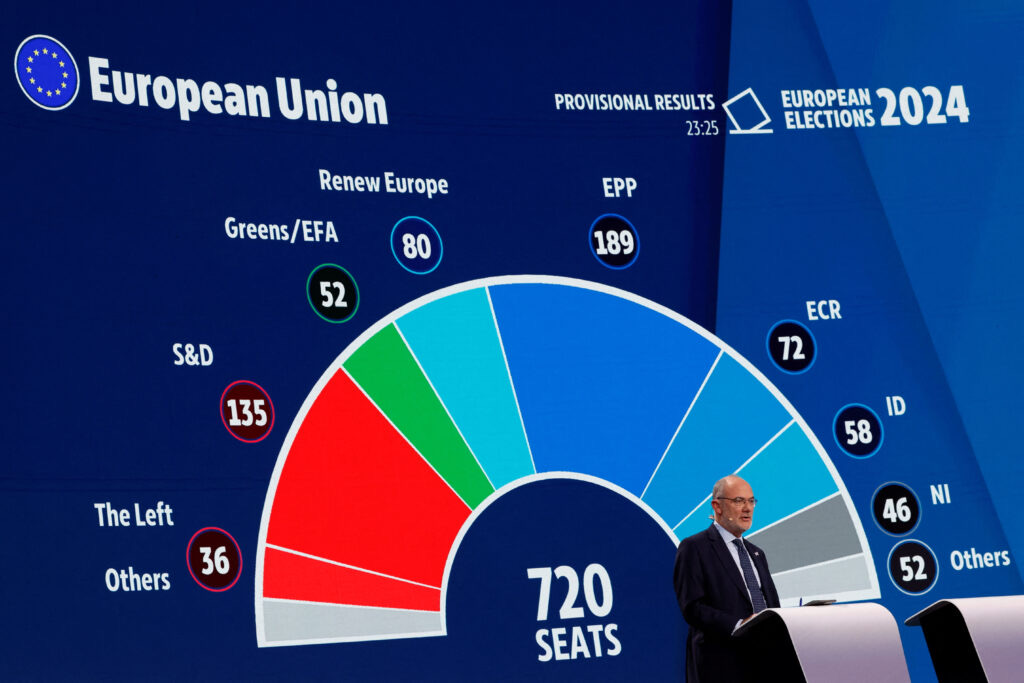
Far-right rhetoric has gained traction in some regions, fueled by concerns over immigration and economic uncertainty. However, this trend is counterbalanced by the resilience of the European Union itself. The EU has repeatedly demonstrated its ability to navigate political turbulence among member states, acting as a stabilizing force that prioritizes economic strength, security, and democratic governance. The Franco-German alliance, while facing strains, remains central to European cohesion, and President Emmanuel Macron has been vocal about the need for stronger European integration to counter populist forces.

Transatlantic relations add another layer of complexity to the European political landscape. The return of Donald Trump to the White House has introduced unpredictability, particularly regarding U.S. support for Ukraine and potential economic policy shifts that could impact European markets. However, rather than weakening the EU, these external pressures have only reinforced the bloc’s determination to assert its independence on key issues such as defense, energy, and trade. Macron and other European leaders have continued to push for greater strategic autonomy, ensuring that Europe is not overly reliant on shifting U.S. policies.

Europe’s path to stability lies in its ability to reinforce its institutions, deepen cooperation among member states, and address the root causes of public discontent. By strengthening the European Commission’s role in economic planning, expanding security initiatives such as PESCO (Permanent Structured Cooperation), and implementing policies that promote inclusive economic growth, the EU can effectively counter the rise of extremism and maintain its position as a global leader in democratic governance.

Update
Since writing this piece, Friedrich Merz has spoken about a stronger, integrated EU, that can look after itself without assistance from the USA, and the possibility of exploring a European Defence Force outside of NATO. 

BRICS Rising: The Challenge to Western Dominance in a Multipolar World

BRICS has evolved from an economic alliance into a geopolitical force challenging Western dominance. Originally conceived as a framework for cooperation among emerging markets, the bloc now pursues a strategic agenda that threatens the global order long shaped by Europe and North America. By fostering economic interdependence, promoting financial independence, and expanding its diplomatic influence, BRICS is positioning itself as a counterweight to Western-led institutions like the IMF, World Bank, and NATO. Its rise signals a shift toward a multipolar world where U.S. and European dominance is no longer assured.

At the core of BRICS’ strategy is economic cooperation aimed at reducing reliance on Western markets and financial institutions. Trade agreements and joint investment projects among Brazil, Russia, India, China, and South Africa strengthen internal resilience while offering developing nations an alternative to the West’s economic model. The New Development Bank (NDB) plays a key role, financing infrastructure and sustainability projects without the political conditions often attached to Western aid. This economic realignment is further reinforced by BRICS’ push to de-dollarize global trade, insulating its members from U.S. financial influence and sanctions. By increasing the use of local currencies and developing alternatives to SWIFT, BRICS is actively undermining the dollar’s global dominance. If oil-producing nations like Saudi Arabia shift toward BRICS’ financial system, the petrodollar system could face serious disruption, weakening the U.S. economy and limiting Washington’s ability to leverage economic power as a foreign policy tool.

For Europe, BRICS represents a different kind of challenge. While not as dependent on the dollar, the EU’s economic model relies on stable access to global markets, raw materials, and energy. BRICS’ growing control over critical resources—such as rare earth minerals, oil, and food supplies—poses risks to European industry. Russia and China have already demonstrated a willingness to use trade as a geopolitical weapon, and as BRICS strengthens its economic ties, European access to these resources could become more costly and politically conditional. Additionally, BRICS’ growing influence in Africa, Latin America, and the Middle East threatens Europe’s traditional soft power approach in these regions. By providing loans and investments without Western-style conditions, BRICS is offering an appealing alternative to nations wary of IMF-imposed austerity. This shift weakens Europe’s ability to shape international policies and erodes its influence in regions it has long considered strategic.

Beyond economics, BRICS is reshaping global diplomacy by advocating for a multipolar world. The bloc frequently aligns its positions in the UN, G20, and WTO, pushing for reforms that reduce Western dominance. By expanding its membership to include emerging economies across the Global South, BRICS is creating a parallel alliance network that enables countries to resist Western pressure. The potential inclusion of Iran and other anti-Western regimes raises concerns about a new axis of influence that could counterbalance NATO and other Western-led security alliances. While BRICS is not yet a military pact, growing defense cooperation—particularly between Russia and China—suggests that security coordination could become more structured over time.

Technology is another battleground where BRICS threatens Western leadership. China and India are emerging as global tech powerhouses, while Russia excels in cybersecurity and artificial intelligence. If BRICS nations successfully develop independent digital ecosystems—ranging from payment systems to semiconductor industries—Western tech companies may lose access to key markets. The push for BRICS-led internet infrastructure could also fragment global digital governance, reducing the West’s ability to shape online policies and monitor cyber threats. Meanwhile, BRICS’ emphasis on state sovereignty and non-interference in domestic affairs provides an ideological alternative to the Western model of governance. As more nations align with this approach, the ability of the U.S. and Europe to promote democracy, human rights, and free-market policies could diminish.

BRICS is not just an economic alliance, but a structural challenge to the Western-led world order. By advancing financial independence, expanding geopolitical influence, and fostering technological self-sufficiency, the bloc is steadily eroding the dominance of Western institutions. While internal divisions and logistical hurdles remain, BRICS’ trajectory suggests that Europe and North America must adapt to a world where their influence is no longer guaranteed. Whether the West engages with BRICS on more equal terms or resists and risks further global fragmentation will determine the shape of international relations in the years to come.  

America’s New Populist Diplomacy: A Threat to European Stability

As a European living in Canada, I watch with great dismay, as America begins to empower the nationalist Eurosceptics, clearly in an effort to weaken the Union against Russia, along with improving its own economic well-being. 

Vice President JD Vance’s decision to meet with Alice Weidel, the leader of Germany’s far-right Alternative für Deutschland (AfD), while snubbing Chancellor Olaf Scholz, is more than just a diplomatic misstep—it is a calculated provocation that undermines European stability. This is not simply an American conservative engaging in ideological dialogue; it is an intervention into European politics that emboldens those who seek to dismantle the post-war democratic consensus.

For decades, the United States has been a pillar of transatlantic stability, supporting European nations in their pursuit of economic integration, security cooperation, and democratic resilience. The very idea that an American leader—especially a sitting vice president—would break Germany’s long-standing political firewall against extremist forces is astonishing. This is not just a question of optics. It is a matter of realpolitik, of who gains and who loses from Washington’s new approach to European affairs.

The AfD, despite its attempts at rebranding, remains a party deeply rooted in xenophobia, anti-democratic sentiment, and historical revisionism. Germany’s mainstream parties maintain a strict policy of non-engagement with them for precisely this reason. By meeting with Weidel, Vance has done what no German chancellor, foreign minister, or major party leader would consider; granting the AfD legitimacy at the highest levels of international diplomacy.

And what message does this send? To Europe’s other far-right movements—from Marine Le Pen’s Rassemblement National in France to Giorgia Meloni’s Brothers of Italy—it signals that the United States, under its current administration, is willing to empower their nationalist, Eurosceptic agendas. It tells them that the old Atlanticist consensus, which valued stable, pro-democratic leadership in Europe, is fading. It suggests that the firewall against extremism is now seen in Washington not as a necessary protection against history repeating itself, but as an outdated restriction on political realignment.

Vance’s remarks at the Munich Security Conference—deriding European leaders for failing to address immigration and for being “afraid of their own voters”—are not just criticisms; they are endorsements of the very populist forces that threaten European cohesion. His rejection of a meeting with Scholz, reportedly on the basis that “he won’t be chancellor for long,” is more than an insult; it is a declaration that Washington now sees little value in engaging with Europe’s centrist leadership.

For Germany, a country that has spent decades carefully managing its historical responsibility, and cultivating a democratic, inclusive society, this is a direct challenge. Chancellor Scholz’s government, whatever one may think of its effectiveness, has upheld a firm stance against political extremism. By treating Scholz with indifference while meeting with 

Weidel, Vance has offered implicit backing to those who seek to erode the stability of German democracy from within.

There is a broader pattern at play here. The Trump-Vance administration is not simply skeptical of European integration—it is actively engaging with those who want to dismantle it. From Steve Bannon’s earlier attempts to unite Europe’s nationalist movements to Trump’s previous disdain for NATO and the European Union, this shift has been years in the making. But now, with a vice president openly embracing figures like Weidel, the implications are clear; the United States is no longer merely tolerating European populists; it is empowering them.

This will have consequences. European unity, already strained by economic challenges, war in Ukraine, and the resurgence of nationalist politics, will face further division if the U.S. continues to lend legitimacy to parties like the AfD. If Washington sees Europe not as a partner, but as a battlefield for ideological influence, then EU democratic institutions will suffer.

Germany and the rest of Europe must not be passive in the face of this shift. While they cannot control who American leaders choose to meet, they can reaffirm their own commitment to keeping extremist forces at bay. The AfD and its allies must not be allowed to claim that they now have a direct line to Washington without consequence.

This is a moment for European leaders to reassert the importance of their own transatlantic priorities. If the United States seeks to shift its alliances toward Europe’s nationalist right, then Europe must double down on strengthening its democratic institutions, reinforcing NATO’s role, and making it clear that their political landscape will not be dictated by the winds of populism from across the Atlantic.

Vance’s actions may have emboldened Europe’s far right, but they have also clarified the stakes. The question is whether Europe’s democrats are ready to respond?