Folly at the Border: Why War with Canada is a Losing Game

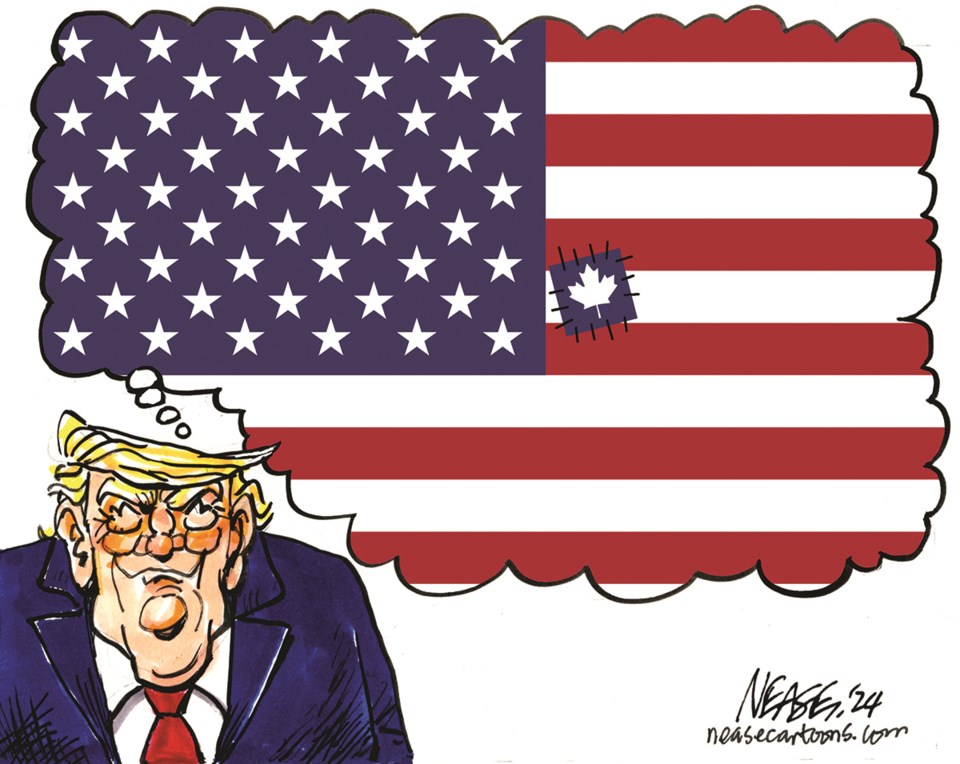
The idea of the United States invading Canada is pure fantasy – fiction that resurfaces when political tensions rise. History has seen conflict between the two nations, notably the War of 1812, but in modern times, such an invasion is not just improbable – it’s impossible. The recent escalation of trade tensions, triggered by the U.S. threat of 25% tariffs on Canadian imports in February 2025, has renewed debate over the state of relations. But let’s be clear: trade disputes don’t lead to tanks rolling across borders.

Canada and the U.S. share the world’s longest peaceful border (8,890 km) and a deeply intertwined economy. Canada is the U.S.’s second-largest trading partner, with trade worth hundreds of billions annually. A military invasion would shatter this economic relationship, triggering global market chaos, retaliatory tariffs, and crippling sanctions. The U.S.-Mexico-Canada Agreement (USMCA) would collapse, devastating American industries and consumers. Even the mere suggestion of aggression would spook markets and alienate key allies, making it a non-starter for even the most hardline economic nationalists.
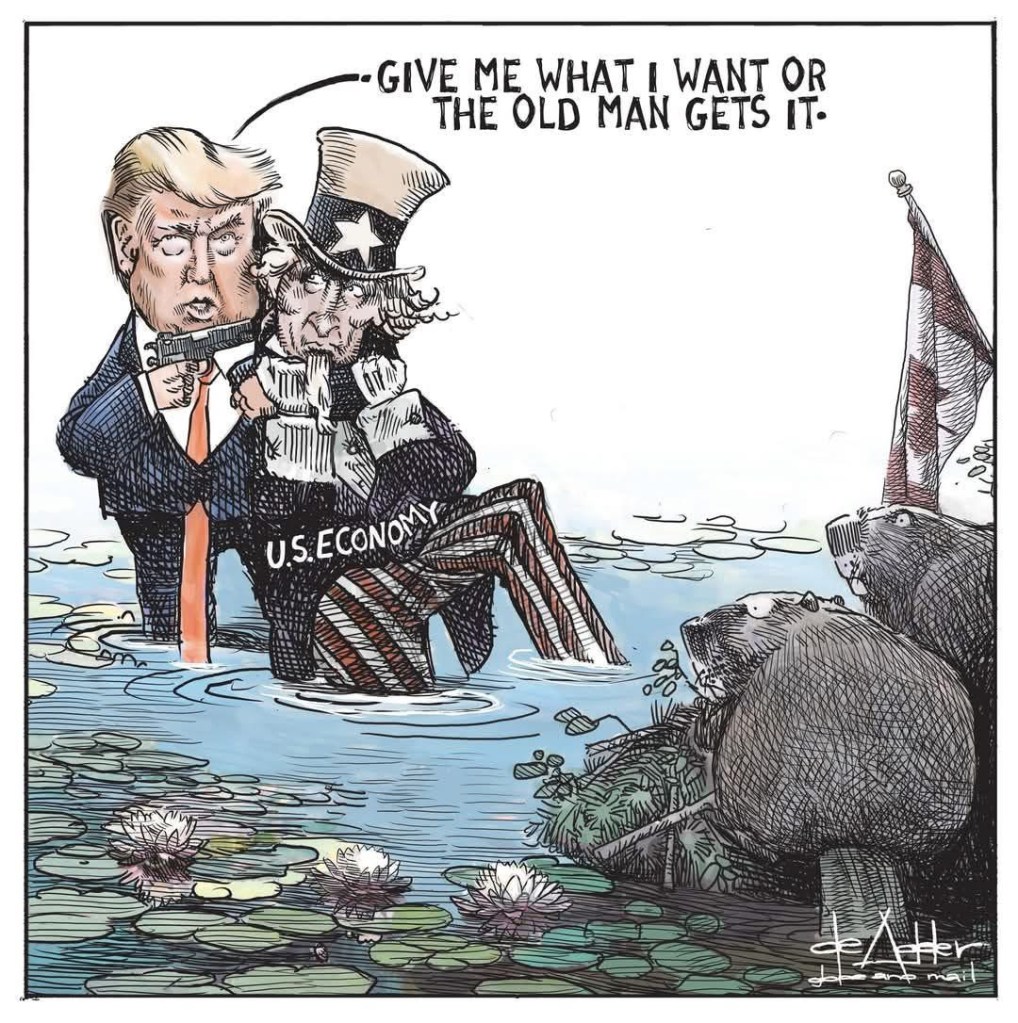
Yes, the U.S. has the world’s most powerful military. No, that doesn’t mean invading Canada is feasible. Geography alone makes occupation nearly impossible. Vast forests, prairies, and the Rocky Mountains would bog down any invading force. Even during the War of 1812, when Canada was smaller and less industrialized, American forces struggled to maintain supply lines. Today, with modern infrastructure and a well-equipped Canadian military, the challenge would be exponentially greater.

Canada’s armed forces, though smaller than the U.S. military, are highly professional, technologically advanced, and well-integrated into NATO. The moment American troops crossed the border, global condemnation would be swift, and allies, including European powers, would not tolerate such an egregious violation of international law. The U.S. would find itself isolated and facing retaliatory action.

Invading Canada wouldn’t just be a military disaster, it would make the U.S. a global pariah. Canada is one of the world’s most respected nations, known for diplomacy, peacekeeping, and strong alliances. An unprovoked attack would trigger severe sanctions from the EU, UK, and other key trading partners, crippling U.S. banks and multinational corporations. The diplomatic fallout could even fracture NATO.

At home, the American public would reject such a reckless move. Canadians, fiercely proud of their independence, would mount an unyielding resistance. Any occupying force would face guerrilla warfare, sabotage, and mass civil disobedience – turning Canada into another unwinnable quagmire, like Vietnam or Iraq. The political backlash within the U.S. would be massive, with protests and upheaval against a war that serves no legitimate purpose.

Beyond all this, a war with Canada would be a direct threat to North American security. The U.S. and Canada work together through NORAD, jointly protecting the continent. Disrupting this alliance would leave both nations vulnerable to adversaries like China and Russia. In today’s world, power is determined by cybersecurity, economic influence, and technological dominance – not outdated military conquest.

Even in the heat of a 2025 trade war, where tensions are high, the leap from tariffs to military action is absurd. Trade disputes are fought with economic measures, not invasions. The fact that some even entertain this notion is more a reflection of political hyperbole than any serious strategic consideration.

A U.S. invasion of Canada isn’t just impractical – it’s impossible. The economic fallout, military challenges, guaranteed international backlash, and fierce Canadian resistance make it a non-option. The U.S. and Canada have their disagreements, but history has shown that their relationship is built on cooperation, shared values, and mutual benefit. The current trade war will eventually be resolved through negotiation, not war.

So, let’s put this nonsense to rest. Canada isn’t going anywhere. And if anyone thinks otherwise – think again.
An Alternative North American Future?

It began in the aftermath of the Trump years – a nation divided, fractured at its very core. The United States, once a symbol of strength and unity, had unraveled under the weight of its own polarization. Years of escalating political infighting, economic instability, and growing regional tensions had pushed the great experiment of American democracy to its breaking point. When the collapse came, it was not with a bang, but with a slow, inevitable unraveling.

In the early 2030s, the federal government, weakened by years of partisan gridlock and financial crises, failed to contain the growing unrest. States, long at odds over issues of governance, resources, and ideology, began asserting their independence. California, Texas, and other powerful states declared their sovereignty, severing ties with Washington, D.C., and leaving the remnants of the federal government powerless. What was once a union of fifty states dissolved into chaos.

As the world watched in shock, two nations quietly stepped forward: Canada and Mexico. Both had been America’s neighbors and partners, but now, they saw an opportunity, and a necessity, to reshape the continent.

The Canadian Annexation
To the north, Canada extended a cautious but determined hand to the crumbling states along its border. The former states of Michigan, Minnesota, North Dakota, and Montana, facing economic collapse and a bitter winter with no central government to guide them, sought refuge under Ottawa’s governance. Canada, ever pragmatic, offered them integration in exchange for loyalty to its parliamentary system and adoption of its healthcare and social policies.

The Pacific Northwest—Washington, Oregon, and northern California—quickly followed. Their progressive politics and environmental priorities aligned well with Canada’s ethos. Vancouver and Seattle became twin metropolises, and the region flourished under Canadian stewardship. The newly expanded Canada, now stretching as far south as the Sierra Nevada, became an economic powerhouse, blending American innovation with Canadian stability.

Mexico’s Revival
To the south, Mexico reclaimed lands it had lost centuries earlier. Texas, Arizona, New Mexico, and southern California were among the first to fall into its orbit. For these states, heavily influenced by Hispanic culture and history, the transition was both practical and symbolic—a return to roots.

Mexico, long underestimated on the global stage, rose to meet the challenge. The integration of these territories revitalized its economy, spurred technological innovation, and solidified its status as a regional superpower. Cities like Los Angeles and Austin, while retaining their unique identities, became hubs of a new Mexican-led cultural renaissance. Spanish replaced English as the dominant language in much of the region, and Mexico’s influence spread northward.

A Continent Redefined
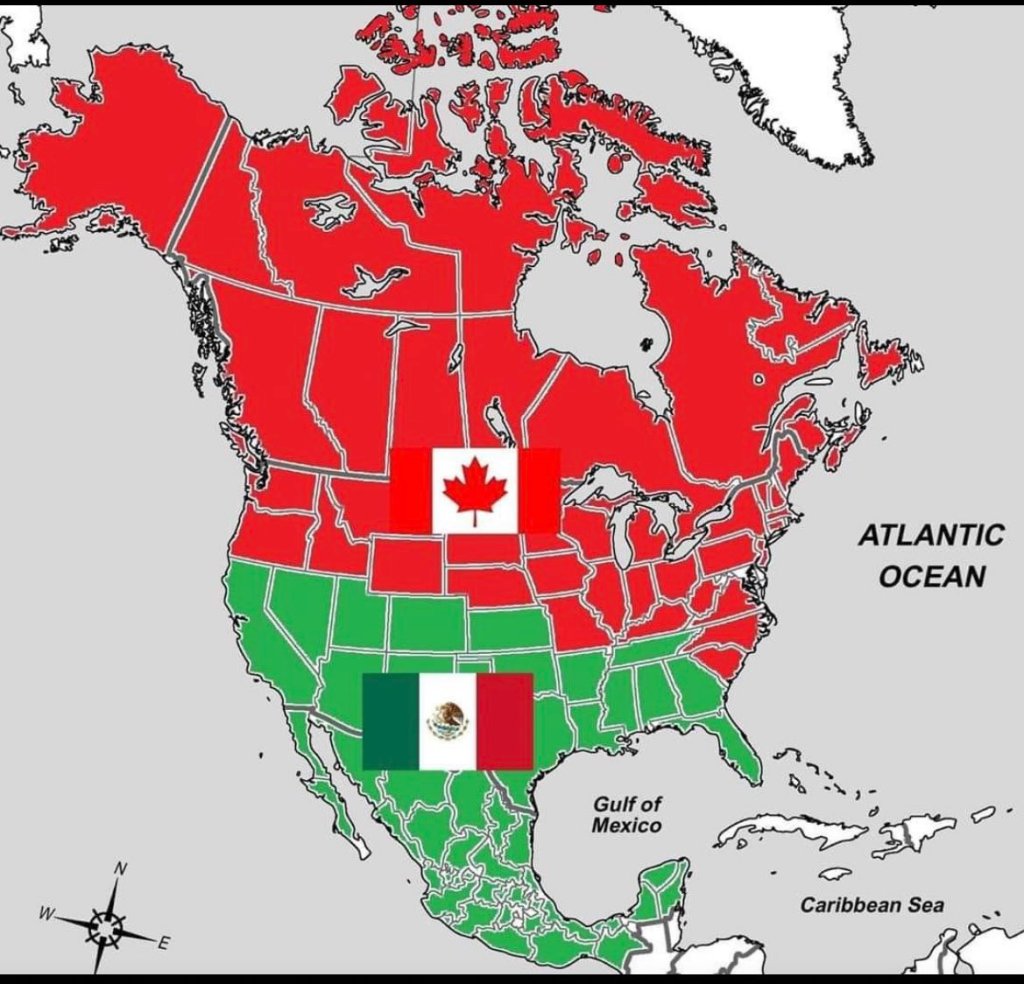
By the 2040s, the map of North America had been redrawn. Canada and Mexico had divided the former United States almost evenly, with a handful of independent city-states like New York and Chicago remaining as neutral enclaves. The continent was no longer dominated by a single superpower but by two distinct and rising nations, each shaped by the remnants of the United States they had absorbed.

Canada, now stretching from the Arctic to the Rockies and the Great Lakes to the Pacific, became a beacon of progressive governance and environmental stewardship. Mexico, infused with the energy of its newly integrated territories, grew into a vibrant economic and cultural force, bridging Latin America with the former United States.

The world adapted to this new reality. China and the European Union moved to fill the void left by America’s collapse, but Canada and Mexico ensured North America remained a critical player on the global stage. Though the stars and stripes had fallen, the legacy of the United States lived on—in the governments, cultures, and people of its successor states.

And so, the great American experiment ended, not in triumph or tragedy, but in transformation, a testament to the resilience of a continent and the enduring power of reinvention.

A Tale of Two Resource Economies: Alberta vs. Norway 

When it comes to managing the wealth derived from oil and gas, two regions stand out for their contrasting approaches: Norway (pop. 5.5million) and Alberta (pop. 4.9million). Both have harnessed their natural resources for economic growth, yet their strategies for licensing and managing these resources couldn’t be more different. The way each has handled its wealth offers key lessons in resource management, long-term planning, and the risks of relying too heavily on finite resources.

Norway: A Model of Prudence and Vision
Norway’s approach to managing its oil wealth is often hailed as a textbook example of responsible governance. Since the discovery of significant offshore oil reserves in the 1960s, Norway has been careful in extracting and managing its resources. Central to its success is the Government Pension Fund Global (GPFG), established in 1990 to invest surplus oil revenues for future generations. The Norwegian government adopted the principle of saving the vast majority of oil revenues, putting them into a sovereign wealth fund, which today is worth over $1.5 trillion USD.

But the key to Norway’s success is not just the size of its fund—it’s the disciplined, long-term vision that drives its policy. The fund is managed independently of the national budget, with only around 3% of its value being used each year to support government spending. The idea is to use oil wealth as a means to stabilize the economy, particularly during times of volatility in oil prices, while preserving it for future generations. The fund is diversified across global markets, ranging from equities and bonds to real estate, and is governed by a strict set of ethical guidelines that ensure investments align with environmental and social responsibility.

What stands out most about Norway’s resource licensing is its careful approach to development. The government has been strategic in its licensing policies, issuing permits in a way that balances long-term sustainability with economic growth. By managing resource extraction with an eye on long-term returns, Norway has avoided the so-called resource curse, a phenomenon that has plagued other oil-rich nations.

Alberta: A Cautionary Tale
Alberta, on the other hand, has taken a much less consistent approach to its oil and gas revenues. Since the 1970s, Alberta has been a major player in the global energy market, thanks to its vast reserves of oil sands. The province established the Heritage Savings Trust Fund in 1976, with the goal of saving a portion of its oil wealth for future generations. However, Alberta’s approach to managing this fund has been less disciplined than Norway’s.

The fund, now valued at around $19 billion CAD, has seen inconsistent contributions and, more often than not, withdrawals to cover the province’s operating expenses. This lack of long-term planning has led to missed opportunities for growth. When oil prices have been high, Alberta has relied heavily on resource revenue to fund public services, rather than investing for the future. This short-term approach has left the province vulnerable to the fluctuations in oil prices, with little in the way of a financial cushion to soften the blow during downturns.

Alberta’s resource licensing policies have also been marked by political expediency. The province has often prioritized immediate economic growth over long-term sustainability, leading to environmental concerns and a boom-bust economic cycle. Unlike Norway, which has been cautious in licensing new projects, Alberta has pushed forward with aggressive development, particularly in its oil sands sector. While this has spurred economic activity, it has also raised questions about the environmental costs and the wisdom of rapid, large-scale extraction.

Key Takeaways
The differences between Alberta and Norway are stark. Norway’s long-term vision, driven by a carefully managed sovereign wealth fund, stands in sharp contrast to Alberta’s more reactive, short-term approach. While both have abundant natural resources, it is Norway’s commitment to future generations, disciplined fund management, and cautious resource licensing that has helped it build a sustainable economic model. Alberta, in contrast, offers a cautionary tale of how reliance on resource wealth without long-term planning can leave a province exposed to the volatility of the global energy market.

As the world’s energy landscape continues to evolve, Alberta would do well to study Norway’s example—not just in terms of saving oil wealth but also in fostering a more sustainable approach to resource extraction and development. The future of resource economies will depend on the choices made today.

American Strategy or Political Posturing? 

President-elect Donald Trump’s recent comments regarding the Panama Canal, Greenland, Canada, and Iceland have ignited a firestorm of international debate, raising eyebrows across diplomatic circles. Trump’s proposals, which include retaking control of the Panama Canal, purchasing Greenland, and annexing Canada as the 51st state, reflect his “America First” doctrine in its most assertive form. While such rhetoric underscores his ambition to reassert U.S. dominance, it also risks fracturing relationships with allies and reshaping global perceptions of American foreign policy.

At the heart of Trump’s statements lies a vision of expanding U.S. territorial and geopolitical influence. Proposals to acquire territories such as Greenland and Canada would, if realized, redefine America’s strategic footprint. Greenland, with its vast natural resources and critical position in the Arctic, is becoming increasingly vital as climate change opens new shipping routes and untapped reserves of oil, gas, and minerals. Canada, on the other hand, represents an economic and security powerhouse whose integration into the U.S. would consolidate North America into a unified bloc of unparalleled power. While such aspirations might seem fantastical, they align with Trump’s broader ethos of maximizing U.S. leverage on the world stage.

The Panama Canal, another focal point of Trump’s vision, underscores the strategic underpinnings of his proposals. As one of the world’s most vital maritime corridors, the canal serves as a lifeline for global trade, connecting the Atlantic and Pacific Oceans. Regaining control over the canal would enable the U.S. to secure a critical chokepoint in global logistics, ensuring that it serves American economic and military interests. Reclaiming the canal would send a strong message to rival powers, particularly China, whose investments and influence in Latin America have challenged traditional U.S. dominance in the region.

These territorial aspirations can also be interpreted as an attempt to counter Beijing’s growing reach. China’s Belt and Road Initiative and its economic entrenchment in Latin America have heightened concerns in Washington about losing influence in its own hemisphere. By floating the idea of reclaiming the Panama Canal or acquiring new territories, Trump may be signaling a broader strategy to curb China’s ambitions and reaffirm America’s primacy in key geopolitical arenas.

However, these bold declarations have not gone unchallenged. Greenland’s Prime Minister, Múte Egede, quickly dismissed any notion of selling Greenland, calling it an absurd proposal that undermines their sovereignty. In Panama, leaders have emphatically rejected the idea of relinquishing control over the canal, asserting their independence and national pride. Canadian officials, too, have categorically rebuffed Trump’s suggestion of annexation, with some labeling the proposal as both outlandish and offensive. The immediate backlash from these nations highlights the deep diplomatic hurdles that such propositions would face.

Critics argue that Trump’s rhetoric is less about actionable policy and more about playing to his domestic audience. By projecting strength and ambition, he may be attempting to solidify support among his base, which has long embraced his unapologetically nationalistic vision. Yet this approach carries significant risks. Alienating allies, undermining international norms, and sparking diplomatic tensions could damage America’s global standing and limit its ability to build coalitions in an increasingly multipolar world.

Ultimately, Trump’s comments raise questions about the balance between ambition and realism in U.S. foreign policy. While his proposals underscore a desire to redefine America’s role on the world stage, the practical and political barriers to their implementation are immense. The overwhelming opposition from the international community suggests that such ideas, even if pursued, would face insurmountable resistance. Whether these statements reflect genuine intentions or are merely provocative rhetoric, they offer a window into the polarizing and unpredictable foreign policy approach that could define the Trump era

Is USA a Fascist State Struggling with Democracy? 

Is America flirting with fascism, or are such claims the product of alarmist hyperbole? It’s a question that divides dinner tables, social media feeds, and even academic circles. Some argue that the United States is a democracy fighting for its soul; others see it as a country standing perilously close to authoritarian rule. But to call America fascist – or even on the road to it – requires a careful unpacking of what fascism truly entails, and how it might resonate within the American political landscape.

Let’s be clear: fascism isn’t a vague insult for policies we don’t like. It’s an authoritarian ideology with specific hallmarks. Think Mussolini’s Italy, Hitler’s Germany – regimes steeped in violent nationalism, the suppression of dissent, and a drive to create a monolithic cultural identity. Robert Paxton, one of the leading scholars on the subject, described fascism as thriving on crises, exalting the group over the individual, and depending on a strong leader to restore a supposedly decaying nation. So, how does America stack up against these criteria? Let’s dig deeper.

Nationalism and Authoritarian Rhetoric
Nationalism is the drumbeat of every fascist regime, and it’s undeniable that America has had its moments of chest-thumping pride. But the “America First” rhetoric of recent years has pushed nationalism to a different level, stirring debate about its compatibility with democratic ideals. Take the Trump administration, where slogans like “Make America Great Again” dovetailed with a barrage of attacks on immigrants, minorities, and even the democratic process itself. Muslim travel bans, family separation policies at the southern border, and the vilification of immigrants as existential threats bear a troubling resemblance to the exclusionary policies of fascist regimes.

And then there’s the attack on the press—“the enemy of the people,” as Trump called it. Fascism thrives on controlling narratives, suppressing inconvenient truths, and manufacturing enemies to unite the populace. These tactics were echoed in efforts to discredit media outlets, undermine trust in elections, and dismiss dissenting voices. While America still enjoys a free press and opposition parties, these tactics are red flags in any democracy.

Civil Liberties Under Pressure
A free society requires robust protections for civil liberties, yet the U.S. has shown cracks in its foundation. Think about the use of force against peaceful protesters during the George Floyd demonstrations, or the revelations of mass surveillance by whistleblower Edward Snowden. Then there are laws in certain states aimed at curbing protests – an unsettling echo of fascist regimes that treated dissent as treason.

Still, America hasn’t crossed the line into wholesale repression. Dissent exists, opposition thrives, and courtrooms regularly challenge abuses of power. These are democratic lifelines, but they must be safeguarded vigilantly.

Corporate Power and Economic Control
Fascism often entails a symbiotic relationship between the state and corporations, where economic power is wielded for nationalist purposes. In America, the government doesn’t control corporations outright, but the influence of corporate money in politics is undeniable. Lobbying, dark money in elections, and the revolving door between big business and government raise questions about whether democracy is being eroded by oligarchic forces.

Economic inequality is another point of tension. Policies favoring the wealthy over the working class may not fit the fascist mold exactly, but they exacerbate social divisions, fueling the kind of crises that fascism preys upon.

Racial and Cultural Tensions
A defining feature of fascism is the enforcement of a singular racial or cultural identity, often to the detriment of minorities. The U.S. has a long history of systemic racism, from slavery and segregation to redlining and mass incarceration. Contemporary issues – like police brutality and racial inequality – continue to expose deep wounds in the fabric of American democracy.

White nationalist groups, emboldened in recent years, represent another disturbing trend. The normalization of their rhetoric in certain political spaces harks back to fascist tendencies to scapegoat minorities for societal woes. Yet, these groups remain fringe elements rather than central powers, and their rise has been met with strong opposition from civil society.

America’s Democratic Struggle
Despite these troubling signs, it would be a mistake to paint America as fully fascist. The U.S. retains institutions that fascist regimes dismantle: a separation of powers, an independent judiciary, and regular elections. Social movements – from Black Lives Matter to grassroots environmental campaigns – demonstrate that the democratic spirit is alive and well.

America’s story is not one of fascism triumphant, but of democracy under pressure. Its history is riddled with contradictions, from its founding on ideals of liberty while maintaining slavery, to its championing of free speech while tolerating systemic inequality. Yet, those contradictions are precisely why it remains a battleground for change.

So, Is America Fascist?
Not yet – and perhaps not even close. But the warning signs are there. The flirtation with authoritarianism, the normalization of exclusionary rhetoric, and the entrenchment of corporate influence all demand vigilance. America isn’t Mussolini’s Italy or Hitler’s Germany, but it is a nation grappling with the forces that could pull it in that direction. The question isn’t just “Is America fascist?” – it’s “What are we doing to ensure it never becomes so?”

Americans must keep democracy’s flame alive by holding power to account, protecting civil liberties, and fighting for the inclusive ideals the country was built on. After all, democracy isn’t just a system – it’s a struggle. And that struggle is theirs to win.

Replacing Canada’s Aging Submarine Fleet

Canada is currently debating whether to invest in a new fleet of submarines to replace its aging Victoria-class vessels, which were purchased second-hand from the United Kingdom in the 1990s. These submarines, while functional, are nearing the end of their service life and face increasing maintenance challenges.

With Canada’s Arctic becoming more geopolitically significant due to climate change, which is opening new shipping lanes and increasing resource exploration; submarines capable of operating under ice are crucial for maintaining sovereignty in this region. Without them, Canada risks falling behind nations like Russia and the United States, which have invested heavily in Arctic-capable fleets.

Modern submarines, such as those with Air Independent Propulsion (AIP) or nuclear capabilities, offer enhanced endurance, stealth, and operational flexibility compared to the diesel-electric Victoria-class. Investing in these technologies would modernize Canada’s navy and ensure operational relevance.

The German Type 212CD (Common Design) submarine, developed by ThyssenKrupp Marine Systems, represents a modern and highly capable class of diesel-electric submarines with Air Independent Propulsion (AIP). These submarines are designed for stealth, endurance, and multi-role capabilities, and as a NATO platform, the Type 212CD would seamlessly integrate with allied operations, thus strengthening Canada’s contributions to NATO’s underwater defense network. Germany has a proven track record of delivering submarines on time and within budget. Partnering with an experienced supplier like ThyssenKrupp could help Canada avoid some of the delays and cost overruns seen in its previous defense procurement projects.

The operational performance of the Type 212CD remains speculative until it enters service. However, the proven track record of the Type 212A, combined with the extensive research and development efforts behind the CD variant, suggests it will be a reliable and capable platform for NATO-aligned navies.

With Canada’s “Sea to Sea to Sea” responsibilities, they really need a fleet of nine boats (operations, training, maintenance), but I think they would likely procure six over a decade timeframe. Ultimately, the decision will hinge on Canada’s strategic priorities, financial constraints, and Arctic sovereignty goals. If Canada prioritizes cost-efficiency and rapid acquisition, the Type 212CD could emerge as a leading choice, provided it meets specific Arctic and endurance requirements. 

Trump’s Transparent Bullying Tactics hold Real Menace  

Donald Trump’s suggestion that Canada could become the 51st state not only reveals a lack of understanding of Canadian sovereignty and identity, but also exposes a broader motivation; the United States’ desire to access Canada’s vast natural resources. Canada is rich in essential resources like fresh water, minerals, oil, and lumber, all of which are increasingly valuable as global demand rises and environmental pressures grow.

Fresh water, in particular, has become a critical resource as many U.S. states face drought and water scarcity. Canada holds about 20% of the world’s freshwater supply, making it an attractive target for U.S. interests. Similarly, Canada’s mineral wealth, including critical minerals like nickel, lithium, and cobalt used in renewable energy technologies, is vital for the U.S. as it seeks to secure supply chains for its green economy. Lumber from Canada’s vast forests has also long been a point of contention, with ongoing trade disputes reflecting the U.S.’s reliance on Canadian wood for construction and manufacturing.

Trump’s suggestion disregards over 150 years of Canadian self-governance, and the deep cultural and political differences between the two nations. Canadians take immense pride in their independence, multicultural heritage, and distinct political system, which are starkly different from those of the U.S. Such remarks alienate an important ally, ignore history and diplomacy, and trivialize the unique relationship between the two countries.

Ultimately, this kind of rhetoric attempts to undermine Canada’s sovereignty, and risks being perceived as a veiled attempt to exploit its natural wealth, rather than as a serious or respectful political proposition. It underscores a broader need for Canada to remain vigilant in safeguarding its resources and asserting its independence on the global stage.