Beyond the Hype: Why Your AI Assistant Must Be Your First Line of Digital Defense

The age of the intelligent digital assistant has finally arrived, not as a sci-fi dream, but as a powerful, practical reality. Tools like ChatGPT have evolved far beyond clever conversation partners. With the introduction of integrated features like ConnectorsMemory, and real-time Web Browsing, we are witnessing the early formation of AI systems that can manage calendars, draft emails, conduct research, summarize documents, and even analyze business workflows across platforms.

The functionality is thrilling. It feels like we’re on the cusp of offloading the drudgery of digital life, the scheduling, the sifting, the searching, to a competent and tireless assistant that never forgets, never judges, and works at the speed of thought.

Here’s the rub: the more capable this assistant becomes, the more it must connect with the rest of your digital life, and that’s where the red flags start waving.

The Third-Party Trap
OpenAI, to its credit, has implemented strong safeguards. For paying users, ChatGPT does not use personal conversations to train its models unless explicitly opted in. Memory is fully transparent and user-controllable. And the company is not in the business of selling ads or user data, a refreshing departure from Big Tech norms.

Yet, as soon as your assistant reaches into your inbox, calendar, notes, smart home, or cloud drives via third-party APIs, you enter a fragmented privacy terrain. Each connected service; be it Google, Microsoft, Notion, Slack, or Dropbox, carries its own privacy policies, telemetry practices, and data-sharing arrangements. You may trust ChatGPT, but once you authorize a Connector, you’re often surrendering data to companies whose business models still rely heavily on behavioural analytics, advertising, or surveillance capitalism.

In this increasingly connected ecosystem, you are the product, unless you are exceedingly careful.

Functionality Without Firewalls Is Just Feature Creep
This isn’t paranoia. It’s architecture. Most consumer technology was never built with your sovereignty in mind; it was built to collect, predict, nudge, and sell. A truly helpful AI assistant must do more than function, it must protect.

And right now, there’s no guarantee that even the most advanced language model won’t become a pipe that leaks your life across platforms you can’t see, control, or audit. Unless AI is designed from the ground up to serve as a digital privacy buffer, its revolutionary potential will simply accelerate the same exploitative systems that preceded it.

Why AI Must Become a Personal Firewall
If artificial intelligence is to serve the individual; not the advertiser, not the platform, not the algorithm, it must evolve into something more profound than a productivity tool.

It must become a personal firewall.

Imagine a digital assistant that doesn’t just work within the existing digital ecosystem, but mediates your exposure to it. One that manages your passwords, scans service agreements, redacts unnecessary data before sharing it, and warns you when a Connector or integration is demanding too much access. One that doesn’t just serve you but defends you; actively, intelligently, and transparently.

This is not utopian dreaming. It is an ethical imperative for the next stage of AI development. We need assistants that aren’t neutral conduits between you and surveillance systems, but informed guardians that put your autonomy first.

Final Thought
The functionality is here. The future is knocking. Yet, if we embrace AI without demanding it also protect us, we risk handing over even more of our lives to systems designed to mine them.

It’s time to build AI, not just as an assistant, but as an ally. Not just to manage our lives, but to guard them.

Patients Are Not Property: Time to Rethink How We Regulate the Sale and Retention of Primary Care Rosters

In the midst of Canada’s growing primary care crisis, it’s time we take a hard look at how patient rosters are handled, or mishandled, when physicians transition or leave their practices. Across the country, millions of Canadians are without a family doctor. Against this backdrop, we can no longer tolerate a system in which doctors purchase entire rosters of patients only to turn around and drop half of them, not based on clinical need, but lifestyle preference.

This is not a matter of gender. It is a matter of professional accountability and ethical stewardship. Patients are not chattel. They are people, often elderly, immunocompromised, managing multiple chronic conditions, who place their trust in a system that is supposed to protect their continuity of care. When a physician acquires a patient list, they are not buying a gym membership or a book of business. They are assuming responsibility for the long-term health of hundreds, sometimes thousands, of human beings.

Let’s be clear: physicians have every right to structure their practice in a way that supports their well-being. Burnout is real, and work-life balance matters, but that personal balance cannot come at the expense of vulnerable patients being systematically cast adrift.

Professional colleges, including the College of Physicians and Surgeons of Ontario (CPSO), do provide formal mechanisms for a doctor to reduce their patient list. These guidelines exist to allow flexibility, but they were never meant to be a loophole for roster triage based on convenience. If the intention was always to serve only a part-time practice, why was the entire roster purchased? Why was the community not informed in advance? And why are regulatory bodies permitting what amounts to a public harm, wrapped in private contractual terms?

These are not just hypothetical concerns. The abandonment of patients, especially those without alternatives, has ripple effects throughout the entire healthcare system. Walk-in clinics become overwhelmed. Emergency rooms fill with non-emergency cases. Preventable conditions go unmanaged until they become acute, and meanwhile, the public’s trust in the integrity of primary care continues to erode.

If physicians wish to buy a practice, that is a valid path to establishing their career; but there must be clear, enforceable rules to ensure that patient care is not commodified in the process. A few policy options worth considering:

  • Conditional licensing of roster transfers: Require binding disclosure of the incoming physician’s intended working hours and patient capacity before the sale is finalized, with oversight by a neutral third party such as the local health authority.
  • Mandatory transition plans: If a physician intends to offload more than 10% of a newly acquired roster, they should be required to demonstrate how those patients will be supported in finding alternate care – not simply left to fend for themselves – meaning that there is actually an alternative primary caregiver available who is willing and able to add them to their existing roster.
  • Public-interest reviews of large roster changes: Just as utility companies can’t hike rates without justification, physicians shouldn’t be able to restructure public-facing services without transparent public reasoning.

Ultimately, the issue is not about lifestyle choices. It’s about stewardship. Every doctor, upon licensing, accepts a social contract with the people they serve. That contract includes not just the right to treat patients, but the responsibility to do so with equity, consistency, and integrity.

We wouldn’t accept it if a public school principal took over a school and expelled half the students because they only wanted to work mornings. We shouldn’t accept it in primary care either.

Five Things We Learned This Week

Here is the latest edition of “Five Things We Learned This Week” for May 31–June 6, 2025, highlighting significant global developments across various sectors.

🧬 1. Breakthrough in HIV Treatment Using mRNA Technology

Researchers have achieved a significant milestone in HIV treatment by successfully delivering mRNA into white blood cells that harbor hidden HIV. Utilizing specially formulated nanoparticles known as LNP X, the mRNA instructs these cells to reveal the concealed virus, marking a pivotal step toward a potential cure. This advancement opens new avenues for eradicating latent HIV infections that have long evaded traditional therapies.  

🚀 2. China’s Tianwen-2 Asteroid Mission Launches Successfully

On May 28, the China National Space Administration successfully launched the Tianwen-2 mission aboard a Long March 3B rocket. This ambitious endeavor aims to collect samples from the near-Earth asteroid 469219 Kamoʻoalewa and explore the main-belt comet 311P/PANSTARRS. The mission underscores China’s growing capabilities in deep-space exploration and its commitment to advancing planetary science.  

 3. MIT Develops High-Energy Sodium-Air Fuel Cell

Engineers at the Massachusetts Institute of Technology have developed a new type of fuel cell that utilizes a reaction between sodium metal and air. This innovative design offers three times the energy per pound compared to the best current lithium-ion batteries, potentially revolutionizing energy storage for electric vehicles and aviation. The breakthrough could lead to lighter, more efficient power sources, accelerating the transition to cleaner transportation technologies.  

🏆 4. Brittany Force Sets Speed Record at NHRA New England Nationals

At the NHRA New England Nationals, drag racer Brittany Force delivered a remarkable performance, setting a new speed record in the Top Fuel category. Her achievement highlights the ongoing advancements in drag racing technology and the increasing competitiveness of the sport. Force’s success also emphasizes the growing prominence of female athletes in motorsports.  

 5. Major League Soccer Hosts 13 Matches in a Single Day

On May 24, Major League Soccer (MLS) featured an unprecedented lineup of 13 matches across the United States. This action-packed day showcased the league’s depth and the growing popularity of soccer in North America. Fans were treated to a full spectrum of competition, reflecting MLS’s commitment to expanding its reach and enhancing the spectator experience.  

Stay tuned for next week’s edition as we continue to explore pivotal global developments.

Five Things We Learned This Week

Here is the latest edition of “Five Things We Learned This Week” for May 17–23, 2025, highlighting significant global developments across various sectors.

🛑 1. UN Warns of Escalating Humanitarian Crisis in Gaza

UN Secretary-General António Guterres described the current stage of the Gaza conflict as possibly its “cruellest phase,” with Palestinians facing immense suffering amid escalating Israeli military operations. He warned that the entire population is at risk of famine and criticized the limited humanitarian aid reaching Gaza, citing that only a fraction of permitted aid trucks have reached those in need due to insecurity. In the past 24 hours, at least 60 people were killed, including strikes on Khan Younis, Deir al-Balah, and Jabaliya, with over 50 people still buried under rubble. UN agencies and aid groups have raised alarms about inadequate food and medical supplies, with over 9,000 children treated for malnutrition and the healthcare system near collapse—94% of hospitals are damaged or destroyed. Israeli airstrikes have also targeted hospitals, further straining emergency services. Despite easing an 11-week blockade, aid remains minimal, far below pre-war levels. International criticism of Israel’s military actions continues, with leaders calling for a ceasefire and increased humanitarian access. Meanwhile, discussions are underway among Western nations about formally recognizing the state of Palestine, adding a new diplomatic dimension to the ongoing crisis. 

💉 2. NHS England Launches World’s First Gonorrhoea Vaccine

On May 21, NHS England introduced the world’s first gonorrhoea vaccine, demonstrating an efficacy of 30–40%. This development aims to combat the rising rates of gonorrhoea infections and represents a significant advancement in public health efforts to control sexually transmitted infections. 

📉 3. Trump’s New Tariff Threats Shake Global Markets

President Donald Trump’s evolving trade policies continue to send shockwaves through global markets. After a brief period of de-escalation in the U.S.-China trade war, markets were rattled on May 23, 2025, when Trump threatened to impose a 25% tariff on Apple iPhones not manufactured in the U.S. and a 50% tariff on EU goods starting June 1. These moves undermined recent optimism following tariff reductions between the U.S. and China, which had reignited S&P 500 gains and stabilized investor sentiment. However, concerns about tariffs resurfaced alongside rising inflation, tepid economic growth, and persistent federal debt nearing 100% of GDP. Despite some temporary relief—such as tariff pauses and incentives for auto and tech firms—Trump’s unpredictable trade tactics, especially his criticism of Apple’s offshore manufacturing and pressure on trading partners like the UK and India, have reintroduced uncertainty. Furthermore, even with promising AI infrastructure investments from the Middle East, the U.S.-China relationship is strained by export restrictions and sanctions tied to Huawei’s semiconductor use. Economists warn these erratic policies could spur stagflation and erode S&P 500 earnings growth, highlighting the risks of Trump’s tariff-heavy strategy amid widening fiscal deficits and global trade tensions. 

🧬 4. Discovery of New Dwarf Planet Candidate in Outer Solar System

Astronomers have reported the discovery of 2017 OF201, a new dwarf planet candidate located in the outer reaches of the Solar System. This celestial body adds to our understanding of the Solar System’s composition and the diversity of objects within it. 

🎭 5. Hay Festival of Literature and Arts Commences in Wales

The Hay Festival of Literature and Arts began on May 22 in Hay-on-Wye, United Kingdom. This annual event is one of the largest literary festivals globally, attracting authors, thinkers, and readers to celebrate literature, arts, and ideas through various talks, readings, and performances. 

Stay tuned for next week’s edition as we continue to explore pivotal global developments.

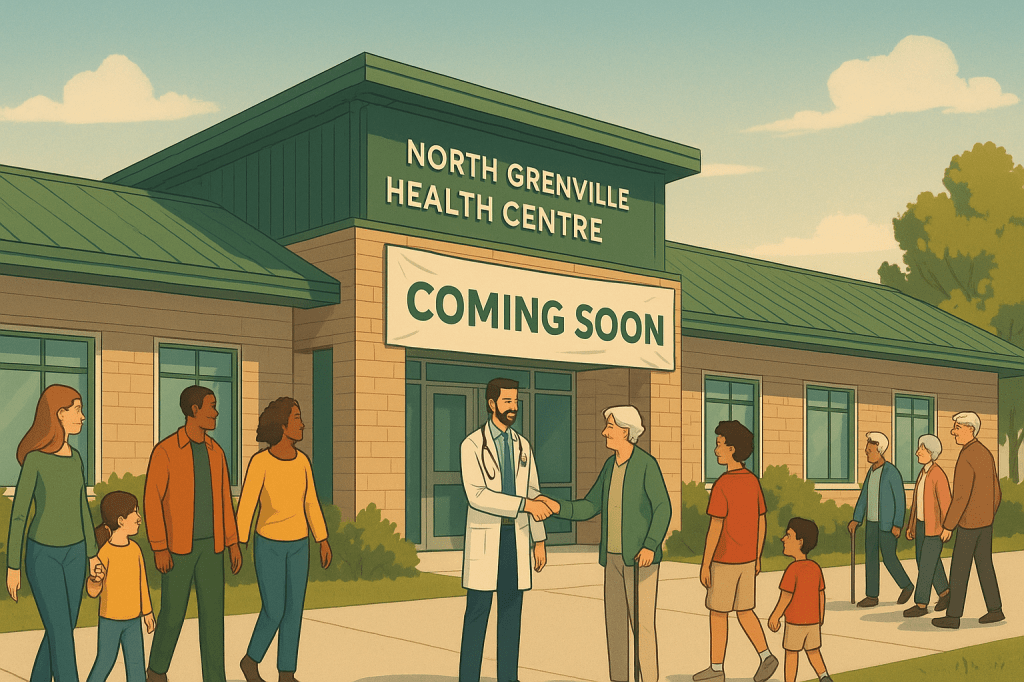
A Municipal Remedy: Why North Grenville Should Open Its Own Healthcare Centre

In North Grenville, the demand for primary healthcare has long outpaced the available supply. While the Rideau Crossing Family Health Clinic has served the community admirably, it seems to have reached its physical and staffing capacity. With a growing population, and increasing concerns over access to primary care, it’s time for the Township of North Grenville to consider a bold, but practical move: establish its own municipally-operated healthcare clinic.

This is not an untested idea. Across Canada, municipalities are taking healthcare into their own hands – literally. In Colwood, British Columbia, the city made headlines in 2023 when it became the first in the country to hire family physicians directly as municipal employees. Offering job stability, pensions, and administrative support, Colwood removed many of the barriers that deter physicians from entering or staying in primary care practice. It wasn’t about competing with existing private clinics, it was about ensuring no resident went without a family doctor.

Orillia, Ontario, is exploring a similar strategy. Recognizing that nearly 25% of the region lacks access to a primary care provider, city councillors there are considering opening a municipal clinic and hiring physicians as city staff. Their aim is to enhance, not undermine, the local healthcare network by filling a gap that traditional models are no longer meeting.

In Manitoba, rural communities like Killarney-Turtle Mountain are actively recruiting international physicians and managing their relocation as part of a municipally driven recruitment strategy. These towns have realized that waiting for provincial solutions is no longer viable. Meanwhile, in Huntsville, Ontario, a physician incentive program funded by the town is already yielding results, with new doctors signing on to help address longstanding shortages.

North Grenville has a chance to follow this growing municipal trend. Simply encouraging more physicians to join the private sector won’t be enough, there’s nowhere for them to go within the Township. A municipally-operated clinic, built with a collaborative mindset, and not as competition, can complement existing services while expanding capacity.

Such a clinic could offer a modern team-based care model that includes nurse practitioners, physician assistants, social workers, and administrative staff, all working under the umbrella of the municipality. With support from provincial and federal programs such as Ontario’s primary care transformation funds or the federal Foreign Credential Recognition Program, North Grenville could create a sustainable and forward-looking solution tailored to its own needs.

How to Move Forward: A Practical Path for the Township
To begin, North Grenville’s municipal council could establish a Healthcare Services Task Force to study local demand, identify gaps in coverage, and recommend a viable service delivery model. This task force should include community health experts, residents, and local politicians.

Next, the Township should apply for funding through Ontario Health’s community-based primary care programs, and the federal government’s health human resources strategy. Partnering with the local hospital, regional health teams, and post-secondary institutions could support the recruitment of new healthcare professionals, including recent graduates and internationally trained physicians.

Land acquisition or repurposing of an existing municipal facility could provide a location, with design input ensuring accessibility, environmental sustainability, and integrated team care. North Grenville does have the amazing resource of the Kemptville Campus, with one of its strategic pillars being “Health and Wellness”. The Township could also offer incentives such as relocation grants, housing support, and flexible hours to make municipal employment attractive to prospective staff.

Finally, a clear communications strategy should be launched to explain that the goal is not to replace or compete with existing providers, but to enhance and expand healthcare access in underserved areas and improve outcomes for all residents.

It’s time to stop waiting and start acting. Our citizens deserve timely, reliable healthcare. Let’s build it, right here at home.

Sources
https://tnc.news/2024/12/26/b-c-city-hiring-family-doctors-as-municipal-government-workers
https://barrie.ctvnews.ca/orillia-could-hire-family-doctors-to-create-municipal-clinic-1.7173907
https://www.winnipegfreepress.com/breakingnews/2024/04/19/diagnosis-critical-desperate-manitoba-municipalities-recruiting-doctors-on-their-own
https://barrie.ctvnews.ca/incentive-program-attracts-new-physicians-to-huntsville-to-address-shortage-in-primary-care-1.7093138
https://www.canada.ca/en/employment-social-development/news/2025/03/the-government-of-canada-is-investing-up-to-143-million-to-help-address-labour-shortages-in-the-health-sector.html

Five Things We Learned This Week

Here is the latest edition of “Five Things We Learned This Week” for May 10–16, 2025, spotlighting significant global developments across various sectors.

🧬 1. CERN’s ALICE Experiment Transmutes Lead into Gold

In a groundbreaking achievement, CERN’s ALICE experiment successfully converted lead into gold. This scientific milestone demonstrates the potential of particle physics to manipulate atomic structures, echoing the age-old alchemical quest with modern technology.  

🧠 2. Genetic Links to Obsessive–Compulsive Disorder Identified

A comprehensive study involving over 2 million participants has identified 250 genes associated with obsessive–compulsive disorder (OCD). This discovery offers new insights into the genetic underpinnings of OCD, paving the way for targeted therapies and improved understanding of the condition.  

💰 3. Reserve Bank of India Plans Record Payout to Government

The Reserve Bank of India (RBI) is expected to transfer a record surplus of up to ₹3 lakh crore to the government for the financial year 2024–25. This anticipated payout, nearly 50% higher than the previous year’s, will provide a significant fiscal boost to the government, aiding in budgetary commitments and economic initiatives.  

 4. U.S. Clean Energy Tax Incentives Face Potential Rollback

A Republican-led initiative in the U.S. House of Representatives aims to significantly cut tax credits for clean energy established under the Inflation Reduction Act. The proposed rollback could hinder progress toward reducing carbon emissions and halt the recent surge in clean energy investments, potentially impacting the U.S.’s position in the global clean tech market.   

✈️ 5. Australian Transport Workers Union Threatens Major Industrial Action

The Transport Workers Union (TWU) in Australia has announced plans for a significant industrial campaign that could disrupt the nation’s transport sector, including airline operations. The union aims to coordinate the expiry of over 200 enterprise agreements in 2026 to maximize workers’ bargaining power, targeting major companies such as Qantas, Aldi, Amazon, and Virgin Australia.  

Stay tuned for next week’s edition as we continue to explore pivotal global developments.

When Boys Hurt Bots: AI Abuse and the Crisis of Connection

There’s a peculiar irony in watching humanity pour billions into machines meant to mimic us, only to mistreat them the moment they speak back. In the last five years, AI chatbots have gone from novelty tools to something much more personal: therapists, friends, even lovers. Yet, beneath this seemingly benign technological revolution lies a troubling undercurrent, particularly visible in how many young men are using, and abusing, these bots. What does it mean when an entire demographic finds comfort not only in virtual companionship, but in dominating it?

This isn’t just a question about the capabilities of artificial intelligence. It’s a mirror, reflecting back to us the shape of our culture’s most unspoken tensions. Particularly for young men navigating a world that has become, in many ways, more emotionally demanding, more socially fractured, and less forgiving of traditional masculinity, AI bots offer something unique: a human-like presence that never judges, never resists, and most crucially, never says no.

AI companions, like those created by Replika or Character.ai, are not just sophisticated toys. They are spaces, emotionally reactive, conversationally rich, and often gendered spaces. They whisper back our own emotional and social scripts. Many of these bots are built with soft, nurturing personalities. They are often coded as female, trained to validate, and built to please. When users engage with them in loving, respectful ways, it can be heartening; evidence of how AI can support connection in an increasingly lonely world, but when they are used as targets of verbal abuse, sexual aggression, or humiliating power-play, we should not look away. These interactions reveal something very real, even if the bot on the receiving end feels nothing.

A 2023 study from Cambridge University found that users interacting with female-coded bots were three times more likely to engage in sexually explicit or aggressive language compared to interactions with male or neutral bots. The researchers suggested this wasn’t merely about fantasy, it was about control. When the bot is designed to simulate empathy and compliance, it becomes, for some users, a vessel for dominance fantasies; and it is overwhelmingly young men who are seeking this interaction. Platforms like Replika have struggled with how to handle the intensity and frequency of this abuse, particularly when bots were upgraded to allow for more immersive romantic or erotic roleplay. Developers observed that as soon as bots were given more “personality,” many users, again, mostly men, began to test their boundaries in increasingly hostile ways.

In one sense, this behavior is predictable. We live in a time where young men are being told, simultaneously, that they must be emotionally intelligent and vulnerable, but also that their historical social advantages are suspect. The culture offers mixed messages about masculinity: be strong, but not too strong; lead, but do not dominate. For some, AI bots offer a relief valve, a place to act out impulses and desires that are increasingly seen as unacceptable in public life. Yet, while it may be cathartic, it also raises critical ethical questions.

Some argue that since AI has no feelings, no consciousness, it cannot be abused, but this totally misses the point. The concern is not about the bots, but about the humans behind the screen. As AI ethicist Shannon Vallor writes, “Our behavior with AI shapes our behavior with humans.” In other words, if we rehearse cruelty with machines, we risk normalizing it. Just as people cautioned against the emotional desensitization caused by violent video games or exploitative pornography, there is reason to worry that interactions with AI, especially when designed to mimic submissive or gendered social roles, can reinforce toxic narratives.

This doesn’t mean banning AI companionship, nor does it mean shaming all those who use it. Quite the opposite. If anything, this moment calls for reflection on what these patterns reveal. Why are so many young men choosing to relate to bots in violent or degrading ways? What emotional needs are going unmet in real life that find expression in these synthetic spaces? How do we ensure that our technology doesn’t simply mirror our worst instincts back at us, but instead helps to guide us toward better ones?

Developers bear some responsibility. They must build systems that recognize and resist abuse, that refuse to become tools of dehumanization, even in simulation. Yet, cultural reform is the heavier lift. We need to engage young men with new visions of power, of masculinity, of what it means to be vulnerable and connected without resorting to control. That doesn’t mean punishing them for their fantasies, but inviting them to question why they are rehearsing them with something designed to smile no matter what.

AI is not sentient, but our behavior toward it matters. In many ways, it matters more than how we treat the machine, it matters for how we shape ourselves. The rise of chatbot abuse by young men is not just a niche concern for developers. It is a social signal. It tells us that beneath the friendly veneer of digital companions, something deeper and darker is struggling to be heard. And it is our responsibility to listen, not to the bots, but to the boys behind them.

Sources
• West, S. M., & Weller, A. (2023). Gendered Interactions with AI Companions: A Study on Abuse and Identity. University of Cambridge Digital Ethics Lab. https://doi.org/10.17863/CAM.95143
• Vallor, S. (2016). Technology and the Virtues: A Philosophical Guide to a Future Worth Wanting. Oxford University Press.
• Horvitz, E., et al. (2022). Challenges in Aligning AI with Human Values. Microsoft Research. https://www.microsoft.com/en-us/research/publication/challenges-in-aligning-ai-with-human-values
• Floridi, L., & Cowls, J. (2020). The Ethics of AI Companions. Oxford Internet Institute. https://doi.org/10.1093/jigpal/jzaa013

A Welcome with Questions: What Dr. Kaur’s Arrival Reveals About North Grenville’s Physician Incentive Strategy

Ontario is facing a growing shortage of primary care physicians, leaving millions of residents without regular access to a family doctor. This crisis is particularly acute in rural and small-town communities, where aging populations and physician retirements have widened care gaps. In response, municipalities across the province are adopting innovative strategies to attract, recruit, and retain doctors. These include financial incentive programs, housing and relocation support, flexible practice models, and community integration initiatives aimed at making smaller communities more appealing.

So, the arrival of a new physician in a small Ontario town is typically a cause for celebration. Access to primary care is under increasing pressure across the province, and communities like North Grenville work diligently to recruit and retain family physicians. Thus, when Mayor Nancy Peckford announced the addition of Dr. Pawandeep Kaur to the Rideau Crossing Family Health Centre in Kemptville, it was a moment of optimism.

However, a closer examination of the circumstances surrounding Dr. Kaur’s recruitment reveals complexities that warrant further scrutiny, particularly concerning the application and effectiveness of North Grenville’s Family Physician Incentive Program.

Dr. Lavitt’s Brief Tenure
Dr. Samantha Lavitt joined the Rideau Crossing Family Health Centre in June 2024 as part of the municipality’s North Grenville Primary Care Incentive Program. Her arrival was heralded as a significant step forward in enhancing primary care access for the community. However, less than a year into her tenure, Dr. Lavitt announced her departure, effective June 1, 2025. The reasons for her short stay have not been publicly disclosed, but her brief tenure raises questions about the program’s ability to retain physicians in the community. 

A Seamless Transition – But Not an Expansion
To ensure continuity of care, Dr. Kaur will begin transitioning into Dr. Lavitt’s practice starting April 16, 2025, with a full handover by June 1. This overlap aligns with the College of Physicians and Surgeons of Ontario (CPSO) guidelines, which mandate that physicians provide appropriate arrangements for patient care continuity upon leaving a practice.

While this transition is commendable from a patient care perspective, it is important to note that Dr. Kaur is not an addition to North Grenville’s physician roster, but a replacement. The total number of family physicians in the community remains unchanged.

The Optics of Growth
Mayor Peckford’s announcement welcomed Dr. Kaur as “another new family doctor,” a phrase that suggests an increase in the local healthcare workforce. However, this characterization is misleading, as Dr. Kaur is filling the vacancy left by Dr. Lavitt. The use of the term “new” in this context may create a perception of growth where there is none.

Furthermore, Dr. Kaur’s recruitment is again tied to the township’s Family Physician Incentive Program. This raises questions about the program’s application. Designed to attract new physicians to underserved areas, the program appears, in this instance, to be used to maintain existing capacity rather than expand it. 

A Stepping Stone, or a Sustainable Solution?
The brief tenure of Dr. Lavitt and the subsequent recruitment of Dr. Kaur under the same incentive program highlight potential vulnerabilities in the program’s design. If physicians view the program as a short-term opportunity or a stepping stone to other positions, the community may face ongoing challenges in maintaining stable, long-term primary care services. Perhaps the program’s retention strategies may need reevaluation to ensure sustainable healthcare delivery in North Grenville? 

Moving Forward with Transparency
While Dr. Kaur’s arrival ensures that existing patients continue to receive care, the situation underscores the need for transparency in how recruitment programs are utilized. It is essential to assess whether these programs are achieving their intended goals of expanding healthcare access, and to consider adjustments that enhance their effectiveness in both attracting and retaining physicians.

As North Grenville continues to navigate the complexities of healthcare provision, clear communication and strategic planning will be key to ensuring that the community’s needs are met not just today, but in the years to come.

Sources
• Rideau Crossing Family Health Centre. “Practice Update.” rideaucrossingfhc.ca
• My Kemptville Now. “North Grenville welcomes newest physician.” mykemptvillenow.com
• North Grenville. “North Grenville Enhances Primary Care Access with Arrival of Dr. Lavitt.” northgrenville.ca
• College of Physicians and Surgeons of Ontario. “Physician Information.” register.cpso.on.ca

The Shifting Dream: White Masculinity and their Receding Grip on North America’s Future

For centuries, the mythology of the “American Dream” (and its Canadian cousin) was powered by the image of the self-made white man; rugged, determined, and in control. From the frontier and the factory floor to the boardroom and ballot box, the narrative of national progress was long centered on white male ambition, but in the 21st century, that dominance is waning. Not because others are taking what doesn’t belong to them, but because they are finally accessing what always should have been shared.

Demographically, socially, and economically, North America is being reshaped by waves of migration, changing gender roles, Indigenous resurgence, and increasing racial and cultural diversity. Women, racialized people, queer folks, and immigrants are not just contributing, they are leading. From startup culture and environmental activism to political office and artistic innovation, the stories being told and the power being wielded are increasingly non-white and non-male.

Yet, as these shifts accelerate, many white men are experiencing something they have rarely encountered at a cultural level: loss of centrality. For generations, society reinforced that whiteness and maleness were the default, everything else was “other.” Now, with those defaults being questioned and dismantled, entitlement is showing its teeth. There is a growing chorus of grievance, often manifesting in reactionary politics, internet subcultures, and movements that call for a return to a mythical past when “men were men” and “America was great.”

The trouble is that entitlement doesn’t vanish when equity rises. Many white men have come to see fairness as persecution, mistaking equality for displacement. They are not just angry at being excluded, they are angry that inclusion requires them to share space, status, and resources. This is especially evident in education, employment, and media representation, where more equitable hiring practices, affirmative action, and inclusive storytelling are viewed not as progress but as threats to traditional dominance.

Some of this backlash is economic. Working-class white men, especially those displaced by globalization and automation, have seen their livelihoods and identities eroded. But the narrative they are often sold isn’t one of class solidarity, it’s one of racial and gender resentment. Politicians and pundits have weaponized their frustration, redirecting legitimate grievances toward scapegoats rather than structural inequity.

Still, the future is not about erasure. It is about redefinition. White men, like everyone else, have the opportunity to take part in a broader, more inclusive vision of what it means to thrive in North America. But it requires humility, self-reflection, and a willingness to let go of inherited privilege. The dream hasn’t died, it’s just no longer theirs alone.

If white men can move from entitlement to empathy, from dominance to solidarity, they can be part of a future that is richer, fairer, and more sustainable. If they cling to the fading illusion of supremacy, they will find themselves shouting from the sidelines of a dream that has moved on without them.

The Language of Care: Why Ontario Needs a Client-Centred Health Model

In Ontario, a quiet revolution in healthcare could begin with something as deceptively simple as a change in language. What if, instead of referring to the people they treat as patients, healthcare practitioners embraced the idea that they are working with clients? This shift in terminology is more than cosmetic; it signals a fundamental rethinking of how care is delivered and how relationships between practitioners and the people they serve are structured. Replacing patient with client disrupts the ingrained hierarchy of medicine, and opens the door to a model of care that is more collaborative, respectful, and, ultimately, more effective.

The word patient carries with it centuries of baggage. Rooted in a paternalistic tradition, it positions the healthcare professional as the authority and the person receiving care as a passive recipient. This model might be efficient in a short hospital stay or an emergency room visit, but it often falls short in the real world of chronic illness, mental health, elder care, and preventive services. In these domains, success relies less on technical intervention and more on sustained relationships, shared goals, and mutual trust. Reframing the care recipient as a client changes the dynamic entirely. A client has agency. A client has choices. A client is someone with whom you work, not someone you work on.

This idea is hardly radical in other professions. Lawyers, accountants, architects, and business consultants, all highly educated, tightly regulated professionals serve clients, not patients. These roles are steeped in trust and responsibility, yet they operate from a baseline assumption that the client is an informed actor. Professionals in these fields provide guidance, analysis, and expertise, but they do not presume to make personal decisions on behalf of the people they serve. If such a standard is good enough for legal or financial matters, why should health, arguably the most personal domain of all, be treated differently?

Adopting a client-centred lens has profound implications for healthcare delivery. It reshapes informed consent from a bureaucratic formality into a genuine process of dialogue and understanding. It places a premium on listening, cultural humility, and the social determinants of health. It encourages practitioners to see people not just as carriers of disease or disorder, but as whole individuals navigating complex lives. In Ontario’s increasingly diverse and pluralistic population, this shift is especially urgent. Language, history, trauma, race, and gender identity all influence how people experience healthcare. Treating them as clients creates space for those realities to be acknowledged and respected.

More importantly, research consistently shows that when people are treated as partners in their care, outcomes improve. Chronic disease management, medication adherence, mental health recovery, all benefit from a model in which individuals are active participants rather than passive recipients. Community Health Centres, Nurse Practitioner-Led Clinics, and Indigenous-led health organizations have long embraced this ethos, often with outstanding results. These models recognize that healthcare is not merely about procedures and prescriptions; it’s about relationships and empowerment.

To make this shift from patient to client more than a philosophical exercise, Ontario’s healthcare system must engage in a formal change management process that embeds this transformation into everyday practice. Change at this scale requires more than individual will, it demands structural alignment, leadership buy-in, and sustained cultural development. Medical and nursing schools must be at the forefront, redesigning curricula to emphasize collaborative care, cultural safety, and relational ethics from day one. Teaching hospitals and clinical settings must model this new language and ethos consistently, ensuring that learners observe and internalize client-centred care as the norm, not the exception. Professional colleges, health authorities, and policy-makers need to articulate a unified vision and provide concrete supports; from updated documentation protocols to ongoing professional development. Without a deliberate, system-wide strategy to guide this cultural transition, the risk is that well-meaning practitioners will continue operating in structures that reinforce the very hierarchy we seek to move beyond. True transformation will require education, reinforcement, and accountability across the health system.

Of course, this shift will not be easy. Medical training in Ontario still often reinforces an expert-knows-best mentality. Fee-for-service billing structures reward speed over depth, and systemic pressures, from staffing shortages to rigid bureaucracies, can make relational care feel like a luxury rather than a standard. Some professionals resist the term client, worrying it sounds too commercial or transactional. But in truth, it’s a term of respect. It conveys that the individual has power, and that the practitioner has a duty to serve, not command.

If Ontario is serious about building a more equitable, sustainable, and humane healthcare system, it must begin by reimagining the core relationship between practitioner and person. Words matter. They shape expectations, behaviours, and culture. Shifting from patients to clients could be the first step toward a system that doesn’t just deliver care, but shares it.